There’s growing buzz in Washington that President Obama will publicly offer a plan for resuming Middle East peace talks at the opening of the UN General Assembly. Coincidentally, the General Assembly falls right in the middle of the High Holy Days, a time when taking steps toward peace in the Middle East will have real resonance for the American Jewish community – a majority of which believes a two-state solution to the Israeli-Palestinian conflict to be the best way to secure Israel’s future.
Surely Obama and his administration understand, however, that there is a real political risk to any steps he might take, particularly any that include putting pressure on Israel and its neighbors to build the mutual trust that has so badly broken down in recent years.
But the president appears to understand something crucial to both the peace process and the upcoming Jewish holy days: it is not enough to want something, to think about it, to talk about it – action is required if we really want change.
Confidence-building measures are a prerequisite for successful negotiations between any two warring parties, but the very idea has raised hackles among some Jews here and in Israel. They’re not accustomed to a U.S. president asking very much of Israel.
Obama’s opponents try to fend off American pressure by asking: should the United States and its Jewish community get involved in resolving a conflict 10,000 miles away? Shouldn’t we leave Israelis and their neighbors to work out their problems on their own? They fail to consider that when American administrations align themselves too closely with official Israeli positions, the peace process gets nowhere – and that American Jews have a responsibility to their Israeli brethren.
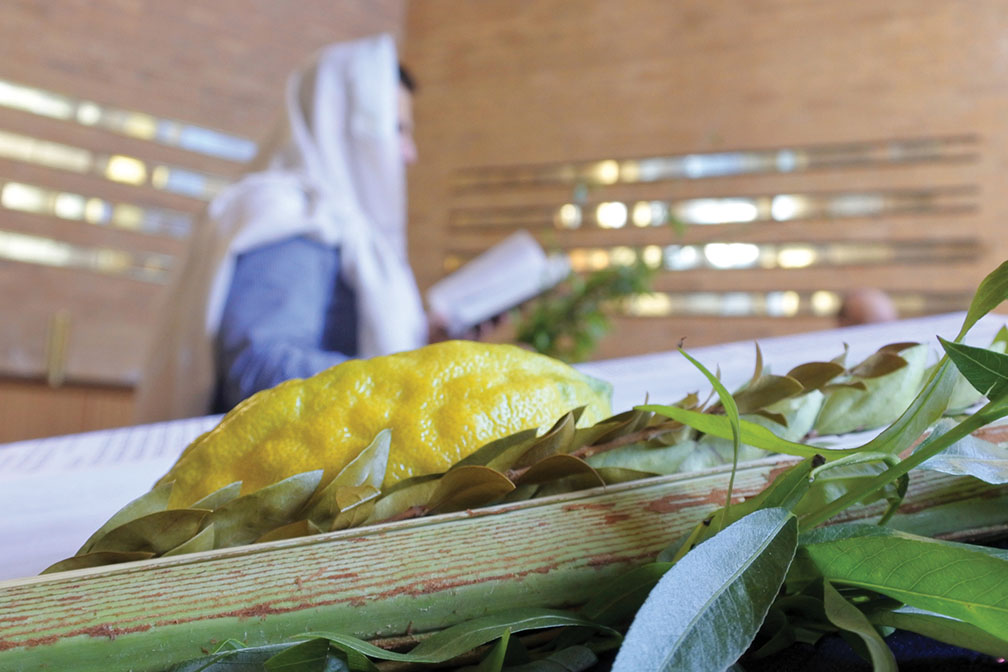
When we gather during our holidays to reflect on the year past and resolve to live a better life in the year to come, our prayers don’t speak of what “I” have done or will do. Our prayers speak of what “we,” the whole Jewish community, have done and what we will do to make a better tomorrow. As our rabbis affirmed many centuries ago: “All Jews are interwoven, each with the other.” American Jews have a responsibility to do as much as we can to bring peace and security to the Jewish State.
At the same time, we must not restrict our circle of concern to Jews alone. Our concern must also be for this country, for America. Promoting peace is not just a moral virtue – it’s also real politik, simple self-interest, because festering conflict anywhere can all too easily ripple out to affect people everywhere – and in particular, a nation currently engaged in two wars in the neighborhood where Israel makes its home.
Surely that’s why the Obama administration has been so intent from its first day in office on moving Israelis and Palestinians toward peace. It’s the right thing to do for the only world power strong enough to make peace happen – but it’s also in America’s self-interest. The consequences of continued strife in the Middle East make it harder in many lands for the U.S. to protect and promote our own needs.
So in the next few weeks, the president will be presenting a plan to revitalize the desperately-needed but perennially hamstrung peace process. Obama has said clearly and convincingly that he has a deep concern for the peace and safety of Israel, the Palestinians and of its neighbors, and that this country has no intention of abandoning its special relationship with the Jewish State.
But President Obama has also said that good friends should be honest with each other and that he intends to be honest with Israel – and that looking out for Israel means calling on her to take difficult steps and make painful compromise.
It is important that a growing numbers of American Jews realize that the president’s policies represent the best way to fulfill this country’s responsibilities to their fellow Jews in Israel. Three-quarters of us want to see a two-state solution to the conflict, and two-thirds of us have said that we would be willing to see the president put pressure on the sides to achieve that solution.
But simply put, that is not enough. As we celebrate the sweetness of a new year, we must change our support into action and pray, as the great American rabbi and theologian Abraham Joshua Heschel once said, with our feet.
The voices of dissent are loud, organized and well-known. We have to meet this dissent with our own strength, our own numbers and see to it that the facts of the matter – the simple truth that the vast majority of the American Jewish public supports the president’s stated policy goals – become just as well-known as the opposition.
Just as the president has adopted a sense of urgency, understanding that he may be the last American president with the political capacity to act on a two-state solution, we too must acknowledge that the opportunity for peace is not limitless. If we would see President Obama succeed, if we would see this new year represent a chance for a true new beginning in Israel, we must act now.
Rabbi Joshua Levine Grater is Brit Tzedek v’Shalom’s Board Secretary and the founding Chair of its Los Angeles chapter. He is also the rabbi of the Pasadena Jewish Temple and Center.