fbpx
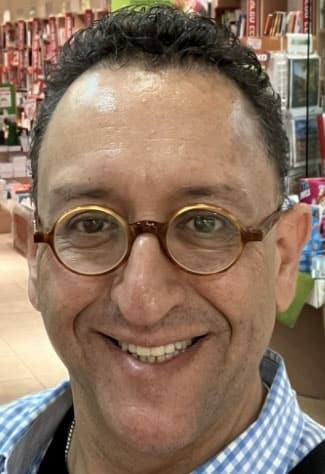
Picture of Rabbi Daniel Bouskila

Rabbi Daniel Bouskila

Rabbi Daniel Bouskila is the International Director of the Sephardic Educational Center.

Women of the word: Parashat Pinchas (Numbers 25:10-30:1)

On a recent trip to New York, I spent Shabbat morning at The Jewish Center in Manhattan, a vibrant Modern Orthodox community. As services came to a close, the 500 congregants did not make the typical mad rush for the door. Instead, everyone remained seated, anxiously waiting to hear scholar-in-residence Tova Manzel.

A Sephardic S.Y. Agnon

In current discourses on modern Israeli literature, the names Oz, Yehoshua and Grossman typically dominate the discussion. But how often do we hear the name Haim Sabato? Who is Sabato, and why is his writing often compared to Nobel Prize-winning Israeli author S.Y. Agnon?

Rabbi Uziel’s overture to Muslim leaders

During our Sephardic Film Festival this past week, we screened a film telling the intriguing and inspirational life story of Rabbi Ben-Zion Meir Hai Uziel, the first Sephardic Chief Rabbi of the State of Israel. Rabbi Uziel’s motto was “Loving Truth and Peace.”

Why Abraham? Parashat Vayera (Genesis 18:1-22:24)

He had only God’s endorsement. Otherwise, this newly chosen leader of the world was a virtual unknown. He didn’t campaign for very long; he suddenly appeared on the scene, going on to change the world. Who was Abraham, and why was he chosen? What was the purpose behind choosing him to become God’s representative on Earth?

Call to war

There are powerful moments when life’s experiences bring deeper meaning to the Torah and her classic commentators. It was Shabbat, June 5, 1982. I was nearing the end of my first year abroad in Israel, and I spent that Shabbat in Haifa with my family. A few days earlier, on June 3, Israeli Ambassador to England Shlomo Argov was seriously wounded in an attack by three PLO terrorists. Reactions in Israel ranged from shock to outrage, and the winds of war were brewing.

Opinion: Lost in translation

“Our Passover seder is translated into Arabic,” I used to tell my friends in school. “Arabic?” they responded in bewilderment. “That’s so weird! How could you translate a seder into Arabic? Isn’t Arabic the language of the enemy?”

Hillel’s voice is back, and she sounds great! (Parashat B’Shalach/Shabbat Shira)

This week I write to you from Jerusalem, inspired by the headline story from this past Tuesday ‘s Ha’aretz. On the first morning of my trip, here is the headline I woke up to: “New Orthodox Rabbinical Group Puts Israeli Women at Its Head – Hopes to Counter Creeping Religious Extremism.” The name of this new organization? Beit Hillel – an appropriate name for an organization that seeks to represent the moderate voice in Judaism.

Celebrating Gilad: The most joyous Sukkot of our lives

When my wife Peni and I decided to take our kids to Israel for Sukkot, we knew that we would have a great time. We knew that Sukkot, referred to in our prayers as “Zman Simchateinu” (“Our time to rejoice”) would especially be celebratory in Israel. But we never could have imagined what awaited us.

A Beatles Passover

Last night my family and I went out with some friends to the Pantages Theatre, where we took a musical journey back in time. For over two hours, the Broadway production of “Rain: A Tribute to the Beatles” took us through the tumultuous 1960’s and the great Beatles songs that came to define that decade. From the innocence of “I Want To Hold Your Hand” to the provocative “Revolution” and the contemplative “Let It Be,” we danced, laughed, cried and “Twisted and Shouted” to the sounds and sights of a unique era in time.

Yom Kippur: The power of dialogue

Thirty-nine years ago, Dov Indig, a young soldier in the Israel Defense Force tank corps, sat on guard duty in the Golan Heights. Joining him was a reserve soldier, many years older than Dov. During their four hours of guard duty, they engaged in a deep conversation about religion. It must have been a fascinating exchange; Dov came from Yeshivat Kerem B’Yavneh, a Hesder yeshiva where students combine Torah study and military service in combat units, and the reservist came from a Hashomer Hatzair kibbutz, the epitome of secular Zionism.

[authorpage]