The Man Behind ‘The Jew in the Lotus’
Documentary focuses on spiritual transformation of Rodger Kamenetz
By Naomi Pfefferman, Entertainment Editor
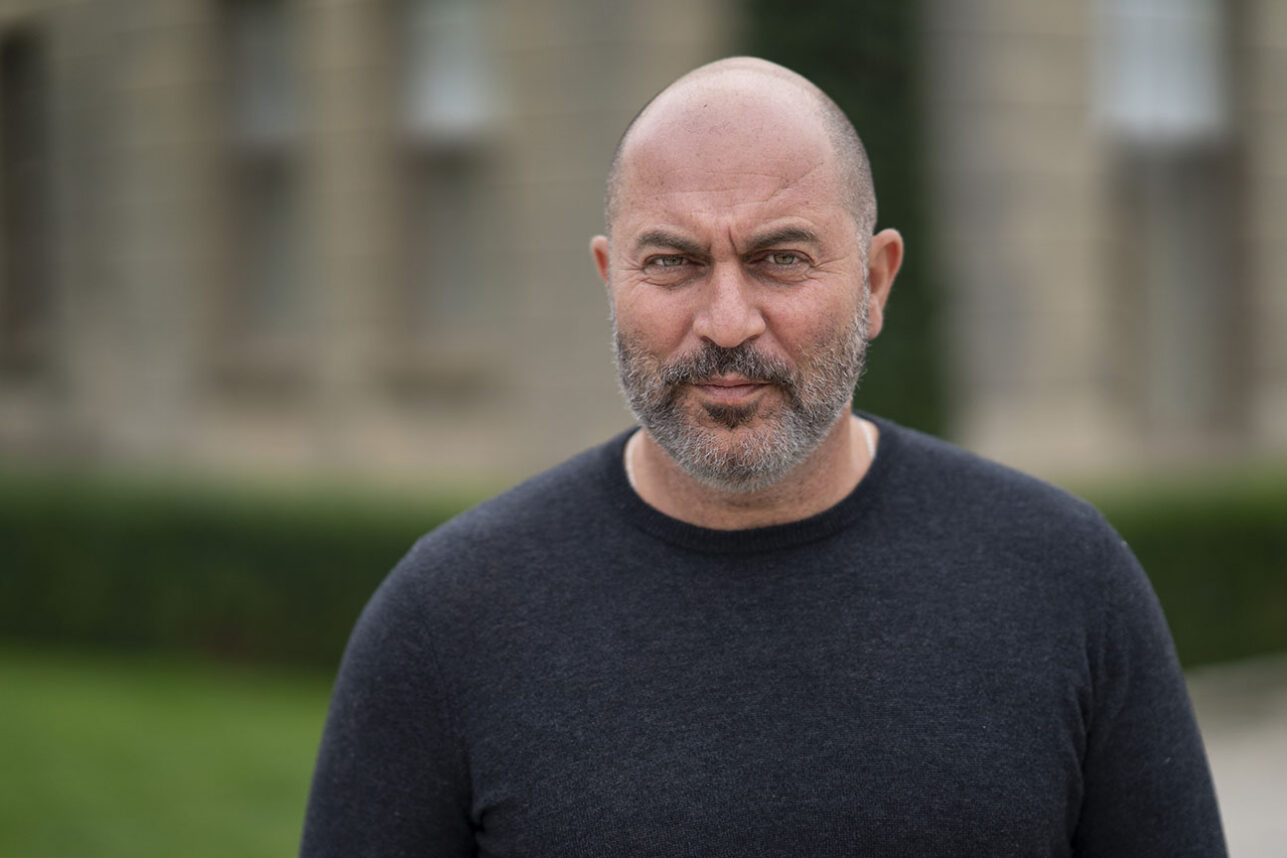
Eight years ago, writer Rodger Kamenetz, pictured below, traveled to Dharamsala, India, to meet the exiled Dalai Lama of Tibet. He went as scribe to a group of Jewish scholars and rabbis invited by the Tibetan leader to share the Jewish secret of survival in exile. Kamenetz described the historic dialogue in his popular 1994 book, “The Jew in the Lotus.”

Now a compelling new film version of the best-seller, also called “The Jew in the Lotus,” reveals the as-yet-untold personal story behind the book. Laurel Chiten’s documentary focuses upon Kamenetz’s spiritual transformation in India, at the lowest point in his life.
The film describes how Kamenetz arrived in Dharamsala, anguished over the death of his infant son. He had poured his heart and soul into a book about the baby’s death, which had been brusquely rejected by publishers. He had disappointed his Jewish parents by not becoming a doctor; now he was a writer unsure he could write.
“I had an overwhelming sense of inferiority,” says Kamenetz, who scribbled his sentiments in a journal upon reaching India. “I’m nervous, which is nothing new in itself,” he wrote. “‘Nervous’ is my religion.”
But something unexpected happened to Kamenetz in Dharamsala; through his encounter with the Tibetan Buddhists, he realized he had undervalued what was precious about his own religion. Kamenetz began his journey back to Judaism; he went on to write “The Jew in the Lotus,” which put him on the map as a writer, and to become an expert on Jewish-Buddhist interface. When he returned to Dharamsala in 1996, with the film crew in tow, he finally had the courage to look the Dalai Lama in the eye.

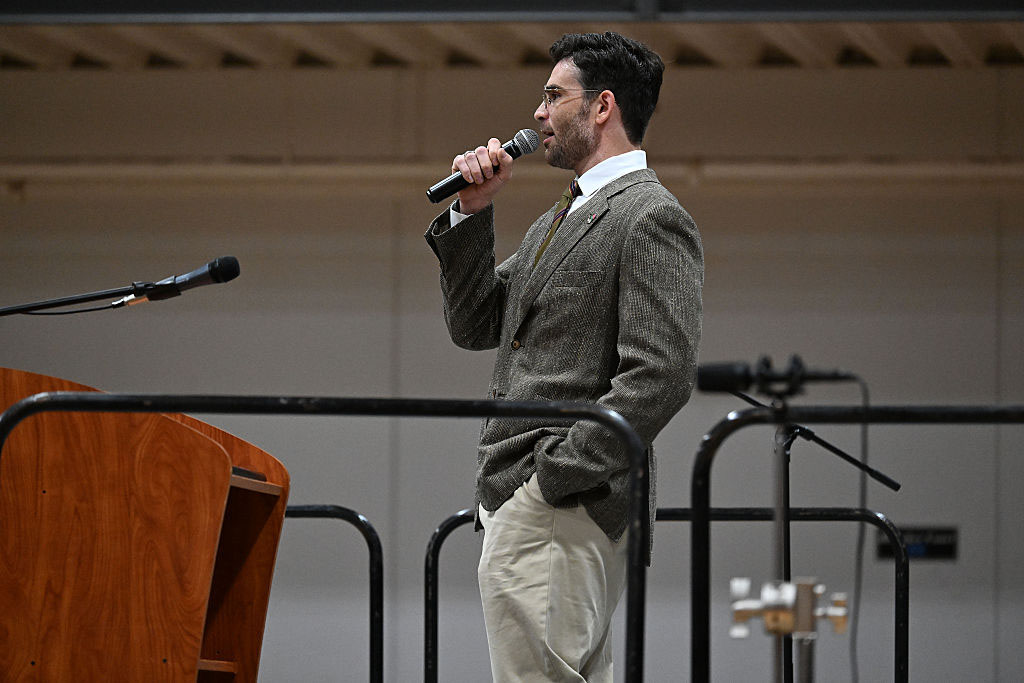
Chiten, above, tells Kamenetz’s story with interviews of the author, his family and friends, underscored by brutal images of Indian poverty, teeming streets and misty, ethereal visions of the Himalayan foothills around Dharamsala. The award-winning filmmaker says she was drawn to Kamenetz’s story because it is so much her own.
She came across “The Jew in the Lotus” at a low point in her own life, after Tourette’s Syndrome had ruined her career as a sign language interpreter and brought her to a personal crossroads. Chiten thereafter returned to film — her first love. But in 1994, her documentary about Tourette’s, “Twitch and Shout” was rejected by broadcasters, leaving her debt-ridden and determined never to make another movie. “My mantra was, ‘Nobody wants me, nobody wants my film,'” says the director, who for solace logged on to a Jewish-Buddhist chatroom where everyone was talking about “The Jew in the Lotus.” Chiten was at the bookstore the next morning to purchase the tome.
“I became obsessed with it,” says the Boston-based filmmaker, a Jew who has been interested in Buddhism since she began meditating and practicing yoga at age 14. “I carried it around with me everywhere. It was like glue in my hands.”
Before long, she wrote to Kamenetz, informing him that she had sworn off filmmaking until she had read his book. He agreed to a movie version of “The Jew in the Lotus,” though Chiten was initially daunted by the wide, esoteric scope of the book. When Kamenetz told her about the death of his infant son over tea one evening, Chiten knew she had her angle. “I realized what interested me the most was Rodger’s voice” she says. “I also wanted to talk about how spirituality deals with suffering.”
Now that the documentary is earning critical acclaim, Chiten sees another parallel between her life and Kamenetz’s. “I went to India terrified of making another film,” she says. “Today I’m taken seriously as a filmmaker.”
“The Jew in the Lotus” runs from Sept. 3-10 at the Laemmle Grand 4-Plex, 345 S. Figueroa St., L.A., (213) 617-0268.The filmmaker will answer questions at the Sept. 3 screening.