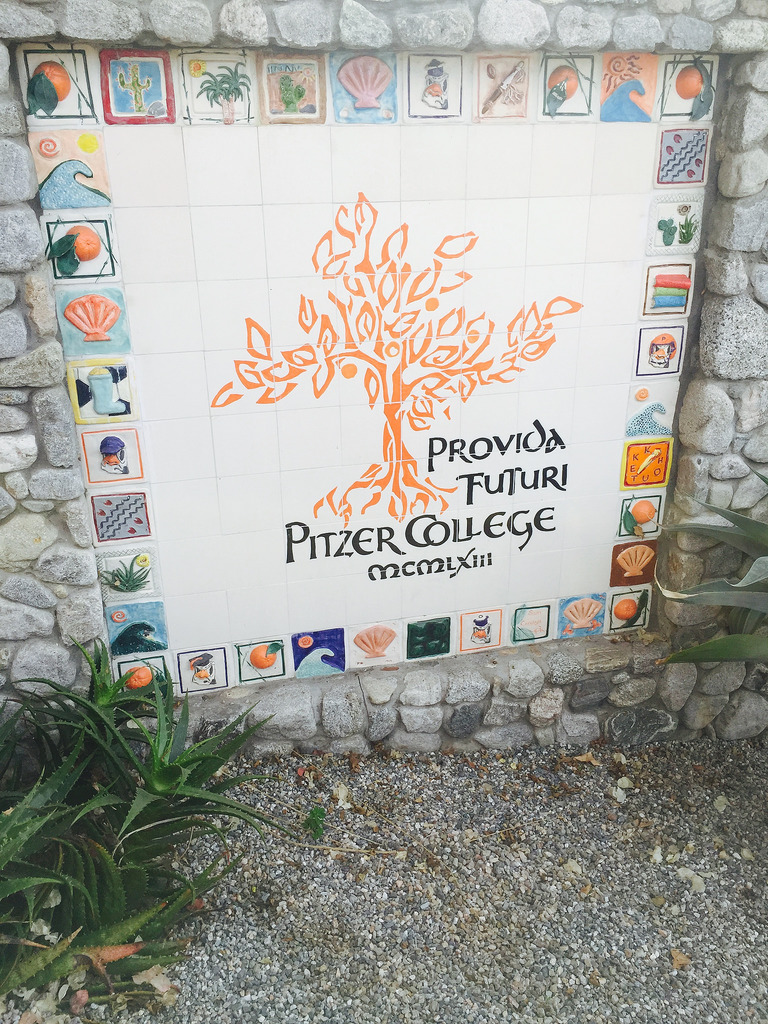
Pitzer College President Melvin Oliver announced in a March 14 statement that he is not going to implement the College Council’s recommendation to suspend the study abroad program at the University of Haifa.
Earlier in the evening, the council voted by a margin of 67 to 28, with 8 abstentions to suspend the program until Israel ends its policy of barring boycott, divestment and sanctions (BDS) supporters into the country.
Oliver said he would not implement the council’s recommendation because Pitzer would essentially be taking “an unavoidably political position on one of the most controversial issues of our time.”
“It is rarely, if ever, the role of the College to be taking such positions,” Oliver said. “It is the College’s job, through its educational process, to help its students determine their own positions and understand what actions each can then take to effect the change they seek.”
He added that ending the study abroad program would have been a violation of “academic freedom.”
“The recommendation puts in place a form of academic boycott of Israel and, in the process, sets us on a path away from the free exchange of ideas, a direction which ultimately destroys the academy’s ability to fulfill our educational mission,” Oliver said. “I categorically oppose any form of academic boycott of any country. We cannot allow our objections to the policies of any nation’s government to become a blanket indictment of the nation itself and, by extension, its citizens.”
Furthermore, it would be “prejudiced” to single out Israel, Oliver said.
“The recommendation would unnecessarily alienate a large cross section of the College’s constituencies,” Oliver said. “The reputational harm to the College would be irreparable and as president of this institution, I cannot permit that to happen.”
Oliver argued that while fighting for social justice is a laudable goal for individuals to strive for, the college should not be taking up that mantle because “our mission would become political and not educational.”
“We will consider ways to ensure that our students attain a deep understanding of the key social justice issues in the countries where they study,” Oliver said. “Likewise, we will seek to expand our students’ opportunities for study abroad in the Middle East and around the world. Our goal must be greater engagement, not less, in the world our students will one day lead.”
Oliver had condemned the efforts to suspend the program back in November.
“To deny Pitzer students who want to study at Haifa University the opportunity to study abroad and to enter into dialogue and promote intercultural understanding at the altar of political considerations is anathema to Pitzer’s core values,” Oliver said before the College Council at the time. “If the suspension of the Haifa University program becomes a reality, this will be paltry support for the cause of Palestinian rights and a major blow to the reputation and reality of Pitzer College as a scholarly institution committed to its stated values of intercultural understanding and the ability of students to pursue their vision of educational engagement.”
University of Haifa President Ron Robin said in a statement, “President Oliver has shown us what strong moral leadership against BDS and all forms of intolerance should look like throughout the academic community.”