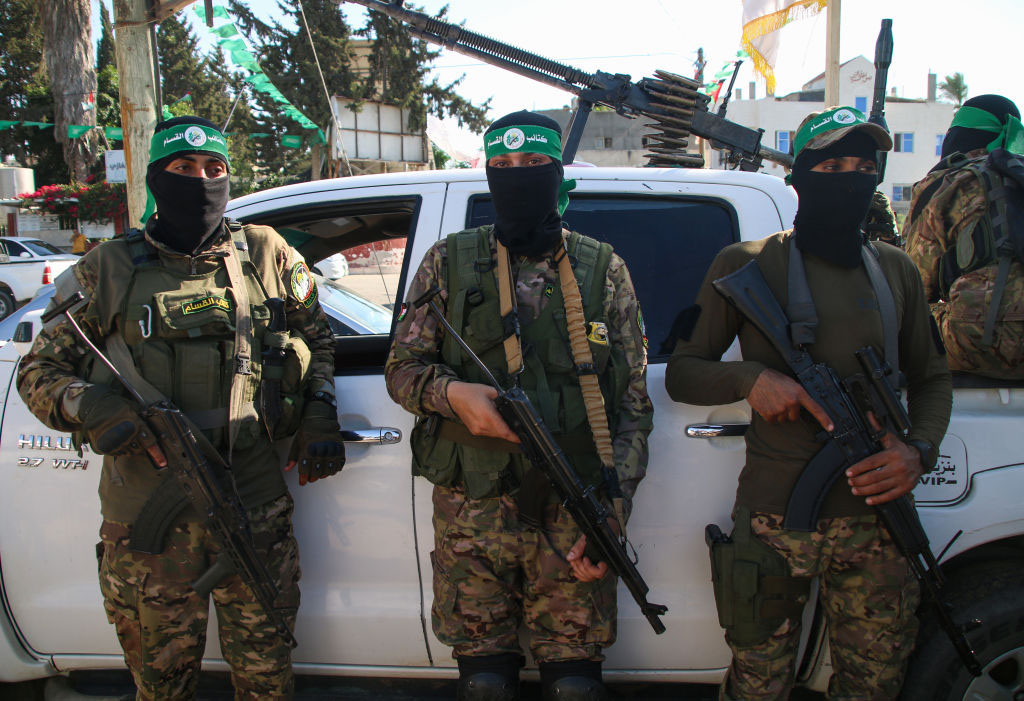
This double parasha brings us to the end of the book of Bemidbar. The Israelites stand at the edge of the Promised Land, following Moses’ last military campaign. Before the people can leave the wilderness, the soldiers must go through rituals of purification. They must stay “outside the camp for seven days.” Everyone who has “slain a person or touched a corpse shall purify himself” (Numbers 31:19). This care for returning soldiers has relevance for today’s veterans.
This and other biblical passages recognize that direct contact with death alters us. We acquire tumah, frequently mistranslated as “impurity,” but more accurately meaning that something of the experience sticks to us, requiring a ritual process to realign ourselves with the practices of daily life.
In Mishnah Yoma we are reminded of other seven-day periods of sequestration for purposes of purification. The high priest is sequestered for seven days to prepare for Yom Kippur. There is a similar seven-day period of isolation for the priest who prepares the ashes of the red heifer to be used in the ceremony that rids of tumah those who have come into contact with death.
When we are that close to death, it is as if our individual universes return to that tohu v’vohu (chaos) that existed before the world was created. Just as it took seven days for creation, the parasha asserts that a week is necessary to re-create one who has experienced the trauma of the combat soldier.
In his book, “War and the Soul: Healing Our Nation’s Veterans From Post-Traumatic Stress Disorder,” psychotherapist Edward Tick speaks of the universal trauma of war. Tick writes that traditionally war was a rite of passage into adulthood, required of nearly all young men. The difference between ancient wars and those fought today is that in antiquity, the potential destructiveness of military service was not nearly as great as in today’s high-tech battleground. Tick writes that “the more destructive war has become, the more one of its original functions as a rite of passage [is] compromised … a major factor in the prevalence of PTSD among vets today.”
Furthermore, Tick reports, returning warriors traditionally were reintegrated into civilian life with intricate rituals. In order to dissipate war’s “archetypal force” it is necessary to bring its affects into consciousness, to not be “possessed by it, but labor to direct its powers. … [T]his labor is … a matter of soul.” He sees PTSD as a “soul wound,” traditionally repaired with purification techniques such as “storytelling, healing journeys, grieving rituals, meetings with former enemies, initiation ceremonies”—ritual responses designed to, in the words of poet and novelist Deena Metzger, “take the war out of them.” These practices, Tick writes, “facilitate initiation … and offer understanding, acceptance and honor.”
When such rituals are provided, society acknowledges that the spiritual and emotional devastation of war is a community problem, the likely result of coming face to face with the horrors of the battlefield, and not a sign of individual pathology. This acknowledgement gives dignity to the emotional wounds of war, helping to provide healing that may be harder to achieve when treated individually … or not at all.
Every day, as my car stops for a red light, I see disheveled men with hopeful hands outstretched for offerings. Often they carry signs indicating the war in which they fought. I wonder who they were before they went off to fight, what they witnessed, who they lost and what keeps them up at night. And then I wonder what kind of care they received when they returned. As I search for some change or a bill to contribute, I feel I’m helping to pay a collective debt—a debt owed by a society that sends them off to wars rarely palpable to those not directly involved, which remain invisible when the soldiers come home to find no communal rituals for integrating and making peace with their experiences. The unredeemed weight of their service needs to be requited.
Unprocessed trauma ricochets through society and through history. It is acted out from one generation to another, so we have more wars, more trauma. Tick writes: “We still act according to the ancient belief in taking ‘an eye for an eye,’ seeking punishment and revenge on those who have hurt us. This ancient strategy continues the world’s wounding in an endless recycling of violence.” It is only when we create spaces for soldiers to harvest their experiences in meaningful ways that resilience can be re-established. Lacking this, as I learned at the Israel Center for the Treatment of Psychotrauma, it is likely that the traumatic experience becomes the defining factor in soldiers’ lives, resulting in PTSD and, very likely, more trauma.
For those who serve, we must create rituals to make it possible for survivors to truly come home.
Rabbi Anne Brener, a psychotherapist and spiritual counselor, is the author of “Mourning & Mitzvah” (Jewish Lights, 1993 & 2001). She is on the faculty of The Academy for Jewish Religion, California, and the advisory board of Hebrew Union College-Jewish Institute of Religion’s Kalsman Institute on Judaism and Medicine. She can be reached at mekamot@aol.com.