I was working on a column on humility when I got interrupted by my obsession with sports, a childhood condition I still can’t shake.
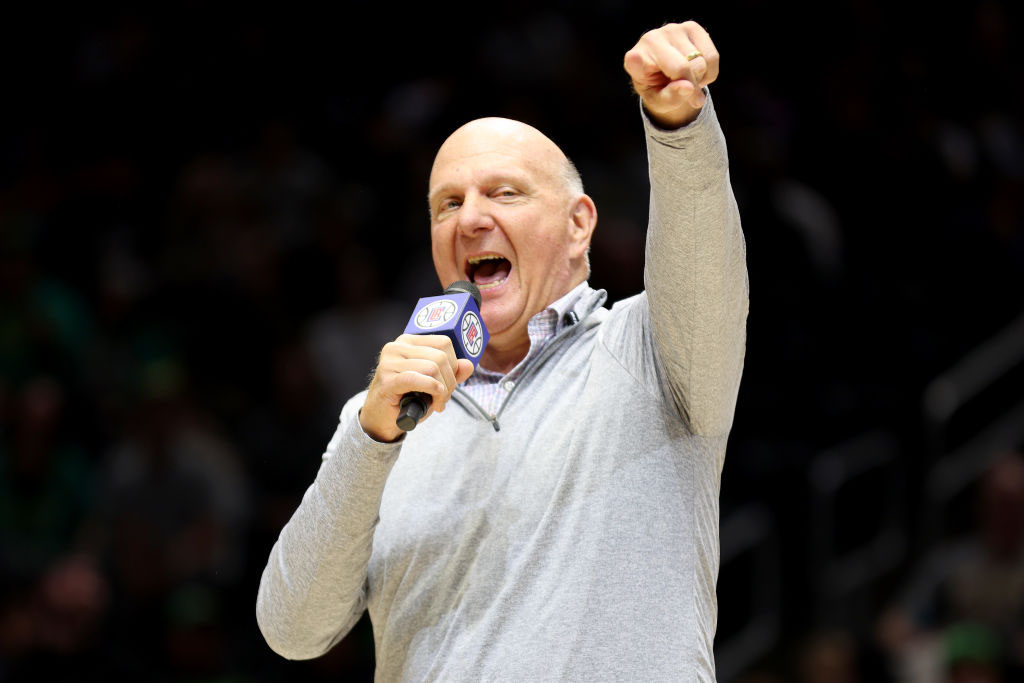
The story of the NBA imposing one of the harshest penalties in league history to the Los Angeles Clippers and owner Steve Ballmer has buzzed throughout the sports world this week.
It’s a human drama, if not a Greek tragedy.
A billionaire former Microsoft CEO buys the Clippers from a previous owner mired in a racist scandal. He pays a then-record $2 billion and is portrayed in the media as the savior of a losing franchise. He embraces the role. His enthusiasm is so off the charts he looks like a kid when he cheers from his courtside seat.
That’s the thing with sports– it has a crude, childlike simplicity. There are clear winners and clear losers. For an overeager new team owner like Ballmer, being a clear winner means holding up a championship trophy in front of the national media.
The business world, no matter how high a company’s stock goes, can never match that kind of massive, macho ecstasy.
To reach that elusive summit, Ballmer knew he needed superstars. In the summer of 2019, one became available– Kawhi Leonard, who had just taken the Toronto Raptors to the NBA championship.
Once Ballmer saw Leonard as his ticket to the top, nothing would get in his way, and Leonard knew it. First, Leonard demanded that the Clippers bring in another star (Paul George), which forced the Clippers to give away the store in a trade.
Then came money.
The NBA has these salary cap rules to prevent super wealthy teams from bigger markets to abuse the system. Ballmer knew the rules, but his zeal to win at all cost overtook his sobriety and even common sense.
I’ll spare you the details, but after an investigation by a reputed law firm, the league concluded that Ballmer and the Clippers committed “flagrant violations” of salary cap rules in order to unfairly boost Leonard’s pay.
Hence the harsh penalties announced this week, which include the loss of five future first-round draft picks and a one-year suspension for Ballmer from all team and league activities.
That might be the ultimate insult: Ballmer won’t be able this year to enter his pride and joy that took five years to build, the $2 billion Intuit Dome, arguably the world’s greatest basketball stadium.
Ballmer and his army of lawyers are digging in and threatening legal action, but most experts agree that won’t go far. The evidence is too damning.
Now you can see why a column on humility got interrupted.
The first lesson seems obvious. There are irresistible forces that can blind us into blundering. In Ballmer’s case, the combination of unlimited money and an unlimited drive to win blinded him to both ethics and basic business practices.
For a successful billionaire like Ballmer, there was something else—blind faith in his business acumen. This is a captain of industry who is the richest owner in sports and is not used to failing.
Maybe that helps explain his refusal to accept the public verdict of his failure— it feels too personal, too connected directly to him.
Publicity is both a dream and a nightmare. If you’re holding up a championship trophy, it’s the former. If you’re exposed as someone who tried to win by cheating, it’s the latter.
Ballmer’s wealth—he’s worth north of $150 billion– used to be a sign of his supreme confidence. Now it’s a reminder of a sudden and shameful collapse– a collapse that ends up punishing the very fans he worked so hard to please.
These loyal fans have stuck by their Clippers through Leonard’s many injuries and his failure to get the team to the finals. When you add up the future effects of the league’s punishment, the signing of Leonard will be associated with about a dozen years of Clippers ineptitude, what Bill Simmons of The Ringer calls “a Bar Mitzvah worth of damage.”
Billionaire or otherwise, I take no pleasure from Ballmer’s fall. I see it as a compelling human drama we may draw lessons from. This is a story that touches on both hubris and humility.
Speaking of humility, how poetic that this scandal was broken a year ago not by a big media conglomerate but by a scrappy podcaster named Pablo Torre. Through months of dogged reporting, Torre, who was mocked and ridiculed by those he scooped, took on the elitist class and notched a win for the working class. While the bigwigs were swinging opinions, Torre kept digging for facts until he struck gold. Now he wins a Pulitzer and earns everyone’s grudging respect.
Ballmer himself was ambushed by hubris, defined as “an extreme and unreasonable trust in one’s own abilities or importance,” which “causes people to ignore warnings, reject advice, and break normal rules.” His fanatical trust in his abilities and importance led him to destroy his own dream.
Like Ballmer, we all have things we believe in so strongly we can forget basic norms of behavior. Sometimes the thing we’re most attached to is the very belief that we’re right and others are wrong.
The art of humility, which prepares us for the process of introspection and accountability at Rosh Hashanah, may be the toughest. Who wants to look weak and admit mistakes? We much prefer to win, but it’s not always clear how humility can get us there.
Maybe one answer is that humility can get us to a deeper kind of victory—a victory of conscience. There’s some ecstasy in that, too.
This year, as Rosh Hashanah lines up with the 25th anniversary of 9/11, Repair the World and Hillel International are joining forces for a day of service. Across the country, more than 800 college students at 22 campus Hillels will be honoring this day through acts of service in their communities.
The initiative, which was supported by a grant from 9/11 Day and Americorps, will address issues like food security, environmental stewardship, and other local needs. Both Repair the World and Hillel are helping Jewish young adults connect with the spirit of civic engagement and collective responsibility for those in their community.
“Most college students today know September 11 through history books and the stories they’ve heard from family, teachers, and the media,” said Melissa Levine, senior director of strategic initiatives at Repair the World. “On that day, people came together to care for one another. Service is a way for young adults to connect with and carry forward that legacy.”
“On that day, people came together to care for one another. Service is a way for young adults to connect with and carry forward that legacy.” – Melissa Levine
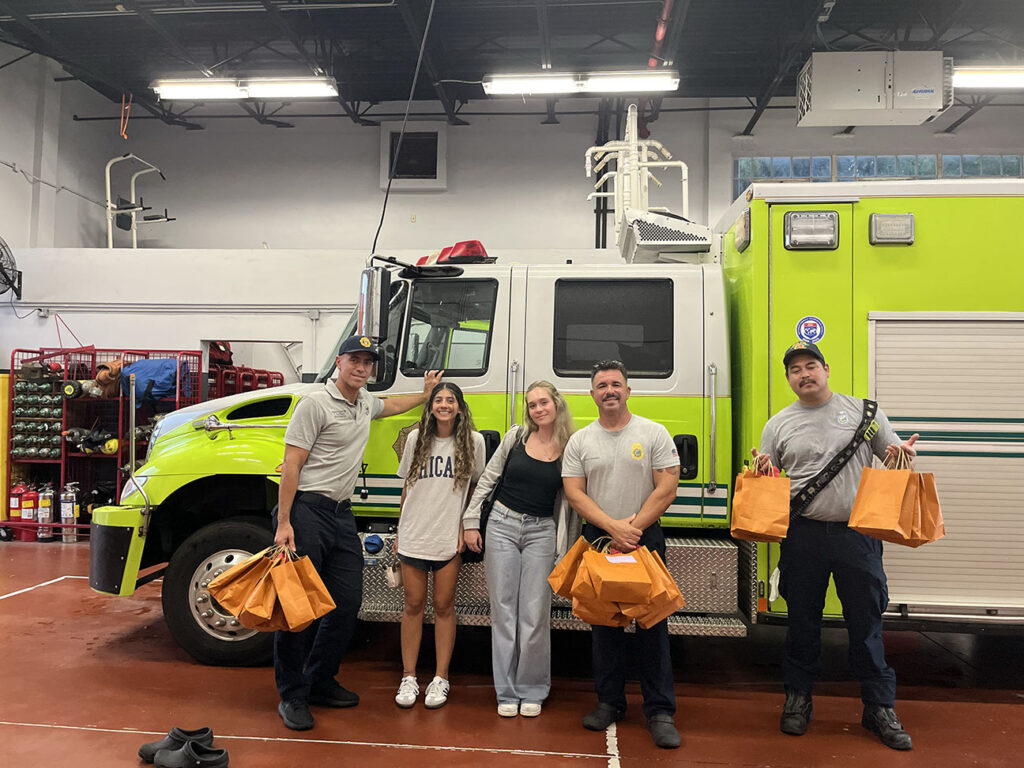
According to Dani Levine, senior director of social impact at Hillel International, last year, 15 Hillels participated in this project; this year, it’s up to 22. They previously supported first responders by creating care packages for them to show their appreciation.
“This is a time to refocus from tragedy, disaster, disagreement, and polarization, and look to empower young people to work together,” Dani said. “It benefits the community and allows our students to see themselves as civic agents… We have problems everywhere. The more people work to address them locally, they are taking steps to alleviate suffering, pain, and challenges, and create a better world for all of us.”
As Jewish students have dealt with their fair share of issues on college campuses since October 7, they’re searching for ways to engage with their Judaism.
“They now have an additional way to connect Jewishly, as they are figuring out their Jewish identity on campus,” said Melissa. “This is a nonpolitical and very natural way to engage Jewishly. They get to know their communities and have a connection to volunteering. It’s a Jewish value.”
The 9/11 initiative also marks the start of Repair the World’s National Days of Jewish Service (NDJS). This month-long campaign runs September 10 through October 10 and invites thousands of young adult volunteers around the U.S. to participate in meaningful service. There will be volunteering opportunities that focus on food and housing insecurity, the environment, and immigrant and refugee support.
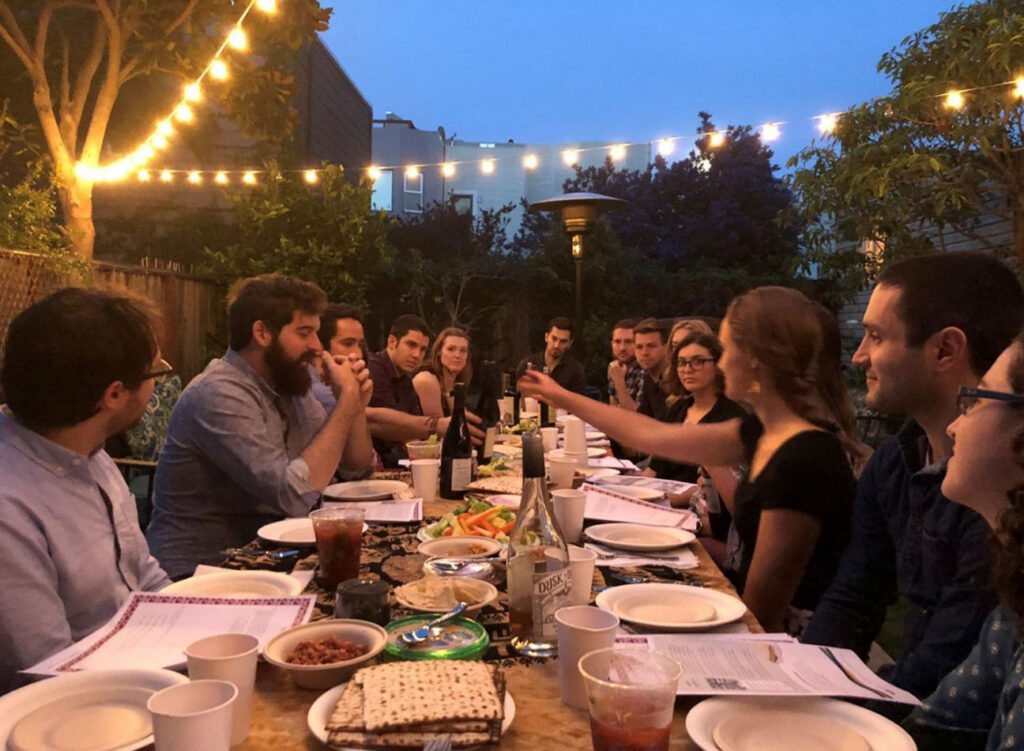
The work doesn’t stop there. Throughout the year, Repair the World organizes nationwide service initiatives for Martin Luther King Jr. Day, as well as during the spring for Passover, Holocaust Remembrance, Earth Day, and National Volunteer Week. They aim to engage tens of thousands of volunteers every year, and by 2030, the organization hopes to inspire one million acts of service.
“Whether we’re commemorating September 11, honoring Dr. King’s legacy, celebrating Passover, or entering the High Holiday season, we have opportunities to act on our values,” said Melissa. “NDJS brings people together to serve with neighbors, strengthen their communities, and demonstrate that remembrance is a catalyst for action.”
As for 9/11, Jewish college students are going to meaningfully commemorate the memory of the those who lost their lives.
“It was really a national tragedy and a day of loss,” said Dani. “The mission is to take some level of ownership back and say, this is a time when we can honor the memory of all those we lost and better our community. We identify the needs, and we come together for a day of service.”
Most Jewish young adults are engaged with their Judaism, according to an unprecedented new study from the Jim Joseph Foundation. The research, which was conducted by Sense Worldwide is known as Project Prism, and it shows that three quarters of Jewish young adults reporting doing something Jewish in their lives regularly.
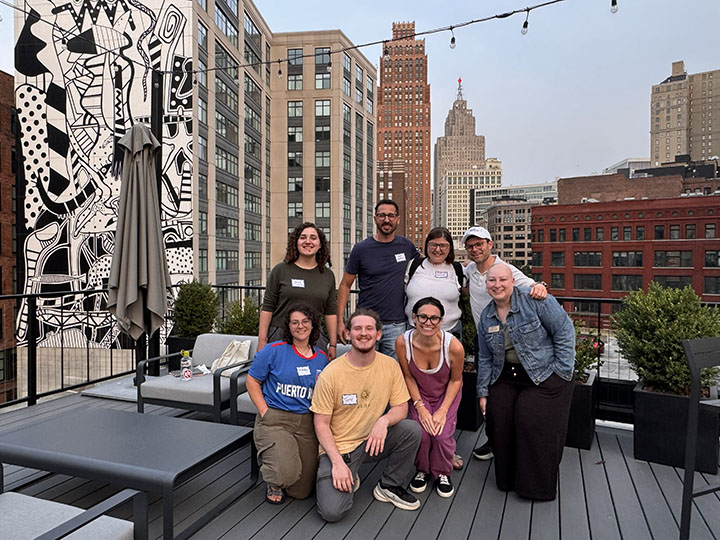
The dataset represents more than 2,000 young adults between the ages of 22 and 40 from a variety of different backgrounds, religious identities, levels of participation, family structures, location, and life experiences.
“We wanted to get a current and full picture of what it’s like to be a young Jew in America today.” – Stacie Cherner
“We wanted to get a current and full picture of what it’s like to be a young Jew in America today,” said the Director of Research and Learning at the Jim Joseph Foundation Stacie Cherner. “We haven’t done a study of Jewish young adults since 2018. It was time after the pandemic and everything that has happened in the world.”
Among the 75% of young adults who participate in something Jewish regularly, 45% say this is their only form of participation in Jewish experiences.
Immersive experiences, like Israel travel programs and Jewish summer camp, youth groups, and attending Jewish high school create a sense of belonging, while a key driver of participation in Jewish experiences is already feeling connected to the Jewish community. The Jim Joseph Foundation, which was established in 2006, has awarded more than $900 million in grants to programs that foster Jewish life in the U.S.
“We can begin to translate these insights to action,” Cherner said. “As we continue to support longstanding organizations whose work is affirmed by this data, we’re also learning alongside partners in the field about potential new opportunities the research uncovered. We look forward to this ongoing learning journey, to ultimately help more young adults tap into Jewish life, community, and experiences that bring them meaning.”
The study also looked at what stops young people from engaging in Jewish life, revealing that they want experiences that are flexible and low-pressure. They also crave, “spaces that can hold complexity, plurality, and nuance without social penalty.”
Sense Worldwide developed a probability-based quantitative sample in partnership with NORC at the University of Chicago. They combined their research with digital qualitative and cultural research, along with machine learning analysis.
“The breadth and depth of this data is fascinating and actionable,” said Yonah Schiller, Chief R&D Office at the Jim Joseph Foundation. “It affirms much of our early R&D research and points towards new needed areas of exploring impact and designing for a new generation in a quickly changing world.”
The finding that young adults like flexible and immersive experiences lines up with what the Jim Joseph Foundation has discovered as well. The Foundation has an Emergent Strategy that powers its R&D initiative through a public facing platform known as Common Era. It invests in and conducts research outside of the usual channels, funds small experiments, identifies new talent and partnerships, and gives innovators the runway to test under uncertain conditions. While most experiments fail to scale, when an initiative is over, it either captures lessons for the next attempt, stays small and localized, gets handed off to an established partner, or scales into a standalone entity.
Project Ruth is an example of that final path to becoming a standalone entity. Other research – not Project Prism – revealed a practical problem: a significant number of families want a rabbi, cantor, or educator for life-cycle events like weddings or b’nai mitzvah but are not members of synagogues and don’t know where to find these leaders.
Common Era backed two entrepreneurs to solve this gap and connected families directly with vetted practitioners on their own terms. The experimental prototype is now scaling into a major standalone platform. Project Ruth is the first of more than a dozen other initiatives in the pipeline that have been incubated in Common Era’s R&D platform. Other projects address areas such as new forms of community, media edutainment, new approaches to leadership development, and more.
The current Foundation grantees are excited about the findings and encouraged to keep reaching and creating programs for Jewish young adults.
“It affirms that what they are doing is working,” said Cherner. “This research unpacks how much potential there is for us to meet young people where they are at and for the Jewish community to help young people find a sense off connection, meaning, and purpose.”
There is a new documentary about the attacks of Oct. 7, 2023 that is unlike any of the others — this one rocks. Literally.
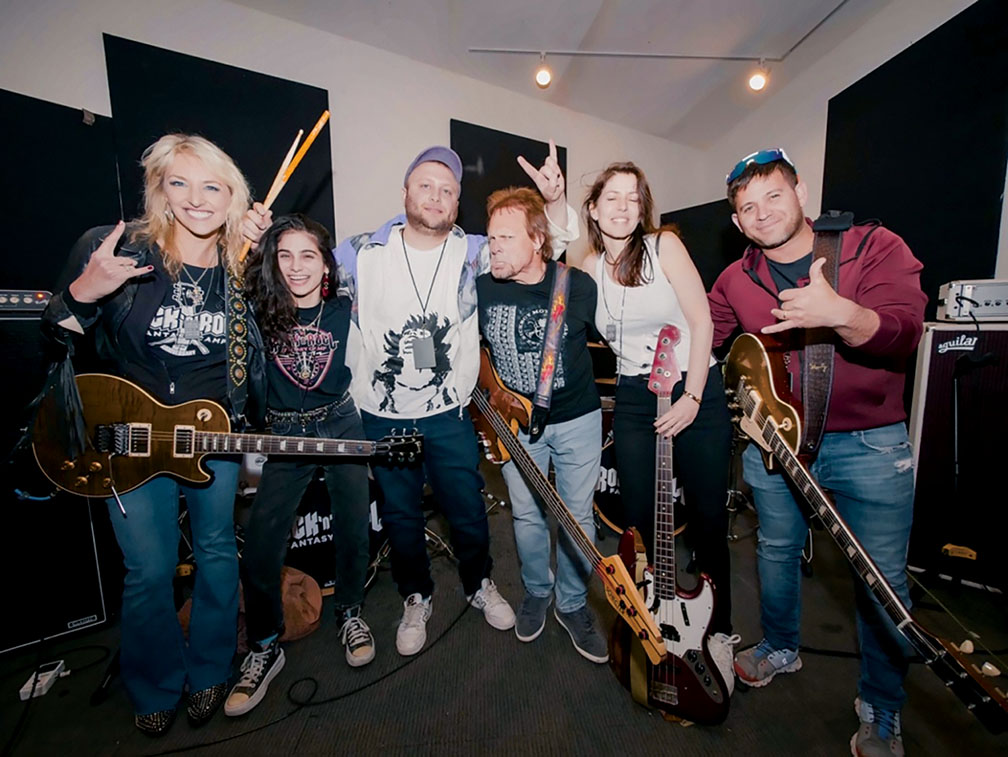
“The Bridge” follows 10 Israelis affected by the attacks, and what they experienced in Los Angeles at Rock ’n’ Roll Fantasy Camp. For the 10 Israeli musicians in “The Bridge,” this dream-come-true experience came only five months after the worst day of their lives.
It’s a moving journey to see music returning them to a part of to themselves which had eluded them since that day.
Rock Camp is a five-day program that places amateur musicians into temporary bands, gives them coaches from the rock world and puts them onstage with performers they idolize at the legendary venues they dreamed of playing. The camp was created by David Fishof, a former sports agent and concert producer who has spent much of his career bringing fans into the orbit of famous athletes and musicians. Fishof represented athletes before moving into concert promotion, then went on to create Rock ’n’ Roll Fantasy Camp.
At Rock Camp, an amateur musician can spend several days rehearsing with other musicians, and sharing the stage with rock performers.
Fishof’s father, a cantor, survived Auschwitz — his father even sang to the Nazis on the trains.
“I’m a Jew first, show business comes second in my life,” Fishof said. “The State of Israel is always in my heart. I’ve had homes there. I love it there. So after Oct. 7, I felt a deep need to do something. I didn’t know what, but I knew I had to act.” During Hanukkah in December 2023, Fishof went to Israel and asked his friend Sam Grundwerg, who had served as Israel’s Consul General in Los Angeles, to help arrange visits to communities attacked on Oct. 7 and the site of the Nova music festival.
That trip took Fishof to the funeral of Yotam Haim, a drummer, who was abducted on Oct. 7. Yotam’s brother, Tuval, sat behind a drum kit before thousands of mourners, including Fishof. “That was such a terrible tragedy,” Fishof said. “His brother Tuval played a drum solo in his honor. When he finished, he took the drumsticks and threw them in the grave. And that’s when it clicked. I wanted to bring that drummer and nine other survivors to Rock ‘n Roll Fantasy Camp in Los Angeles.”
Fishof spoke to Tuval as the delegation came together, and told him where the idea had begun. “This whole thing is inspired because of you,” Fishof said. “I was at the funeral of your brother.”
Fishof and Grundwerg set out to find 10 people affected by Oct. 7 who had a connection to music. Some had never played in bands. Some did not know much of the hard rock catalog that awaited them at the Van Halen-themed camp.
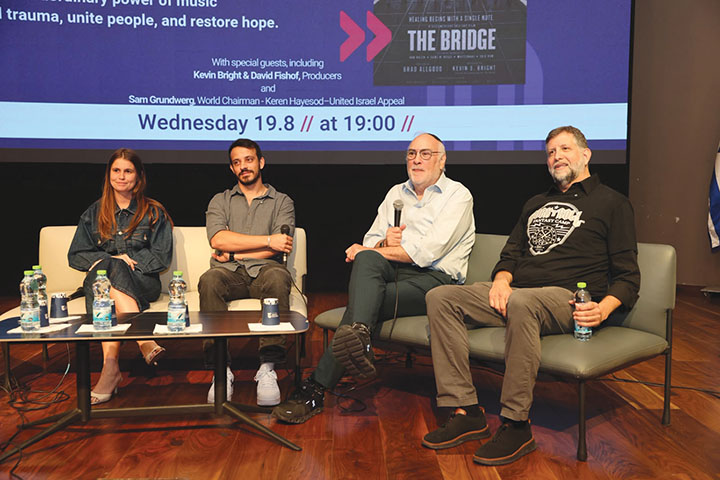
(left to right) Valeria Dvorkin, Bar Rudaeff, David Fishof, Sam Grundwerg at premiere of “The Bridge”
Sagi Arad, a lawyer who teaches music, helped find musicians. When he was told they still needed a bass player, Arad told his wife he would find someone. “She’s looking at me like I’m an idiot,” Sagi Arad said. “She says, ‘Just put your name, it’s okay. You can go. It’s okay.’ So I did, I put my name in and that’s how I got to this amazing delegation and met these guys.” Singer Valeria Dvorkin found out about the opportunity when a friend sent her the flyer.
On Oct. 7, guitarist Ben Rudaeff woke in Tel Aviv to alarms and called his father, Lior Rudaeff, who had gone out to help defend Kibbutz Nir Yitzhak. Lior did not answer. The family knew Lior had been hurt but did not know what had happened to him. “The feeling after Oct. 7 and up until now is like we’re still in Oct. 7,” Rudaeff said. “We need to find closure. I think music really helped me cope. It pulled out a lot of feelings I was, I think, repressing at some point.”
Raz Shifer had been at the Nova festival on Oct. 7. Under rocket fire and hunted by terrorists armed with grenades and AK-47s, Shifer barely escaped. Several of her friends were murdered and abducted. “I didn’t sleep or eat for a few days afterward,” Shifer said. “I was in shock.”
Singer Valeria Dvorkin spent about 25 hours alone at her home in Nir Am as fighting took place close to the house. The night before Oct. 7, she had sung at a local pub as a friend celebrated his birthday there. That friend was killed the next day. “Something like 50 people that I know and love and knew in my life,” Dvorkin said in the documentary. “The most happy place became very sad.”
At Kibbutz Magen, Arad grabbed his gun and equipment after terrorists breached the fence. Arad said he saw 30 to 40 people outside and fought for seven hours while his wife and daughters stayed in a safe room. Arad could not play or listen to music for at least a month after Oct. 7.
Israeli guitarist Ben King spoke about how he had been coping with the trauma of the Oct. 7 attacks up until that point. “Talking about the events to some extent helps, but there’s no fix,” King said in “The Bridge.” “There’s no cure.” At his apartment, King and his wife hid in the safe room. Terrorists entered and set the apartment ablaze. King and his wife endured the smoke and heat until the IDF rescued them after more than 12 grueling, uncertain hours. The entire place burned down around them. The only thing salvageable from the rubble was a piece of King’s guitar — a volume control knob. “This is a symbol,” King said in the documentary. “Music hasn’t gone. You can still control the volume.”
In March 2024, Creative Community for Peace held an event for the Israeli musicians, “Rocking Together for Hope.” As he talked about his work, Fishof looked like a kid raving about his Christmas gifts.Camp musical director Britt Lightning — guitarist for the band Vixen and daughter of an Israeli — played “Hatikvah” on electric guitar in the style of Jimi Hendrix.
The bands picked up their instruments and got set for their first public performances. There was some hesitance in their faces but a sense of relief and accomplishment washed over them as they played classic rock hits. The final song was the Beatles’ “With a Little Help from My Friends.” By the final chorus, Grundwerg was swaying and singing with then-Consul General to Los Angeles Israel Bachar, along with David Renzer, founder of CCFP.
Fishof invited The Journal to Third Encore Studios in the San Fernando Valley to see the Israelis rehearse. Some of them stood outside talking and blowing off steam. Some were in no mood to talk. Evan Stanley, son of Kiss guitarist Paul Stanley and a musician in his own right, was one of the mentors working with the Israelis. Members of A Perfect Circle were rehearsing nearby.
Prior to Rock Camp, Fishof had withheld one part of the agenda from the paying campers and the featured rock musicians: none of them had been told the Israeli delegation was joining them at camp.
“I was afraid that if I told the campers in advance about the Israelis … all I needed was to have one guy who says ‘I didn’t pay money to come to camp with a bunch of Israelis’ and opens his big mouth and makes noise,” Fishof said. “So I was prepared for that person, I would have paid for his plane tickets, would have given them a refund and sent them home.” The Israelis were fully embraced by their fellow campers. Fishof had the same concern about the featured musicians. Fishof and Grundwerg introduced the Israelis. When the introduction ended, they stood, applauded and welcomed them. That hypothetical big mouth guy? He didn’t exist. Fishof did not have to issue one refund.
“We’re standing on stage, you see all these campers applauding,” Arad said in “The Bridge” about the first day of camp. “I almost cried when that happened. This is one thing I won’t forget.” At night, they’d play acoustic jams together near at the bar at Loews Hollywood Hotel. “We didn’t get any negative experience from the other campers or the rockers,” Rudaeff said.
On Friday March 15, the Israelis played with bassist Michael Anthony of Van Halen at the camp’s North Hollywood base. Everyone in the first band looked to Anthony through the first chorus, but loosened up as they played. Fishof was the biggest cheerleader in the room.
For Rudaeff, meeting drummer Tommy Aldridge was a big moment. “My dad really loves old school rock and roll music,” Rudaeff said in “The Bridge.” “He really liked ’80s rock, like Deep Purple, Bon Jovi, Foreigner, Ozzy Osbourne. So jamming with Tommy was a dream come true.” Aldridge had played with Ozzy Osbourne and Whitesnake.
On the afternoon of March 17, at the Whisky a Go Go, Skid Row’s Sebastian Bach bantered with Shifer onstage, with her bandmates in position. Shifer wore a T-shirt bearing the image of her friend Romi Gonen.
“She’s kidnapped by Hamas in Gaza right now,” Shifer told Bach and the crowd. “And this is for her.” Bach looked solemn as the anthem played and belted out a duet of “18 and Life” with Shifer and her Israeli bandmates.
The final show was a few hours later at the Viper Room. The venue was packed. The Israelis played songs by Black Sabbath, Alanis Morissette, the Beatles and Israeli rock band HaYehudim’s “Od Aron Echad,” an upbeat rock anthem. “The most exciting part about performing in the Viper Room? We did a Hebrew song,” Rudaeff said in “The Bridge.”
Then Tuval spoke about his brother Yotam. He had learned from hostages who were released from Gaza that Yotam had quietly continued “drumming” and making rhythms on objects while captive in Hamas tunnels. He said that Hamas had taken Yotam’s freedom, but those terrorists could not take percussion from him.
When Tuval stopped speaking, the room was silent for a beat before a respectful applause. The band started playing Foo Fighters’ “Hero,” which opens with a dramatic drum solo. Tuval is an exceptional, confident drummer. Fellow campers and audience members shed tears as they watched his face, focused on playing but everyone knew he was thinking of his brother. Rudaeff played guitar on the song.“He played it to his brother,” Rudaeff said. “I played it to my dad.”
The post-camp return to Israel brought the musicians back to their lives. Rudaeff said the euphoria lasted a few weeks.Dvorkin said that camp “just opened me.” Fishof and Grundwerg went to Israel and visited members of the group later in 2024. Fishof wanted to get them into a room together again.
Fishof contacted Academy Award-nominated songwriter Diane Warren. She sent Fishof lyrics for a new song, “Prayers for This World,” in 20 minutes. The musicians reunited in Israel to record it. The song plays over the end credits.
Fishof showed an early cut of the documentary to his friend Kevin S. Bright, who was executive producer and director on “Friends.” “I said to [Fishof] it’s just way, way too long and it needs some things that are missing,” Bright said. “So the best thing I can give you is not advice. I’ll fix the film for you for nothing.’” Bright came aboard the project. Brad Allgood directed and edited.
“We weren’t trying to make a political statement,” Bright said. “We’re trying to tell a human story about what happens. How do you deal with trauma? How do you come back from something that’s so devastating as this?”
Fishof thinks “the biggest issue we Jews have in America is what can we do? We want to do something. We all want to do something. So for me, I was able to do something. For me, it was the greatest thing I’ve ever done,” Fishof said.
On Aug. 19, “The Bridge” premiered at the Menachem Begin Heritage Center in Jerusalem. Los Angeles screenings are planned for October. U.S. Ambassador to Israel Mike Huckabee attended the Jerusalem premiere and spoke to the audience afterwards. “As long as I have lived, music has been a part of my life,” Huckabee said. “To the members of the cast who are here tonight that are going to be part of the discussion: God bless you. What an incredible gift he gave us tonight.”