
fbpx

August 17, 2026

Entryism and Jew Hatred: The Case of Doctors Without Borders

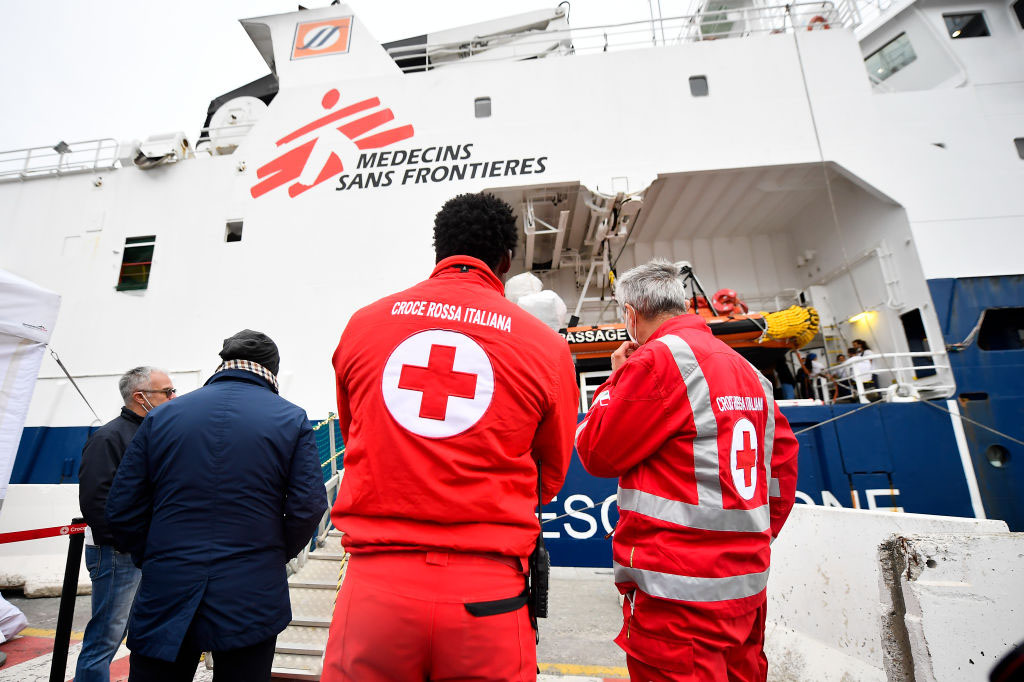
In 1995, Muslim Brotherhood leader Yusuf al-Qaradawi addressed supporters in Ohio with a prediction. The West, he stated, would not fall “through the sword” but would collapse under quiet Islamist infiltration. Through the patient, legal work of building influence inside a society’s institutions to undermine them – “we will conquer Europe, we will conquer America.” Not restricted to the Muslim Brotherhood, this strategy is often described as “entryism,” and Médecins Sans Frontières (MSF), or Doctors Without Borders, is a major example.

MSF was founded in France in 1971, based on the principle of treating those wounded by war without regard for identity or affiliation. MSF’s mission statement emphasizes combining aid with “testimony,” and highlighting independence and neutrality as essential to ensuring access and protection in conflict zones. Based on these principles, thousands of doctors joined the NGO, participated in its humanitarian activities around the world, and donated funds.

However, the principles have been systematically undermined, transforming the organization beyond recognition. MSF’s governing structure has been manipulated by individuals who refashioned MSF into a vehicle for anti-Israel, anti-Western, and often antisemitic propaganda.

Rima Hassan, now a member of the European Parliament from France, is a major example. Born in Syria, in a Palestinian camp, Hassan migrated with her parents, studied international law at the Sorbonne, and entered French politics. Journalist Nora Bussigny’s investigation describes a trajectory moving “from a troubled fascination with Jewish culture to a radical obsession.” Hassan was central in bringing Muslim Brotherhood-linked groups Lallab and FEMYSO into European Parliament frameworks. In 2024, 50 MEPs submitted a letter to the Parliament’s president expressing concern regarding Hassan’s links to the Brotherhood.

In July 2021, Hassan became a board member of MSF France, bringing her antisemitic agenda with her. Far from “neutrality,” she went on to parrot and amplify the lies of Israeli organ theft, a canard with roots in medieval blood libels, and the dog-rape hoax promoted by a Hamas-linked NGO. She called the October 7 massacre “legitimate,” and joined two Gaza-bound flotillas linked to Hamas.

Although Hassan ended her formal affiliation with MSF France after a year, her imprint on the organizational culture was substantial. It was during this period, which coincided with the Hamas-organized violent confrontations at Gaza’s border with Israel, that MSF’s neutrality and credibility on Israel disappeared. The once “highly respected” humanitarian organization became a leader in the propaganda war, promoting false accusations against Israel and the vocabulary of demonization, including genocide.

Alain Destexhe, MSF’s secretary-general in the 1990s, recently stated that “it would have been impossible at the time when I was secretary-general of MSF to be as biased as MSF is now in Gaza.” Whether Hassan was a major source of this destructive transformation, or her inside role accelerated existing trends, is unclear.

UK-based Dr. Ghassan Abu Sittah is another example of MSF entryism and demonization. Abu Sittah traveled to Gaza frequently for both hospital service and political advocacy. His virulent false accusations reached a crescendo on October 17, 2023, in a grotesque press conference under MSF’s auspices, when he “testified” that Israel was responsible for an explosion at al-Ahli hospital that supposedly killed hundreds. Amplified by MSF’s PR team, the claim appeared instantly in headlines and viral social media posts around the world. A few days later, the facts became clear – the explosion in the parking lot (not the hospital) was caused by an Islamic Jihad rocket that fell short, and less than 50 died. Neither MSF nor Abu Sittah have acknowledged the blatant lie or retracted the statements and social media posts.

In parallel, MSF became a leading source of demonization in social media posts. Between October 7, 2023, and January 2026, the NGO’s accounts repeated the libel of “genocide” 272 times – a term it did not use in any other global conflicts. In contrast, the Israeli hostages were the primary subject of only three posts.

Evidence documenting MSF’s internal culture of antisemitism is also surfacing, fostered by the entryism process beyond Rima Hassan and Abu Sittah. Michael Goldfarb, who worked for MSF-USA for 15 years, said that colleagues, knowing that he is Jewish, told him “Israel doesn’t have a right to exist.” Dr. Estrella Lasry, a consultant in MSF’s medical branch in Geneva who voiced objections to MSF’s deep anti-Israel bias was attacked for being “part of the Israeli propaganda machine”. Internal staff forum posts called Israel a “textbook example of…settler colonialism” and a “76-year-old crime scene.”

The antisemitism and demonization are amplified among top officials, including MSF International President Javid Abdelmoneim, (previously chair of MSF’s UK board and a media activist, including on Qatar-owned Al Jazeera), Tirana Hassan (not related to Rima) who became head of Doctors Without Borders USA after many years with Human Rights Watch, where she contributed to the anti-Israel campaigns, and Sana Bég, executive director of MSF Canada, and a former Al Jazeera staffer.

The hijacking of MSF from within is far from unique among NGOs claiming to promote moral and humanitarian agendas. The entryism is enabled by board members and major donors, including tax-exempt foundations and governments. The time for a fundamental rebuilding of the entire structure of the powerful NGO industry and a removal of the sources of Jew-hatred and anti-Westernism is long overdue.


Prof. Steinberg is founder and president of the NGO Monitor research institute, and professor emeritus of political studies at Bar Ilan University.

Entryism and Jew Hatred: The Case of Doctors Without Borders Read More »
Habibi City’s SWANA Isn’t a Region. It’s a Loyalty Test.

New York Magazine’s 31-page package on Arab and Muslim life in Mayor Zohran Mamdani’s New York, branded “Habibi City” (published on August 10, 2026) has already drawn condemnation for the obvious reason: it frames Zionism, the belief that Jews have a right to sovereignty and self-determination in part of their indigenous homeland, as a species of hatred alongside xenophobia and Islamophobia, while barely acknowledging that Jews are themselves an indigenous people of the region it celebrates.

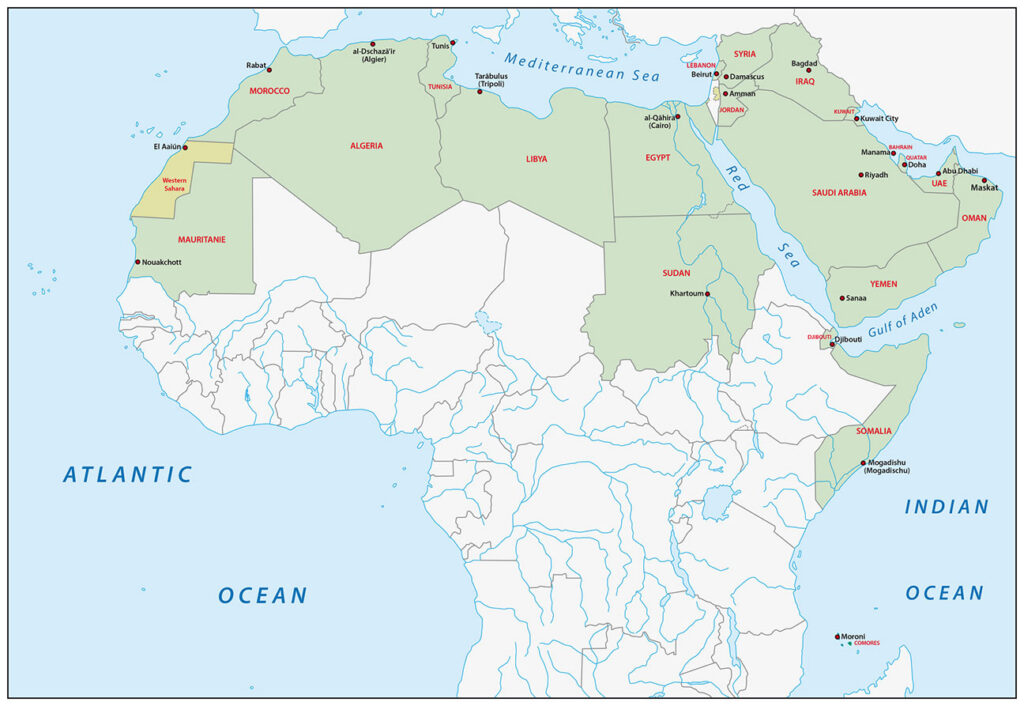
That criticism is correct, but it undersells the problem. The deeper issue is not that one magazine feature got Jews wrong. It is that the entire framework the piece relies on, the term “SWANA,” Southwest Asia and North Africa, was constructed to erase everyone whose history is inconvenient, not just Jews, and it does so while posing as scholarship rather than what it actually is: a political loyalty test dressed up as geography.

SWANA presents itself as a neutral geographic term, a more accurate replacement for “Middle East,” which admittedly carries its own colonial baggage. But geographic accuracy is not what the term serves. In practice, “SWANA,” particularly as promoted in the “Habibi” piece, functions as a cultural and political identity, one built around shared grievance against the West and against Israel, and it absorbs into that identity peoples who have almost nothing in common except having once lived under Arab or Islamic rule. This is not new. It is an NYC diaspora version of a much older project.

In the region SWANA claims to describe – Arabization and Islamization were not gentle processes of cultural diffusion. They were conquest, followed by centuries of legal, linguistic, and religious coercion that steadily erased the region’s actual indigenous populations.

Princeton professor and historian Bernard Lewis spent a career documenting this: the Copts of Egypt, once the overwhelming majority, reduced over centuries to a persecuted minority in their own homeland. The Assyrians and Chaldeans of Mesopotamia, speakers of Aramaic, the language of the region before Arabic arrived, pushed to the brink of extinction. The Berbers of North Africa, the Kurds of the Fertile Crescent, the Baloch of the Iranian plateau, all absorbed, marginalized, or violently suppressed by whichever Arab or Persian nationalist project happened to be dominant at the time. Jews were one indigenous people among several who were conquered, subordinated under dhimmi status, persecuted, and periodically expelled. The Ottoman millet system that “Habibi City” romanticizes through Café Barzakh’s salon decor was not pluralism. It was a hierarchy that assigned each religious minority its permitted place, always beneath the ruling faith.

“SWANA” repeats that erasure by different means. It takes a region defined by irreconcilable internal differences: a Copt who fears the Muslim Brotherhood has nothing in common politically with an Egyptian Islamist, a Baloch nationalist executed by Tehran shares no cause with the regime that killed him, and folds them into a single “cultural ecosystem” defined by opposition to Israel and the West. The SWANA category touted by NY Magazine holds together only because it quietly excludes anyone whose actual history would break the consensus. That is not an accident. It is the mechanism, and it is the same mechanism colonialism has always used: define the group, then decide who is permitted to belong to it.

Look at who “Habibi City” includes, and how. Iran appears in the piece as a source of nightlife branding, bonfire-jumping mayors, Persian New Year parties in Williamsburg bars. What the piece does not mention is that most Iranian-Americans, especially the large Los Angeles diaspora, are fiercely opposed to the Islamist regime that controls their homeland, and many are among the most pro-Israel constituencies in the country. The Islamic Republic executes Baloch and Kurdish dissidents with regularity and represses Ahwazis in the country’s southwest. None of that fits the SWANA branding. So, none of it appears in “Habibi City.”

The same selective inclusion applies closer to home. Mizrahi and Sephardi Jews, whose families lived in the lands now called Syria, Iraq, Egypt, Yemen, and Iran for millennia before being expelled in the twentieth century, are SWANA by any honest geographic definition. They do not appear in “Habibi City” as members of the community it describes, because their history complicates the story the piece wants to tell (and sell). A Syrian Jewish New Yorker whose family was driven from Aleppo is, geographically and ethnically, exactly the kind of person the acronym claims to represent. Politically, however, he is inadmissible.

This is the pattern worth naming plainly: SWANA is not a description of a region’s peoples. It is a membership test, and the price of admission is agreement on Jews and Israel. Pass that test and your grievances count, your culture is celebrated, your restaurants get written up in New York Magazine. Fail it, whether you are a Mizrahi Jew, a pro-Israel Iranian, a Baloch nationalist, or a Copt who blames Islamist mobs rather than Netanyahu for his community’s suffering, and you disappear from the story entirely, no matter how indigenous you are to the region.

The irony is that “Habibi City” markets itself as an act of reclamation, a pushback against decades of Western caricature, a chance for the region’s diaspora to finally tell its own story on its own terms. But a coalition that can only cohere by excluding its own unique groups and dissidents is not reclaiming indigeneity, let alone telling an honest story. It is performing the same erasure that Arabization and Islamization performed on the ground in the MENA for centuries, relocated now to Brooklyn supper clubs and dressed up as progress.

The real story of the Middle East and North Africa is one of astonishing ethnic diversity ground down by centuries of conquest and forced homogenization, a story in which Jews, Assyrians, Yazidis, Copts, Kurds, Amazigh, and Baloch all have a claim to indigeneity that predates the Arab conquest and the spread of Islam by centuries.

The real story of the Middle East and North Africa is one of astonishing ethnic diversity ground down by centuries of conquest and forced homogenization, a story in which Jews, Assyrians, Yazidis, Copts, Kurds, Amazigh, and Baloch all have a claim to indigeneity that predates the Arab conquest and the spread of Islam by centuries. New York Magazine had the material to tell that full story. It chose instead to build a far smaller, much more political one, and to cast everyone that homogenization left out, starting with the Jews, as the problem.


Micha Danzig is an attorney, former IDF soldier, and former NYPD officer. He writes widely on Israel, Zionism, antisemitism, and Jewish history. He serves on the board of Herut North America.

Habibi City’s SWANA Isn’t a Region. It’s a Loyalty Test. Read More »