fbpx

July 1, 2025

No Ceasefire With Tyranny: Stop Appeasing the Regime

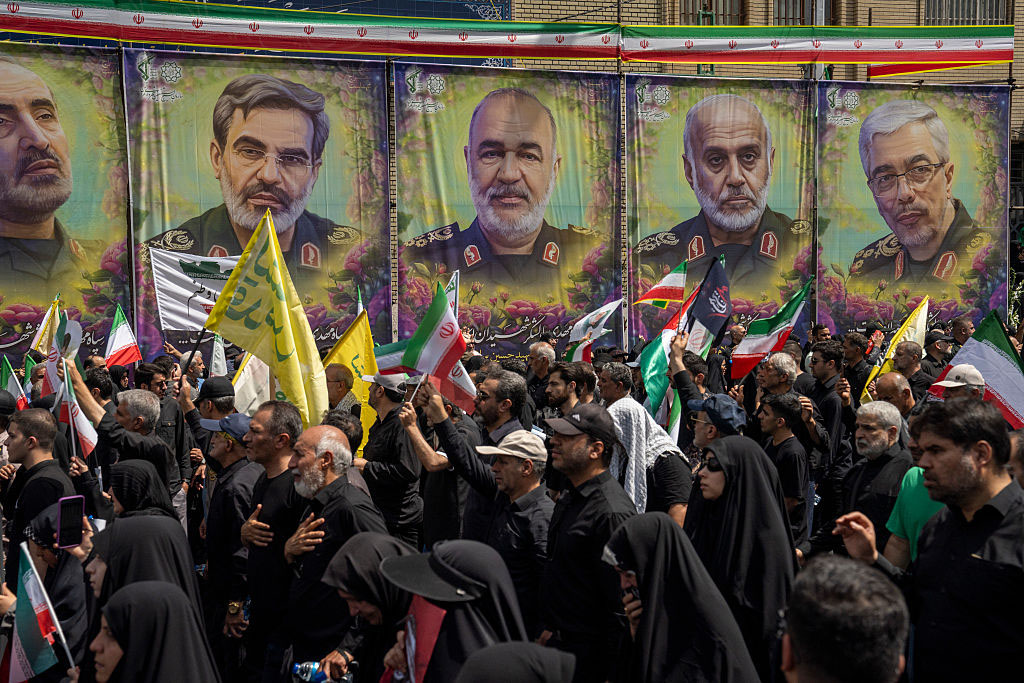
A ceasefire was announced between Israel and the Islamic Republic of Iran — brokered by President Trump and reluctantly accepted by both sides after days of intense airstrikes. But the ceasefire is fragile. Less than an hour after it was announced, the Iranian regime launched a barrage of missiles into Beersheba, killing at least five civilians and injuring over twenty more. And yet, shortly after, Israel — under pressure from Trump — reportedly turned its fighter jets around, halting further strikes on Iranian targets.

So what’s really going on?

According to Trump and his allies, the goal was a tactical victory: damage Iran’s nuclear infrastructure, avoid a broader regional war, and gain diplomatic leverage without U.S. boots on the ground. A short, sharp campaign with a clean exit. But what many of us see is something else entirely: political theater. An effort to declare “mission accomplished” while leaving the core threat — the Islamic Republic regime — intact.

And what’s worse: it may not have even worked. Despite initial claims that the nuclear sites were “obliterated,” U.S. intelligence now suggests the damage may have been far more limited. Satellite imagery shows destruction at key sites like Fordow and Isfahan, but not total incapacitation. Enrichment infrastructure may have survived. Uranium stockpiles appear untouched in some locations. The program may be delayed by months — not years. Which means the regime could rebuild. And quickly.

Meanwhile, the Iranian regime has turned its attention inward. As always.

For the first time in years, the people of Iran had real hope. Hope that the regime might finally fall. Hope that their voices — silenced for over four decades — were finally being heard. Across multiple cities, Iranians began taking to the streets. In some areas, they chanted boldly against the regime. In others, they moved cautiously, aware of the danger. The momentum was building — not yet a full-blown revolution, but the most significant domestic defiance since 2022.

But it wasn’t enough. Not yet.

The regime’s domestic enforcers — especially the Basij, a volunteer paramilitary militia under the control of the IRGC — were still intact. The Basij are infamous for violently crushing dissent: beating, arresting, and even killing protesters in the streets. And they were ready. Within hours, they were deployed to snuff out these early signs of uprising.

And that’s the real tragedy: the war ended too soon.

President Trump halted Israel’s air campaign just as its momentum was beginning to destabilize the regime’s military grip — including the IRGC infrastructure that empowers and protects the Basij. If those strikes had continued even a few days longer, the Iranian people might have had a real opening. A fighting chance. A window to rise up before the regime could regroup.

Instead, that moment was cut short. And the people — once again — were left to face their oppressors alone.

In the wake of the ceasefire, the regime passed sweeping new laws labeling dissent as “collaboration with hostile states,” especially Israel. Penalties have been expanded. Trials are mbeing fast-tracked. At least several executions have already taken place. A digital blackout continues across large swaths of the country. Dozens — likely hundreds — have been arrested, many of them falsely accused of being Mossad agents or Zionist spies simply for speaking out, sharing videos or expressing hope that the regime might fall. The very people who believed, for once, that the world stood with them are now being hunted.

This is what “stability” looks like under the Islamic Republic.

It may feel like calm to the outside world, but inside Iran, it’s anything but. It’s a temporary halt in missile fire abroad, so the regime can resume its war against the people of Iran — through arrests, torture, executions and silence.

The reality is, this has never just been about a geopolitical chess game between Israel, the U.S., and Iran. This has always been about the Iranian people — and their right to live free of tyranny. It has always been about the fight for democracy, for secular governance, for a future not dictated by unelected clerics or international appeasers.

The reality is, this has never just been about a geopolitical chess game between Israel, the U.S., and Iran. This has always been about the Iranian people — and their right to live free of tyranny.

And to those who ask, “What comes next if the regime falls?” — the answer is simple: Let Iranians decide.

The people of Iran do not need a foreign-backed puppet or imposed solution. They need space to breathe. They need international support, not intervention. And among the options for a transitional figure who has long committed to democratic reform, Crown Prince Reza Pahlavi remains the most consistent, legitimate, and viable.

Reza Pahlavi has made clear, repeatedly, that his only goal is to assist the Iranian people in transitioning to a secular liberal democracy — one rooted in free elections, the rule of law, and pluralism. He has stated publicly that he does not want power — he wants process. His appeal is rooted not in nostalgia, but in clarity. He offers a future where Iran belongs not to mullahs, militias, or any ruling elite — but to its people.

That vision — of Iranians choosing their own government, without fear or force — is what terrifies the Islamic Republic most. It is why they try to silence him. And it is why we must amplify him.

Throughout this conflict, both Israel and the U.S. gave signals — through actions and rhetoric — that they had no intention of allowing this regime to remain standing. Everything about the campaign — even its name, Operation Rising Lion — made that clear. The operation’s title referenced the Lion and Sun emblem from Iran’s original flag, a symbol long associated with national pride and liberation from tyranny. It was a message to the Iranian people: that this time might be different. That the regime’s days were truly numbered.

But instead of a final roar, the regime remained.

What we are witnessing is not peace. It is a pause. A pause that allows the regime to regroup, rearm, and retaliate against its own citizens. A pause that gives Western powers political cover while the regime tightens its grip. A pause that, if left unchallenged, will once again extend the life of one of the world’s most brutal theocracies.

We cannot afford to fall for this again. The international community must stop legitimizing a regime that survives only through terror. If we truly believe in democracy, in women’s rights, in freedom of speech, in self-determination — then we must stand with Iranians who are risking everything to claim those values for themselves.

There can be no ceasefire with tyranny.

No deals with executioners.

No peace built on the backs of those begging for liberation.

The Islamic Republic cannot be allowed to remain standing — not after all the blood it has spilled, not after all the lies it has told, and not after all the hope it has tried to crush.

End the regime. Let Iranians choose.


Matthew Nouriel is an Iranian Jewish LGBTQ advocate and activist based in Los Angeles. He serves as Director ofCommunity Engagement for JIMENA (Jews Indigenous to the Middle East and North Africa) and is active in public discourse on Middle Eastern human rights, antisemitism, and identity.

@MatthewNouriel (Instagram & Twitter)

No Ceasefire With Tyranny: Stop Appeasing the Regime Read More »
Brooklyn Nets Select Two Israeli Players in NBA Draft

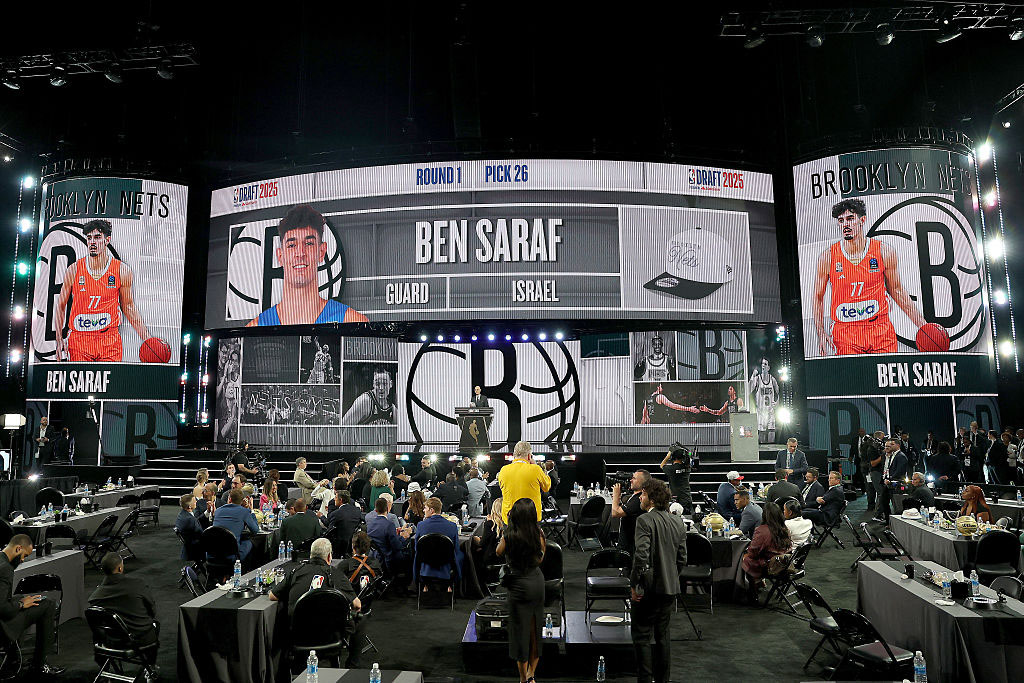
The Brooklyn Nets drafted Israeli guard Ben Saraf with the 26th pick in this year’s NBA draft, immediately followed by Israeli-American forward Danny Wolf at number 27.

This marks the first occasion two Jewish players have been picked in the same round by one NBA franchise, and only the second time ever that two players holding Israeli citizenship will be teammates in the league. Brooklyn held a record-setting five first-round selections during this year’s draft event, hosted at their home court, Barclays Center.

Saraf, 19, was unable to attend the draft in person because he is still competing overseas with his German team, Ratiopharm Ulm, in the Bundesliga Finals.

They are only the second set of NBA teammates to have Israeli citizenship. The first Israeli teammates in the NBA were Jordan Farmar and Omri Casspi on the Sacramento Kings in 2016.

Wolf, 21, sat with his family members at Barclays Center. During a live TV interview, when his mother referred to the Nets as a “New York” team, Wolf quietly corrected her by mouthing the word “Brooklyn.” His brother Jake was in tears — a quick shot of Jake shown on the broadcast has since gone viral.

Ben Saraf

The 6’6’’ Saraf made an impact at the 2024 Federation Internationale de Basketball (FIBA) Under 18 EuroBasket (also known as the European Basketball Championship), where he earned MVP honors an average of 28.1 points per game, along with 5.3 assists, 5.0 rebounds and 4.0 steals. He previously earned Rookie of the Year honors in the Israeli Premier League and averaged 12.8 points and 4.6 assists in EuroCup play for Ulm. He is the son of former Israeli professional basketball players Yadid Saraf and Ella Amir. His father played in Bnei Herzliya in the Israeli Basketball Premier League and his mother played for the Israeli National Team.

Danny Wolf

Wolf, a 7-footer originally from Glencoe, Illinois, near Chicago, transferred to Michigan after two seasons at Yale. He led the Wolverines to the Sweet 16, averaging 13.2 points, 9.7 rebounds, 3.6 assists, and 1.4 blocks per game, and shooting 33.6% from three-point range. In 2024, Wolf helped lead Israel’s U20 national team to a silver medal.

Wolf, who keeps kosher, celebrated his bar mitzvah at the Western Wall and attended a Jewish day school until fifth grade.

He described experiencing antisemitic hostility during his time at Yale, especially after the Oct. 7 attacks. He specifically recalled one game at Dartmouth when a crowd of roughly 80 people displayed Palestinian flags in the stands.

At the post-draft press conference, Wolf was asked about his connection with Saraf.

“It’s crazy, it still hasn’t really hit me yet,” Wolf said. “But I was supposed to play on the U-20 team with him when I played in 2023, and then ultimately he decided to play on the U-18 team. But I really got to spend some time with him there. We’ll communicate here and there over social media. From what I’ve heard, he’s an unbelievable kid. Just watching him, he makes the game look so easy, effortless. It’ll be really exciting and fun and a great opportunity to be with him and grow with him.”

It’s crazy; it still hasn’t really hit me yet.” – Danny Wolf

The International Jewish Sports Hall of Fame celebrated the milestone following the draft. “Jewish hoops history made in the 2025 NBA Draft! Back-to-back picks for two rising stars to the Brooklyn Nets!” The Hall of Fame wrote on Instagram. “From Israel to Michigan, these guys are making moves, and we’re pumped to watch them shine in the league. Mazel tov, Ben and Danny!”

Saraf and Wolf are expected to debut for the Nets at the NBA Summer League in Las Vegas, with each projected to earn approximately $12 million across four seasons.

The Nets have played in Brooklyn since they relocated from Newark, New Jersey in 2012.  New York’s Brooklyn borough alone has nearly 500,000 Jewish residents.

Brooklyn Nets Select Two Israeli Players in NBA Draft Read More »

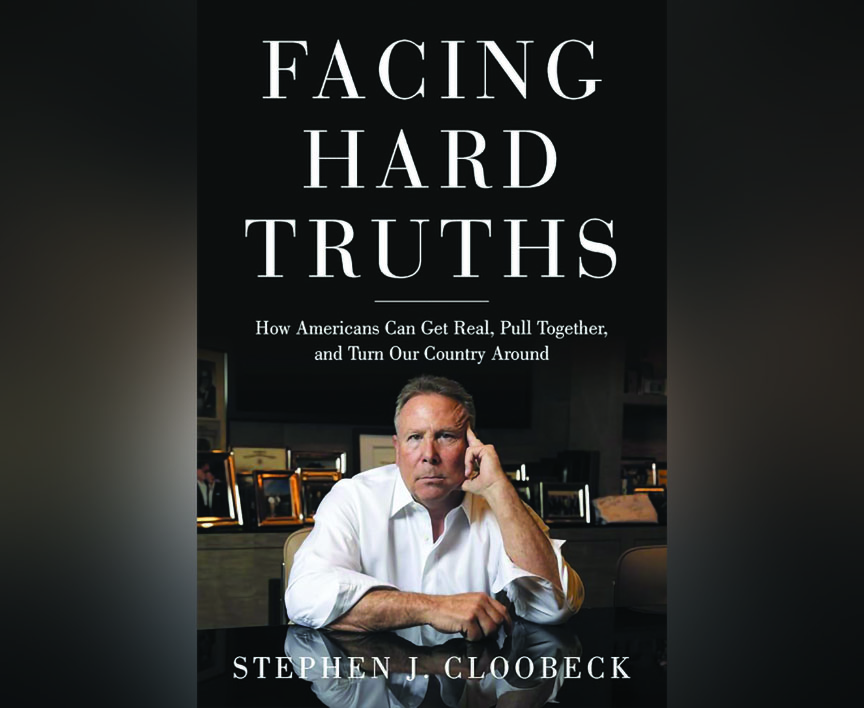
‘Facing Hard Truths’ — Stephen Cloobeck Shares Plan to Become California’s Next Governor in New Book

Stephen Cloobeck’s earliest California politics memory is when actor Ronald Reagan became governor in 1967. He was five at the time. Almost six decades later, the hospitality industry executive writes in a new book that California needs another big shakeup in Sacramento. 

In “Facing Hard Truths: How Americans Can Get Real, Pull Together and Turn Our Country Around,” he introduces himself and his plan for California with seven principles, including: “Life is tough — Get a Helmet,” “The Best Economies Benefit Everyone,” “Leadership Is About Competence, not Celebrity,” “True Success Requires Putting ‘We’ before ‘Me.’”

Cloobeck is a lifelong Democrat best known for being the founder and chairman of Diamond Resorts International (he sold the company to Apollo Global Management for $2.2 billion in 2016). He entered the 2026 governor’s race in November 2024. In the book, he questions the judgement of Democratic Gov. Gavin Newsom as much as he goes after the temperament of President Trump. Cloobeck’s business success often invites comparisons to Trump, which he rejects. “I’ve got values. He doesn’t,” Cloobeck said. “I pay my contractors. He doesn’t. I create value. He destroys value.” As for diversity, equity, and inclusion (DEI) policies, Cloobeck says “Mine are discipline, education and integrity. His are Donald Jr., Eric and Ivanka.”

One of the first noticeable things about Cloobeck’s affect is that he’s a clever speaker. His blue campaign hat shows California’s state bear facing right — a nod to what Cloobeck sees as Sacramento veering too far left. One of his proposals, “California Performance and Results” (or CPR), would publish letter grades for all state programs. He is also intent on having cash bounties for any tips that expose missing funds intended for homelessness, COVID relief and other mismanaged state programs. He thinks that California’s population could grow from 39 to 44 million if something is done to address “rising unemployment, failing schools, increasing retail theft, the nation’s highest poverty rate, a health-care crisis and an enormous budget gap in the tens of billions of dollars.” 

“Facing Hard Truths” also includes its moments of vulnerability. He recalls dropping a tray of glasses while working as a busboy as a kid, and being told, “You break it, you pay for it.” His father called him a “lard-ass,” and a college advisor said he’d always be “a crappy writer.” Cloobeck writes about owning up to public mistakes, including one during his tenure as chair of Nevada’s State Athletic Commission. 

“I regret allowing slap fighting in the state of Nevada, and knowing what I now know, I would decide differently.”  

One of Cloobeck’s most personal pages describes caring for his father through Alzheimer’s disease and the lessons he took from their relationship. 

“We do ourselves a disservice when we equate discipline with punishment,” Cloobeck writes. “They are not the same. Discipline is about establishing healthy boundaries and useful expectations. And that’s something our parents, our schools, and our society could do more to instill.”

The late U.S. Senator Harry Reid (D-Nev.) remains Cloobeck’s political lodestar. Reid served in the Senate from 1987 to 2017, including eight years as majority leader. During that time, he led the efforts to pass the Affordable Care Act, Dodd–Frank Financial Reform and the 2009 American Recovery and Reinvestment Act. He had earlier served as a U.S. Representative, Nevada Lieutenant Governor, and chair of the State Gaming Commission. Reid died in 2021.

One of the book’s starkest moments involves Cloobeck’s observation of how the nature of politics has changed.

“Back in 1960, just a sliver of the political ads fielded by presidential candidates, 10%, were negative attacks. Fast-forward to 2012, and the situation was reversed: Only a sliver of ads, 14%, were inspiring and positive. All the fanaticism, outrage, and performativity in politics has rendered our governing institutions increasingly dysfunctional. U.S. Congress, for instance, has become notorious for soap-opera dramas, not progress toward helping the American people. When you have extremist members of the Freedom Caucus appealing to their most extremist followers by killing off useful legislation that members of their own party championed, you’re just not going to get much done. And Congress, in recent years, hasn’t: In 1975, our national legislative body passed 649 laws; by 2023, that number had dwindled to just twenty-seven.”

Ultimately, Cloobeck is positioning himself as someone who won’t take criticism personally, but also isn’t afraid to call out problems when he sees them. For example, he took on former Vice President Kamala Harris in our interview. Cloobeck calls her “tone deaf” and attributes her statewide success to being merely “battlefield-promoted.” Harris is also considering running for governor in 2026. 

“She called me on May 24th, 2019, I spoke with many candidates [for the Democratic nomination for president in 2020],” Cloobeck said. “I was a donor, and I told her, ‘you’re not ready for prime time.’ She hung up on me. That was the last time I talked to her.” He doesn’t consider that kind of talk to be the discourse he laments, but rather, another set of hard truths to face. 

“We must all show integrity, standing up for what is right even when doing so exposes us to discomfort and risk,” Cloobeck writes in the final pages of his book. “We must all collaborate better across political divides, and open ourselves to difficult but honest conversations in which we hear each other out and work through disagreements. We must all uphold the basic rules, laws and conventions that allow for the healthy, stable society we too often take for granted. We must all fight hard for economic inclusivity, knowing that we do well when our neighbors are also prospering.”

Cloobeck mentions that if he were to win in 2026, he would be California’s second Jewish governor — the first was Washington Bartlett in 1887, who was also the first Jewish governor of any U.S. state. Cloobeck grew up in Encino, had his Bar Mitzvah at Stephen Wise Temple, attended Camp Alonim and earned a degree in psychobiology from Brandeis. In 2024 he trademarked the slogan  “Don’t F— with the Jews.” It can be seen on hats throughout Los Angeles’ Jewish community over the past year-and-a-half. It’s also the title of a yet-to-be-released song by his friend, comedian Jeff Ross (Ross performed it at “The Roast of Antisemitism” show filmed at The Saban Theater in June 2023). During Rosh Hashanah in 2024, Cloobeck’s synagogue, The Temple of the Arts, renamed the stage at The Saban after his father, Sheldon H. Cloobeck.

During our interview, he was more than happy to weigh in about the news of the day affecting the Jewish community. 

“On Iran? Right now you cut off the head of the snake,” he said about Israel’s airstrikes on Iran’s nuclear sites. Cloobeck wrote in his book that when criticizing Israel, “some far-left voices veer into dangerous antisemitism, all while ‘canceling’ those who disagree with them.” On campus debates he writes, “Think of the phenomenon of establishing ‘safe spaces.’ Feeling victimized, young people on college campuses shield themselves from hearing other points of view, which in turn can limit their ability to pose critical questions and stand up for others around them.” 

That is the core of his book and his overall message. 

“We’ve got to move past the wedge issues, the ‘gotcha’ attacks, the unproductive ‘whataboutism,’ the media-baiting,” Cloobeck writes. “We’ve got to set aside the political theater, face hard truths and make decisions that might not please everybody all the time but that will set us right.”

‘Facing Hard Truths’ — Stephen Cloobeck Shares Plan to Become California’s Next Governor in New Book Read More »