
fbpx

April 1, 2025

He Must Go Free: Algeria Detains Acclaimed Author, Denies Lawyer Access

Algeria has charged as a terrorist Boalem Sansal, a former high-ranking Algerian government official, and its most internationally acclaimed writer since Nobel Laureate Albert Camus. Citing his publications and comments to journalists, Algeria has now denied him access to his lawyer Francois Zimeray, saying he is “too Jewish.”

Algeria’s shocking barring of French Jewish Zimeray from meeting his client comes at a time when diplomatic tensions between Algeria and France reached a new crescendo as Algeria refuses to receive 60 Algerian nationals subject to deportation from France for criminal acts and radicalization.

Algeria accuses France of issuing ultimata and forgoing existing procedural channels; France accuses Algeria of breaching international law. Ironically, in a direct rebuke to France, Algeria claims it acts only in the interests of its nationals while categorically denying Sansal access to his rights guaranteed either by France or Algeria.

As a rapidly expanding diplomatic crisis, the tensions between France and Algeria are of acute geopolitical interest to the United States. This coincides with the recent announcement by Sabri Boukadoum, Algerian Ambassador to the U.S., of three working groups tasked with deepening  security partnerships within the U.S Algeria Defense Cooperation agreement, signed in January after years of negotiation.

Algeria charged Sansal, a former engineer in the Ministry of Industry, under Article 87 of their Penal Code defining acts threatening Algerian national security, state integrity or the stability of Algerian institutions as subversion or terrorism.

The United Nations has observed this law is frequently abused to silence human rights defenders. While Algeria has been racked by jihadism, it is increasingly accommodating to quietist Salafiists who have strongholds throughout the nation including in Algiers where Sansal was detained.

Algerian-born Muslim, Sansal, 75, has penned novels including, 2084: The End of the World, and other searing critiques of the hypocrisy and totalitarianism of Islamism and its deepening, corrupt grip upon Algeria. Living in Algeria with his family, his books have been banned in Algeria since 2006.

As a Muslim Arab defying Islamism inside his native Muslim-majority Arab nation, he may soon pay with his life.

The United States needs to offer this intellectual immediate asylum and urgently needed medical care. As deterrent to all sponsors of Islamism and Islamist antisemitism, the U.S. must punish Algeria with sanctions. Many of the world’s leading literary voices, including representatives of PEN America, have appealed for his release

Eliminationist Islamist antisemitism is the central tenet of radical Islam and animates the world’s leading jihadist movements. Radical Islam is a key factor in the wars of the Taliban in Northwest Pakistan, ISIS in Northern Iraq and Hamas on October 7, 2023 in the Gaza Envelope. I have visited the aftermath of these conflicts, met with survivors and, most recently, provided medical testimony to the  British parliament of such Islamist antisemitism.

Sansal wrote the first Arab novel about the Holocaust, The German Mujahid. He wrote of the Arab-Nazi alliances, empathies and collaborations- and the entry point of Nazi ideology into Arab antisemitism which grew in the post- 9/11 Muslim majority and  diaspora communities.

While global experts appear comfortable denouncing far right antisemitism typified by Nazi and Neo-Nazi ideologues, Islamist antisemitism has been shielded by the machinations of Islamists who portray themselves as persecuted religious minorities both in secular liberal democracies and in Muslim majority nations.

They gain further succor by the potent political and judicial shield of Islamophobia mainstreamed since the Iranian Revolution launched the first charge of Islamist blasphemy on acclaimed author Salman Rushdie.

The war launched on Israel by Hamas has been denied and  distorted by the Islamophobic sentiments inverting Hamas into sacred victimhood.

While antisemitism is recognized as lethal to the Jewish people, Global Jewry and the Jewish State, and threatens all humanity, few understand non-Jews can also be targets of antisemitism, as in Sansal’s case.

Non-Jews who defend Jews, Israelis and all Judaism from antisemitism face crushing and sometimes lethal consequences. As an observing Muslim woman publicly writing and speaking about combating Islamism and lethal genocidal Islamist antisemitism for decades, I have been a target of virulent antisemitism.

As an American and British citizen, my governments guarantee my rights of expression wherever I speak, publish or broadcast, particularly the protections of Free Speech under the U.S. constitution.

For Sansal, the stakes are much higher.

Now held in a prison unit in an Algerian hospital, [QA1]  Sansal faces the full force of state-sanctioned Islamist antisemitism. Imprisoned, with his prostate cancer progressing, his elderly Algerian wife is powerless to intervene and his defense counsel is unable to see him. Sansal is now on hunger strike as a means of protest.

Algeria is aligned with Arab boycott nations. It has no diplomatic relations with Israel and Algeria enshrines anti-normalization laws. In some Arab nations, the crime of engaging with Israel can be punished by revocation of citizenship, imprisonment and death.

Following the Abraham Accords which neighboring Morrocco joined, Algeria closed its border and airspace to Morrocco, intensified its anti-Israel stance and in direct defiance deepened its ties with Iran.

Sansal, a citizen of France and one of the world’s leading intellectuals, must not be further victimized for the prowess of his ideals. He must go free.


Dr. Qanta A. Ahmed, Senior Fellow, Independent Women’s Forum; Life Member, Council on Foreign Relations @MissDiagnosis

He Must Go Free: Algeria Detains Acclaimed Author, Denies Lawyer Access Read More »
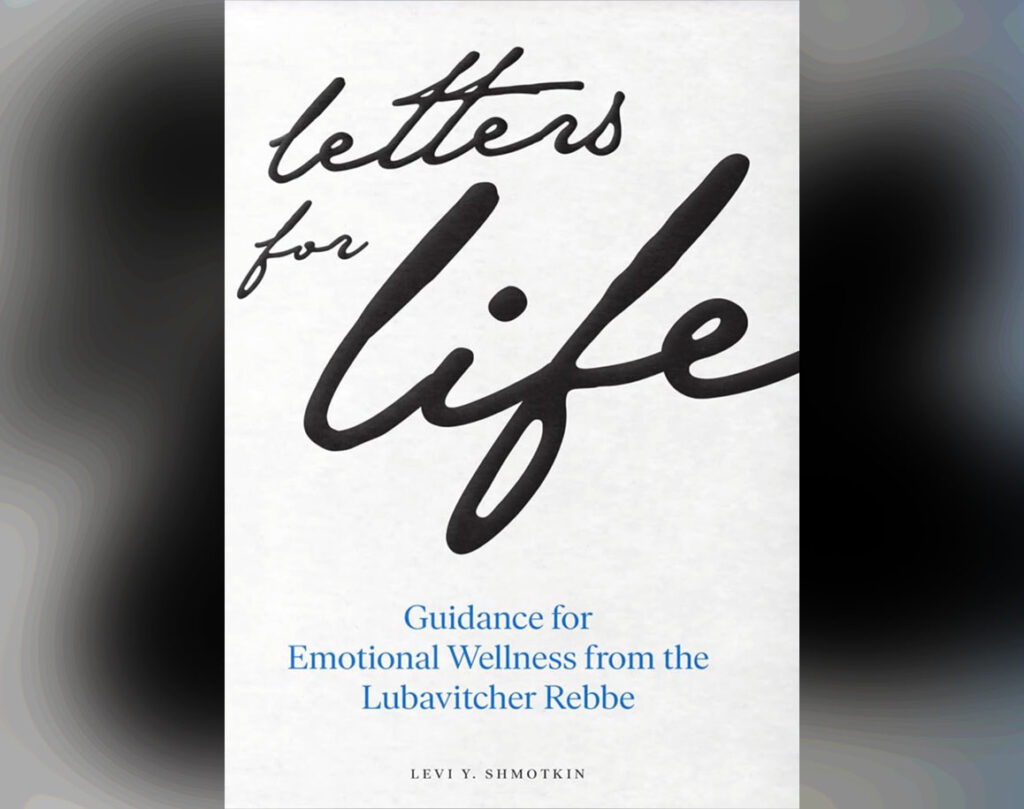
Author Researched 20,000 of the Rebbe’s Letters, Here’s What He Learned

Levi Y. Shmotkin didn’t set out to write a book when he began poring through the correspondence of the Rebbe,Menachem Mendel Schneerson (1902–1994). He started with a notebook. The notebook eventually became “Letters for Life: Guidance for Emotional Wellness from the Lubavitcher Rebbe.”

“I started reading his letters, written to real human beings going through real experience in life,” Shmotkin told the Journal. “I’m not just reading letters to someone else. Some of these lines are coming off the page and becoming alive to me.”

He described the research and writing phase as “much harder than expected.” Shmotkin first read the Rebbe’s letters years ago, before his Bar Mitzvah—it would become a daily habit. 

During his time in Yeshiva, Shmotkin had gone through a period of emotional numbness and disillusionment. It was then that he started rediscovering the Rebbe’s letters — not as lofty philosophy but as grounded guidance —he began jotting down insights that felt practically useful. Shmotkin re-read all 20,000 of the Rebbe’s published letters. During the next dive, he focused on about 2,000 that dealt directly with emotional struggle.

“I started taking down notes in a notebook, just literally notes of themes,” Shmotkin said. “I had about 10 or 11 themes that I had for myself, and then I started acting on them.”

Rather than organize the letters chronologically, “Letters for Life” is structured by theme. Each chapter centers on a recurring emotional or spiritual challenge — such as fear, doubt, identity or anxiety — and includes excerpts from the Rebbe’s letters, explanations, and suggested tools for action.

The turning point came when Shmotkin read a letter the Rebbe had written to a college student in distress. The Rebbe wrote back with a clear instruction:

“You are much too wrapped up with yourself, with your own emotions and feelings and aspirations. … The way to cope with such an emotionally charged situation is to stop trying to cope with it. You must get away from yourself and begin to think of others. It is time to begin an active participation in society; to give, and to give generously. The opportunities are many, and the need is great.”

Shmotkin told The Journal that he was “actually crying when I read this letter. The way to deal with such an emotionally charged situation is actually to not become more entangled … You’re part of a society, you have a responsibility to society. And slowly, when you think more in that direction, that’ll unwrap you from yourself.”

That insight sat with him for two years while the notebook sat dormant. Eventually, after returning to New York, he committed to finishing the project.

This past February and March, Shmotkin toured the West Coast, including stops in British Columbia, Washington, San Diego, and Los Angeles. He used the long drives to reflect on how the material was landing with readers. In Washington, he spoke about individual providence. There, Shmotkin said that the Rebbe wrote, “The belief that every individual Hashem looks after is isolated in the sense that it’s just about you — doesn’t matter your place in society, doesn’t matter your success, doesn’t matter your failure … he’s actively engaged in and present in” your life.

After that talk, an elderly man approached Shmotkin and said, “It took me over 80 years to realize this idea that Hashem wants me here.”

Shmotkin said the moment appeared to be transformative for the man. “He shared that for these decades he’d been possessed by thoughts like, ‘maybe I should be somewhere else, maybe I should become someone else …’ And it took him all these years to recognize this point: that Hashem wants him here.”

“He shared that for these decades he’d been possessed by thoughts like, ‘maybe I should be somewhere else, maybe I should become someone else …’ And it took him all these years to recognize this point: that Hashem wants him here.” – Levi Y. Shmotkin

Another idea that comes up in letter after letter is how people speak to themselves in difficult moments. Shmotkin said the Rebbe often reminded people that we’re not defined by our present state, and that potential is often buried beneath self-judgment.

“We shouldn’t assume that our capacity ends or is identified by whatever darkness we have now,” Shmotkin said, paraphrasing the Rebbe. “We’re bigger than that, we’re stronger than that … and if we only understand it and don’t say, this is who I am, but this is instead somewhere that I’m at now … that’s a big step towards health.”

In Chapter 10, he shares the Rebbe’s response to a woman struggling with agoraphobia and fear of flying. Shmotkin said most of her suffering came not from the fear itself, but from what he calls “the angst about the problem.”

He suggested she “try to think about it less, get active with other things, and consider that millions of people live with similar fears.”

That idea — addressing the person struggling with the problem, not just the problem itself — is one of the central themes of the book. Another, Shmotkin said, is learning to give people confidence that they can move forward.

“You have it in you, and sometimes that can bite, sometimes that can hurt,” Shmotkin said. “But if you care about the person and you’re saying it for their good … you don’t want to see them stuck and believing that they’re useless and they’re helpless and they’re powerless.”

The book also addresses the tension between Jewish identity and emotional wellbeing. After Oct. 7, Shmotkin said many Jews felt a rupture between their desire to blend in and the reality of being singled out.

“A lot of people said, ‘I worked so hard to integrate, and then I get singled out anyway,’” Shmotkin said. “The Rebbe’s letters argue that the real strategy is to double down on identity—especially through mitzvot.”

Shmotkin said the Rebbe grounded mental health not in vague belonging, but in repeated action — like lighting Shabbat candles or putting on tefillin.”

Shmotkin is quick to clarify that “Letters for Life” isn’t a definitive collection, but his own attempt to surface recurring themes. The book is 209 pages, with over 100 pages of endnotes and extended excerpts. While it draws deeply from thousands of letters, it is focused on practical solutions.

The book is careful not to present itself as a replacement for seeking professional help for mental illness. “Indeed, the Rebbe often clarified that his advice to one may not apply to another,” Shmotkin writes in the preface. Shmotkin is still getting used to being treated as an expert on a man who he never met nor received any letters from. But after half a decade of researching, and now driving 1,400 miles down the west coast to hear from readers directly, Shmotkin realized that readers don’t expect him “to say something earth-shattering.”

“I just need to say something from the heart that I’ve learned from the Rebbe,” Shmotkin said. Shmotkin described himself as someone with a tendency toward self-deprecation. But over time, he said that reflex began to feel like avoidance.

“When people are investing in you, with your ability to say something meaningful… they’re giving you the chance to say something that might actually help,” Shmotkin said. “Sometimes we need to be reminded of the basic, most fundamental truths. The things we know in our hearts—but get lost in our own world.”

“Letters for Life: Guidance for Emotional Wellness from the Lubavitcher Rebbe” is available on Amazon. More information about Levi Shmotkin’s book tour can be found on the book’s Instagram, @lettersforlifebook.

Author Researched 20,000 of the Rebbe’s Letters, Here’s What He Learned Read More »