Campus protestors demonize their own version of Zionism. It’s not the Zionism I inherited from my grandmother.
When I was young—perhaps six or seven years old—my grandmother made my older sister and me life members of Hadassah. A photo in one of my parents’ albums marks the occasion: my grandmother beams at the camera as my sister and I hold our membership certificates with broad grins, complete with missing teeth, on our faces. For my grandmother, this was a momentous gift. Not only was she giving us an affiliation with an organization to which she had devoted herself for decades, but she was also giving us the gift of Zionism.
I have thought of my grandmother often over the past year, as I have watched the disturbing explosion of antizionism across higher education—especially at Rutgers University, where I was a tenured full professor until a couple of months ago, but which I have now left to become a dean at Yeshiva University. I pursued a career in academia because I believe in the power of research and teaching to illuminate the full complexity of the human experience and the world around us. Yet, increasingly, higher education has been coopted by self-styled “activists,” whose purpose is not to understand the world but to change it to suit their own agendas. They often approach this task with a preconceived “correct” outcome, and they link their work especially with the task of supporting disadvantaged racial, ethnic, or economic groups. While this goal might sound lofty, it has a dangerous aspect: the politicization of knowledge sometimes leads these “activists” to willfully ignore evidence and to demonize those who stand in their way.
In the case of the anti-Israel protests on university campuses today, this politicization has taken the form of extreme, virulent antizionism. As the British sociologist David Hirsh has pointed out, “antizionism draws its own grotesque caricature of Zionism as a single, monstrous, universal evil, and it constructs a whole worldview, or ideology, in relation to that demonic fantasy of Jewish nationhood.” Increasingly, this demonizing caricature of Zionism has been normalized, with university leaders generally failing to speak out, either to correct the record or foster true dialogue within constructive, respectful bounds.
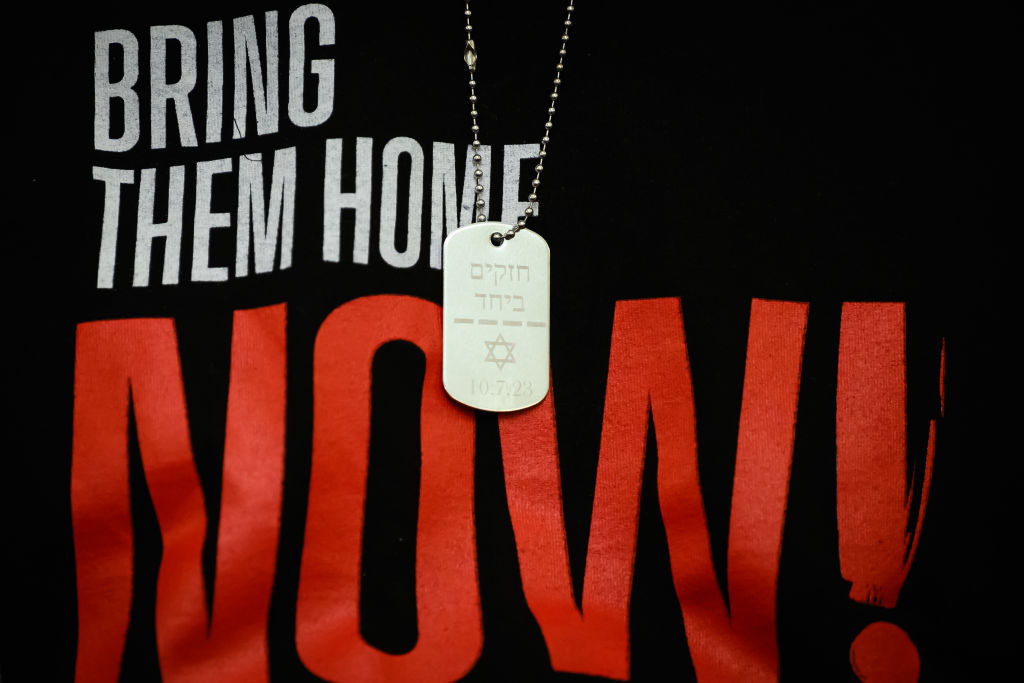
Campus protesters today have little interest in engaging with Zionism as a multifaceted, complex movement; instead, they adopt easy, social-media-ready slogans that paint all Zionists as racist oppressors and declare that Zionism—including Zionist students, faculty, and staff—must be eradicated from campuses. In the new academic year, we are seeing the intensification of calls for universities to cut ties with their chapters of Hillel, perhaps the largest Jewish student organization in the United States, on the grounds that Hillel supports Israel and seeks to connect Jewish students to their historic homeland.
For my grandmother, Celia Rubel, the Jewish people’s connection to Israel was of paramount importance. She and my grandfather had the work of Israeli artists on their walls and in large, glossy books on their coffee table. As a young girl, I often fell asleep on a cot in their living room while staring at an imposing copy of Leon Uris’s novel Exodus on the shelf next to me. My grandparents traveled to Israel twice, including once with a group from Hadassah. But my grandmother expressed her Zionism most clearly and bravely in her dedicated service to her local Hadassah chapter.
Born in 1910, my grandmother became active in Hadassah after she moved to Flushing—together with my grandfather, uncle, and mother, then in high school—in 1960. With the trauma of the Holocaust still fresh and the State of Israel yet in its infancy, my grandmother threw herself into her volunteer work. A tiny woman who worked as a part-time substitute teacher, my grandmother served terms as secretary, treasurer, and president of her Hadassah chapter at Flushing’s Temple Gates of Prayer, keeping meticulous records of her chapter’s activities in notebooks and in a special gray lock box. My grandmother had a nervous disposition that made it difficult for her to speak in public. When she had to address her chapter’s membership, she ensured she would be prepared by writing out every word of her speeches in her pristine, sloping longhand. Her devotion to Hadassah’s mission enabled her to put her anxieties aside.
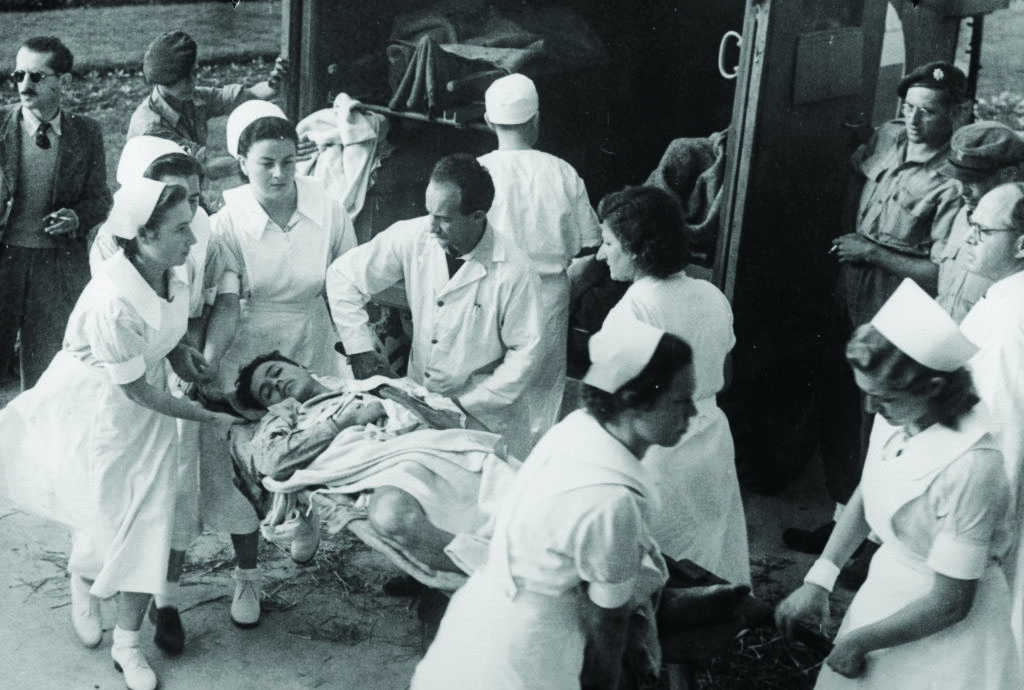
The goal of my grandmother’s Hadassah chapter, in line with that of Hadassah’s international movement, was to raise money for hospitals and healthcare in Israel. The promotion of healthcare for both Jews and Arabs had been part of Hadassah’s mission from the time of its founding by Henrietta Szold in 1912. In 1936, Britain’s Peel Commission praised Hadassah’s dedication to the health of both populations: the “disinterested philanthropy of Hadassah deserves recognition: it was a real step towards the promotion of good feeling between the two races; but unhappily the effect of its work was impaired by other influences.” Despite setbacks, including the infamous ambush on a medical convoy traveling to Hadassah-Mount Scopus in 1948 that killed 78 and that cut off access to the neighborhood until after the Six-Day War, Hadassah’s facilities continued to promote the dream of peaceful coexistence and mutual care. When my grandmother became active in Hadassah, the hospital at Ein Kerem was just opening. Today, Hadassah’s hospitals continue to promote the wellbeing of all their patients and collaboration among doctors and researchers regardless of national origin, religion, or political views. Supporting Hadassah’s lifesaving work in Israel became part of my grandmother’s life mission.
What would my grandmother think of the demonizing caricatures of Zionism and Zionists espoused by so many “activist” protesters on university campuses today? Like me, I think she would scarcely recognize the Zionism that these protesters claim to hate. Hadassah’s Zionist identity and its mission of supporting and providing inclusive medical care in Israel have always been one and the same. While affirming the right of the Jewish people to self-determination in their historic homeland, Hadassah’s vision sees healing as a pathway to peace. That was the Zionism that my grandmother gave to me.
Rebecca Cypess is the Mordecai D. Katz and Dr. Monique C. Katz Dean of the Undergraduate Faculty of Arts and Sciences at Yeshiva University.