fbpx

September 10, 2024

The Project on Allyship to Combat Antisemitism

Allyship has been fundamental to the fight against antisemitism in the United States since the founding of the Anti-Defamation League more than a century ago. Yet, this work has not always been smooth or easy, and as antisemitism increased in recent years, a refrain has been growing in the Jewish community: Our allies are not showing up. 

How can we change this paradigm? American Jewish University (AJU) recently convened a group of scholars to systematically examine the dynamics of the future of allyship, with a focus on African American, Asian-American, Christian, Indigenous, Jewish immigrant, Latino, LGBTQ+, and Muslim communities and their relations with Jews. This resulting project powerfully exposed the fraught politics around allyship – and to change the paradigm we have to change our perspective. Instead of the plaintive cry “Where are our allies?” we must embrace the unsentimental “What are we going to do to garner the allies who are available?”  

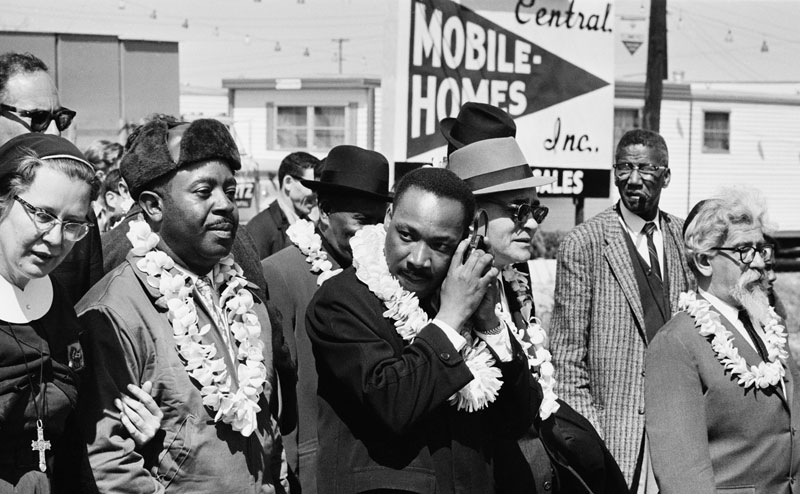
Allyship as a central theme of Jewish life was greatly reinforced during the civil rights struggle in the 1960s when Jews saw the crusade led by the Reverend Martin Luther King as not only just but also having deep resonance with their battles against hatred, especially coming only a few years after the Holocaust. The picture of Rabbi Abraham Joshua Heschel marching with King in Selma in March 1965 became emblematic of what many in the Jewish community saw as a durable and attractive alliance and a model for the Jewish population’s relationship with other groups.  

When antisemitism reemerged as a significant concern in the mid-2010s, due in some combination to protests, especially against Israel on college campuses, the rise of Donald Trump and Christian Nationalism, and the Charlottesville chants in 2017 that “Jews will not replace us,” the Jewish community began to look around for its allies. The search became that much more poignant after the Tree of Life massacre in Pittsburgh in October 2018 when it seemed to be time to cash in the allyship chips earned over the previous decades.

As antisemitism increased, some Jewish commentators noticed that their allies were missing. After Oct. 7, the absence of some allies, especially on the left, was widely noted. Rabbi Sharon Bous talked about her feeling of “existential loneliness” given that “The clear message from many in the world, especially from our world — those who claim to care the most about justice and human dignity — is that these Israeli victims somehow deserved this terrible fate.”

Yet, the realities of political coalitions demand something different. Far from being a natural condition, allyship should be seen as a fraught and difficult relationship cultivated over time from deliberate strategies that account for the political terrain. First, we must recognize that many groups may not be particularly interested in developing allyship with the Jews – not because of inherent antisemitism, but because Jews, as a small population, do not bring obvious political muscle to many discussions.

Far from being a natural condition, allyship should be seen as a fraught and difficult relationship cultivated over time from deliberate strategies that account for the political terrain. 

Second, we must recognize that our allies come from communities diverse within themselves. We must carefully approach them, with an appreciation of this complexity. The Asian American community contains Koreans whose median incomes are high and Burmese whose are not, the Latin American community includes Cubans who have been in the United States for decades and arrived with significant human capital and Venezuelans who are recent, impoverished migrants. The African American community includes descendants of enslaved people forcibly brought to America centuries ago and recent migrants from the Caribbean and Africa. 

Two Allyship Strategies

The Jewish community will never adopt one allyship strategy. However, we must be intentional and understand the implications of our choices, which can be boiled down to two different but admittedly not completely distinct paths to pursue allyship.

One approach is what might be called transactional allyship:  We work for your cause with the expectation that you will help us or come to our aid in exchange. This bundle of actions has the potential to be durable because it is based on a type of realpolitik, but it has challenges, in particular recognizing that groups will have real reciprocal asks. As Dr. Bridget Kevane noted in her contribution to our project, “[Allyship means] What do you need? And it asks, “What do we need, both of us, together?” 

Jewish groups, led by ADL, have long had a reflex toward allyship, driven by the belief that all good causes could go together. However, other communities have distinct political agendas that may not align with the sentiments of the Jewish community. Thus, Dr. Kevane notes that the central question that the Latino population focuses on is no longer relevant to the Jewish community: “For most Jews, the immigration story is a distant memory. In turn, for Latinos, it has remained a constant reality.”

The other type of allyship might be called environmental allyship, which posits that the fight against bigotry helps everyone because there is some correlation between all hate even if there is no explicit quid pro quo between groups. This sentiment is central to the Biden Administration’s “National Strategy to Counter Antisemitism,” released in May 2023, and includes building “cross-community solidarity and collective action to oppose hate” as one of its four pillars. 

Once the general path of allyship is understood, the implications become clear. The first regards the architecture of allyship. In transactional allyship, much of the heavy lifting will have to be done by organizations that can deliver votes and political positions. Many in the Jewish community tend to default to this model. However, other communities may not have a peak organization as well-established as the ADL and often lack that organization’s grounding in allyship work. For instance, since the glory moments of the civil rights movement, the African American community has split in several different directions based on varied understandings of social justice, among many other considerations.

In contrast, in environmental allyship, much of the work can and should happen at the individual level. With this perspective, people work to change the general climate, without making firm calculations about how political positions should be traded for explicit mutual gain. Allyship at the individual level, including friendships and grassroots organizations, is certainly possible and can be powerful. It is surprising that perhaps the most successful, but hardly discussed, development of allyship, at least until Oct. 7, was between Muslim and Jewish populations conducted at the individual level. Walter Ruby and Sabeeha Rehman note in their contribution to our project that, “Contrary to the perception that American Muslims and Jews have been and remain distant and hostile to each other, sustained efforts to build ties of communication and cooperation at the leadership and grassroots levels have been underway for two decades or more.” 

Yet allyship at the individual level is often difficult. For instance, Dr. Kevane notes that many members of the Latino population are far too consumed with daily struggles and the overarching political question of immigration to engage in much allyship work.

We hope that the guidelines in our research will enable leaders and groups to make better choices when constructing constituencies to fight antisemitism and other forms of hate. They may also be better able to calculate if the effort is worth the investment and expected outcome. That is far from the heroics of Selma but is what is needed to face the realities of hatred in twenty-first century America.


Jeffrey Herbst is the President of American Jewish University. The Project on Allyship to Combat Antisemitism is funded by The Schechter/Levine Program in Public Ethics and the Sid B. Levine Service Learning Program.

The Project on Allyship to Combat Antisemitism Read More »
Two Jewish Students Attacked at Pitt

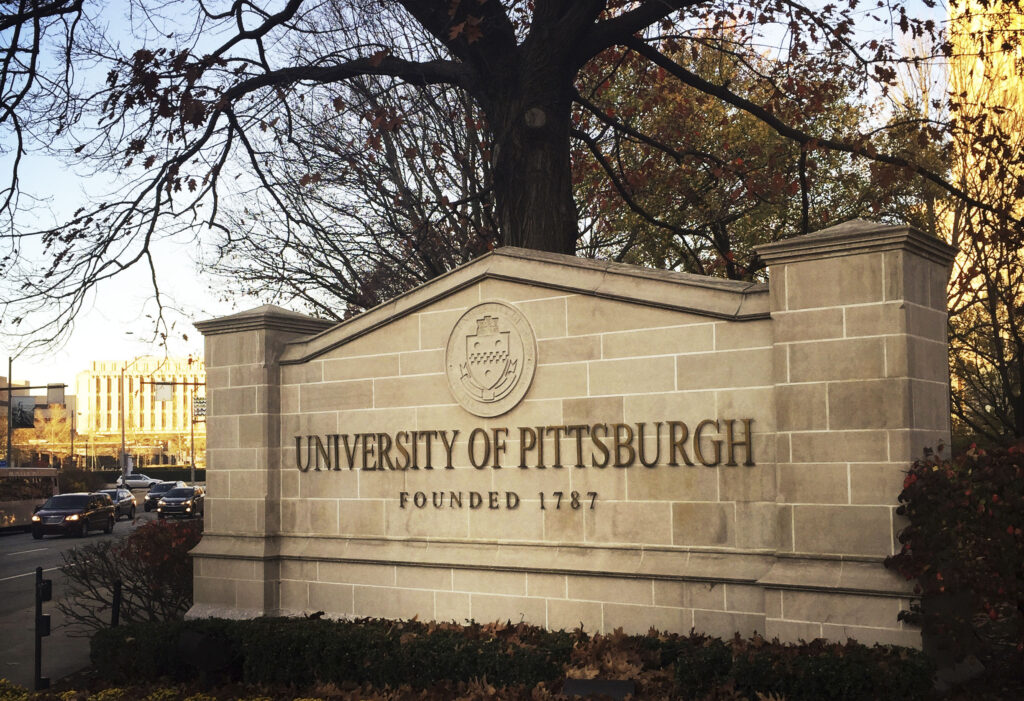
Two Jewish students at the University of Pittsburgh were assaulted while on their way to a Shabbat dinner at the university Hillel on Aug. 30.

The two students, Asher Goodwin and Ilan Gordon, were hit on their heads from behind with a glass bottle by a man wearing a red shirt and a keffiyeh. Goodwin suffered cuts on his neck and Gordon suffered a concussion after being hit on the cheek. One of the students — media reports have not indicated which — held the assailant on the ground until police arrived.

The alleged assailant, 52-year-old Jarrett Buba, was subsequently arrested and is being charged with assault, reckless endangerment, harassment and resisting arrest. University Vice Provost for Student Affairs Carla Panzella and Vice Chancellor for Equity, Diversity, and Inclusion Clyde Wilson Pickett said in a statement that Buba is not believed to have any affiliation with the university and that law enforcement has concluded that the attack was not targeting any particular group of people.

Gordon, however, argued to CNN’s Gabe Cohen that he and Goodwin were in fact targeted for being Jewish. “Asher and I were the only two students wearing yarmulkes, openly Jewish, and we were the only ones attacked by this man wearing a keffiyeh, who came from across the street,” Gordon said.

“Asher and I were the only two students wearing yarmulkes, openly Jewish, and we were the only ones attacked by this man wearing a keffiyeh, who came from across the street.” Ilan Gordon

Panzella and Pickett also said in their statement, “There is no room in our community for violence and we condemn, in no uncertain terms, antisemitism, all forms of hate, and the actions of the alleged assailant. We also recognize that there is nothing more important than the safety of every member of our community.” They added that they are “providing additional resources” to campus police “to ensure additional security officers are available as escorts to students, faculty, and staff traversing to Friday night services or other events.”

Buba has been denied bail and also faces allegations of throwing a bottle at two people at Carnegie Mellon university on Aug. 29; the bottle hit a vehicle and no was injured.

Goodwin told CNN that, as a Jewish student, he feels “like an alien” on campus, as it’s “now common rhetoric that if you go to Hillel, you support genocide.”

A Jewish student affiliated with Chabad, on the other hand, told The Journal that while they think the university’s statement on the incident is “very weak,” they still believe that the university “is one of the best colleges for a Jewish student to go to, incidents here are few and far between. There have been a couple, there has been a little bit of an uptick, but it’s not enough for me to say I don’t feel safe here.”

Two Jewish Students Attacked at Pitt Read More »

Burning Man Festival Installation Honors Victims of Nova Festival

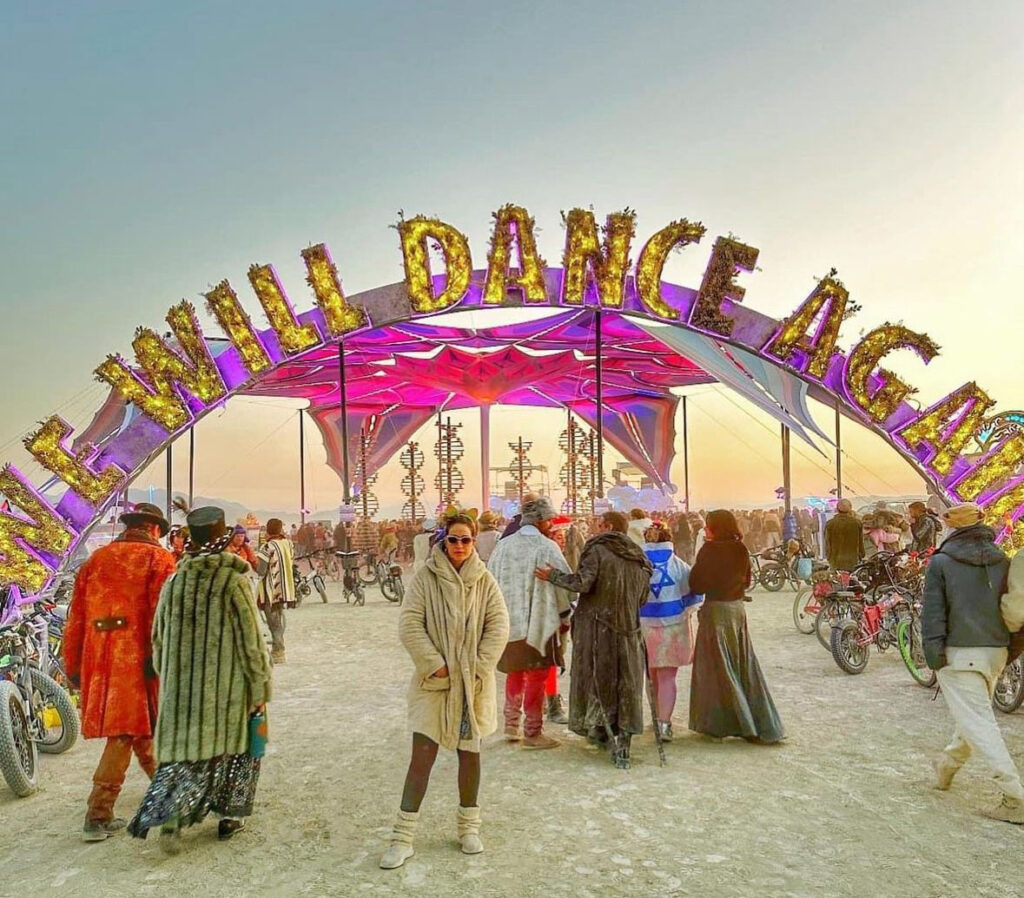
At this year’s Burning Man festival in Nevada’s Black Rock Desert, an installation called “Nova Heaven” was created to honor the victims of the Nova Festival Massacre in southern Israel Oct. 7, 2023.

The installation featured a 140-foot-wide desert hued pink, blue and black tent pavilion with elements of the original shade station used at the Nova festival almost eleven months ago. At the entrance, was an arch with the words”We Will Dance Again” — the rallying cry (and recurring coping activity) used by those standing in remembrance of victims. The pavilion featured 405 laser-cut angels symbolizing each Nova Festival attendee and staff member murdered by Hamas. A spiral staircase at the pavilion also displayed 100 messages in both English and Hebrew featuring phrases such as “love conquers all” and “compassion unites us.”

“This installation wasn’t just for the people who came to see it — it was for us, too,” Tal Navarro, who has attended many Burning Mans, told the Journal. She managed the digital presence and fundraising for Nova Heaven at Burning Man. “Every year at Burning Man is special for me. I got married there, I was pregnant there. But this year was beyond words because I came with the Nova team to build the installation and be part of something deeply personal.”

Navarro, an entrepreneur and mother of two, said the Nova Heaven project was the most meaningful Burning Man activity she’s ever done.

“I’ll keep working on this,” she said. “Whether it’s managing the media, fundraising, or organizing events, I’ll be there. This is something that I believe in deeply, and I’m not going to stop.”

The installation culminated in a “We Will Dance Again” remembrance ceremony on Saturday, Aug. 31, 2024, at 6:29 a.m., marking the exact time the attack on the Nova festival began. The nine day installation featured trance music, Hebrew prayers and healing sessions.

“Everyone was waiting for that moment,” Navarro said. “It was a very emotional moment for all of us — especially for the Nova survivors who were with me. To stand there, dancing next to people who personally knew the names on the [angel] wings, while they cried and hugged — it’s something I will never forget.”

“It was a very emotional moment for all of us — especially for the Nova survivors who were with me. To stand there, dancing next to people who personally knew the names on the [angel] wings, while they cried and hugged — it’s something I will never forget.” – Tal Navarro

Throughout the run of this year’s Burning Man, Navarro saw that for many of the Nova survivors in attendance, the installation provided a much-needed space for healing and collective mourning at one of the best-known desert-festivals in the world.

“To see their friends’ names on the wings, to be able to dance and cry together — it was a very healing experience,” Navarro said.

There were some concerns among organizers of Nova Heaven that anti-Israel agitation would be directed at them. But Navarro was relieved to find that the Nova Heaven installation remained a peaceful space.

“I was worried about how people would react, but there was nothing like that,” Navarro said. “In fact, it was the opposite. We had so many people joining us, dancing with us. There were Israeli flags all around the Playa, and everything felt peaceful.” Though there were Palestinian flags and Gaza messages at other parts of the Burning Man festival, Navarro didn’t notice any incidents at Nova Heaven.

Gezel Nehmadi, who attended her 15th Burning Man this year, told The Journal that there was some heated dialogue about Israel and Palestine.

“I had two really deep and sometimes aggressive conversations on the Playa about Israel and Palestine … It was rough but I felt better for it.” Nehmadi also attended another Shabbat (not affiliated with Nova Heaven) and said that it was “packed and felt really good, with people crying, praying, supporting each other.”

Round-the-clock “guardians,” many of whom were participants and producers from the original Nova Festival, maintained a protective presence at the installation.

Navarro explained that the installation changed her on a personal level. “Every year, Burning Man transforms you in some way, but this year was different. I came back feeling more connected than ever to Nova and to the survivors I met. I feel prouder than ever of who I am, and more connected than ever to Nova.”

Omri Sasi, a co-founder of Tribe of Nova nonprofit, and Nova festival producer Sarel Botavia co-created the Nova Heaven installation. Sasi, of Moonclipse, lost his father Avi in the Oct. 7 attacks when he jumped on a grenade to protect the other Nova festival attendees who were hiding from Hamas terrorists.

There were several acts and events throughout the Nova Heaven run. One of the performers was Scarlett De La Torres, who performed “Shir LaMaalot” (“Song of Ascents”).

“Singing ‘Shir LaMaalot’ with everyone beneath the actual tent of the Nova Festival was so profound and one of the most beautiful healing processes I’ve ever experienced,” De La Torres said in an Instagram post after Burning Man. “The resilience of the Jewish spirit inspires me every day. This is a message of love and unity, a prayer for an ancient conflict to resolve, a prayer for harmony, and a prayer that we can transmute pain and sorrow through music and relating. I truly believe that music is what is going to heal this planet.” De La Torres also hosted a free Hebrew Codes class where she taught the music and meaning behind “Ana B’Koach” (about divine strength and protection across the seven levels of spiritual energy), “Elohai Neshama” (a prayer of gratitude for the soul’s purity and renewal), and “‘Shir LaMaalot.”

Former IDF soldier David Shemesh led sound healing sessions at the Nova pavilion. Trance musician DJ Captain Hook (Reshef Harari) was slated to do a three-hour set beginning at 6:29 a.m. on Saturday, Aug. 31 with Sasi. It ended up lasting seven hours. Erez Eisen and Amit Duvdevani, the Israeli psy-trace duo Infected Mushroom, did a set at Nova Heaven where they honored 18 people from the Israeli psy-trance production company Mushroom Project, who were murdered at the Nova festival. Mushroom Project founders and 35-year old twins Osher and Michael Vaknin, were among those murdered on Oct. 7.

Navarro explained that many visitors from all walks of life came to the Nova Heaven installation, some unaware of the gruesome story behind it.

“We had ambassadors who were available at all times to explain what the installation was,” Navarro said. “There were no signs or explanations provided in writing. Instead, people were encouraged to ask questions, and our team was there to explain. Some thought it was a resting spot or a party area. When they found out it was a tribute to the victims of the Nova Festival, their reactions were powerful.”

That power and healing was felt by Tal Nimrodi of Santa Cruz, during an early morning shift as lead volunteer at Nova Heaven, where she met a Nova survivor whose girlfriend and best friend were murdered on Oct. 7.

“As if that wasn’t enough, a week after the massacre, his mother committed suicide,” Nimrodi wrote on Instagram. “We talked and breathed, and he told me that until he finds the names of his girlfriend and best friend, he won’t feel a complete closure — so we did just that. What a powerful moment to be a part of and be able to hold space for the pain and grief, to share tears and hugs and be there to dream of a better future.”

Burning Man Festival Installation Honors Victims of Nova Festival Read More »

Tonight’s Debate: Loose Cannon Meets Verbal Adventurer

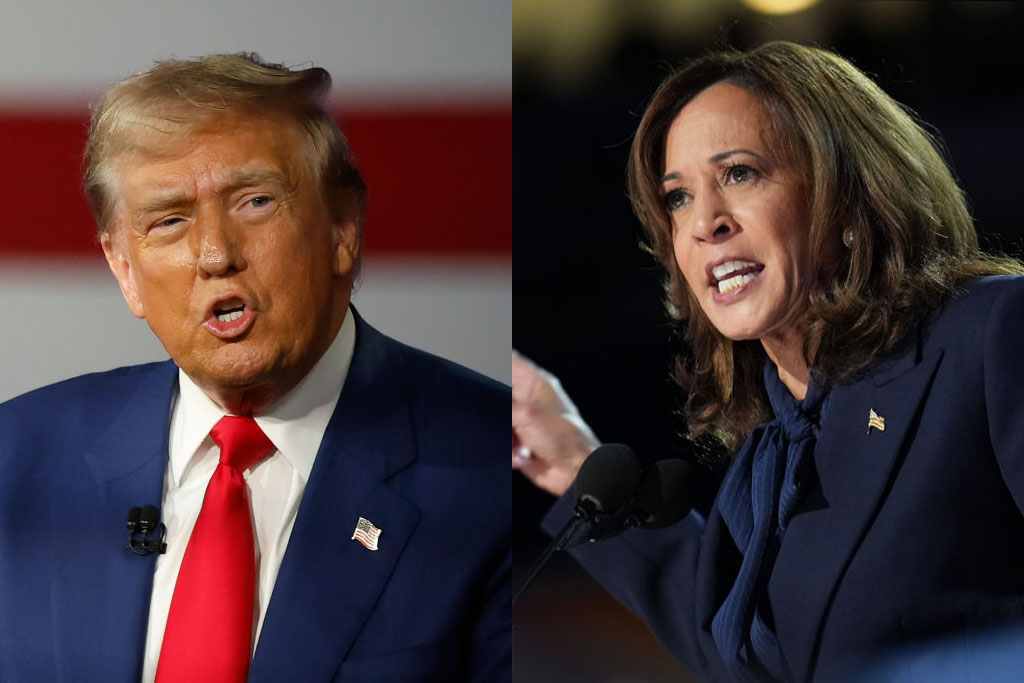
The race between presidential candidates Kamala Harris and Donald Trump is so close it’s easy to forget that, whatever side you’re on, these are not formidable candidates, to put it mildly.

At what might be their only debate tonight, we’ll get a glimpse of how unformidable they are.

Given the verbal blunders we’re likely to see, I can imagine that meme creators will have a field day picking out the most cringe moments to post on social media.

Let’s start with the serial loose cannon, Donald Trump. The Trumpster is highly overrated as a communicator. His blunders tend to overshadow any sharp moments. The man has no filter, so his bluster can easily get the best of him. That may work with diehard fans at a rally, but in a stiff studio setting facing the nation, it can easily lead to boneheaded miscues your rivals will use against you.

Trump tends to be sharper at the beginning of debates, as he showed in his July face-off with President Joe Biden. But any discipline he displays at the outset, as Noah Rothman writes in NRO, “soon dissolves into the fog of his own muddled thinking. Within a sentence or two, Trump retreats into the shorthand decipherable only to the MAGA faithful.”

Harris, for her part, is not immune to a fog of her own muddled thinking, but in her case, it’s more like flighty verbal adventures.

“When speaking extemporaneously,” Rothman notes, “[Harris] sets off in the directionless pursuit of a thought worthy of expression. The vice president so often sounds like a flighty, new-age, self-help guru because she has embarked on a journey of discovery, the ultimate destination being a cogent statement somewhere over the horizon.”

He notes her infamous response at the Democratic debate in 2019: “So part of how I believe we’re going to win this election is, it is going to be because we are focused on the future, we are focused on the challenges that are presented today and not trying to bring back yesterday to solve tomorrow.”

She was responding to the question: “How would you pay for that?”

Like I said, not formidable.

Debate handlers from both sides know all this, so I’m sure they’ve been sweating in preparations to try to minimize those blunderous bells that are impossible to unring.

What about policies, you ask? Of course they matter. Both candidates will spin and reframe and dissemble and exaggerate to convince us—and mostly undecided voters– that their policies are better and that any idea from their opponent will hurt the country.

But in a tense television format, when soundbites and appearances rule, it is not the policies but the optics that matter most.

Who looks more in command? Who looks more confident and poised? Who looks more credible? Who looks like they’ll make the better president?

One of the foibles of our modern debates is that you can do well for long stretches but one or two epic blunders that go viral can ruin your night. Of course that also works the other way: one sharp comeback can steal the show.

So yes, watching tonight’s debate is sure to be a nerve-wracking experience, especially for those who believe the future of our country is at stake.

Each side will tune in hoping for a great performance from their candidate, but knowing that, at any time, a cringe-inducing moment will only be a question away.

Enjoy the show.

Tonight’s Debate: Loose Cannon Meets Verbal Adventurer Read More »