

fbpx

September 9, 2024

Jewish Solar Challenge Aims to Put Solar on Every Jewish Organization in America

The Jewish Solar Challenge (JSC) announced the opening of its 2024 grant application cycle on Aug. 21. JSC is a one-of-a-kind, competitive matching grant program open to any interested Jewish organization in America, including synagogues, Jewish schools and Jewish camps that own their buildings and pledge to go solar.

Applications for matching grants up to $50,000 are due by Sept. 20, and winners will be announced at the end of November. Applicants must have a plan for solar installation and demonstrate other ways they will implement environmentally conscious and sustainable practices.

JSC plans to award over $300,000 in grants in November, bringing the total amount awarded for solar panels to nearly $1 million since the organization launched in 2022.

Veteran communications executive and environmentalist Mitchell Schwartz founded the Jewish Solar Challenge in Los Angeles with the goal of putting solar panels on the rooftops of every Jewish organization in North America.

“Our goal is to help combat climate change while also slashing the operating costs for Jewish organizations across America,” Schwartz said. “We know many institutions are reluctant to invest in solar because it typically takes more than five years to recoup the costs. With the Jewish Solar Challenge cutting those costs in half, it reduces their payback time, making solar more attainable to Jewish organizations that want to make a difference.”

This model has helped many institutions overcome the financial barriers that previously prevented them from installing solar. Jewish Solar Challenge has given grants to seven organizations, including Temple Israel of Hollywood, Temple Beth Am, Berkeley Hillel and Camp Tawonga.

Temple Israel of Hollywood, the first recipient of a JSC grant, has abated an estimated 282,326 lbs. of CO2, the equivalent of planting over 13,000 trees or taking five cars off the road. Berkeley Hillel installed a 36.4 kWh array of panels with a 13.5 kWh Tesla Powerwall Battery in March 2022 and has experienced other benefits.

“We lost power one day, and the lights, Wi-Fi, and refrigeration all stayed on so we didn’t have to close the building,” said Berkeley Hillel COO Emily Hirschman. “Thanks to the solar panels, we were able to still welcome students to study here when the rest of the campus didn’t have power.”

The first round of the 2024 application opened to interested groups on Aug. 21. JSC will prioritize organizations with existing quotes for solar that are “shovel ready.” Jewish Solar Challenge is also looking for partners committed to broadening their sustainability efforts beyond solar energy.

“JSC really opened our eyes to focus not only on solar but on institutional sustainability,” said Mark Samuel, the immediate past president of Temple Beth Am in Los Angeles, which received a JSC grant in 2022 and completed its solar installation in March. “We introduced more recycling bins, installed low-flow toilets and faucets, upgraded to LED lighting, enhanced energy efficiency measures, and implemented composting on our site. Our goal is to reduce our carbon footprint overall. This initiative was a great catalyst to move things ahead, and it provided a meaningful way to focus on Shmita, a year of growth and rebirth.”

Solar Panels installed with JSC grant money on the roof of Temple Beth Am in Los Angeles. Photo Courtesy of Jewish Solar Challenge.

Qualified applicants will move on to the final round of the grant process. Before final applications are due, sustainability professionals at JSC will work directly with the organizations to curate specific initiatives aimed at making their communities more sustainable. Final applications are due Nov. 1, and winners will be announced at the end of November. Interested Jewish organizations can apply at www.jewishsolarchallenge.com.

Jewish Solar Challenge Aims to Put Solar on Every Jewish Organization in America Read More »
Israel Divestment Vote at Brown: Proof That Not All Votes Are Created Equal

There are certain words in liberal democracies that we are taught to cherish. “Freedom” and “rights” are among them. So is “vote.” The freedom to vote ensures that our rights are protected.

So why would Joseph Edelman, a trustee of the Brown Corporation, resign from his post because of a vote? If he feels strongly about an issue, shouldn’t he stick around and express his view through a vote?

It turns out that even a vote is not all it’s cracked up to be.

In this case, an anti-Israel group at Brown has been pushing for the university to divest from companies with ties to Israel. In the midst of last year’s protests, Brown agreed to hold a vote on the issue in exchange for the demonstrators to dismantle their encampment. In other words, it looks like they were bullied into the vote, which is scheduled to take place next month.

Beyond anything else, let’s get one thing out of the way: The Achilles heel of all boycotts against Israel is the sheer discrimination of singling out the world’s only Jewish state while ignoring real genocidal regimes.

After being attacked on Oct. 7 in the worst massacre of its history, Israel defended itself to regain deterrence against its sworn enemies. Is that cause for divestment?

Is Israel’s defensive war in Gaza worse than what evil regimes like Russia, Iran, China and Syria have been doing for years?

This only begins to describe the anti-Israel nature of the story.

For any university to even consider divesting from Israel is borderline self-destructive. Israel is a vibrant society bursting with innovations, especially at its many universities. Every college in the U.S. has an interest in nurturing investment in such a thriving academic environment.

But perhaps worse of all is the fact that the movement at Brown pushing for Israel divestment, the Brown Divestment Coalition (BDC), is poisoned by bad faith.

For starters, a recent report submitted to Brown identified 45 false claims made by the BDC.

“First, they broke both the law and university policies,” the report concluded. “Then, as extensively documented below, they lied to the university about nearly every aspect of their cause. Now, the BDC expects the university to harm its own interests and violate its own values in service of the BDC’s bigoted demands.”

The report highlights two issues crucial to any university–credibility and bad faith: “[Brown] has a moral and professional obligation to embrace and embody intellectual honesty…As the record shows, the BDC is not willing to engage honestly with the facts. Instead, it seeks to exploit Brown for purely partisan ends.”

Which brings us back to the vote and Edelman’s decision.

“I find it morally reprehensible that holding a divestment vote was even considered, much less that it will be held — especially in the wake of the deadliest assault on the Jewish people since the Holocaust,” Edelman wrote in a Wall Street Journal op-ed.

His key point is that the vote itself is the real offense.

“There are some votes you do not take.  This was one of them,” another philanthropist wrote in an email. “Would they vote on whether to allow free speech? Would they vote on whether to allow gays? Would they vote on whether to allow a lesbian club?”

In a statement to the Daily Caller, a spokesperson for Brown defended the vote: “Our process allows any University community member to submit a divestment proposal for examination, and does not pre-determine the merit or outcome.”

That may well be, but it doesn’t obligate Brown to accept proposals that violate basic principles of fairness and truth.

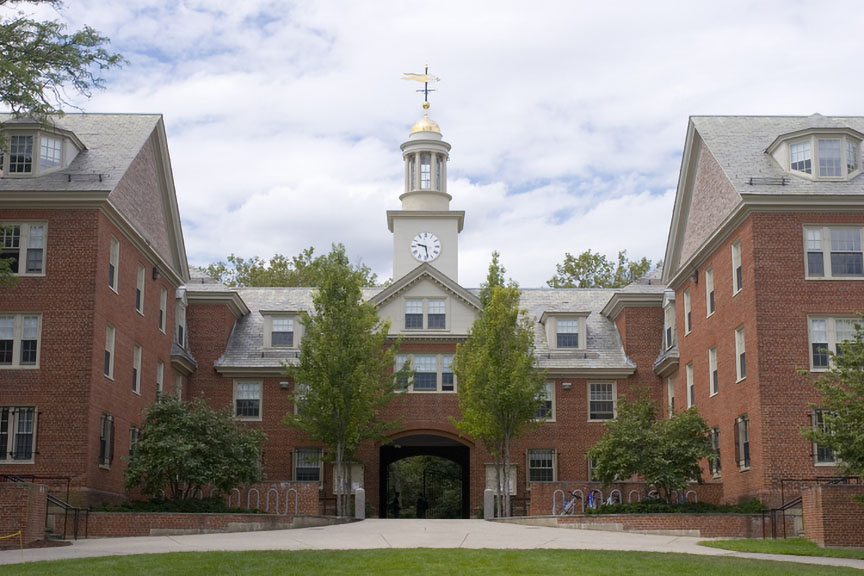
Brown deserves better than this. It is not anti-Jewish. Its leadership has come to the defense of Jewish students. Its Hillel and Chabad houses are sanctuaries of Jewish living.

It looks to me like Brown got ambushed by cynical Jew-haters who exploited an innocent-sounding idea like a vote.

Israel Divestment Vote at Brown: Proof That Not All Votes Are Created Equal Read More »