fbpx

September 1, 2024

The Message I Left for Hersh at the Airport

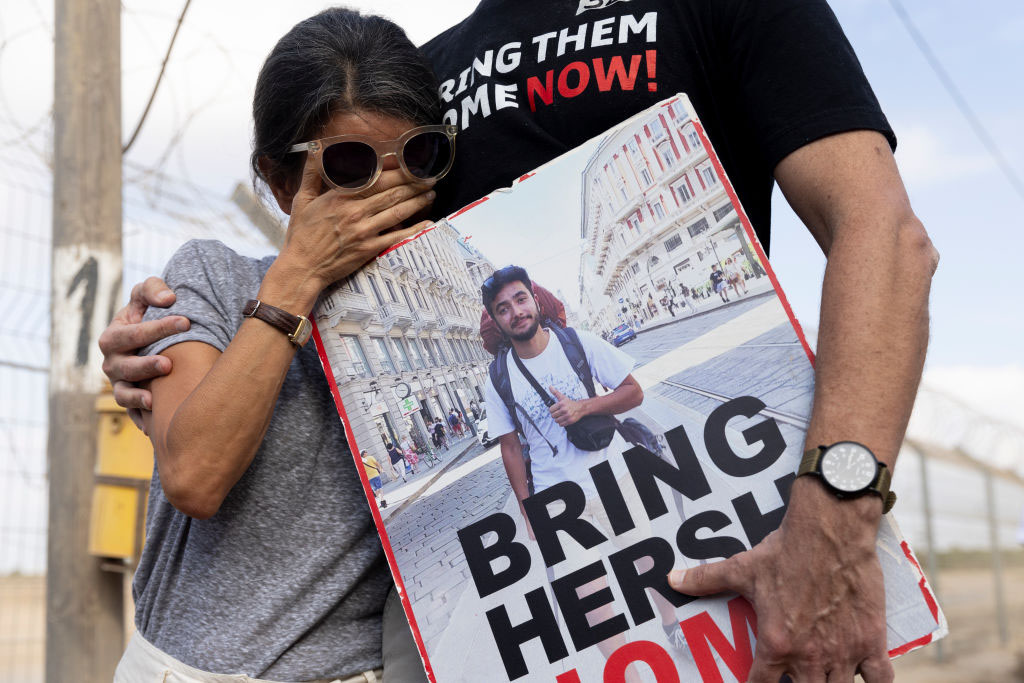
A few months ago, on the way back to New York from Israel, I wrote Hersh a message on the sign carrying his photo at the airport. “Hersh, I met your mom and she said to stay strong and survive.” He didn’t know me, but I felt that I knew him after those long 9 months. I knew he loved music, soccer, collecting National Geographic magazines and beer, similarly to my brother. I knew he was brave and saved fellow concert-goers during the massacre of October 7 by throwing grenades out of the shelter he had taken refuge in with his friend Aner Shapira. And I knew Hersh carried himself with an innate sense of dignity, surely passed down to him by his parents Rachel Goldberg and Jon Polin, when he was forced, by the savage monsters, onto that hellish pickup truck, nursing what remained of his arm. His left forearm had just been blown off.

I believe that he felt the piercing cry and prayer of Rachel, who three days ago, blasted into a megaphone on the border with Gaza: “It’s Mama, Hersh, it’s day 328, we’re all here, all the families of the remaining 107 hostages. Hersh, we are working day and night and we will never stop. I need you to know that I am giving you the blessing I give you every single morning when I pray for you and every Friday night…..”

I wonder what Hersh knew and what he felt.

I wonder if he knew that, on the streets of New York, Chicago and Los Angeles, his photo was posted everywhere. That stickers covered the neighborhood lamp posts on the blocks that I walked my daughter to school. That, all over America, which was also his home, people ordered their coffee using his name so that the barista would yell it across the crowded cafés. Some would perk up and acknowledge that Hersh was with us, in a strange way. Others didn’t know who he was, or what his name had come to signify. And others simply didn’t care.

But really, I wonder how we arrived at a time when everyone in America had not come, in the past painful months, to know Hersh’s name. After all, he was our fellow American. Whatever that means anymore.

I wasn’t born when more than 50 Americans were taken hostage in Iran in 1979 and held for 444 days. Did our fellow Americans know their names?

I didn’t, and ashamed of my ignorance, I just looked them up to learn their names and see their faces. While googling, I came upon this Time Magazine article from 1980. Yes, it was forty-four years ago and the parameters were different – though not the savage monster pulling the strings – but how could our national reaction have shifted so dramatically? I read closely:

“Khomeini thus poses to the U.S. a supreme test of both will and strategy. So far his hostage blackmail has produced a result he certainly did not intend: a surge of patriotism that has made the American people more united than they have been on any issue in two decades. The shock of seeing the U.S. flag burned on the streets of Tehran, or misused by embassy attackers to carry trash, has jolted the nation out of its self-doubting “Viet Nam syndrome.” Worries about America’s ability to influence events abroad are giving way to anger about impotence; the country now seems willing to exert its power. But how can that power be brought to bear against an opponent immune to the usual forms of diplomatic, economic and even military pressure, and how can it be refined to deal with others in the Third World who might rise to follow Khomeini’s example? That may be the central problem for U.S. foreign policy throughout the 1980s.”

I wonder where’s that “surge of patriotism” and “unification” now?

Where is the “shock of seeing the US flag burned” – and not in Tehran, but on our college campuses?

I wonder where is that “surge of patriotism” and “unification” now? Where is the “shock of seeing the US flag burned” – and not in Tehran, but on our own college campuses?

Where is the “jolt” for our nation to awaken from an era of “self-doubting”?

Where is our collective “anger about impotence” and why has a “willingness to exert power” not re-emerged in our Administration or in public opinion?

Fatigued then by Vietnam, now by Afghanistan and Iraq, where’s our collective sense of responsibility to certain American ideals and to our people?

Why have we not learned how to fight an opponent that is “immune to the usual forms of diplomatic, economic and even military pressure?” Or do we know how but prefer not to?

Why are we now such professionals in cowardice?

And I’ll add one that, I am certain, did not apply in 1980: how did it become “acceptable” for some to rip down Hersh’s photo?

Why must we witness the disgusting and spiteful act of those ripping down Hersh’s face – one that, to paraphrase Douglas Murray, even a lost puppy would not be subjected to?

In my head, I keep repeating Rachel’s words from the recent Democratic National Convention– “In the Jewish tradition, every person is an entire universe.”

In my head, I keep repeating Rachel’s words from the recent Democratic National Convention– “In the Jewish tradition, every person is an entire universe.”

If every person had heeded this message, learned his name, respected his photo, pressured officials and kept him and the hundred plus other hostages, at the forefront of our collective consciousness, perhaps together, we could have brought Hersh home.

Instead, today, we mourn.


Emily Hamilton is the Executive Director of Justice for Kurds and producer of three documentary films: “Why Ukraine,” “Slava Ukraini” and “Glory to the Heroes” by Bernard-Henri Lévy on the extraordinary resistance of Ukraine against the full-scale Russian invasion. 

The Message I Left for Hersh at the Airport Read More »

Anatomy of an Academic Failure: Is Watson Institute Searching for the Truth at Brown University?

If you run an institute that claims to promote “research, teaching and public engagement,” why would you host an event that assumes Israel is committing a genocide in Gaza?

And yet, that is what is happening on Sept. 16 at an event sponsored by The Center for Middle East Studies at the Watson Institute for International and Public Affairs at Brown University.

Just the title of the event— “Anatomy of a Genocide: A Failure of the International System?”— gives away the agenda. This won’t be a debate about whether there is a genocide happening in Gaza; rather, it will be a confirmation of that so-called “genocide.”

It’s as if Israel is such an evil country it doesn’t even deserve a debate or even a chance to defend itself against such an inflammatory accusation.

Perhaps we shouldn’t be surprised by this blatant bias given that the speaker will be Francesca Albanese, UN Special Rapporteur on the Occupied Palestinian Territories.

Albanese has a long history of bias against Israel. She tweeted recently that Israel “continues to destroy Gaza and the Palestinians as a people,” adding that “this is genocidal intent turned into action. Crystal clear.”

A speaker who has accused Israel of genocidal intent is giving a lecture on  the anatomy of that genocide. What kind of “research, teaching and public engagement” can the attendees of the Sept. 16 event expect from someone who already has a “crystal clear” take on the matter?

The UN watchdog UN Watch has a thick file on Albanese’s biased record. This was their response to her accusatory tweet:

“Israel is not trying to commit any ‘genocide.’ Hamas invaded Israel and launched a war on October 7th, massacring 1200 people, raping, torturing and mutilating. This is the proportional equivalent of terrorists killing 42,000 Americans in a day. When Hamas promises to repeat the massacres again, and continues to hold more than 120 Israeli hostages, Israel’s campaign against Hamas terrorists is a just war.

“The only ones trying to commit genocide is Hamas, whose founding charter openly calls to kill all Jews, and which has already killed more Jews in a single day than anyone since Adolph Hitler.”

In a detailed analysis, the American Jewish Committee laid out “5 Reasons Why the Events in Gaza Are Not Genocide.”

  1. “Genocide” refers to the physical destruction of an entire group in whole or in part that has been targeted on the basis of its identity. This is not Israel’s objective in Gaza.
  2. Israel is responding to a genocidal attack by Hamas.
  3. Israel’s actions reflect its desire to spare Palestinian civilians from harm, not to deliberately harm them.
  4. Hamas’ actions are designed to cause harm to Palestinian civilians and blame Israel.
  5. The “facts” of the genocide charge don’t add up.

In other words, it’s anything but a slam dunk that Israel is committing a genocide in Gaza. At the very least, it deserves a vigorous debate.

The students who will attend the Sept. 16 event will not get that debate. Instead, they will hear from someone who has already made up her mind and who will share her narrow and biased view to students who deserve better.

Had the event been about a search for truth, it would have been a pro and con debate titled: “Is Israel Committing Genocide in Gaza? Two Takes on a Controversial Issue.” The students would then hear from both sides and make up their own minds. This is what promotes critical thinking rather than the indoctrination of agendas. This is what students should expect from a college that puts a premium on the objective pursuit of truth.

Maybe it’s not too late. There’s still time before Sept. 16 for the Watson Institute to do an anatomy of this academic failure and deliver a debate worthy of its mission statement.

Anatomy of an Academic Failure: Is Watson Institute Searching for the Truth at Brown University? Read More »

On Being Jewish NOW

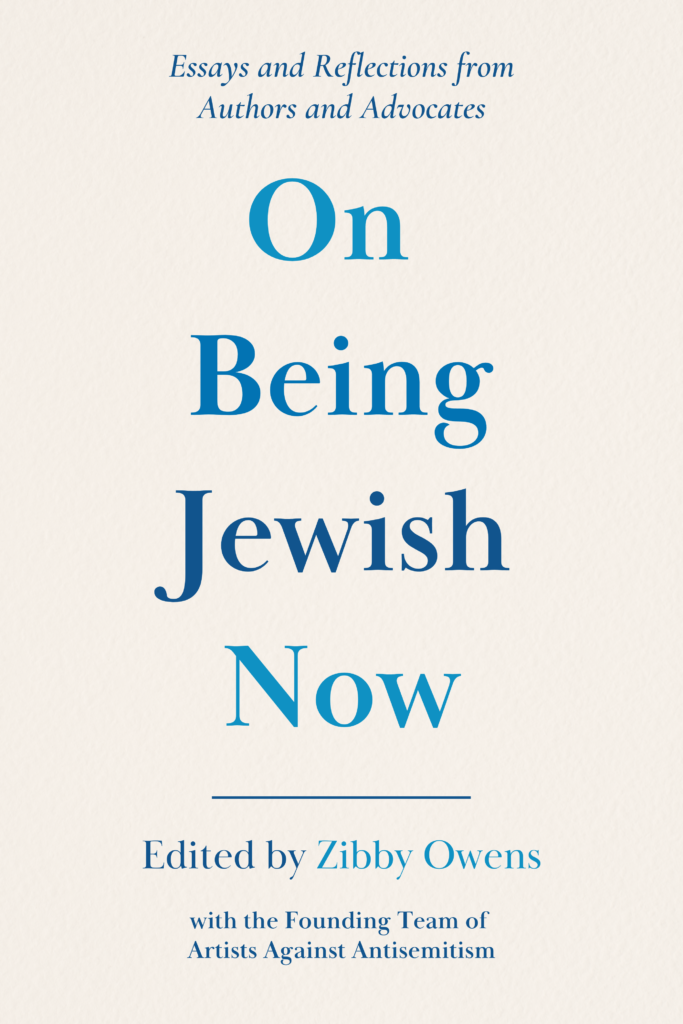
On Being Jewish Now: Essays and Reflections from Authors and Advocates

An intimate and hopeful collection of meaningful, smart, funny, sad, emotional, and inspiring essays from today’s authors and advocates about what it means to be Jewish, how life has changed since the attacks on October 7th, 2023, and the unique culture that brings this group together.

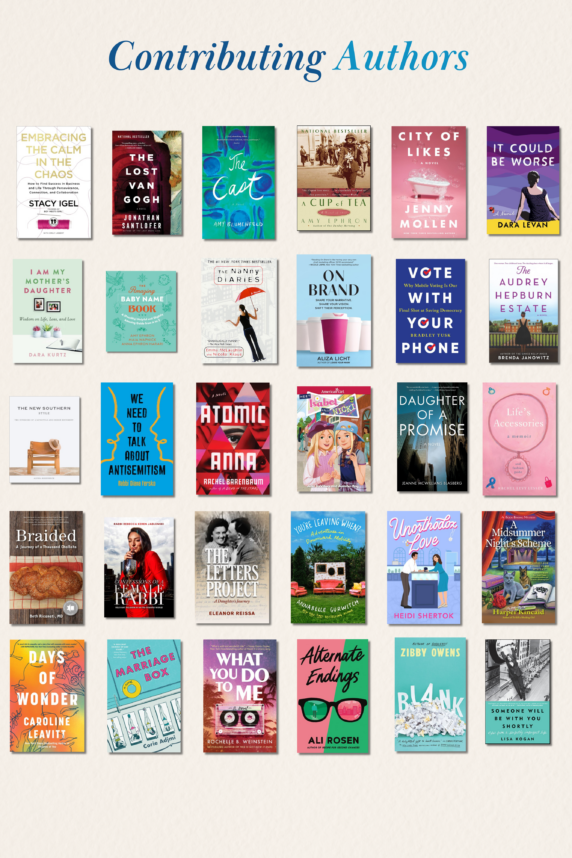
On October 7th, 2023, Jews in Israel were attacked in the largest pogrom since the Holocaust. It was a day felt by Jews everywhere who came together to process and speak out in ways some never had before. In this collection, 75 contributors speak to Jewish joy, celebration, laughter, food, trauma, loss, love, and family, and the common threads that course through the Jewish people: resilience and humor. Contributors include Mark Feuerstein, Jill Zarin, Steve Leder, Joanna Rakoff, Amy Ephron, Lisa Barr, Annabelle Gurwitch, Daphne Merkin, Bradley Tusk, Sharon Brous, Jenny Mollen, Nicola Kraus, Caroline Leavitt, and many others. On Being Jewish Now is edited by Zibby Owens, bestselling author, podcaster, bookstore owner, and CEO of Zibby Media.

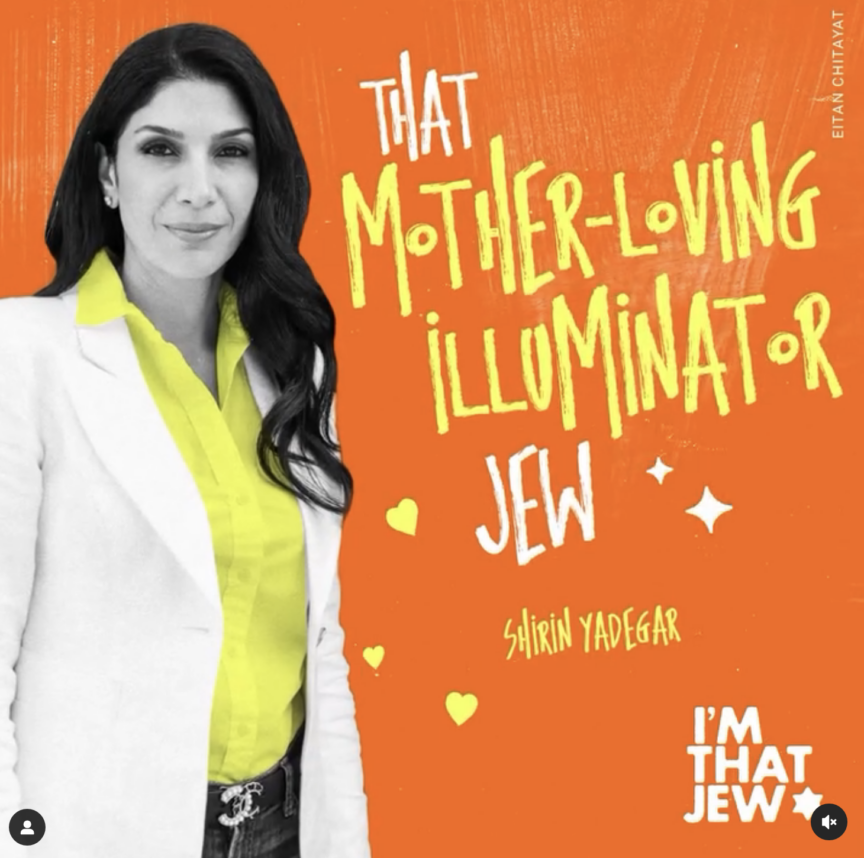
A Mother’s Fight by Shirin Yadegar

Fleeing Iran with my family was a decision born out of desperation, a leap into the unknown, grasping for safety amidst the rising tide of antisemitism. As a Jewish Iranian woman, my mother sought sanctuary for my brother and me in the United States. Becoming  a mother of four daughters, I always thought my girls would grow up free from the shadows of hatred that had darkened my homeland. Yet, the events since October 7 have stirred the embers of old fears, igniting a flame of sorrow and anxiety that wakes me at night.

My eldest daughter, Eden Yadegar, a junior at Columbia University, stood before Congress with a resolve that left me breathless. Her voice, strong and unwavering, testified to the surge of Jewish hate on college campuses. Watching her, my heart swelled with pride and trembled with fear. Pride in her bravery, her ability to stand tall against a wave of darkness. Fear for the dangers she faces in her unyielding quest for justice. Should we bring her home for her safety? Hire security to shadow her? Transfer her to another school? Her voice was and continues to be a beacon, illuminating the terrifying reality that Jewish students face daily—a reality that my other daughters know all too well.

Bella, my freshman at USC, had her mezuzah torn off her dorm door. She was jolted from sleep by the haunting chants of “Intifada revolution” outside her window. These acts of hatred are not mere vandalism; they are wounds inflicted upon her soul, attempts to erase her identity and silence her spirit. Each incident echoes with the same venomous intent that drove us from Iran, reminding us that no place is immune to the scourge of antisemitism.

My middle schooler, Lily, came home one day with tears in her eyes, the image of swastikas graffitied on her school walls etched into her mind. For a child her age, these images are a brutal assault on her innocence. Seeing her struggle to understand why such malice exists in the world breaks my heart and stirs a deep-seated rage within me. It is a stark reminder that the hatred we fled from can rear its ugly head anywhere, even in the supposed safety of American schools and culture.

Camille, my 11-year-old, saw and heard the atrocities of October 7th: babies burned alive, women raped and killed in front of their families. These horrors are too monstrous for any child to comprehend. She wrestles with nightmares about a world that seems both cruel and incomprehensible, while I grapple with shielding her from this harsh reality without hiding the truth. Her questions pierce my heart, each one a reminder of the innocence shattered by a world filled with hatred.

As a mother, my instinct is to shield my daughters, to envelop them in a cocoon of safety and love. Yet, as a journalist, I am driven to speak out, to shine a light on the darkness and give voice to those who are silenced. This balance has never been more precarious. The pain of seeing my children face the same hatred my family once fled is indescribable, but it fuels my resolve. I must be their pillar of strength, showing them that fear may grip us, but it cannot silence us.

Night after night, I wake in sweats, my mind plagued by the uncertainty of what tomorrow might bring. The fear and uncertainty for Jews in America gnaws at my peace, leaving me restless. In these dark hours, I find strength in my daughters’ resilience and in my own voice. I stand on my platforms, not just as a mother, but as a warrior of words, amplifying the cries of our community, sharing the struggles of my daughters, and calling for justice and understanding. This is my daughters’ generation’s fight and I will be here to support and encourage their voices. We will not be silenced.

My journey is one of pain and fear, but also of courage and hope. As a mother, I strive to protect my children from the world’s hatred while empowering them to stand tall and proud of their Jewish identity. Our story is a testament to the enduring spirit of those who, despite facing relentless adversity, continue to fight for their right to exist and thrive in peace. We are the voices that will not be silenced, the lights that refuse to dim.


Shirin Yadegar is a mother, journalist, publisher and TV host. Her magazine, L.A. Mom Magazine and talk show “Moms Matter” have turned into a war room since October 7th in order to amplify the truth. Before becoming a mother, Shirin received her M.A. from USC’s Annenberg School of Journalism and worked as a researcher and writer at the Los Angeles Times and Managing Editor of the Beverly Hills Weekly. Shirin currently serves on the board of WIZO, Shero’s Rise and Visionary Women.

Contributors

Abby Stern Ali Rosen Alison Hammer Alison Rose Greenberg Alix Strauss Aliza Licht Alli Frank Alyssa Rosenheck Amy Blumenfeld Amy Ephron Amy Klein Anna Ephron Harari Annabelle Gurwitch Barri Leiner Grant Bess Kalb Beth Ricanati Bradley Tusk

Brenda Janowitz Cara Mentzel Caroline Leavitt Corie Adjmi Courtney Sheinmel Danny Grossman Daphne Merkin Dara Kurtz Dara Levan David K. Israel David Christopher Kaufman Debbie Reed Fischer Diana Fersko Eleanor Reissa Elizabeth Cohen Hausman Elizabeth L. Silver Elyssa Friedland Emily Tisch Sussman Harper Kincaid Heidi Shertok Ilana Kurshan Jacqueline Friedland

Jamie Brenner Jane L. Rosen Jeanne Blasberg Jennifer S. Brown Jenny Mollen Jeremy Garelick Jill Zarin Joanna Rakoff Jonathan Santlofer Judy Batalion Julia Devillers Keren Blankfeld Lihi Lapid Lisa Barr Lisa Kogan Lynda Loigman Mark Feuerstein Nicola Kraus Noa Yedlin Rebecca Keren Jablonski Rachel Barenbaum Rachel Levy Lesser Rachelle Unreich
Rebecca Minkoff
Rebecca Raphael
Renee Rosen
Rochelle B. Weinstein
Samantha Ettus
Samantha Greene Woodruff
Sharon Brous
Shirin Yadegar
Stacy Igel
Steve Leder
Talia Carner
Toby Rose
Zibby Owens

ABOUT ARTISTS AGAINST ANTISEMITISM

Artists Against Antisemitism is a 501(c)(3) organization founded by a group of leaders who believe in spreading light to offset hate. The Founding Author team is made up of contemporary Jewish women writers from the U.S. but their extended community is for everyone: artists, creators, and supporters of all types both Jewish and non-Jewish.

Their mission is to raise awareness of antisemitism, promote education about Jewish history and culture, and work to help build a kinder, brighter, more understanding future.

Anyone who wants to stop the rise in hate crimes, prevent more antisemitic attacks, and help the Jewish people through this wave of hatred are welcome.


On Being Jewish Now: Essays and Reflections from Authors and Advocates

On Being Jewish NOW Read More »