fbpx

March 19, 2024

Jewish Influencer Lizzy Savetsky Wears Iconic Star of David Outfit

In 1999, Israeli fashion designer Galit Levi designed a corset art piece featuring a stunning Star of David for the woman representing Israel in the Miss Universe pageant. That contestant, Rana Raslan, was the first Israeli-Arab to be crowned Miss Israel, and her outfit showed the power of fashion to foster unity and peace. It symbolized a message of coexistence and showed the world Israel’s dedication to all its citizens, whether or not they are Jewish.

Twenty-five years later, influencer and outspoken pro-Israel activist Lizzy Savetsky wore the repurposed top to the UJA’s 18th annual Generosity Gala in New York, held on March 14. She makes an effort to wear clothing from Israeli designers and jumped at the chance to don the corset.

“This corset is not just a gorgeous piece of fashion history, but it also symbolizes pride and unity,” Savetsky told the Journal. “I love how fashion and art can communicate such a powerful message even when words fail us. Wearing this corset meant so much to me. It’s a symbol of hope for the future.”

“It’s a symbol of hope for the future.” – Lizzy Savetsky

Levi, in a statement, said that the Star of David is “a symbol deeply rooted in the history and identity of Israel, and by incorporating it into this corset, I aimed to showcase the beauty of coexistence and mutual respect.”

At the event and on Savetsky’s Instagram – where photos of the influencer wearing the corset received thousands of likes and comments – people “loved the sparkling expression of pride for Israel without even knowing the amazing story behind it,” she said. “So many people I had never met wanted to take my picture to show their friends.”

Before Oct. 7, Savetsky posted pro-Jewish and pro-Israel content on her social media almost daily. But since Oct. 7, she has doubled down, becoming more invested in helping her people and Israel and fighting the hate and antisemitism on these platforms.

“I had already positioned myself as an advocate for my people, but I think October 7 was a defining moment for every Jewish person,” she said. “There are two wars happening: the one on the ground, and the one on social media. My battleground is on the digital front and my fight has been a relentless one. I feel a huge responsibility to spread truth in a sea of lies, and more importantly, to empower my own people to stand loud and proud as unapologetic Jews. I will never stop fighting for the Jewish people.”

To Savetsky, a mom of three and wife of Dr. Ira Savetsky, her Jewish identity is “the most important part” of her being, and her, “North Star. It’s who I come from, my value system and my whole purpose,” she said. “I cannot separate my Jewish identity from the land of Israel because they are inextricably linked. As Jews, we don’t just need Israel; Israel is a part of who we are at our core from biblical times.”

She first fell in love with the Jewish homeland after visiting when she was 18 years old.

“My soul felt at home,” she said. “That is a feeling I hang onto every day as I fight for the truth. It is clear to me that the reason Israel is attacked on the ground, in the media, at the UN, on college campuses and beyond comes down to antisemitism. It really is that simple, no matter how complicated it may appear. To fight for Israel is to fight for the past, present and future of the Jewish people.”

For Savetsky, a simple gesture like wearing a piece of clothing takes on a much deeper meaning in these times, when antisemitism is spreading around the world and Israel is fighting for its right to exist. Rather than backing away from the fight, she dives in and does her part to advocate for the world’s only Jewish state.
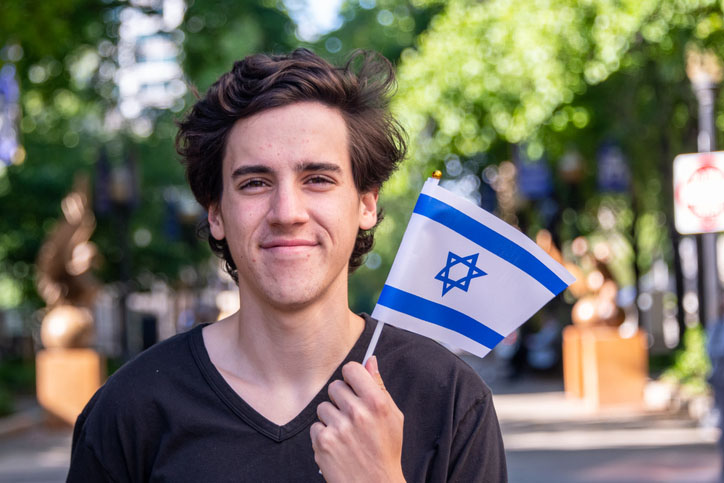
“We have two choices as Jews in a moment like this: to hide who we are and try to exist under the radar, or to fully embrace our identity and wear it with pride,” she said. “I think it means a lot to people to see such a beautiful statement that says, ‘I’m here, I’m Jewish, and I am going to let it shine.’”

Jewish Influencer Lizzy Savetsky Wears Iconic Star of David Outfit Read More »

Jewish Students Feel Less Safe on Campus – But Are Still Showing Their Jewish Pride

A new survey from Israel on Campus Coalition, in partnership with Schoen Cooperman Research, shows that since October 7, a majority of Jewish students feel less safe on campus – but most are also willing to stand up and show their Jewish pride.

The ICC/Schoen survey findings came from interviews with 1,000 U.S. adults, 400 American college students and 200 Jewish college students, who revealed that since the Israel-Hamas war began, 73% of them feel they are “less safe” on campus. It also showed that 81% say it’s important that they use their voices to stand with the Jewish community on campus.

Additionally, 77% of Jewish college students believe that the Boycott, Divestment and Sanctions (BDS) movement is an antisemitic movement or has antisemitic supporters, and 65% say that it poses a threat to Jewish students.

“Imagine if almost four out of five students from any other group felt targeted and unwelcome on campus,” said Jacob Baime, CEO of ICC. “For Jewish students, that’s the disturbing reality due to BDS votes. BDS is not about free speech. It’s about free hate. It’s time for university leaders to step in and cancel these votes.”

“Imagine if almost four out of five students from any other group felt targeted and unwelcome on campus.” – Jacob Baime

BDS votes, which have been happening at college campuses around the U.S., urge universities to divest from Israel and support BDS, an extremist organization which aims to eliminate the Jewish state.

A majority of Jewish students, 62%, feel it’s important to use their voice to stand against the BDS movement on their college campus, and only 25% believe that pushing back against BDS does more harm than good.

For its part, ICC partners with Jewish and non-Jewish students, inspiring them to advocate for Israel on campus. They send students to Israel to see the truth for themselves, as well as offer six-month fellowships where students can learn about Israel from experts and engage in meaningful dialogue on and off campus.

One ICC fellow, Tessa Veksler, a senior at the University of California, Santa Barbara, recently went viral after showing antisemitic messages on campus, including signs that said “Zionist (sic) Not Allowed” and “When people are occupied, resistance is justified.”

The ICC/Schoen survey showed that college students are more anti-Israel than American adults, but they are largely undecided on whether they support or oppose BDS. A majority, 55%, were unsure where they stood on the movement. However, once they were informed of BDS’ activities, 43% said they believe BDS is antisemitic or has antisemitic supporters, and 36% said it poses a threat to Jewish students.

One thing is clear: Jewish students do not feel protected on college campuses, and action must be taken.

Carly Cooperman, CEO and partner at Schoen Cooperman said, “These findings underscore the urgent need for action on these issues to foster a safer and more inclusive campus environment for Jewish students.”

Jewish Students Feel Less Safe on Campus – But Are Still Showing Their Jewish Pride Read More »

Celebrating a Decade of Dedication: Actor’s Journey to Success in Hollywood

When aspiring actor Ido Samuel arrived in Los Angeles from Israel in 2013, he was told by a friend in the industry, “You need to be here for 10 years to make it.” Ten years sounded like forever to the young man’s ears, but he was determined to make it.

“I wasn’t planning to give up on my dream, but I soon realized that everybody in this city is an actor, from the waitress to the doctor’s son. So you think to yourself, I’m not that special, yet I wasn’t willing to give up so easily.”

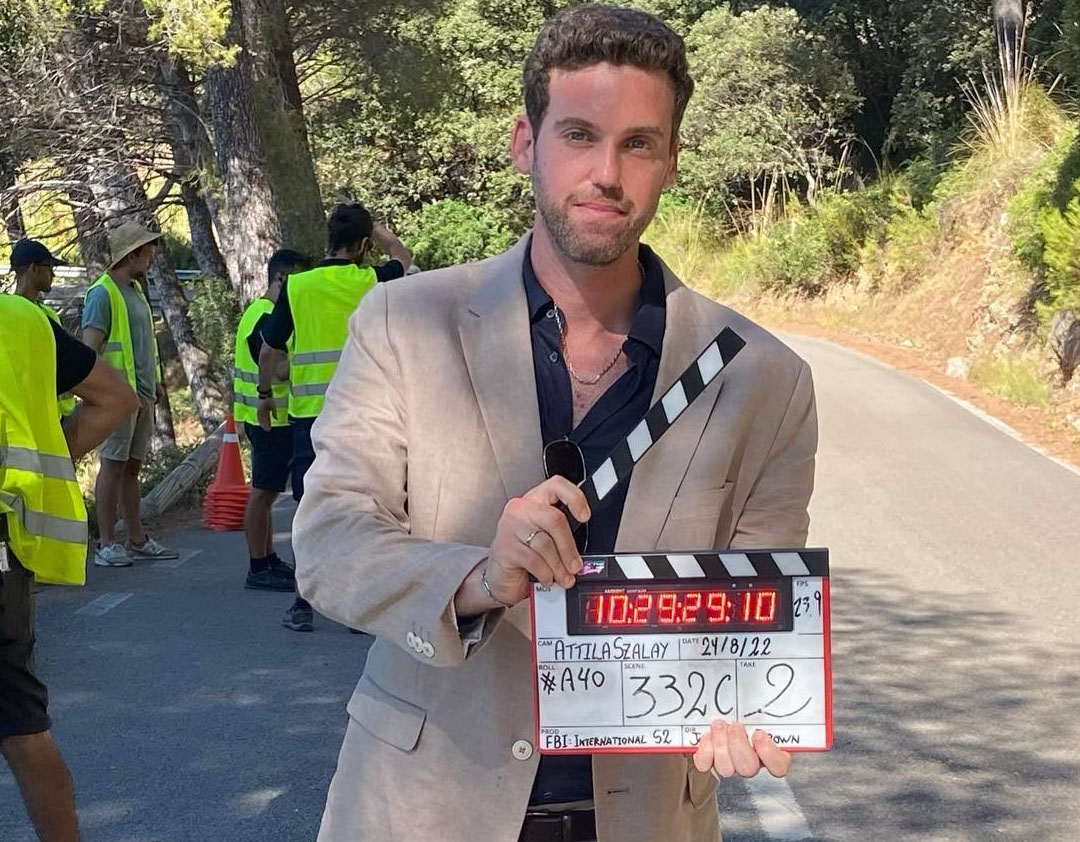
Nine years later, when luck still hadn’t struck, he began contemplating where to go from there, and then it happened. “I booked a feature film, ‘Teheran,’ and traveled to Glasgow for the shooting. On the last day there, I booked a TV show on CBS, ‘FBI International’ and right after that, I booked the part in ‘We Were The Lucky Ones.’”

The series, which will premiere on Hulu March 28, is based on the book by Georgia Hunter and tells the true story of a Jewish family separated at the start of World War II. The Kurc family is doing its best to live a normal life in Poland when the Nazis overtake their town. One sibling is forced into exile, another tries to escape and others are working in the factories of the ghetto or hiding in plain sight as gentiles. The limited series follows the family’s determination to survive and reunite.

Samuel is playing the role of Isaac, a Hasidic young man from a big family who was a childhood friend of one of the Kurc’s children, Addy (Logan Lerman). As the Nazis take over the town and turn it into a ghetto, he joins the Jewish Police in the hope of helping other Jews.

Ido Samuel with co-star in WE WERE THE LUCKY ONES.

Prior to moving to the U.S., Samuel appeared in the 2017 film, “Fill the Void,” which won seven Ophir Awards, the Israeli Oscars. The lead actress, Hadas Yaron, won a Best Actress Ophir for her portrayal of Shira Mendelman, an 18-year-old Hasidic girl living in Tel Aviv who is looking forward to an arranged marriage with a young man whom she likes. Yaron, the first Israeli actress to be named best actress at the Venice Film Festival, was also cast for “We Were the Lucky Ones.”

“I knew that they were looking for celebrities for this show, so I decided to do my best and give it my all to get it. The writing also was so good, and the characters were beautiful,” Samuel said. “I was thinking to tell them during the audition that I know Hadas, but the audition went so well that I decided to let it do the work. I was thrilled when they called me later and told me I got the part.”

Working on the series was an incredible experience, Samuel said. “Isaac’s character resonated deeply with me on both a personal and artistic level … During my preparation for another project, which also delved into themes of the Holocaust, I had the privilege of meeting a 96-year-old survivor. His wisdom and resilience left an indelible mark on me. I asked him a question that had been weighing heavily on my mind: ‘What kept you going in the face of such darkness and adversity?’ His response was simple yet profound: ‘I didn’t have the luxury of dwelling on it. Survival was instinctual, a primal urge that propelled me forward.’ Those words echoed within me throughout the entirety of filming, especially as I embodied Isaac, a character who endures immense suffering yet persists in clinging to hope amidst profound loss.”

It isn’t easy being an actor in Los Angeles and only a few make it. Samuel saw many of his friends give up on their dreams and leave town during the past ten years, but he persisted.

“I had many struggles in my career, but I never gave up because I wanted to prove that I can make it. This is a tough city for an actor to be in. There is a lot of talk and promises. I was supposed to be in four different films when I got here. I was told ‘we were going to start shooting in the summer’ and I was so excited, only to learn that it was just talk. It can be very frustrating. In the first two years, I didn’t leave town because I was afraid they were going to start shooting soon, and I’d be away.”

The eight-episode limited series started shooting in Romania late last year, and lasted for three months. Samuel took the opportunity to visit his family and friends in Israel before starting work on the show. He was there on Oct. 7.

“I was there for a week, and it didn’t feel real. A friend of my friend got murdered, a friend’s uncle got kidnapped; everyone in Israel knows somebody who something happened to him in this war. It’s shocking and doesn’t feel real. I hope that the series will show people what antisemitism can be like; it can bring people to dark places. I hope people will be more compassionate. It’s a trend now to be antisemitic; people consider it cool.”

Samuel was shocked to learn that some individuals he considered friends were antisemitic. “Those are people who always share everything that happens in the world on their social media, and when Israel was attacked, they kept complete silence. Then they started sharing videos against Israel, justifying why it happened. I got into lots of conversations with them, and it doesn’t make sense. People feel they can tell me things about what’s happening in Israel and Gaza while they’ve never been to that part of the world.”

Samuel is already getting ready for his next project. It’s another story about the Holocaust, based on true events. “We made a short film called ‘Dirty Bomb’ about Jewish prisoners in the Dora camp. The prisoners sabotaged the construction of the V-2 bombs.” The short received very good reviews in film festivals and is being developed into a feature film.

“After years of struggle, I started landing role after role, and I feel incredibly blessed. It’s truly a dream come true,” Samuel said gratefully. Alongside his strong work ethic and persistence, he credits his success to a special gift he received. When he arrived in L.A., he was invited to Shabbat dinners by a Chabad family he met during Sukkot. Recognizing that the young actor was alone in town, they made sure to include him every Shabbat and holiday.

“They kept urging me to put on Tefillin, something I had never done before. One day, one member of that family, a 22-year-old man bought me a pair of Tefillin so I wouldn’t have any excuse. I saw he paid for them $400. I felt so guilty that I started wearing them and recited the prayers. A week later, I started booking all these shows.”

He has continued to put on Tefillin ever since and also before each audition. “I always add, ‘With God’s help, we shall succeed.'”

It has proven to work well.

Celebrating a Decade of Dedication: Actor’s Journey to Success in Hollywood Read More »

Anthony Hopkins Stars in Film about the “British Schindler” Who Saved Jewish Czech Children During Holocaust

All 300 seats in The Museum of Tolerance’s Peltz Theater were filled for a screening of “One Life,” a new film about a British stockbroker who saved hundreds of Jewish Czech children from slaughter during the Holocaust. The date of the screening — March 14 — was significant, as it was the 86th anniversary of the first Kindertransport.

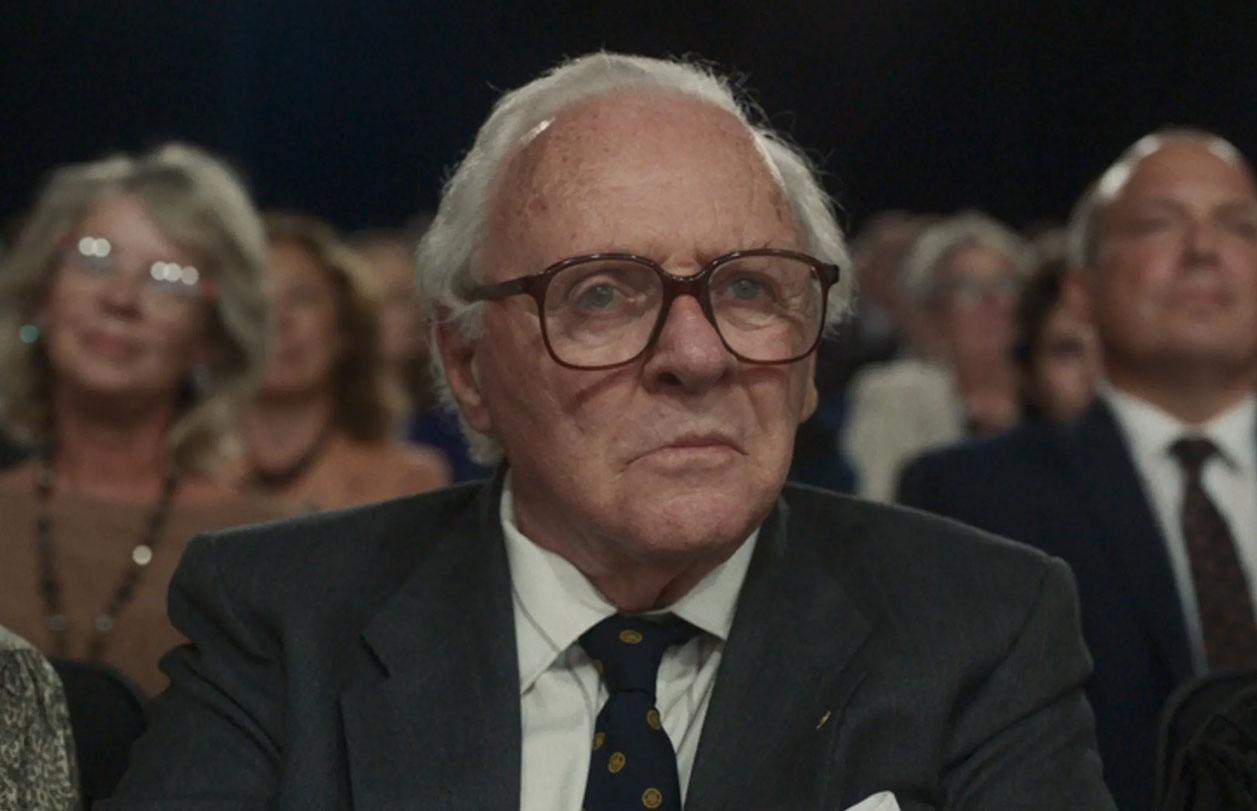
The film tells the story of Sir Nicholas Winton (Anthony Hopkins) through a series of flashbacks. The film opens in the 1980s, with Winton, now in his 70s, going through the meticulous, treasured paperwork that he saved for 40 years. The documents and photos he kept were his legacy of saving Jewish Czech children from the Holocaust.

His wife is irritated by the pack rat presence of her husband’s idle files, and encourages him to dispose of them. As Winton goes through the files, he is haunted by flashbacks of the children he couldn’t save. The story then moves to 1938, in the days preceding the Nazi occupation and annexation of the Sudetenland.

It’s a true story that will have viewers inevitably comparing it to “Schindler’s List.” While “One Life” isn’t as gruesome as Steven Spielberg’s film, it’s just as grueling. Scenes of families being ripped apart are no easier to watch.

There was an audible gasp from the audience during a scene where children are boarding a train in Prague, en route to the Netherlands and a boat to the United Kingdom. A Jewish father gives his eldest son his hat, bids him and the middle child goodbye, saying they’ll “be together again soon,” while holding his youngest son who has to stay behind with him.

Another major difference between “One Life” and “Schindler’s List”: Winton, who died in 2015, lived to be 106, while Oskar Schindler died at 66 in 1974. Without giving away too much of the film, Winton gets to see the fruits of his labors to save Jewish children.

Though Winton was born Jewish, his family converted to Christianity during his childhood. Viewing the film in 2024 is heartwarming as it comes at a time where the Jewish people are feel threatened and in need of allies outside of the community standing side by side with them.

Photo by Todd Felderstein (@ToddMakesFotos)

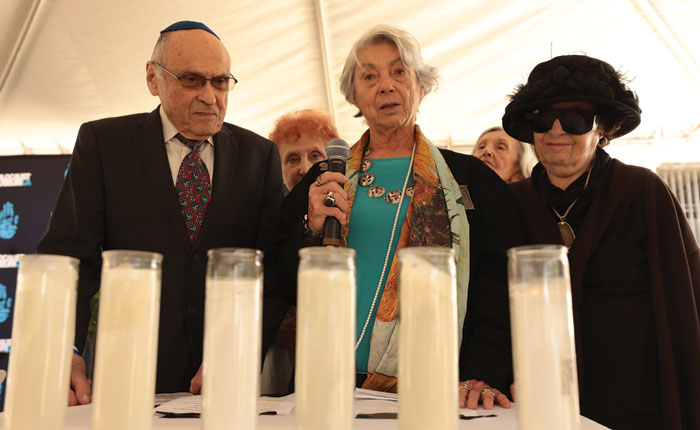
After the screening, Jewish Film Festival founder Hilary Helstein spoke to the crowd and acknowledged the offspring of children saved by Winton. Each of those descendants in attendance were introduced and stood up to be recognized:

Karen Kruger, daughter of Erica, a niece of the Daisy Sisters saved by Winton. She was accompanied by filmmaker Jeffrey Gary, her codirector of “Letters from Bruno,” a documentary about her family.

Kim Masters, editor at large of The Hollywood Reporter and host of KCRW’s “The Business.”  Winton rescued her mother, Alice and her mother’s sisters Yossi and Ellie. Kim and her mother had visited Winton at his home near London before he passed away.

Helene Lux and Beverly Lux, wife and daughter of Dave Lux. Dave and his brother Herman were saved by Winton. Mr. Lux spoke at the Museum of Tolerance for many years before he died in 2018.

Jessie Sloane, whose mother was saved by Winton.

Michelle M. Gold, daughter of a Kindertransport survivor who wrote “Memories that Won’t Go Away: A Tribute to the Children of the Kindertransport.”

Winton’s son, Nick Winton, Jr. was also in attendance. Speaking with the Journal, Winton Jr. said that Barbara, his late sister always said that the number one choice of an actor to play their father in a film is Anthony Hopkins. Barbara passed away in 2022 at age 69, and wrote a biography of their father “If It’s Not Impossible…: The Life of Sir Nicholas Winton.”

Winton Jr. told the crowd just how selfless his father remained through the rest of his life.

“Ten years before my father died, the production company, Seesaw Films, who made ‘The King’s Speech,’ went to see my father and asked if they could make a film about him,” he said. “He said, ‘no, don’t need any publicity. There’s no point. There’s already enough in the media and you’ll have to find something else to do.’”

It’s a good thing they didn’t listen, for so many more people will now learn the story of how one man led an effort to save 669 children, which has led to an estimated 6,000 descendants.

The Journal spoke with Nick Winton, Jr. about his father’s legacy:
 

JEWISH JOURNAL: You told me that your late sister Barbara’s dream casting for your father was Anthony Hopkins. How does it feel to see your father portrayed by one of the greatest actors of our time?
NICK WINTON, JR: Anthony Hopkins’ portrayal of my father is amazing. Few people who see the film will know just how well he captures my father looks, his mannerisms and his sense of humour. It is uncanny to watch and at times I am convinced that I am looking at my father on the screen.

JJ: What’s something that’s not in the film that you’d love viewers to know about your father?
NW: My father believed in what he called “Active Goodness”. That is, to be a good person one had to go out to find and help those in need. He didn’t feel that it was okay to be passive, and that simply to avoid doing anything bad didn’t make anyone a good person. He was involved in many charities and activities to help others throughout his long life.

JJ: Tell me about the earliest memory you have about learning of your father’s efforts to save the children?
NW: He was often asked, “why did you keep it a secret for such a long time”. His reply was “I didn’t keep it a secret. I just didn’t talk about it!”
Until the story appeared on the TV show ’That’s Life’ I didn’t realise the implications of what he had done. When I use that clip in my presentations to organisations and schools it still brings a tear to my eye at the massive impact the rescue had on so many people.

Anthony Hopkins Stars in Film about the “British Schindler” Who Saved Jewish Czech Children During Holocaust Read More »

Time to Do or Die

Five months ago, Hamas deliberately broke a ceasefire with Israel, resuming a war that began nearly the moment Israel abandoned the enclave back in 2005. A familiar reprise took shape over five wars: Hamas instigated hostilities; Israel retaliated, resulting in many Palestinian casualties of war; Hamas claimed victory in the battle for public opinion.

This latest war is different, however. The savagery on Oct. 7 was not merely an instigation. The stakes were raised by a troika of Hamas terrorists, UNRWA employees who, apparently, have always been in the raping and pillaging business, and “ordinary Gazans,” who have little claim to innocent civilian status. Together they laid siege to southern Israel in ways that demanded a resolution that will foreclose any future repeat performance.

The co-conspirators of Oct. 7 demonstrated once more for the world to see (because they chose to film it!) that they obey no laws of war, and boast how little value they place on life—whether it be Israeli, or their own. 

When will fair-minded people finally start believing them? Excusing barbarism has done neither the world, nor the Palestinian people, any good.

Much has happened, and not happened, since October 7. Lots of blood, ink and digital bandwidth has been spilled on land that few can even find on a map. Vastly larger losses of life went wholly unnoticed in the Congo, Sudan, Ethiopia, China and Syria — not to mention those valiant Kurds who never once hijacked a plane or placed a suicide bomber in a pizza shop. The world seemingly had no interest in those headlines, and not just because the press kept those stories off the front page.

What separates those hot spots of genuine mass murder from Israel’s existential wars of self-defense? Well, obviously, you can’t blame any of those other killings on Jews. If Jews were killing Kurds, even in self-defense, the Kurds would be treated like Palestinians. And, unlike the Palestinians, the Kurds actually deserve preferential treatment. 

This tells you everything you need to know about why, whether at the United Nations, the mainstream press, think tanks or academic institutions, the entire world appears to be against Israel — especially now. 

That’s precisely why we have already reached a do-or-die moment. Almost every day, in major cities across Europe and Canada, violent protests break out where the police are outnumbered, the Arab Street is one neighborhood closer to taking the West hostage, and Jews, many of whom have never been to Israel, are deemed legitimate targets if found walking the streets. 

America has not yet quite graduated to a European “No-Go-Zone” lifestyle, but give it time. Any day now the neighborhoods around Detroit will resemble Stockholm, and the people who live in them will suffer from Stockholm Syndrome. We all know that universities, nearly everywhere, have become infested with rabid antisemitism. The marketplace of ideas has been consumed by scavengers of hate. 

Meanwhile, American Jews have some serious decisions to make about their political and professional affiliations. 

Just over the past several weeks, Sen. Bernie Sanders (I-Vt.) has called for the halting of aid to Israel, and Sen. Chuck Schumer (D-N.Y.) called upon the Israeli people to oust their premier. A noted economist at Columbia University charged the United States with complicity in genocide for arming Israel with aid. A film director receiving an Academy Award denounced Israel. Vice-President Kamala Harris’ stepdaughter raised money for UNWRA on Instagram. (Her father, the Second Gentleman, sits on a White House task force to quell antisemitism. How’s that working out?) 

What do they all have in common? You guessed it: they are all Jews — although two of them — the film director and the Second Daughter — have publicly renounced their religion. 

In the case of Schumer, he’s undoubtedly haunted by the specter of Rep. Alexandria Ocasio-Cortez, who is a likely challenger to his left. He just so happens to possess the worst combination of credentials to remain in office: An elderly Jewish white male who supports Israel. Schumer can’t do anything about his age, gender and skin color, but chucking Israel to placate the progressives is apparently a small price to pay if it results in the cameras still being pointed at his face.

For all of them, the sources of their Jewish betrayal, their lack of remorse, are of no consequence. Returning them to the tribe is a hopeless endeavor. Many reasons might explain their abandonment. Cynical gamesmanship. Career enhancements. Moral narcissism. A bad Hebrew school experience. Dropped on their heads during their bris is always a possibility. 

None of it matters. They comprise the weakest link in the Jewish chain, the fatal flaw in our flank. Better to be rid of them.

We are at war, and not just in southern Gaza and northern Israel. At wartime, you depend on those you can count on. Those with whom you can make common cause, who recognize the moral imperative of a democratic state surrounded by Islamist theocracies that hate the West. That Jewish canary in the oil field, hemmed in by terror. 

Embrace the people who can read a map, know their Old Testament and Middle East history, aren’t easily deluded by lies, and couldn’t care less if A-listers and social media influencers like them or not.

Embrace the people who can read a map, know their Old Testament and Middle East history, aren’t easily deluded by lies, and couldn’t care less if A-listers and social media influencers like them or not.

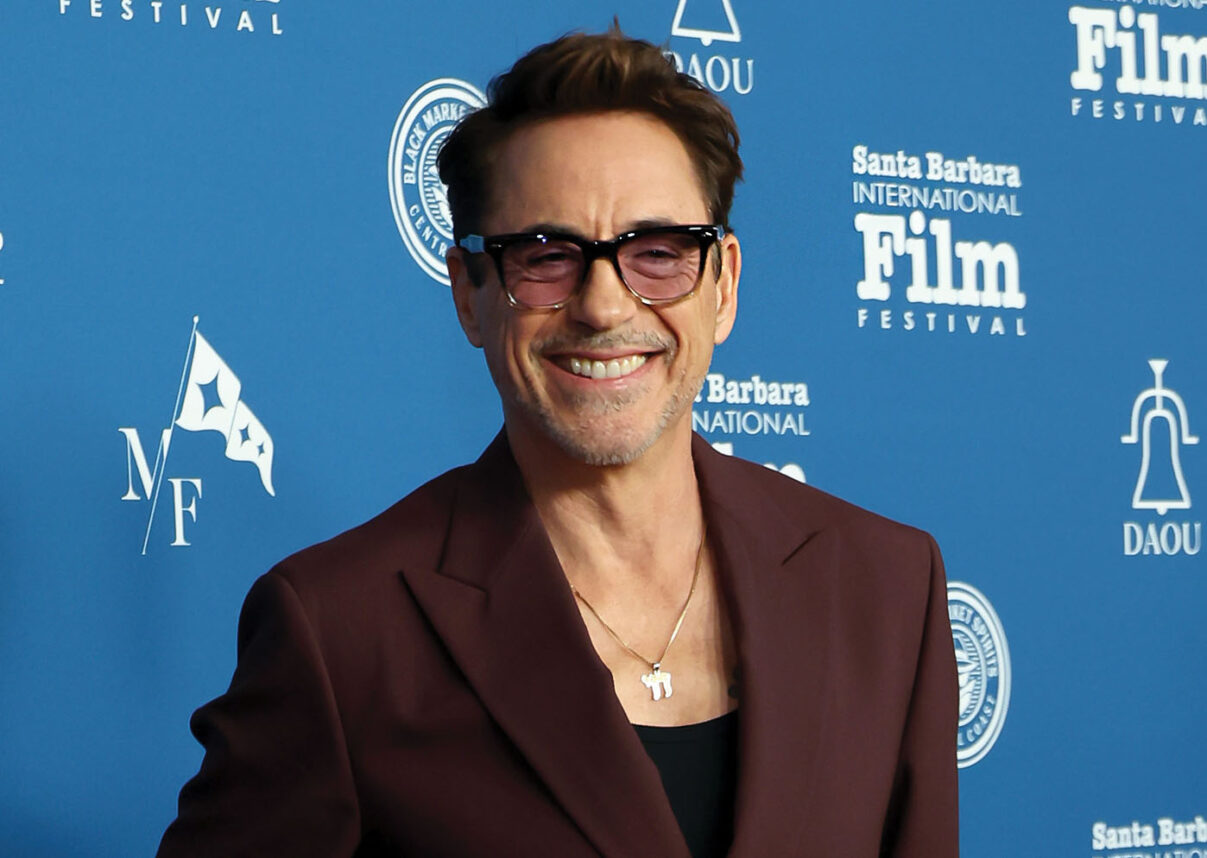
Robert Downey Jr. is not Jewish, but he openly wears a chai. Paul McCartney, Jon Voight, James Woods and Bill Maher have long stood beside the State of Israel. Cindy Crawford, Amy Smart and other non-Jewish celebrities have recently taken to Instagram to proclaim their support for Jews and rejection of antisemitism. 

Rocker John Mellencamp presented an award several years ago at the Rock and Roll Hall of Fame Induction Ceremony by stating emphatically, “F— Antisemitism!” Chris Rock honored his old pal, Adam Sandler, when he received the Mark Twain Prize for American Humor, by acknowledging, “Jews … nice people.”

Evangelical Christians live in Red States, but support Israel in ways that far surpass Jews in Blue States. Why? For one thing, they are not impressed with Hollywood glamour or coastal literary elites. Such shallow calling cards are, regretfully, crack cocaine for Jews. 

But they also understand what happens to Christians under Sharia law. When Jordan occupied the Old City of Jerusalem from 1949-1967, the Christian Quarter, where Jesus Christ walked along the Via Dolorosa and the Church of the Holy Sepulcher remains, was treated like a garbage dump. 

When Israel reclaimed the Old City after the Six-Day War, each of the Quarters were restored and respected. 

This is a time for serious people who will choose a side and take stands, and for Jews who are fully committed and won’t flinch. The calculating operators, opportunists and apologists can go stand somewhere else. It’s time to take names, and perhaps even more importantly —to dispose of some.


Thane Rosenbaum is a novelist, essayist, law professor and Distinguished University Professor at Touro University, where he directs the Forum on Life, Culture & Society. He is the legal analyst for CBS News Radio. His most recent book is titled “Saving Free Speech … From Itself.” 

Time to Do or Die Read More »

Lies My Comrades Told Me

It began with a smart, skinny, good-natured guy with a Trotsky goatee, whom I met at UC Berkeley as I was protesting South African apartheid. It was 1985. I thought the Trotskyist group he belonged to was dogmatic and nuts, but that didn’t stop me enjoying his company. By the following year I’d become his girlfriend and, in an overnight conversion that suggests I wasn’t the independent-minded woman I thought I was, determined that the strident newspaper he sold was the brave bearer of essential truths.

I’m shocked and ashamed today to reread the articles that must have impressed me when I was 19, stupid, desperate for meaning and eager to please my boyfriend’s comrades. The Zionist madmen threaten the Soviet Union with nuclear apocalypse, they screamed in a front-page article, and I became convinced of the urgent need to fight for socialism. They told me Natan Sharansky, who had just been released from the gulag and was going to speak in San Francisco, was a traitor who had spied on the Soviet workers’ state, and I joined them in picketing that magnificent man. Soon after, I joined their youth organization and later their party, staying for over 25 years. During that time, I not only firmly believed I wasn’t antisemitic: I thought I opposed antisemitism. But running through my belief system was the conviction that history had unfortunately put the Jews on the side of evil reaction, and the righteous must mobilize against their sovereign and ugly offspring, the State of Israel.  

Running through my belief system was the conviction that history had unfortunately put the Jews on the side of evil reaction, and the righteous must mobilize against their sovereign and ugly offspring, the State of Israel. 

Then the Soviet Union fell, and we found solace for our demoralization and grief in the rising struggle of the Palestinians. Communism is dead, we were relentlessly told, but the intifada lives. Sept. 11 and the war on terror ushered in forces hostile to our most basic vision of progress, and it required some mental gymnastics — which is to say, a steady erosion of truth — to justify our belief that the Islamic fundamentalists slaughtering people at Baghdadi neighborhood markets were on the side of progress, because at least sometimes they fought the world’s greatest enemy, the U.S. military machine. 

The unchallengeable dogma on which so many of our lies were based — a tenet shared by countless left-minded people today — is that nothing is, and cannot possibly be, worse than U.S. imperialism. The doctrine cannot be shaken by any evidence. Once a person accepts that Western imperialism is the greatest possible evil, she must cheer any atrocity carried out by the neocolonial oppressed against it; or if she has any kind of conscience, lie about what her heroes actually do. A corollary of the doctrine is that tiny Israel is the U.S.’ war-crazed puppet, if not the puppeteer. Antisemites have always used Jews to represent whatever it is they hate. So for today’s anti-imperialists, Israel is the quintessence of imperialism, truth be damned.  

Once a person accepts that Western imperialism is the greatest possible evil, she must cheer any atrocity carried out by the neocolonial oppressed against it

My former party’s zeal for the Soviet Union was unfashionable in the 1980s left and sounds quirky today. But my ex-comrades must be gratified that their anti-Zionist vitriol, a niche passion of the far left when I was young, are de rigueur for today’s “progressives.”  When college students and Hollywood stars rail that Israel is carrying out a genocide, Gaza is a concentration camp and Israelis are acting like Nazis, they’re echoing the propaganda of my former party, which we in turn snapped up from the Soviet Union. I can find frenzied claims of a Zionist “Final Solution,” “Holocaust” and “genocide” of the Palestinians, in the yellowing pages of my group’s press many decades ago. 

People ask: How can anyone believe such obvious lies, or deny the atrocities of Oct. 7? I’ll wager that most don’t believe a lot of what they’re saying. They take the claims on faith, as I did, because they are made by people they respect, trust and even love. The first hesitant “I guess so” leads inexorably to accepting the next questionable “fact,” because they’ve already invested too much emotionally to challenge their comrades or friends. Soon they’re committed to defending a network of wild assertions about things they know nothing about. In an electrified region of their minds marked “Danger — Do Not Cross,” they suspect the things they’re saying may, in fact, not be true. 

But adhering to truth is nowhere near as important as being loyal to their tribe — a beloved yet tyrannical community, which makes life a misery for those who fail to uphold the creed. Today’s self-styled progressive is every bit as beholden to the party line as I, in my explicitly Leninist organization, was. This partly explains their rage: At some level they know they’re spouting lies. This makes them hate even more passionately those who make them feel guilty about it.  

At some level they know they’re spouting lies. This makes them hate even more passionately those who make them feel guilty about it.

One of the more sickening moments of my life was about five years ago, in my London apartment, when I realized that things I’d believed and fought for were ugly lies. At first I was naïve enough to think it was an honest mistake, which my intelligent, scrupulous comrades would rectify if I brought it to their attention. Instead they turned on me with the viciousness of an abused wounded pit bull, and when I still challenged them, my life fell rather dramatically apart. So I can’t offer immediate assurances to anyone wondering whether to probe behind that electrified fence. There will be a price.

But I soon found support and belonging in a new community, among my own Jewish people, and forgiveness I often don’t feel I deserve. I’m prone these days to second-, third- and fourth-guessing, but I’m confident about those things I do assert as true. I’m endlessly gratified about the open intellectual climate I’ve found on the other side, which contrasts so starkly to what I’m used to, and reflects the Jewish tradition of healthy skepticism and argument. There’s freedom here — to question, to read unapproved books, to hear forbidden speakers, to think for yourself, to search for truth as you genuinely see it. 

So to those who hesitate: Courage. You will suffer losses and pain, but soon you’ll be asking, as I did, What took me so long? As Liel Leibovitz wrote in his essay “The Turn”:

“The freedom you feel on the other side is so real it’s physical, like emerging from a long stretch underwater and taking that first deep breath in the cool afternoon air. None of it makes the lost friends or the lost career opportunities any less painful; but there’s no more potent source of renewable energy than liberty, and your capacity to reinvent—yourself, your group, your life — is greater than you realize.”


Kathleen Hayes is the author of ”Antisemitism and the Left: A Memoir.”

Lies My Comrades Told Me Read More »