fbpx

January 22, 2024

Learning to Love Judaism’s Best Loved Book

Poetry is one of humankind’s most enduring and significant art forms. The only problem is that most of humankind doesn’t seem to care.

According to a survey from the National Endowment for the Arts, just 9.2% of American adults read any poetry in 2022. Compare that with 53% who read prose. 

Religious culture, however, has a different relationship with poetry. It is often said that the book of Psalms — the Tanakh’s collection of liturgical poems — is the “best loved” book of the Hebrew canon—the breakout hit of the ancient world that accompanies the soul of Jew and Christian alike in times of trouble or joy. 

Religious Jews are in near constant contact with the book of Psalms. They are a significant part of every prayer service. They are prescribed for moments of anguish and moments of joy. They are a response to life events or merely a way of passing time on the bus, as any commuter in Jerusalem has observed.  
Many—myself included—have long struggled to connect with Psalms. It is too repetitive. It is too self-assured. The Psalmist (as the anonymous author is often called) is triumphalist and vengeful when he’s in a good mood.

This is true, but many — myself included — have long struggled to connect with Psalms. It is too repetitive. It is too self-assured. The Psalmist (as the anonymous author is often called) is triumphalist and vengeful when he’s in a good mood. When he’s feeling low, he writes paranoid screeds about “enemies” and obsesses over the punishment and humiliation of evildoers. 

Sure, there are beautiful lines interspersed, but they have never been enough for me to love Judaism’s “best loved” book.

And so, when I was asked to review “Duets on Psalms: Drawing New Meaning From Ancient Words” by Rabbis Jack Riemer and Elie Spitz, I leapt at the opportunity, hoping that I would find the authors’ love of Psalms contagious. After all, I’m a rabbinical student. I am someone whose job it will be to help people connect with Torah. How can it be that I am unable to love our most lovable text?  

Their book is a work of scholarship and a labor of love. The authors select 14 out of the 150 psalms to analyze. They both offer their own interpretations, hence “duets.” Perhaps these are also “duets” in that the authors seem to riff on the psalms and off one another. Rather than strictly analyzing each psalm according to a predefined set of literary or religious criteria, they follow their instincts and improvise, moving seamlessly between religious commentary, personal reflection, and historical context.

Take their treatment of Psalm 35, which focuses entirely on its role in inspiring the founding fathers at the Continental Congress in 1774.

Or take their treatment of Psalm 145, known popularly as Ashrei. It is said by the sages of the Talmud that one who recites Ashrei three times a day is guaranteed of his or her place in the world-to-come. I don’t tend to take such Talmudic pronouncements about the afterlife literally, but I have long recognized this as a good deal — life eternal for an unbeatably low price. 

Hence, in my own version of Pascal’s wager, I have been punctilious about never missing an Ashrei. This has made the recitation of this particular psalm into a dreadful chore, however, something I do by rote to get my world-to-come points and then move on. 

In “Duets on Psalms,” Rabbi Riemer helps me to repair this relationship with the text: “We think that it means that if you say the Ashrei sincerely you will be admitted into the world to come. But that is not what it says. It says that whoever says the Ashrei IS in the world to come. For these few minutes, while we say these words, we are in the world to come. And so it is wrong to rattle off these words quickly as so many of us do.”

I was also moved by their discussion of Psalm 137.  Psalm 137, known commonly as “By the Rivers of Babylon,” is a poignant portrayal of the pain of exile, but its final line is a gruesome expression of bitterness and violence. 

“Fair Babylon, you predator,

a blessing on him who repays you in kind

what you have inflicted on us; 

a blessing on him who seizes your babies

and dashes them against the rocks!”

The book’s discussion of this psalm centers almost entirely on this last line. “The last part is, to put it mildly, not loved at all. There are some people, both Jews and Christians, who abhor this part of the psalm. It is considered by some to be the most offensive passage in the entire Bible.”

Hence, the authors grant us permission to not love every line of Psalms, even while they guide towards deeper understanding. They quote a preacher named Samuel Spurgeon, who wrote:

“Anyone who has stood by helplessly and watched his wife raped before his eyes, and anyone who has stood by helplessly and seen his children murdered before his eyes, and anyone who has seen the sanctuary that he considers to be most holy reduced to ashes before his eyes has a right to criticize this passage. The rest of us should keep a respectful silence.”

The impact of reading “Duets on Psalms” has been twofold. First, their commentaries have made these ancient poems light up for me with new significance and associations. Second, they have reassured me that it’s not an aesthetic or a spiritual failing on my part that I have thus far been unable to love Judaism’s “best loved” book.

As Rabbi Spitz writes in the introduction, “I only recently began to appreciate their artistry, origins, and richness of content. What I found engaged my heart and mind. I fell in love with Psalms and I want to show you why.”

Rabbi Riemer then writes: “We can somehow manage without knowing the names and dates of the authors and without knowing the musical notes. But what makes the psalms so difficult for us to understand is that they were written by people who felt a deep and a personal relationship to God, and we do not have this awareness.”

The book thus serves as a bridge for those who are either new to the psalms or who, like me, are deeply familiar with the psalms but have been looking for a way to connect on a deeper spiritual and emotional level.

The book thus serves as a bridge for those who are either new to the psalms or who, like me, are deeply familiar with the psalms but have been looking for a way to connect on a deeper spiritual and emotional level. 

I cannot say that you’ll soon see me on the Jerusalem bus mouthing Psalms quietly as we lurch through traffic, but my relationship with this part of our scripture has been altered and deepened, and this is more than enough. Selah.


Matthew Schultz is a Jewish Journal columnist and rabbinical student at Hebrew College. He is the author of the essay collection “What Came Before” (Tupelo, 2020) and lives in Boston and Jerusalem.  

Learning to Love Judaism’s Best Loved Book Read More »

Israel and Its Multifront Mayhem

In its short history as a modern state, Israel has been a Cinderella story where the glass slipper doesn’t quite fit without arch supports. A mere 9 million people, sovereign for a scant 75 years, an apparent underdog, yet overabundant in achievements: blooming deserts, desalinated water, pill cameras and pacemakers, GPS and the Iron Dome, derring-do rescues in Uganda and Ethiopia, and a goodwill Amazonian ambassador named Wonder Woman.

And, yet, with all those and other contributions to humanity, there are still 132 hostages in Gaza, 20 of whom are believed to be dead, and that’s after more than 1,200 were murdered on October 7. And have I mentioned that Jewish babies were beheaded?

Yes, you heard that right: “beheaded.” Israel, the epitome of 21st-century enlightenment, doomed by the Islamist ill-fate of being surrounded by medieval imitators. Israel’s flirtation with a fairytale existence succumbs to the bitter knowledge that there are those with college degrees (who even teach in the Ivy League!) who refer to the October 7 massacre as “exhilarating,” and believe the perpetrators of such unspeakable acts to be not monsters, but freedom fighters.

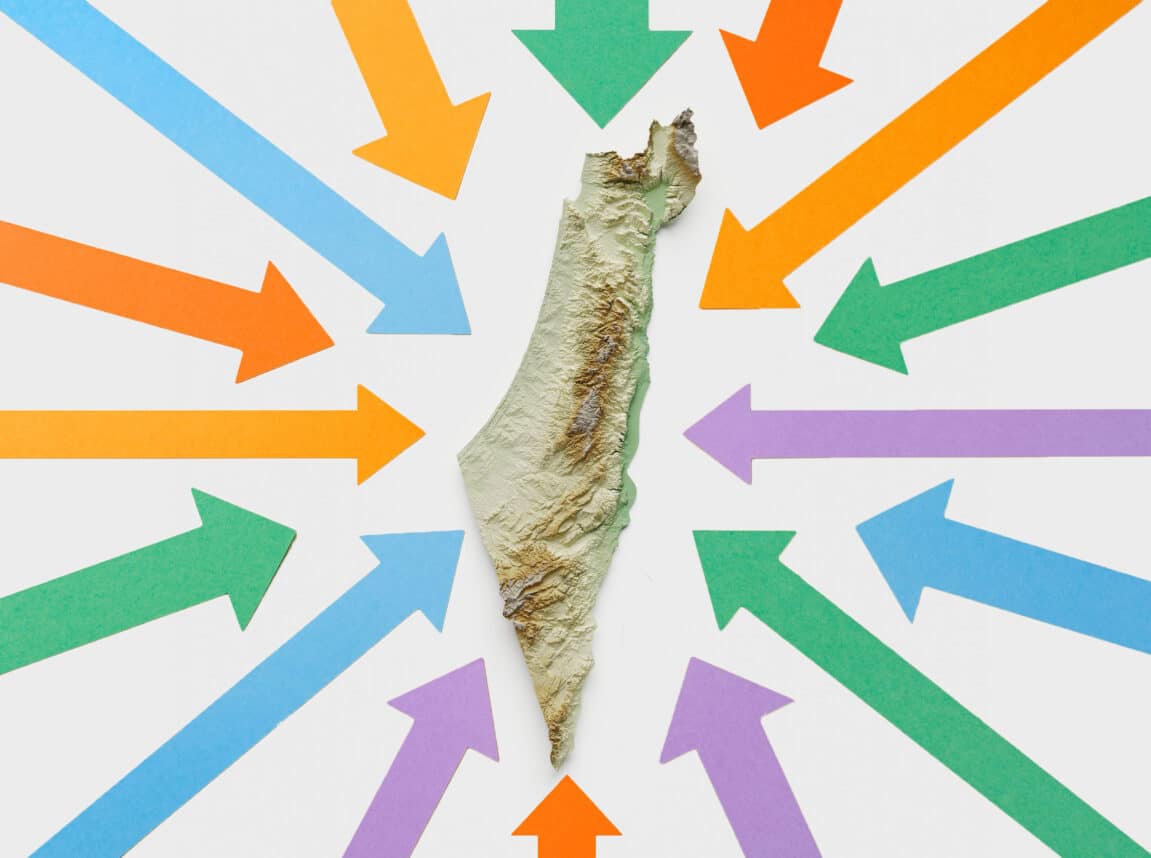
Isolated and encircled from all sides by neighbors and fiends that mean them harm, no nation of its size and population deficits has ever had to cope with so many forces arrayed against it.

There is the ongoing war in Gaza, with daily rocket fire aimed at Israel, unabated even after 100 days of fighting. Intelligence agencies estimate that Israel has eliminated only 20% to 30% of the roughly 30,000 Hamas terrorists who were operating in Gaza before October 7. Israel believes it has so far killed 9,000 terrorists, with an additional 1,000 who were in southern Israel on the day of the attack. As many as 16,000 terrorists have been wounded, many of whom are not expected to return to the moral hazard and urban minefield that is Hamas’ chosen theater of war.

There are approximately another 14,000 causalities of war—which include women and children. Israel has lost 190 soldiers since ground forces entered Gaza, with 1,200 reported wounded. And Gaza itself, which was never but an eyesore, at best, given Hamas’ overinvestment in tunnels and rocket launchers, and Israel’s bombing campaign, now most resembles Mars.

Those are the grim unpleasantries. One distressing conclusion is that Hamas still has weapons to spare and civilians to sacrifice—even after all that ruin and lost treasure. This war is far from over if Israel requires that Hamas be obliterated as a future threat. That’s the outcome Israelis demand and what its government has promised.

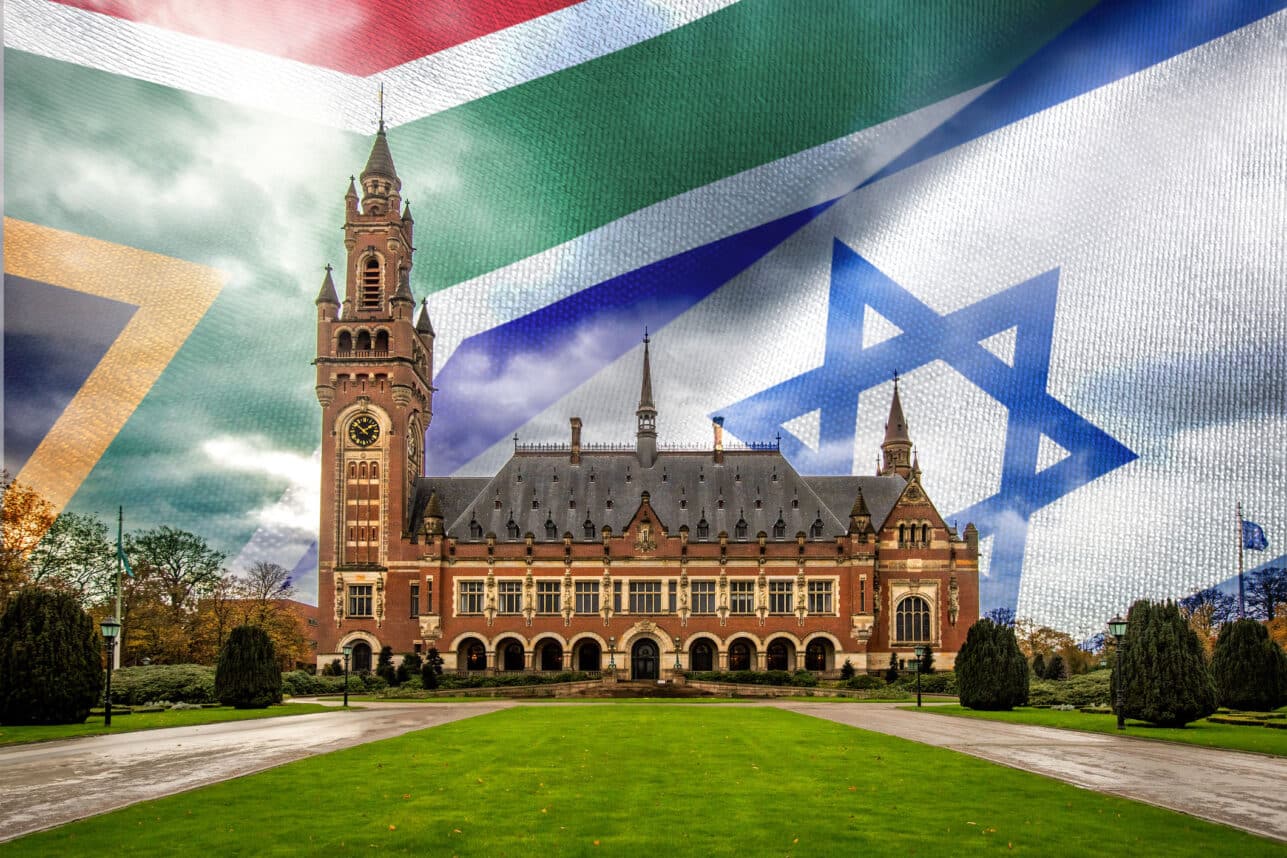
Yet, this is a tall order given that battlefields continue to mount. Two weeks ago, Israeli lawyers and jurists were at the Hague, before the International Court of Justice, defending against South Africa’s indictment that Israel is guilty of genocide in Gaza.

If Israel wishes to remain the defender of the Jewish people, it must continue these dizzying campaigns on multiple fronts. Some require law degrees, others diplomatic initiatives, and all a steady hand. In many tragic ways, not much has changed since its founding in 1948.

Cross-border fighting with Hezbollah has intensified in Lebanon, too. In Syria, Israel has launched airstrikes against cargo trucks, infrastructure, and Iranian military advisors. Meanwhile, the Houthis in Yemen, in solidarity with Hamas and at Iran’s whim, have disrupted commercial shipping in the Red Sea. This has brought the United States into the fight given that Iran is the proxy puppeteer behind all of these military incursions—the architect of so much promiscuous meddling without ever having to get its own hands dirty.

President Biden’s warning to Iran, “Don’t!,” as in, “Stay out of it,” was prescient.

These are the multiple fronts Israel faces. Turn in any direction, and there is a snarling menace to outflank.

And now a new one. The relatively silent trenches of the West Bank are starting to make some noise. The region is governed by the Palestinian Authority, but polling shows that West Bank Palestinians would favor Hamas in any election—both before and after October 7.

Violence in support of Hamas is fomenting beyond Gaza, in that other territory that would comprise a Palestinian state. The United Nations estimates that 357 Palestinians, including as many as 90 children, have been killed in the West Bank and East Jerusalem, the highest level of militancy since the second intifada. Hundreds of intelligence alerts are responded to each day. With Hamas having won the hearts and minds of the West Bank, Israel can no longer rely on the Palestinian Authority to provide security in the region.

All of this has revived the dreaded “stabbing intifada.” Palestinians are once again ramming cars into pedestrians in central Israel. Obviously these incidents are mere pop-guns compared to the paragliding theatrics of October 7. But it has opened up a new front in this ever-expanding war without borders, stretching the capacity of Israel to defend itself against so many rotating enemies.

Terrorists operating in the town of Nablus planned a large-scale attack that Israel foiled. Shin Bet detained nearly 2,700, over 1,300 linked to Hamas. New offshoots of Hamas have grown, largely due to excitement over October 7, and in response to the stalled Palestinian-Israeli peace process and a newly empowered Israeli settler movement.

Israel’s right-wing government will someday have to answer for the misallocation of IDF resources that were devoted to protecting the religious settlers of the West Bank over the Israelis that lived in the south—many of whom, ironically, were progressives and supporters of a two-state solution. Hamas didn’t care that it was slaughtering potential allies—those Jews that suffered the military lapse and paid the highest cost.

Meanwhile, Israel’s enduring peace treaty with Jordan is fraying because West Bank terrorists are operating out of Jordanian hospitals—operating as terrorists, and not surgeons. Israel has launched attacks against these facilities, but doing so is, as in Gaza, at the expense of global goodwill—even among peace partners.

At the same time, Israel must massage the Biden administration’s internal messaging to reduce the casualties in Gaza. It must also worry about the Arab Street erupting at any time in the states that comprise the Abraham Accords. Friendships in the Middle East and Persian Gulf are inherently fleeting and fragile.

If Israel wishes to remain the defender of the Jewish people, it must continue these dizzying campaigns on multiple fronts. Some require law degrees, others diplomatic initiatives, and all a steady hand. In many tragic ways, not much has changed since its founding in 1948. A fledgling country, poorly armed—with many soldiers bearing numbers on their arms—miraculously held back five invading Arab armies.

The neighborhood hasn’t really changed all that much.


Thane Rosenbaum is a novelist, essayist, law professor and Distinguished University Professor at Touro University, where he directs the Forum on Life, Culture & Society. He is the legal analyst for CBS News Radio. His most recent book is titled “Saving Free Speech … From Itself.” 

Israel and Its Multifront Mayhem Read More »

405 University of California Faculty to Regents: Stop Professors from Using University to Promote Hatred of Israel

Dear University of California Board of Regents,

We, the undersigned, are faculty members from a number of UC campuses, who are deeply concerned about the growing hostility and harassment targeting Jewish members of the campus community in the wake of Hamas’ October 7th massacre of Israeli civilians. Of particular concern is the role played by individual faculty members and whole departments in fomenting the hostile, antisemitic climate that exists on many of our campuses, through their use of the University’s name, facilities and resources to engage in anti-Zionist political expression, whose goal is to demonize, delegitimize, and ultimately dismantle the Jewish state.

At the November Regents meeting Chair Leib acknowledged with alarm the growing anti-Jewish hostility on UC campuses and underscored the contribution of UC faculty to the problem. He specifically noted reports of “discrimination in the classroom,” “episodes of abuse” by faculty, and students’ horror at hearing faculty praise Hamas’ “unspeakable brutality” and seeing it “justified on many University websites.” Chair Leib unequivocally stated that such faculty abuse was “in violation of the faculty code of conduct and our University policies,” emphasizing, “We have no patience for faculty who abuse their positions and willfully violate our policies.”

We greatly appreciate Chair Leib’s public acknowledgement and condemnation of faculty who contribute to campus antisemitism by abusing their University positions and state resources to promote anti-Zionist advocacy and activism. However, we believe that the Regents themselves must take decisive action to ensure that University policies proscribing such behavior are robustly enforced, since neither the academic senate nor campus administrators have been willing to exercise their due diligence in addressing a problem that threatens to do great harm not just to Jews, but to the entire University.
A glaring example of UC faculty flagrantly violating University policy by using their departmental status and the University’s name and resources to promote political propaganda and activism – with complete impunity – can be found in the Critical Race and Ethnic Studies Department (CRES) at UC Santa Cruz. According to a recent detailed report, CRES faculty have been engaging in anti-Zionist advocacy and activism, as a department, since at least May 2021, when a statement pledging CRES’s allegiance to “the struggle for Palestinian liberation,” and committing its faculty to bringing into their classrooms an academic boycott of Israel that UC Chancellors unanimously condemned as “a direct and serious threat to the academic freedom of our students and faculty,” was posted to the CRES website. Since Hamas’ October 7th massacre, examples of CRES’s anti-Zionist political advocacy and activism – all of them documented on their departmental website – have dramatically increased in frequency and intensity. These include incorporating counterfactual anti-Zionist propaganda intended to demonize and delegitimize the Jewish state and its supporters into their teaching and teacher training programs; promoting the statements of organizations committed to dismantling the Jewish state; shutting down their department as part of a “Global General Strike” against Israel and calling for students to boycott their classes; and promoting and participating in the “Shut It Down for Palestine” protest rally of Students for Justice in Palestine (SJP) that illegally blocked access to the campus and endangered the safety of students and staff.

Tellingly, less than a week after receiving a clear warning from the UCSC Provost highlighting UC policies prohibiting faculty from engaging in political advocacy in educational spaces, an invitation to join Faculty for Justice in Palestine (FJP), a group wholly devoted to anti-Zionist advocacy and activism in collaboration with SJP, was posted to the CRES homepage and linked to the FJP’s founding manifesto, which was signed by more than 60% of CRES’s principal faculty.

CRES’s commitment to anti-Zionist political advocacy and activism, as a department and as part of its core mission, harms the University in many ways: it corrupts the most basic standards of scholarship and tarnishes UC’s reputation as a world-class research institution; it coerces the consciences of students and fellow faculty by chilling dissent and marginalizing anyone who disagrees with CRES’s political orthodoxy; it deprives students of accurate and crucial knowledge about a complex topic of global importance and violates their fundamental right to be educated and not indoctrinated; and, as Chair Leib has already noted, it incites animus and harm toward Jewish members of the campus community.

As the report points out, CRES’s unabashedly political expression apparently violates several UC policies and California laws that prohibit the use of the University’s name, facilities and resources for political advocacy or indoctrination, and sanction the failure of faculty or departments to fulfill their contractual and fiduciary responsibilities. The fact that all of these incidents are still proudly displayed on CRES’s departmental website is proof that neither UCSC’s academic senate nor its administrative leadership is willing to take responsibility for holding CRES faculty accountable for violating UC policies or undermining the academic mission and basic obligations of the University to its students and staff.

To be clear, although CRES’s flagrant misconduct is extreme, faculty throughout the University system are using their departmental status to engage in similar kinds of politically motivated and directed behavior. For instance, like CRES, the Ethnic Studies department at UC San Diego posted a statement to its website announcing that in solidarity with #standwithpalestine’s call for a General Strike, the department would be “suspending normal classroom sessions on October 20th, 2023”. At UC Merced, the Department of History & Critical Race and Ethnic Studies posted on its homepage a link to the department’s statement on Palestine, entitled, “Genocide in Gaza: Context and Conversation,” that vilifies Israel, rejects the characterization of the Hamas massacre as terrorism, and calls on the UC administration to “endorse the call for Boycott, Divestment, and Sanctions.”

We therefore urge you to take action to ensure that all UC policies prohibiting faculty use of the University’s name, facilities or resources for political advocacy or indoctrination are strictly enforced at UCSC, and on all UC campuses. In particular, we recommend you request that each Chancellor submit an annual report of all violations of these policies and what steps they have taken to address the violations.

Thank you for your consideration,

405 Current & Emeritus UC Faculty, including 50 Distinguished Professors


The letter was spearheaded by Ilan Benjamin, Distinguished Professor in the Department of Chemistry and Biochemistry at UC Santa Cruz; Judea Pearl, Chancellor’s Professor in the Computer Science Department at UCLA; and Shlomo Dubnov, Professor in the Music Department and Computer Science Department at UC San Diego, who serve as the Steering Committee for UC Faculty for Academic Integrity, as well as 402 current & emeritus UC faculty members.

405 University of California Faculty to Regents: Stop Professors from Using University to Promote Hatred of Israel Read More »

South Africa Accuses: The Trial of Israel and the Ghosts of Soviet Anti-Zionism

The October 7, 2023 Hamas attack on Israel reanimated the long history of anti-Jewish violence, both ethnoreligiously and ideologically incited, from the pillaging mobs during the Crusades to the pogroms of the 1900s, from the genocidal annihilation of Jewish communities by the Haydamaks in Ukraine in 1768 to the genocide of Jews by Nazis and their accomplices during the Shoah. But the Hamas violence, which took the lives of nearly 1200 people on Israeli soil, ripped hostages from families and communities, and forced Israel into yet another war it did not seek with its Arab neighbors, opened a new chapter in the history of “legal” persecution of Jews.

In this legal history of religious Judeophobia and racialized antisemitism, neither frenzied mobs brandishing axes nor trained commandos armed with submachine guns do the job of punishing Jewish victims for their own victimization. In this history, spanning from the early Middle Ages to the present, the prosecutors—persecutors—of Jews are kings and government officials, judges and learned jurists. Legal injustice against individual Jews and whole Jewish communities still touches the minds of students and theater-goers when they confront Shakespeare’s “The Merchant of Venice,” set in the Italian city that invented a model ghetto. Medieval prejudice, outrageous manipulation of evidence, and the doge’s contrivance all conspire in a judgment against the Jew Shylock, who cannot achieve a fair verdict in a European court of law. Not for the love of Jews but for the sake of verisimilitude, Shakespeare’s genius captures the crux of the history of the Jews’ legal persecution.

In the Russian Empire, the Pale of Settlement and the inequality of Jews were legal, and in Germany the passage of the Nuremberg Laws in 1935 legally stripped Jews of their rights as citizens. The world likes to forget, or to feign ignorance, that throughout history, injustices against Jews have been carried out legally in different institutions of jurisprudence and courts of law. In the 19th and 20th centuries this happened, most egregiously, in the Russian Empire, France and the Third Reich but also in the United States of America (e.g. the Leo Frank trial of 1913) and in the Stalinist USSR and Eastern Europe (e.g. the trial of the Jewish Anti-Fascist Committee or the Rudolf Slánský trial, both of 1952). Trials of Jews, falsely accused of vicious crimes against non-Jews and of plots against countries, from murder and rape of Christian children to high treason, from well poisoning to being involved in a “Zionist conspiracy,” were conducted by judges, juries, and military tribunals. These trials constituted a particular abomination of truth and justice right under Themis’s blindfolded yet antisemitic gaze.

On 29 December, 2023, South Africa brought a case against Israel in the International Court of Justice (ICJ) in The Hague, accusing Israel of allegedly committing genocide against the residents of Gaza. The ICJ trial of Israel bears many marks of the notorious antisemitic trials of the past. Not unlike the Dreyfus affair of 1894, the South African case paints Jews—here collectively the Jewish state of Israel—as having no regard for ethics and law. In ways typologically similar to the Beilis trial of 1913, in which a Jewish man was accused of the blood libel, Israel’s South African accusers fabricate noxious lies by arguing that Israelis commit genocide against Palestinian Arabs. To Israel’s foes now celebrating intifada in the streets and cursing Israel on campuses—to Israel’s detractors united under the international banners of anti-Zionism—South Africa’s case augurs a victory of political strategy and legal maneuvering against Israel. To Israel’s supporters, the ICS case against Israel, a state created in the aftermath of the largest genocide in history, is a bacchanalia of legal antisemitism, a nightmare of reason, and a travesty of justice.

South Africa’s legal team, comprised of attorneys with roots in Black, Southeast Asian and European communities, is designed to represent a successful, forward-looking, post-apartheid nation. South Africa’s government is not shy about its advocacy against Israel and on behalf of Palestinian Arabs. Shawan Jabarin, formerly a senior member of the Popular Front for the Liberation of Palestine (PFLP), appeared at the ICJ with the South African delegation. A high-level Hamas delegation visited South Africa in December 2023, weeks following the massacres of October 7, which claimed the lives of at least two South African nationals. Days after the October 7 attack, South Africa’s Minister of International Relations and Cooperation, Naledi Pandor, had a phone conversation with Hamas’s political leader Ismail Haniyeh. Pandor’s engagement with Hamas outraged and terrified members of South Africa’s Jewish community, as did also the recent government announcement that South African citizens who are in the IDF would be “prosecuted.” South Africa’s government has denied that during the phone call with Haniyeh, Pandor voiced support for Hamas’s violence while equivocating that “Minister Pandor’s call with the Hamas leader is in line with South Africa’s readiness to engage all interlocutors.”

In accusing Israel of genocide, South Africa seeks to obscure its own post-apartheid corruption, poverty, lawlessness and staggering crime rates, but also its unabating racial tensions and rising antisemitism. As Israel’s accuser, South Africa is presently the only African nation with a large if shrinking Jewish community, estimated at over 50,000. Furthermore, the majority of Jews who emigrated to South Africa from the 1880s to 1910 came from Lithuania, where 95% of the Jewish population was later annihilated during the Shoah. There is both poignancy and perversity in the fact that South Africa—a country that betokens its black and brown population’s struggle against apartheid—now leads the international efforts to isolate Israel and to delegitimize Zionism.

As Israel’s accuser, South Africa is presently the only African nation with a large if shrinking Jewish community, estimated at over 50,000.

South Africa’s case is a pinnacle of decades of efforts, originally led by the Soviet Union both domestically and internationally, to demonize Israel, equate Zionism with racism, and insidiously to portray Israel as a racist state. Today’s South Africa has a special stake in the history of Soviet-led ideological and diplomatic war against Israel. On December 14, 1973, UN General Assembly Resolution 3151 G (XXVIII) condemned “the unholy alliance between between Portuguese colonialism, South African racism, Zionism and Israeli imperialism.” On November 10, 1975 the UN General Assembly adopted Resolution 3379 (XXX), both a brainchild of Soviet foreign policy against Israel and a reflection of Soviet antisemitism masked as anti-Zionism. The resolution stated that “Zionism is a form of racism and racial discrimination.” Of the 72 countries that voted in favor of the resolution, the vast majority were countries of the Soviet bloc and countries of the Middle East, Africa and parts of Southeast Asia, where the Soviet Union exerted much influence. South Africa voted against the resolution. When on December 16, 1991 UN General Assembly Resolution 46/86 voted to revoke Resolution 3379, with 111 countries in favor, South Africa was among 15 countries absent during the vote.

In the words of Milton Shain, a historian of Jews in South Africa, in the early 1990s, with “the unbanning of the [African National Congress] and other proscribed movements, and the normalization of South African politics, a broad hostility towards Zionism reared itself in public discourse.” While Nelson Mandela, South Africa’s first post-apartheid president, was a champion of Palestinian statehood and had strong ties with the PLO, he also sought a balanced relationship with Israel. Mandela accepted an honorary doctorate from Ben-Gurion University in 1997 and traveled to Israel in 1999, soon after the end of his presidency. Among the international observers at South Africa’s first democratic election of 1994 was Natan Sharansky, formerly a Soviet Prisoner of Zion and a prominent Israeli politician who was friendly with Mandela. During the 2000s-2010s, under the presidencies of Thabo Mbeki, Jacob Zuma and Cyril Ramaphosa and due largely to the growing influence of the radical members of the ruling African National Congress (ANC), South Africa’s relations with Israel deteriorated further and further. As Israel’s accuser not only in the ICJ but also in the public court of Israel’s enemies, South Africa appears to be cleansing itself of its past connections with Israel as it leads the anti-Zionist parade.

It is crucial to understand the deep connections between South Africa’s case against Israel and the living legacy of Soviet militant anti-Zionism. How did the Soviet regime, which fell apart in 1991, manage to plant the slow-acting anti-Zionist poison in the wounds of South Africa’s apartheid past?

How did the Soviet regime, which fell apart in 1991, manage to plant the slow-acting anti-Zionist poison in the wounds of South Africa’s apartheid past?

To make sense of this connection, one needs to consider that, starting with the 1960s, the Soviet regime exported a combustible mix of anti-colonialist, anti-capitalist and anti-Zionist rhetoric by training tens of thousands of students and thousands of political activists from African, Middle Eastern, Southeast Asian, and Latin American countries. Some of the trainees received their Soviet education (which in many cases included ideological indoctrination) not at regular Soviet universities but at such specialized institutions as the Higher Party School in Moscow as well as at classified facilities. That the USSR, an heir to the Russian Empire, was the world’s largest colonial empire, did not seem to trouble its international aspirants who became Soviet operatives and exponents of Soviet ideology. And those of us who came of age in the former Soviet Union in the 1960s-1980s remember not the purported internationalism but rather the pervasive racism, which students of color experienced while studying and living in Soviet cities. Anti-Zionism was part of the education of foreign political activists in the USSR. As the historian Izabella Tabarovsky revealed, in 1982 Mahmoud Abbas, now President of the Palestine Liberation Organization (PLO), defended a dissertation in Moscow. The title of his project, “The Relationship Between Zionists and Nazis, 1933-1945,” elaborated a commonplace of Soviet anti-Zionist rhetoric, whereby Israel was routinely maligned as a new “Nazi” state.

The fact that the ANC-led South Africa has now emerged as the leader in a global anti-Israel campaign should give pause to a historian of the Cold War. For the Boycott, Divestment and Sanctions (BDS) activists committed to undermining Israel’s legitimacy, it has always been tactically important to evoke a metaphorical connection between the Jewish state and the apartheid South Africa. In doing so, the opponents of Israel tapped into a cause of racial emancipation that, by the end of the Cold War, had become almost universally popular among Western intellectual elites and across Jewish communities in the West. This approach also sought to capitalize on a complicated relationship between independent African nations and Israel. Indeed, until Israel’s lightning victory in the Six-Day War in 1967, Israel had been often perceived on the African continent as “one of us”—a young postcolonial state forging its nationhood. All through the 1960s and into the early 1970s, Israel expended considerable resources on cultivating close economic and political partnerships in Africa, dispatching agricultural experts, establishing joint ventures, and providing professional and military training to African countries.

The shift in the attitudes toward Israel on the part of many independent African nations occurred in response to Israel’s successes on the battlefield and also to the rising alliance between Israel and the United States. Increasingly, Israel was viewed as a stranger among the postcolonial nations, masquerading as a “natural ally” while in substance and ambition closely welded to the West, and especially to the United States. The October 1973 (Yom Kippur) War had effectively ended the fraying relationships between the majority of the African nations and Israel. As the Israeli army crossed the Suez Canal in pursuit of the retreating Egyptian armed forces and thus entered Africa proper, twenty-one Black African nations severed diplomatic ties with Israel. By the end of 1973, only four Black African nations continued to have diplomatic representation in Israel. It was to a significant extent in response to this rejection by Africa that Israel fostered closer links with those few nations on the continent that remained friendly, notably South Africa with its sizeable Jewish community.

The October 1973 (Yom Kippur) War had effectively ended the fraying relationships between the majority of the African nations and Israel.

Israel’s growing diplomatic isolation in Africa overlapped with an intensified global anti-Zionist campaign conducted by the Soviet Union. By the early 1970s, anti-Zionism had firmly entered the canon of Soviet propaganda as it was directed at Soviet citizens, served to the sympathetic political forces in the West, and beamed at the newly independent nations of the so-called “Third World.” According to some estimates, up to 3,000 ANC and SACP (South African Communist Party) cadres received education and political and military training in the Soviet Union at the height of the Moscow-designed anti-Zionist campaign that eventually produced the UN Resolution 3379. The training entailed not only skills of anti-apartheid struggle but also an indoctrination against Israel and Zionism. According to historians Irina Filatova and Apollon Davidson, by the early 1980s most of the ANC funding and military support was provided by Moscow. Such ANC leaders as Oliver Tambo, ANC president in 1967-1991, and South Africa’s future president Thabo Mbeki, were frequent visitors in the Soviet Union. In 1969 Mbeki was sent to study at the Institute of Marxism-Leninism in Moscow, where he received schooling under an alias.

Israel’s growing diplomatic isolation in Africa overlapped with an intensified global anti-Zionist campaign conducted by the Soviet Union.

Decades before the ascendancy of the “intersectional” left on U.S. campuses, Soviet ideologues breathed life into a set of remarkably similar ideas that sought to link anticolonial and antiracist battles waged across the globe to Moscow’s other favored political causes, including a relentless anti-Zionist campaign. These views resonated with the radical left in Europe and produced jarring alliances. To take one example: In late June 1976, a group of terrorists hijacked an Air France flight en route from Tel Aviv to Paris. The hijacking was a partnership between two militants from the PFLP and two German leftist radicals from the ranks of the Red Cells (RZ). The terrorists brought the plane to Uganda, ruled at the time by the dictator Idi Amin, who had previously received paratrooper training in Israel during the days of the Israel-African rapprochement. On July 4, 1976, most of the passengers of the hijacked flight were rescued in a daring Israeli raid known as Operation Entebbe, but not before the victims of the hijacking had been given a taste of violent intersectionality; the terrorists proceeded to separate Jewish hostages from the non-Jewish ones.

In a truly Shakespearean plot twist, the young German antiracist revolutionaries, obsessed with the sins of their fathers and struggling to atone for them by fighting Israel, ended up reenacting Nazi crimes. Surely, the involvement of Western radicals in terrorism against Israel offers lessons for the present, and surely these lessons also point to the morbid triumphalism of today’s European and American ideological heirs to the Entebbe hijackers as they celebrate South Africa’s case against Israel without understanding its profound legal problems and its deep Soviet roots.

In the astute analysis of South Africa’s case against Israel, the historian Norman J.W. Goda expressed hope that the 18 ICJ judges “will see the South African application for what it is, and relegate it to the ever-increasing pile of anti-Israeli propaganda.” By putting Israel, the Middle East’s the only democracy, on trial for fighting Hamas and other armies that wish to annihilate Israel, the International Court of Justice in The Hague is also trying the very idea of the Jewish state. Bewigged red ghosts of Soviet anti-Zionism, those invisible yet voluble members of South Africa’s legal team, continue their toxic work from beyond the grave. It is now incumbent upon the judges of the International Criminal Court to recognize the case against Israel for what it is, a Soviet-inspired fabrication fueled by a mix of political opportunism and laced with antisemitism—to recognize the insipidness and falseness of South Africa’s accusations and to find for Israel.


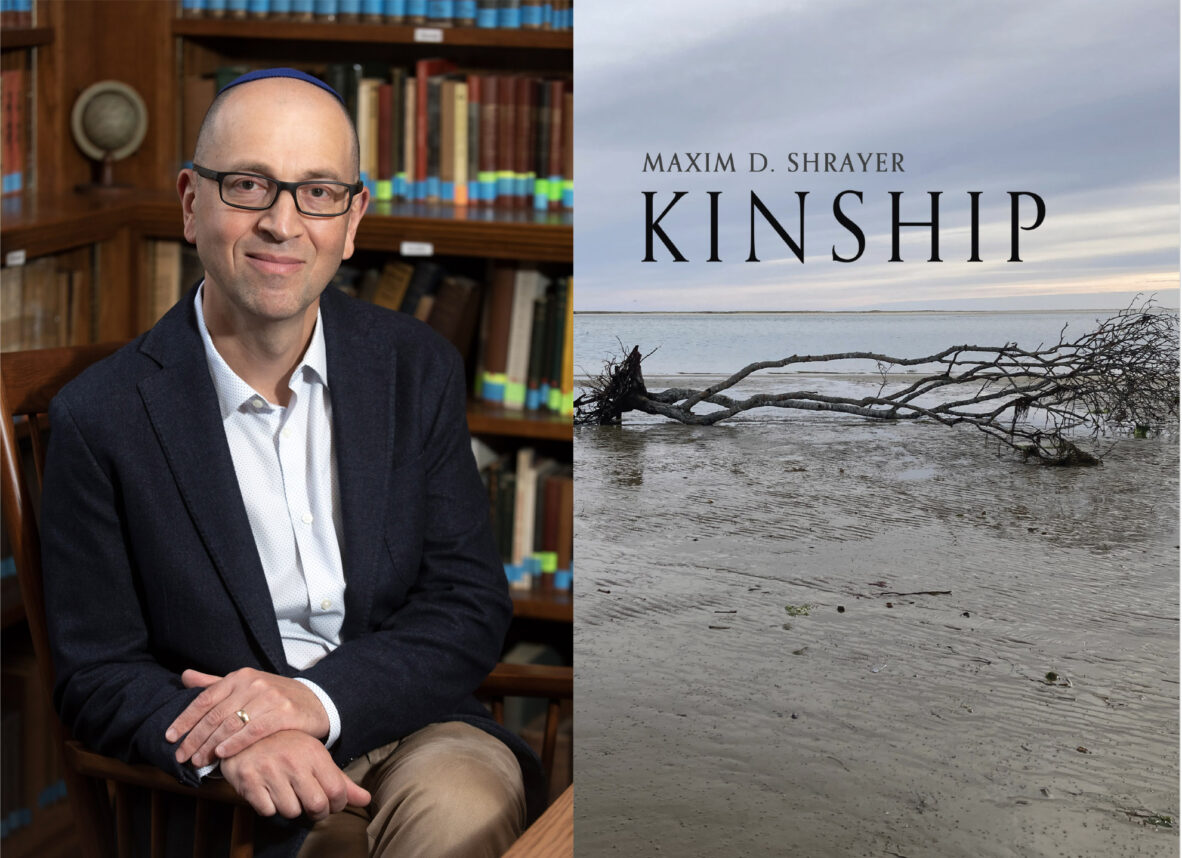
Maxim D. Shrayer, Professor of Russian, English, and Jewish Studies at Boston College, is the author of the memoir “Immigrant Baggage: Morticians, Purloined Diaries, and Other Theatrics of Exile” and the forthcoming collection of poetry, “Kinship.”

Maxim Matusevich, Professor of History at Seton Hall University, is the author of “Africa in Russia, Russia in Africa: Three Centuries of Encounters” and “No Easy Row for a Russian Hoe: Ideology and Pragmatism in Nigerian-Soviet Relations, 1960-1991.”


South Africa Accuses: The Trial of Israel and the Ghosts of Soviet Anti-Zionism Read More »