
fbpx

January 7, 2024

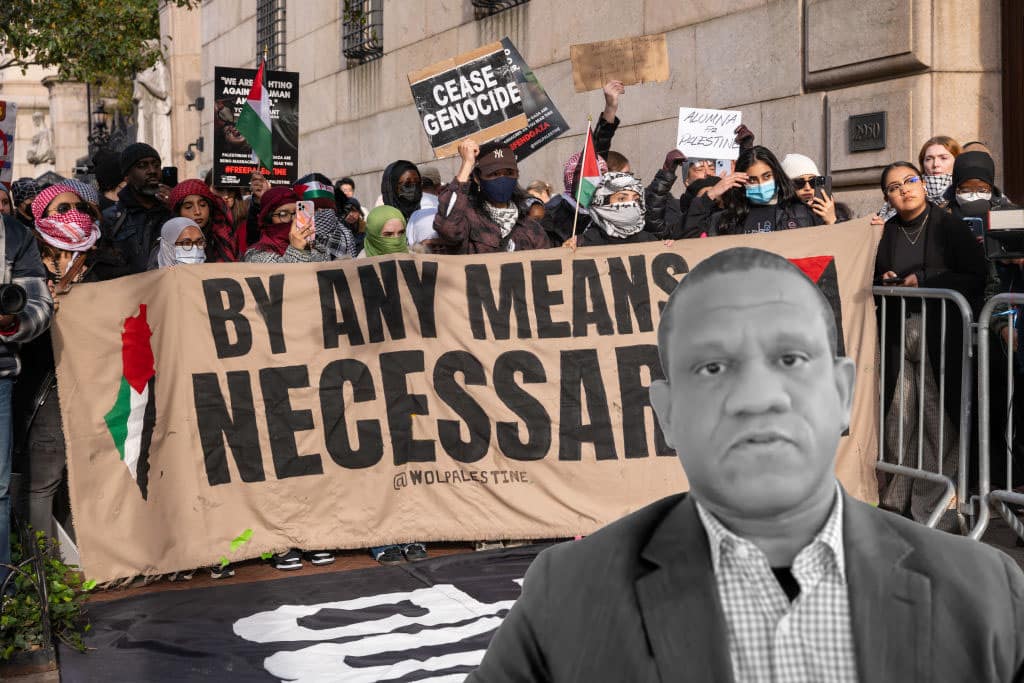
“Diversity” Advocate Denies Antisemitic Violence

A prominent spokesman for greater diversity” and inclusion” of minorities in American businesses and institutions seems to have something of a blind spot when it comes to one particular minority group. Guess which one.

Alvin Tillery, Jr. is director of the Center for the Study of Diversity and Democracy at Northwestern University and a leading advocate of the Diversity-Equity-Inclusion (DEI) campaign. On his LinkedIn page, he says, I call myself a DEI evangelist because I see my work in the DEI space as my life’s mission.” For somebody so dedicated to his work, you would think Tillery would pay a little more attention to the facts about issues such as antisemitism before making public statements about them.

Tillery was asked by the New York Times on January 6 about the problem of antisemitism on American college campuses. He replied, No Jewish students have really been subjected to violence on most of these campuses,” with the exception of the assault of a Jewish student at Columbia University and a bomb threat against Jews at Cornell.

It seems Mr. Tillery has not been paying careful attention as Jewish students have been assaulted on many campuses around the country in recent weeks.

Pro-Hamas students shoved and accosted a Jewish student outside the Harvard Business School (Oct. 18). They assaulted three Jewish students near the Tulane University campus (Oct. 26). They attacked a Bring Them Home” information table at the City College of New York, seizing its literature and destroying its posters (Nov.2). They punched two Jewish students at Ohio State University, while calling them kike Zionists” (Nov. 10).

Not enough for Mr. Tillery? How about what happened at the University of Massachusetts-Amherst on November 3? A Jewish student was setting up a symbolic Shabbat table at a vigil to call attention to the Israeli hostages in Gaza. A pro-Hamas student in a nearby building began shouting and cursing at him. Then he charged out of the building and punched me in the head several times,” the student recounted.I put my hands up to protect my face and he grabbed the flag and kicked me in the chest several times and shoved me.” The attacker then produced a foot-long knife. He kept stabbing the Israeli flag until it was completely destroyed.”

Still not enough to impress Alvin Tillery? Pro-Hamas students physically surrounded and taunted a Jewish student at the New School, in Manhattan. They trapped Jewish students in a room at the Cooper Union library. They blocked an entrance to the City College of New York library and shoved a cell phone into the face of a Jewish student who tried to walk by, to record her against her protests. They vandalized an Israeli flag at the Jewish fraternity house at Carnegie Mellon. They violently disrupted classes, study sessions, and meals at Rutgers. At the University of California at Berkeley, they grabbed a Jewish student by the neck as they tried to steal his Israeli flag. At a George Mason University fraternity house, they assaulted a Jewish student and ripped his Star of David necklace from his neck. The list goes on and on.

It would be disturbing enough if Tillery was simply too disinterested in antisemitism to be aware of these and other incidents. But his record on related issues suggests there might be more at work here than mere apathy and ignorance.

Tillery is one of the most outspoken supporters of disgraced former Harvard president Claudine Gay. In a recent essay, Tillery declared that all of the criticism of Gay for her weak response to pro-genocide chants on campus, and her plagiarism, has been motivated by racism.”

Tillerys proof” that Gay really does care about antisemitism is that she issued her first statement about Hamas two days after the event,” whereas Harvards first statement about the killing of George Floyd took place five days later.

What actually happened was quite different. On the evening of October 7—the very day of the pogrom—33 student groups at Harvard issued a grotesque statement saying that Israel was entirely responsible” for the Hamas massacre. For two days, President Gay was silent.

Finally, in response to a wave of criticism, Gay issued a statement saying she was heartbroken by the death and destruction unleashed by the attack by Hamas.” She did not explicitly condemn the attack. She did not say a single word about the vile statement that 33 student groups had issued. After more criticism, the then-president issued another statement, this time saying she condemned the Hamas pogrom—but still refusing to criticize the student cheerleaders for Hamas on her own campus. In short, Tillery completely misrepresented what transpired at Harvard.

If Tillerys attitude toward Jews and antisemitism is typical of Diversity-Equity-Inclusion advocates, is it any wonder there is so much criticism of those programs and their spokespeople?


Dr. Medoff is founding director of The David S. Wyman Institute for Holocaust Studies and author of more than 20 books about Jewish history and the Holocaust. His latest is America and the Holocaust: A Documentary History, published by the Jewish Publication Society & University of Nebraska Press.

“Diversity” Advocate Denies Antisemitic Violence Read More »
Brandeis and the American-Jewish “Intellectual Imagination”

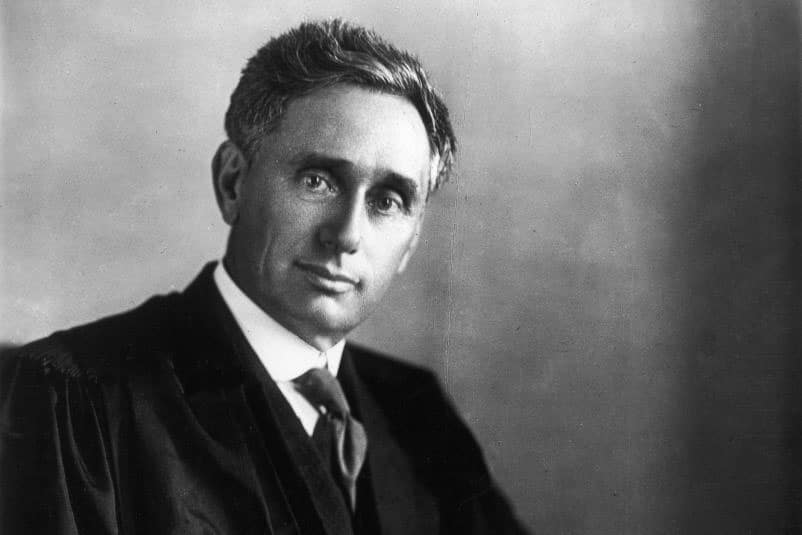
Louis Brandeis, the iconic first Jewish member of the United States Supreme Court, had a uniquely American perspective on the importance of the creation of a Jewish state, not only for the Jewish people but also for America and the world. A latecomer to the issue, he promoted Zionism decades before the Holocaust led many Jews to consider a Jewish state an existential necessity for the very survival of the Jewish people. Brandeis thought of Zionism as the perpetuation of the American idea of freedom, justice and equality.

Brandeis was a major force in a movement that I have described as the New Covenant of Jews who assumed a special responsibility since the nation’s founding to uphold and propagate the America idea. For such Jewish thinkers and leaders, securing the American idea in a dangerous world meant creating a safe refuge for all peoples, especially Jews. His position on Zionism was consistent with his leadership of this New Covenant movement. As I noted in “The New Covenant: Jewish Writers and the American Idea,” Brandeis claimed his “approach to Zionism was through Americanism.” He believed that “By battling for the Zionist cause, the American ideal of democracy, of social justice and of liberty will be given wider expression.” Brandeis’s view of Zionism reflected his deep commitment to classic cultural pluralism and diversity.

Brandeis was born in Louisville, Kentucky in1856, after his parents came to America from Bohemia, but it wasn’t until he entered Harvard that his passion for American democracy blossomed in the light of what he saw as the New England Way of fostering democratic values, institutions and human relationships. Leading projects for reform and social justice, Brandeis by 1896 became known as the “The People’s Attorney” who advanced a modern concept of the “living law” that related people’s lived experience to the law. A noted voice in the progressive cause, Brandeis gained President Woodrow Wilson’s controversial nomination to the Supreme Court in 1916.

Brandeis’s vigorous advocacy of the fusion of Zionism and the American ideology of freedom and democracy speaks directly to concerns and fears expressed today about the future relationship between Israel and America in the aftermath of the horrific massacre of Jews by Hamas terrorists on October 7. Thus, Richard Haass, President Emeritus of the Council on Foreign Relations, argued last month on Fareed Zakaria’s CNN show “GPS” that “Israel has lost the intellectual imagination debate in this country.” Asked about the response on campuses to Israel’s war on Gaza, Haass said “The American-Jewish establishment has totally dropped the ball there.” Haass believes they “lost the larger debate,” leaving unanswered the growing impression of Israel as “Goliath more than David.” He thinks leaders “played a kind of inside game” by emphasizing politics and votes “on the Hill for aid” as they “looked the other way at settlement activity.”

Haass and others probably will seek a revivification of the American-Jewish “intellectual imagination” by considering a new Middle-East politics of new policies, positions and alliances. The times clearly require such an approach; but any project of regeneration of the American-Jewish “intellectual imagination” on the issue of Israel should include a renewed understanding of a portion of the history and context of the modern American-Jewish perspective on a Jewish state as articulated, for example, by Brandeis, among others. Brandeis saw a kind of democratic Zionism as an extension of the Jewish contribution and articulation of democracy and freedom in America. He thought of Jewish settlers in Palestine as modern day pioneers in the American mold repeatedly calling them “Jewish Pilgrim Fathers.” Brandeis’s provocative image of Jewish settlers in Palestine during the 1910s and 1920s as comparable to “Jewish Pilgrim Fathers” represents a dramatic and radical expression of the robust creativity and energy of the American-Jewish intellectual imagination.

For Brandeis, Jewish sensibility and American ideology were indispensable to each other. He thought the moral and ethical foundation of Jewish consciousness inhered in the American idea of freedom. Consequently, the moral meaning of the Jewish experience gave authenticity to the American way and energized the American mission to renew history for the world. In turn, the American experience created the vision and the environment in which Jewish energies and creativity and ambition could flourish and thrive.

Brandeis’s conception of Zionism implied a continuation for Jews of the American mission for freedom and equality. For other Jewish leaders at the time, such as Oscar S. Straus, the first Jew to serve in a cabinet position as President Theodore Roosevelt’s secretary of commerce and labor (1906-1909), America was the new Zion for Jews. Straus felt that American democracy was deeply rooted in Jewish history, thought and culture from the time of the prophets.

For both Brandeis and Straus, as well as innumerable other adherents of the New Covenant, an ingrained connection persists between America and the Jewish people. Brandeis believed “the twentieth-century ideals of America have been the ideals of the Jew for more than twenty centuries.” He argued that “we have inherited these ideals of democracy and social justice.” He wrote, “I find Jews possessed of those very qualities which we of the twentieth century seek to develop in our struggle for justice and democracy: a deep moral feeling which makes them capable of noble acts; a deep sense of the brotherhood of man; and a high intelligence, the fruit of three thousand years of civilization.”

Brandeis’s sentiments resonate in the words of a New York Times columnist I consider a modern-day member of the New Covenant, Bret Stephens, who states, “Jews have long stood for a set of ideas that, if not radical now, were radical in their time. Among them: monotheism, freedom, general literacy and what Jewish tradition calls ‘argument for the sake of heaven.’  . . . No wonder Jews have inspired so much loathing from every ruler, religion or ideology seeking to keep people in servitude and ignorance.”

From Brandeis’s words to Stephens’s hopes, any project for the renewal of the American-Jewish intellectual imagination over Israel, as Haass suggests, should call for more than power politics between nations. Such an effort also should consider an emphasis on a greater, transcendent dimension of meaning, mission and purpose based on history, culture and ethics. At a moment in history when democracy is in peril in both Israel and the United States, the ideas, values, hopes of the American-Jewish experience should be called into action to advance freedom and democracy.

At a moment in history when democracy is in peril in both Israel and the United States, the ideas, values, hopes of the American-Jewish experience should be called into action to advance freedom and democracy.

Also, an awakening to the vitality of Jewish leadership in protecting and propagating American democracy establishes a place and a space of strength to engage and defeat new forces of antisemitism in America and the world. Centuries of leadership and experience in the struggle for democracy and against authoritarianism construct a powerful arsenal of armed ideas and ideals for a new era of battling old forces of prejudice, discrimination, and hatred of Jews and other vulnerable peoples. Such experience provides the basis for combatting anti-Zionism when it becomes antisemitism while also enabling the fight against fascistic and anti-democratic impulses in both America and Israel.

Brandeis proved the powers of regeneration in the American-Jewish imagination when he helped modernize and advance democracy, freedom and equality in America by calling for “industrial democracy or liberty” through the creation of what he termed “social inventions.” Such a regeneration of consciousness and action remains possible today, but, as in the past, fulfilling the promise of renewal demands leadership, motivation and courage. As Michelle Goldberg, another contemporary figure in the New Covenant and also a columnist for The New York Times, writes, “Before we can fight authoritarianism, we have to fight fatalism.” Almost by definition, the New Covenant and American-Jewish collaboration resist and repel fatalism.


Sam B. Girgus is a retired professor of English and American studies who has taught at Vanderbilt University and the Universities of New Mexico, Alabama and Oregon. A recipient of a Rockefeller Humanities Fellowship, he has written and published more than ten books on film, modernism and American literature, thought and culture.

Brandeis and the American-Jewish “Intellectual Imagination” Read More »