fbpx

November 28, 2023

A Response to the Los Angeles Times Call for a Cease-Fire in Gaza

The Los Angeles Times ran an editorial on November 17, 2023, stating its position: “Cease-fire now: The killing of civilians in Gaza must stop.” Let us evaluate the morality and logic that the editors invoked as the basis for their position. In order, its propositions are:

  • The U.S., Israel’s chief ally and weapons provider, needs to assert strong pressure on Israel to stop its attacks that have “reportedly killed more than 11,000 Gazans.”
  • Admittedly, Hamas murdered 1,200 people and continues to hold “more than 200 hostages—Israelis, Americans, and others.”
  • In addition, Hamas treats Palestinian civilians as human shields.
  • Israel is stepping up its assault in southern Gaza, whose residents “will not be permitted to enter Egypt on Gaza’s southwestern border.”
  • S. Secretary of State Anthony Blinken testified that a cease-fire would “simply consolidate what Hamas has been able to do and potentially repeat another day.”
  • But the problem is that “neither Israel nor the U.S. has explained how Hamas can be eradicated or removed from power without an unacceptable level of civilian deaths and casualties. Nor have they set forth what they intend to happen next.”
  • It is therefore imperative to adopt a cease-fire forthwith.

All decent folks share the editors’ imperative to end war crimes immediately. Yet, given the fog of war, it is difficult to know many aspects of what is currently unfolding. That admitted uncertainty extends to the very basis for the editorial’s position: Has there been disproportionate loss of civilian life compared to Israel’s military objectives? The editorial’s statement that Israel’s campaign has “reportedly killed more than 11,000 Gazans” emphasizes that lack of knowledge—its qualifier “reportedly” not only means that the Times simply does not know, but also that it is citing statistics compiled by a terrorist organization as the basis for its position.

But even apart from its unreliability, the unspecified “report” itself fails to distinguish the terrorists who are the legitimate target of Israel’s efforts from innocent civilians killed collaterally. As the editorial itself admits, Hamas uses those civilians as human shields. In the same time-frame, The New York Times mooted the figure of 5,000 dead militants. That figure, like every other one, represents only speculation, as does any number that is assigned for civilian deaths. It is a tragedy whenever innocent civilians die, but the number killed in this war (which is currently unknown) may result more from their use as human shields than any culpability on Israel’s part. All we can conclude today is that Israel (like every country) must be held to account if it turns out that it has violated the laws of war—but we have no basis to reach any such conclusion today, either pro or con.

On the other hand, there is no doubt whatsoever that over 200 war crimes are occurring every single day in Gaza—by virtue of the hostages that Hamas is holding without even allowing the Red Cross to visit them. If there is to be a target of righteous indignation, surely its locus must be on the ongoing war crime that is apparent and undeniable.

Amazingly, though, the Los Angeles Times focuses 100% of its attention on only one of the international players that it cites. After referencing Israel, Hamas, Egypt and the United States, it places the entire burden as to future conduct on Israel alone. Pointedly missing from the editorial are any suggestions along the lines of:

  • Taking forceful international steps to compel Hamas to release the hostages.
  • Demanding that Egypt open its southwestern border with Gaza in order to permit civilians to enter Egypt, so that Israel can concentrate its forces on the terrorist regime that rules there.
  • Urging the United States to make surgical strikes into Qatar to detain the Hamas leadership as a way to end the war.

Not being a geopolitical strategist, I have no pretense of being able to offer assurances of how those alternative courses would play out. But I do not set myself up as an expert as to how the situation on the ground must change. By contrast, the Los Angeles Times is portraying itself as the expert, which makes its silence on the above matters—or any other variant—deafening.

These considerations lead to the editorial’s most glaring contradiction. The linchpin of the presentation is that Israel has failed to explain either how it intends to achieve its goals or what will happen next. A little reflection reveals that its government, for better or worse, is expending all its efforts on fighting a war that was thrust upon it rather than articulating goals. It may be suboptimal, but is certainly understandable, why in the midst of an ongoing crisis it would focus on military objectives rather than public pronouncements.

On the other hand, if we are talking about communications media, it is fair to ask how they intend to achieve the goals they outline and to ask what will happen next. By the very standards that it has erected, the Los Angeles Times must specify what will happen next, after its proposed cease-fire is implemented. Here, we do not need to guess, as the editorial quotes the chief American diplomat: A cease-fire would “simply consolidate what Hamas has been able to do and potentially repeat another day.”

In other words, the editorial asks Israel to tell its citizenry, “We have decided to leave in place all the genocidal murderers a few miles away, who will continue to maraud and kill your families, raping your women, cutting up your babies, and exulting in mass murder.” No sane person would continue to live in that country.

Crowds at the Sydney Opera House reacted to the Hamas atrocities with chants of “Gas the Jews.” Albeit not as vulgar, the Times’ editorial leads to the conclusion that the only Jewish country on earth is also the only country on earth that is denied the right to protect its citizens from wholesale slaughter. It is disheartening, to say the least, that the editors would adopt such a stance.


Former president of B’nai David-Judea, a Modern Orthodox congregation in Los Angeles, David Nimmer is a legal scholar who has written numerous books.

A Response to the Los Angeles Times Call for a Cease-Fire in Gaza Read More »

The Abuse of the Term “Genocide”

In the context of the Israel-Hamas War, there is an almost torrential interest in accusing the state of Israel and the Israeli Defense Forces (IDF) of genocidal intentions. For example, since October 7, a series of articles have appeared that identify the situation as “textbook genocide,” followed by a warning of potential genocide in Gaza as of 15 October. It is important to note that none of these articles have been authored by people who were asked to provide a historical expert opinion or such a statement. Although they are not legal experts, they have simply taken it upon themselves to offer opinions that deal with legal terms and ramifications. The question, then, is: Why do we need lawyers if Holocaust and genocide historians can now also present legally complex facts that are subject to a certain burden of proof?

In response to demands for accountability for the terrorist, antisemitic and racist attacks and mass murders by Hamas, Islamic Jihad and its supporters—which can now be seen everywhere on social media, and incudes the participation of civilians of all ages and genders—from Gaza on Israel, the quote by Minister of Defense Yoav Gallant, who spoke of “human animals” and ordered the complete siege of Gaza, is often cited and used as evidence for Israel’s alleged genocidal intentions. The reality is the opposite: The IDF is building corridors for the civilian population and allowing aid supplies into Gaza. This is not genocide. Moreover, on social media we see only a clip of Gallant’s speech, and it is very difficult to obtain access to the full version. What did he say before or after?

The interpretation of this phrase in his speech is explained in different ways: Some say it was aimed at “all Palestinians,” while others say it was directed only toward the perpetrators of Hamas and their supporters. Depending on one’s political agenda, the order can be constructed in such a way as to suggest that Gallant advocated for complete annihilation of all Palestinians. But such an interpretation means that a historian is working dubiously and should not be taken seriously. The “human animals” reference was aimed at the perpetrators: Hamas. In the name of freedom they beheaded, raped, tortured and took hostages into Gaza. Ultimately, however, war would not have been necessary if Hamas had laid down its arms. In many cases, without showing any empathy for the 1200 victims and hostages taken to Gaza or naming specific perpetrators and their deeds such as rape, manhunts, cold-blooded murder of children and young people, it seems that the tools of the historical trade are being used for their own political agenda, which shows par excellence that historians perhaps focus far too often on theories in their textbooks at the expense of what is happening in the real world.

Questions about the difficult, sometimes unambiguous, definition of the term “genocide” were recently discussed against the backdrop of the Russian war of aggression against Ukraine. However, it is clear that it takes more than quoting from the United Nations Genocide Convention of 1948, often out of context, to certify genocide. It is very surprising that some Holocaust and genocide researchers very quickly came to the conclusion that a genocide is currently taking place in Gaza or warn that one could take place. It is also very astonishing that snap judgments and one-sided citations led to the attestation of a genocide. It seems that academic language is being politically instrumentalized in the published statements, articles and “open letters” of the past weeks. As a rule, there is no comparison of sources in these statements. In many cases, when it comes to the perpetrators, Hamas and their supporters, their ideological foundations (even if not every single perpetrator will have read the Hamas charter from 1988 and its amendments from 2017) are completely ignored.

Consider, for instance, the thoughts of Raphael Lemkin (Polish-Jewish lawyer who coined the term “genocide”) on genocide: “Genocide has two phases: one, destruction of the national pattern of the oppressed group; the other, the imposition of the national pattern of the oppressor.” Moreover, in these statements too often a perpetrator-victim reversal can be observed here, or the terrorist attacks are seen in the context of the Palestinian “struggle for freedom” or as a reaction to attested occupation and oppression and not in the broader context of nationalist, Islamist movements worldwide. Thus, for some Holocaust and genocide researchers, October 7 was apparently “not surprising.” Obviously, they ignore Hamas’s eliminatory ideology, which is at the forefront of the October 7 massacre. This is in the tradition of Holocaust and other researchers who, for example, superimpose the population policy goals of the Nazi regime to the antisemitic ideology of extermination.

Journalists are doing the same. Al Jazeera’s English-language website quickly recorded so-called genocidal acts in Gaza and was able to describe the “Palestinian blitzkrieg” in admiring terms as early as October 7. A few days later, the comparison between the “people of Gaza” to the “Warsaw Uprising” was noted, and finally, on October 18, the question was raised: “Analysis: Will Gaza be Israel’s Stalingrad?” Journalists want to attract readers and convey their political world view. But what do historians want? Perhaps they want to control the narrative and interpretation of the Israel-Hamas war.

One of the most important tools of the historian’s trade is source criticism: a tool that is clearly not being used enough in many of the stated opinions of these scholars. Source criticism means looking at printed, photographic or film sources, as well as oral testimonies and first-person documents, in their respective contexts and interpreting them against the background of their time. Ideally, historians also examine sources that contradict their working hypotheses in order to obtain a complete picture. In their work, historians are as objective as possible, but in reality many external factors influence their work. It is their own historical school, contact with colleagues, knowledge of secondary literature, career thinking and, most important, a political agenda. Naturally, their work can never fully reflect historical reality. Finally, the selection of sources also plays a role; it is always important which quotations from the sources are used to support one’s own theses in an apparently historically sound manner.

Ultimately, only by compiling and analyzing sources that contradict one’s own theses can historical reality be made comprehensible. This is because selective, de-contextualized citations can lead to false conclusions. In day-to-day political business, deliberately selective quoting without context can be dangerous and is ultimately not scientific. All historians, including those researching the Holocaust and genocides, must face up to this problem.

For today’s historians of the Holocaust, it is a matter of course to use both the perpetrator sources and the testimonies of Holocaust survivors. This was not the case for many decades; Holocaust research was based on the perpetrators’ sources until the 1960s, and in Germany even until the 2000s. Another “open letter” was finally published on November 20 by, as the German publication SPIEGEL wrote, renowned historians and antisemitism researchers, which shows that it is perhaps less about comparisons and more about the fact that some would like to have the authority to interpret the current Israel-Hamas war while they demand that others refrain from comparing the mass atrocities by Hamas and its supporters with the Holocaust. Since the Holocaust was the point of reference for the United Nations Genocide Convention as of 1948, why should no comparisons be made? Why should the numerically largest mass murder of Jews since the Holocaust on October 7, 2023 not be used as a comparison? Why do Holocaust and antisemitism researchers reject this? And wouldn’t it also be time to point out that the UN Genocide Convention has far too broad a scope of interpretation? Raphael Lemkin himself, founder of the Genocide Convention, mentioned then that the new word “genocide” is an “old practice in its modern development.” In his approximately 670-page book “Axis Rule in Occupied Europe: laws of occupation, analysis of government, proposals for redress,” which refers to ideas dating back to the 1930s, he explains the genesis of the term “genocide” in detail.

However, one does not have to like comparisons between October 7 and the Holocaust. The latter was a process that took place in various stages of escalation. Of course, history does not repeat itself one-to-one. The numbers of Jewish women, men and children murdered and the geographical scope of Europe and North Africa during the Holocaust cannot be compared either at the present time. But since the Holocaust—the genocide of six million Jews by Nazi Germany, actively and passively supported by large sections of German civil society—is the blueprint for the United Nations Genocide Convention, why shouldn’t comparisons be made? Why should the numerically largest mass murder of Jews since the Holocaust on October 7, 2023 not be used as a comparison? That some Holocaust and antisemitism researchers oppose this is extremely problematic.

It is obvious that the details of the mass crimes show certain similarities and of course also differences. Among other things, Hamas terrorists attempted—based on orders from the higher ranks and implemented through army-like structures—to exterminate, rape and kidnap as many Jews as possible. This can be defined as the (fantasized) starting point for the destruction of the State of Israel—the liberation of Palestine from Zionist occupation” (Hamas: General Principles and Policies, 2017). In an attempt to carry out a comprehensive, dehumanizing extermination campaign against Israel, they also murdered Arab Israelis and Bedouins. They raped and tortured Israeli women and killed and kidnapped Israeli babies and other civilians and took them hostage. Similarly, the Nazis held Jewish hostages in Bergen-Belsen and other camps, for example. Hamas slaughtered whole Jewish families in an act of intimate violence in their homes and justified their murderous actions by an allegedly assumed process of “liberation,” They proudly filmed their murder campaigns and spread propaganda to deceive the world. And, shockingly, large parts of Western human rights and aid organizations and even Holocaust-related institutions stayed silent, also when it came to crimes against women and children or the condemnation of the murderous acts as such. And this is despite the fact that excerpts from the interrogations of the perpetrators of October 7 are widely available on TikTok or other social media, proving that there were systematic orders for the brutal execution of rape and kidnapping. Incidentally, it is very likely that the thinkers and perpetrators of Hamas and their supporters took into account how Israel (generally speaking) would react to the terrorist attacks. Such reactions should be seen as part of a toxic manipulation.

To come full circle, historians do not usually prove their theses with one single quote or draw selectively on source material that reflects a preconceived opinion, regardless of whether it was about the genocide of the Armenians or the Herero or Tutsi in Ruanda. Historians actually put forward a working hypothesis, the pros and cons of which must be discussed academically. What have we learned in the past few weeks? Even intellectuals and Holocaust, genocide and antisemitism researchers are not immune to manipulation.


Dr. Verena Buser is a historian in Berlin and associated researcher with the Holocaust Studies Program/Western Galilee College.

The Abuse of the Term “Genocide” Read More »

A Pilgrimage to Family Roots

Like many in my profession, I was prejudiced against genealogy, believing that genealogists were consumers of archives rather than producers of knowledge. Two experiences persuaded me how wrong I was. 

Last year, my wife’s family held a family reunion uniting the disparate branches of the Kovalarchik family of Babruysk in Belarus as three of the four branches of the 20th century family came together for the first time. Their collective experience traversed modern Jewish history: Pogroms, the great wave of immigration to the United States, the Holocaust, the Great Patriotic War, the Soviet Jewry movement, Zionism and the resettlement of Jews in Germany, all within a bit more than a century. They were liberators of Berlin, astrophysicists working on the space program, combat pilots, high tech moguls, engineers and pioneering women entrepreneurs, as well as merchants and lawyers, all descendants of a blacksmith and his two brothers. They are still searching for the offspring of the fourth sibling.

The errors of my way were further confirmed by the moving documentary “Fioretta,” the story of Randol and Joey Schoenberg’s journey to Vienna, Prague and Venice as they trace both sides of their family’s history way back into the 16th century.

Randol Schoenberg, who was celebrated for his victory in the recovery of the Klimt painting “Woman in Gold” to the family of its original owner in a case that went to the Supreme Court, and even greater acclaim in the Helen Mirren film of the same name, is well known in genealogical circles. Having begun his illustrious career as a young child assigned to produce a family tree, he interviewed relatives and created an elaborate family tree, only one part of which dealt with his world-famous grandfather, the great composer Arnold Schoenberg. He has been working on elongating that family tree ever since, now aided by the internet, the opening of archives behind the former Iron Curtain and the dedication of a worldwide network of individuals, in many European cities, working to recovering the records and the presence of their destroyed Jewish communities.

Randol — or Randy as he is routinely called — sets off on a journey with his youngest son Joey from Malibu to trace his family roots. Like many passionate fathers who are completely — dare we say obsessively — committed to their work, Randy wants to share that passion with his children. He knows that sons and daughters often view that passion, which has taken their parent away from their home and robbed them of precious family time, with skepticism. Joey is no exception. He is along for the ride, enjoying the many pleasures of Europe and the long stretches of uninterrupted time with his father, yet can’t quite grasp – at least at the beginning – why anyone would be interested in uncovering generation after generation of relatives. He is uncertain what’s in it for him and provides levity in “Fioretta.” He serves as the surrogate for the audience. If he can be persuaded, so can the audience. As he is touched so are they.

Randy’s journey into his past invites not only his son but the audience to pursue their past and to discover the multitude of factors that lead to their place in the world.

Not everyone has a world-class grandfather whose name is known in musical circles across the globe, so one imagines that Arnold Schoenberg would be the centerpiece of the film. The film begins in Vienna, the city Arnold and his wife were forced to leave both because he was a Jew and because of the disruptive creativity of his music, but it quickly pivots to earlier generations. One sees the stuff of genealogy, the archival records of seemingly mundane elements of life, birth and death, taxes and deeds, purchases of property, disputes of law, even honored seats in the synagogue. We all leave written records behind, the imprint of the life we have led. The Schoenbergs visit cemeteries where their ancestors are buried and whose tombstones tell a story. Sadly, in many Los Angeles-area cemeteries tombstones only provide names, dates of birth and death and barely another line on information.

Yet visiting Jewish cemeteries in Europe is no easy task. Many were destroyed by the Nazis. Those not destroyed then, were often overgrown and ignored because there was no living Jewish community to tend to them or because cities wanted to use the space for development, and Jewish protests, however vigorous, were ignored.

Yet tombstones are a remnant that provide vital information. And there are heroes throughout Europe who are committed to preserving these cemeteries, restoring the tombstones, and recording the vital information that they contain. Some are Jews, often the last remnant of their ever-shrinking community, and some are non-Jews determined to grapple with the dual burden of Jewish memory in Europe – the absence of presence, the presence of absence. 

We meet these heroes and are humbled by them. An example: We encounter one woman who moved into her new apartment and was offended by a neighbor who bragged that now the apartment house was Judenrein, without Jews. She demurs. Her response is to research the Jewish history of her apartment house and from there the Jewish history of her block. She then helped created a moving memorial of keys and the addresses of those Jews who were expelled from Vienna or were deported to concentration and death camps. One-third of the Jews on her block were murdered, one-third received visas and lived in exile, and of the final third, no trace could be found but not for want of trying.

David Myers, in his “Jewish History” (in the Oxford University Press’ “Very Short Introduction” series), attributed Jewish survival to mobility and adaptability. Randy’s European family is a case in point, moving from country to country, from city to city as conditions changed, as opportunity beckoned and Jews were unwanted or expelled. It is remarkable how many had portable professions. Arnold was a musician who could easily move along with his fellow emigres from Vienna to Hollywood because music is an international language. So too was medicine and tombstone after tombstone records that many doctors were among Randy and Joey’s ancestors. Joey is a chef. His talents are certainly portable as people will always need to eat.

And we meet the custodians of documents, archivists who are proud of their records, ever prouder to show these records to all who are interested. In Randy, they have a most interested and informed visitor, which only brings out the best in them. 

People die twice, Rabbi Nolan Lebovitz tells Randy’s son, once when they die physically and again when their memory is no longer invoked. In his relentless pursuit of family records, Randy goes back to the 16th century, rescuing from oblivion those ancestors in his past, invoking their memory, returning them to life, albeit for a moment. He walks the streets they walked, visits the synagogues where they prayed and meets along the way their descendants who convey — as my wife’s relatives did — the human story behind the records. He meets relatives in the flesh, celebrating their common ancestry and their uncommon journeys through life. He sees relatives’ names on walls in synagogues and on memorials; he touches elements of his past and finds many traces.

Ever the skeptic — what 18-year-old doesn’t want to make fun of his prominent father? — Joey feels a link back in time, gaining a sense of roots and of a past that a future-oriented California teenager who lives in the here and now and is concerned primarily with his own future, can seldom find.

Randy’s journey into his past invites not only his son but the audience to pursue their past and to discover the multitude of factors that lead to their place in the world.

“Fioretta” will be showing at the Laemmle Royal and Laemmle Town Center beginning December 1st. For tickets: https://www.laemmle.com/film/fioretta


Michael Berenbaum is director of the Sigi Ziering Institute and a professor of Jewish Studies at American Jewish University.

A Pilgrimage to Family Roots Read More »

USC Prof Barred from Campus After Saying Every Hamas Terrorist “Should Be Killed”

USC Economics and Gerontology Professor John Strauss is currently barred from campus after telling pro-Palestinian protesters that every Hamas terrorist “should be killed” and will be teaching remotely for the rest of the semester. The university is claiming that the move was “precautionary” and denied that they are punishing Strauss.

The controversy, as explained in The Daily Trojan, involves a viral video of Strauss, 72, saying to the protesters, “Every one should be killed, and I hope they are all are.” The full clip of the exchange, however, shows Strauss saying: “Hamas are murderers, that’s all they are. Every one should be killed, and I hope they all are.” Strauss has clarified that he was saying that all Hamas members should be killed, not all Palestinians.

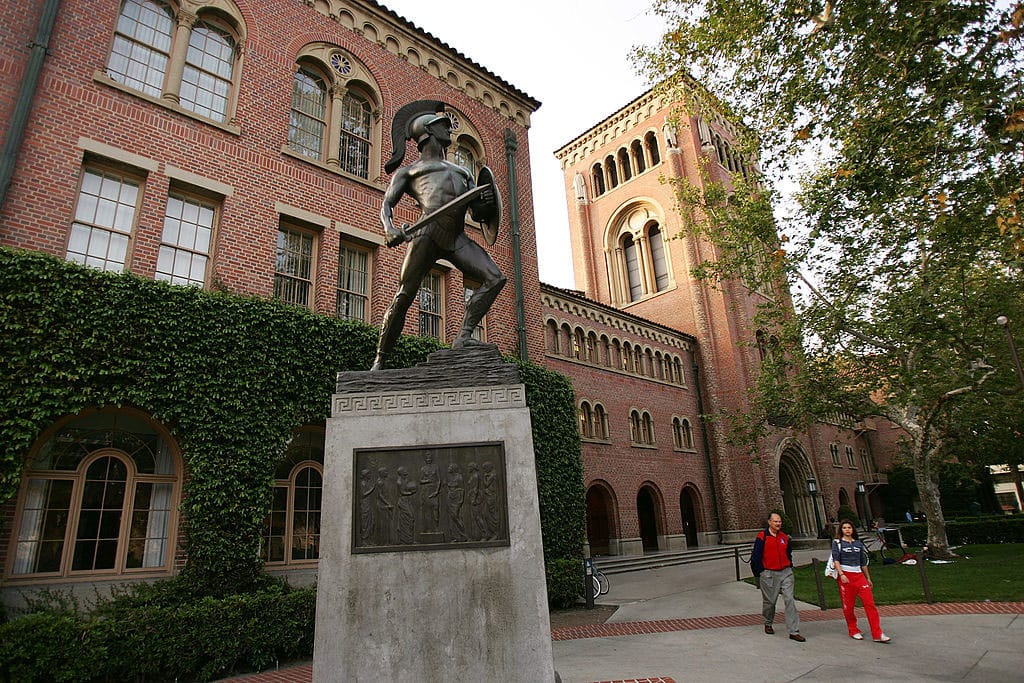
In a phone interview with the Journal, Strauss, who is Jewish and a staunch supporter of Israel, said that he was walking from his office building to one of his classes on Nov. 9 when he heard anti-Israel slogans like, “Down with Israel!” and “Cut United States money from Israel,” and “from the river to the sea” from a pro-Palestinian rally. The rally, “Shut It Down for Palestine,” was taking place at the Tommy Trojan statue. Strauss believes that many of the protesters came from off-campus. In response to hearing these slogans, Strauss says he shouted, “Israel forever! Hamas are murderers!” a couple of times before continuing to walk to class.

After his class ended, Strauss walked by the location of the protest again as part of his route back to his office; by this point, the rally had mostly dissipated. He talked to some Jewish students, who were there to observe and document the rhetoric at the protest, as well as USC Chabad Rabbi Dov Wagner, who was there to support the Jewish students and wrap tefillin. As Strauss began heading back to his office, a female pro-Palestinian protester shouted at him, “Shame on you, Professor Strauss!” Strauss fired back at the protester with the now-viral comments: “You are ignorant. Hamas are murderers, that’s all they are. Every one should be killed, and I hope they all are.”

Strauss first learned that his comments had gone viral when he got home and received messages from Jewish students warning him that a pro-Palestinian group had posted a video that just showed his “every one should be killed” comments and that the pro-Palestinian group claimed that Strauss wanted all Palestinians to be killed. “One, I never said that. Two, I don’t even think that,” Strauss told the Journal. “I was referring explicitly to Hamas, which they knew or should have known.” He claimed that the video was “doctored.”

The Los Angeles Times spoke with a student who only wanted to be identified by her first name, Daphne, who is responsible for one of the videos of Strauss’ now-viral remarks. “I do not possess the ability to doctor a video like that,” she told the Times. “And also we have a second video that matches so, like, there’s no way on God’s green Earth that I would have been able to doctor that video.” The Times reported that while they could not find any evidence that the videos of Strauss were doctored, “as the clip circulated online, it was at times trimmed to a few seconds of Strauss uttering, ‘Everyone should be killed.’ The captions and superimposed text in social media posts could be minimal, misleading or wrong.” Both the Times and The Daily Trojan pointed to one such social media post that has received millions of views showing only Strauss’ edited remarks with a caption stating that Strauss “threatened these students ‘hope you get killed and I hope they all are (*Gaza)” during a campus rally for Gaza.”

A USC Jewish student who asked that her name not be used witnessed the incident. “He was walking by, minding his own business when a female on the Palestinian side yelled at him from the display, ‘Shame on you Professor Strauss!’ And then a bunch of people chimed in after, ‘Shame on you Professor Strauss!’ at him,” the student said. “And that’s when I started getting concerned about his safety because they just started yelling at him out of nowhere and they looked very aggressive. One student looked like he was going to lunge at him and attack him.” It was at that point that Strauss made his now-viral remarks, and then he walked away. The Jewish student had talked to Strauss a bit before the incident happened and called him “a sweet guy.”

Rabbi Wagner, whose back was turned when the Strauss interaction with the protesters occurred, told the Journal that it is “really abhorrent” that Strauss’ comments were misrepresented on social media. “Clearly he only referenced Hamas, and that wasn’t at all the way it was being presented in the first few days of when this was going around,” he said. “Even now, there’s plenty of places on the Internet where the false representation is still on there.”

Strauss has also been criticized by pro-Palestinian groups on social media for stepping on a list of names of Palestinians that have been killed in the Gaza Strip during the ongoing war with Israel. “I didn’t even pay attention, I guess I must have stepped on one by accident but it was by accident,” Strauss told the Journal, “because I was trying to move closer to the woman shouting, ‘Shame on you, Professor Strauss.’” The student who witnessed the incident told the Journal that while she did not see whether or not Strauss stepped on the list, she pointed out that the list “was on the floor in a highly trafficked area” and that “you can see footprints on the display.”

The next morning, Strauss said he became inundated with “very nasty emails saying things like, ‘Fire Professor Strauss,’ ‘Die Professor Strauss.’” That afternoon, Strauss received a phone call from the provost’s office that he’s been placed on administrative leave for the rest of the semester and could only teach his graduate classes via Zoom (Strauss teaches both undergraduate and graduate students); the administration later softened their stance somewhat on November 13, allowing him to teach his undergraduate class virtually, Strauss claimed. Strauss also alleged that he is being subjected to multiple Title IX complaints, presumably for his now-viral remarks. He says has been in contact with the Academic Freedom Alliance (AFA) on the matter and that the AFA sent a letter to the university arguing that they had no standing to take action against Strauss. The AFA did not respond to the Journal’s request for comment; The College Fix claims to have obtained the letter and that the AFA told them that the university has not responded to it.

The university is disputing that Strauss was placed on administrative leave. “Online video clips of Professor Strauss – some of which appear to have been edited in misleading ways – have been widely shared on social media, generating millions of online global engagements and comments, many of them quite alarming,” the university said in a statement to the Journal. “There also have been reports in the media and in social media that he has been placed on administrative leave. That is not the case. After reviewing the overwhelming volume and types of comments, the university directed him to teach his two remaining classes online and to remain off campus as a precautionary measure until classes are finished this term. These measures were designed to minimize disruption in the classroom and to ensure a safe environment for both him and students. He has in no way been disciplined or punished for engaging in protected speech.”

Strauss’ attorney Samantha Harris told the Journal that while it is “technically true” that Strauss has yet to be disciplined, “on November 17, he received a notice of investigation based on complaints that students had filed against him based on the rally, notifying him that he is being investigated for hostile environment [and] harassment, which obviously could lead to discipline if he’s found responsible.” She added that it is “outrageous” that Strauss is being subjected to this investigation.  Regarding the university’s claims that the move was a “precautionary measure,” Harris replied: “That’s not to say that students might not give him a hard time, it seems clear that the university’s primary concern here is not Professor Strauss’s safety.” She argued that the university’s claim that they’re simply trying to “minimize disruption” suggests that “the university has a large number of loud and angry students that it is appeasing.”

Additionally, Harris contended that there is a double standard with how the university has treated Strauss compared to pro-Palestinian protesters. “We have videos from … days following Oct. 7, when Palestinian supporters were chanting things on campus like, ‘There is only one solution, intifada revolution.’ And as far as I know, those people are not being investigated for creating a hostile environment despite very clearly referencing the extermination of Jews. So I think this is yet another example of the double standard where speech is permitted about Jews that is then not permitted by Jews.” She confirmed to the Journal that Strauss wants to be back on campus.

The student who witnessed the incident argued that the university is engaging in a double standard for quickly taking action regarding Strauss, while nothing has been done regarding a few antisemitic incidents that have occurred on campus.

“There was that student who tore down the hostage poster in a building on campus,” the student said, adding that during a pro-Palestinian rally, protesters shouted “f— you” at a pro-Israel communications student and called him out by name. Various professors have also “been reposting antisemitic, pro-Hamas posts on Twitter,” the student alleged. “… And nothing ever happens to any of them.”

Anna Krylov, who holds the USC Associates Chair of Natural Sciences and is a chemistry professor at USC, had similar comments. “This is an example of the double standard practiced by the universities,” she told the Journal in an email. “At USC, since Oct. 7 we had several pro-Palestinian rallies at which the participants shouted genocidal slogans such as ‘the only solution – intifada revolution’ and ‘from the river to the sea’ (recall that for the latter, Rashida Tlaib [D-Mich.] was appropriately censured) and valorizing the Hamas terrorists who were killed in Gaza by Israeli forces. Pro-Palestinian students have been tearing down posters of the hostages and posting antisemitic  messages on social media. The participants of these rallies as well as students tearing down posters and posting antisemitic messages on social media faced no consequences, even though their actions are intimidating and hurtful to Jewish and Israeli students and faculty, and their views are at odds with the official position of the US government … And this is how things should be  — because even hate speech is protected by the First Amendment and we should allow it on our campuses, even if it is morally reprehensible, insulting to many people, and is at odds with the official position of our government.”

She added: “However, when Prof. Strauss voiced his opinion about Hamas, he was barred from campus and put under involuntary administrative leave. Prof. Strauss made his remarks not in the classroom, but at the rally, in response to pro-Hamas statements and exhibits. And yet the students complained and the university reacted not by educating the students about free speech (or disciplining them for making frivolous complaints and false accusations — they falsified the video), but by punishing the professor. This is unacceptable.”

Asked by the Journal to respond to accusations of a double standard USC used in handling Strauss, the university pointed the Journal to the “Where We Are Today at USC” section of a page on USC’s website titled, “USC’s Network of Informational Support Resources in Times of Conflict.” The section states in part that “we reject hate speech and antisemitism in any form at USC” and “that USC takes threats of violence and harassment extremely seriously. We work closely with law enforcement, as well as our threat office and other university offices to address them to the fullest extent possible under the law. As of now, we have received very few such reports since Oct. 7, but please know we investigate all of them. Many extremely offensive and disturbing statements are protected by the U.S. Constitution, which private universities like USC are required to uphold under the California Leonard Law.”

The section further states, “Federal and state privacy laws also prohibit us from releasing personal facts (for example, individual names and other identifying details) of any case. That doesn’t mean we can’t take any actions, and we do, but the privacy laws also stop us from sharing details. We also don’t have legal rights to enforce our campus-wide poster policies (which generally prohibit posters), or policies about marches taking place off our campuses, even when they are directly adjacent to our campus.”

“The university, I think, could have saved themselves a lot of grief by being a little clearer about what did or didn’t happen to him,” Wagner told the Journal. “They took four days to say anything. He had heard that he was put on administrative leave and there was no official denial of that until The Daily Trojan article [on November 15]. It’s actually a pity that they weren’t a little clearer in sharing information… that unnecessarily raises the temperature when we all should be trying to lower it.”

There are currently dueling petitions against and in favor of Strauss. One petition is calling for Strauss’ ouster, stating in part: “His racist, xenophobic behavior, including stepping on names during a memorial service at USC for over 10k innocent civilians that lost their lives in Palestine, is unacceptable. His remarks – ‘everyone should be killed, and I hope they all are’ – are not only offensive but also promote and incite violence. This behavior is unbecoming of an educator and a professor of this stature.” This petition has garnered more than 7,100 signatures as of publication time.

A different petition, on the other hand, is urging the university to “promptly reinstate Professor Strauss with adequate protection and conduct a comprehensive review of university policies.” “Even if [the university] cited safety reasons, that is no reason for not allowing him on campus,” the petition stated. “We should not revert to the days of the Holocaust. Jewish people should not have to hide for our safety. Violent people who make threats and spread false accusations are the ones who should be expelled, not the victims of their abuse. USC should offer Professor Strauss proper protection in the coming months.” The petition currently has more than 17,000 signatures. An Instagram account, “Stand With Strauss” has been launched with the intention of clearing Strauss’ name. Both the petition in support of Strauss and the “Stand With Strauss” He has received support from both students and faculty.

Daisy Kahn, a recent USC alumna who now resides in New York, is one of the alumni who has been involved in supporting Strauss. She told the Journal that she first learned about the Strauss incident from a pro-Israel group chat, and people were discussing the negative comments on his RateMyProfessor page. Additionally, she saw that his email address was circulating around on social media. “Someone in the group chat said, ‘I think we should warn him about what they are doing and send him the full video so he has it … and can defend himself against the doctored video,” Kahn said. She defines “doctored” in reference to the shortened video that omits his mention of Hamas. Kahn later personally emailed Strauss to show her support for him. “I’ve never met Strauss, but given the double standard of what’s accepted on college campuses, I had to use my voice to stand up against injustice and unify against hate.”

The student who witnessed the incident told the Journal that “I usually don’t take interviews.” “I’m not one to put my name out there, but I thought that this issue was incredibly important because there are so few witnesses that were actually there and are saying what actually happened,” the student said, “and the other side is just continuing to perpetuate a narrative, a wrong narrative, that Jews want Palestinian deaths — and that’s not true — and are continuing to perpetuate doctored evidence.”

Strauss told the Journal that he has “been so happy” to see the Jewish community on campus — students and faculty alike — overwhelmingly support him. He added that he is “so much indebted to all of them. It’s really helped me keep my head together.”

For Rabbi Wagner, he is proud that “the community in general is coming together more than it’s ever come before to try to stand up for what’s right, to try and stand strong on campus.” He called this “just one of many incidents that have been ongoing over the last few weeks, and I think the silver lining in all of it is really the incredible leadership and unity that our students are showing.”

USC Prof Barred from Campus After Saying Every Hamas Terrorist “Should Be Killed” Read More »

UCSB Student Senate Condemns Hamas, While Pro-Palestinian Protesters Walkout

The UC Santa Barbara (UCSB) student senate passed a resolution on November 15 condemning Hamas, prompting various pro-Palestinian protesters to disrupt the meeting and conduct a walkout; a student was assaulted during the protest.

According to Students Supporting Israel (SSI), the resolution condemning Hamas passed with 76% support in the student senate on November 15. The resolution states that the student senate “unequivocally condemn[s] Hamas for the undeniably barbaric atrocities and war crimes they perpetrated on October 7, 2023” and also condemns “any celebration of the October 7 pogrom as vehemently antisemitic, anti-humanist, and morally despicable.”

However, a resolution condemning both antisemitism and Islamophobia failed during the same meeting.

“I sat there, with my fellow senators, baffled,” UCSB Student Senator Michelle Lebowski said at a November 16 press conference at UCLA regarding the resolution denouncing antisemitism and Islamophobia failing. “I have no words for that.”

Santa Barbara Hillel issued a statement calling the passage of the resolution condemning Hamas an “extraordinary accomplishment,” noting that it made “UCSB the first student government of a public university in the United States to condemn Hamas.”

This triumph occurred despite a coordinated effort to disrupt senate proceedings, create a hostile environment, and interfere with students’ free-speech rights,” the Hillel chapter added. “Student protestors took over the public forum, blocked the doors, pointed their megaphones into the meeting room, and chanted the genocidal slogan ‘From the river to the sea, Palestine will be free’ at Jewish students gathered inside. Chanting ‘we are bigger than the senate,’ demonstrators taunted elected representatives and prevented them from conducting senate business. One student was physically assaulted. Campus safety officers and on-site administrators allowed the disruption to escalate.”

StandWithUs shared video footage of the purported disruption and assault on social media. “These protesters did everything they could to disrupt the meeting and intimidate students, the pro-Israel education group wrote. “But the Jewish and pro-Israel students stood strong and gathered together to sing Hatikvah, singing louder than the chants for their destruction being shouted outside. The meeting ended with UCSB becoming the first public university student government to officially condemn Hamas. We commend [the] UCSB Student Government on their decision to #StandAgainstTerror and anyone who supports it.”

Lebowski told the Journal following the UCLA Hillel press conference on November 16 that a female student “started to speak out, and she aligned herself with SJP… she basically started a rally of tons of students.” Lebowksi claimed that they kept asking their director to remove the student, but the director refused. “Basically, it escalated to a huge rally outside with all of SJP and was supported by numerous clubs that called for this rally, and it became incredibly scary,” Lebowski said.  She also claimed that the victim of the alleged assault that took place was hit in the hand by a pro-Palestinian protester because the protester didn’t want to be filmed.

Santa Barbara Hillel called on the university “to take swift action to hold student perpetrators accountable,” including investigating SJP over what occurred during the November 15 meeting as well as taking disciplinary action against the individual who assaulted the student.

“Jewish students have felt unsafe for weeks after experiencing anti-Israel bias in classrooms and hearing an antisemitic campus mob chanting, ‘We don’t want Zionists here,’” the Hillel affiliated stated. “No student at UCSB should fear for their safety, and university leadership has a moral and legal responsibility to protect Jewish students and all students. Santa Barbara Hillel stands with our students, and we will continue helping them amplify their voices with university leadership.”

The university said in a statement to the Journal, “Our campus has been working to offer support to our students during these challenging times, including a host of services that provide them with academic and personal advising, support for their well-being, and more. We also provide students with tools, including how to report bias incidents and information about campus policy. The University reviews and responds to these incidents as they are reported. Our campus administrators and student affairs professionals care very deeply about our students, have been meeting with individuals and campus organizations, and have shared information about available resources in meetings and several campus-wide messages. The campus demonstration response team is present at every event to monitor and help address student concerns in real-time and coordinate with our campus safety partners.”

The UCSB SJP chapter did not respond to the Journal’s request for comment.

UCSB Student Senate Condemns Hamas, While Pro-Palestinian Protesters Walkout Read More »

Rabbi Yossi Eilfort and Magen Am: Empowering Communities with Firearm Training

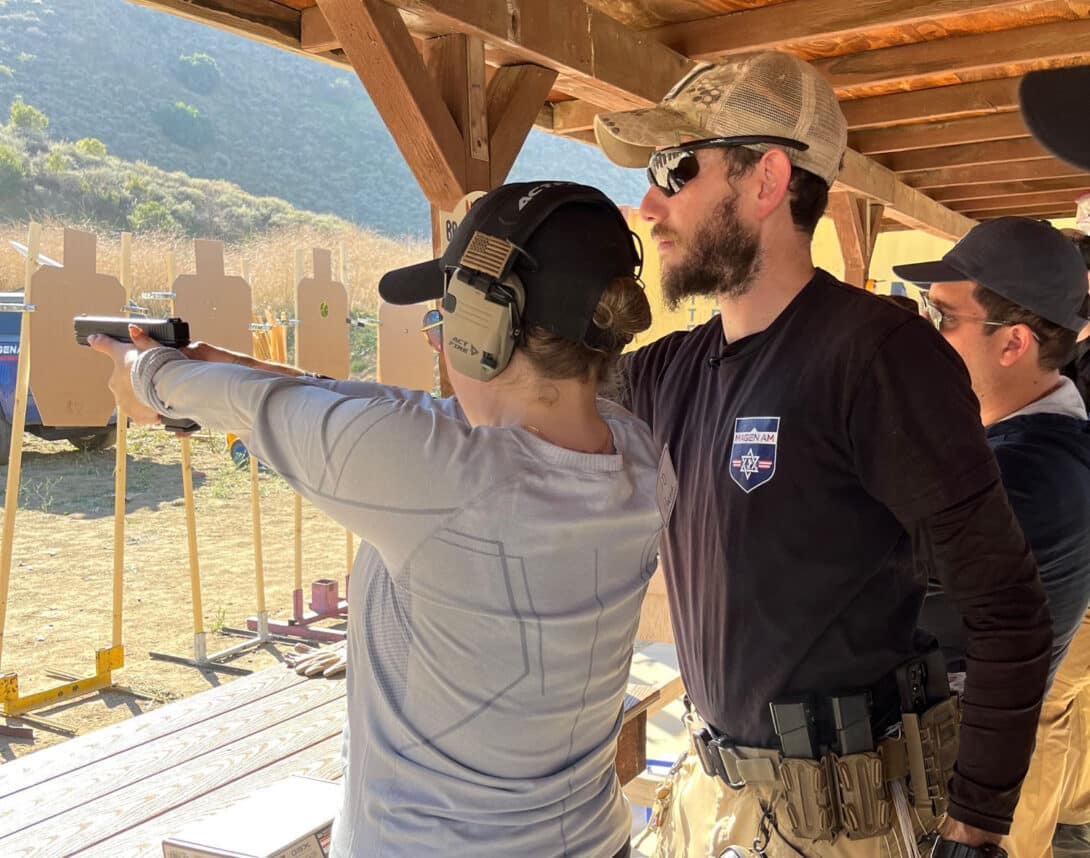
Every Sunday morning, Rabbi Yossi Eilfort, along with his dedicated team, makes their way to Piru to educate members of the Jewish community on firearm usage and self-defense. Following the terror attack on Israel this past October 7th, there has been a significant surge in interest in the training classes provided by Magen Am, a nonprofit organization founded by Rabbi Eilfort. Until recent events, Magen Am focused on offering security and patrol services as well as training for safeguarding synagogues and neighborhoods. Now, the organization is also catering to teaching the use of firearms to a wider demographic which includes Orthodox and secular men and women, some of whom had never considered owning, let alone handling, a firearm before. The goal is to teach them how to use a gun safely and responsibly. For the past month, the classes are filling up fast, as the community watches in shock reports about attacks of pro-Palestinians on Jews, vandalism of Jewish stores and properties.

On a recent Sunday, November 5th, we met them at a shooting range located about an hour’s drive from Los Angeles. The journey takes you on the 5 Freeway through breathtaking landscapes of lush green mountains, leading to a small city before veering onto a dirt road that leads to the shooting range. Participants, included women in long skirts and headscarves, men wearing yarmulkes and Tziziot, a few middle-aged couples and a woman with a full arm tattoo. They all arrived at 11am for their Pistol 101 Training session. For most, it marked their first encounter with a firearm as they gathered to grasp the fundamental rules of safety, proper handling, aiming, and shooting.

Despite more attendees than initially registered, Rabbi Eilfort and his team of trained instructors graciously accommodated everyone. While the echoes of gunfire resonated from nearby shooting ranges, Rabbi Eilfort illustrated responsible firearm use, underscoring the essential golden rules:

  1. Never point your gun at anything you do not intend to shoot.
  2. Treat all guns as though they are loaded.
  3. Keep your finger off the trigger until you are ready to shoot.
  4. Always be sure of your target and what’s beyond it.

The class was designed to be simple enough for anyone to comprehend, akin to a “Shooting a Gun for Dummies” guide. After a two-hour instructional session, participants practiced with BB guns before progressing to live rounds. However, mastery requires multiple sessions to gain comfort and ensure proper handling.

Leah, in her early 40s, told the Jewish Journal that this was her first lesson. “I attended one of their lectures at Emek Hebrew Academy and decided to join. Though I don’t own a gun yet, I’m planning on getting one soon. My husband contemplated this after the riots three years ago, but I was hesitant. Now, it feels imperative. The rise in anti-Semitism has left us feeling the need to protect ourselves. I was born and raised in L.A and relatively I always felt safe here, but no longer.”

Shelhee Gal and her husband, Steve Kossover, acquired three guns in recent years. Gal, an Israeli who relocated to the US in 1990, shared, “We saw it coming, we saw things declining here a few years ago. We have an SOS group on WhatsApp, and whenever a community member is in trouble, those nearby rushes to their aid. Just a week ago, there was an attempted kidnapping of Jews in Culver City, and community members promptly responded and prevented it from happening. This group was opened following the massacre in Israel. We need to be there for each other, we can’t only count on the police.”

Gal and Kossover navigated the process to acquire a CCW (Carry Concealed Weapon) license, a procedure that took about a year. Magen Am aids community members in the training required to obtaining such a license. Gal, the owner of Uniquely Real Estate, mentioned she no longer wears her Magen David necklace for safety reasons. “Meeting clients in vacant properties poses risks; these times call for heightened caution.”

Rabbi Eilfort is no-doubt not your average Rabbi. On top of being a firearm instructor he is also a Martial Artist. Ten years ago, at 22 years-old he won his first amateur MMA match by a technical knockout. Back then he already stated his goal to encourage fitness in the Orthodox Jewish community and promote an awareness of self-defense. A few years later, he had established Magen-Am and recently it had been added to the Sheriff’s West Hollywood station emergency plan for the Jewish community. The organization has a team of volunteers as well as hired professional armed security men.

“We’re always running classes. We have so much demand from people who want to sign up for classes and we try to filter them the best we can,” said the Rabbi in an interview before the beginning of our Sunday class.  “On our first session today, we took people who were former military who have shooting experience and we did basic assessment to know where to put them and now we are going to have our basic class. We have two back to back classes today.”

The plan is to run the classes twice a week, for beginners as well as for more experienced shooters who want to volunteer and protect their synagogues and communities. “The main goal is to get community members to be licensed and step up as security team for their institutions.”

If you want to register for classes or attend one of the 101 lectures, please visit: https://magenam.com/training-calendar/

Rabbi Yossi Eilfort and Magen Am: Empowering Communities with Firearm Training Read More »

UN Entity for Women Empowerment Turns a Blind Eye to Israeli Female Victims of Terror

Amid the avalanche of anti-Israel propaganda surrounding the Israel-Hamas war, it is more important than ever that international organizations like the United Nations (UN) remain impartial. In particular, the double standard against Israel that UN Women has demonstrated is alarming and must be challenged.

The UN Women website states that it is “dedicated to gender equality and the empowerment of women.” In fact, it excludes a specific subset of women. The truth is that UN Women has turned a blind eye to the horrors that Israeli women suffered during the October 7 barbarous attack by Hamas.

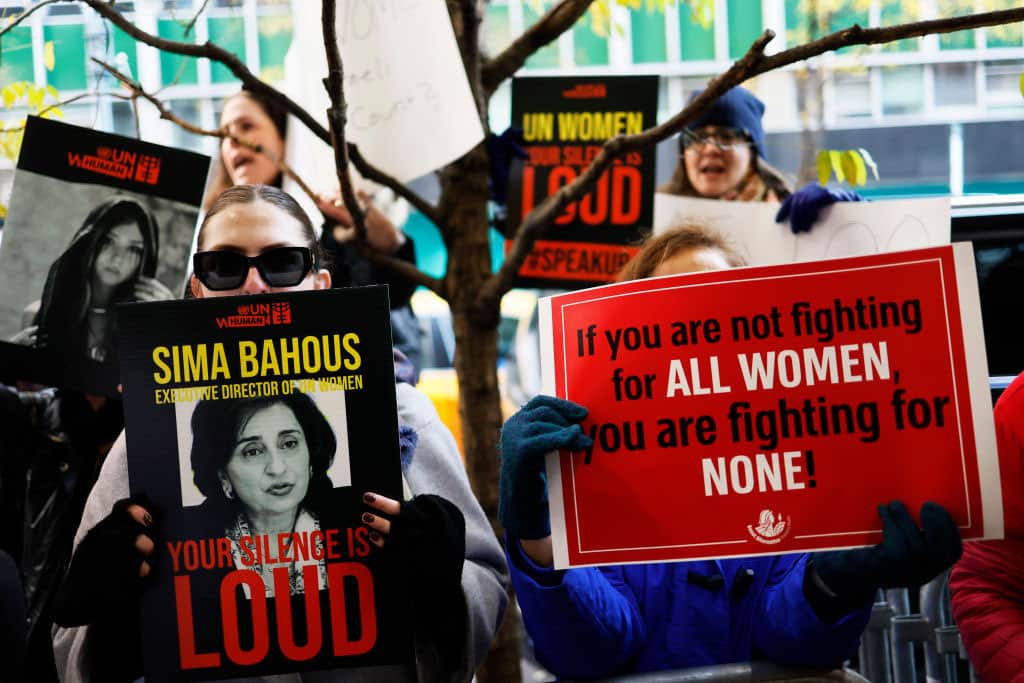
Under the leadership of Executive Director Sima Bahous, UN Women has released a series of communications emphasizing Palestinian suffering, while entirely ignoring the savage massacre of Israeli women.

A report released on October 20, which contains the estimated number of dead and injured on both sides, notes that 53% of Palestinian casualties are women and children. Aside from the source of this statistic being suspect, as data coming out of the Hamas-ruled Gaza is historically unreliable, there is no mention of the percentage of Israeli women and children raped and mutilated by Hamas. The report goes on to state that the “impact [of the crisis] from a gender perspective cannot be overlooked.” The crisis to which UN Women refers is clear, as is the one it continues to neglect.

UN Women’s pattern of bias has continued throughout the conflict. It released a story on November 1, part of a larger series called “Voices from Gaza,” that features the picture and emotional testimony of a suffering Palestinian-Arab women.

Notably, there is no series called “Voices from Israel.” A visitor to the UN Woman website would never know that Israeli women and children are currently held hostage by Hamas in Gaza. They may never see the horrifying images of Israeli women and children mutilated, raped and murdered on October 7.

The scandalous imbalance of reporting conducted by UN Women toward Israel is evident in its approach to other regional conflicts. The organization was quick to condemn sexual violence perpetrated in Ukraine, and highlighted crimes committed against women in Sudan and Ethiopia.

The inconsistency of its advocacy when it comes to Israeli women raises serious questions about UN Women’s legitimacy. Any respected international organization must adopt an agenda-free approach in order to be taken seriously. UN Women must retract reports when proven to be false, as in the case of Al Ahli hospital strike. Failing to do so will prevent the international body from achieving its stated mission of promoting gender equality and women’s empowerment. Thus far, it is not living up to its lofty mission.

UN Woman has a powerful platform for shaping global perspectives and must be held to the highest standards of integrity. Instead, its predisposition to reporting desired outcomes skews the global understanding of the situation in Gaza, which only serves to perpetuate further conflict.

When the United Nations fails to stand up for Israeli women and hostages, when it fails to condemn Hamas, when it fails to report the truth, it is failing women everywhere.

Now is the time for UN Women to make a concerted effort toward positive change. UN Women can play a crucial role in defending women by adopting an impartial stance and acknowledging the complexities of the Israel-Gaza conflict.

This is not merely a demand for fairness. It is a call for a commitment to integrity.


Karys Rhea is a producer at The Epoch Times and works with the Middle East Forum, Jewish Leadership Project and Baste Records.

UN Entity for Women Empowerment Turns a Blind Eye to Israeli Female Victims of Terror Read More »

Stop Psychoanalyzing Israel

Here come the armchair psychoanalysts!

European Union foreign policy chief Josep Borrell declared during his recent visit to Israel, “I understand your rage. But let me ask you not to be consumed by rage.” President Biden expressed a similar sentiment upon his arrival in Israel last month. “While you feel that rage, don’t be consumed by it,” he advised.

The notion that if Israel hits hard at terrorists, it must be acting out of some kind of irrational emotion is inaccurate and insulting. But it’s not new.

For years, some critics of Israel have advocated the idea that Israelis have been collectively traumatized by the Holocaust, a kind of mental disorder that renders them incapable of making rational decisions.

An early promoter of this diagnosis was New York Times columnist Thomas L. Friedman. In his 1989 book, From Beirut to Jerusalem, Friedman wrote at length about what he called “the Holocausting of the Israeli psyche,” that is, what he considered to be an excessive interest in the Nazi genocide of six million Jews. “Israel today is becoming Yad Vashem with an air force,” Friedman asserted. He alleged that Israelis’ memories of the Holocaust were to blame for their impatient driving habits, unethical business dealings, timid acceptance of high taxes, and reluctance to make more concessions to the Arabs.

Others picked up on that theme in the years to follow. Clinical psychologist Alon Gratch, writing in USA Today in 2015, asserted that “the trauma of the Holocaust has penetrated every aspect of Israeli life,” filling Israelis with “anxiety and rage” over Jewish helplessness. This supposedly has created a “psychological burden” that shapes their attitude toward Iran and influences them to vote for nationalist political parties.

Ian Lustick, a professor emeritus at the University of Pennsylvania, wrote an entire book in 2019 about the problems supposedly caused by what he dubbed “Holocaustia,” the mental illness that he said results from Israelis paying too much attention to the mass murder of Jews by the Nazis.

Lustick’s extreme perspective included his claim that Israel put Adolf Eichmann on trial “so as to extend the period of usable gentile sympathy and guilt.” He also invoked Holocaust-related language in accusing Israel of “the continuous mass shooting of Palestinian civilians [in Gaza]…murder[ing] and maim[ing] so many men, women and children trying to escape from the ghetto within which they have been concentrated.” Presumably his use of loaded terms such as “concentrated” and “ghetto” was not accidental.

The Israeli author Yishai Sarid wrote a novel in 2017 about an Israeli tour guide whose visits to the sites of former death camps led him to the conclusion that “we need to be a little bit Nazi, too.” It received a very positive review in the New York Times. Perhaps it is fitting that Sarid’s book is a work of fiction, since that is the only genre in which one could seriously argue that the tour guide’s remark represents how Israelis actually think.

In the years before there was an Israel, there were those who dismissed Jewish concerns about Nazism as a kind of emotional rage from which Jews just needed to calm down.

In 1934, Everett Clinchy, a prominent liberal Presbyterian minister, berated American Jewish leaders for planning to hold a public program to counter a New York City rally by pro-Nazi German Americans. “The situation is now like a tense quarrel between husband and wife in a family,” Pickett counseled his Jewish colleagues, “and when such a quarrel is at its height, the intelligent thing to do is to stop yelling at each other and wait a bit until the emotion of the situation is moderated.”

In the aftermath of the Kristallnacht pogrom in 1938, Father Paul L. Blakely, associate editor of the magazine America: A Catholic Review of the Week, warned Jews to stop complaining so loudly. Blakely charged that American Jewish critics of Hitler were trying to stir up “a fit of national hysteria” that would drag the United States into “war against Germany.”

The false diagnoses of “Jewish rage” and “Holocaust trauma” assume that all Jews think alike and act alike. Therefore, since some Jews were persecuted in the past, their descendants today must be acting out some hidden psychological problem if they cry out or fight back.

The absurdity of that argument is obvious from Israel’s demographic makeup. The Holocaust happened eighty years ago, primarily to European Jews. Most Israelis today are not old enough to be Holocaust survivors. And most of them are not children or grandchildren of Holocaust survivors—because their parents and grandparents did not come from Europe. The majority of Israelis are immigrants, or the descendants of immigrants, from Arab, African and Near Eastern countries; their relatives were not gassed in Auschwitz.

Certainly Israelis are deeply interested in the history of the Holocaust. And they may justifiably view the Nazi genocide, and the world’s reaction to it, as a cautionary tale, in the same way that many contemporary Western policymakers regard the failed appeasement of Nazi Germany in the 1930s as a lesson in how to deal with dictators today. But that is a far cry from being traumatized or mentally unbalanced as a result of what happened to previous generations.

When Israelis look at Hamas, they don’t see Nazis. They see Palestinian Arab terrorists who, just weeks ago, perpetrated mass murder, torture, rape, and beheadings of Jews. Israel’s response to them is not rage against imaginary enemies. It’s self-defense against real enemies.


Dr. Medoff is founding director of The David S. Wyman Institute for Holocaust Studies and author of more than 20 books about Jewish history and the Holocaust. His latest is America and the Holocaust: A Documentary History, published by the Jewish Publication Society & University of Nebraska Press.

Stop Psychoanalyzing Israel Read More »