fbpx

October 27, 2023

Teachings for Shabbat 27 Oct 23 – Fighting Lies and Disinformation

Fighting Lies and Misinformation – Teaching Truth


This Shabbat we are moving back to teaching the beauty and depth of our tradition, but will also continue our advocacy training for Israel.


The facts and consequences of the terrorist attacks and atrocities are unfolding further and further.

Some of the most horrific videos were kept secret; some are just being discovered. These profoundly disturbing videos are now making the rounds. We are sickened and grief-stricken in seeing the unspeakable brutality of Hamas. In seeing these videos, we realize, again, that any talk of a ceasefire is not only untenable, but also immoral. The savagery of Hamas equals the worst that we have seen in the past century. Hamas must be defeated and eradicated. Those responsible must not be permitted to walk this earth. Gazans can stop their own suffering in a moment by surrendering to the IDF.  If someone knows a better way to defeat Hamas, I’m sure the world would love to hear it.


The morale in the IDF is extremely high. Some reports say that reserve units are at 130% of needed strength. Those who, as of October 6th, were advocating for Israelis not to enlist in the IDF, not to show up for reserve training, and who tried to delegitimize Israel from within, are now silent. Israelis are binding together in the face of this horror. The story of stupendous valor of the first few days of fighting are coming out. Most Israelis agree: investigations of failures at all levels are to come, but that will need to come later.


Most Jews and all good people everywhere support Israel, and are horrified by the anti-Israel demonstrations, many taking place at what we used to call “elite universities.”  On that note, I will be offering on a Zoom session Wednesday evening will offer a detailed call to action for high school and college students, their parents and grandparents. We need to know how to respond to the radical ideologies, and then move to proactive plans to guide learning toward truth and justice and not advocating for genocide and atrocities. More information on that to come.


All of us here in here in the United States, college campuses and elsewhere, have our work clearly set out for us and central to that work is the tireless advocating for Israel. I want to remind you that the best way to advocate for Israel is to ask questions and make brief points, but not to argue. Make the other person pull out their smartphone and look up any evidence for what they are saying. Watch the discomfort.


I am hearing most often that people need to know how to respond to two main things:


First, the lie of Jews stealing Palestinian land.  There was no political entity called Palestine that owned any land. Palestine was a region, like “the Rocky Mountains.”  We all need to know a bit of the history of the region, especially during the Ottoman empire and the British mandate.  Friday night I would like to offer brief advocacy training on responding to the lie of Jews stealing Palestinian land. I will take pointed questions.


Second, the lies of the “oppression,” “occupation” and “outdoor prison.” A tragic history of refusal to make peace with Israel is dumped in the problem of these three obfuscations.  Complex issues invite slogans of misinformation.  We must know a little about the Palestine Civil War of 1948 (“the Israeli War of Independence”), the Six Days War in 1967, and the consequences of each. We need to know a bit about the Oslo accords and the Camp David talks. Shabbat morning I will offer brief advocacy training on the lies around the “oppression,” “occupation” and “outdoor prison” and take pointed questions.


Please join us as gather as community to grieve, to learn and take action.


Lots of work to be done. We have to stay at it.

Teachings for Shabbat 27 Oct 23 – Fighting Lies and Disinformation Read More »
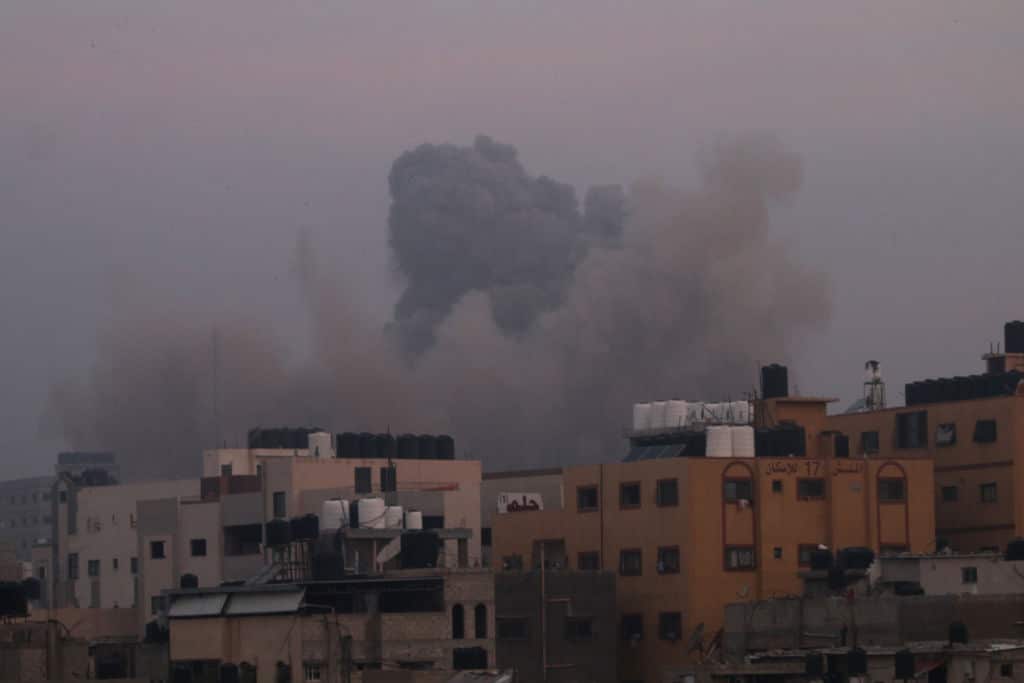
IDF: Ground forces in Gaza broadening their activity

(October 27, 2023 / JNS) Israel Defense Forces ground forces stationed on the front at the border of the Gaza Strip are broadening their activity, the Israeli military announced on Friday night, as the Israeli Air Force unleashed a wave of firepower strikes that stood out in its intensity.

“In recent hours, we stepped up attacks on Gaza. The IAF is attacking [in a] broad manner, hitting underground targets and terror infrastructure in a very significant manner,” IDF Spokesperson Rear Adm. Daniel Hagari said. “Ground forces are broadening their activity.”

Israel’s stated war objectives are the destruction of the Hamas terror army and the return of all kidnapped hostages.

“We will continue to attack in Gaza City and its environment and call on civilians to evacuate,” Hagari said.

Internet and phone service was reportedly down in Gaza, and the Palestine Telecommunications Company (Paltel) announced “a complete disruption of all communication and Internet services” due to the IDF offensive.

U.S. and Israeli officials told ABC News that the current ground activity in Gaza is not a large-scale offensive, and Peter Lerner, the IDF spokesman, said that the current action is not the major operation that is expected.

Hagari said terrorist fire targeted military posts in Avivim and Misgav from the north, with the IDF returning fire. “We are continuing to search and destroy terror squads,” he said of the lower-level conflict with Hezbollah.

“Since the start of the war, the IDF destroyed many terror squads. Anyone who endangers us will pay with their lives,” Hagari added. “The IDF is on high alert in the north.”

The IDF also thwarted an aerial threat in the Red Sea on Friday morning, it stated.

IAF forces “were scrambled after an aerial threat was identified in the area of the Red Sea. The IAF intercepted the hostile targets in the area,” the military said. “No threat was posed to civilians, and no infiltration into Israeli territory was identified.”

Israel will continue to work with Egypt and the United States to tighten defenses in the Red Sea, Hagari said.

The IDF has officially counted 310 fallen soldiers and 229 hostages. “At this time our heart is with the hostages,” Hagari said. “We are dedicated to the national mission of bringing them all back.”

At the end of the third week of war, hundreds of thousands of reservists and other security force personnel are deployed around Israel’s land borders, as well as in the air, at sea and in the cyber arena, he said.

Asked to address reports on alleged hostage exchange deals, Hagari called those “psychological terrorism on Israeli citizens.”

“We will hold and bring any relevant data on the hostages, operational, intelligence or civilian,” he said. “We’ll give it to families. Until then, I call on civilians not to capitulate to this.”

IDF: Ground forces in Gaza broadening their activity Read More »

SWU Interns, Mezuzah Installation, Spertus Institute, CCFP Appointments

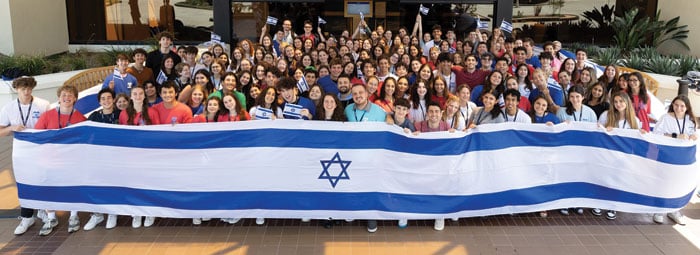
Pro-Israel education group StandWithUs (SWU) has announced the students participating in the 2023-24 Kenneth Leventhal High School Internship and the Emerson Fellowship.

The Kenneth Leventhal High School Interns include Shira Elyaszadeh of Shalhevet High School; Eli Pournazarian of Milken Community School; Abigail Wissot of de Toledo High School and Jacob Shayefar of Beverly Hills High School. Additional interns are enrolled at schools including Granada Hills Charter School, Taft Charter High School and Brentwood School.

The StandWithUs Emerson Fellows are Ariela Moel of University of Southern California; Eliana Eisen of Cal State University, Long Beach; Eyal Wrobel of UC Santa Barbara; Jaden Penhaskashi of UCLA; Lexi Yaghoubi of Cal Poly San Luis Obispo; Nova Sari of UC Irvine; and Sharon Shashoua of CSUN.

Like previous years, the student leaders join hundreds of others chosen for each program from hundreds of high schools and universities throughout North America and SWU chapters worldwide.

“More students are reporting that they are made to feel isolated because of their religious or national identity,” SWU CEO Roz Rothstein said. “Our programs aim to give students the tools, education and support they need to confidently and fully participate in their schools and communities while proudly expressing core parts of their identity, including their Zionism.”


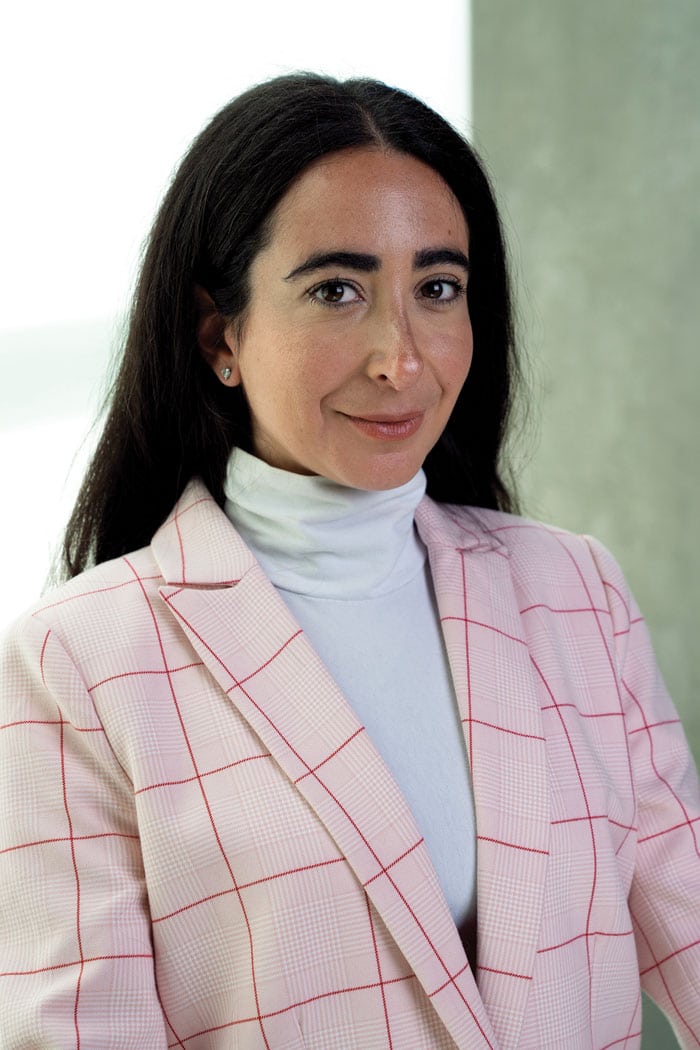
Holocaust Museum LA’s Jordanna Gessler. Courtesy of the Spertus Institute

Holocaust Museum LA Vice President of Education and Exhibits Jordanna Gessler is among the Jewish leaders selected for the second cohort of the Chicago-based Spertus Institute’s Leadership Certificate in Combating Antisemitism.

Launching this month, the important program equips Jewish leaders with tools to respond to rising antisemitism. The second cohort is comprised of 18 leaders across North America.

Holocaust Museum LA Vice President of Education and Exhibits Jordanna Gessler is among the Jewish leaders selected for the second cohort of the Chicago-based Spertus Institute’s Leadership Certificate in Combating Antisemitism.

Launching this month, the important program equips Jewish leaders with tools to respond to rising antisemitism. The second cohort is comprised of 18 leaders across North America.


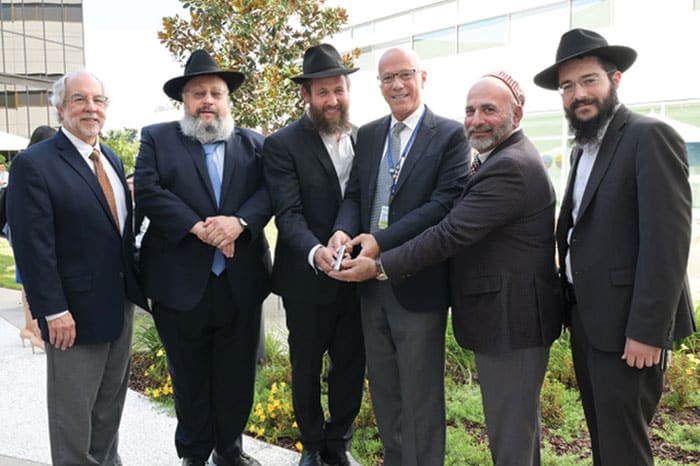
From left: VBS Rabbi Ed Feinstein; Rabbi Mordecai Finley; Chabad Rabbi Yanky Kahn; Providence Cedars-Sinai Tarzana Medical Center Chief Mission Integration Officer Shawn Kiley; Temple Judea Rabbi Joshua Aaronson; and Rabbi-Chaplain Mendy Begun. Photo by Philicia Endelman

A mezuzah installation ceremony was held at the Friese Family Tower, a new patient building at Providence Cedars-Sinai Tarzana Medical Center, ahead of the state-of-the-art facility welcoming its first patients on Oct. 1.

On Sept. 28, rabbis from around the local community gathered for the installation of the building’s first mezuzah. 

Named for the Donald Friese family in recognition of their $50 million donation to the building’s construction, Friese Family Tower is the centerpiece of an extensive and ongoing hospital expansion and modernization plan at Providence Cedars-Sinai Tarzana Medical Center.


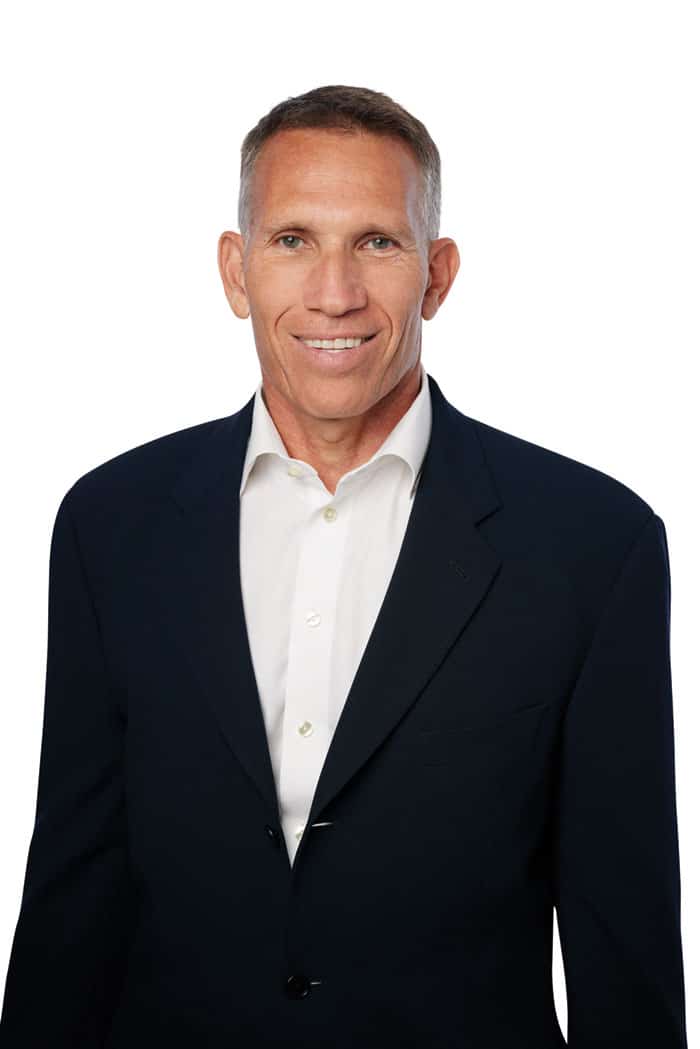
Mattel CEO Ynon Kreiz Courtesy of CCFP

Mattel CEO Ynon Kreiz has joined the advisory board of Creative Community for Peace (CCFP), a group of entertainment industry executives committed to combating the Boycott, Divestment and Sanctions movement against Israel, promoting the arts as a means of peace and countering antisemitism in showbusiness.

Kreiz, an Israeli-American businessman, is currently reeling from the astronomical success from the summer blockbuster movie, “Barbie,” based on Mattel IP.

“I strongly believe in the power of storytelling, imagination and creativity to foster peace and create a better future for the next generation. CCFP understands the vital role arts play in society to bring people together and build inclusion, acceptance, and tolerance,” Kreiz said. “I look forward to supporting CCFP’s work in its important endeavors.”

CCFP also announced the appointment of Modi Wiczyk, co-founder and co-chairman of film and television studio MRC, to its advisory board. 

“CCFP’s work brings that unity and peace to places that need it the most,” Wiczyk said. “It’s an honor to help in any capacity I can.” 

SWU Interns, Mezuzah Installation, Spertus Institute, CCFP Appointments Read More »

The Beauty Queen of Jerusalem Moves to LA

One of the most inspiring things to see is when a newcomer makes a show sizzle and becomes a star. That has certainly been the case for Israeli actress Swell Ariel Or, who starred as Luna Ermoza in the Netflix hit “The Beauty Queen of Jerusalem.” Or lit up the screen as a young woman fighting for love, learning to dance and dealing with an overprotective mother in Jerusalem during the years leading up to the establishment of Israel in 1948.

The first season introduced the Ermoza family, living in Jerusalem at the time under Ottoman control and later, the British Mandate. They’re a Sephardic family steeped in tradition, but the Ermoza men appear to be cursed to marry women they do not love. In the second season, Or showed an even greater acting range in some grueling scenes with Israel Ogalbo, who plays her love interest, David Franco. 

While Luna is a whirlwind of emotions, Or said that underneath that was the desire to do what was right and carve a niche for herself as an independent woman who was a talented dress designer. “I was definitely comfortable with the character,” she said. “But Season 2 was very different as she went through domestic violence and was horribly attacked.” Or took the role very seriously not only because it was a major break but because Lula represented something new. “The character and the show bring an important part of history people might not know and we don’t see enough of Sephardi characters on screen,” Or said. “So, it was extremely meaningful to me to play the part.”

Or said she was rejected by many agencies because she hadn’t specialized in theater in high school or in the Army. She said she never got discouraged. “My attitude was like, ‘if this option is not available, let’s look at the next option,’” Or said. “I don’t hold on to negative energy.” She was helped by what she learned from Doron Ben David — Steve on the hit show “Fauda” and Amir on the jaw- droppingly good show “The Lesson,” available on ChaiFlicks. “Not all actors are good acting teachers,” Or said. “He (Doron) is. He taught me to be brave with my choices.”

“The Beauty Queen of Jerusalem” was created by  screenwriters Shlomo Mashiach, Esther Namdar Tamam and director Oded Davidoff, who helmed every episode. Davidoff said there was a lot of pressure to pick the right actress for the role. “We did a lot of testing with most of the best talent in Israel with four months of auditions. I wanted someone new. I could see she was very talented. She had the strength that she would be able to do a great job with the part.” She needed  memorize a large amount of text, be whimsical, and endure scenes that called for extremely violent situations.  He praised Or for her versatility and her humility.

“I needed someone who could handle the pressure and Swell was amazing,” Davidoff said. “She could to different emotions in the same take. She can do everything. It’s very cool to work with her because she doesn’t act like she is a star or a diva.”

One of the reasons the show was such a success is the chemistry between Or and “Shtisel” star Michael Aloni, who plays her father, Gabriel Ermoza, a man who views her as the apple of his eye, while his wife, Rosa and mother, Merkada (Hila Saada and Irit Kaplan) are often harsh to Luna. 

“I was extremely comfortable working with him because he was kind, patient and allowed me to take chances or make mistakes,” Or said of Aloni. “I think that’s why you see such a strong father-daughter relationship on the show.”

The move from Israel to Los Angeles was made so Or could explore new opportunities. Among many she would love to work with, she cited actress Scarlett Johansson, and directors Wes Anderson and director Greta Gerwig. Israeli actress Gal Gadot has become the major international superstar to represent Israel on the big screen as the star of “Wonder Woman” and its sequel, “Wonder Woman 84.” More than that, Or said, Gadot is “a badass for starting her own production company. That way you can create your own projects without having to wait for someone else.”

Or’s upcoming projects include Kissufim,” which takes place on a kibbutz of the same name. Directed by Keren Nechmar, she  stars opposite Tamar Ginsburg, who played her love interest on ‘The Beauty Queen if Jerusalem.” Or also appears as Laila in the Disney comedy series, “How To Be a Carioca.”

Or is proud to represent Israel and is excited to learn more about L.A. In addition to playing a beauty queen, she says she could play a villain.

Or is proud to represent Israel and is excited to learn more about L.A. In addition to playing a beauty queen, she says she could play a villain. She would not make any bold predictions and is staying grounded amid her new fame, and enjoys singing, playing guitar and cracking jokes.

Or declined to make any specific predictions of what roles she will have but said she is very optimistic about her future.

“We’ll see what happens,” Or said.

The Beauty Queen of Jerusalem Moves to LA Read More »

The Mehdal—To Be or Not to Be

The reason Hamlet never had much peace

is that he asked, “To be or not to be,”

translated into Hebrew “live or cease,”

lihyot o laḥdol, made by meḥdal as unfree


of peace of mind as not just Israelis

but Jews throughout  the universe became,

doomed like him by meḥdal to fail, ease-

deprived, attributing to themselves the blame,


at least that seems to be the problem that prevails

in those who think, “Oh what a rogue and peasant

am I!” like Theseus sailing with black sails,

Jews’  message harming Jews  more than the crescent.


In “Can the Hebrew Word for Catastrophic Blunder Be Translated?”  mosaic.com 10/19/23, Philologos writes:

https://mosaicmagazine.com/observation/israel-zionism/2023/10/can-the-hebrew-word-for-catastrophic-blunder-be-translated/?utm_source=Klaviyo&utm_medium=campaign&_kx=YvHRNm7nH45xpg0B8XZlrQrBRwVniBH9VelDcoIFlqI%3D.L87CGh

Although meḥdal’s emotional resonance, which will now be doubled and redoubled, goes back no further than 1973, the word itself is an old one. It is built on the biblical verb ḥadal, “to cease” or “to cease to be,” which, in the second of these two senses (Hamlet’s “to be or not to be” is lihyot o laḥdol in Hebrew), yields various compound terms. Thus, we have ḥadal-ishim, “ceased-of-person,” a worthless or ineffectual individual; ḥadal-onim, “ceased-of-strength,” someone who is helpless; ḥadal-yesha, “ceased-of-being-rescued,” someone in a hopeless position; ḥadal-pera’on, “ceased-of-repayment” or insolvent, and so on. Ḥidalon, “cessation of being,” denotes in Hebrew a state of near non-existence. One never finds ḥadal used in a positive sense. Theoretically, it is possible to say something like \, “ceased-of-troubles,” that is, unworried or carefree, but in actuality there are no such expressions.

The earliest documented use of mehdal dates to the 10th century. It occurs in the Sefer ha-Mitsvot, the “Book of Commandments,” a rhymed poetic rephrasing of the commandments of the Bible by the great rabbinic leader and religious philosopher Saadya Gaon. In summing up the sin-offering prescribed for transgressions of Mosaic Law, Saadya wrote: He who commits a prohibited act must offer a lamb or a goat to the Heavens [ha-z’vulim]. He who commits such an act unawares must likewise make such an offering. But the Almighty, may He be praised, who pities the poor man, requires of him only turtledoves or pigeons and a tenth [measure of fine flour] for his meḥdalim. The Just One knows the case of the poor [dalim].

Theseus, forgetting his father’s direction, flew a black sail as he returned. Aegeus, in his grief, threw himself from the cliff at Cape Sounion into the Aegean, making Theseus the new king of Athens and giving the sea its name.

Ibn Ezra explains Gen. 13:8:

וטעם ויחדלו לבנות העיר להשלימה כי כבר בנו קצת העיר וקצת המגדל כי כן כתוב אשר בנו בני האדם. או יהיה פירוש אשר בנו בני האדם במחשבתם. וכן וילחם בישראל על בלק. והראשון נכון בעיני.

[AND THEY LEFT OFF TO BUILD THE CITY.] Its meaning is: they left off from completing the city because part of the city and the tower had by this time been built. This is so for Scripture reads, the city and the tower, which the children of men builded (v. 5). It is also possible that the meaning of which the children of men builded is: which the children of men intended to build. Then Balak the son of Zippor, king of Moab, arose and fought against Israel (Josh. 24:9) is similar. The first of these interpretations appeals to me.

Following Ibn Ezra’s interpretation of banu in Gen. 13:8 as “misunderstanding,”  I suggest  that the mehdal was caused by Israel’s misunderstanding of the significance of the tunnels that Hamas banu, had built, enabling me to recall how the rereading of Isa. 54:13  in   bBerakhot 64a can be interpreted as an implied warning that when peace is not great it can be  a stumbling block, as sadly proved to be the case regarding the tunnels built by Hamas when its peace with Israel was not great, but a military mirage:

אַל תִּקְרֵי ״בָּנָיִךְ״ אֶלָּא ״בּוֹנָיִךְ״. ״שָׁלוֹם רָב לְאֹהֲבֵי תוֹרָתֶךָ וְאֵין לָמוֹ מִכְשׁוֹל״. Do not read banaykh, your children, but bonayikh, your builders. There should be a great peace for those who love your Torah, and it should be  no stumbling block for them.


Gershon Hepner is a poet who has written over 25,000 poems on subjects ranging from music to literature, politics to Torah. He grew up in England and moved to Los Angeles in 1976. Using his varied interests and experiences, he has authored dozens of papers in medical and academic journals, and authored “Legal Friction: Law, Narrative, and Identity Politics in Biblical Israel.” He can be reached at gershonhepner@gmail.com.

The Mehdal—To Be or Not to Be Read More »

Much Has Changed on the UCLA Campus Since October 7

For many Bruins, a conflict taking place 7500 miles away in Israel still strikes remarkably close to home. Since October 7th, our school has come to life with the political and social activism that seemingly dominates universities today.

Thus far, it’s been a Fall Quarter unlike any other. In campus corridors and classrooms alike, emotions among the community are running high. Intense feelings of grief, outrage and fear are palpable. It’s clear that students of varying backgrounds are impacted in numerous ways.

Such sentiments have been channeled into tangible action. In recent weeks, pro-Israel organizations have hosted several vigils and rallies, while pro-Palestinian groups have held demonstrations and walkouts of their own. Posters and leaflets, meanwhile, blanket our campus.

Due to an elevated physical threat, extra security measures have been implemented to help protect the school’s Jewish institutions. Last weekend, for example, I ate Shabbat dinner together with the campus police officers at our table. Still, many students say they feel generally unsafe and alienated during this time.

But, despite all these recent changes, what has affected me the most on campus since October 7th is actually something much less prominent. It’s probably something that perhaps only ten or fifteen people at my entire school may know about.

It’s an extra prayer, Avinu Malkeinu, that we have added, based on a halachic decision from Rav Herschel Schechter, to our daily prayers at the UCLA Hillel. Normally recited only between Rosh Hashanah and Yom Kippur and on fast days, saying Avinu Malkeinu each day has had a significant impact on how I’ve coped since the attacks that took place on Simchat Torah.

Inherent in the phrase Avinu Malkeinu (Our Father, Our King) are two seemingly contradictory aspects of the religious experience. As individuals, we dually relate to Hashem as both a Father and as a King. On one hand, we feel inexorably drawn to our Father out of an immense love. Yet, we recoil from Him, fearfully, as we would from a King.

Avinu Malkeinu thus encapsulates a dialectic of both expansion and contraction, an experience relatable on both a personal and a national level. In the present moment, our yearning to extend ourselves outward and contribute to the Jewish people is simultaneously accompanied by a painful and paralyzing process of introspection.

In the wake of the terror attacks of October 7, I have been truly inspired by the numerous stories and anecdotes of heroism and valor—of the brave people heeding the national call, flying into Israel to serve on the battlefront or to volunteer behind the lines. I remain in awe of the generosity of so many, the extraordinary mesirat nefesh among the Jewish people, and of people’s selfless efforts to help others in any way possible.

These courageous actions are propelled by an intense ahavat yisroel, and are a testament to the extraordinary achdut and solidarity among the Jewish people in the present moment. This inclination of extending outward is the epitome of the “Avinu,” Our Father, aspect of the dialectic.

Yet, following the October 7th atrocities, we have also become aware of a gaping wound afflicting us internally. As individuals and as a collective, we are reeling with a sense of feeling spiritually bereft that has made us recoil, retreat and look deep inside ourselves.

As individuals and as a collective, we are reeling with a sense of feeling spiritually bereft that has made us recoil, retreat and look deep inside ourselves.

“Let us search and examine our ways, and turn back to Hashem,” reads the verse in Lamentations. In the aftermath of this tragedy, we’ve been prompted to reflect, atone for our mistakes, and analyze our deeds with microscopic precision. Feeling like we are in the presence of a King, “Malkeinu,” we consider ourselves unworthy and flawed.

In the wake of the October 7th attacks, I’ve been experiencing the full extent of this dialectic. On one hand, I feel connected and bound to the Jewish people like never before. Yet, I feel compelled to atone, much like I did on Yom Kippur several weeks ago.

As I process the recent tragic events in Israel, I find myself reminiscing about the considerable time I’ve spent in Israel and the experiences I’ve had in the Holy Land. Since 2020, I have been to Israel on several occasions: for a religious gap year program, summer programs with professional opportunities, and also for vacation to visit family and friends.

Each time I went, I fully enjoyed all that Jewish sovereignty and freedom had to offer. I explored the land, I felt the warmth of Israelis, and I took comfort in the relative peace and prosperity of the country. I was blessed with opportunities that my ancestors could only dream of.

Upon further reflection, I’ve realized that the massacres of October 7th have changed my relationship to the Jewish state.

Looking back at the time I spent in Israel, I realize I was naive then. I failed to recognize that it was because of the sacrifices of many courageous Jews and Israelis that I was gifted with those very opportunities. Perhaps I expected the Promised Land to be served to me on Natan Alterman’s “silver platter.” I took my experiences for granted.

Looking back, I realize I had primarily celebrated Yom Ha’atzmaut and all that the day represented. But in doing so, I had put Yom HaZikaron on the periphery.

October 7th, 2023 now serves as my solemn reminder that the struggle and sacrifices for Jewish sovereignty, Jewish life and Jewish existence endure to this very day. These concepts are not distant historical phenomena; on the contrary, they are living realities.

The atrocities have taught me that, as a Jew, I am part of a collective that is greater than any one individual. Our fate as a people is one. We now feel this viscerally: An attack on k’lal yisroel is an attack on all of us.

It is certainly true that the events of October 7th are forcing us to introspect and reflect like never before. But as we proceed through this difficult chapter of Jewish history, I take comfort knowing that these reflections will be a powerful tool as we slowly rebuild.

So for now, as we continue to recite Aveinu Malkeinu each day in this time of distress, I hope to draw solace and strength from the prayer’s powerful entreaties.

Our Father, our King, raise up the might of Israel, Your People.


Alex Rubel is a third-year student at UCLA

Much Has Changed on the UCLA Campus Since October 7 Read More »

The Weaponization of Zionism and the IHRA Definition

After the founding of Israel in 1948, many Middle East and North Africa nations enacted laws criminalizing “Zionism.” Zionism was rarely defined by those countries, creating an intended ambiguity that ushered in a surge of state-sanctioned antisemitism, resulting in widespread human rights violations against Jews throughout the region.

These camouflaged anti-Jewish campaigns were not merely institutional; they manifested in public spaces with frequent violent outbursts and subtler forms of discrimination against Jewish individuals. Jewish students, in particular, were no longer safe in public classrooms or welcomed in social spaces they once frequented. Bullying, harassment, and the alienation of Jewish children became routine, and in extreme cases, Jewish men, women, and children were scapegoated for local frustrations.

A poignant example is a Libyan law[1] passed in 1961, which stipulated that “any person deemed to have acted morally or materially in favor of Israeli interests” would lose their Libyan nationality. Six years later, during the 1967 Arab-Israeli War, some Muslim Libyan residents turned against their Jewish neighbors, setting synagogues ablaze, destroying businesses, and tragically separating families. All this occurred even though the conflict, for which these innocent Jews were being blamed, was happening over 1,000 miles away.

Country after country in the Middle East and North Africa passed similar laws, criminalizing perceived and/or tangible relationships with Israel. The term “Zionist” was often used by Arab governments as a coded, all-encompassing reference for any Jewish individual. By the end of that 20th century, nearly one million “Zionist” Jews in the Middle East fled state-sanctioned oppression, expulsion, and dispossession.

A similar weaponization of the word “Zionist” and targeting of Jewish individuals and organizations supporting Jews’ indigenous rights in Israel is occurring in the USA today. From the thousands of Hamas sympathizers marching on our streets calling for “resistance by any means,[2]” to public school boards contracting with anti-Zionist organizations, in the last week Jewish communities across America have woken up to this insidious form of  antisemitism, that unfortunately is known well by Jewish refugees from Libya and other Middle East and North African countries.

Make no mistake, when modern-day activist-educators, particularly those within the discipline of Ethnic Studies, mention “Zionist influence[3],” “Zionist forces[4],” and “Zionist attacks” on education and society, they are referring to Jews. These activist-educators often cherry-pick specific anti-Zionist Jewish voices[5] and organizations to bolster their claims and further their antisemitic agendas. If they were genuinely committed to combating all forms of bigotry, including antisemitism, they would refrain from such cherry-picking and consider various data points on Jewish Americans’ relationships with Israel. This includes the 2020 PEW study of Jewish Americans[6], which reported that over 80% of Jewish Americans believe that “caring about Israel is an essential part of what being Jewish means to them.”

The most fertile and unsettling new breeding ground for these anti-Zionist campaigns is America’s K-12 schools. Policies embracing “liberated” Ethnic Studies try to marginalize and undermine a wide-swath of mainstream Jewish organizations, pointing to their “Zionist” attacks keep antisemitic content out of the classroom.

So, what can we do?

Though the U.S. Constitution protects Jewish Americans from laws criminalizing Zionism, like those in Arab nations, we are witnessing anti-Zionist antisemitism creeping into government spending as anti-Israel educational activists work overtime[7] to influence educational policies and land contracts in order to shape classroom curriculum and so hearts and minds..

Unlike Jews in the Arab world, helpless in the face of state-sanctioned discrimination, Jews in the United States have a tool to combat this form of antisemitism – the International Holocaust Remembrance Alliance’s (IHRA)[8] working definition of antisemitism.

We should not assume our elected officials can identify and understand antisemitism in all its nuances and we should use this definition when in dialogue with them. That is why my organization, JIMENA, is leading a state-wide effort asking Governor Newsom to adopt the IHRA definition of antisemitism.

If the state of California had adopted the IHRA definition in 2019 when the first draft of the Ethnic Studies Model Curriculum was being drafted, the project might have proceeded without controversy, saving the state millions of dollars and avoiding numerous controversies. Instead, the California Department of Education was unable to recognize the anti-Zionist antisemitism embedded in it by K-12 Liberated Ethnic Studies activist-scholars on the writing team. Educational agencies can prevent similar errors in the future by using the IHRA definition as a guide to discern when educational materials include antisemitic content.

Critics have raised several concerns about the IHRA definition and its examples, mostly related to the belief that it will suppress free speech. However, time and again, interfaith legal scholars, educators, and political leaders from around the globe have established that the IHRA definition is not a tool to stifle free speech. Instead, its primary value is to help society identify, prevent, and combat antisemitism. This is why over 1,000 entities worldwide, including more than 30 US states, have adopted the definition.

Unsurprisingly, the most vocal critics of the IHRA definition are those who use the term “Zionist” pejoratively and conspiratorially when Jews oppose antisemitism in classrooms and public spaces. Those perpetuating antisemitic language and tropes, such as the authors of the first draft of California’s Ethnic Studies Model Curriculum, are the last individuals who should be tasked with defining antisemitism or influencing the definitions adopted by public agencies, especially our schools, yet they are demanding to do so.

It falls upon us, Jewish leaders and concerned parents to educate our civic leaders and public educators about antisemitism. We should unite in encouraging the State of California to formally adopt the IHRA definition as other states, like New York, Vermont, Washington State, Florida, and New Mexico have done.

And finally, we should proudly use the word “Zionist” to describe our people’s liberation and reject it being weaponized against us. As the IHRA definition models — denying the Jewish people their right to self-determination is antisemitism, and we should be unafraid to express support for our own Zionist liberation and a world free from double standards and hatred of Jews.

[1] http://www.justiceforjews.com/libya.html

[2] https://nationalpost.com/news/hamas-support-students-justice-in-palestine

[3] [3] https://teachpalestine.org/defend-crt-and-ethnic-studies/

[4] https://convergencemag.com/articles/fight-for-ethnic-studies-moves-to-k-12-classrooms/

[5] https://www.jimena.org/sephardic-and-mizrahi-communal-response-to-jewish-voice-for-peace/

[6] https://www.pewresearch.org/religion/2021/05/11/u-s-jews-connections-with-and-attitudes-toward-israel/

[7] https://ethnicstudies-coalition.org/

[8] [8] https://www.holocaustremembrance.com/resources/working-definitions-charters/working-definition-antisemitism

The Weaponization of Zionism and the IHRA Definition Read More »