
fbpx

October 1, 2023

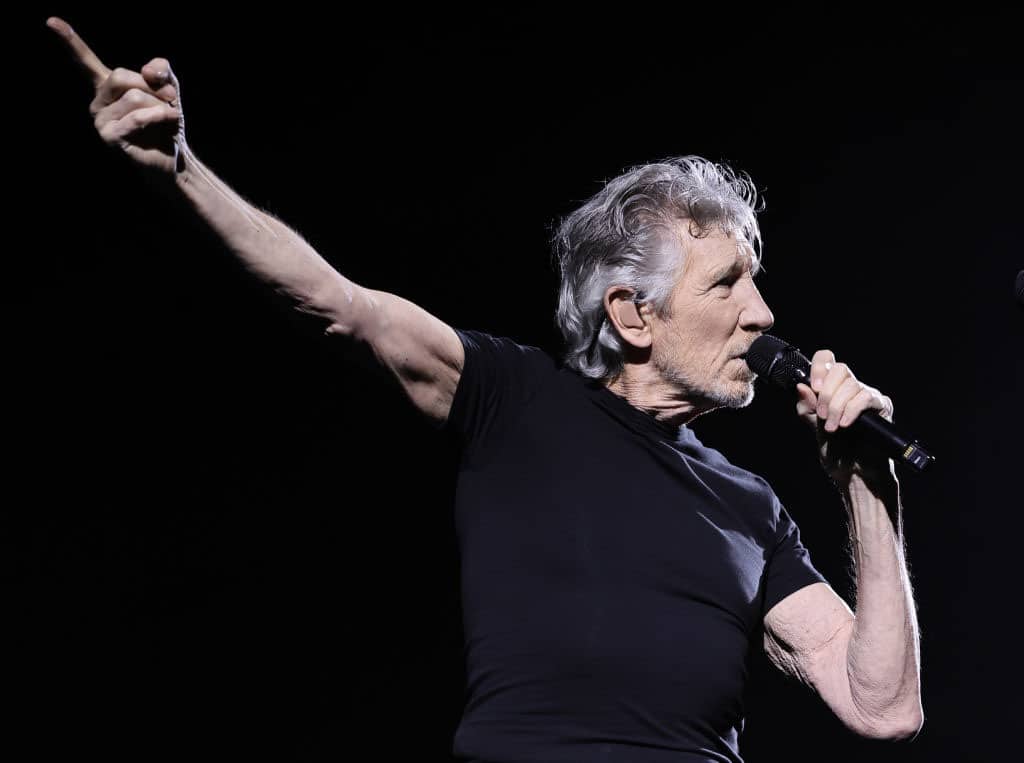
New Roger Waters Antisemitism Allegations in Documentary

The new documentary “Dark Side of Roger Waters” has revealed a new set of antisemitism allegations against former Pink Floyd bassist and frontman Roger Waters, including that he wanted to use the words “dirty kyke” on an inflatable pig, wanted to write a song that called Pink Floyd’s then-agent a “f—ing Jew” and ranted about “Jew food.” Waters has since issued a statement on his website calling the documentary “a flimsy, unapologetic piece of propaganda.”

The 37-minute documentary, which was created by Campaign Against Antisemitism (CAA), featured longtime journalist John Ware claiming to have obtained internal emails from Waters in 2010 when he was planning a global tour. One of the purported emails features Waters proposing that the now-infamous inflatable pig feature “stars of David” and “epithets” like “dirty kyke,” “follow the money” and “Scum?” Ultimately, Waters scrapped the “dirty kyke” epithet after objections from his lighting director, who was Jewish.

Another email shows Waters suggesting that they provide visuals dropping Stars of David and other religious symbols “like bombs,” along with “dollar signs” and “swastikas.” Waters wrote in this email, “I gather that at least one of us is offended by the inclusion of at least one of these symbols,” an apparent reference to his lighting director. The swastikas were not used in the tour, but Waters did use Stars of David followed by dollar signs.

In his Friday statement, Waters claimed that the documentary distorted the emails. “The offensive words I referenced in quotes in an email 13 years ago, were my brainstorming ideas on how to make the evils and horrors of fascism and extremism apparent and shocking to a generation that may not fully appreciate the ever-present threat,” Waters said. “They are not the manifestation of any underlying bigotry as the film suggests. Quite the opposite. I have been trying to expose the evils of fascism ever since learning of my father’s death fighting fascists in World War II.”

The documentary features a clip of Waters saying on Double Down News that the pig “has a number of symbols on it, including the crucifix and the star and crescent” and that “the Star of David is only part of a group of symbols that represent dogma.” He stopped using the Star of David on the pig in 2013.

“I think Roger sees himself as an antifascist,” legendary producer Bob Ezrin, who co-produced Pink Floyd’s 1979 album “The Wall” and has worked with other iconic artists like Alice Cooper, Kiss and Lou Reed. “I think Roger sees himself as someone who opposes racism and opposes totalitarianism and opposes stereotypes and all that stuff, he sees himself that way. And I think in his mind, that pig was symbolic of all the bad thinking people have about other people in the world, and he assimilated it into one symbol that floats over the top of audiences at his concert.” But, Ezrin argued, “nobody really understands the profound meaning that Roger will ascribe to the pig” and so when people see the Star of David on the pig, “they just see symbols of antisemitism, so for the antisemites in the audience, that’s a rallying cry.”

Ezrin, who is Jewish, alleges in the documentary that when he came to England to co-produce “The Wall,” Waters conjured up a ditty about Pink Floyd’s then-agent Brian Morrison that included an offensive line. “I can’t remember the exact circumstance, but something like, the last line of the couplet was: ‘Because Morri is a f—ing Jew,’” Ezrin said. “It was my first inclination that there may be some antisemitism under the surface.”

The documentary also interviews Norbert Statchel, a former saxophonist for Waters who alleged several instances in which Waters made antisemitic remarks. One such instance is that when Statchel was with Waters at a restaurant in Lebanon in 2002; Statchel claims that Waters was annoyed that the restaurant kept bringing out vegetarian food and the former Pink Floyd frontman eventually snapped. “That’s it! That’s it! Where’s the meat? Where’s the meat … this is Jew food!” Waters allegedly exclaimed. “What’s with the Jew food? Take away the Jew food!” Statchel recalled feeling “tongue tied” and “kind of in a panic.”

Statchel also recalled in an instance in which Waters offered to get know him. Statchel gave him family background and that his family are Ashkenazi Jews and Holocaust survivors from Minsk and Poland; Statchel described Waters as making an awkward smile while listening to his family background. Waters then asked Statchel if there are relatives on his father’s side, to which Statchel replied, “Not that I’m aware of, I think most of them were killed.”

At this point, Statchel claimed that Waters offered to “help you feel like you’re meeting your long-lost relatives. I’ll introduce you to do your dead grandmother. I can do a good Polish peasant imitation.” “He tried to go into character as a babushka,” Statchel said, “and he puts on this impression of an old hag, he makes his voice a certain way, he tries to portray a Polish Jewish peasant woman’s voice. It was kind of like a slapstick, insulting way a person of no education and low class––and maybe not real smart––would speak and talk.” After Waters was done with his impression, he then allegedly asked Statchel: “Now you’ve met your grandmother, how do you feel now?”

Asked by Ware why Waters would do this, Statchel replied: “Because he knew I wouldn’t challenge him on it because I wanted his money, and I wanted his gig.” Ware suggested that “it was a power thing,” and Statchel concurred.

Additionally, Statchel claimed that a member of Waters’ entourage who is Jewish gave Statchel some advice to keep his job: “Just shut up about the Jewish stuff. Keep it to yourself. When he says something, just go with it or politely bow out of it.” The entourage member also asked Statchel to not tell Waters that the entourage member is Jewish.

At the end of the documentary, Ware asks both Ezrin and Statchel if they think that Waters is antisemitic.

“I personally do,” Statchel said. “After these things that I heard and all these little things that I already spoke about that I experienced, what else would I call it?”

“Do I think he considers himself to be an antisemite? I’ll bet you dollars for donuts he does not, and he’ll be the first person to say, ‘I’m not anti anything, I’m in favor of everyone,’” Ezrin said. “But as a person with a powerful public platform, he has a responsibility to understand that what he does affects other people. And so he may not be one, but he walks like one, he quacks like one, he swims like one, so from my point of view he’s functionally a duck.”

Waters said in his Friday statement that the CAA reached out to him earlier in the month to respond to the allegations and gave him seven days to respond. “Initially I took the view that their attacks on my character did not deserve a response,” Waters said. “However, now that the attacks are in circulation, I want to put my response on record. All my life I have used the platform my career has given me to support causes I believe in. I passionately believe in Universal Human Rights. I have always worked to make the world a better, more just and more equitable place for all my brothers and sisters, all over the world, irrespective of their ethnicity, religion or nationality, from indigenous peoples threatened by the US oil industry to Iranian women protesting for their rights. That is why I am active in the non-violent protest movement against the Israeli government’s illegal occupation of Palestine and its egregious treatment of Palestinians. Those who wish to conflate that position with antisemitism do a great disservice to us all.”

The former Pink Floyd frontman then cited a report in The Guardian from January about how the United Kingdom’s Charity Commission is opening a compliance case against the CAA to investigate complaints that the nonprofit is, in the words of The Guardian report, “politically partisan.” Waters accused the CAA of “waging partisan political campaigns against critics of the state of Israel. So I knew their questions were not asked in good faith.”

Water acknowledged that he can be “mouthy and prone to irreverence” and couldn’t remember “what I said 13 or more years ago.” “I’ve worked closely for many years with many Jewish people, musicians and others,” he said. “If I have upset the two individuals who appear in the film I’m sorry for that. But I can say with certainty that I am not, and have never been, an antisemite – as anyone who really knows me will testify. I know the Jewish people to be a diverse, interesting, and complicated bunch, just like the rest of humanity. Many are allies in the fight for equality and justice, in Israel, Palestine and around the world.”

He also accused the documentary of misrepresenting his views on Israel and Zionism and manipulated “footage and quotations to serve its agenda.” “What it says about my latest tour, This Is Not A Drill, repeats a series of falsehoods that have already been debunked, many times, not just by me, but in the German courts, after attempts were made to have my show banned there,” Waters said, referencing the film’s highlighting of Waters’ juxtaposition of Anne Frank’s name with Palestinian journalist Shireen Abu Akleh on the video screens during his shows and Waters dressing up in a Nazi-style uniform. Waters has previously defended those actions in a May statement, saying that the Nazi-style uniform is “a statement in opposition to fascism, injustice, and bigotry in all its forms.” As for Anne Frank, Water said, “When I was a child after the war, the name of Anne Frank was often spoken in our house, she became a permanent reminder of what happens when fascism is left unchecked.”

Waters concluded his Friday statement by calling the documentary “a flimsy, unapologetic piece of propaganda that indiscriminately mixes things I’m alleged to have said or done at different times and in different contexts, in an effort to portray me as an antisemite, without any foundation in fact.”

Before Waters had issued his statement Gideon Falter, the chief executive of CAA, said in a statement on the CAA’s website, “Roger Waters has repeatedly used his enormous platform to bait Jews, but he always claims that he is not antisemitic. We believed that there was further evidence out there to the contrary, and the release of ‘The Dark Side of Roger Waters’ now puts the evidence we obtained in the hands of the public. It is hard to imagine a rockstar emblazoning the N-word above their concerts, but Mr. Waters demanded that his crew do exactly that with the K-word. Not only that, but he seems to have spent time humiliating and harassing his Jewish staff. One cannot help but watch this film and wonder what kind of person uses their power to this effect. Is Roger Waters an antisemite? Now people can make up their own minds.”

New Roger Waters Antisemitism Allegations in Documentary Read More »
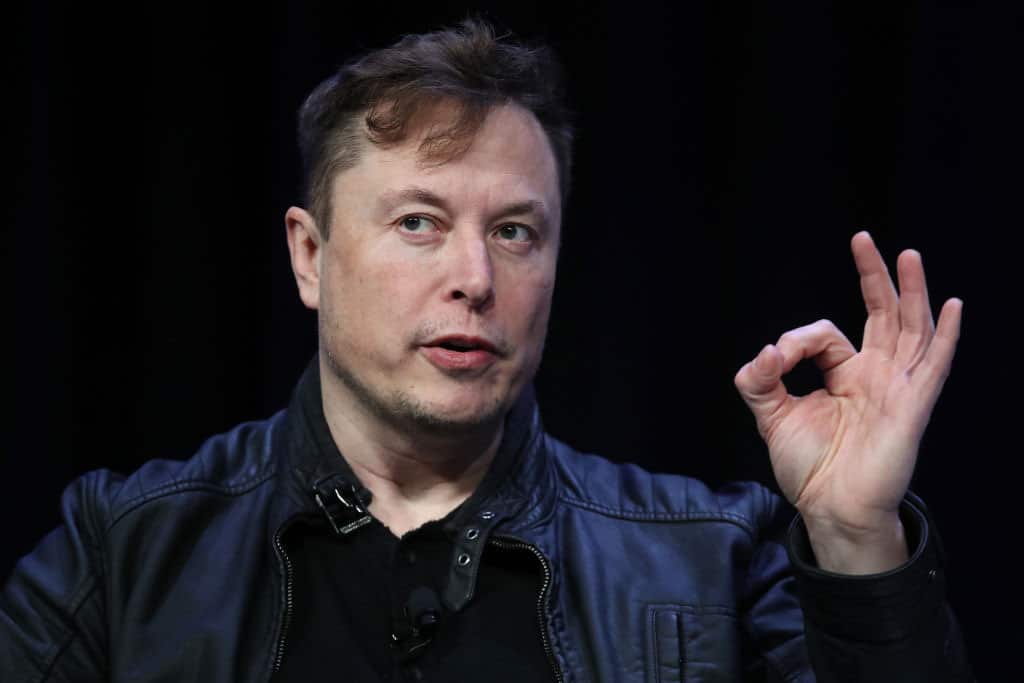
Elon Musk Discusses X’s Handling of Antisemitism in Online Convo with Ben Shapiro, Other Jewish Men

Elon Musk discussed how X, formerly known as Twitter, is handling antisemitism and free speech on the platform in a Thursday space on X with Ben Shapiro and other Jewish men that went on for nearly two hours.

Shapiro, who co-hosted the space along with podcaster and Bnai Zion CEO Ari Lamm, began the space by recapping Musk’s feud with the Anti-Defamation League (ADL); Musk has threatened to file a defamation lawsuit against the ADL, as he blamed the Jewish group for X losing advertising revenue. Shapiro said that Musk is “right on the merits here,” arguing that “the legacy media, multinational institutions, left-wing interest groups, they have been converging on Elon’s X as a supposed source of rising hate speech and they’ve been doing so in really opportunistic fashion from pretty much every angle.” “These institutions are generally in favor of more censorship, more restrictions on speech,” Shapiro said, arguing that these institutions aren’t just suppressing “material we all agree is gross or violent or despicable” but also speech that doesn’t comport with their “approved narratives, whether we’re talking about COVID, or transgenderism or foreign policy. These organizations get what they want at a lot of other platforms… but they’re not getting it at X.”

Musk called Shapiro’s analysis of the situation “spot on” and argued that hate speech has “gone down” since he bought the platform, claiming that was the conclusion of third parties who examined the platform.

Musk went onto talk about his background going to Hebrew school as a kid in South Africa, describing himself as being “aspirationally Jewish” and “pro-semitic.” “My name Elon is actually a very sort of Israeli name,” Musk said. “It’s like being called Bob in Israel.” He went on to say that he traveled to Israel at the age of 13, where he visited the Western Wall; Musk also said he has been to the Masada twice. “I don’t know how many people can say that,” Musk said.

Shapiro asked Musk where he draws the line on hate speech on X; Musk replied that “one person’s hate speech is another person’s free speech much of the time.” “The general principle is to operate according to the laws of the country that we are in,” Musk said, arguing that “if there is someone harboring hate … the best way to combat that hate is to cure it and then say why it’s not true.” In Musk’s view, it is better to allow someone to say something that then “gets dunked on” or “corrected.”

He later said that X is dealing with “legal but hateful” speech through the platform’s algorithms, claiming that views of hate speech posts have declined by at least 30% since Musk bought Twitter; Musk attributed the decline to X making “the algorithm better.” Shapiro lauded Musk for making the algorithm “more transparent” and getting rid of many of the bots on X. Shapiro also pointed out that the ADL said in 2016 that he was “the single greatest recipient online of antisemitism in 2016, and I will say that has dropped markedly since 2016, including after [Musk] took over X.”

Many of the other Jewish men who spoke during the session kept asking Musk about where to draw the line. Former Israeli President Reuven Rivlin was one of the men who asked this question, as he pointed out that antisemites have used free speech to spread their hatred. Musk said he was “open to ideas” on how to best handle the matter. “I’m aware of that old sort of trope of like, you know, ‘I have a Jewish friend,’” Musk said. “I don’t have a Jewish friend. I think probably, I have twice as many Jewish friends as non-Jewish friends. That’s why I think in some respect I am Jewish basically.” He then said his Jewish friends use the platform and ask them if they see anything, and they say no.

Musk reiterated his earlier point that it’s better for the antisemites to be publicly exposed to counterpoints as to why their hateful views are wrong; otherwise they would become “hidden antisemites.” As an example, Musk said that he has had conversations with rapper Kanye West about the rapper’s antisemitic remarks and has tried “to get to the bottom of where he is coming from,” though Musk said it was unclear where exactly West was coming from. Musk said he told West that he should act according to his Christian values, and he claims to have made progress with West, “and that’s better than just completely excluding him.” “Can we turn an antisemite into someone who is at least neutral, if not pro?” Musk said.

Harvard Professor Emeritus Alan Dershowitz similarly asked Musk about his view on the “parameters” of free speech for X and throughout the space repeatedly offered to help Musk on the matter. Musk reiterated that that X’s current approach is that “hateful but legal” speech won’t be censored, but such speech won’t be algorithmically recommended to others on the platform. Dershowitz argued that that approach “can be abused and become a form of censorship”; Musk agreed and said, “Advertisers certainly have a right to say what content they’ll appear next to… but not to dictate what can be said on the platform.”

Toward the end of the space, Simon Wiesenthal Center Associate Dean and Director of Global Social Action Agenda Rabbi Abraham Cooper recalled how the late Nazi hunter Simon Wiesenthal was asked in the 1980s if the Holocaust could happen in America. Wiesenthal’s reply was that if there was organized hate, a societal crisis and technology, then “anything can happen.” “What we need to look at together, based on your algorithms, is what tweaks need to take place,” Cooper later told Musk, arguing that there needs to be a way to stop hateful groups from marketing their ideas, fundraising and recruiting on X. “How do we degrade their marketing capabilities?” Cooper asked.

Musk said that Wiesenthal was “a great man”; the X owner pointed out that the Nazis were “extremely censorious,” as they “exercised censorship on anything pro-semitic or anything that would counteract the antisemitic arguments.” Musk then said that he aims to make X become “a force for good” that increases love and “diminishes the amount of hate” in the world, but wants to be sure that “in seeking to promote love and understanding” that X doesn’t “inadvertently” become too censorious and create a backlash that increases hate. But Musk said he wanted to keep the dialogue open regarding how to make the platform better.

Both Cooper and Rabbi Menachem Margolin, chairman and founder of the European Jewish Association, asked Musk about the coalition of more than 180 human rights organizations that sent Musk a letter urging him to adopt the International Holocaust Remembrance Alliance (IHRA) definition of antisemitism. Musk claimed to have not received the letter but said that he would take a look at it. “I suspect it’s probably sensible, it may already be what we’re doing,” he said.

Margolin urged Musk to visit Auschwitz on Holocaust Remembrance Day in January so that he can understand the Jewish people’s sensitivity to antisemitism and see what antisemitism can lead to. Musk called himself “an avid student of history” and who is “very well aware of the Holocaust” and the Nazi death camps. “This is certainly not new information for me, I don’t need to visit Auschwitz to understand,” Musk said. “I get it.” Margolin replied that the visit “is not to understand but to feel.”

“I do feel it,” Musk said, discussing how he has seen the pictures of baby shoes and that it brings him “profound sadness to see that all these children were killed.”

Margolin argued that Musk visiting Auschwitz would send a “strong statement” and contribute to Holocaust awareness and combating antisemitism. Musk then said he would “seriously consider it,” saying that while he’s “knowledgeable on the subject” it could be helpful as “as an example to others.” Musk later said that his answer on visiting Auschwitz is “a tentative yes.”

The X owner also said that his values “do match that of the Jewish people.” “Knowledge, reading, understanding, debating, these are all Jewish values and I very much agree with those,” Musk said. “The Jewish people are a learned people, not just of one book but of many books, and I greatly admire that as a rather bookish person myself.”

Israel was also discussed during the space. Rabbi Shmuley Boteach mentioned that Israel gets accused of being a Nazi state, which prompted Musk to laugh and say, “Oh my God.” In a conversation with Soviet dissident and former Jewish Agency chairman Natan Sharansky, Musk said he is pro-Israel and that and those saying Israel shouldn’t exist are “outrageous” and “absurd,” calling it “one of the most antisemitic things” that someone could say. Musk described the anti-Israel movement as being “very strong on the far-left, including at the top universities of America.” He expressed concern that students at elite United States high schools and colleges “are being taught to hate America” as well as being taught to question “the right of Israel to exist.” “We need to fix our education system because they’re being indoctrinated with this madness,” Musk said.

Elon Musk Discusses X’s Handling of Antisemitism in Online Convo with Ben Shapiro, Other Jewish Men Read More »

By Peddling His Metaverse, Mark Zuckerberg Wants to Keep Us Even Further Apart

According to a recent advisory from the Surgeon General, there’s a “public health crisis of loneliness, isolation, and lack of connection in our country.”

Even before the pandemic hit, the advisory states that “approximately half of U.S. adults reported experiencing measurable levels of loneliness.” This loneliness “increases the risk for individuals to develop mental health challenges in their lives, and lacking connection can increase the risk for premature death to levels comparable to smoking daily.”

This crisis of loneliness was on my mind when I read about Mark Zuckerberg’s Metaverse conversation with computer scientist and podcaster Lex Fridman. Thanks to Meta’s Codec Avatar research, the duo appear as 3D hyper-realistic avatars, which makes it look as though they’re talking face to face.

It’s not exactly real, but it’s almost real—like Zoom on steroids.

Evidently, this is Zuckerberg’s vision for our future: Stay home, put goggles on your face and connect with the “hyper-realism” of human avatars.

Never mind that Zoom, Amazon, Postmate, Netflix and other merchants of convenience are already keeping us isolated at home. Zuckerberg now wants to pile on and deliver virtual humanity to our door. If you’re comfortable at home but starved for human connection, Zuckerberg wants you to know there’s no need to schlep anywhere or invite anyone over. Human connection will come to your door if you buy his avatar-producing Meta goggles.

We can’t blame Zuckerberg. This is what he does. He is neither a poet nor a philosopher. He’s a techno nerd. He sees life’s problems through the cold lens of technology. If humans are lonely and isolated, how can technology fix the problem and boost Meta’s revenue in the process?

It turns out we didn’t need much technology these past few days during the Jewish festival of Sukkot. As I gathered with friends and family inside these frail huts we call sukkahs, the only technology we needed was a sturdy table. We were a group of real humans sitting in a real space in real time with real food and real wine enjoying real conversation with real hugs.

Who knew such a simple human ritual would ever be worth mentioning?

When Zuckerberg tells us his new technology is “hyper-realistic,” he seems to sense its limitations. He knows he can’t really offer us the real thing, so he overcompensates by telling us it’s more than real, it’s hyper real. Maybe he’s hoping we will replace “almost real” with “hyper real” and forget the difference.

Zuckerberg has so much loose change he’s poured more than $40 billion into his futuristic play toy, even renaming his company from Facebook to Meta. He’s got meta plans for humanity, and, apparently, nothing will stop him.

Well, not so fast.

There is one thing that can stop him. We can say no to his vision. Just as the Meta king is using his freedom to foist on us his Metaverse vision, we can use our freedom to foist on him a counter vision. This is a vision of a life with real people around us, whether eating a meal or hiking on a trail, whether strolling through a mall or going to a theater, whether gathering in communities or meeting friends for coffee. From these simple goggle-free pleasures, Zuckerberg’s Metaverse won’t make a penny, and he knows it.

Zuckerberg’s magical goggles may make him giddy with techno pride, but it won’t fix our loneliness. It will likely make it worse. No matter how many human avatars his $40 billion gizmo can push through our tired eyes, it will only reinforce our isolation and remind us of our need for real human connection.

The only thing that can fill our need for real human connection is real human connection. If enough of us stick to that truth, humanity wins.

By Peddling His Metaverse, Mark Zuckerberg Wants to Keep Us Even Further Apart Read More »