fbpx

February 10, 2023

Blinded by the Torah

Asking questions can save lives. In the late 1990s, Korean Air had an atrocious safety record: its accident rate was 17 times those of similar carriers such as United Airlines. What was it that caused so many crashes? Investigators found that the pilots, the planes, and the mechanics all met or exceeded international standards; there were no obvious deficiencies. Instead, the real problem was in airline culture.

Malcolm Gladwell, in his book Outliers, explains that, at that time, Korean Air had a “high power distance culture;” in organizations like this, subordinates must be deferential, and will often be excluded from decision-making. What that meant is that the captain on each plane reigned supreme, and the first officers were uncomfortable with even questioning them. At times, a captain might be flying into a direct hazard, yet the first officer would stay silent, accepting the captain’s choice.

The perils of power distance are not unique to Korean Air; even relatively egalitarian cultures are affected by it. Airlines generally split the flying time between the captain, and his assistant, the first officer. Even though the captain always has far more experience and training than the first officer, crashes were far more likely to happen if the captain was flying the plane. Gladwell explains that this is because the captain is very comfortable bluntly correcting the first officer, while the first officer would generally mitigate their remarks, speaking tactfully and indirectly. Captains rarely got the feedback they needed in a direct way, and that resulted in crashes.

In their book Start-Up Nation, Dan Senor and Saul Singer describe a very different type of culture as being key to Israel’s high-tech success. Low-level employees can pose questions to those in charge, and be listened to; and before decisions are made, there are wide-ranging debates about what is to be done. Senor and Singer trace this back to Israel’s unique military culture; but that too has Jewish roots. Major General Aharon Zeevi-Farkash explained to them that the IDF’s antihierarchical structure goes back to the Talmud, which cherishes objections and arguments.

Learning is not just about intellect; it is about attitude. The willingness to listen to everyone with an open mind is even more important than mere brilliance. The Mishnah in Pirkei Avot (4:1) explains: Ben Zoma said: who is wise? one who learns from every person. One must never be blinded by rank or degrees; a good idea can come from anywhere.

Ben Zoma’s lesson is a practical one, and Gladwell’s entire article is essentially a commentary on this Mishnah. But it is also a spiritual lesson, one which is the foundation of the Torah.

The highlight of our Torah reading is the giving of the Ten Commandments on Mount Sinai. Moses alone approaches God, and he is entrusted with conveying revelation to the people. He is an awe-inspiring, commanding authority; later, people will be afraid to approach him. Yet in the passage just before this, we see a very different side to Moses.

Jethro, the Priest of Midian and the father-in-law of Moses, comes to visit. He sees long lines of people waiting on his son-in-law, who is busy day and night sitting in judgment and responding to queries. Jethro does not like what he sees. He tells Moses: “What you are doing is not good. You and these people who come to you will only wear yourselves out. The work is too heavy for you; you cannot handle it alone.” (Exodus 18:18-19.) Instead, Jethro offers practical advice to Moses: he should set up a judicial system, with ascending tiers of judges who will handle the cases and any appeals. By delegating much of the work to them, Mose will be able to complete his own tasks.

Jethro offers very good advice; but his idea is pretty obvious. Don Isaac Abrabanel wonders why Moses couldn’t figure this out by himself; after all, “even the simplest person would understand that it is foolish for one man to judge from early morning to late evening..” In other words, how is it possible that this brilliant prophet couldn’t come up on his own with an obvious solution like delegating?

There are several answers given to this question. Ralbag and Rabbi Samson Raphael Hirsch argue that Moses lacked the ability to deal with practicalities; people like Moses, who are profoundly spiritual and brilliant, very often lose connection to reality. Abrabanel, uncomfortable with an approach like this that diminishes Moses’ stature, argues that Moses had planned on eventually implementing such a system himself, but was waiting until after the Torah was given. Once that would occur, others could be trusted to oversee the courts, because there would be uniform rules and regulations for the judges to follow. In other words, Abrabanel argues that Jethro is telling Moses something he already knew. This answer is problematic; it renders Jethro’s advice as being meaningless, and it becomes unclear why this narrative was included in the Torah.

This question is so troubling, that the Sifrei says it was divine intervention. God wanted “to give greatness to Jethro” who, by offering this advice, would be featured prominently in this section of the Torah; and so, Moses had to have a temporary lapse of judgment, to leave room for his father-in-law to shine.

But I think the answer to this question is far simpler: sometimes even the greatest leader, even the most experienced pilot, can miss the obvious. And at the same time, even an outsider like Jethro can offer useful advice to the greatest prophet of Israel. There is no hierarchy in the pursuit of wisdom; as Maimonides writes, “accept the truth from whoever says it.”

As I noted, the section about Jethro’s advice to Moses is followed immediately by the revelation of the Ten Commandments. It would seem that the intent of this connection is clear; one must know how to learn properly before they can learn Torah. The section of Jethro’s advice is, in a spiritual sense, the very beginning of the rabbinic tradition, which is filled with questions and debates, with young rabbis debating their own teachers, and unlikely characters, such as the maidservant of Rabbi Judah, teaching lessons to great rabbis.

But the ability to learn from every person is not merely about building a culture of learning. It goes to the core of how we should see the world.

Close-mindedness is a vice that frequently afflicts the brilliant; they are unable to imagine that anyone else can teach them anything. The elitist impulse can blind us to the greatness of others. And ultimately, this can devolve into a lack of respect. The most important lesson of this section is not just that Moses listens, but also that Jethro has a lot more to teach us than we imagine.

Elitism can corrode our character; we must keep our minds and hearts open in every relationship. There is greatness among those with little learning, and know no Torah.

In the Midrash, (Leviticus Rabbah 9:3,) a story is told about Rav Yannai, who invites a guest to his house; Rav Yannai can tell that the man has a spiritual demeanor, so he mistakes him for a fellow Rabbi. During the meal it becomes clear that man is completely ignorant, and cannot even say a blessing. Rav Yannai is so annoyed by this, he insults the man, saying that “a dog has eaten Yannai’s bread.” The man upbraids Rav Yannai, and in further conversation, Rav Yannai learns that his initial impression was correct: this was a man with a refined sense of ethics, who never gossiped and spent his time making peace between those who had disputes. This man was a spiritual giant.

Rav Yannai then embraces a very different view. He says that derech eretz, acting with goodness and integrity, is a spiritual path equal to the Torah; not only that, but also derech eretz kadmah l’Torah, the path of derech eretz existed generations before the Torah was given.

This lesson is on full display in this Torah reading. Jethro is a foreigner and a neophyte; but every time he appears in the text, Jethro embodies the lesson of derech eretz kadmah l’Torah. Here, he even offers advice grounded in derech eretz, that the Jews waiting in line deserve respect, and that his son-in-law needs some respite.

Rav Yannai is at first blinded by his own Torah knowledge from appreciating the greatness of others. But then he learns that there is spiritual greatness among those who are ignorant. There are many quiet heroes who follow in Jethro’s footsteps, who even though they have not learned much, make sure that there is peace and goodness in this world.

They must be our heroes too.


Rabbi Chaim Steinmetz is the Senior Rabbi of Congregation Kehilath Jeshurun in New York.

Blinded by the Torah Read More »

The Bull in Durham: Jewish Leadership Betrayal

It’s clear that a Jewish community is morally confused when its synagogue leadership invites a BDS (Boycott, Divestment, Sanctions) activist to speak on a panel that will advise parents how to talk to their kids about antisemitism. Evidently, such leaders do not understand the full scope of antisemitism that Jews now encounter, or perhaps they are simply unwilling to face it. Whether it’s the result of ignorance or denial, this poses a threat to their congregation and future generations.

On January 8 of this year, Judea Reform (JR), a synagogue in Durham, NC convened just such a panel. The synagogue invited Steve Schewel, who is a JR member and also the former mayor of Durham, to be an honored member of the panel.

Yet when he was mayor of Durham, Schewel guided the city council into passing a BDS resolution against Israel, unleashing antisemitism in our town. Here’s a short version of a long story:

In 2018, the radical anti-Israel Jewish Voice for Peace (JVP) circulated a petition demanding that Durham never send police officers to train in Israel, claiming that police exchanges with Israel drive officers here in America to “terrorize black and brown communities.” This is in fact not only untrue, but also it is a blood libel to charge Jews with helping police brutalize minorities. That Durham had no plans for training with Israel didn’t matter to the defamers, who thought they could get this passed in Durham and make it a model for other cities to adopt. They had good reason to think they’d be successful: Mayor Schewel has a history of supporting JVP.

Schewel worked hard behind the scenes to ensure a win for JVP’s libel. First, at the request of JVP and their allied groups, he agreed to waive the standard 10-day rule so the petition could be presented just three days later, on April 5. This would allow the item to be formally voted on in the next city council session. It also made life easier for some of the petitioners who had already arranged to take off work on the 5th; another date would have inconvenienced them. Also, scheduling the session according to regular town rules would have pushed it to a time that university students—said to be “key participants in this effort” by petition leaders—would have left campus. Finally, Schewel’s accommodation to the petitioners placed the session during Pesach, when many of the Jews who would want to defend Israel were otherwise occupied. However, there was no urgency, since training with Israel was not even planned. Schewel of course understood all of this. He knew that such a last-minute scheduling would prevent the pro-Israel community, including local rabbis, from having time to prepare and stand up against JVP’s defamation. The tactic of scheduling important resolutions damaging to Jews over Jewish holidays has become common, especially in academia. Although he had already put JVP on for April 5, he waited until late April 3 to tell the rabbis that it was only “quite possible that the council will take it up preliminarily.”

Having tilted the game board, Schewel fully expected the item to pass on to a formal vote. He wrote his resolution on April 4, so that on the 5th when it passed the work session it would go to press immediately. Schewel’s resolution twisted the testimony of Durham’s police chief Cerelyn Davis, who actually praised the training she received in Israel before coming to Durham. Davis also related that there had been no effort during her tenure to initiate such training. Schewel’s resolution stated that Davis “affirms as policy that the Durham Police Department will not engage in such exchanges.” This was simply not true.

The next step was a formal city council vote, which took place on April 16. Three hours were given for public comment, and during this time hate-filled lies about Israel and Jews came out in full force. We heard statements like “IDF solders incarcerate, mutilate, and often kill young Palestinian men to prevent them from fighting back against apartheid,” “Israel turns a blind eye to virtually every brutality it commits,” and “the Israeli army is one of the best equipped, best fed terrorist organizations.” By April 16 area rabbis were able to send a letter to the city council condemning the petition, but their pleas to dismiss it were ignored.

The resolution boycotting Israel passed unanimously. After the vote, Schewel, the Jewish mayor, compared Israelis to Nazis, saying “the terrible traumas visited on us we are now visiting on the people of Gaza.”

Throughout the process Schewel acted as an innocent caught in the middle of a controversy. On April 16 he posed as neutral and unbiased, chastising both JVP and the pro-Israel community. However, through FOIA requests we learned that Schewel was never impartial. A city council member wrote, “Our mayor LED this effort with great courage and erudition.” The city council member reported that there was even an effort to table the Israel resolution, but Schewel refused.

The Jews of Durham paid for this betrayal almost immediately: After the JVP win, antisemitic posters were found in public Durham locations, and Jew hatred continued unabated.

Imagine the shock then, in 2023, when we learned that Schewel—who was not only duplicitous about his role, but also helped unleash antisemitism in our area—would be invited by Judea Reform to be on the “Antisemitism Panel Discussion Communicating with Kids.”

Members of the community who had been betrayed by Schewel, and some JR members as well, expressed their outrage to the synagogue leadership. One JR member, Kathryn Wolf, sent a congregation-wide letter that began, “With due respect, there is a rot in this house.” She outlined Schewel’s complicity in the damage done to the community, along with other anti-Israel actions JR had taken, for example, hosting talks by people who claim that Israel is an apartheid state and only supports gay rights to “pink-wash” supposed atrocities. JR also planned a discussion on “disturbing parallels between Nazi concentration camps and U.S. detention centers.” The synagogue gave Schewel a Volunteer of the Year award and hosted a JStreet speaker while refusing a ZOA one. They even planned a session inviting Jewish teens to discuss their white privilege, promoting an ideology that casts Jews as oppressors.

They even planned a session inviting Jewish teens to discuss their white privilege, promoting an ideology that casts Jews as oppressors.

Wolf, a member of their Social Action Committee, had proposed raising money for victims of antisemitic violence and teaching parents about anti-Israel instruction in schools. In her letter to the JR community, she reminded them of JR’s absurd reason to deny her proposal: “providing a platform for a conversation around antisemitism and anti-Zionism will only serve to divide our sacred community.” She said the threat to Jews is existential. She urged the rabbi to clean house. It was only after years of having her polite entreaties ignored by the JR leadership, and seeking others who share her concerns, that Wolf made the decision to send her letter.

The response? JR sent out a mass e-mail to the congregation condemning “a congregant who chose to disparage our community, our Rabbi, and a fellow congregant (Schewel) in a very public manner.” Soon thereafter another mass e-mail went out stating “the Board of Trustees wishes to state its unanimous, unequivocal support for Rabbi Soffer, who was unkindly and unfairly targeted in a congregant’s inaccurate e-mail … we also want to offer our support to congregant (and former Durham Mayor) Steve Schewel.” Schewel got to play the victim again. Wolf reported that she was excluded from both e-mails.

The panel discussion went on as planned. JR’s Rabbi Matthew Soffer was proud to host Schewel. Others, including the University of North Carolina’s Rabbi Melissa Simon, and Duke University’s Director of Jewish Life at Duke, Joyce Gordon, seemed happy to sit with him. The focus was entirely on right-wing issues. There was no discussion regarding left-wing, Islamic, or minority attacks on Jews. Schewel downplayed the problem, saying that antisemitism is “important and real but it isn’t dominant” so children should be reassured. Questions submitted in person by the audience, were not addressed, and no discussion involving the audience was allowed. The Jewish tradition of discussing different points of view seemed lost during the event.

Perhaps Rabbi Soffer and JR leaders were not aware of Schewel’s dubious history. Even so, rather than shutting down concerns from Wolf and others, perhaps they could have taken the time to listen instead.

Some congregants may not know what BDS is, and how it discriminates against Israel and Jews. They may not understand the irony of inviting a BDS activist, who has himself engendered antisemitism in our community, to be on a panel advising parents about antisemitism. Many in Reform and Conservative communities are ill-informed about the full scope of threats to our communities that endanger American Jews. The most important way a Jewish community can repair the world, or tikkun olam, is to educate Jews and non-Jews alike about ALL forms of antisemitism. The future of American Jewry depends on it.


Amy Rosenthal is a believer in peace in the Middle East and co-founder of the North Carolina Coalition for Israel.

The Bull in Durham: Jewish Leadership Betrayal Read More »

Man Arrested for Allegedly Shooting Blanks in SF Synagogue

A man has been arrested and charged with allegedly firing blanks inside a San Francisco synagogue.

The suspect, identified as 51-year-old Dmitri Valerie Mishin, allegedly fired the blanks several times at the Schneerson Center on February 1 and ranted about the Mossad before fleeing. Mishin is also alleged to have been behind a similar incident at a theater the night before. No one was hurt and no property was damaged in either case. He was arrested on February 3.

District Attorney Brooke Jenkins’ office announced in a February 8 statement that they will be charging Mishin with “two felony counts of making threats obstructing exercise of religion, one count of misdemeanor disturbing of a religious meeting, and five counts of misdemeanor brandishing a replica firearm.” The office will also be filing hate crimes charges against Mishin. “This is another deplorable example where our Jewish community has been targeted for who they are and what they believe,” Jenkins said. “There is no doubt that antisemitism is real and we must stand with the Jewish community against it. My office will make clear that there is zero tolerance for hate in San Francisco and there will be no safe haven for those who perpetrate these crimes.”

If convicted, Mishin could serve up to 10 years in prison.

Anti-Defamation League (ADL) San Francisco tweeted that they were “grateful” at how quickly the suspect was arrested and charged. “Everyone in America-including Jews-has the right to practice religion free from threat,” they wrote. “ADL will closely follow the criminal prosecution & trusts the defendant will be held to account.”

The American Jewish Committee similarly tweeted, “We are thankful that no one was hurt and commend @SFPD for quickly apprehending this dangerous individual.”

Man Arrested for Allegedly Shooting Blanks in SF Synagogue Read More »

Bringing Dignity to the Agunot Court Experience

Divorce is a fact of life. Painful divorce that drags on for years leaving individuals traumatized and feeling abused by the Jewish religious system should not be. We—Chochmat Nashim, and other organizations around the Jewish world who work with agunot, women chained in marriage—see the crisis surrounding Jewish divorce as one that can and must be solved in our lifetimes for the integrity of Judaism and the safety of our children.

Let’s start at the local level. What happens when our religious courts fall short of their responsibilities? To whom do we turn when procedures, standards and proceedings do not bring justice but pain, abuse and helplessness?

Consider these testimonies by women who used the Rabbinical Court of California for divorce and responded to our survey about their experiences.

“This process truly turned me away from Orthodoxy. I was treated so poorly … I left with a list of people I could no longer marry and a waiting period to remarry and my ex left with a handshake and a bracha that he should find his bashert [soulmate] and build a bayit ne’eman [religious home].”

“They asked my ex-husband at the gett session why he was willing to give the gett before finalizing the civil case. [They said,] ‘You can use it as leverage in case she tries to take away the kids.’ I was furious that they would even put that idea into his head. I never planned to withhold anything and we were doing mediation.”

“It felt like secondary abuse of a rape victim.”

“My overall experience with the RCC was sad. I left with a gett Baruch Hashem [thank God] but I also left feeling very far away from God’s Torah. This cannot be the way Hashem [God] intended for the gett process to be … It should feel empowering and not threatening and unsafe.“

“I didn’t end up having a get for over eight years and they took money but didn’t help me get it. He was violent and I ended Up in a shelter with my child and they wouldn’t help.”

“They were not willing to hear me ask for a gett and why I need a gett, unless I signed a binding financial and legal agreement with them online before coming.”

When divorce is mutually desired, the religious court most often easily facilitates the dissolution of a marriage. But when there is abuse and gett-refusal, the courts fail the most vulnerable: agunot and their children.

Often, when we talk about the “aguna crisis,” people shrug: “What can we do? It’s Jewish law.”

But in a survey of hundreds of women and men who experienced Jewish divorce around the world, we found that (before we even get to halacha) batei din [rabbinic courts] lack transparency, have no oversight and suffer from a lack of standards, making the process painful and often confusing. Such aspects have nothing to do with halacha and much to do with professionalism and efficiency.

As a result of this survey, Chochmat Nashim, and other organizations created the website Rate My Beit Din, where people can review their rabbinic court experiences and others can educate themselves about the available courts based on those reviews. Currently, the site assesses the way the courts make information available, ease of contact, and collates reviews of personal experiences with the court, as well as how long they waited for a resolution.

From the reviews and interviews we conducted in person, it became clear that rabbis and judges must be able to recognize and name abuse of all kinds: physical, emotional, sexual and spiritual. Many areas and manifestations of mental illnesses were not understood, leading rabbis to try to heal marriages that were past saving and, worse, not recognizing sophisticated and psychological delay tactics crafted by the recalcitrant spouse. In far too many cases, judges waited years before declaring a man a refuser (if at all). In some courts, the judges are sensitive, but the processes in place are deficient, leaving ample room for gett-refusers to manipulate the system.

We are not here to shame, but to improve the system—a goal we believe the judges share. To increase transparency and the overall court experience, the site contains a “best practices” page recommending shorter response times, transparency about costs, suggested practices during proceedings, and professional training in domestic abuse, addiction, narcissism and more.

We are not here to shame, but to improve the system—a goal we believe the judges share.

Jews are commanded to create courts and systems of law. Indeed, even while in the desert, Moshe spent his days arbitrating disputes. In the Torah,  we are told, “Tzedek tzedek tirdof” (“Justice, justice shall you pursue”). By tackling the shortcomings of the court system, we can achieve this directive, together.

If you or someone you know has experienced the beit din for divorce, please fill out a review. The more reviews that are collected, the better the data will be, and the more people we can help. In addition, everyone can encourage their local religious court to increase oversight and transparency and to be in touch with RateMyBeitDin.com to work together to improve the process for its most vulnerable players, because what happens at the court, and as a result of its proceedings, is far too important to ignore.


Shoshanna Keats Jaskoll is a writer and an activist. Co founder of Chochmat Nashim, she raises awareness of damaging policies in the Orthodox community and works on tools and solutions to combat them. Originally from Lakewood, NJ she lives in Israel with her family.

Bringing Dignity to the Agunot Court Experience Read More »

Fauda’s Season 4, an Unlikely Unifier of Arabs and Jews, Explodes on Screen

To read more articles from The Media Line, click here.

Avi Issacharoff, co-creator of the hit TV series Fauda, is a veteran journalist and now provides expert Middle East news analysis for several outlets. With a background of serving in an undercover unit of the Israeli army, Avi brings a unique and informed perspective to his work on-screen and off.

Along with his writing partner, Lior Raz, Issacharoff has been instrumental in creating one of the most talked-about and successful shows in recent times. Fauda, now in its fourth season, has captivated audiences with its high-stakes, action-packed storyline and has been praised for its nuanced and realistic portrayal of the complex political landscape of the Middle East.

In 2021, Issacharoff and Raz also created, together with Dawn Prestwich, the political espionage thriller Hit & Run.

With a wealth of experience covering the region, Issacharoff has established himself as a leading voice in the Middle East. During his time as the Arab affairs columnist for the daily Haaretz and as the Middle East affairs correspondent for Israeli public radio, he covered numerous significant events and won Israel Radio’s “best reporter” award for his coverage of the Second Intifada in 2002.

In 2004, Issacharoff wrote the award-winning The Seventh War: How We Won and Why We Lost the War with the Palestinians with Amos Harel. In 2008, he and Harel published their second book, 34 Days: Israel, Hezbollah, and the War in Lebanon.

The Media Line: To call Fauda a runaway hit doesn’t do it justice; not merely in terms of the viewership it brings to Netflix as its most popular series, but as an Israeli production demonstrating enormous popularity in Arab countries and No. 1 in Lebanon.

Welcome Avi Issacharoff to The Media Line!

Avi Issacharoff: Thank you, Felice! Thank you very much!

TML: Fauda, let’s begin with the name. I mean, everybody knows that it means chaos [in Arabic] by now. Why’d you choose it?

Avi Issacharoff: Everyone became fluent in Arabic! I noticed that lately. We chose it for two reasons, I would say. One I would say is from the Israeli side, and one is from the Palestinian side. I’ll start with the Palestinian side. Basically, the situation on the ground in the West Bank and Gaza Strip during the years of 2000–2007, and I’m sorry to say but also in the last few months, what we see is chaos, meaning a lack of Palestinian Authority functioning, a lack of law and order, and the emergence of militants, or militant cells, small groups, militias that are doing whatever they feel like, whatever they want on the ground. And that situation was described as fauda.

Back then in the years when I was a journalist on the ground, people were using that term to describe not only the situation around them but actually the way of living, meaning, just imagine yourself living with no law and order around you, with no police, with no authority. So that creates a kind of very chaotic situation. And this is fauda on the Palestinian side.

On the Israeli side, for us, and I mean while [Fauda co-creator and star] Lior [Raz] and I were serving in the undercover units in the Israeli army back in the early ’90s, 30 years ago, so fauda was a kind of code name to describe a kind of situation in which you are exposed by locals, and the mob or people are trying to get to you, to kill you, to hurt you, and you are trying to call for rescue to come. And this is the code name that you report: “Fauda, fauda, fauda!

TML: I have to say the timing of season four’s release was amazing! It coincided with actual news as nine Palestinians died as the Israeli army entered Jenin claiming it was to thwart a terror attack, but two days later a terrorist killed eight worshippers leaving a synagogue [in Jerusalem] on the Sabbath. What were your thoughts as you learned this was happening with the coinciding of your season four?

Avi Issacharoff: So, just keep in mind that our opening in Israel was in July [2022], so we didn’t plan anything to go with the news, but it’s very sad. In many cases we found that Fauda is either following the news, or the news are following Fauda, because we are dealing with very realistic materials, because we are dealing with very realistic situations and realities that might happen on the ground, and sometimes reality does take us there.

While we were writing it, it was two-and-a-half years ago, and Jenin was just at the beginning of the emergence of chaos and we saw many militants over there. And again, as a journalist, I traveled a lot to Jenin. I visited this place lots of times, especially the refugee camp, and slowly, slowly you could see, you could notice three years ago that there are more militants on the streets and there’s less of the Palestinian Authority, and the Israeli army is not that enthusiastic about going into the refugee camp.

So, in a way, we took this very sensitive region, this very problematic region, and we used it in order to describe how a terrorist cell that is combined out of Hizbullah on one hand, and Hamas and Islamic Jihad on the other side, can emerge in a place where there is no law and order.

TML: Do people come up to you ever and say, “I’m that character”?

Avi Issacharoff: Yes, it happened to me a few times. It happened to me with Nurit, the undercover woman; Rona-Lee Shimon, but it happened with Captain Eyov, of course. And a few people claimed that they are Captain Eyov.

TML: We won’t mention names, will we?

Avi Issacharoff: No, no! But that was their nickname while they were in the Israeli intel: Captain Eyov. It’s not their real name, of course. But others, Steve is Steve and we know exactly who he is. It’s very unique. It is inspired by a real character that we know (or that we knew) that was serving with Lior in the same team, and other characters too, like all [of them] are almost [all] inspired by true people.

TML: So, there are two sides to my next question. The military officials see the program as giving away the farm, or is there an element of deterrence here?

Avi Issacharoff: I think that Fauda brings a dramatic story. It’s not an attempt to deter. It’s not something that gives up secrets. It’s just a story. A good drama. It’s inspired by true events, but it’s not real life. I mean, I think that reality is way more complex than even Fauda.

Although Fauda is very complex, reality is way, way more complex than that, and we’re just trying to give a good story, [and] not more than that. So, excuse me for not being a part of the hasbara attempts of the State of Israel, and excuse me for not being a part of the Palestinian campaign against Israel. We are just trying to give a good show.

TML: Avi, what surprises you most about the success of Fauda?

Avi Issacharoff: By no doubt, the success of Fauda in the Arab world, this is the thing that surprised me more than anything else. But to be honest, every time that I hear that Fauda succeeded in the Israeli market or outside of Israel, it’s a surprise for me. This is not something that I nor Lior saw coming, and when it became popular in Israel it was a kind of a shock for us. When it became popular all over the world, it became even more shocking, and then the most shocking thing was when we learned that it is very, very popular among Arab states.

Note that in Lebanon just a couple of days ago there was an article in French that was published and the headline was “Fauda: The TV Show That the Lebanese Hate To Love.”

TML: It’s interesting that there are many that we’ve tried to reach who watch it who would not talk about that publicly in certain parts of the Arab world.

Avi Issacharoff: Of course! But I’ve spoken to so many people that have Lebanese friends. I know some Lebanese that do talk to me, of course. Everyone is watching Fauda! It’s crazy! Everyone in Lebanon is watching Fauda, and I wonder what the Secretary General of Hizbullah Hassan Nasrallah has to say about it.

TML: Or the head of the PA security? I think there’s a long list.

Avi Issacharoff: Yep. On the Palestinian side, I know that they watch it. Again, it’s about Palestinians and most of the characters on the other side are Palestinians. Some now in the fourth season are Lebanese, but Fauda was very popular in Lebanon also in the third season, and not only in the fourth season.

TML: The role of female characters has developed in the course of the series, in particular season four’s Maya Binyamin, who portrays the sister of a Lebanese source and a respected Arab Israeli policewoman played by the noted journalist Lucy Ayoub, and the role of the senior commanding officer, Meirav Shirom. [These are] strong women who are playing these characters. Is there a message here? Did that evolve in the storyline?

Avi Issacharoff: Well, what we were trying to do is not to send the message. I think that we’re both like two kids from Jerusalem at the end of the day, and people are asking us about Fauda, “What is your message?” Guys, there was no message! We just wanted to do something fun [and] to do a good show, so I think that the minute that you come out of the equation [with] the message thing, you understand that it’s like two guys who want to write a good show. That’s it!

Then of course, you have the reality, and in reality, you know, more than 50% of the population here in Israel is women. So, of course, you cannot ignore it, even in the special forces, even in the most sensitive, secretive units on the Israeli security side, you’ll find so many women: Mossad, Shin Bet, army intelligence, etc., etc.

So, we are just trying to make it real. Our Meirav [Shirom] who is playing Dana met real female characters that are in the Shin Bet, in the Israeli internal secret service, and this is what they do. They are Dana, not in the show but in real life. So again, I think that we just try to do is show more complexity.

Maya, I think, is one of the best characters that we had in Fauda since Dr. Shirin [El Abed] in the second season, because she’s not part of it. She’s drawn to it by the tragic developments on the ground. She’s just trying to be a good police officer in the Israeli police, but the reality is just tearing her apart and dragging her into the darkest places which she will need to decide what is she.

TML: How did this change you as a journalist?

Avi Issacharoff: First of all, I’m not a journalist anymore. You know, it’s hard for me to say that, because it’s my instinct, because this is me, Avi, I’m a journalist. It’s my second name, Avi Issacharoff, the journalist. This is how people know me in Israel; as a journalist who is covering the Palestinian side and the Middle East for the last 20-something years, but basically, I became more focused on telling stories to TV and cinema.

I still write as a journalist, but more as an analyst, so given the bird’s [-eye] view, and not from the small alleys of the refugee camps and villages. And I think that you’ve known me for quite a few years now and you remember my old happy days as someone who was traveling in Gaza and the West Bank and meeting all the…

TML: Well, we’ll get to that in a minute.

Avi Issacharoff: But now, now I sit in my office in north Tel Aviv and I’m a little bit [of a] schmendrick [foolish or contemptible person] we call it in Hebrew, like a spoiled kind of high-tech guy. Like the street that I’m in, in [the Tel Aviv neighborhood] Ramat Hahayal, it’s so full of high-tech businesses and technology people, so at 1 pm you go out and look for the right place to eat lunch and you go back to the office and try to write the next story.

TML: Your real-life reporting has been something that you’ve seen, that you’ve covered, certainly at a demonstration on Nakba Day, embedded in tunnels, and co-writing books [such as] The Seventh War: How We Won and Why We Lost the War with the Palestinians and 34 Days: Israel, Hezbollah and the War in Lebanon.

Years ago, you participated in the Mideast Press Club where we brought Israeli and Palestinian journalists together. Do you think this could happen again when today we see so much toxicity between Israelis and Palestinians for the most part?

Avi Issacharoff: I think that it will be very, very hard to combine Israeli and Palestinian journalists. I’m sure that you’ll find enough Israeli journalists that would be happy to do that. I doubt that you’ll see enough Palestinian journalists that would jump to this type of occasion, because the minute that it would be out, that something about it will be published, they will be “the collaborators,” “the traitors,” and I don’t think that for them it serves any kind of an interest. So, definitely, the situation changed not only on the ground but also amongst a community that was always collaborating. These are the journalists.

Once upon a time, a teacher of mine in the university, when I studied about the Middle East, who is a very old-school, known analyst for Palestinian issues, Danny Rubinstein, said that in more than 100 years of conflict, two sectors continued to collaborate and to play together. One is the criminals, and the other one are the journalists. And I’m sorry to say that, but lately, the journalists are not any more collaborating as they used to play.

TML: American reviewers spoke on the human element. That you cover the human cost of the conflict humanizing antagonists. A Palestinian leader told me you pegged it in the way you give true feelings of both sides. Is this maybe Fauda’s grid element.

Avi Issacharoff: I’m sure that this is part of the thing, this is part of the story and the success. I suspect that also our intention is to bring something that would make you feel real, authentic, so it’s less of a Hollywood-style type of TV show, less of a Hollywood movie. It gives you the feeling like you’re there with the people, like you’re a fly on the wall in a room with them. You can feel the pain. You can hear their voices. You can smell the smells that they are smelling, although it is TV, and I think that this is a part of the secret of the success.

TML: Did you ever wonder watching Fauda if it would ever change the mind of a would-be terrorist or discourage an Israeli from joining an elite unit?

Avi Issacharoff: I don’t go there. I don’t think that this is something that really happens. People are smart enough to understand that this is a TV show. So I don’t think that they’ll change their minds. If someone wants to be a terrorist or a freedom fighter – and it depends on who you ask of course – he will do that, with Fauda or without Fauda.

And on the Israeli side the same [thing]. If someone wants to go and become an undercover soldier, so I don’t think that Fauda… [would be what makes them do it]. You know, maybe Fauda encouraged people. We know that the numbers of people that are volunteering to those kinds of units has jumped dramatically because they are the good guys, they are the heroes.

But honestly, I don’t think that Fauda is the thing that can change people’s minds yes or no if they already decided.

TML: Can you tell us about season five? You have a cliffhanger there at the end of season four. We don’t know yet about season five.

Avi Issacharoff: We don’t know if we’ll have season five. We’re still under negotiations. We definitely hope to get something, to do something, but it’s not really in our hands right now.

TML: And can you tell us about the new spy series which is based on news events in Israel and the United States involving a fight against terrorism?

Avi Issacharoff: So, it’s going to be aired in late spring in the US on Showtime, and it tells the true story of the longest manhunt in the history of the CIA and the Mossad after a terrorist who was responsible for the killing of more Americans than anyone else till Osama bin Laden.

TML: Avi, parting words?

Avi Issacharoff: Nothing special, just go watch the fourth season of Fauda if you didn’t watch it yet. Let’s just hope that reality will prevail one day and bring us peace, instead of another very bloody season of Fauda.

TML: Avi Issacharoff, co-creator of Fauda, I really appreciate your time with me on The Media Line.

Avi Issacharoff: Thank you! Thank you very much!

Fauda’s Season 4, an Unlikely Unifier of Arabs and Jews, Explodes on Screen Read More »

Jewish Groups React to Biden’s State of the Union

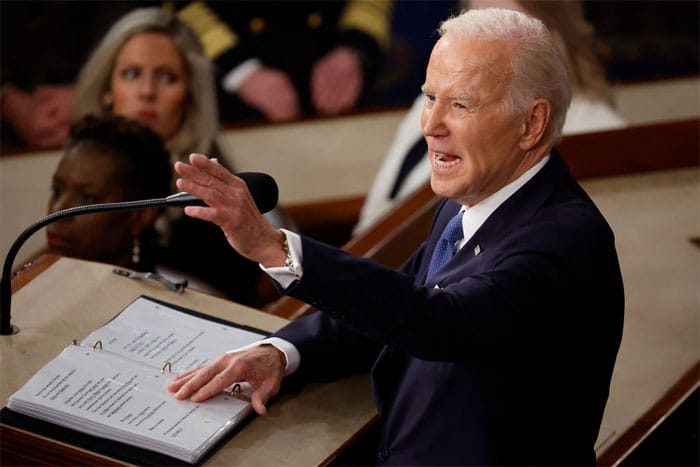
Jewish groups offered varying reactions to President Joe Biden’s State of the Union address on February 7.

Over the span of 73 minutes, Biden proclaimed that the economy was rebounding, COVID-19 is no longer plaguing the nation and that “our democracy has faced its greatest threat since the Civil War.” He also claimed that his presidency has seen various bipartisan achievements, such as infrastructure and a law that helps “veterans exposed to toxic burn pits.” Biden called on Congress to “finish the job” by passing bills to make the richest Americans “pay their fair share,” ban assault weapons and address the ongoing border crisis.

Some Jewish groups praised Biden’s speech.

“President Biden demonstrated tonight that he has the back of ordinary Americans, and he’s getting important things done to improve our lives,” President and CEO Mark Mellman said in a statement. “Whether it’s creating 12 million new jobs, rebuilding our crumbling infrastructure, holding down prescription drug prices, or raising real wages over the last six months, President Biden is rebuilding our country and its vital middle class. But President Biden’s work goes beyond the material. He is restoring the soul of America and fighting to ensure our democracy remains strong, as does our mutually beneficial alliance with Israel. DMFI is committed to helping him finish the job.”

Jewish Democratic Council of America CEO Halie Soifer similarly said in a statement, “An overwhelming 77% of Jewish voters helped elect President Biden in 2020. Two years into his administration, he has achieved historic progress for the American people by growing the economy, creating a record 12 million jobs, and ensuring the lowest unemployment rate in decades. He’s also taken meaningful action on climate change, gun violence, infrastructure, and prescription drug prices. He’s worked to defend our democracy, promote equality, and restore the soul of our nation by taking action against the rise of antisemitism and right-wing extremism.” Soifer added that Biden “will remain laser-focused on addressing the needs of the American people” despite “Republican obstruction and extremism.”

J Street tweeted that Biden’s speech was “a clarion call to defend our democracy.” “This is our moment,” they tweeted. “We need to rise to it.”

Anti-Defamation League CEO Jonathan Greenblatt tweeted that it was “very important” that Biden “called out the threat of violent extremism.” “We need vocal leadership from all levels of government to fight this hate,” he wrote.

Others were more critical of Biden’s speech.

“American families are poorer and the United States is weaker under the feckless Presidency of Joe Biden,” Republican Jewish Coalition National Chairman Senator Norm Coleman and CEO Matt Brooks said in a statement. “Soaring inflation has risen a staggering 13% since Joe Biden was elected, pushing hard-working American families to the financial brink, with 4 in 10 Americans saying they are worse off financially since Joe Biden was elected – the highest percentage on record. On the world stage, from Afghanistan to Iran, from China to Russia, adversaries of the United States are emboldened, and threatening the security of our friends and allies.”

As for the issue of antisemitism, Coleman and Brooks pointed out that Biden didn’t mention anything about how “every single Democrat in the House of Representatives voted to defend notorious antisemite Ilhan Omar and keep her on the critical Foreign Affairs Committee.” “Joe Biden has been a creature of Washington, D.C. for 50 years, so it’s no surprise that his State of the Union address was yet another tone-deaf exercise in fact-spinning to fit a grossly out-of-touch narrative that Americans living outside of D.C. are sick and tired of hearing,” they said.

Gabriel Noronha, a fellow at the Jewish Institute for National Security of America (JINSA), tweeted that Biden’s speech was “missed opportunity” because there was “zero mention of Iran or the incredible Iranian revolution.”

Richard Goldberg, senior adviser to the Foundation for Defense of Democracies (FDD), replied to Noronha’s tweet by saying that the omission of Iran from Biden’s speech was “by design.”

Jewish Groups React to Biden’s State of the Union Read More »

L'dor V'dor with shanni and david Podcast

Can ChatGPT write a Jewish Journal column?


In the first episode of the “‘L’dor V’dor” podcast, Shanni and David clash on a few things and agree on a few others.

Topic List:
  • Joe Rogan’s recent antisemitic comments
  • Netflix’s “You People” with Jonah Hill and Julia Louis-Dreyfus
  • Anti-Israel speakers at Princeton University
  • AI software and ChatGPT
  • The earthquake in Turkey
  • The latest Jewish Journal print issue

Buy tickets to the Chosen Comedy Festival before they sell out! 

Follow David Suissa on FacebookTwitter and Instagram & Shanni Suissa on InstagramTwitter and TikTok.

Listen to the full episode on any of your favorite podcast platforms!


Can ChatGPT write a Jewish Journal column? Read More »

Love, Hate, and Silence at a NYC Film Festival

For anyone worried that women are being reobjectified through social media, “Passed You on Pico” offers up a feminist alternative: a pin-up calendar of (fully dressed) men called Hasidic Hotties. Written, produced and starring Chloe Traicos, the new pilot just won “Best TV Pilot” at the New York City International Film Festival (NYCIFF).

LA resident Traicos describes the pilot as “a comedy about Orthodox Jewish singles who will do anything to find love.” Her inspiration? “I lived it.” 

The pilot episode, directed by Evan Blank, follows the comedic struggles of dating life within the Orthodox Jewish community of Pico-Robertson in Los Angeles. LA resident Traicos describes the pilot as “a comedy about Orthodox Jewish singles folks who will do anything to find love.” Her inspiration? “I lived it.” 

The actress, who played Walton Goggins’ wife in HBO’s hit TV series “The Righteous Gemstones,” is hardly new to film writing. Born and raised in Zimbabwe, Traicos was forced to flee the country in 2005 after having made a controversial documentary about the country’s leader, Robert Mugabe, called “A Stranger in my Homeland.” In the documentary, Chloe speaks out on behalf of the Zimbabwean people who have spent years being persecuted and starved. Despite the fact she had to leave the country, Traicos went on to win Best Director in a Documentary for the film at the Amnesty International Film Festival.

Chloe then immigrated to Australia with her parents and sister, where she wrote, produced and starred in “I Wish I Were Stephanie V,” which opened the NYCIFF in 2011 with a special screening outside in Times Square. After moving to LA, Traicos wrote and starred in “One Day in Hollywood: Introducing Jodea” (2021), a low-budget romantic comedy that is available on all major platforms.

“All of my characters are always inspired by real people,” Traicos told the Journal. “Of course, in order to be more commercial you have to exaggerate them a bit.” 

Winning Best Documentary was “15 Days with Kanye,” made before his antisemitic fall from grace. Created by “celebrity” bodyguard and former NYPD officer Steve Stanulis, the film presents his side of an earlier Kanye imbroglio. After hiring him as his bodyguard, Kanye fired Stanulis for allegedly “flirting” with Kim Kardashian, then threatened him with a $30 million lawsuit. The documentary, directed by John Bianco, shows that Kanye’s arrogance, narcissism, lies, and rage are not just reserved for the Judean people. Notably, Kanye insisted that Stanulis guard him from “10 paces behind” in order to “stay out of my [media] shots.”

Winning Best International Documentary and Best Actor is an exquisite film called “Facing the Silence.” Fuensanta “La Moneta” is a Spanish flamenco dancer and choreographer whose life is changed when one of her students, a young Israeli woman, gives her a book of poems called “La Cabellera de la Shoá” — The Hair of the Shoah — by Félix Grande. As a gypsy herself, Fuensanta is so moved by the book that she goes to Auschwitz to confront the hair, the shoes, the nightmare. She returns to Spain to create a masterpiece, mixing dance, literature, music, and “the silent interpretation of millions of silent lives.” 

Grande uses the phrase “the cry of the soul” to describe what it was like to look at all of the shaven hair at Auschwitz. The phrase inspires Fuensanta and her students to dig deeply emotionally and spiritually to create, to dance, to live. 

In 1949 philosopher Theodor Adorno famously said that writing poetry — creating beauty — after Auschwitz was “barbaric.” What he couldn’t have known is that 70 years later we would be living in an era of anti-art, fed again by fascist ideologies. But that a book of poetry about the Holocaust could inspire young artists to begin to dig deeply again, to explore their own souls — and face the silence, both historically and in their own lives.


Karen Lehrman Bloch is editor in chief of White Rose Magazine.

Love, Hate, and Silence at a NYC Film Festival Read More »

How War Changed the Name of Rabbi Benzaquen’s School

When the Gaza War broke out in Israel in 2014, a member of the West Coast Torah Center, an Orthodox synagogue founded by Rabbi Moises Benzaquen, approached him with an urgent message.

“We have to go to Israel,” the man said. “We have to do something.”

In June 2014, Palestinian terrorists had ignited the latest firestorm by kidnapping and murdering three Israeli teenagers.

Benzaquen felt the urgency to go and offer aid. But he also had to balance responsibilities here. He had just founded Yeshiva Hi-Tech High School, an innovative school that offered blended learning using the latest technology. It would soon change its name. 

Since war waits for no man, the Spanish-born rabbi – who will accept the Founder’s Award at a February 15 school banquet at The Luxe Hotel – greenlighted the trip.

Accompanied by a dozen activists, the Benzaquen group would go to a kibbutz near the frontier with Gaza every day, the rabbi said. 

 “Soldiers would come by, and we would have prepared food for them.”

Then came a game-changing moment. Benzaquen turned to a friend who operated the community center in Kiryat Arba and told him he would like to meet with the parents of the teenage victims. First he met with the oldest boy’s parents, Naftali Fraenkel’s Moroccan mother and Yemenite father.  “They were showing me pictures of this unbelievable kid,” Benzaquen said. “He was going to go into the army when (his life) was cut short.” 

The Fraenkel parents went out to the kitchen, leaving the rabbi alone, but not for long. Naftali’s 15-year-old brother passed through. He was going out for a run. “He looked at me first,” said Benzaquen, “and said, ‘Would you like to know who my brother was?’”  In the middle of the shivah for Naftali, his brother told Benzaquen, a girl called. “We didn’t know he had a girlfriend. She said, ‘I am very sorry about the murder of your brother. He saved my life.’”

How? “She said, ‘I am 24 years old. He wasn’t my boyfriend. He was 18.’ She said ‘this happened six months ago. I came out of the army, and I went into bad company and drugs. I was devastated. One day I found myself at the end of a bus, crying. What has happened to my life?

“‘All of a sudden, the bus stopped. A whole bunch of kids walked in from a yeshiva. One kid approached me with a handkerchief because I was crying. He said ‘Can I do something for you?’ I dismissed him with my hand. ‘You can’t help me,’ I said. ‘Leave me alone.’ He went back to his seat. He wrote down his cell number, and he said ‘If you ever need anything, give me a call.’ A week later, the young woman called Naftali. “For six months,” she told Naftali’s brother, “I was calling him for an hour every day. That is how he saved my life.” Naftali’s brother asked, “What did he say to you?”

Her answer formed the clincher. She said, “He didn’t say anything. He just listened to me. He just listened.” Even almost nine years later, Benzaquen grows emotional telling the story. “It broke me. That was my drasha for Yom Kippur in my shul.”

“Sometimes we shouldn’t talk too much. We should listen because a lot of people have a lot of hurt. They need to express themselves. And they need to. Rather than sermonizing, we should listen to them.”

Ears can be more important than mouths. “Sometimes we shouldn’t talk too much,” the rabbi said. “We should listen because a lot of people have a lot of hurt. They need to express themselves. And they need to. Rather than sermonizing, we should listen to them.”

A sudden thought struck Benzaquen: “I said, I think I should call the school in the memory of these boys because this also is a high school. I wanted to give it a meaningful name.” On the long flight home from Israel, “I was playing with the boys’ names. I said ‘how do I get it?’ Suddenly he found it: Gilad, Eyal, Naftali make up “Gaon,” which he added to the family name of philanthropist Efrem Harkham, and Harkham-Gaon Academy was born – in mid-air.

The banquet where Benzaquen will be honored salutes the tenth anniversary of Harkham-Gaon. It has 80 students, middle school through high school, and 120 is the rabbi’s goal for next year. 

The banquet where Benzaquen will be honored salutes the tenth anniversary of Harkham-Gaon. It has 80 students, middle school through high school, and 120 is the rabbi’s goal for next year. It is located at Beth Jacob synagogue after previously being based at the Westside Jewish Community Center.

“We created a kind of hybrid education — computers plus teachers,” the rabbi said, adding that the  emphasis is on individualized education.

Because of its more efficient approach, Harkham-Gaon’s tuition rates are significantly lower that what other Jewish schools charge.

“I realized the city needed something new because the prices were skyrocketing,” he said. “Parents could not afford tuition.”  

“Some of the families do not pay,” Benzaquen said. “Not many pay full price, and we need to balance that. We will need a lot of help, and it is for a great cause.”

He used to teach, but these days, he is more focused on fundraising.

“Our school, Baruch HaShem, is successful because a lot of kids are coming from the public schools, as you can understand,” the rabbi said. “The public school is becoming not appropriate for kids anymore.”

“Parents who had their kids in public school, they are used to not paying to send their kids to school,” Benzaquen said. “And now, what are you going to do, pay $40,000? I know some schools give scholarships, but how many can you give?” 

Under the school’s hybrid education model – computers plus teachers – some students can finish in two and a half years.

Moises Benzaquen was born in Melilla, Spain, the youngest of 11 children. He graduated from The Jews’ College, London, and then served a Sephardic synagogue in London for six years. 

The most significant event of this period was marrying his wife Yafa, and they have had six children throughout the past 44 years.

Since arriving in Los Angeles at Kahal Joseph in 1983, his youthful smile and accessible personality have been an enduring comfort to hundreds, if not thousands.

His proudest achievement in 40 years?

“When I was in Kahal Joseph,” Benzaquen said, “we created a massive young group every Monday night called Classes for the Masses. Singles and married couples. It was the talk of the town. We had 500 young people, and many marriages came out of there.” 

It was comprised of one hour of class and one hour of socializing, which helps explain the ultimate relationships. 

“For the first three years, I ran the shiurim,” said Benzaquen. “I distributed papers and we studied. Then they started inviting guest lecturers. The class was extremely popular.”

Many students married but they had to move elsewhere because they could not afford to live in Westwood.

In the mid-90s, Benzaquen left Kahal Joseph.  For two years, in his words, “I was unemployed. We say that whatever happens, it is for a good purpose.”

In 1998, the good purpose blossomed. Benzaquen, on the wings of two philanthropists, founded a new synagogue community, the West Coast Torah Center. They opened in an office on Crescent Drive, Beverly Hills.

“Both of them attracted a lot of friends, and Baruch HaShem, it was an unbelievable experience,” the rabbi said. 

“We became extremely Zionistic, not only observant but very, very much for Israel. Today, most of my community has homes in Eretz Israel.” 

The rabbi attributes that to their “Zionism, getting to know the land of Israel, getting to appreciate Torah,” he said.

Of his modest-sized 70-member community, the rabbi said, “Remember, it is in Beverly Hills, which is too far to walk for many people.”

Culturally, the Torah Center is a mixed bag of Iraqis, Moroccans, Iranians and some Ashkenazim. Benzaquen characterizes his community as having a kind of friendship attitude, “in the sense that ‘I don’t have a community, I have friends’” he said. “They are my friends, and they see me as their spiritual leader.”

As his 71st birthday beckons in March, the rabbi talks of possibly moving to Israel in a few years. “But I’ll be going in and out since all my children are in this country.”

How War Changed the Name of Rabbi Benzaquen’s School Read More »

The Percussionist With Magic Hands

The drummer might be the most important member of a band; without the steady boom of the kick drum and the snap of a snare, the music will feel dull and lifeless. But they’re easy to forget because they sit in the back, behind the guitarists and singers who get most of the attention. 

That’s not the case when it comes to Dean Rubin. Rubin, a professional percussionist – which is technically different than a drummer – plays at the front of his bands, getting the crowd pumped and feeding off their energy.

“People always said I was better being at the front of the stage instead of at the back of it,” said Rubin.

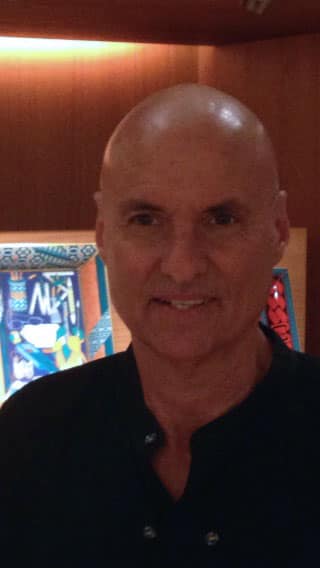
Dean Rubin

The longtime Los Angeles-based musician has known what he wanted to do since he was a kid growing up in Coney Island. “I remember playing on my desk when I was in the second grade,” he said. “I had speed and rhythm.”

Everyone in Rubin’s family was involved in music: His brother played the flute, his dad was a violinist and his mom was a professional dancer. Rubin gravitated toward the drums, and got his first set for his bar mitzvah. He soon figured out that he wanted his hands, not his drumsticks, to hit the drums, and learned the bongos, congas, doumbek, cajón and timbales. 

“You get to create more rhythm and ethnic sounds with those instruments,” Rubin said. 

When Rubin was 10, he and his family packed up and moved from Brooklyn to L.A. After graduating from college, he worked at a Chabad counseling center on Fairfax, and then went on to become a Teamster in the film industry for studios like Warner Brothers. While working on “Xanadu,”  he met the movie’s stars, Gene Kelly and Olivia Newton-John.  “Working with Gene Kelly was one of the highlights of my career,” said Rubin. “There were very few celebrities that I didn’t get to see or meet.” 

While working as a Teamster during the day, Rubin played gigs with bands at night and on weekends around town, and booked shows around the world, including Thailand and France, around his off time and vacations. In 2017, the 60-something Rubin retired from his job and focused on music full-time. 

Things were going well. Rubin was picking up gigs and wrote and performed with Stigol, a local Spanish guitar and rumba jazz band. He also got gigs at Chabad houses in LA and community events for the holidays.

Then, when COVID hit, all his performances were canceled. Rubin decided to pivot: it was time for some introspection, and he wanted to become more engaged with his Judaism. 

“Since my bar mitzvah, I’d gone to synagogue for the holidays and to say kaddish, but that was it,” he said. 

During COVID, Rubin met with Chabad rabbis, and they encouraged him to start wrapping tefillin. Now, he’s doing it six days a week – except Shabbat, when nobody wraps tefillin. He also tries to go to his synagogue, Knesset Israel Congregation on Robertson, as well as Shabbat dinners as often as he can.

“I’m amazed that there is this kind of magic in my hands.” – Dean Rubin

These days, his gigs are back up and running, just like they were pre-COVID. He has regular shows every weekend in Malibu, where he’s a member of a band that plays Israeli, Greek, Persian, French, Russian and Spanish music, and he recently played at The House of Blues. Since tapping into his more spiritual side, Rubin feels like he’s bringing Godliness into the world through his music.  “I’m amazed that there is this kind of magic in my hands,” he said. “Something comes out of my hands I can’t even believe I’m doing. It’s like God is putting it in my soul.” 

Along with continuing to pursue his passion, Rubin hopes to meet his soulmate in the Jewish community. “I’m single, and my life would be totally complete if I met my besheret, or my other half,” he said. Until that happens — and Rubin has faith it will — he is focusing on bringing happiness to people with his magic hands. 

“God gave me a gift to play music and entertain people,” he said. “When I’m up on stage, I feel like I’m bringing light into the world. I see people dancing and smiling. They’re happy. I’m doing a mitzvah because I’m giving them joy.”

For information on booking Dean Rubin, find him on Facebook or email him at Drumguy2@sbcglobal.net.

The Percussionist With Magic Hands Read More »