fbpx

December 28, 2022

Israeli Security Sources Confirm Hamas Prisoner Swap Talks

To read more articles from The Media Line, click here.

According to well-informed sources within the Israeli security services, negotiations are underway with Hamas to secure the release of the bodies of two Israel Defense Forces soldiers, Hadar Goldin and Oren Shaul, as well as two civilians, Avraham (Avera) Mengistu and Hisham al-Sayed, who are currently being held by Hamas in the Gaza Strip.

In addition, the sources indicated that Israel would release several Hamas prisoners who were given lengthy prison sentences and will transfer them to Jordan where they will serve between 5 and 10 years in a Jordanian prison. Upon their release, they will be granted a royal amnesty but will not be allowed to return to the West Bank or Gaza and will instead remain outside the region.

Among the prisoners slated for transfer to Jordan is Abdullah Barghouti, who was convicted and sentenced to 67 life sentences and an additional 5,200 years in prison for his involvement in attacks that resulted in the deaths of numerous Israelis and the injury of hundreds of others during the second Intifada from 2000 to 2004.

Israeli citizen Hisham al-Sayed is being held captive in Gaza by Hamas

It appears that Israel will also release the bodies of Palestinians who have been involved in attacks against Israel that resulted in the deaths and injuries of innocent individuals, as well as police officers and soldiers, in recent years. The Israeli security services has now addressed the issue of releasing prisoners with “blood on their hands,” which was previously discussed within the government following the 2011 deal with Hamas to free captive IDF soldier Gilad Shalit, and ultimately decided against.

Abdullah Barghouti is a member of Hamas whose family resides in Qatar. It is reported that his family has confirmed the details of the agreement that is being negotiated between him and the Israeli security services, with the assistance of Egyptian and Qatari mediators.

It is also stated that Israel has reached an agreement with Jordan on all the necessary details, including the fact that the prisoners on the list hold Jordanian passports, which allows the Jordanian authorities to imprison them according to Jordanian law and recognize the validity of the Israeli judgments against them.

According to a source close to incoming Israeli Prime Minister Binyamin Netanyahu, the details of the plan to release Hamas prisoners and secure the release of the bodies of Israeli soldiers and civilian captives being held by Hamas in Gaza are known to Netanyahu.

The source also indicated that the incoming prime minister is not opposed to the plan in principle, and that it will be discussed in the political and security cabinet of the new government for further consideration and decision-making. The plan was reportedly formulated by the Shin Bet (Israel Security Agency), Mossad (Israel’s intelligence agency), and representatives from Aman (military intelligence) in the Israel Defense Forces.

Israeli Security Sources Confirm Hamas Prisoner Swap Talks Read More »

Israel May Be Preparing for New Hamas Prisoner Swap

To read more articles from The Media Line, click here.

Israel appears to be ready to allow some of its security prisoners with Jordanian citizenship to complete their sentences in their home country – a move that appears to be connected to a possible prisoner exchange with Hamas.

The deal could include Abdullah Barghouti, who has been repeatedly on top of the list of prisoners drawn up by Hamas to be freed by Israel in any prisoner exchange. Israel had refused to release Barghouti, a member of the Hamas military wing, in its 2011 prisoner exchange with the group.

Barghouti is serving 67 life sentences, after his conviction in Israel for his role as a bomb maker. The move has sparked discussions in Israel that a prisoner exchange is nearing.

Fadi Farah, the head of Jordan’s National Committee for Prisoners and Missing Persons in Israeli Detention Centers, confirmed to The Media Line this week that the transfers could well be connected to a Hamas-Israel prisoner exchange that has been in the works since 2014 when Israeli soldiers Oron Shaul and Hadar Goldin were killed in action in Gaza and their bodies seized.

Avera Mengistu and Hisham al-Sayed, two living Israeli hostages, were captured in 2014 and 2015 respectively when they each entered Gaza of their own volition.

According to Farah, members of the Israeli security services have visited a number of Jordanian prisoners, accompanied by plainclothes officers. The prisoners were asked to sign a document that would pave the way for them to complete their sentences in Jordan, he said.

“At least four prisoners have agreed to the suggestion, while others have yet to be asked to sign this agreement,” Farah said, adding he that he was not sure to which Israeli unit the plainclothes officers belonged.

“From the Israeli side, this [return of prisoners to Jordan] would lessen the cost of the deal with Hamas as the Israelis will make the transfer as part of the deal rather than releasing long-held prisoners,” Farah said.

Jordanian national Abdel Fatah Musleh told The Media Line that his son Mohammad, who is serving a five-year sentence for security offenses, is one of the four prisoners who have signed the paperwork to finish his sentence in Jordan.

“My son has 1.5 years left in his term,” Musleh said. “Since his arrest, I have not been able to see him. Even though I was promised twice, I was not given [an Israeli] visa that would allow me to visit.”

In addition to Musleh and Barghouti, the two other prisoners who have reportedly signed the agreement to finish their terms in Jordan are Mohammad Rimawi, who is serving a life sentence for his role in the 2001 assassination of Israeli government minister Rehavam Ze’evi, and Thaer Lowzi, who is serving a 19-year sentence for attacking Israelis.

Israel has in the past agreed to such transfers for both criminal and security prisoners. In 2007, for instance, several Jordanian security prisoners were allowed by Israel to complete their prison terms in Jordan.

Musleh said that prisoners are concerned that Israel is indeed aiming to make the transfers to Jordan part of a deal with Hamas.

“We have no idea what is happening, the Jordanian Foreign Ministry doesn’t know either,” he said. “We are concerned that this is part of a bigger deal that involves the prisoner exchange with Hamas.”

Farah told Amman’s Radio Al-Balad on Monday that while he and the prisoners’ families are skeptical, they are eager for a hopeful sign.

“A drowning person is willing to clutch any straw,” Farah said.

Among the 17 Jordanian prisoners in Israel, 10 have already completed 18 years of their sentences, including eight serving life terms.

An eighteenth Jordanian prisoner was recently released but has been rearrested and held on a four-month administrative detention order. His case is not part of any burgeoning agreement, sources say.

The Jordanian Foreign Ministry told a delegation of the prisoners’ parents that it had no information on the issue.

The Israel Prison Service (IPS) told The Media Line that it is in compliance with the provisions of the law that permits foreign prisoners “to submit a request to serve their sentences in the country of their citizenship.”

The IPS said that such requests have been submitted over the years, by both criminal and security prisoners. The service also said, however, that none of the prisoners in this particular case have to date been transferred to Jordan, and that the power to make a decision on this matter lies with the minister of justice.

Israel’s Justice Ministry was contacted for a response but had not replied at press time.

Israel May Be Preparing for New Hamas Prisoner Swap Read More »

Will President Biden Follow Through on His Pledge to Combat Anti-Semitism?

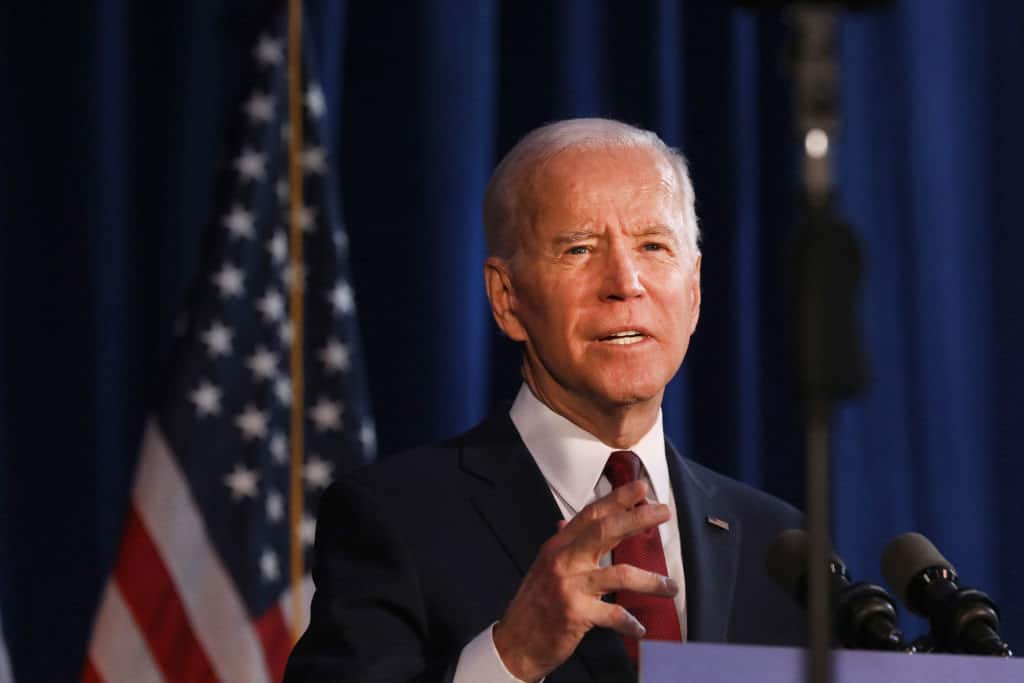
During the White House Hanukkah party, President Joe Biden reiterated his longstanding commitment to combat anti-Semitism. He promised a national strategy, a White House summit, and increased security funding. In stark terms, he identified the stakes involved: “evil — this is not hyperbole — evil will not win. Hate will not prevail.” The question now is whether President Biden will follow-through on these bold words, providing the policies, enforcement, and resources necessary to ensure that this evil and hate are defeated.

That question is made urgent by an omission in Biden’s remarks. Conspicuously, he did not mention the crucial and yet long-delayed federal regulation on combating anti-Semitism. The White House long ago announced that this important new rule would be unveiled in December 2022. Typically, when the White House has a policy that is expected to be well-received, staffers move heaven and earth for a well-timed White House announcement. Hanukkah would have been perfect. The question now is whether the proposed rule, when it is finally proposed, will be viewed as a late present or a lump of coal.

This promised regulation, which I initially proposed during the Trump administration, is intended to codify the 2019 Executive Order on Combating Anti-Semitism. To do so, it must do two things. First, it must preserve the rule that Jewish Americans, like other ethno-religious groups, enjoy equal protection under Title VI of the Civil Rights Act of 1964. This protection, which I announced while heading the Education Department’s civil rights agency in 2004, was reiterated by the Obama administration in 2010 but has never been formalized in regulations.

Second, it must incorporate the IHRA Working Definition of Anti-Semitism, including contemporary examples relating to Israel. This is the internationally-agreed upon standard, endorsed by nearly forty nations as well as hundreds of other governmental and non-governmental entities.

President Biden could better the Trump record by entrenching the Executive Order in the Code of Federal Regulations, further fleshing it out as the Obama administration did for the Bush guidance. Biden might also use the occasion to solidify protections for other ethno-religious groups, such as Arab Muslims, Coptic Christians, and Sikhs. This would be a welcome addition.

Each of the last three administrations have built upon work done by their predecessors. During the George W. Bush administration, OCR recognized that Jewish students enjoy legal protection under Title VI. The Obama administration affirmed the Bush policy, embellishing it with clarifying guidance. The Trump administration affirmed the Bush-Obama rules and, in addition, provided that federal agencies will use the Working Definition when appropriate.

The importance of maintaining IHRA cannot be overstated. Without this definition, OCR was long rudderless in its efforts to address a form of hate which it simply did not understand. And absent such a formal definition, the agency was unable to handle systemic campus anti-Semitism case for nearly a decade and a half following the initial 2004 guidance.

Under the current OCR guidance, which includes IHRA, Assistant Secretary Catharine Lhamon has commendably opened several important cases involving systemic anti-Semitism, including the Brandeis Center’s cases Brooklyn College, the University of Vermont, and the University of Southern California.

Whatever President Biden does, he should not diminish use of the Working Definition by paring it with a lesser standard. The controversial Jerusalem Definition, which some left-wing activists advocate, has been criticized for defining anti-Semitism too narrowly, misunderstanding Jewish experience, and inadvertently giving cover to anti-Semites. It is hardly a substitute for the internationally agreed-upon standard, and its usage would significantly undermine civil rights enforcement.

President Biden’s words are strong, but his administration’s actions do not always match. Earlier this month, the Biden administration botched its presentation of federal hate crimes data. Nationwide underreporting has plummeted so far this year, especially in areas with high Jewish populations, that the FBI data mischaracterizes last year’s record spike in anti-Semitism as if it didn’t occur – falsely suggesting a decrease. Mistakes can happen. But it is hard to excuse the administration’s failure to correct these errors, now or in the future.

The stakes are high. President Biden has correctly identified the seriousness of confronting anti-Semitism. Now his administration needs to deliver a strong regulation to ensure, in his words, that evil will not win and hate will not prevail.

Will President Biden Follow Through on His Pledge to Combat Anti-Semitism? Read More »