
What to DO in CALGARY, Canada?
Thank you to my friends who shared their city with me! I loved my first trip to Calgary.




See PART TWO of my Calgary adventures for where to stay and eat!
What to DO in CALGARY, Canada? Read More »

What to DO in CALGARY, Canada? Read More »
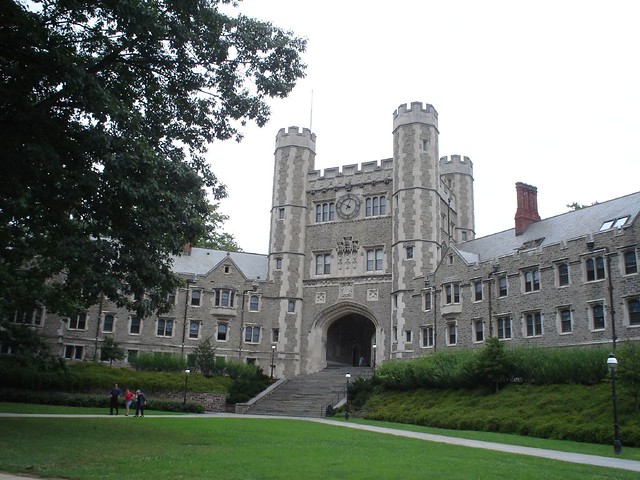
On the evening of November 13, 2022, the treasurer of Princeton’s Undergraduate Student Government (USG), Adam Hoffman, proposed that the USG Senate sponsor a referendum supporting the adoption of the International Holocaust Remembrance Alliance (IHRA) Working Definition of Antisemitism.
That proposal, which needed nine votes to become a Senate-sponsored referendum and appear before the student body for a vote, failed after public opposition by USG U-Councilor Judah Guggenheim, a Jewish undergraduate.
As a proud member of Princeton’s Jewish community, I put pen to paper today to vigorously oppose Guggenheim’s efforts and affirm the necessity of adopting the IHRA definition of antisemitism at Princeton, principles that have been affirmed by a growing list of countries across the globe.
The working definition states that “Antisemitism is a certain perception of Jews, which may be expressed as hatred toward Jews. Rhetorical and physical manifestations of antisemitism are directed toward Jewish or non-Jewish individuals and/or their property, toward Jewish community institutions and religious facilities.”
After the formal definition, it lays out a long litany of examples of antisemitism, ranging from Holocaust denial and charges of dual loyalty aimed at diaspora Jews to the denial of the Jewish “right to self-determination.”
Guggenheim expressed that he would support the IHRA definition without the provision labeling “Denying the Jewish people their right to self-determination, e.g., by laying bare that claiming that the existence of a State of Israel is a ‘racist endeavor’ is in itself,” an act of antisemitism. “I wouldn’t say that arguing against that right [to Jewish self-determination] is antisemitic,” he told listeners at Sunday’s USG meeting.
The working definition does not in any way delegitimize criticism of specific actions or policy initiatives pursued by any sitting Israeli government. It makes clear that “criticism of Israel similar to that leveled against any other country cannot be regarded as antisemitic,” thus allowing for open and honest dialogue regarding action undertaken by the State of Israel. It does, however, draw the line when individuals attempt to undermine the fundamental premise of the Zionism, denying Jews their historical and religious right to their indigenous and ancient Homeland.
In the words of Dina Porat, head of the Institute for Study of Antisemitism and Racism at Tel-Aviv University, “antisemitism is involved when the belief is articulated that of all the peoples on the globe (including the Palestinians), only the Jews should not have the right to self-determination in a land of their own.”
Guggenheim’s rhetoric contains within it echoes of UN General Assembly Resolution 3379, which declared that “Zionism is a form of racism and racial discrimination.” The resolution characterized Zionism as racism – not a specific action or policy decision associated with the Zionist movement or the State of Israel, but the movement itself.
The resolution charged Zionism with being inherently racist – inherently flawed. In doing so, Israel’s inherent right to self-determination was challenged. Historic Jewish nationalism spanning the two millennia of exile, expressed through Zionism, was and is the basis for the State of Israel’s establishment and continued existence. Without this foundation, there is no legitimate state. Guggenheim attempts to make the same claim today, arguing that questioning Israel’s right to exist – legitimacy he seems unwilling to question of other nations – should thus not be considered antisemitic.
Immediately before resolution 3379 was passed, U.S. Ambassador to the U.N. Daniel Patrick Moynihan rose in condemnation of the decision, declaring that “the United Nations is about to make antisemitism international law.” Moynihan and others, among them Israeli Ambassador to the United Nations Chaim Herzog, refused to stay silent. While their voices seemed lonely outliers in a hostile world, the truth eventually won out, and the resolution was revoked in 1991.
I implore Princeton’s USG Senate not to permit a repeat of Resolution 3379 on Princeton’s campus. USG must reconsider its decision and follow in the footsteps of the 38 countries and over 30 U.S. campuses that have already adopted or endorsed the IHRA working definition of antisemitism.
Though often under-reported, antisemitism is still sadly alive and well in this country; Jews have been the targets of almost 55% of religiously-motivated hate crimes across the nation, despite constituting a mere 2.4% of the population.
As Bret Stephens trenchantly pointed out in a recent NY Times op-ed, the blatant presence of antisemitism is too often overlooked because “Jews are excluded from inclusion and included in the excluded.” The Jews’ minority status, with the bias and hatred that come along with it, is overlooked, just as “contempt and ostracism is becoming increasingly accepted.” As Stephens rightly notes, that contempt often takes the form of attacks on the State of Israel. Not attacks on its policy decisions; attacks on its most basic right of existence.
Stephens asks: “Is the Jewish state so uniquely evil that, alone among 193 UN member states, it has no moral right to exist? Or is it the unique evil of antisemitism that directs this kind of obsessive hatred at one state only — while generally ignoring or downplaying the endless depredations of regimes in, say, Caracas, Ankara, Havana, and Tehran?”
That question needs no answer.
Anti-Jewish bigotry has proven remarkably protean in its manifestations over the centuries, and I have no doubt it will continue, like most viruses, to morph again with the passage of time. But despite donning a new cloak from a seemingly bottomless wardrobe, it is, at its core, the same malicious, irrational hatred bent on erasing the ‘Jew.’ We cannot allow any of the malignant forms anti-semitism chooses to take at any given moment to insinuate itself into acceptable norms of public opinion – within the gates of Princeton and beyond. USG has the power to act honorably to stand against it.
I Stand for the Adoption of the IHRA Working Definition of Antisemitism at Princeton Read More »