fbpx

November 4, 2022

The Hollywood Power Brokers Mugged by Reality

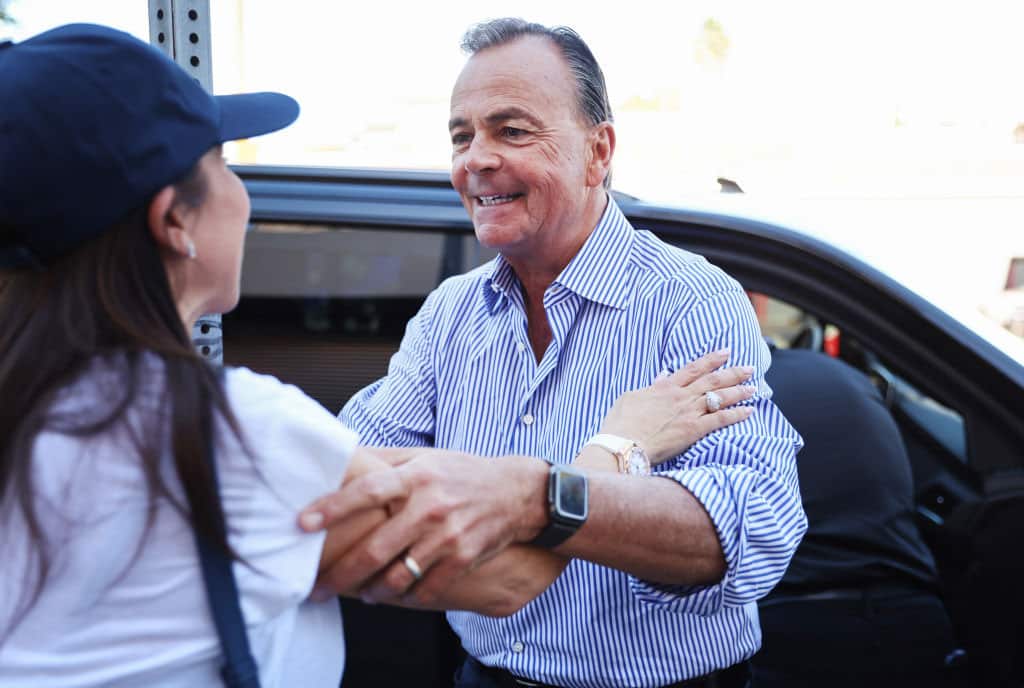
“This is like a breaking point,” said Nicole Avant, who served as U.S. ambassador to the Bahamas under Barack Obama and is the wife of Netflix co-CEO Ted Sarandos. We were talking about Los Angeles, where she was born and grew up and met her husband. “Who is in charge here? How is this happening? It’s the drug addicts in front of people’s houses, it’s people naked in the street—there’s so much chaos, and Rick is the opposite of that, and we just need to reel things in and do things in a different way.” She was referring to Rick Caruso, the billionaire real-estate developer running for mayor of the second-biggest city in the country.

Avant is black Hollywood royalty. Her father, Clarence Avant, now 91, was a legend in the music industry, managing the likes of Sarah Vaughan, Freddie Hubbard and Bill Withers. They called him the Black Godfather.

So you might think that Avant would be supporting Karen Bass’s bid to be mayor of Los Angeles. Bass, who is black, is a six-term Democratic congresswoman. In 2020, she was on Joe Biden’s vice-presidential shortlist. Days ago, Obama, Avant’s old boss, endorsed her.

But Avant is backing Bass’s rival, Caruso—who was a Republican for years, and then, in 2011, switched his registration to “decline to state,” and then, in January of this year, switched to Democrat, just in time to run for mayor in a city overflowing with Democrats.

To Avant, to any number of Caruso supporters, all that is beside the point. Los Angeles, they say, is heading toward a cliff and everything is at stake in this election.

Avant said she found it “very insulting” when Bass supporters told her she had an obligation to support Bass because she’s a black woman. “I don’t ever vote on race or gender,” Avant said. “I’m a free thinker. People told me not to support Barack Obama and to support Hillary Clinton for the same reason, because she’s a woman. You can’t win.”

“The concept of hiring the best person for the job, especially in a situation like this, is not gone,” Bryan Lourd, co-chairman of the Creative Artists Agency and a Caruso supporter, told me. “I don’t think this city survives with more of the same old ideas about leadership.” (CAA is the biggest shop in town and represents, among many other celebrities, Scarlett Johansson, Steven Spielberg, Ava DuVernay and Reese Witherspoon.)

Avant and Lourd are hardly alone. Caruso’s list of supporters includes Gwyneth Paltrow, Kim Kardashian and Snoop Dogg (to say nothing of Elon Musk).

Bass has plenty of A-listers in her corner, including Donald Glover, Jennifer Garner, Octavia Spencer, J.J. Abrams, Ken Jeong and William H. Macy. But if this were in any way an ordinary election in an ordinary year,  pretty much everyone in Hollywood would be behind her. Cutting checks. Posting pics of some poolside fundraiser in the Palisades. Signaling like Adderall bunnies. “I mean, she checks all the fucking boxes,” a Democratic activist in the entertainment industry told me.

It is not an ordinary year. The reason is simple: Homicides are up. Homeless encampments are metastasizing. Public spaces are overrun with graffiti and needles and human feces. In the first year of the pandemic, an estimated 160,000 people left Los Angeles County.

All of which is why recent polls show that the race is a dead heat.

Caruso’s Hollywood supporters like him, they said, because he’s unowned: He’s on track to spend $100 million of his own money on the campaign. And because, they insist, he’s not running for mayor so he can run for governor or president. He’s not doing what so many elected officials seem to do these days—hello, Gavin Newsom!—which is to get elected to get elected to something better. (At 63 years old, Caruso presumably still has time to reconsider that.)

They had arrived at Caruso in a way that was not so dissimilar to that of Republicans who, in 2016, had rallied to Donald Trump, though the Caruso campaign hates the Trump analogy. But it was hard to avoid: The old ways of doing things had failed, the whole thing was broken—the schools, the City Council, the outgoing mayor, Eric Garcetti, the Covid policies, the progressive DA—and someone needed to come in and shake things up.

“Eric—we’re very good friends, but he’s spent his entire time doing whatever he could to piss off the fewest people possible, and he’s wound up pissing off everybody,” a Democratic bundler told me. (Nearly everyone I spoke to said some version of this.)

Caruso, people told me, was good at making things happen. He could build big splashy malls, corral activists and influencers and politicians, and raise capital. He’d run his company. He’d run USC, where he’d chaired the Board of Trustees. He was ready to run L.A.

“There’s just no room for ideological bullshit, because it’s affecting us in the here and now,” a startup founder with deep ties in Hollywood told me. She, too, was backing Caruso.

Two years ago, at the apex of the nation’s “racial reckoning,” Hollywood was all in on Black Lives Matter, defund the police, social justice—marching, preaching, hashtagging. Many A-listers gave to the campaign of George Gascon, who was then running for District Attorney of Los Angeles on a platform that prioritized decarceration and anti-racism. Reed Hastings, the other co-CEO of Netflix, gave more than $1.7 million to Gascon. (Avant noted that her husband, Ted Sarandos, did not, some media reports notwithstanding.)

When Gascon won, Hollywood celebrated.

“After George Floyd, we all had passion for what we thought were the right things, but then it became impossible to have candid conversations about things like race relations, crime, equality,” the startup founder told me. “It felt like a game of gotcha if you misspoke, even if your intentions were in the right place.”

“Two years ago, I couldn’t have voted for him,” Lysa Heslov told me, referring to Caruso. Heslov was the director of the 2017 documentary “Served Like a Girl,” about female veterans; her husband, Grant Heslov, had produced “Argo” and co-written, with George Clooney, “Good Night, and Good Luck.”

But since then, she and others said, there had been a tectonic shift. Everything had gotten worse—the crime, the homelessness, the feeling that the city was spiraling, that the bottom was falling out from under it.

Everyone in L.A. has had that moment when something awful and crystallizing happens. Perhaps it was the UCLA graduate student stabbed to death in a furniture store. Or the college student shot and killed near USC. Or the 12-year-old in Wilmington struck by a stray bullet.

For many in Hollywood, it came on December 1, 2021, when a robber—a repeat offender—broke into the Beverly Hills home of Nicole Avant’s parents. He shot Avant’s 91-year-old mother in the back, killing her—and later, according to court records, laughing and bragging about it. He did not expect to spend the rest of his life in prison; he figured Gascon’s office would be lenient. (He was wrong.)

The message was like this neon billboard hovering over the city, the Hills, the tennis courts and Michelin-star restaurants: You can live in a beautiful neighborhood several freeway stops from the poor and the violent. You can wall yourselves off with gates and security systems. You can even hire a personal security guard, as Avants’ parents had. And it still doesn’t matter.

On February 11, Caruso announced he was running for mayor. Two weeks later, he gave $50,000 to the effort to recall Gascon. His whole campaign has been about restoring order—his supporters would say “humanity” or “decency”—to the city.

“It’s not like you’re going to get canceled for supporting Caruso,” the startup founder went on, “whereas I feel like maybe a year-and-a-half ago, the BLM movement had more strength.”

Heslov added: “I really had to put my Trump PTSD aside and look at what was best for the city and what was best for my kids living in the city.” Yes, Caruso bore a superficial similarity to Trump—he was rich, he was a real-estate developer. But that was it. The more important thing, she said, was that she thought he could fix things. Make L.A. better. After a moment, Heslov said, “It’s fantastic to elect Karen, but you can’t make your decisions based on the color of somebody’s skin.”

“We supported Hillary Clinton in 2016, because she was the most qualified, and we thought it would be important to have a woman president,” Jeremy Barber, a top agent at UTA, told me. “That is where my heart is. But look, here’s the reality: This city feels, in a very meaningful way, like an amazing place to raise a family, and it feels broken.”

Lourd estimated that 60 to 65 percent of the people in his orbit were for Caruso. “They believe he’s the right person for the job, but because they’re Democratic or women or want to be supportive of Bass, it’s difficult for them. I can’t tell you the number of people who tell me, ‘I’m voting for him, but I’m not telling anyone.’” Lourd had been open about supporting Caruso, he said, because “I actually know him. I know him know him—not like Hollywood know him.”

The Caruso campaign feels like more than a campaign to many of his most fervent supporters. It feels, like any number of races this cycle, like part of a reassessment of what is happening across America, how we arrived at this juncture—how Los Angeles morphed into this place that’s so inhospitable to the people without Teslas or second homes (or first homes) in Malibu, the Latino working class south and east of downtown, the Koreans west of downtown, the Chinese in Rosemead and Alhambra, the hordes of L.A. cops and firefighters and teachers forced to live in neighboring cities an hour or two away.

It seemed fitting that Obama, who had ascended to the pinnacle of the post-Cold War American totem pole, who had presided over it and tended to it but done little, if anything, to reimagine it, had endorsed Bass, as had President Biden and Vice President Kamala Harris, who seem desperate to scotch-tape together the old Democratic base long enough to stay in power. (Forty-eight hours after news broke about the recent City Council scandal, in which the Latina council president made disparaging remarks about blacks, Armenians, Jews, gays and indigenous peoples, Biden called on everyone involved to step down—the better to weld back together the black-brown coalition his party depended on to win elections.)

“The Democrats and Republicans, over the past 25 years, have both been complicit in carrying out policies that have hurt the working class and shrunk the middle class,” UTA’s Jeremy Barber said. “I think this race is reflective or emblematic of a larger shift that is happening that we may not even realize yet.”

This is the new conversation just starting to take place about class.

They talk endlessly about representation and inclusivity in Hollywood. They do not talk about all the people who aren’t being included, Avant said. She recalled driving in Beverly Hills a few years ago, and it was raining, and she passed a bus stop, and there was a woman standing in the rain, waiting for the bus, because a homeless person had taken over the bus stop for the night. “Somebody, please tell me why that’s okay,” she said.

The Hollywood Power Brokers Mugged by Reality Read More »

We Need a Better Way to Fight Celebrity Antisemitism

A few days ago, I was praying for a reprieve from the endless conversation about Kanye West. Kyrie Irving has apparently answered my prayers, though not in the way I had hoped. Did we really need another round of celebrity antisemitism? We didn’t, but here we are.

And where exactly are we? From the reactions to the basketball star’s posting of a link to an antisemitic film, it feels like we are at the beginning of the four-step program of the American Jewish response to the kind of recurring antisemitism we are treated to by cultural elite. By this I mean verbal assaults that range from insensitive, to ignorant to strategically malevolent. Whatever the motivation for the outburst, it triggers a pre-packaged response.

Step one is to get emotional and express outrage. This is the step that I sort of like. There should be a visceral reaction when people say, support, or defend antisemitic rhetoric. Too often, this step is skipped when it comes to bashing the Jews, often by Jews themselves.

Step two is to encourage and organize public pressure on the offender’s employer to punish him or her for the behavior. This is where we start to go off the rails. The cancellation model was perfected as a weapon against the Jews, and we have no business supporting it unless we plan to stay silent the next time some “white, Zionist, colonialist” professor is denied tenure.

Antisemites get to be employed in America. So do homophobes, people who don’t believe all women, people who think Taiwan isn’t China, election deniers, and all kinds of people who have views the other half of the country hates. We can’t, and should not, advocate for all of them, and in this case, Kyrie Irving, to be fired. The long list of intolerable views for which corporations are meant to penalize people has already extended well beyond the limits of common sense and if Jews pile on, we will absolutely regret it.

Step three, where politically expedient, is to bring in the usual cast of Jewish communal professionals who work out a carefully crafted public “apology” with the antisemite’s crisis management team that everyone will read and know the celebrity didn’t write and doesn’t mean. Kyrie did what he could with step three. His declaration that he was taking “responsibility” for the “harm” he caused was taken as sincere by exactly no one.

And why should he apologize? He isn’t really sorry, which became clear the more he spoke. Why exactly, then, are we extracting false “apologies” from him? To soothe ourselves?

If we needed further proof that these statements are empty, we can recall Adidas’ words when they disengaged from their contract with Kanye West after his “Deathcon 3” comment about the Jews. Adidas claimed its company “does not tolerate antisemitism and any other sort of hate speech.” Except, they do. On November 3, the company proudly announced the launch of their collaborative athleisure line with model, Bella Hadid who in 2021 posted to Instagram that Israel practices, “ethnic cleansing, military occupation and apartheid over the Palestinian people.”

We have become so addicted to logging the “PR apology” so we can feel that we have accomplished something, that we are allowing people and companies to use them to move the media cycle along, and substantively change nothing at all. We have forgotten that the goal is to deal with antisemitism, not our angst about antisemitism.

And then there is Step Four: “Jesse Jackson” the offender by sending in an NGO to extract a large charitable donation to vaguely “fight hate” in return for “official Jewish absolution” for the antisemitic sin. How does this help a single victim of antisemitism? Do we ever find out exactly where those critical donations went and what the ROI was? For all the donations collected by reformed antisemites turned Jewish philanthropists, is antisemitism abating in America?

The point is not that one individual named Kyrie Irving posted a link to an antisemitic film. The concern is that millions of people who follow Irving and his career might be influenced by the film because he gave it legitimacy. Are those people changed by Kyrie’s now rejected offer to donate to obscure “anti-hate” efforts? Will the Nets’ offer of a donation change anything other than their own public image? Will a word soup apology Kyrie didn’t author convince some 18-year-old in Brooklyn that in fact six million Jews did die in the Holocaust after all?

Everything we do when these incidents take place is designed to solve the problem of our feelings about antisemitism, not the problem of antisemitism itself. It is a performance, with emotionally satisfying yet practically ineffective outcomes. Maybe it even makes things worse. People like Kanye and Kyrie are contrarians who clearly don’t like to dance to mainstream tunes. By pushing this routine on them, we are making them resistance martyrs to the millions we had hoped to persuade, which encourages them to double down and exacerbates the very problem we are trying to address.

The eight people in the front row of the Nets game last Monday night at Barclays Center demonstrated more creative energy than the entire American Jewish establishment when they sat courtside wearing t-shirts that read, “Fight Antisemitism”. Mocking Kyrie Irving has a better shot of reaching the hearts and minds of his followers than running him through the 4-step program does.

Maybe NBA Commissioner, Adam Silver, should sponsor and disseminate a short video by Ruth Wisse, professor emerita of Comparative Literature at Harvard University and scholar of Jewish history and culture, to refute the top 5 falsehoods in the antisemitic movie Irving referenced. It could play on the jumbotron at every stadium during halftime at all games for the next month. It might be harder for some of his fans to get on the antisemitism train with him once they realize his antisemitism is born of plain ignorance and susceptibility to rank propaganda, rather than fashioned by some well thought-out theory about the Jews.

When sports stars, musicians and talk show hosts mouth off, we have to come up with better and more creative ways to deal with the problem. We can start by remembering that the problem is not how hurtful words make us feel, but how they can misinform and influence others. Our strategies and solutions have to focus on the latter or we will be stuck in this loop for a long time.


Rebecca Sugar is a writer living in New York. Her column, The Cocktail Party Contrarian, appears every other Friday in The New York Sun.

We Need a Better Way to Fight Celebrity Antisemitism Read More »

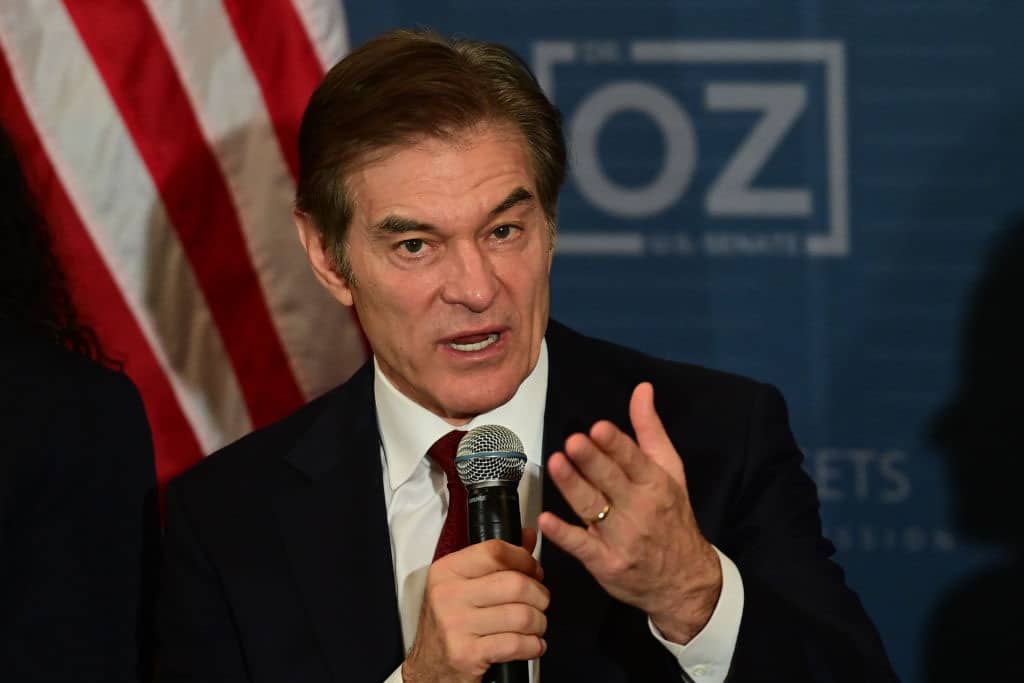
Why Oprah Dumped Dr. Oz

Months ago I actually wrote that I felt that Oprah had a responsibility to repudiate Dr. Oz. Now that she has, having said yesterday that she strongly endorsed Oz’s opponent John Fetterman for Senate in Pennsylvania, I want to explain why.

For the last few months I have been struggling with my own conscience. Could I really come out against such a close friend as Dr. Oz in his campaign for Senate in Pennsylvania? Aren’t friends supposed to stick together.

First there was the fact that amid my taking Dr. Oz and his family on a private plane to Israel, he would barely make a single positive comment about Israel in his campaign and refused to do any events dedicated to Israel’s support.

Then there was the election denial, with Dr. Oz winning President Trump’s endorsement by denying the results of the 2020 election. Lest President Trump think that Oz would show any gratitude, the next thing was Dr. Oz deleting any mention of the former President the morning after the Republican primary.

The rotten values just kept on coming.

Next was Dr. Oz firing an AR-15 in a TV commercial, the same week as the Uvalde massacre. Oz would of course go on to even mock his opponent John Fetterman for having a near fatal stroke, even as Fetterman is the father of three young children.

But what persuaded me that I had to go public was when Dr. Oz denied the Armenian Genocide, probably because Oz seems terrified of Turkey’s head of State, of which he is a citizen, Recep Erdogan, one of the most evil dictators in the world. The US Senate had voted in 2019 unanimously to recognize the genocide, 100 to 0. Oz would be the first Senator, should he be elected, to be a genocide denier.

I am Jewish. Every day of my life I mourn the six million of the holocaust. I decided I would fight Oz and his genocide denial with every means at my disposal. The Armenians are my brothers and sisters. Would I not expect the same of them if a holocaust denier was running for office?

Dr. Oz and I met through Oprah. We both hosted daily shows on the Oprah and Friends Radio Network. Oz was a good man back then and an excellent physician. Through Oprah he became world famous and “America’s Doctor.”

But now, put yourself in Oprah’s shoes. OK, Dr. Oz is running as a Republican and Oprah is a Democrat. No big deal. The country needs two parties. Oprah said as much when she was first asked about Dr. Oz’s campaign.

But then comes Dr. Oz, whom Oprah promoted to the whole word as a caring physician, actually mocking a 53 year old father of three for having a stroke! That’s just nauseating. What kind of disgusting physician would ever do that?

I’m guessing, only one who puts the acquisition of power before anything else.

Next, Oprah watches a world famous Doctor whom she helped create running around on TV with an assault rifle? Are you kidding me? Is he mad?

It’s one thing to embrace the Second Amendment. I do. But an assault rifle? A surgeon? On TV?

Next, Oprah is entertained to the spectacle of Dr. Oz denying the 2020 election. What becomes of America if people don’t believe that their vote is real or that any candidate is legitimate? Answer, the country goes down the toilet. And Dr. Oz would even embrace the “Stop the Steal” stuff to get into the Senate?

Oh, and the coup de grace. Dr. Oz doing a fundraiser in California literally in front of Hitler’s Mercedes Benz.You can’t make this stuff up.

The list goes on and on. A campaign that is a values abomination.

So Oprah, being the extremely moral person she is, decides that she has to end this. Let Dr. Oz go in the direction in he wishes. But she will no longer be silent. She can’t watch something that she created and elevated trample on the values she holds dear.

She’s right.

And it’s exactly how I felt and why I took the same action.

It was one of the great honors of my life to work for Oprah. She is excellent in everything she does. She has the most exception moral core and she is a woman of dignity, grace, and goodness. Most of all, she’s authentic, which is how she has lasted all these decades at the center of the American heart.

I’m sure she found it extremely difficult to repudiate a good friend. But Dr. Oz alone is to blame. He made the choices to make his campaign all about power at any cost.

Our country deserves better.

God bless you Oprah.


Rabbi Shmuley Boteach, “America’s Rabbi” whom The Washington Post calls “the most famous Rabbi in America,” is the international best-selling author or 36 books including “Ten Conversations You Need to Have with Your Children” which he launched on the Oprah TV Show. Follow him on Instagram and Twitter RabbiShmuley.

Why Oprah Dumped Dr. Oz Read More »

If He Becomes a Senator, Let’s Pray Dr. Oz Learns to Respect Others’ Sabbath Observance

“If, let’s say, you landed at the airport after Shabbat started, would you be able to drive home or would you have to walk?”

I assumed Dr. Oz was asking me theoretically, out of genuine curiosity about Jewish observance. We had stopped midway between Tel Aviv and New Jersey to fill the airplane with fuel. Perhaps he was concerned for us in case we got further delayed.

“Technically, we would have to walk,” I responded.

Dr Oz gave a thoughtful nod and walked back to the huddle of his family who all seemed to start talking at once.

We were on a tarmac somewhere in Ireland. The plane had been lent to my father, Rabbi Shmuley Boteach, by a prominent Jewish donor for a trip to Israel he had organized for the Oz and Boteach families. It was the summer of 2013. At 19, I had just finished a gap year in seminary in Jerusalem and I had joined trip both as my father’s daughter and as a photographer.

After spending a week traveling through Israel, the plan was that my parents would stay on and that the plane would return me, my siblings, and the Oz’s to our home state of New Jersey. It was a Friday but we were scheduled to land well before the Sabbath began.

I couldn’t have known that Dr. Oz was asking because his family was pushing to extend their vacation on to Maine. And I would never have expected that he would approach the pilot to diverge knowing what it would mean for us as Orthodox Jews, namely, to violate the Sabbath for the first and only time – a time when, after spending the year in Jerusalem studying Torah, I had never been more pious.

To put me and my siblings, the youngest who was 4, in such a precarious situation now seems so thoughtless, so selfish. But back then I was simply shocked. Shocked when the pilot announced we were landing not in New Jersey, but in Maine. Shocked as I watched Dr. Oz and his family shuttle out of the plane excitedly, knowing well that the Sabbath was beginning imminently and that we were stranded, too ashamed to confront them, too paralyzed to make our next move.

Should we get off too? We knew no one in Maine. I scrambled to call synagogues and Rabbis in the area. There were none. “We can’t get off!” my sister Chana, one year older than me, pleaded. “We have no food and nowhere to stay.”

The plane took off again into a multi-colored sky. I remember looking out the window at a blood orange sunset and the sensations of physical pain that it elicited in my body. It was now Shabbat and I was on a plane. This was the first time I had ever violated the Sabbath, even if not by choice. It felt unbearably painful and strange. I could not stop crying from take off until landing.

After sending the little ones home in a car with non-Jewish friends, my sister and I proceeded to walk from Teterboro Airport in New Jersey, our original intended destination with Dr. Oz and his family, to our home in Englewood using google maps directions printed for us by the staff. It took us almost 4 hours in the dead of night, two young women completely alone. It was terrifying.

The entire experience saddened and confused me. At the time, Dr. Oz was a good friend. He had joined my family for Shabbat dinner many times. We had visited his family at the Oz home in New Jersey. He had shown tremendous support for Israel with his visit, as I myself had witnessed, snapping photos as he danced with Israeli soldiers in Hebron. His behavior that day on the plane didn’t add up. Why would he have forced observant Jews to desecrate the Sabbath after he had expressly asked us about stopping in Maine? Why would he have forced two women to walk four hours in the middle of the night? And why, after my father and these Jewish donors had been so kind as to provide a private plane to visit Israel for the entire Oz family had they repaid their kindness this way?

My father was deeply disturbed when he heard. He thought about what to do but decided in the end not to bring it up. He felt that it had been an honest mistake. Here was a world-renowned celebrity doctor who had just shown tremendous support for Israel. We would let it slide.

Fast forward to January 2022 and my father has now organized a special night of Holocaust commendation at Carnegie Hall. The Gala was commemorating the Wannsee Conference, which planned the holocaust and and whose 80th anniversary was January 20th, 2020. Very significant Jewish donors were scheduled to speak live that night but due to a huge Omicron surge that almost canceled the event, most of the major donors spoke by Skype in instead. It was obvious by his behavior that Dr Oz, who was a featured speaker, was furious. He stood disgruntled on the sidelines, eyes scouring the crowd for any sign of the Republican mega-donors he had come to court, and then, too angry to care that we could all see, began harassing my father by the stage, even as speakers like Marion Wiesel, Elie Wiesel’s wife, addressed the audience about the horrors of the holocaust.

Ironically, it was on our trip to Israel that I first heard whispers of Oz’s own political aspirations.

I overheard “Mehmet” and “presidency” between some of the people who accompanied us. I was stunned.

It will be for the people of Pennsylvania to decide on Dr. Oz’s political future. But regardless, two Jewish sisters who had a nightmarish Sabbath will never forget the Dr. Oz who must learn, if he is to become a successful public servant, to respect people’s traditions and observances.


Shterna Sara Glick is a graphic designer and artist who is the mother of three young children. Her husband, from Philadelphia, is currently doing his medical residency at a hospital in New York.

If He Becomes a Senator, Let’s Pray Dr. Oz Learns to Respect Others’ Sabbath Observance Read More »

Abraham the Zionist

Israel has become a taboo topic in some synagogues. Before Rosh Hashanah, Daniel Gordis wrote an article entitled “If I Had a Sermon” about rabbis who had struggles when it came to including Israel in their High Holiday sermons:

If you were a rabbi of a congregation in the US, you’d be stressing now. Because there is a ton to do, and because if your sermons are not written, you know that you need to get cracking … To add to the complexity, you’d have, among other decisions to make, a difficult decision about Israel. Should I speak about Israel? Can it be done without creating divisiveness? Many rabbis think not. In fact, Israel’s a topic that many rabbis say they avoid speaking about from the pulpit.

Rabbis are afraid to talk about Israel from the pulpit! While this is not true of Orthodox congregations like my own, it is a worrying trend for anyone who cares about the American Jewish community.

Gordis outlines a model sermon, one that he argues would allow a rabbi to talk about Israel without triggering an angry debate. Love is complicated, he explains, and loving a country no less so. One can love, and love passionately, something of which they are critical. Israel does not have to be perfect to be beloved; profound disagreements with her political leadership don’t have to occasion a total divorce. The Bible simultaneously honors and criticizes its own heroes. We should be willing to do the same with Israel.

This is an important lesson. It is impossible to see clearly if one paints reality in stark black and white polarities. If all of our Israel education is mythical, young Jews will be unprepared for the messy, complex reality that the modern State of Israel is; learning that Israel is flawed will provoke a crisis of faith. At the same time, detractors often mistake the forest for the trees, fixated on endless, bitter criticisms that lack objectivity. How is it that the same young American Jews who attend rallies against Israel have next to nothing to say about the conduct of the American military in Afghanistan? The self-righteous sloganeering surrounding Israel is often the product of oedipal obsessions.

An endemic lack of nuance certainly leads to angry debates, but that isn’t the primary reason why Israel is such a contentious issue for American Jews. Instead, we have missed a major change in our community.

Today’s arguments over Israel begin with commitments held and withheld. American Jews, specifically young Jews, are substantially less attached to Israel than their elders. The 2020 Pew Research Center survey of Jewish identity in the United States found that “among Jews ages 50 and older … just 10% say that caring about Israel is not important to them. By contrast, among Jewish adults under 30 … one-quarter (27%) say it’s not important to what being Jewish means to them.” This is where Jewish criticism of Israel begins; people who don’t care about Israel will be far more likely to criticize her.

This change in attitude is part of a larger apathy. For example, the survey found that “Three-in-ten Jewish adults under the age of 30 (31%) say it would be ‘not at all’ important for their future grandchildren to be Jewish, which is significantly higher than the share who say this in any other age group.” The drop in young Jews’ identification with Israel goes hand in hand with a decline in commitment to Judaism in general.

At the same time, there is another element involved in this loss of identification. A small group of younger, progressive Jews, to assert that although they are Jewish, they are no longer “Zionists,” or even, are “anti-Zionists.” Some of these contemporary anti-Zionists take inspiration in anti-religious anti-Zionists of the past, such as Communists and Bundists. But others claim to make a religious case for anti-Zionism.

In the late-19th century, as Zionism was becoming a mass movement, two religious groups stood in opposition to it: Reform and Haredi Jews.

In actuality, Haredi Jews are not true anti-Zionists; they too desire a return to Zion, but want to wait for the arrival of the Messiah. They see Zionism as a lack of faith, a heretical desire to replace the Messianic redemption with a man-made enterprise. This concern was exacerbated by the fact many of the early Zionist leadership were secular, whose religious lifestyles the Haredim held in disdain.

Despite this, most Haredim today are not anti-Zionists. Representatives of Agudath Israel were signatories to Israel’s Declaration of Independence. And even Haredi anti-Zionists worry about the safety of the people of Israel; only a small fringe group, the Neturei Karta, march in pro-Palestinian rallies.

For 19th-century Reform Jews, Zionism was a painful challenge. Jews in Western countries were engaged in a struggle for equal rights; and they had to battle against the antisemitic canard that Jews couldn’t be trusted to be loyal citizens because they longed for a state of their own. In the 1885 Pittsburgh Platform, the Reform Movement declared “We consider ourselves no longer a nation, but a religious community, and therefore expect neither a return to Palestine … nor the restoration of any of the laws concerning the Jewish state.”Zionism was considered a betrayal of patriotism. Jews, petitioning for rights that were long denied to them, did not want to appear as anything but loyal citizens. (A few decades later the Reform movement did adopt Zionism, and some of the most influential Zionists, such Abba Hillel Silver, were Reform rabbis.)

Today’s anti-Zionists take inspiration in an ideology shaped by long-forgotten challenges, and offer an alternative Judaism devoid of any national identity. But this is bound to fail; a Judaism without Zionism is impossible.

Abraham becomes a Jew and a Zionist at the same time. The first command he receives is “Go from your country, your people and your father’s household to the land I will show you.” Abraham’s religious journey begins with a pilgrimage to Israel. Israel is an ever-present theme in the text; when Abraham and Sarah abandon Israel in search of food, it is seen by some, such as the Ramban, as a “major sin.” Their entire lives focus on the dream of building a nation in the land. When Sarah dies, the Bible depicts the intense effort Abraham makes to bury her in Israel. As Ibn Ezra notes, the purchase of a burial plot for her marks the beginning of the future Jewish State.

Genesis makes it clear that Zionism is central to Abraham’s new religious mission.

Generations of Jews would follow in Abraham’s footsteps. Instead of offering hairsplitting arguments about “the spiritual essence of Judaism,” they turned their hearts toward Zion. Israel was a part of their prayers, part of their Tanakh, part of their studies and stories. At the Seder, they sang “l’shanah habaah b’yerushalayim,” “next year in Jerusalem,” with all of their hearts.

They simply couldn’t imagine a Judaism without Zionism.

Jews who knew little else still heard the call of “lech lecha,” and from the furthest reaches of exile would find their way home, just as Abraham and Sarah did so many generations before.

And they never let go of the dream of Israel, even in the worst of times.

Rabbi Yisrael Meir Lau, in his autobiography, tells the remarkable story of how he survived the Holocaust as small child. For much of the time, his older brother Naftali Lau Lavie heroically protected him. Rabbi Lau relates an episode that occurred at the end of the war in Buchenwald.  Naftali was being taken away from Buchenwald, and he didn’t expect to survive. He ran over to his younger brother Yisrael Meir, who was then just seven, and had received virtually no Jewish education because of the war. Rabbi Lau describes their conversation:

[My brother] came to me and said, “They’re taking me away. I see no way out of this Gehinnom [hell]. This is the end of the world.” …”You’re going to be left alone now,” … “But you still have friends. Maybe a miracle will happen and you’ll survive. I just wanted to tell you: There’s a place called Eretz Yisrael. Repeat after me: Eretz Yisrael.” I repeated the words, which meant nothing to me. Naftali said: “Eretz Yisrael is the home of the Jews,” … You’re not going anyplace else. Only to Eretz Yisrael. We have an uncle there. Say that you’re Rabbi Lau’s son, and tell them to find your uncle. Goodbye (my brother). Remember: Eretz Yisrael.”

Remember Eretz Yisrael. Remember Eretz Yisrael.

For two thousand years, that is exactly what Jews did. We were determined to get back home.

Just like Abraham the Zionist.


Rabbi Chaim Steinmetz is the Senior Rabbi of Congregation Kehilath Jeshurun in New York.

Abraham the Zionist Read More »