fbpx

October 31, 2022

Israel Is Holding Elections, Again

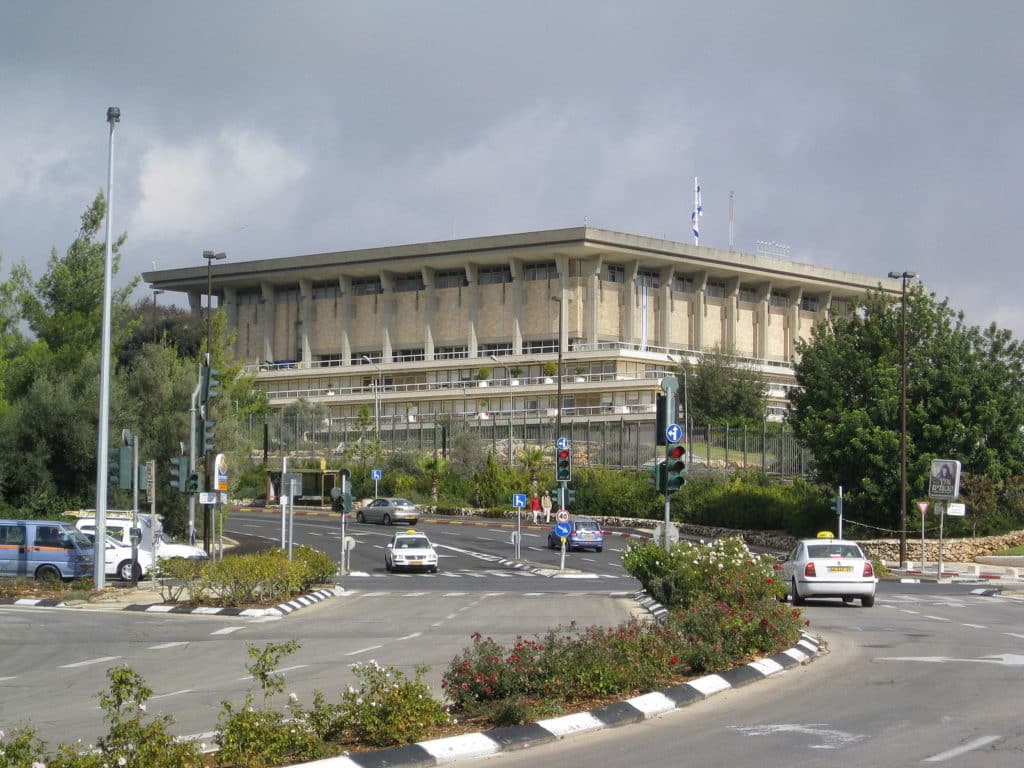
On Nov. 1, Israelis head to the polls for the fifth time in less than four years, to elect members for the 25th Knesset (parliament) and thereby choose a new government.

With a national vote taking place on average almost every 2.5 years, Israel has since 1996 led the world in terms of election frequency.

Israeli elections operate under a system of proportional representation, whereby the parliamentary seats each party receives reflect the number of votes cast for that party as a proportion of the total number of votes. To enter the Knesset at all, a party must exceed the threshold of 3.25% of the total vote, which would grant it the minimum of four seats. The higher the proportion of the vote a party receives, the more seats it has in the Knesset.

A government in Israel is formed by different parties coming together to form a 61-seat majority coalition. The leader of the largest party in that coalition tends to become prime minister, although this is not always the case. The outgoing government, for example, had Naftali Bennett as its first prime minister even though his New Right party was not the largest party. But in order to secure its crucial support, Yair Lapid, the head of the coalition’s largest party Yesh Atid, agreed to forgo the right to become prime minister first.

Some parties, such as the right-wing Likud and centrist Yesh Atid, are strong enough to run on their own and are expected to receive dozens of seats in the next Knesset, while other smaller parties must unite to run on the same list in order to ensure that they pass the threshold.

This time around, there are a dozen parties realistically competing for the 120 Knesset seats and not one is expected to win an outright majority of 61. In fact, the final opinion polls taken before the election predict that Likud, which is expected to secure the most votes, could win as few as 30 seats. That’s a quarter of those in the Knesset and not enough to form a government solo.

Technically, 61 seats are enough to establish a coalition, but most would-be prime ministers want more – around 65 or 66 – so they can put together a stable and strong government that will be able to withstand any turmoil and several defections.

In Israeli politics, it often comes down to one or two of the smaller parties in the race to decide which way an election goes. And because they sometimes can have that influence, these smaller parties are called the kingmakers – deciding who gets to sit in the prime minister’s chair and who doesn’t.

This election will also attempt to answer many questions, including whether former Prime Minister Binyamin Netanyahu can regain the premiership after over a year in opposition, how influential the smaller parties can actually be and if caretaker Prime Minister Yair Lapid will be able to retain the seat he has only occupied for the last three months?

Let’s have a look at the parties in the race:

Likud is arguably Israel’s most prominent political party.  The center-right to right-wing party has dominated national politics for over a decade and at its center is former Prime Minister and current Opposition Leader Binyamin Netanyahu.

At the heart of its agenda is the right of Jewish settlement in the West Bank. In the past, Likud formally rejected the idea of a Palestinian state; but it does not explicitly dismiss the two-state solution in principle.

Its position on religion and state is viewed as more moderate compared to its fellow right-wing parties and includes supporting the status quo – a political understanding between secular and religious political parties going back to the foundation of the state not to alter the communal arrangement in relation to religious affairs.

In almost all recent polls, Likud comes out on top but is still short of hitting the magic number of 61 and being able to form a government.

Yesh Atid (There is a Future) is the other party at the center of Israeli politics and is led by former journalist and current caretaker Prime Minister Yair Lapid.

Lapid formed the centrist party in 2012 to represent the secular middle class. Civic, socioeconomic and governance issues are at the center of its platform agenda, including government reform and ending military draft exemptions for ultra-Orthodox Israelis.

Yesh Atid has been running in the parliamentary elections since 2013 and has become a formidable competitor to rival Likud, whose insistence on keeping Netanyahu as head of the party has ruled out the possibility of a unity government that includes both of them.

Lapid seeks to preserve his partners on the political left, primarily the Labor and Meretz parties. He is also courting the Arab vote and is open to the idea of including Arab parties in his government, as happened in 2021 with the United Arab List under Mansour Abbas.

The National Unity party is led by current Israeli Defense Minister Benny Gantz, who in July merged his Blue and White centrist alliance with the right-wing New Hope party of former Likud lawmaker Gideon Sa’ar.

During the March 2019 campaign, the Blue and White platform focused on fighting government corruption, including imposing term limits on the prime minister and several other pledges such as protecting Israel’s Jewish identity and investing in education. His agenda also includes a plan for peace with the Palestinians.

New Hope was formed by Sa’ar in 2020, and also supports term limits and sees Israel as the nation-state of the Jewish people.

In an attempt to strengthen National Unity’s chances, a new figure has joined the party – Gadi Eisenkot, who like Gantz is a former Israel Defense Forces chief of staff.

Religious Zionism and Otzma Yehudit, the extreme right-wing parties that are becoming mainstream in Israeli politics, are currently running together as Religious Zionism and are headed by its leader Bezalel Smotrich.

Religious Zionism, like Otzma Yehudit under Itamar Ben-Gvir, calls for one state on all Israeli and Palestinian land and is opposed to territorial concessions with the Palestinians, with some members supporting annexation of the entire West Bank. It is also against freezing the construction of Jewish settlements, opposes recognition of same-sex marriage on religious grounds and advocates for increased funding for religious studies and education.

Religious Zionism, including Otzma Yehudit, is part of the right-wing national camp along with several other far-right alliances.

This extreme right-wing pact relies on Israel’s settlers for its electoral power. It stresses the Zionist project and the Jewishness of the state and calls for the expulsion of Palestinians and anyone who opposes the existence of Israel as a Jewish state.

Another key party is Shas, an ultra-Orthodox religious political party led by Aryeh Deri.

This party primarily represents Sephardic and Mizrahi ultra-Orthodox Jews and aims to work to end prejudice and discrimination against these communities. Unlike other ultra-Orthodox parties, Shas enjoys support from moderately religious Mizrahi Jews.

Originally, Shas was more moderate on the Israel-Palestinian conflict but has moved further to the right. The party now opposes any freeze on constructing Israeli settlements in the West Bank.

Shas is anti-LGBT, and especially opposes Pride Parades in Jerusalem. However, it condemns violence against the LGBT community. Shas is currently part of the national camp.

United Torah Judaism is an ultra-Orthodox religious political alliance consisting of Agudat Yisrael (Union of Israel) and Degel HaTorah (Banner of the Torah), led by Yaakov Litzman and Moshe Gafni, respectively.

Unlike similar religious parties such as Shas, United Torah Judaism is non-Zionist and has no formal opinion on increasing settlements in the West Bank.

Agudat Yisrael maintains a base demographic of the Hasidic community, whereas Degel HaTorah has a non-Hasidic ultra-Orthodox demographic.

The two parties split in 2004 before reuniting again a year later. United Torah Judaism is also a part of the Likud-led national camp.

Arab citizens in Israel comprise about one-fifth of the population and technically could be poised to gain a larger voice in the country’s domestic affairs and be a force politically.

Israel’s majority Arab parties – Balad, Hadash, Ra’am and Ta’al – joined forces in 2015 to form the Joint List, in an effort to stave off extinction after Israel raised its threshold to enter the Knesset to 3.25%.

That show of unity was well-received by Israel’s Arab citizens, as they had their best showing ever in any Israeli elections, winning 15 seats. But that unity didn’t last long.

The Joint List collapsed when the Islamist party Ra’am (aka the United Arab List) currently led by Mansour Abbas and the political wing of the Southern Branch of the Islamic Movement in Israel, choose to run separately in the last elections.

And in a historic, yet controversial decision, it was the first Arab party ever to join a governing coalition, led by former Prime Minister Naftali Bennet.

The other three parties couldn’t maintain their unity. The far-left Hadash, led by Ayman Odeh, and center-left Ta’al, headed by Ahmad Tibi stayed together amid the dismantling of the Joint List.

Hadash leaders were among the first to support a two-state solution, with voters that are primarily middle-class and secular Arabs along with far-left Jewish voters. The party supports a socialist economy and the evacuation of all Israeli settlements.

The secular Ta’al party supports the establishment of an independent Palestinian state. It has not run independently since 1999, running with Ra’am three times over the past two decades.

The left-wing Balad party, led by Sami Abu Shehadeh, elected to run alone; it opposes the idea of Israel as a Jewish state and supports creating a new binational state. Of the four predominantly Arab parties, it is the one that seems most unlikely to make it into the next Knesset.

Israel’s Labor party, known in Hebrew as Ha’avoda, is a center-left party headed by former journalist Merav Michaeli.

The party ruled Israel unchallenged until 1977 when it was beaten by Likud under Menachem Begin. Until then, all Israeli prime ministers were affiliated with the Labor party or its previous incarnations.

Labor supports a mixed economy with strong liberal political and social views. On the Palestinian issue, it backs a two-state solution and the creation of an independent, demilitarized Palestinian state – while supporting Israel as a Jewish and democratic state.

Yisrael Beitenu, a right-wing, nationalist Zionist party was founded in 1999 by the current finance minister, Soviet-born Avigdor Liberman. The party, whose name translates to Israel Our Home, still relies on immigrants from the former Soviet Union and has been a partner in the majority of government coalitions.

Liberman is a strong advocate for a unity government from across the spectrum and has expressed his willingness to join any coalition government with Likud, on the condition that Netanyahu resign as leader of that party.

Meretz, which means “vigor” in Hebrew, is Israel’s most prominent left-wing party, now led by party veteran Zehava Galon.

The party identifies as social-democratic and secular with a platform that advocates for peace moves between Israel and the Palestinians and freezing settlement construction in the West Bank.

Its stated principles also include LGBT rights and environmentalism as well as the separation of religion and state.

Israel Is Holding Elections, Again Read More »

Rapper Kosha Dillz Releases Fiery Diss Track at Kanye West

This week, Rapper Kosha Dillz released a diss track to hit back at the recent antisemetic comments by recording artist Kanye West.

Dillz’s new song “Death Con 3” calls out Ye (the rapper formerly known as Kanye West), Representative Ilhan Omar (D-Minn), Candace Owens and condemns numerous harmful transgressions against the Jewish people that are flooding the media. Here are the lyrics to the chorus:

This for all the right wingers leftists who do

Absolutely nothing and pretend they make moves

For Ye Lovers, Ilhan(ds) and Candace Owens too

you can all get dissed man I’m owing y’all the truth


This for every right wingers leftist who do

Absolutely nothing and pretend they make moves

For Ye Lovers, Ilhan(ds) and Candace Owens too

you can all get dissed I can’t tell who is who

Dillz defines a “diss track” as “When you call people out with lyrics and try to expose them and disrespect them,” he told the Journal “[Kanye’s] being disrespectful to me and everything we [the Jewish people] stand for. Just check my inbox and see what it’s caused.”

The idea to make a diss track came to Dillz after reading a recent article about Kanye on the blog “Modern Wandering Jew.” Dillz included the blogpost’s title “Ye or Nay I’m a Naysayer” into the lyrics of his new song. Dillz also credits the line “From the dreidel to the grave” to comedian Petey DeAbreu.

The song manages to fit 1,274 words in 2 minutes and 19 seconds. The mixing and production are tight and Dillz has an angry-proud flow. The diss track is produced by Grammy-nominated songwriter Sam Barsh (Kendrick Lamar, Aloe Blacc), and mixed and mastered by Mike Machinist of rock and hip-hop band Shinobi Ninja (“Rock Hood,” “Brooklyn to Babylon”). The music video was directed by award-winning cinematographer Matthew Kyle Levine (“Miss Freelance”). The video was shot primarily in Brooklyn, where Dillz grew up. Students from Public School 770 started to crowd around Dillz as he performed the chorus while wearing Tefillin.

Dillz has proven chops as a rapper, and not just in the Jewish community. Since he burst onto the hip hop scene in 2005, he has toured the world and collaborated with several multi-platinum artists, including Matisyahu and EDM artist Kaskade. Dillz’s song “Cellular Phone” played in a Bud Light commercial during Super Bowl XLVI.

Dillz spoke of the sheer disappointment he feels about Kanye speaking harmful words about the Jewish people to millions of his fans — with Dillz himself included.

“I love Kanye West’s Music,” Dillz said. “I’ve even worked with people who have worked with Kanye — I’m one degree away from him. People that I work with wrote on [Kanye’s albums] ‘Yeezus’ and ‘Donda.’”

The Brooklyn-based rapper is the son of Israeli immigrants, born Rami Matan Even-Esh. Although his music isn’t usually confrontational,  as a former Division one wrestler for Rutgers University, he knows what it takes to go toe-to-toe with an adversary. And in his early days as a rapper, he cut his teeth in the rap battle scene. But he hasn’t released a diss track until now.

“A lot of people hate confrontation, including myself,” Dillz said. “And for me personally, where I’m at in my life, I was like, ‘No, I need to have confrontations. We could grow from certain things.’”

This past year, Dillz appeared on the rap battle show “Wild ‘N Out” with host comedian Nick Cannon. The show had been canceled in 2020 after Cannon expressed antisemetic comments on a podcast. He later apologized, and began a dialogue with the Simon Wiesenthal Center and Museum of Tolerance. In 2021, “Wild ‘N Out” resumed filming, with Dillz joining the cast in the most recent season.

“I’m on ‘Wild ‘N Out,’ so that’s a show that was once canceled and reinstated for antisemitism, for kind of same thing that’s happening now. But I feel like now it’s four or five times worse by somebody who’s just like, I don’t have to apologize for anything cuz I’m rich and that the Jews control the media. But if you look at the media, the only person they’re writing about is this guy [Kanye]. There’s a lot of irony within it.”

As of this writing, video has over 100,000 views on YouTube, and a Twitter post about the making of the video has over 3.3 million views. While he’s grateful his diss track is bringing a Jewish resilience and practice resistance to the uptick of antisemitism in the world today.

“I think Jewish people are all about forgiving in general, but Jewish people need to be a little bit more down to be telling people to shut the f— up and that’s what I wanted to do,” Dillz said. “There’s plenty of people that do all that other stuff— there’s a lot of people that have opinions, but no one raps. No one has my job. There’s a lot of people with think-pieces and everything, but there’s no artistic expression on it really. And I’m just like, sometimes you just gotta tell people f—you. I think that’s really important.”

Although those two words don’t explicitly appear in Dillz’s song, the prose is as inflammatory and searing. You can read the lyrics in the liner notes on YouTube.

Kosha Dillz’s new song “Death Con 3” is available on Spotify and Apple Music: https://soulspazm.ffm.to/deathcon3

Rapper Kosha Dillz Releases Fiery Diss Track at Kanye West Read More »

Tucker Carlson’s Silence on Kanye West Is Deafening

Kanye West has excelled at everything he’s touched, from music, to production, to fashion, to shoes. So it only makes sense that he should excel as an antisemite as well. In the space of just four short weeks, Kanye has gone from someone whose views on Jews was ambiguous, to the foremost antisemite in America. Yes, Kanye the visionary always emerges on top.

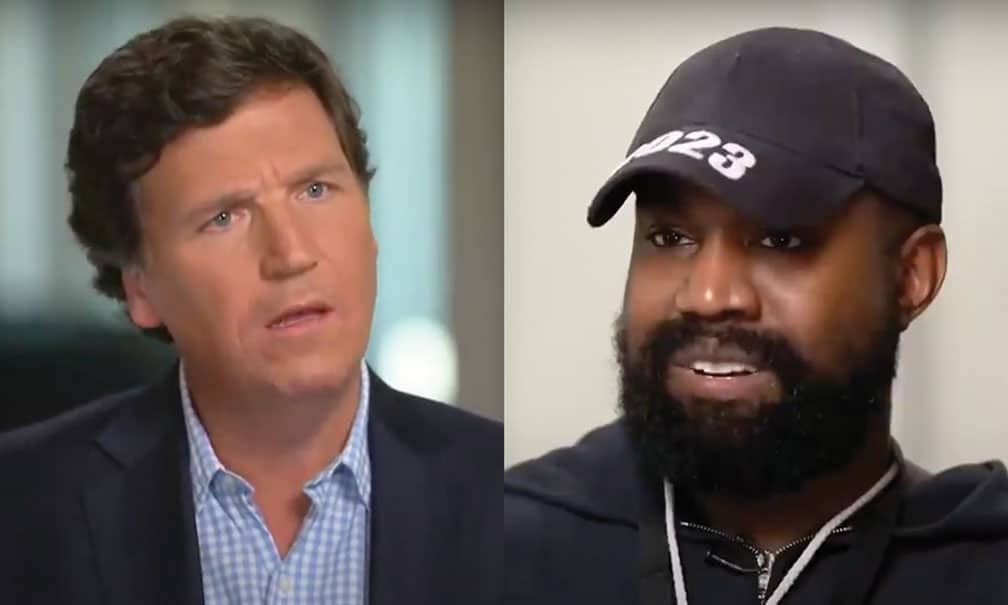
But what’s been overlooked is how we all got here. It started with what seemed an innocuous interview on Tucker Carlson’s show on Fox News. Only later would we discover that Tucker’s producers had edited out all the antisemitic trash that Kanye had uttered on the show.

Why was that?

You can’t argue it’s because they found his words disgusting because then they should have scuttled the entire interview. Fox News is a pro-Israel network. Surely they’re not going to be in league with a lunatic antisemite.

But no explanation was ever offered as to why Tucker did not disclose that in his celebrated interview with Ye, the rapper (and let’s not forget visionary) went off the rails about how much he hates Jews.

Even more curious is the fact that Tucker has been so utterly silent on Ye’s Jew-hating fulminations. One would expect that as they all started on his show, he’d be the first to condemn them.

The Jewish community has a right to expect that the most highly-rated cable host in America would at least do better than Adidas and hold Kanye to account. So why has Tucker been silent?

Even if meant bringing Ye back on to his show to ask just about his antisemitic comments, as Chris Cuomo did, that would be enough. But to give Ye the original platform from which he spewed his antisemitism and then go completely silent is not something in keeping with Tucker’s brand for fairness and support for Jewry and Israel.

There was a time when I was impressed Kanye and his wife at the time, Kim Kardashian, took both their babies to be baptized at an Armenian Church in Jerusalem’s old city, and that Kim was involved in Armenian genocide memory. I was also impressed that Kanye seemed to be the kind of celebrity who swam against the stream and wanted to be his own man. Authenticity counts. But is there any virtue in being an authentic antisemite? Once you go down the road of being a dyed-in-the-wool antisemite, you have lost all virtue. You’re a hater and you deserve to be condemned.

Ye’s disgusting attacks on Jews of wanting to go “death con 3 [sic] On JEWISH PEOPLE” and saying he “can’t be Anti Semitic because black people are actually Jew also,” thereby even denying Jews an intrinsic existence, would not much matter except for what it reveals about how few allies we Jews have in combatting antisemitism. Jews control the world? The media? The banks? Are you kidding me. We can’t even get pro-Israel Fox News and Tucker Carlson to condemn antisemitism.

What would the African American community have done had a white celebrity said they’re going nuclear against blacks on Fox News? My guess is they would not stand for it.

Is it possible that one of the reasons that many in the Jewish community dislike Black Lives Matter is jealousy? Black lives matter has exposed the power of the black community and the weakness of the Jewish community.

Today in America you can falsely accuse Jews and Israel of genocide, like Bella Hadid, and get rewarded by Swarovski with millions of dollars, even as that disgusting company continues to hide their Nazi past. You can spew hatred of Jews and Israel to your millions of Instagram followers every day, like her sister Gigi Hadid, and be rewarded with being on the cover of Vogue more than 35 times. And why? Because there is virtually no price to pay whatsoever for antisemitism.

The fault for Jew-hatred falls directly on the shoulders of the antisemites. But that doesn’t mean that we in the Jewish community should tolerate it. Tolerating the intolerable is the liberalism of fools.

You can be the President of Turkey, Recep Tayyip Erdogan, and call Jews Hitler, Nazis, murderers, baby killers, for ten years. You can, like Erdogan, vilify and demonize Jews from your global bully pulpit. And then, as soon as you, in this case Erdogan, back the wrong horse on the world stage – Putin, in his war in Ukraine – and need a deal with Israel to whitewash your brutal reputation, you can just come running back.

“Yes, I’ve said Israel is more brutal than even Hitler. But hey, let’s now exchange Ambassadors.” And Israel will embrace you with open arms. No apology for calling us Nazis, even as Erdogan demanded, and received, an apology from Israel for the Mavi Marmara episode.

But the test of Jewish influence is our ability to demand of a friend like Tucker Carlson that if your show starts the ball rolling on Ye’s antisemitism then you should be the first to condemn it.

Kanye’s comments about Jews were inexplicably defended by some like Candace Owens. West, who has 32 million social media followers, continued his rant against Jews by saying, “You guys have toyed with me and tried to black ball anyone whoever opposes your agenda.”

Has someone been reading the protocols of the elders of Zion?

His comments followed Instagram banning him for intimating rapper Diddy is controlled by Jewish people.

West and his defenders don’t get to define antisemitism. Anyone threatening to go nuclear against Jews has engaged in antisemitism.

Owens tried to rationalize his remarks, questioning whether “death con 3” was meant as a threat and reference to the military alert level DEFCON. “It’s like you cannot even say the word ‘Jewish’ without people getting upset,” she said.

These were not West’s only anti-Semitic comments, but they were enough to get him locked out of Twitter and provoked criticism from fellow celebrities like Sarah Silverman and Jamie Lee Curtis, whose father was Jewish. Silverman seemed to be calling out her fellow liberals when she tweeted, “Kanye threatened the Jews yesterday on twitter and it’s not even trending. Why do mostly only Jews speak up against Jewish hate? The silence is so loud.” ‘

Similarly, Curtis tweeted, “The holiest day in Judaism was last week. Words matter. A threat to Jewish people ended once in a genocide. Your words hurt and incite violence. You are a father. Please stop.”

Conservatives should be held to the same standard.

I am not an advocate of canceling people for making controversial statements. But they deserve to be condemned when they cross a line into expressions of hatred directed at others. But, even then, I believe people still have an opportunity for redemption.

Curtis alluded to the fact that Jews just observed the holiday of Yom Kippur. This is the day when we atone for the sins of the past year.

According to Moses Maimonides, the greatest Rabbi since the original Moses, atonement requires four steps: First, a recognition of the sin. Second, a confession of the sin. Third, an apology to the injured party and a request for forgiveness. And fourth, restitution. Undertaking concrete action that demonstrates that one is charting a new course.

There exists the possibility that Ye actually repents and goes through all four Maimonidean stages. We know that people with some of the vilest beliefs can change. For example, there are former Klansmen who have renounced their previous white supremacist views.

But until he does so, Tucker Carlson and all those who have given him a platform to spew his Jew-hatred should be condemning him in the strongest possible terms.


Rabbi Shmuley Boteach, “America’s Rabbi” whom the Washington Post calls “the most famous Rabbi in America,” is the author of “Holocaust Holiday: One Family’s Descent into Genocide Memory Hell.” Follow him on Instagram and Twitter @RabbiShmuley.

Tucker Carlson’s Silence on Kanye West Is Deafening Read More »