fbpx

July 6, 2022

Ben & Jerry’s Files Lawsuit Against Unilever for Ending Israel Boycott

Ben & Jerry’s filed a lawsuit against their parent company, Unilever, on July 5 for ending the ice cream company’s Israel boycott on June 29.

The lawsuit alleges that Unilever violated their merger agreement stating that Ben & Jerry’s Independent Board (which voted 5-2 in favor of suing Unilever) has full autonomy in engaging in political activism and Unilever made the decision without consulting Ben & Jerry’s. Ben & Jerry’s is requesting an injunction against Unilever renewing its contract with its licensee, American Quality Products (AQP) to distribute their product in Israel and the West Bank. Ben Cohen, one of the co-founders of Ben & Jerry’s, expressed support for the ice cream giant’s lawsuit against Unilever and the boycott, according to The Times of Israel.

Alyza D. Lewin, President of the Louis D. Brandeis Center for Human Rights Under Law and represents Zinger and AQP, said in a statement that Unilever’s decision is “a done deal.” “Unilever chose the morally correct, socially just and principled path when it ensured that Ben & Jerry’s ice cream would always continue to be produced and sold in Israel and the West Bank,” Lewin said. “Avi Zinger stands arm in arm with Unilever and commends Unilever’s decision to forcefully defend its agreement with him.”

Other Jewish groups also expressed support for Unilever on the matter.

“What a joke,” the Simon Wiesenthal Center tweeted. “The only ones undermining the integrity of the @benandjerrys brand is the current Israel-hating propagandizing Ben and Jerry’s board. Kudos to @Unilever for doing the right thing.”

Human rights lawyer Arsen Ostrovsky, who heads the International Legal Forum, similarly tweeted: “I think @benandjerrys have done a pretty good job themselves, undermining the integrity of their brand, by pursuing this racist, discriminatory and bigoted boycott campaign against #Israel.”

Writer Melissa Braunstein tweeted, “Ben & Jerry’s wants you to know they weren’t bowing to [Boycott, Divestment and Sanctions] activists last year. They are the activists.”

Ben & Jerry’s Files Lawsuit Against Unilever for Ending Israel Boycott Read More »

Consul General Dr. Hillel Newman and Pastors Discuss Christian Support of Israel

It was not an uncommon scene in the life of Dr. Hillel Newman, consul general of Israel to the Pacific Southwest: With the aid of Dr. David Edery, a founder of Friends of Israel, 50 pastors had been invited to Newman’s Pico-Robertson home to hear why Christian support of Israel is crucial for them and for Jews.

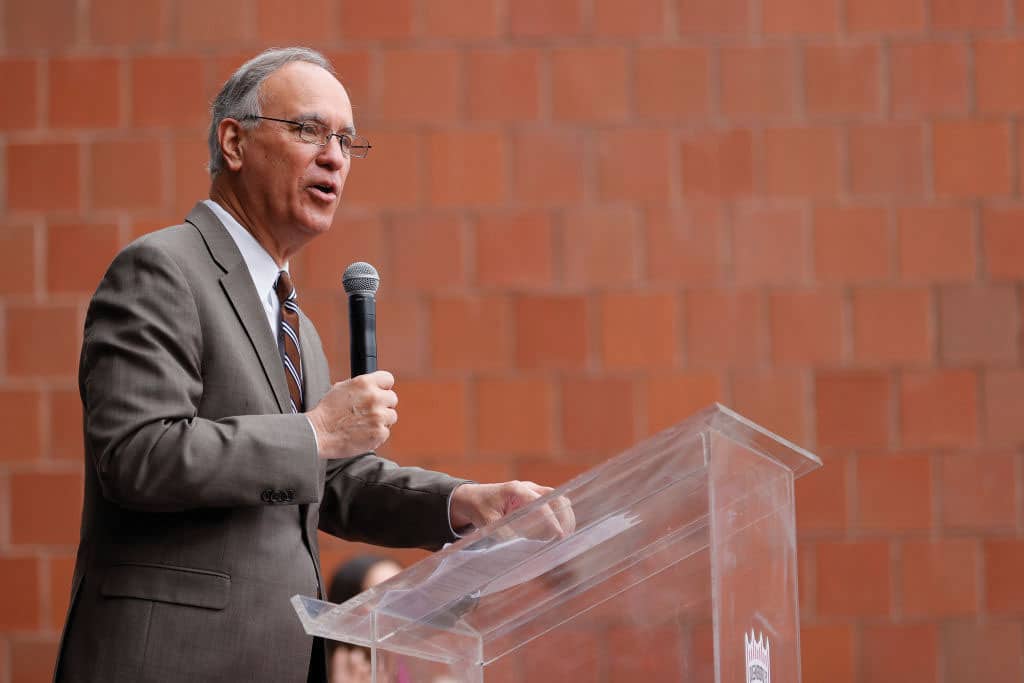
Standing on the steps of his back porch, microphone in hand, Newman explained his work to the pastors.  

“Part of our mission is to reach out to different leaders and communities,” said Newman, a longtime diplomat. “Israelis think we are here for Israelis. The Jewish people think we are here for the Jewish community. But we are here for everybody. That is our mandate.” Alluding to social media “where the attention span sometimes is 150 characters,” the consul general reminded the pastors, “We have to go deeper to explain complex issues.”

Edery, a chief architect of the event, works closely with Newman. He has been associated with the consul general for more than three decades. Edery said Newman visits churches two or three times monthly.

Before he succeeded Sam Grundwerg as consul general in February 2019, Newman said he had been warned that he would encounter strong opposition. 

“But I have not found that at all,” he said.

For one emphatically declared reason, he has declined to meet with virulently antisemitic groups such as BDS supporters. “I don’t go around and waste my time with people who are so deluded and misled,” Newman said. “Radical supporters of BDS and anti-Israel groups form a small faction. Very minor. They don’t have a strong base of support. They have not spread their wings.”

Newman said the mainstreams of the Jewish and Christian communities, both Democrats and Republicans, and U.S. churches are generally supportive of Israel.

“Look at the resolutions in the Congress,” he said. “Those who are pro-Israel get bipartisan support.” However, he cautioned, “You have a minority radical group, in and out of the Congress, which is of concern.”

A number of pastors from various Christian denominations – including those from Black and Hispanic churches – spoke warmly of trips to Israel. One pastor has visited the Jewish state 10 times.

Newman’s hometown diplomatic ventures are having an effect. “My message is one of friendship,” the consul general said. “They should know Israel is the one place in the Middle East where Christian communities flourish. They do not flourish in the Palestinian Authority. Very often they are oppressed in the Muslim world. In Israel, they see freedom of expression, freedom of religion.”

“They should know Israel is the one place in the Middle East where Christian communities flourish.” – Hillel Newman

Whenever he speaks, the South African-born Newman encourages pastors and church members to visit Israel. “When pastors go on missions to Israel, they always come back here feeling favorably,” he said. “This is one way of expanding the base of support — when people see the real Israel, not the misleading information in the news.”

Among other speakers at the consul general’s home were his predecessor,  the Miami-born Grundwerg, actress Noa Tishby, named by Israel’s outgoing government as its special envoy for combatting antisemitism and delegitimization, and Nasimi Aghayev, consul general of Azerbaijan.  

“When pastors go on missions to Israel, they always come back here feeling favorably.“
– Hillel Newman

In introducing Aghayev, Newman shared warm praise on “my dear friend,” and his homeland, which is 97% Muslim. He stressed how safe Azerbaijan is for its 30,000 Jews and spoke glowingly of its favorable relations with Israel. 

Aghayev saluted Newman and organizer Edery, and stressed that he has been a friend of the Jewish state throughout his 10 years in LA. Azerbaijan has had a “tremendous friendship” with Israel for 30 years, “since the beginning of our independence,” he said. He noted Jews have lived there for 2,000 years “without any problems.” After making an extended visit to Israel himself, Aghayev came back believing “it is a truly special place where all ethnicities and all religions are respected. The whole idea there is to bring people together rather than divide them.”

Tishby, a longtime LA resident who was born in Israel into a Zionist family, shared her own compelling case for the Jewish state. Tishby’s immediate relatives were strongly involved in the pre-state and founding days, and her grandmother helped start the first kibbutz.

All of the pastors that Edery recruited unwaveringly support Israel. “They love the Jewish state,” he said.

Consul General Dr. Hillel Newman and Pastors Discuss Christian Support of Israel Read More »

AJU Names Rabbi Tarlan Rabizadeh as VP for Jewish Engagement

Last week, American Jewish University (AJU) named Rabbi Tarlan Rabizadeh as their vice president for Jewish Engagement, starting on August 15.

Rabbi Tarlan Rabizadeh

Rabizadeh will direct the university’s Maas Center for Jewish Journeys, which champions those often relegated to the periphery of Jewish life, and the Miller Introduction to Judaism Program. She will also supervise the Ziering Brandeis Collegiate Institute (BCI), Community Mikveh and Marriage for Life and Opening Doors courses.

“With gratitude and appreciation, I am thrilled to join AJU in this capacity,” Rabizadeh said via press release. “Teaching and curriculum writing is my passion, and having worked with the Miller Intro to Judaism Program for many years, I have seen first-hand how it’s been able to change lives.”

Currently the director of student life at the University of California Los Angeles (UCLA) Hillel and the Simha and Sara Lainer Senior Jewish Educator, Rabizadeh was ordained at Hebrew Union College-JIR. She served as the Jewish Emergent Network Fellow at The Kitchen in San Francisco and was a Milken Community High School faculty member.

AJU is a thriving center of resources and talent that advances the Jewish journeys of individuals, organizations and their communities through excellence in scholarship, teaching, engaged conversation and outreach.

With her new role, Rabizadeh will lead an effort to ensure that AJU programming is ubiquitous across the country.

“We are honored to bring Rabbi Tarlan Rabizadeh onto our senior leadership team during a time of strategic transformation at AJU,” said Dr. Jeffrey Herbst, president of American Jewish University. “With previous experience engaging college students at UCLA and non-Jews, Jews by choice or those on the periphery of Jewish life, I am confident that Rabbi Tarlan will be a fantastic leader, bringing new ideas and vision to our diverse programs and offerings at AJU.”

As a Persian Jew in an overwhelmingly Ashkenazi community, Rabizadeh has made it her mission to bridge the gap between the communities. It has afforded her the insight to prioritize diverse understandings of Judaism. For instance, at UCLA, Rabizadeh has facilitated conversations between Ashkenazi and Mizrahi Jews on Jewish rituals and practices.

Rabizadeh, who has a bachelor’s degree in political science with a minor in Hebrew from Boston University, began her career as a Jewish professional by attending the HUC-JIR Rhea Hirsch School of Education in Los Angeles. She graduated with a master’s degree in Jewish education. She served as interim director of the religious school at Temple Beth Hillel in Valley Village, CA. Rabizadeh fulfilled internships in Monessen, Penn., New York City, High Point, North Carolina and the HUC-JIR National Office of Recruitment and Admissions during rabbinical school.

The rabbi’s aim is to create more meaningful and inclusive Jewish experiences across the North American Jewish community, which is in alignment with the goals of AJU.

“AJU’s mission to engage and educate a diverse group of students on a Jewish journey excites me, and I am inspired to be part of such a prominent Jewish institution,” Rabizadeh said. “I look forward to joining Dr. Herbst and a highly committed board and staff in leading innovative and inclusive developments at the university.”

AJU Names Rabbi Tarlan Rabizadeh as VP for Jewish Engagement Read More »

State Department says Tests on Origin of Bullet that Killed Al Jazeera Journalist Were Inconclusive, But Was “Likely” Accidental IDF Gunfire

The State Department announced on July 4 that their tests on the bullet that killed Al Jazeera journalist Shireen Abu Akleh were inconclusive, although they believe it’s likely that it was an accidental killing by the Israelis.

Department spokesperson Ned Price said in the statement that the department used “independent, third-party examiners” to examine the bullet; the examiners “could not reach a definitive conclusion” regarding whether the bullet was fired by Israelis or Palestinians because “the bullet was badly damaged.”

Additionally, Price said the department was given access to the investigations led by the Israel Defense Forces (IDF) and Palestinian Authority (PA) and concluded that it was “likely” the result of IDF gunfire. However, the examiners believe that there it was “the result of tragic circumstances during an IDF-led military operation against factions of Palestinian Islamic Jihad on May 11, 2022 in Jenin, following a series of terrorist attacks in Israel.” Price’s statement concluded that the department “will remain engaged” with both sides on “next steps” and “again offer our deepest condolences to the Abu Akleh family.”

Israeli Prime Minister Yair Lapid similarly said in a statement that an Israeli investigation was also inconclusive as to the origin of the bullet but did definitively find “that there was no intention to harm her.” “Israel expresses sorrow over her death.”

Tony Abu Akleh, Shireen Abu Akleh’s brother, called the State Department’s conclusion “unacceptable.” “It was obvious that there were 16 bullets fired, all at the same head level, and one I think 1.3m [4.3ft] high, which is targeting the head,” he told the BBC. “Only journalists were hit, two journalists. Shireen unfortunately didn’t make it. [Fellow Palestinian journalist] Ali Samoudi was injured … I would like to know how they come up with that it wasn’t deliberate.”

The PA has also rejected the State Department’s conclusion, saying in a statement that the PA’s investigation found that Israel deliberately murdered Abu Akleh and that they will pursue the matter in the International Criminal Court.

Former IDF spokesperson Oliver Rakowicz told Voice of America that “it was impossible to get the elements of any investigation because one side, the Palestinian side, actually refused to cooperate with the Israeli side. I would like to say we never said it is not us, it is them, like they say it. We said we need to have a full and transparent investigation to get all the elements in order to know what happened.” Knesset Foreign Affairs and Defense Chairman Ram Ben Barak also posited to Army Radio that the bullet examined by the State Department may have been the wrong bullet simply because it was too damaged to conclusively say if it was or not, although Barak was basing his conjecture on public statements and hadn’t read the State Department’s report on the matter, the Post reported.

State Department says Tests on Origin of Bullet that Killed Al Jazeera Journalist Were Inconclusive, But Was “Likely” Accidental IDF Gunfire Read More »

Jewish Agency’s Future in Russia in Jeopardy Over Russian Gov’t’s New Demands

The Jewish Agency has a murky future in Russia amidst reports that the Russian government has issued onerous demands to the agency in order for it to remain operational in the country.

The Jerusalem Post had initially reported on July 5 that the Russian government had ordered the agency to stop operating in the country altogether, though this report was disputed by The Times of Israel (TOI). The TOI report did not specify the Russian government’s demands, but quoted Jewish Agency International Relations Unit head Yigal Palmor as saying that the demands would be “challenging” to follow. Talks between the two are ongoing.

“As part of our work, the Jewish Agency’s delegation in Russia is occasionally required to perform certain adaptations at the demands of the authorities,” the agency said in a statement to both outlets. “We maintain constant contact with the authorities, with the aim of continuing our activities in accordance with the rules set by the relevant authorities. This dialogue is continuing now.”

Any Jews that wish to immigrate to Israel are required to do so through the agency. Relations between Israel and Russia are fraying over the former’s support for Ukraine during the ongoing Russian invasion of the country, while Russia has recently denounced some Israeli strikes in Syria against Iran.

Jewish Agency’s Future in Russia in Jeopardy Over Russian Gov’t’s New Demands Read More »

What the Highland Park Massacre Hides From Us

There might have been 20 million acts of goodness that occurred throughout our country on Independence Day, but the only act I heard about was the murderous rampage in Highland Park. I can’t get the victims out of my head.

This is how reality works. Horrible news rises to the top, not because good news doesn’t matter but because bad news is more urgent. There’s nothing to “fix” with good news. There’s everything to fix with bad news.

We’re also drawn to bad news because we’re silently grateful that it wasn’t us. We recoil at the pain and suffering of others, but deep down we’re reminded that we ourselves are fortunate to have dodged those bullets.

The other thing with bad news—especially with mass shootings—is that they come with an endless dribble of follow-up stories. Who was the killer and why did he do it? What did his family know? How did he get the weapons? Who were the victims? What are the politicians saying? How can we stop the madness? I can’t stop reading all these stories. It’s as if the more I read, the more I’ll be able to make sense of the pain and the madness.

Good news is infused with joy rather than pain. But joy is not an emergency that requires action. Pain requires immediate attention. There must have been millions of people creating moments of joy on July 4, but it’s the Highland Park killer that made the evening news.

I can’t help thinking that in the midst of so much bad news, there’s still one industry that values good news: advertising. Those idyllic commercials of friends enjoying themselves thanks to a certain brand of beer or snack food may be exaggerated and driven by a profit motive, but at least they remind us that “good” is what we should strive for.

It’s ironic that the news business makes money by focusing on the bad, while advertising makes money by exaggerating the good. We need to see both, of course, the good and the bad, but perhaps we can do it on our terms, not the terms of the revenue-driven exaggerators.

We can keep opposing ideas in our minds at the same time: We shouldn’t ignore the violence and the killing around us, just as we shouldn’t ignore the goodness that resides within us.

We can keep opposing ideas in our minds at the same time: We shouldn’t ignore the violence and the killing around us, just as we shouldn’t ignore the goodness that resides within us.

We can recognize that evil exists and must be fought with all means at our disposal, just as we can recognize that the great majority of human beings are decent people who just want to fire up the BBQ and enjoy themselves.

We can grieve for the victims and work towards a less violent future, just as we can remember that we’re put on this earth not just to fight the bad but to create the good.

And maybe we can figure out how to create our own personal news channel that knows how to balance both.

What the Highland Park Massacre Hides From Us Read More »

Anchorage to Talkeetna: Dream Trip to Denali

 
View from the terrace at Talkeetna Alaskan Lodge, 9pm June 5, 2022
I spent three summers of my seven years at sea sailing the inside passage of Alaska with Princess Cruises. I heard passengers talk about their pre-cruise adventure in Denali National Park and it has long been on my bucket list!
Talkeetna Alaskan Lodge
I absolutely LOVED my road trip adventure to Denali with Pursuit Alaska. View our Anchorage to Talkeetna experiences in the videos below and look for PART TWO with our stay at Denali Cabins, Denali Backcountry Adventure Tour and Moose sightings!
Base Camp Bistro at Talkeetna Alaskan Lodge

WHERE to STAY and EAT in TALKEETNA?

The views at Talkeetna Alaskan Lodge were beyond belief! I could not believe how great this location is for seeing the mountains. You can have happy hour at Base Camp Bistro outside-and then move inside to Foraker for dinner.
We had lunch at the brand new Homestead Restaurant. Chef Richard Pace is serving hearty dishes with a warm welcome right on Main Street!
Homestead Kitchen on Main Street, Talkeetna, Alaska
After lunch, I walked on to Talkeetna Riverfront Park at the end of Main Street where three wild rivers, the Talkeetna, Susitna, and Chulitna join to form the “Big Susitna River.” I loved the panoramic view of the Alaska Range! I want to stay in the cabins on the trail. In town, I met the Mayor–a cat named Denali.
Seeing Denali from the air was exceptional! Thank you to our pilot Leon & K2 Aviation for an incredible flight seeing tour, the Denali Experience. It was so awesome! Thank you to Colin Dougan for the photos of me in the Cessna.
Photo by Colin Dougan

I flew to Anchorage from Los Angeles on Delta which was also like a flight seeing tour!

Lisa in Anchorage talking about her bucket-list adventure:

What to see in Anchorage?

I loved walking the Anchorage Coastal Trail. It is easy to go through the tunnel at Elderberry Park (5th & N) and I strolled along the water to Westchester Lagoon. Next time, I am going kayaking! I saw the planes taking off from the airport and saw a train go by! I also went to Centennial Rose Garden.

WATCH ALL OF MY DENALI ADVENTURE VIDEOS HERE

Anchorage to Talkeetna: Dream Trip to Denali Read More »

Will CUNY Continue to Become a Post-Truth, Antisemitic University?

I myself am a graduate of the Department of Music of the CUNY. My grandmother came to the United States by herself at age 19 to escape antisemitism, and, although poor, she devoted herself to financing my university education at CUNY. Most of her family perished in the Holocaust. My grandfather, Yakov Zelechin, changed his name to “Jack Jackson” in 1936 in order to avoid antisemitism.

In 2019, Hunter College professor Philip A. Ewell shocked the music world when he indicted the important music theorist Heinrich Schenker, a Viennese Jew who died in 1935, as a “virulent racist,” “white supremacist” and Nazi sympathizer. He also accused generations of Schenkerian scholars of trying to “whitewash” the theorist’s racism and prevent Blacks from succeeding in music theory. 

Then, in July 2020, faculty and graduates of the CUNY doctoral program in music organized a national censure resolution condemning Schenker and all those who defended him as “racists.” But Ewell was just the tip of a much larger spear, its shaft being a group of enablers, including department heads, school administrators and music faculty at CUNY and throughout the U.S. This censure resolution provides a clear example of the harassment of Jewish scholars for objecting to antisemitic conspiracy theories. One of the most appalling and pernicious claims, published in an article posted by CUNY on the Graduate Center website, is that Schenker “supported the white supremacist and German nationalist movements that presaged Hitler.” In fact, Schenker condemned Nazism as early as 1923, and again in 1933; he never supported or endorsed any proto-Nazi movements. Publishing such assertions stains CUNY’s reputation as a serious research university.

Another clear indication of Ewell’s indifference to or blindness toward antisemitism is his silence on the problem of antisemitism in the lyrics in hip-hop and rap, and his advocacy of using hip-hop and rap in music classes to discuss racism. Ewell has described writer Amiri Baraka as an anti-racist predecessor of today’s hip hop and rap artists; Baraka famously wrote, “I got the extermination blues, jew-boys. I got the Hitler syndrome figured.” Without proper vetting and appropriate critique, the teaching of rap and hip hop can become a means of injecting antisemitism into the music curriculum at CUNY and elsewhere.

Recently, a hearing was held by the New York City Council to investigate widespread antisemitism at CUNY. There are specific occasions when academic freedom does not protect antisemitic administrators and professors. Three alumni and one former teacher asked the City Council to intervene by condemning specific antisemitic behaviors in the CUNY music departments and, if appropriate measures are not taken, withdraw all tax-payer funding.

There are specific occasions when academic freedom does not protect antisemitic administrators and professors. 

CUNY Chancellor Felix Matos Rodriguez was supposed to have attended the hearing on June 8; however, it was postponed to June 30 in order to accommodate his schedule. Then, at the very last minute, he decided to skip the once-postponed hearing altogether, replacing himself with his legal counsel Glenda Grace, and two other administrators, “who sparred with Council members throughout the hearing.” The head of the CUNY Graduate Center, Robin Garrell, who made a cameo appearance of just one hour at the outset, was therefore not present to hear allegations from CUNY music alumni that the Graduate Center music department had disseminated false allegations about Schenker and Schenkerians on its website. Time and time again, when asked factual questions by the chair Eric Dinowitz, and council members Inna Vernikov and Kalman Yeger, about various manifestations of antisemitism at CUNY, these officials could not answer. Clearly they had not done their homework, and their attitude and demeanor, if not their words, projected their response: We know nothing so that we cannot be held accountable. The evasiveness exhibited by these CUNY officials was painfully reminiscent of more than one post-war Nazi defendant: “Did not the gas chambers pour out their smoke, smell, and screams just a stone’s throw from your office? … and yet you still say you heard, saw, and smelled nothing?”  

Clearly they had not done their homework, and their attitude and demeanor, if not their words, projected their response: We know nothing so that we cannot be held accountable. 

In closing, I reference an astonishing painting by Georg Grosz, from 1942, now hanging at Hofstra University, called “A Mighty One on a Little Walk Surprised by Two Poets.” If you look closely at it, you will see that the two “poets”—actually, one is clearly a musician playing the harp, while the other is indeed a scribbling poet—are wearing elaborate, heavy wooden earplugs screwed to their ears. Grosz’s point is that these groveling poets, artists, musicians—these supposedly university-educated intellectuals, albeit freezing to death on the Russian steppe while their master, protected by his warm greatcoat, whips them to obedience—must “hear no evil, and see no evil.” This painting reminds one all too well of the CUNY president’s no-show, and the eloquent ignorance of his minions.
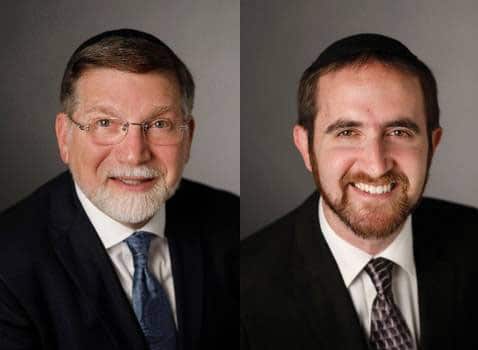



Timothy L. Jackson is Professor of Music Theory at University of North Texas.

Will CUNY Continue to Become a Post-Truth, Antisemitic University? Read More »

My Addiction to Rabbis

Whenever school was in session at Pigeon Creek, Abe Lincoln hiked four miles there and four miles back.  On Shabbos, when I walk to synagogue, I clock about three miles. Others I know go four and five miles.  We hike it for prayer, family, friends, community, learning, growing, and for some, the love of our rabbis.

How can you not love someone who is trying so hard to help make you a better person?

I am blessed with having a plethora of rabbis to learn from. Some I know personally and some I only know from their books. “Man is Not Alone” by Abraham Joshua Heschel was a life changer for me. After reading it, I was convinced there was a God.

Rabbi Elazar Muskin of Young Israel of Century City is my rabbi. I am wholly disappointed when he’s out of town and I don’t hear him speak on Shabbos. He makes me laugh, cry, question, and, best of all, opens my heart. He is considered by many one of the best pulpit rabbis. If you go by me, he is the best. 

Recently, I heard the terrific Rabbi Mahler of YICC’s Young Community Minyan speak. He said, “We need things in our lives that are non-negotiable.” He said, “It might be learning Torah, taking a class, being kind.”  For me, it’s doing what my wife says.  Now that’s a real non-negotiable.

Now we come to Rabbi Zev Wiener.  Along with Rabbi Muskin, Rabbi Zev is one of my non-negotiables. He is the resident Maggid Shiur (rabbi that lectures). He’s 38, trim, with a very friendly face. He does not have a disarming smile because he’s never trying to disarm you. His memory would put most elephants to shame.  Rabbi Zev is a rabbi, psychiatrist, husband, father, son, and a deep thinker. He has a rare, everyman ability to be able to simply convey his deep thoughts to an average person. At least I think he does.

When I tell him an idea I’ve come up with, I always walk away thinking he enjoyed it and learned something. Enjoyed it maybe. Learned something, I should live so long. He does it all with warmth and humility. When Rabbi Zev teaches, it never comes across, “Look how smart I am.” He seems like any other guy who’s telling you a story at the gym.

In the traditional world on Shabbos afternoons, there is a third meal called Seudah Shlishit. Along with the food, there are always words of Torah spoken. It’s generally not nearly as well attended as the morning service. But that’s all changed since that became Rabbi Zev’s spot to teach.

Since he started teaching, the afternoon crowd has almost tripled. It’s not the egg salad or Diet Coke that’s yanking us back. For many, it’s that he is brilliant and ends most of his talks with a life-affirming message that almost always leaves you with more hope than you came in with. Even his parents hoof it back almost every week.   

Since Rabbi Zev started teaching, the afternoon crowd has almost tripled. It’s not the egg salad or Diet Coke that’s yanking us back.

When I pray, I usually sit within three or so seats from him, and two of his children. I like sitting near good people, hoping they rub off on me. I watch how, when he prays, he seems to dive into the deep end of the pool. With his eyelids shut tight, he seems to be trying to meet God head-on. Flanked left and right of him, his young son and daughter stand within inches of him. 

Very soon Rabbi Zev and his family will move to Israel for about a year. Maybe longer. Maybe forever. When he told me he was moving, my heart sunk. I said, “That’s great.”  But I didn’t mean it. I don’t want him to leave. I want him to stay for me and for all the others who love him.  I suggested to him that he send a video every week, even if it’s 10 minutes long, so we don’t lose track of him completely. 

But now, more than ever, I have a great reason to head off to Israel. One of my rabbis is going to be there. I need to go and learn with him. And I need to tell him some of my new deep thoughts.


Mark Schiff is a comedian, actor and writer, and host of the ‘You Don’t Know Schiff’ podcast.

My Addiction to Rabbis Read More »

Can Abortion Rights be Codified?

One would think that the Supreme Court’s decision to overturn Roe vs Wade would set off a four-alarm emergency among pro-choice advocates. So why are Democratic Party leaders content with ringing only two alarms?

Shortly after the Court acted, President Biden announced that he would work to safeguard the ability of women in states that outlawed or restricted abortion to maintain access to medication abortion and to travel across state lines for abortion services. His advisors have been cautious about alternatives that involve providing abortions on federal property in pro-life states, citing potential legal exposure to both women and doctors. There are other measures being debated on both ends of Pennsylvania Avenue, including protections for online data that could make women vulnerable to prosecution.

But the most impactful possible solution – passing legislation through Congress — has been almost completely ignored. Biden has repeatedly stressed the importance of electing more Democrats to Congress this November in order to enact abortion rights legislation, but both the White House and Congress have been extremely quiet about attempting to pass a bill at some point over the next four months. Given their stated urgency of maintaining protections for legal abortion in the roughly two dozen states where those rights are under threat, it seems odd that no such effort would be made until after the fall election.

The biggest obstacle to legislative codification of Roe vs Wade is still the filibuster. 

Neither Senator Joe Manchin (D-WV) or Kyrsten Sinema (D-AZ), both longtime proponents of the filibuster, were moved by Biden’s call for its suspension last week, and the prospect of attracting sixty votes for a compromise measure seems remote. But this Senate just passed its first gun reform legislation in thirty years, and while the ultimate product was far from the Democrats’ ambitions, it was supported by no fewer than sixteen Republican Senators, creating a several-vote safety margin that allowed the bill to comfortably exceed the 60-vote threshold.

The gun legislation’s passage demonstrated that even a bitterly divided Congress can come to a middle-ground agreement under the right circumstances. But Democrats have displayed no such interest on abortion-related policy. Before the last pro-choice bill was defeated in early May, Majority Leader Chuck Schumer (D-NY) completely ignored efforts from Senators of both parties to pass less sweeping legislation that would have codified Roe as it then stood.

The gun legislation’s passage demonstrated that even a bitterly divided Congress can come to a middle-ground agreement under the right circumstances. 

Schumer and the rest of his party’s leadership wanted a bill that would outlaw all limitations on abortions before viability and eliminate all current state-level restrictions, a more expansive version of the law than existed at that point. Pro-choice Republicans Susan Collins (R-ME) and Lisa Murkowski (R-AL) both pushed for a version that reflected existing law on matters such as the so-called “conscience protections” for anti-abortion health care providers, as did Manchin. Pro-choice Democrat Tim Kaine (D-VA) worked with Collins and Murkowski on such a compromise. Schumer said that he never even read their proposal.

Are there eight additional Republicans who might vote for some partial level of abortion protections, less than Roe but more than nothing? The honest answer is that no one knows because no one has tried. Marco Rubio (R-FL) has been working on legislation that would provide more support for mothers. Several GOP members who are retiring or not up for re-election this year signed on to the gun compromise. While it’s unlikely that they would still support a legislative version of Roe, a bill that provides even some protection for pregnant women could attract a similarly limited bipartisan coalition.

The odds are against success. But even a historic (and wildly improbable) Democratic landslide in the midterm elections would not provide enough new votes to break a filibuster in the next Congress. Which means that a concession-less legislative solution is at least two elections away. It seems like an attempt to pass what pro-choice advocates would consider a less-than-perfect bill would be worth at least some effort.


Want to talk about this topic more? Join Dan Schnur for his webinar “Politics In The Time of Coronavirus https://lawacth.force.com/LightningMemberPortal/s/lt-event?id=a1Y3h000003Bn1vEAC. Or read more of Dan’s writing at: www.danschnurpolitics.com. 

Can Abortion Rights be Codified? Read More »