fbpx

February 3, 2022

Calling Out Distortions of the Truth

In his attempt to define the threshold test for obscenity, Supreme Court Justice Potter Stewart famously remarked, “I know it when I see it.”

We’ve seen—and heard—a few things over the past few weeks that clearly cross the threshold.

On Jan. 10, the school board of McMinn County, Tenn. voted unanimously to remove “Maus”—Art Spiegelman’s Pulitzer Prize-winning graphic novel about the Holocaust—from its middle school curriculum, claiming that the book’s profanity and nudity made it unfit for middle school students. As David Corn writing in “Mother Jones” put it: “Of course, it’s ridiculous to object to an account of the mass murder of six million Jews and millions of others because of salty language and (animal!) nudity. But that’s what happened. Spiegelman told the New York Times it seemed to him the board members were asking, ‘Why can’t they teach a nicer Holocaust?’”

I’ve used “Maus” as a text when teaching middle school students, and I can relate first-hand how powerful, approachable, important and singular this text is. The “salty” language contained in the book includes words that you’ll hear on network television these days, and the nudity—as noted above—is limited to Spiegelman’s illustrations of naked cats and mice. I dare say that most every middle school student in this country has seen far more explicit material on the internet.

The school board’s decision denies these students a pedagogically-sound, effective, and age-appropriate opportunity to learn about this critically important historical event. I’m not sure if it’s motivated by antisemitism, a desire to spare these middle schoolers from the disturbing facts of genocide, or a broader campaign across the country to ban books that parents find objectionable for a particular reason. What I do know is that it should disturb us as Jews for a few reasons.

The school board’s decision denies these students a pedagogically-sound, effective, and age-appropriate opportunity to learn about this critically important historical event.

First, because, as the Rambam taught centuries ago, we must accept truth wherever it is to be found (“ושמע האמת ממי שאמרו”—Introduction to the “Shmoneh Perakim”). For him, the search for truth by studying history and science was a path to the knowledge of the Divine—the most exalted pursuit imaginable. Second, because the removal of such an effective, relatable teaching tool for young people will erode the already-woeful state of Holocaust education and awareness in our country. A 2020 survey indicated that a staggering 63% of adults surveyed did not know that six million Jews were murdered in the Shoah.

This week, during a roundtable discussion of the school board’s decision on “The View,” we saw Whoopi Goldberg share her belief that the Holocaust was about “man’s inhumanity to man” and “not about race.” Any student of history (or even a fan of Mel Brooks’ “The Producers”) knows that the Shoah was very much about race. The Nazis considered Aryans racially pure, and saw Jews, conversely, as an inferior race that had to be exterminated like vermin for the common good. In Spiegelman’s parlance, while cats and mice are both animals, they are clearly different species, and the role of the superior species is to eradicate the inferior.

On Tuesday, Amnesty International released a report labeling Israel an “apartheid” state. While one can certainly criticize Israel’s policies in the West Bank, the label is a form of demonization that crosses over to antisemitism. The Reform movement’s response to the report makes this case quite clearly.

There is something obscene and disturbing about each of these episodes. Book banning is inherently problematic, all the more so when we consider how the Nazis themselves employed this technique to further marginalize Jewish authors who were already considered “others.” Removing Jews from the Holocaust or portraying it as an event about hatred generally rather than about hatred of Jews specifically is offensive. Critique that repeatedly crosses over to demonization becomes a form of hate speech.

Critique that repeatedly crosses over to demonization becomes a form of hate speech.

When we see, as we do so often these days, the obscenity of antisemitism or other forms of xenophobia, we have to call it what it is. We have to speak the truth about its nature and hope that, in so doing, others will accept this truth—this correction—and respond.

Searching out, accepting and embracing truth, especially a challenging one, can be painful. Yes, being exposed to the horrors of the Holocaust is disturbing for a feeling person of any age, but to hide this truth is obscene. Calling out others for failing to see the truth of our experience can be uncomfortable, but it is a discomfort that can lead to greater understanding. Confronting distortions of the truth that are increasingly broadly accepted can be a lonely endeavor, but it is painfully necessary.

Whenever and wherever, whether it’s easy or difficult, when we see the truth distorted we must raise our voices.


Rabbi Yoshi Zweiback is the Senior Rabbi of Stephen Wise Temple in Los Angeles, California.

Calling Out Distortions of the Truth Read More »

Azerbaijan helps repair fire-damaged Chabad Synagogue in California

A newly constructed Chabad House-Almaden Valley synagogue in San Jose, California was utterly destroyed in a fire on December 23, 2021. I learned about this when I saw a tweet by the Consul General of Azerbaijan in Los Angeles, Nasimi Aghayev, who stated: “Last December I was saddened to learn that a fire had destroyed Chabad House synagogue in San Jose, CA. @AzConsulateLA contributed funds to the reconstruction of the synagogue. Sharing it to encourage others to support this meaningful effort. I look forward to grand reopening soon.”


Azerbaijan is a 96 percent majority-Muslim nation, and our diverse Jewish population includes a thriving Chabad community, in our capital city of Baku, with additional Chabad centers in Quba and in Sumqayit. In Baku, alongside the Chabad synagogue we have a state-of-the-art academic complex – Ohr Avner Day School – for approximately 450 Jewish students, that combines teachings of Jewish culture, tradition and Hebrew language with modern-day science and technology learning. The school also provides Kosher food to the Jewish community. There is also a Jewish kindergarten and numerous Jewish organizations.

Since regaining independence from the Soviets in 1991, the Azerbaijani government has been subsidizing and generously supporting the various synagogues and infrastructure across the country for its 30,000-strong Jewish community. The same is true for churches of various denominations, and mosques throughout the country. A little known secret that should inspire hope in the world: Azerbaijan provides free natural gas to warm all of the churches, monasteries, mosques and synagogues in the neighboring country of Georgia!

The stunning Ohr Avner campus in Baku was built with the support of Azerbaijan’s Heydar Aliyev Foundation, led by First Lady Mehriban Aliyeva, and inaugurated in 2010 by President Ilham Aliyev.

There are two main synagogues in Baku: the Mountainous Jewish Synagogue and the European Jewish Synagogue. The former was completely built by the Government of Azerbaijan and donated to the Mountainous Jewish community in 2011, making Azerbaijan arguably the world’s only state building a synagogue for its Jewish population. The European Jewish Synagogue, which also houses the Georgian Jewish Synagogue, was opened in 2003 with the support from various Jewish communities of the world, as well as from Azerbaijani Muslim and Christian faith communities.

The relationship between Azerbaijan and Jewish communities is truly unique to the world. Jews have been living in Azerbaijan for the last 2,000 years. In 1742, the Muslim Khan of the Quba region of Azerbaijan designated a secure and naturally fortressed area to be the protected home of Jews, and fiercely guarded and sustained the lives of Jews while the region was frequently attacked and overrun by foreign invaders. Today, that same town – called Red Town – is the largest all-Jewish town/shtetl outside of Israel and New York, a truly rare gem. During WWII, thousands of Jews found safe haven in Azerbaijan escaping the Holocaust in Europe. They were welcomed and hosted by Azerbaijani Muslim families as their own. And while Azerbaijan widely opened its doors to any Jewish refugee, 700,000 Azerbaijanis bravely fought against Hitler and Nazi regime on the frontlines; 400,000 of them died.

The centuries-long Azerbaijani-Jewish harmony and brotherhood also allowed Azerbaijan and Israel to build a strong and strategic partnership since the very first day when Azerbaijan regained its independence. This year marks the 30th anniversary of Azerbaijan-Israel diplomatic relations. 

Referring to the support from the Azerbaijani Consulate General to the Chabad Synagogue in San Jose, Chief Chabad Rabbi of Baku, Rabbi Shneor Segal, who also leads the European Jewish Synagogue, shared for this article: “I have lived for many years in Azerbaijan, and have experienced the remarkable sensitivity and generosity of both the people and the government, toward religious communities across the spectrum. I am deeply moved to see this generosity extended in California, carried out with the same warmth and kindness that has emanated from Azerbaijan toward the Jewish people, today and for the past 2,000 years.” 

And Rabbi Mendel Weinfeld of the fire-damaged synagogue said: “It’s difficult to describe the sense of encouragement and hope we felt when we received the donation. The generosity is undeniable, but what touches me the most is where it came from, and the story behind it all. In a world where division seems overwhelming, it’s so important to highlight examples of light, hope and true solidarity.”

Incidentally, the Chabad community of Baku is currently engaged in the construction of a new Mikveh (a Jewish ritual bath), thanks to the support from the Government of Azerbaijan, which is also helping with funding of the Ohr Avner School.

Azerbaijan has a rich history of closeness and friendship with the Jewish communities throughout California and neighboring states. And Jewish communities in California have stood by Azerbaijan in our difficult times – in fact my own experience as a survivor of the Khojaly Massacre and a prisoner in a torture camp, have been repeatedly memorialized and honored by the Jewish community of Los Angeles; unspeakably kind acts of solidarity. 

There is always space for profoundly improving the world we live in, a space of intimate solidarity, of compassion, and a consistent movement of direct action, sharing in the good times and the difficult. 

With these considerable inspirations in heart and mind, I look forward to hearing only good news about the upcoming repair of the Chabad Almaden Valley Synagogue and the many celebrations and holidays that will take place there, and of the new Mikveh in Baku that will soon be finalized and ready to use. And I reflect and feel abundantly thankful for friendships; those that are new and soon to be realized, and those that are very, very old. May all of us, in Baku or San Jose, Los Angeles and across the globe, continue to flourish in our friendship and in our shared vision of repairing the world. 

Azerbaijan helps repair fire-damaged Chabad Synagogue in California Read More »

Movers & Shakers: JFed/ADL Address Security, World Values Network Gala, Interfaith Leaders Protest Hate

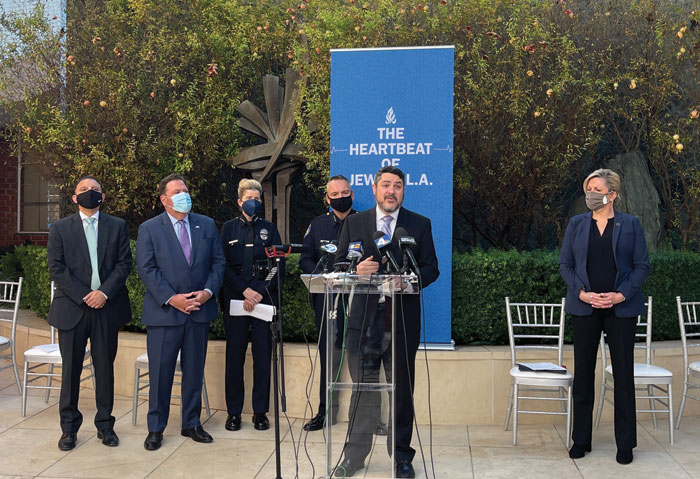
The Jewish Federation of Greater Los Angeles and Anti-Defamation League joined local and national law enforcement on Jan. 21 to address security concerns in the aftermath of the recent hostage situation at a Colleyville, Texas synagogue.

Held on a Friday morning, the press conference at Temple Emanuel of Beverly Hills featured remarks by Jewish Federation of Greater Los Angeles CEO and President Rabbi Noah Farkas; ADL Regional Director Jeffrey Abrams; FBI Los Angeles Assistant Director in Charge Kristi Johnson; Los Angeles Police Department Assistant Chief Beatrice Girmala; and Beverly Hills Chief of Police Mark Stainbrook. They discussed federal nonprofit security grants for Jewish organizations in need and highlighted collaborative work toward ensuring protection of local synagogues, agencies, camps and day schools.

“Our work securing the Jewish community of Los Angeles is a top priority for The Jewish Federation of Greater Los Angeles,” Farkas said.  “That’s why we established our Community Security Initiative (CSI) in 2012. CSI works diligently with the ADL and our valued law enforcement partners including the FBI and LAPD to keep all of us safe. We are stronger together and grateful they joined us here today.”


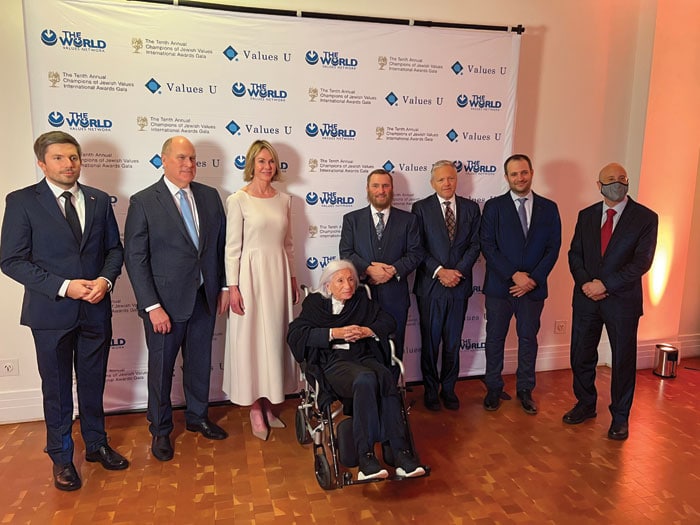
Attendees of the World Values Network gala included Marion Wiesel (seated, fourth from left) and Rabbi Shmuley Boteach (fifth from left). Courtesy of the World Values Network

The World Values Network’s tenth annual “Champion of Jewish Values International Awards Gala” was held at Carnegie Hall in New York.

The Jan. 20 gathering honored global philanthropist Miriam Adelson with the Light of the Jewish People Award on behalf of her late husband, Sheldon Adelson, whose yahrzeit fell shortly before the gala.

Several high-profile community leaders turned out, including Marion Wiesel, co-founder of the Elie Wiesel Foundation for Humanity, along with her son Elisha; former United States Ambassador to the United Nations Kelly Craft; television personality Mehmet Oz; Consul General of the Republic of Poland in New York Adrian Kubicki; IsraAid CEO Yotam Polizer; and Tom Rose, a former advisor to Vice President Mike Pence. 

Pfizer CEO Albert Bourla appeared virtually. 

The gala marked the 80th anniversary of the Wannsee Conference, a meeting among high-ranking Nazi officials that coordinated the “final solution” to the “Jewish question.” Evening honorees and speakers spoke of the significance of this event and discussed best practices for preventing future genocide. They also examined recent spikes in global anti-Semitism, evidenced by the recent hostage crisis at a Texas synagogue on Shabbat. 

“The Jewish Values International Awards Gala is a time where we can recognize the best practices pioneered by leaders from around the world to combat hate, and appreciate how they can make a difference at a global scale,” Rabbi Shmuley Boteach, founder and executive director of the World Values Network, said. “We must also highlight the key role these leaders have played in championing social cohesion and peace building efforts. The World Values Network affirms that we are all entitled to justice, inclusion at all levels of society, and access to equal opportunities. The Jewish community is of critical importance in establishing a true values-based global society.”                        

The World Values Network, a nonprofit, aims to impact the world globally with the power of universal Jewish values. Its message, based on Boteach’s teachings, is communicated through high-profile events, speeches and public debates.


Muslim Public Affairs Council President Salam Al-Marayati
Courtesy of Muslim Public Affairs Council

On Jan. 21, following a press conference on security, interfaith leaders gathered at Temple Emanuel of Beverly Hills to protest hate, violence and polarizations.

“The scourge of anti-Semitism in the world today requires vigilant attention and concerted action by all people,” Muslim Public Affairs Council President Salam Al-Marayati said. “The responsibility does not lie just with Jews.”

Additional participants at the program included Temple Emanuel of Beverly Hills Rabbis Sarah Bassin and Jonathan Aaron; IKAR Rabbi Sharon Brous; Bend the Arc: Jewish Action Rabbi-in-Residence Aryeh Cohen; B’nai David-Judea Rabbi Yosef Kanefsky; and Father Alexei Smith of the Archdiocese of Los Angeles. 

“The Jewish community knows that its safety is dependent on the solidarity of the Muslim and Christian communities,” Cohen said. “We will not let the acts of one person harm that, nor will we defame a whole community based on the acts of an individual.”

Temple Emanuel of Beverly Hills Rabbis Jonathan Aaron and Sarah Bassin participate in a multifaith gathering against hate and polarization.
Courtesy of the Muslim Public Affairs Council

Movers & Shakers: JFed/ADL Address Security, World Values Network Gala, Interfaith Leaders Protest Hate Read More »

Who Counts?

News that Israel’s Central Bureau of Statistics (CBS) is rethinking its approach to counting diaspora Jewry is a welcome development. The CBS has consistently undercounted world Jewry, particularly the Jews of the United States who are the largest diaspora Jewish community. At a time when antisemitism and anti-Israel sentiment are increasing, ensuring that Israel understands the size and composition of the worldwide Jewish community is of enormous strategic importance.

In countries where Jews are a minority population, it is challenging to collect accurate population data. In the United States, the Census Bureau is prohibited from asking questions about religion, and its questions about ethnicity do not identify those who are Jewish. Official government statistics notwithstanding, increasingly sophisticated surveys, sponsored by public policy institutes as well as Jewish communal organizations, enable estimates of the American Jewish population.

There is a growing consensus about the size of the U.S. Jewish population among scholars of the American Jewish community. Multiple studies, including a recent survey conducted by the Pew Research Center, as well as a synthesis of data from hundreds of studies conducted by the American Jewish Population Project at Brandeis University, indicate that the U.S. Jewish population now exceeds 7.5 million adults and children.

Current estimates of the U.S. Jewish population represent a 35% increase in the number of U.S. Jews from 1990 and a 10% increase over the last decade. The estimate does not include the nearly 3 million adults who have Jewish parentage but do not consider themselves Jewish, nor does it include children in Jewish households who are not being raised Jewish in some way. Even as a conservative estimate, the 7.5 million figure contrasts significantly with the estimate of 6 million U.S. Jews currently used by the CBS.

Skeptics may believe that the consensus estimate of 7.5 million is the result of a change in the definition of “Who is a Jew.” However, current studies use essentially the same sociological definition that has been relied on by researchers for decades. An adult Jew is an individual who considers themselves to be Jewish and has Jewish parentage or has converted. A Jewish child is someone under the age 18 who lives in a Jewish household and is being raised in some way Jewish.

What has changed is that an American Jew is increasingly likely to marry or partner with a non-Jew.  However, in contrast to patterns of earlier generations, the children of intermarried parents are increasingly likely to be raised Jewishly, receive Jewish education and, as adults, claim their Jewish identity.

Professor Sergio DellaPergola of Hebrew University, who has long studied Jewish population dynamics, is the progenitor of the CBS’ current estimate. His population estimates include only those in the Jewish population whom he considers “core Jews.” In particular, he excludes adults who are the offspring of only one Jewish parent and who indicate they are Jewish because of ethnicity, culture or family connection, but who otherwise claim no religion. Notably, he excludes some who are halachically Jewish (i.e., a Jewish mother and non-Jewish father).

There are profound implications to excluding some Jews who have only one Jewish parent. To the extent the decision is based on whether they think of their Jewish identity as religious or secular, it establishes a criterion for Jewishness that is not applied to other Jews. Given the important role the United States Jewish community plays vis-à-vis Israel, it does not make sense to reject some Jews. It creates unnecessary divisiveness and undermines efforts to build bridges among world Jewry.

Some may argue that population counts are not meaningful. Nevertheless, knowing the size of the population provides the denominator that makes it possible to understand the ways and extent to which different communities, and groups within the community, express their Jewish identities and their relationship with Israel.

Knowing the size of the population provides the denominator that makes it possible to understand the ways and extent to which different communities, and groups within the community, express their Jewish identities and their relationship with Israel.

One measure of U.S. Jewish identity has traditionally been connection to Israel. Even when one includes the U.S. Jews currently ignored by Israel’s official statistics, the vast majority of American Jews feel an emotional connection to Israel, and nearly half of them have visited Israel. Those U.S. Jews who have spent time in Israel tend to be the most highly attached and supportive of Israel. Many of these individuals have a long history of Jewish education and involvement; however, we also know that the educational efforts can have a significant impact on the Jewish trajectories of less connected Jewish adults.

Birthright Israel, for example, has brought nearly half of million North American Jews to Israel since 1999. One third of the participants are children of intermarried parents, and many of these individuals would not have been counted as Jews by the CBS. Two decades of research demonstrates that participation in Birthright produces long-lasting effects on these individuals’ connection to Judaism and to Israel. Participation has an especially strong impact on those from one-Jewish-parent households and those whose only connection to Judaism is non-religious.

To be Jewish is to be connected to Jews in the past, present and future. Especially in a crisis-torn world, it makes no sense for the Jewish population estimates used by the government of Israel to exclude some Jews based on how they express their Jewish identities. Our collective future depends on understanding our strength and appreciating the diversity of our respective communities.


Leonard Saxe, PhD is the Klutznick Professor of Contemporary Jewish Studies and Social Policy at Brandeis University

Who Counts? Read More »

A Moment in Time: The View from the Bottom

Dear all,

I set out this week to climb the steps to the Baldwin Hills Scenic Overlook. I was really looking forward to the view from the top, a spiritual reward after the physical exertion. I made my way up the steps and looked out. Yeah, it was nice. But somehow, on this particular day, it just didn’t do it for me.

I then walked back down and met up with a good friend. We shared an incredible conversation, right there at the base of the hill.

I thought about it so much over these past few days. We don’t always need to ascend to encounter something divine through a vast, breathtaking vista. Sometimes all it takes is connecting one soul to one soul with one friend. And when we do, we realize that the view from the bottom enables us to engage in a deeply powerful moment in time.

(And yes – sometimes that huge vista is really moving as well! But each connection we can make in the huge world …. That’s akin to God’s fingerprint touching our hearts!)

With love and Shalom,

Rabbi Zach Shapiro

A Moment in Time: The View from the Bottom Read More »

They Don’t Sell Tabernacles at Ikea – A poem for Parsha Terumah

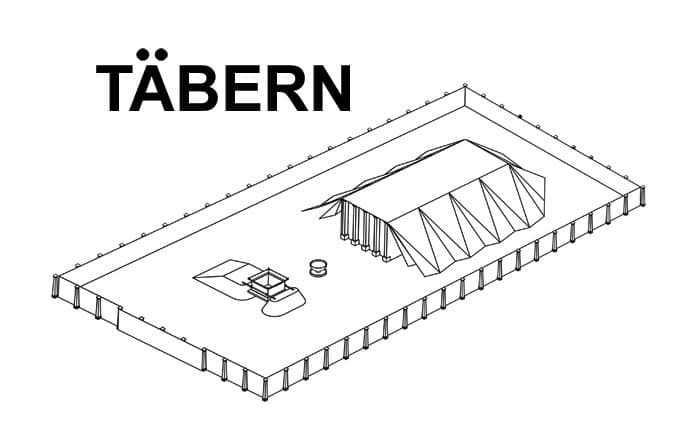
And you shall erect the Mishkan according to its proper manner, as you will have been shown on the mountain.
–Exodus 26:30

I have two friends who, as recently as last week,
went to the blue mountain where they exchange
currency for pieces in boxes and a Torah of instructions
which tells you exactly what you should do
and how you should do it.

The end result, and I’ve seen the photos as
we’re the kind of friends who share everything
far more (and far more often) than anyone
could have predicted, is big boy beds
for their boys who used to be smaller, but
are not yet as big as they will be.

This is how it was in the desert – Everything temporary,
all the acacia wood we gathered would eventually
disappear into history with no provable evidence
it ever existed.

Everything is temporary.
Our children grow so fast
by the time we get home from Old Navy
they’ve already outgrown the shirts
they had grudgingly allowed us to purchase.
I don’t know why we bother to clothe them at all.

But these instructions from the Mountain –
No diagrams to assist us. No picture of
the final product on the box.
Not even a box.

In the end it’s up to us to know what’s right.
One person’s Tabernacle is another’s wardrobe
is another’s bookshelf, upon which all
our collected words will rest.

Did I tell you about the time I made my mother
a space station out of clay. My eyes
weren’t so wide when she used it as an ash tray.
But that’s a story for another day.


God Wrestler: a poem for every Torah Portion by Rick LupertLos Angeles poet Rick Lupert created the Poetry Super Highway (an online publication and resource for poets), and hosted the Cobalt Cafe weekly poetry reading for almost 21 years. He’s authored 25 collections of poetry, including “God Wrestler: A Poem for Every Torah Portion“, “I’m a Jew, Are You” (Jewish themed poems) and “Feeding Holy Cats” (Poetry written while a staff member on the first Birthright Israel trip), and most recently “The Tokyo-Van Nuys Express” (Poems written in Japan – Ain’t Got No Press, August 2020) and edited the anthologies “Ekphrastia Gone Wild”, “A Poet’s Haggadah”, and “The Night Goes on All Night.” He writes the daily web comic “Cat and Banana” with fellow Los Angeles poet Brendan Constantine. He’s widely published and reads his poetry wherever they let him.
They Don’t Sell Tabernacles at Ikea – A poem for Parsha Terumah Read More »

Meet Comedian Alex Stein, a Professional Troll

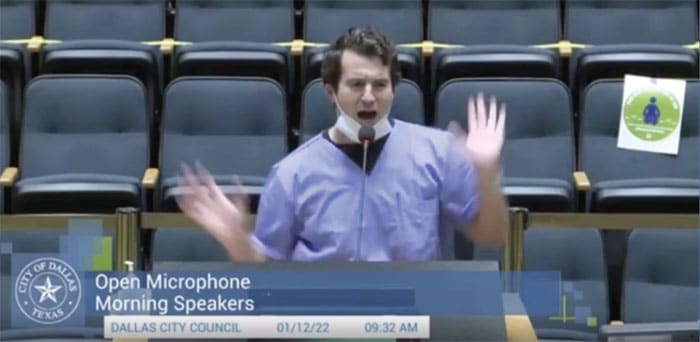
A man in scrubs walks up to the microphone at a city council meeting in Dallas.  In front of over a dozen council members, he starts to give his spiel about why it’s important to vaccinate children. He says he’s figured out a way to make vaccination more hip and cool to the younger generation: a freestyle rap. 

“Would the real Dr. Fauci please stand up, please stand up, please stand up?” he raps, channeling his inner Slim Shady, dancing awkwardly and dousing his hair and face with hand sanitizer. “Vaccinate your mom, vaccinate your dad, vaccinate the happy, vaccinate the sad. Vaccinate your babies, vaccinate them, even if they got rabies. Vaccinate my life, vaccinate my wife. Vaccinate your DNA, vaccine created by the CIA. Vaccinate your body. Vaccinate me at the party. Vaccination freak. Vaccination freak-a-leek.”  

The short video has more 273,000 views. It ended up all over the internet, with some people sharing it because they thought it was real. Others recognized that it was a joke.

The rapping “nurse” in the video is actually Alex Stein, AKA Instagrammer Primetimestein, who is a comedian and self-described professional troll. He said he made his now-viral vaccination rap because he wants people to question what’s going on in the world today.

“I want people to see my video and not know whether or not it’s real.” – Alex Stein

“Everyone sees nurses dancing on TikTok, so it’s not that absurd,” he said. “I want people to see my video and not know whether or not it’s real. Questioning is almost as good as laughter. People need to ask questions.”

Stein, who said he wants to carry the torch of Andy Kaufman, started going to in-person and virtual community meetings when the pandemic began. At first, he was genuinely concerned about what was happening in his neighborhood. He attended a local Dallas meeting, where he talked about how he’d go to the park to exercise and see another runner use the restroom to change out his colostomy bag. But when the lockdowns happened, the city closed down the public restrooms, and the other runner stopped going to the park. 

“There was no health benefit of closing a public restroom in a park,” Stein said. “I was so sincere and went to about three or four meetings, but nobody paid attention.”

Then, he decided to prank meetings all over the United States virtually instead. In one recent video, he plays a concerned dad who tells school board members about how there needs to be a terrarium in his daughter’s classroom. Why? Because she identifies as a lizard. 

In a virtual meeting on voting rights with the New York City Council, he pretends to be a guy with a mail order bride who is upset that his swindling wife now gets to vote in America. The council lets him speak for a while, and then ultimately mutes him. 

“I’ve been muted a bunch,” said Stein. “As long as you’re there in person and you’re not vulgar, they will give you the time to speak. Most of the time, I get no reaction. Zilch. But if I go and act absurd and pour hand sanitizer in my face, then they react.”

Though conservative media outlets have mostly been sharing and applauding the vaccine rap, Stein identifies as a centrist politically and believes in socializing the healthcare system. And even when he pokes fun at COVID, he knows it’s no joke; his mother died from it this past October. 

“I’m really sad about my mom passing away, but at the same time, I still don’t think we should be mandated or shut down the world,” he said. “In life, we take risks. People should have the choice to risk their own lives with this virus.”

The comedian, who grew up in Texas and also lived in Los Angeles, believes in God but not in organized religion. Still, he regrets not experiencing a Jewish rite of passage.

“I didn’t get to have a bar mitzvah or any of the cool Jewish stuff as a kid,” he said. “I would have loved to have had one.”   

Stein is confident that if he keeps creating funny videos, he’ll eventually get his own talk show on a network. He said he hopes to have a show like Conan O’Brien’s, but it’ll be all about conspiracy theories. Right now, he hosts his own online show called “Conspiracy Castle.”

“I like conspiracies because I believe there is a lot of information we don’t get,” he said. “As a kid, I was obsessed with spy stuff. It’s that detective side of me.”

However, he always likes to deliver the information he’s found with a side of funny. 

“The media tells you that something bad is around the corner, and they’re doing that on purpose to keep us in this negative energy,” he said. “I’m trying to be the one person laughing and joking so we don’t all start crying.”

Meet Comedian Alex Stein, a Professional Troll Read More »

Why I Care About Ukraine

There is no special place in my heart for Ukraine. Its cities and villages have a history of rich Jewishness, no doubt, but this runs parallel to their just-as-rich history of antisemitism. It’s possible that a few of my ancestors hailed from Kyiv or Odessa, yet this only makes my contempt for Ukraine more personal—as it does for surrounding nations who were just as complicit in the murder of their Jews, and that continue to harbor growing far-right movements. 

But several years ago, my understanding of foreign policy and my views on how the United States should react when our allies are threatened began to shift, from a more hands-off preference to a desire for more engagement. As Russia once again makes a bid for territory outside its borders, I see the importance of holding international bullies accountable, for not only does it concern me as an American, but also as a Jew. 

In considering Nazi Germany and Soviet Russia, it seems beyond coincidence that the two top adversaries to western stability in the 20th century both treated their Jewish populations in despicable and barbaric ways. Also apparent is that isolationism in the United States has almost always been deployed in conjunction with concerns regarding Jews, whether it was conservatives in the 1930s preaching against involvement in Europe (using anti-Jewish conspiracies to fan justifications of Nazism,) or radical anti-war movements later in the century that absorbed anti-Zionist propaganda. From reading books like “The Plot Against America” by Philip Roth, which depicts a fictional, counter-historical nightmare scenario for American Jews in which our country elects as president a non-interventionist (Charles Lindbergh, also a suspected Nazi sympathizer) at the dawn of World War II, I now realize that my responsibility as one of those American Jews is to defend the societies that have defended me. My own best interest appears to be on the line.  

In considering Nazi Germany and Soviet Russia, it seems beyond coincidence that the two top adversaries to western stability in the twentieth century both treated their Jewish populations in despicable and barbaric ways. 

Russia threatened the planet with nuclear annihilation not forty years ago, and now they are amassing a legion to trespass into Ukraine. I observe the reactions of the people around me. On the far left are those who claim to be anti-imperialists, certainly when it involves the demonization of Israel. Yet they are mainly quiet when it comes to Russia, exposing their hypocrisy. They even sneer at the west, buying into the false narrative that we are the true antagonists in this conflict. On the far right, on the other hand, are “America First’’ isolationists, who trivialize allyship with international partners and bemoan what they believe is a too-heavy American burden in the foreign arena. 

What these polarized responses have in common is the way they undermine institutions like NATO, which exist to defend the interests of liberal democratic nations, and anti-establishment messaging in favor of more radical politics. They also both share a history of antisemitism: The anti-Zionist left uses accusations of imperialism and colonialism to delegitimize Jewish nationhood, while the right pokes the embers of hatred with their “the globalists are responsible” fearmongering. None of this should be a surprise. Contempt for liberalism and contempt for Jews usually intersect, and an ideology that advocates disengagement from the larger world outside of one’s own borders is sure to unnerve a people with such cosmopolitan proclivities. 

Internal conflict is not new in Jewish American life. The editors of Commentary Magazine wrestled with their ideology in the late 1960s, failing to stifle their strong anti-Soviet impulses despite their favor toward a more liberal domestic political scene. Irving Kristol once defined a neoconservative as “a liberal who’s been mugged by reality.” I’ll confess that I am uncomfortable with this label, as my domestic views break slightly leftward. But with isolationism seeming to guide both parties toward the poles, do traditional right-wing/left-wing categories of foreign policy even exist anymore? What I know to be true is that a foreign autocrat is threatening the stability of democracies. That is a reality we should, to use Kristol’s term, mug back—whether we call it liberal or conservative.  

In a post-World War II era, I deeply care about an apparatus of nations capable of holding despots and tyrants accountable, not only as a patriotic American, but as a Jew who understands the fragility of global order, and the imminent danger should it unravel.

Vladimir Putin desires chaos. He’s made this known since his days as a KGB agent up to the 2016 American presidential election, and again in 2020 when he favored both Donald Trump and Bernie Sanders, knowing that two polarized and anti-establishment candidates on the ballot would cripple American unity. The Kremlin has planted the seeds of destruction in several European countries as well, supporting anti-democratic leaders like Alexander Lukashenko in Belarus and exploiting anti-government protests like The Yellow Vests in France. Putin resents NATO, he despises the EU, and backs the morally repugnant regime of Bashar al-Assad in Syria. In instability, he sees opportunity. 

We Jews are the opposite. When nations are at peace with one another, when there is an abundant supply of resources to be traded and distributed, and when political temperatures are cool enough to avoid sectarian violence, we thrive. This explains why our interests and the interests of the democratic world have aligned—democracies at home and abroad exist to maintain tolerance between different groups and nations. One of these groups is the Jewish people, and one of these nations is Israel. In a post-World War II era, I deeply care about an apparatus of nations capable of holding despots and tyrants accountable, not only as a patriotic American, but as a Jew who understands the fragility of global order, and the imminent danger should it unravel. Rule-breaking must be checked. And when it comes to Russia and Ukraine, the rules are hanging on by a thread.


Blake Flayton is New Media Director and columnist at the Jewish Journal.

Why I Care About Ukraine Read More »

Whoopi Goldberg is Half Right, But What She Got Wrong is All Important

Whoopi Goldberg knows little about the Holocaust and less about Nazi Racism, but she got half the story right.

Contrary to Nazi ideology, Jews are not a race, they are a people and a religion. There are many Jews of color, Black Jews, Hispanic Jews, Asian Jews—not just Jews who are White. The Rabbi of Central Synagogue whom a hostage-taking terrorist mistakenly believed was the key to liberating a convicted ISIS terrorist in a nearby Texas jail, is an Asian-American Jew-by-choice. One can convert to Judaism, one can choose, as many have in this generation, to become a Jew.

Under Nazi ideology, Germans stood at the peak of a racial pyramid, the master race. Those to the West of Germany in Europe fared better and were more respected than those to the East. The Nazis regarded the people to the West as superior. The Danes were considered their brethren. Not so the Slavs to the East. Heinrich Himmler, the head of the SS and the architect of the Holocaust, wrote: “For the non-German population of the East, there must be no higher school than the fourth grade of elementary school. The sole goal of this schooling is to teach them simple arithmetic, nothing above the number 500, writing one’s name and the doctrine that it is divine law to obey the Germans. …I do not think that reading is desirable.”

The Germans even targeted their own, Germans of special needs—in offensive terms, “the mentally retarded, physically handicapped, mentally distraught and congenitally ill Germans” were considered “life unworthy of living,” “food wasters,” using scarce resources of the German people who could enhance the lives of their superiors. They, not the Jews, were the first to be gassed in the Tiergarten 4 (T-4) program, named for the building where the murders were implemented.

The Nazis targeted Afro-Germans, so-called “Rhineland Bastards,” the offspring of North African troops who were part of the invading French Army that married or merely impregnated German women.

In Nazi ideology—and after September 1935 in German law—the Jews were a race, defined not by the identity they embraced, the religion they practiced, or the traditions they regarded as sacred, but by the blood of their grandparents. Even priests and nuns, Protestant pastors as well, whose ancestors had converted were regarded as Jews, defined by the blood of those ancestors who had chosen a different faith. Edith Stein, a Catholic nun was murdered at Auschwitz; Eugen Rosenstock Huessy, the great Protestant theologian, had to flee to the United States. Their “crime” was not their faith nor their religion but the blood of their grandparents. The only building left standing in the Warsaw Ghetto after the Ghetto Uprising was a Roman Catholic Church, which served parishioners who professed the Catholic faith but were defined by German regulations as Jews. Jews were regarded as a cancer by Nazi ideology, a threat to the well-being of the Master Race.

In Nazi ideology, the Jews were a race, defined not by the identity they embraced, but by the blood of their grandparents.

At first, Jews were subjected to elimination by forced emigration from German society, culture and land, and then, as the Holocaust began its killing phase, Jew were to be what the Nazis termed “exterminated,” in systematic state-sponsored murder. UCLA’s Saul Friedlander, himself a survivor whose parents were murdered in the Holocaust, termed it redemptive antisemitism—in Nazi ideology, the murder of the Jews was essential to saving the German nation.

Ms. Goldberg, who seems to know little of this history, sees racism as a Black/White phenomenon, yet understands Jews are not a race, but a multi-racial people, who welcome converts. So she could not understand that in the Nazi universe, the ultimate expression of its racist policies was the murder of the Jews. Ms. Goldberg sees Jews as White and hence the issue of race cannot apply. She forgets that false racism and genocide allowed Black Hutus to commit genocide on their Black Tutsi neighbors in Rwanda or West Pakistanis to commit genocide on their East Pakistani/Bengladeshi neighbors.

The issue of race did undeniably apply to the Holocaust. German science, German universities, German doctors, many of them brilliantly trained in pre-Hitler years—often by Jews—tried their hardest to show that Jews were a race, a race that threatened the very survival of the German nation. They distorted their science and they violated the oath of their profession. Doctors presided over the selektions at Auschwitz-Birkenau. They may not have directly administered the poison Xyklon B gas (which arrived in Red Cross trucks) in the gas chambers, but were present at the gassings to pronounce the dead dead.

We should invite Ms. Goldberg to learn a bit and see that in other cultural contexts the issue of race cannot be viewed as a Black/White phenomenon.

We should invite Ms. Goldberg to learn a bit and see that in other cultural contexts the issue of race cannot be viewed as a Black/White phenomenon. Though the political, social, ideological, and legal contexts are so very different, the venom is the same.

Perhaps we should forgive her for she knows not whereof she speaks. Surely, we should educate herself to learn more. Ignorance can be an invitation to learning, an opportunity to grow. We should all aim to be smarter tomorrow than we were yesterday.


Michael Berenbaum is a Professor of Jewish Studies at American Jewish University and Director of the Sigi Ziering Institute: Exploring the Ethical and Religious Implications of the Holocaust.

Whoopi Goldberg is Half Right, But What She Got Wrong is All Important Read More »

Education Dept. to Investigate Complaint Accusing Brooklyn College Profs, Students of Calling Jews “White and Privileged”

The Department of Education’s Office of Civil Rights (OCR) announced on February 3 that they are investigating a complaint accusing professors and students at Brooklyn College’s Mental Health Counseling (MHC) program at the City University of New York (CUNY) of harassing and bullying Jewish students for being “white and privileged.”

In a February 3 press release, the Louis Brandeis Center for Human Rights Under Law––which filed the complaint on behalf of Jewish students on campus––announced that OCR will be investigating the matter. The complaint, filed a year earlier and obtained by the Journal, centers on two students, identified solely as Doe 1 and Doe 2. Doe 1 and Doe 2 were in an August 2020 class where an unidentified professor allegedly said “that Ashkenazi Jews who immigrated to America have become part of the oppressors in this country.” A month later, the same professor allegedly accused whites of establishing “the concept of professionalism to oppress people of color.” Another Jewish student told the professor during class that they felt “uncomfortable” with those comments since it implies whites “should feel bad or guilty about their race.” The professor replied that the student needed to “get your whiteness in check,” per the complaint.

That same month, the professor assigned students to rank their identities. Doe 1 said they identified more strongly as Jewish instead of white, prompting students to tell Doe 1 that they should have ranked white higher, arguing that Doe 1 is “white and part of the dominant culture” so Doe 1 “did not understand oppression.”

The complaint then describes a September 2020 WhatsApp discussion about Martin Luther King Jr. and Sigmund Freud among Brooklyn College students. A disagreement ensued in said discussion, prompting a student to threaten a Jewish student, and two other students supported the threat. When Doe 1 expressed concern over the threat, they were accused of being racist and “part of the dominate culture” that perpetuates “power structures.”

Doe 2 voiced concern to a professor about what was happening in the chat, the professor suggested that Doe 2 leave the chat, saying that “those of us who enjoy the privileges of whiteness, cisgender, heterosexuality … have to become increasingly humble and sensitive to how our privileges are preserved.” Doe 2 is a Jewish Hispanic woman, per the complaint.

Similarly, in December 2020 a Jewish student expressed similar concerns to an administrator in the MHC Graduate Program, saying there was a hostile environment against Jewish students. The administrator, according to the complaint, told the Jewish student to “keep their head down.” The student countered that Jews shouldn’t be forced to identify as “white,” prompting the administrator to reply “that’s never going to happen.”

Doe 1 and Doe 2 no longer feel comfortable expressing their viewpoints in the program, so much so that in December 2020 Doe 1 said they were considering transferring to another school.

“By advancing the racist and ethnic stereotype that all Jews are ‘white’ and ‘privileged’ and therefore oppress people of color, faculty members, students and course assignments in the MHC program thereby invoke the classical anti-Semitic trope that Jews possess disproportionate power and influence in society, which they use for nefarious purposes against non-Jews, while also subjecting them to racial stereotypes about ‘whites,’” the complaint stated. “Further, by advancing the anti-Semitic ethnic stereotype that all Jews, including Jewish students like Doe 2, who is a Hispanic woman of color, are ‘white,’ faculty, students and course materials in the MHC program are perpetuating an age-old anti-Semitic perspective that changes its perception of Jewish skin color depending on the nature of the perceiver’s prejudice.”

The complaint argues that Brooklyn College failed to take action to ameliorate the situation, and consequently the school is in violation of Title VI of the Civil Rights Act mandating that universities need to take action against discrimination on campus. The complaint concludes with a call for the college to take a series of actions to address the matter, including the adoption of the International Holocaust Remembrance Alliance (IHRA) definition of antisemitism, establishing a task force to investigate the hostile climate against Jewish students and issuing a statement condemning antisemitism, among others.

“Once again, in a university program for mental health professionals, Jews are told they must identify as white, are called privileged, and are accused of being oppressors,” Denise Katz-Prober, Brandeis Center Director of Legal Initiatives, said in a statement. “This runs completely counter to Jewish history. It utterly ignores centuries of Jewish discrimination and murder, which we are frighteningly seeing resurface, and it promotes dangerous age-old anti-Semitic tropes concerning Jewish power, conspiracy and control. Training mental health professionals to oppose racism is a laudatory and important endeavor, but you can’t erase, let alone promote, anti-Semitism in the process.” 

Students for Faculty and Equality (S.A.F.E.) CUNY said in a statement to the Journal, “S.A.F.E. CUNY is aware of the long and horrific history of antisemitism and bullying of Jews at Brooklyn College and throughout CUNY. By tolerating harassment, intimidation, and discrimination against one of the most oppressed and victimized minority groups in history, CUNY is complicit in fomenting an unsafe environment for Jewish students on their campuses. S.A.F.E. CUNY stands by the Jewish students at Brooklyn College and calls on CUNY to take immediate action to quash the systemic Jew Hate at Brooklyn College and throughout CUNY.”

A spokesperson for Brooklyn College said in a statement to the Journal, “Brooklyn College unequivocally denounces antisemitism in any form and does not tolerate it on its campus, and is committed to working cooperatively and fully with the U.S. Department of Education. The College appreciates the important role Jewish Americans have played in the rich history of the country, the city, and the campus.” 

He added: “The College’s ‘We Stand Against Hate’ initiative features lectures, workshops, concerts, programs, and other events that reflect the school’s ongoing commitment to celebrate the voices that make up our diverse campus community. ‘We Stand Against Hate’ also serves as a platform to denounce antisemitism that touches our community.”

Education Dept. to Investigate Complaint Accusing Brooklyn College Profs, Students of Calling Jews “White and Privileged” Read More »