fbpx

November 24, 2021

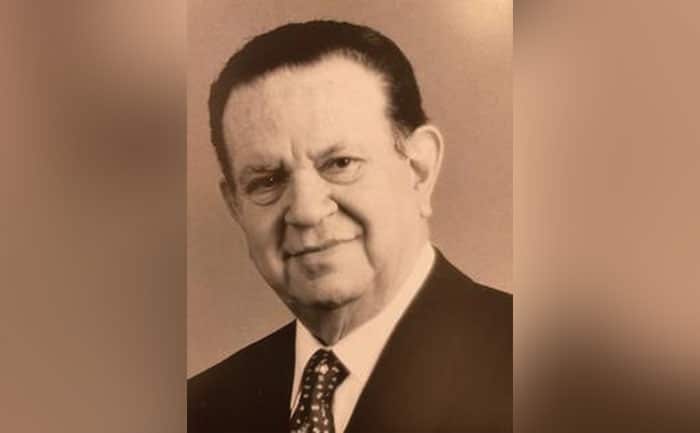
Lebanese Jew Reached Out to Arafat to Protect Synagogue

A little over twenty years ago, I met a rather amazing gentleman. My sister-in-law was recently engaged to a young Lebanese lawyer, and his parents were kind enough to invite me for the Sabbath dinner. Maître Selim Moghrabi (Maître is a commonly used honorific for lawyers in Québec), recited the Kiddush over the wine and then proceeded to tell me about his flight from Beirut during the Lebanese civil war in 1975. 

Maître Moghrabi, who passed away recently at the age of 94, was a prominent and well-connected lawyer in the city that was once called “the Paris of the Middle East”. He was active in the Lebanese-Jewish community and was respected by Muslims, Jews and Christians alike. He had many important members of the political class as clients and a multicultural staff. 

Selim Moghrabi was born in Beirut in 1927. He came from an observant family and his father, Ibrahim, was the only mohel in Lebanon. In fact, his father kept a detailed list, in a special book, of all the circumcisions that he performed. That tome is now in the possession of his son Moïse Moghrabi, and Lebanese Jews often contact Moïse to learn about their parents or to determine birth dates. 

As a young man, Selim graduated from the American University of Beirut and started work as a secretary. He was ambitious, and the job did not offer him enough challenges or compensation. After only a few months, he submitted his resignation and enrolled in law school.  

He managed to pay for part of his tuition by selling his comprehensive notes to other students in the program. Selim graduated first in Lebanon from the Law program and became the first and only Jewish lawyer to practice in Beirut.  He articled as an attorney for a very prominent lawyer with extensive political connections and by association he got access and was welcomed into the upper political class of Lebanese society.

Selim Moghrabi had an unusual talent. He had the ability to make anyone feel important. 

Selim Moghrabi had an unusual talent. He had the ability to make anyone feel important. 

In the spring of 1975, the fragile balance of power between Christians and Muslims that had existed in Lebanon suddenly fell apart. Armed militias of various factions roamed the streets of Beirut. 

During the fighting, some of the Jewish families sought  refuge in the Beirut synagogue. Ongoing street fighting made it so the Jews could neither escape nor obtain enough food and water.

When news of the situation reached Maître Moghrabi, he made a phone call to a very unlikely ally, Yasser Arafat, the leader of the Palestine Liberation Organization. Mr. Arafat immediately dispatched his own militia to defend the synagogue and to deliver food to the besieged people. They were eventually brought to a safe place along with all of their religious articles. The relationship between Maître Moghrabi and Yasser Arafat was unclear; suffice to state that sometime in the past, Selim had met and impressed Yasser Arafat and he was eager to do a favor for his Jewish “friend”.

Maître Moghrabi knew that it was time to escape from Lebanon. Before the Moghrabi family could board a plane for their new home, they had to stealthily make their way through Lebanon, and board a ship for Cyprus. 

During this treacherous journey, the family had to cross various enclaves controlled by rival factions and was often stopped and even detained. The most unlikely of circumstances allowed them to continue to their final destination. 

Every summer, the family would rent a cottage in the small town of Bhamdoun to escape the heat of the city. When the war broke out, they collected what they could of their possessions, and moved to the cottage, where they hoped they would be safe from the fighting. 

The cottage was not winterized, the nights were very cold, but the countryside was beautiful and the area was generally peaceful. That is, until Syria entered the war. Selim’s son, Moïse, remembers waking up one morning and seeing hundreds of Syrian tanks that had taken up position on the ridge. That night, they started to fire shells at the towns and villages below, including Bhamdoun.  

After a year-and-a-half in Bhamdoun, Maître Moghrabi was able to secure the papers required for passage out of Lebanon. Other families would be joining the Moghrabis on their journey. A convoy of cars wound their way down the mountainous roads, but roadblocks and other obstacles made the trip into a harrowing journey. Selim had secured from his political connections authorization passes for every different militia territory they would have to cross along the way.

At one point, the families crossed into a territory for which they had no pass and upon finding out that Selim was an acquaintance of Arafat, the militia had him arrested and brought to a holding cell. It looked like the end of the line for the frightened group, as they anxiously awaited the arrival of the leader who would decide their fate. Luckily, upon his arrival, the leader recognized Maître Moghrabi as someone who had helped him in his previous life and embraced him. Instead of detaining the prisoners, he had his men prepare a lavish lunch for them and sent them on their way.

At nightfall, they finally arrived in Tyre and boarded a freighter that would take them to Cypress. 

Maître Moghrabi and his family endured a long and difficult journey out the Lebanese war zone. But the struggles were not over when they finally reached Montréal. At 49 years old, he had to return to university. Quebec did not recognize his degree and he had to reattend law school and pass the bar to be able to practice. In 1987, his son Moïse became a lawyer and in 1988, they opened their own law office. His law firm grew as he started to take on prestigious clients, many of them, like himself, refugees from Lebanon who were trying to make new lives by building successful businesses in Canada. 

Moïse took over the firm when Selim retired but Selim never lost the respect and admiration of those around him. I remember joining him for dinner in a well-known Lebanese restaurant. What impressed me the most was when a Maronite Bishop dressed in lavish robes came over to our table and embraced Maître Moghrabi. 

Selim Moghrabi took his last breath on Wednesday, July 28, 2021, at the age of ninety-four.  Maître Moghrabi defined the word “mensch” — a man who made lasting friendships and was always there for those who needed him.

He is survived by his beloved wife and lifelong partner, Vicky, his children Becky, Albert, Moïse, Mike and Shirley, and 13 grandchildren.


Paul Starr is a recently retired systems analyst who has lived his entire life in Montréal, Canada. On Sunday mornings he is “living the dream,” hosting a two-hour Internet radio show featuring music from the 50s and 60s called “Judy’s Diner.”

Lebanese Jew Reached Out to Arafat to Protect Synagogue Read More »

How Green Can Judaism Get?

In preparation for the COP26 international climate conference that was hosted in Glasgow, the world’s leading Christian figureheads, Pope Francis of the Roman Catholic Church, Canterbury Archbishop Justin Welby of the Anglican Church, and Orthodox Ecumenical Patriarch of Constantinople Bartholomew I, released a joint statement urging members of their churches to “listen to the cry of the Earth” and pray that world leaders make brave choices. This was the first time these high-caliber religious figures felt the need to address climate change and advocate the urgency for environmental sustainability.

In a similar move from Jewish leaders, dozens of senior rabbis from religious Zionism sent a public letter to Israeli Prime Minister Naftali Bennett, calling on him to faithfully represent the State of Israel at the conference and work vigorously to engage the country’s full capacity in tackling the climate crisis. Despite recognizing Israel’s smaller size and contribution relative to larger developed countries, their newfound vocalized support highlights the high degree of significance Israel’s partnership can provide.

Due to the fact that the fight against the climate crisis is often times mistakenly perceived as being associated with the secular-left side of the political spectrum, these moves may come as a surprise to some of us. However, these letters and official statements mark a new wave of mobilized support and more transparently indicate an environmental awakening among religious communities both in Israel and abroad.

Sustainable Conduct

“I grew up in a classic religious-Zionist home, and when I joined Green Course at Ben-Gurion University, I was the only religious person there,” says Einat Kramer, founder and director of Teva Ivri (Jewish Nature). “I did not understand why this social gap existed, and I took on the task of connecting the two worlds together.”

According to her, Teva Ivri has been bridging this gap and mending the disconnect between Judaism and the environment for nearly fifteen years. Its purpose is twofold: to make the climate issues and environmental science accessible to the religious public and enable the general Israeli public to see the environment through the perspective of rooted Jewish culture and heritage.

“Sustainability in Israel should not necessarily look the same as it does in Sweden,” she argues.

Because the Zionist movement embraces and values the land of Israel as the Jewish state, Kramer illustrates that parts of religious Zionism are taking more active stances with regard to ecological issues and that it has led to changes in both personal and community-wide conduct in recent years. This is referred to as Green Zionism, which prioritizes Israel’s environmental well-being because unchecked pollution jeopardizes the only scared homeland the Jewish people have.

“In the ‘Ashira’ congregation in Mazkeret Batya where I pray, a group of parents of Bar Mitzvah children gifted the synagogue reusable tableware for Kiddushim (religious blessings),” she says. “Since then, we do not use disposable utensils during Kiddushim, and the community’s youth come on Saturday nights to wash the dishes.

Beyond that, Kramer alludes to a similar trend occurring in dozens of other communities throughout Israel. She even says that rising numbers of synagogue representatives are beginning to adapt their religious practices and raise questions about how best to uphold sustainable conduct.

“Today there are also many more religious vegans and vegetarians than there were in the past, and I receive a lot of requests through the association to deliver lectures on food ethics in Judaism and Rabbi Kook’s, Vision of Vegetarianism and Peace, a book that seeks to integrate environmental ethics and traditional religious practices. And this all indicates a growing preoccupation with the issue.”

However, in light of increasing awareness and conscious support for sustainable solutions in national-religious communities, Kramer acknowledges the reverse movement—a scrutiny.

“Some people treat sustainability as an entirely different religion, as if veganism replaces the laws of Kashrut. Some of these people even link nature conservation to neopaganism,” she explains. “For example, Bnei Akiva recently issued a tender for the position of sustainability coordinator, and some of the reactions to it on Facebook were very extreme.”

Adapt the Language

While the disconnect between religious Zionists and the left-secular public gradually shrinks, there is another problem that still persists: the larger gap that exists between the ultra-Orthodox community and the accepted perception of environmentalists.

“One of the problems is that the ultra-Orthodox automatically perceive sustainable action as a fight belonging to another community,” says education and environmental activist Rabbi Benayahu Tvila. “For example, people say to themselves that those who are in favor of preserving the environment are also in favor of LGBT rights, so those who oppose LGBT marriage are also opposed to environmental issues.”

In his view, the way to solve the difficulty concerns developing awareness of the issue in a language appropriate to the community.

“The language in which we deal with the environmental issue today is science-based, and there is no need to replace it because it is good. But it needs to be expanded, and religious-thought and tradition-related arguments need to be added to existing arguments,” he explains. “For example, the scientific argument that eating beef enables and perpetuates a harsh cycle of negative environmental impacts can be filtered through a religious perspective; one that acknowledges that it has always been customary to eat beef on the holidays, including Shabbat, but not during the week as is so frequently done today.”

A Discourse of Mindfulness

 In order to preserve and increase awareness of environmental issues within the religious communities beyond the current momentum its presently experiencing, efforts have recently been made to integrate more religious and ultra-Orthodox rabbis and community leaders into environmental discourse.

“Throughout the years we have worked with rabbis who engage in sustainability on their own initiative, such as Rabbi Ronen Lowitz or Rabbi Michael Melchior. But now, we have begun to actively approach rabbis to mobilize them due to the urgency of the climate crisis and the rise of climate discourse,” says Kramer.

“We approached the rabbis, invited them to a seminar regarding the latest IPCC report concerning the status of the climate crisis, and created an open discussion about the things they can do as intellectuals leading a moral-spiritual voice,” she continues. “The first executive step we agreed on is writing the letter to the prime minister as a moral appeal in preparation for the climate conference.”

“The exposure of ultra-Orthodox rabbis and educators to the latest scientific knowledge on the subject is required,” reinforces Rabbi Tvila who is also a member of the group. “Unlike rabbis from religious Zionism, who some are familiar with sustainability, talking to ultra-Orthodox rabbis about this takes more time. We want to present a relevant, eco-religious discourse that will clarify in the correct language how serious the climate crisis is.”

“The religious public can and should lend a leading voice to the environmental crisis,” Kramer concludes. “The idea of ‘tikkun olam’ is to make the world a better place, and if we believe we were created to do what is right and what is good, then we are obligated to do so.”

ZAVIT – Science and the Environment News Agency


How Green Can Judaism Get? Read More »

Be a Mensch: Hire a Kid

A few summers ago, when my son Finn was eleven, he delivered a handwritten flyer for his new business—“Finn’s Bins”—to every house on our block. Several older retired folks (and a few busy younger neighbors) hired him to haul their trash bins out to the curb on Thursday night and then roll them back up the driveway on Friday. Most of Finn’s customers signed up for the flyer’s “special deal”: four weeks of bin service for $15 (you saved a buck by booking the whole month). But one couple, Gary and Shari, booked the entire rest of the year. Finn couldn’t believe his luck. Then, at the end of that year, they booked another. Then another. Before he knew it, Finn was rolling in dough, thanks to rolling in bins for Gary and Shari.

Finn now refers to Gary and Shari as his long-standing clients. But they aren’t the only ones. Over the years, Finn and his older sister Reese have been employed by least a half-dozen of our neighbors. From babysitting toddlers, walking dogs and feeding chickens to pulling weeds, waxing cars and bringing in mail, my kids have gained valuable skill sets that might not make it onto their college applications, but have made them into the kind of people you’d want to spend an afternoon with—or at the very least, hire to water your hydrangeas.

From babysitting toddlers, walking dogs and feeding chickens to pulling weeds, waxing cars and bringing in mail, my kids have gained valuable skill sets that might not make it onto their college applications, but have made them into the kind of people you’d want to spend an afternoon with.

But it’s not just about acquiring a work ethic or the quick thinking needed to convince a wayward bunny to jump back into his hutch. The real gift my kids have been given by toiling in the neighborhood is best conveyed by something I’ve come to refer to as the White Envelope Effect. Every month, even during COVID, Gary and Shari would walk the eleven houses down our street holding hands sweetly and deliver Finn’s monthly salary to our mailbox: one crisp ten-dollar bill and one five-dollar bill enclosed in a small white envelope. On the front of the envelope each month, in Shari’s careful handwriting, there’s always a message for Finn.

Finn,
For September. Sure, it went fast! Good luck in school. Thanks for being consistent.

 Finn,
For October! Doing a good job. Happy Halloween! Thanks again.

And in May 2021, when Finn “graduated” from middle school while sitting in his bedroom on Zoom, there was still this bright light, along with an extra ten-dollar bill in the envelope:

Finn,
Thanks for May. A little extra for your next step in your educational walk.

What our neighbors have really given Finn and Reese by literally investing in them is the gift of community. Along with the chance to earn a few bucks of their own, these mensches have woven in with their tens and fives so much good intention, support and love. When Skip asks Finn to help wax his classic car, Finn is keenly aware he’s part of a privileged group deemed special enough to touch such a prize. When Heidi has him assist her with something in her garden, he has a chance to witness the magic of a green thumb up close and personal. And when he weeds eighty-year-old Sharon’s garden, he doesn’t just come home with a sore back, but also a treasure trove of stories from our street’s oldest resident.

What our neighbors have really given Finn and Reese by literally investing in them is the gift of community.

Over the years these relationships have become so much more than transactional. They have turned our block into sacred ground, a true village raising good humans, together. 

Gary and Shari can certainly roll out their own trash bins. Skip didn’t need to put a tub of carnauba into a ten-year old’s hands. Sharon has a gardener. But they—along with so many others in our community—made the decision to hire a kid, our kid. To get involved. To take the time to bother. And as these kids of ours get closer to leaving this community for college and the big wide world, I am more grateful than ever that their first steps were met with so much grace. I know it’s too much to wish for a world of white envelopes for these two precious people we’ve raised—my community and I—but just knowing that wherever they go and whatever they do, they take with them such love and care, is somehow enough.

It can seem impossible at times, imagining how small acts of goodness can possibly make a big difference in a world gone wild. But it does, and it has. Tikkun Olam can certainly be a charitable gift of millions, a social justice movement or buying an electric car. It can also be choosing to be a mensch when you can, making room at the table, smiling at a stranger, investing in the ten-year-old kid down the block who now knows what it’s like to be knitted tightly to a place, to be seen, to be counted on.
If that’s not repairing the world, I don’t know what is.


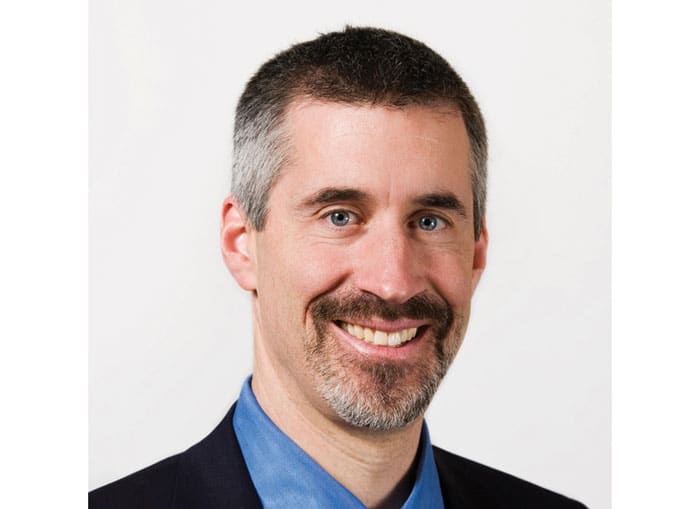
Geralyn Broder Murray is a Northern California-based writer whose work has appeared in Newsweek, USA Today and Shondaland. www.GeralynBMurray.com @GeralynBMurray

Be a Mensch: Hire a Kid Read More »

Rabbis of LA: Rabbi Richard Camras Is In It for the Long Haul

For 22 years, Rabbi Richard Camras has served as the rabbi of Shomrei Torah Synagogue in West Hills. Throughout that time, he’s experienced simchas with his community, mourned with his congregants when a death occurred and saw them through the latest crisis, the pandemic. And it’s all been worth it.

“To officiate at the b’nai mitzvahs of kids and then officiate their weddings and the simchot of their children is truly a gift,” he said. “At the same time, you form these deep relationships and have to officiate at funerals for people you’ve known for many years, so there is a great deal of sadness as well. But it’s been a blessing because people in this community are good human beings who have treated me with kavod, honor and respect. It’s been very easy to be their rabbi.”  

Camras, a Los Angeles native, was always involved in Jewish life when he was growing up in Westwood, steps away from Sinai Temple. He would volunteer there after school and was involved in the youth programming, so it was his home away from home. His parents, who served on the board and committees, inspired him to get involved.

“They acted as great role models for me and my three siblings,” he said. 

Though Camras enjoyed participating in synagogue, going to United Synagogue Youth meetings and attending and working at Camp Ramah, he didn’t think he was going to become a rabbi.

“I wanted to open up a restaurant, and I was working on doing that after I’d spent a year-and-a-half traveling in Asia after college,” he said. Then, Camras heard a lecture from Rabbi Yitz Greenberg.

“I wanted to open up a restaurant, and I was working on doing that after I’d spent a year-and-a-half traveling in Asia after college,” he said. “I was in negotiations with a kosher restaurant where the owner was looking to get out.” 

However, that fell through. Then, Camras heard a lecture from Rabbi Yitz Greenberg, and it got him thinking differently about his future. He subsequently had lunch with friends from the University of Judaism (now American Jewish University), and was convinced that he should look into becoming ordained. In 1992, he officially became a rabbi through The Jewish Theological Seminary and married wife, Carolyn. 

After serving as a rabbi in Baltimore for seven years, he returned to L.A. and assumed his current role at Shomrei Torah, which is made up of 430 families. He also founded the Conejo/West Valley branch of the Florence Melton School of Adult Jewish Learning and lectures on Practical Rabbinics for the Ziegler School of Rabbinic Studies at AJU. 

“My passion has always been in education,” said Camras. “I teach classes in history, Torah and Jewish ethics. What makes Melton so successful is that I am one of many teachers for the school, which is a collaboration of rabbis in the community.”  

Along with educating people, Camras said he feels very strongly about ensuring that young people remain connected to Zionism and the state of Israel. “I am constantly reaching out to high school students and college-aged students,” he said. “I want them to have a meaningfully enriched and nuanced dialogue about Israel and the role of Zionism in their life today.”
Though Shomrei Torah has been thriving throughout the pandemic – Camras said that they were already livestreaming services and events before COVID hit – there have been challenges because of the changing nature of the Jewish world.

“Young people don’t see the synagogue in the same way that their parents and grandparents did. It requires synagogues to be nimble, which they aren’t, and innovative, which they generally aren’t. They are usually understaffed and underfunded, and to innovate and experiment is challenging.”

One thing that he’s done is make sure to meet families’ needs by being flexible on membership dues and supporting them when they seek out help. 

“During COVID, there were a lot of people who lost work and struggled severely,” he said. “Through The Jewish Federation and generous donations from members, we helped people who were in severe financial need.”

Through all of his work, Camras hopes to show people that God is in every place, and it just takes some intentionality and awareness to recognize the presence of God every moment in our lives – just like Jacob did in Chapter 28, verse 16 of the Torah portion Vayeitzei: “And Jacob awakened from his sleep, and he said, “Indeed, the Lord is in this place, and I did not know [it].”

“The ultimate goal I try to accomplish is to help congregants live that verse,” he said. “[I want them to] experience godliness in the lives of the people around them and to use Torah to deepen their relationships with one another, with God and with the world.”

Fast Takes With Richard Camras

Jewish Journal: What do you do when you have a day off?

Richard Camras: I love to read and ride my bike, either in the mountains or on the road, oftentimes in West Hills or out in Malibu or Simi Valley. I can ride anywhere from an hour to four hours depending on the day.

JJ: What’s your favorite Jewish food?

RC: Anything my wife makes.

JJ: What TV show are you binging right now?

RC: My wife and I are watching “30 Rock” and laughing hysterically.

JJ: What’s your favorite spot to go to in L.A.?

RC: We live in a beautiful area in West Hills and there is this gorgeous area called Castle Peak. 

JJ: How do you keep your congregation happy? 

RC: By being authentic and a good listener. 

Rabbis of LA: Rabbi Richard Camras Is In It for the Long Haul Read More »

About That Time I Broke Into the Macy’s Thanksgiving Day Parade

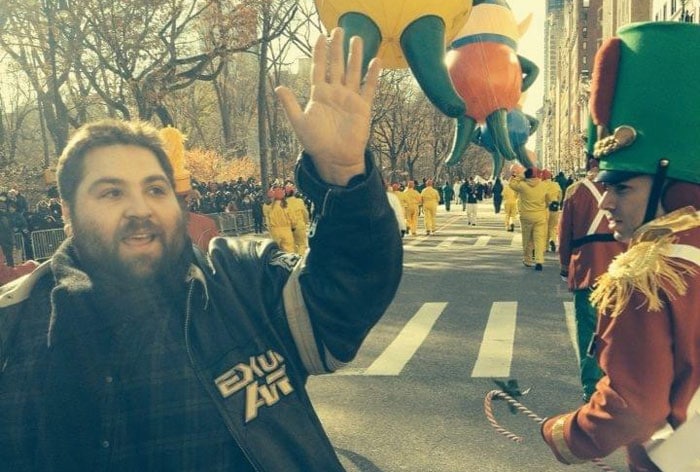
My wife Kylie and I are walking in front of Santa Claus and his reindeer, waving to the crowd and to everyone in America via the news cameras surrounding us. We’re laughing to ourselves that we’re two Jews in Santa’s entourage. We didn’t intend for this to happen when we broke into the Macy’s Thanksgiving Day Parade, but here we were.

That morning, Thursday, November 28, 2013, Kylie and I woke up later than usual to go to the parade. It was my ritual ever since I was a kid to get up early, grab some hot cocoas and head into the city to see the balloons. But this time, the alarm didn’t go off. By the time we got into Manhattan, the subway wasn’t stopping near the parade. There was no other transportation available. It seemed impossible to get to it. We were going to miss the parade. 

I couldn’t let that happen. In my 31 years, I had only missed two parades – one when I was in Israel, and one when I was just born. I was determined to get us in so we could at least catch the end of the celebrations.

When we finally got out of the subway on the Upper West Side, we saw that the police had barricaded off a block alongside the parade and were only letting residents through. One swanky-looking older couple said they lived on that block. 

“We live on this block too!” I yelled, as Kylie and I strode past the police. I figured if I were a rich person living on Central Park West, I would have a sense of entitlement to blow past the officer to get to my house. 

Once I saw where we were – the end of the parade – it hit me. We could either cross the street or take a quick turn when no one was looking, and enter the parade. We chose the latter. 

Kylie and I marched in front of Santa and made it onto all the big news channels. I imagined the anchor saying something like, “And here comes Santa Claus being led by… um… some couple I guess?”

After 20 blocks of marching, we were getting pretty tired, so we decided to start taking pictures to document this moment before it was too late. But then, one of Santa’s toy soldiers saw what we were doing and stomped towards us. “Hey, you’re not supposed to be in the parade!” he exclaimed. 

I improvised: “What are you talking about? Yes we are! Keep marching. You’re slowing down the parade.”

The toy soldier said “sorry,” went back into line, thought about it for a minute and then returned. 

“Then where are your badges?” he asked.

“Uhhh… in our hotel?” I said.

“Officer!” he yelled, waving to a police officer. “These people are not authorized to be here!” 

The officer chewed us out. 

“What the hell are you doing here? Why are you in the damn parade?”

“Uhhh,” I said, “I think a clown pulled us in.”

Whenever you’re in doubt, always blame a clown.

(Whenever you’re in doubt, always blame a clown).

I don’t know where this came from, but as the cop was pulling us out of the parade, I said to her: “Officer, we’ll leave on one condition. You take a picture of us so we can prove we were in the parade.”

Somehow, it actually worked. I guess the spirit of the holiday moved her, and she took the picture. Then, she let us go.

That’s the great thing about Thanksgiving. It’s a real unifying force in an increasingly divided country. No matter what your background, class, race or religion, it’s likely that you and your family are going to sit around a turkey and thank God for this great country we all enjoy together once a year. 

We’re not a perfect country, and we’ve got a long way to go. But as long as we’re still the kind of place where a guy can break into his favorite parade, march 20 blocks and publish a comic book about the experience, then it’s still somewhere that I say is worth living in.
Happy Thanksgiving, everyone. Have a piece of kosher turkey for me and check out the Thanksgiving issue of my autobiographical comic book series, Fair Enough, available for purchase on FairEnoughComic.com.


Daniel Lobell is a comedian and podcaster living in Los Angeles. He is the author of the Fair Enough comic book series and hosts the Doctorpedia podcast.

About That Time I Broke Into the Macy’s Thanksgiving Day Parade Read More »

Bibi’s Owner Dan Messinger Reflects on 10 Years in the Business

It was Hanukkah of 2011 when Dan Messinger officially took over as the new owner of Bibi’s Bakery & Café on West Pico Blvd. He had never worked in the food business, but it was always his dream to one day have a restaurant. Fresh off a career in marketing and television production, he started baking bagels, preparing pitas and serving sufganiyot at the Israeli-style café. 

“It was literally like jumping into a fire,” he said. “It was one of the busiest times of the year. When I look back and think about whether or not it was foolish to do that, I think it’s better to jump in when it’s crazy and just go from there.”

Wanting a career change 10 years ago, Messinger began looking into businesses for sale around Los Angeles. When he saw that a kosher restaurant in Pico-Robertson, his neighborhood, was available, it seemed like it was fate.

“People talk about the food business being exceptionally hard – especially the kosher food business. It’s true, but it’s definitely rewarding.”
— Dan Messinger

“I thought Bibi’s would benefit from some fresh energy,” he said. “I wanted to give it a shot. I truly had no idea what I was getting myself into, as anyone who starts a new business would. People talk about the food business being exceptionally hard – especially the kosher food business. It’s true, but it’s definitely rewarding.”

Messinger is the third owner of Bibi’s; the first owner opened it in 2001, and gave it his last name, Bibi. When Messinger took over, he didn’t want to change the name, theme or style of the place since it already had a solid reputation in the neighborhood. However, what he did want to do was expand the menu. 

“I wanted to make it a place that had more options for people to come for breakfast, lunch or dinner,” he said. “I brought with me experience in marketing and production. The biggest project I felt I had was building the brand of Bibi’s with consistent marketing and branding. Over the course of this decade, we’ve been pretty successful in establishing Bibi’s as a go-to name in the community.”

Messinger works what he calls “the grind.” Sunday through Thursday he starts his day at 6:30 a.m., answering emails, getting back to his customers and picking up supplies from the grocery. He opens the store at 8 a.m., running back and forth all day until 7 p.m. doing deliveries and going to his Bibi’s offshoot, The Kosher Cookie Company. Along with attending to customers, he’s also taking catering orders for simchas, shivas and schools and managing his employees. The only time of year he takes off is for Pesach. 

“Pesach is sacred in our house,” he said. “That is the one week where I cannot be consumed with the store.” 

While Messinger acknowledged that peak pandemic times were difficult because business was slower, now he’s facing inflation, general COVID fatigue and labor shortages.  

“I want to be able to serve our customers in a certain way,” he said. “In the absence of having a full staff, more things fall on me. It is a challenge.”

However, despite these issues and his rigorous daily schedule, Messinger stays positive about his work. He reflected fondly upon the time when people came into the restaurant to do a sheva brachot and dance around the store, which he said, “is sort of exceptionally Jewish.” 

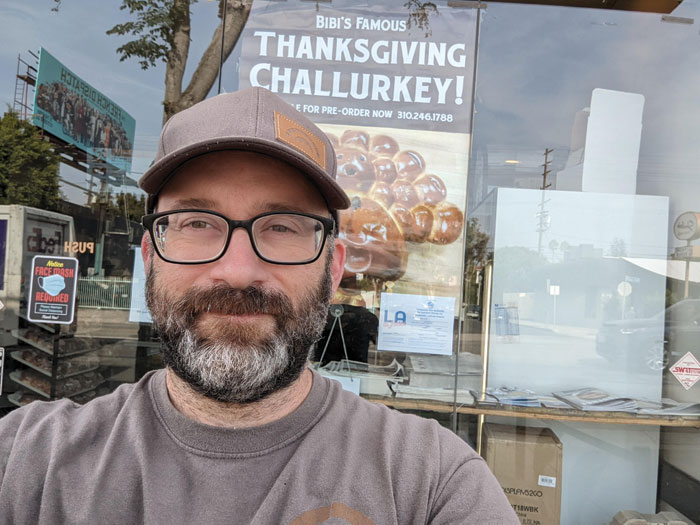
Dan Messinger in 2011

Another day that stood out was when a couple of Chasidim came in, “jumped behind the counter and showed me how they liked to make their babka,” he said. “This wouldn’t have happened anywhere else.”

In December, Messinger is running specials and doing giveaways to show his appreciation to the community and strengthen his relationships with customers. For the Bibi’s owner, that’s truly what it’s all about. 

“I know many, if not most, of my regular customers by name,” he said. “I know when they’re celebrating a simcha or when they have a death in the family or they go on vacation. Seeing them and having conversations really offsets the challenges.”

He continued, “As frustrating as it is to hustle, it’s nice to know that you’re part of the local community. That’s the dream of a local business.”

Bibi’s Owner Dan Messinger Reflects on 10 Years in the Business Read More »

Rittenhouse Verdict Exposes Our National Divide

You may think of Kyle Rittenhouse as a villain, or as a hero. You might regard him as a courageous citizen looking to protect a besieged community or a racist vigilante out to wreak havoc. I see a frightened and confused teenager who got himself involved in something much bigger and more dangerous than he could have possibly understood, with fatal and tragic consequences. 

It’s been noted frequently that Rittenhouse was not found innocent. Rather, a verdict of not guilty simply means that his acts of violence did not surpass the very precise legal standard of self-defense that protects many of those who use deadly force when they believe they are facing the threat of death or great bodily harm. The jury made a legal decision, not a moral one.

It’s unlikely that anyone on either side of this debate is going to change their initial opinion of the verdict. But this trial is yet another reminder of how polarized and deeply divided a nation we have become. A mark of how wide that philosophical chasm has grown is that there are no serious conversations taking place about whether a tragedy like this one can provide the opportunity for learning and growing and healing, for recognizing that there are still common bonds of humanity that link us together despite our partisan and ideological differences. The reason those conversations aren’t taking place is because most of us know how futile they would be. That is, if the thought even occurred to us at all.

Imagine even the slightest of possibilities that someone who disagrees with you on the verdict is neither stupid or evil.

But imagine even the slightest of possibilities that someone who disagrees with you on the verdict is neither stupid or evil. Maybe it’s worth entertaining the idea, if only for a moment, that while there are angry and vile haters on the far extremes of the other side, that most of the people over there are good and decent people who want to live in safe and trusting communities much as you and I do. And they despise senseless violence just as much as us, but have simply come to a different conclusion about the intricacies of Wisconsin statutes on gun possession and self-defense.

Admittedly, we currently live in a much different and less forgiving world than that one. And it is difficult to envision how long and complicated a path we would have to navigate to arrive at a point where those conversations would not be pointless, let alone productive. But once we’re done hurling invective and insults at those who disagree with us, it might be worth at least some time considering what we might be able to do to shrink that divide, maybe not to make it disappear completely but at least make it a bit easier to cross should we ever be of a mind to try.

The early reaction from the nation’s political leaders was not encouraging. The president issued a statement that was somewhat conciliatory but not especially emphatic. The vice president was resentful and barely made an effort to conceal her anger. Most members of Congress weighed in predictably, reinforcing the existing beliefs of their parties’ loyalists and building the walls even higher. And the former president stoked the fires with applause so fervent that it is a virtual certainty that the cultural war ignited by the case will continue to rage. 

Most of us know better than to look to Washington for serious efforts toward conciliation any more. So the question becomes whether the possibility exists for any meaningful efforts toward bridge-building to originate from outside the Beltway. Rather than waiting for Biden and Trump and Pelosi and McCarthy to begin that conversation, perhaps there are ways for us to attempt some outreach without them.

But that will require us to move beyond our ideological comfort zones and risk talking to people with whom we disagree. That runs directly in the face of human nature, which encourages us to seek out the safety provided by those who can reassure us how right we are. But maybe it’s worth the effort — before another teenager kills again.


Dan Schnur is a Professor at the University of California – Berkeley, USC and Pepperdine. Join Dan for his weekly webinar “Politics in the Time of Coronavirus” (www/lawac.org) on Tuesdays at 5 PM.

Rittenhouse Verdict Exposes Our National Divide Read More »