fbpx

November 9, 2021

My Verdict on Jury Duty

Just spent the last few days serving on a jury, and here are my takeaways – Since it’s over we are allowed to discuss openly…

-Due to COVID precautions, they don’t call you in to sit in a room all day waiting, you’re only called in if they are sending you DIRECTLY to jury selection on a case. So that’s a way better use of everyone’s time.

-I had been on one jury in the past, about 15 years ago where it turned into a minor 12 Angry Men case. I remember they asked me to be the foreman which I refused (felt strange in my mid 20’s being in charge of so many people older than I was) with the other 11 jurors each immediately doing a “straw poll” where they found him guilty. I was the ONLY holdout saying NOT guilty. I then spent 2 hours forcing them to actually go through the evidence, and by the time we were done we actually all found that defendant NOT guilty of the higher charge (intent to sell) though still guilty of the lesser charge (possession). This has bothered me for years knowing that had I not been there it would have been a 5 minute deliberation with an entirely different outcome.

-(Oh the difference another 12 jurors or different lawyers can make in the outcome of a trial, it’s quite terrifying that the truth is not what gets decided each time, but that particular presentation and perception of the truth, on that particular day.)

-This one was a domestic battery situation;, the man was on trial with no witnesses and the woman not pressing charges (as is often the case).

-Of note, the entire courtroom was made up of women. The judge, the clerk, the prosecutor and the public defender. Oh, and even the bailiff.

-The judge was great at explaining things throughout, and when we convened to start deliberation, the first thing they did was ask me to be foreman (“What IS it about me?” I asked” “You talk a lot!” they replied. lol)

-THANKFULLY this time recharged my faith in the judicial system. I replied, “I will be the foreman on 2 conditions:

  1. No matter what we all think right now, EVEN if it turns out we all unanimously think it should be guilty or not guilty, we still discuss the case and go through it, I assure you we will realize things as we bounce them off each other. EVERYONE AGREED.
  2. We don’t pressure anyone to decide faster or to agree with us. If the day is going to end and none of us want to come back the next day, too bad if anyone isn’t comfortable with where they are in the decision making process, and no guilt given. EVERYONE AGREED.

-And I’m truly proud of my fellow jurors this time. Some were pretty quiet, barely saying a single word. (Though we always made them ultimately answer agreement/dissent before moving on). I made a new friend there, and she wrote on the chalkboard keeping us organized. And we went through the evidence, even requesting the defendant’s testimony to read (which meant we were brought back into the courtroom where everyone reconvened, and the poor little court reporter had to spend half an hour reading us that entire portion of the trial, bad words and all). And by the end we ALL felt extremely comfortable finding the defendant NOT GUILTY on both the higher and lesser charges of battery. (It was a misdemeanor not a felony btw).

-One of the most valuable parts of the experience was when we left court both the defense attorney and the prosecutor asked if any of us would stay to discuss feedback on them and the case. I’ve been asked after a movie to discuss my thoughts, and this was something far more impactful! Half of us stayed and talked to them; the prosecutor asked me to stay one on one to discuss further, and I was brutally honest what was wrong with her case (the main cop didn’t testify – apparently he got COVID – the manager of the homeless housing where it happened didn’t testify – apparently she ignored her subpoena so they either jail her or let it fly – and the alleged victim didn’t testify – she just didn’t want to).

Then the prosecutor told me the funniest thing: she said she was strongly considering using her juror veto power to get rid of me, but then talked to her Jewish colleague who said “keep him, he’ll probably help you analyze things at every angle” and I totally did.

-The prosecutor told me she’s really grateful I was on the case, and honestly was expecting a not guilty verdict, but that we took far longer than most to deliberate. She said we took the amount of time that juries take for far longer trials with 4 times the evidence to go through, but when she saw yesterday end and continue today, she knew we were taking our duties seriously, and was really impressed. (Sadly, she said 15 minutes later they often have a verdict, which implies not much is discussed other than a straw poll verdict with likely peer pressure involved. Yikes.)

-When we finished, the alternate juror put her hand on my shoulder and said THANK GOD YOU GUYS VOTED THAT WAY I WAS SO NERVOUS AND YOU MADE THE RIGHT DECISION!

I’m really proud of how seriously we took our duties, and given that I get paid if it coincides with work anyway, I’m more than happy to get another experience in the future and be a part of the process. Even if at times it gets tedious, it’s always interesting and important.

NOTE: I didn’t get into any details of the case because I don’t know how interesting that would be, but if you have curiosities about it I don’t mind; it’s now public record and we were told as much.


Boaz Hepner grew up in LA in Pico/Robertson and now lives here with his wife and daughter. Thus, the neighborhood is very important to him. He helped clean up the area by adding the dozens of trash cans that can still be seen from Roxbury to La Cienega. When he is not working as a Registered Nurse in Santa Monica, he can be found with his family enjoying his passions: his multitude of friends, movies, poker and traveling.

My Verdict on Jury Duty Read More »

Jewish Groups Call on VA Tech to Take a Stronger Stand Against BDS Resolution

A letter signed by 79 Jewish groups called on Virginia Tech President Timothy D. Sands to take a stronger stance against the Boycott, Divestment and Sanctions (BDS) resolution recently passed by the Virginia Tech Graduate and Professional Student Senate (GPSS).

The resolution, passed during an October 21 meeting, called for a “boycott of all Israeli academic institutions complicit in maintaining the Israeli occupation and the denial of basic Palestinian rights” and to divest from “all institutional investments from companies that profit from the Israeli occupation and apartheid.” In response, Sands issued a statement on October 29 saying that the university “strongly supports the free speech rights of members in our community as well as organizations to express their opinions, regardless of whether those views are widely shared or controversial.” Sands also acknowledged that “there are legal boundaries that must not be crossed, and university policies with consequences for those who violate them. Everyone in our community should be free from harassment, discrimination, and physical threats to their safety.”

The letter, spearheaded by the AMCHA Initiative and signed by groups like the Simon Wiesenthal Center, StandWithUs and B’nai Birth International, noted that the university also has the freedom of speech to condemn the resolution. “More importantly, your statement failed to recognize the possibility that GPSS members, many of whom serve as Graduate Teaching Assistants, may implement elements of the academic boycott on campus and in their own classrooms, in ways that would directly and substantively harm undergraduates on your campus, particularly those who are Jewish and pro-Israel,” they added. “We urge you to take immediate steps to ensure that this does not happen at Virginia Tech.”

The letter also argued that boycotts of Israel undermine the rights of students on campus since they can result in the closure of “academic exchange programs in Israel” as well as the refusal of professors “to write letters of recommendation for their students who want to study in Israel; and disrupt or shut down educational activities about Israel or featuring Israeli scholars or leaders at their own schools. All of these actions directly subvert the educational opportunities and academic freedom of undergraduate students who want to study about or in Israel.” Additionally, “instructors who support an academic boycott of Israel are far more likely to include anti-Israel content in their courses” and that anti-Israel rhetoric tends to lead to an increase in antisemitic incidents on campus.

The letter concluded with a call for Sands to issue a statement repudiating “demands for the university to implement an academic boycott of Israel, specifically acknowledges the harms of an academic boycott for members of the Virginia Tech community, and affirms your commitment to ensuring that no student will be impeded from studying about or 3 in Israel, or will be subject to unfair discrimination or harassment, because of the implementation of such a boycott on your campus” as well as clearly telling Graduate Teaching Assistants that they cannot use their positions to advance their political agendas.

“A major contributor to the erosion of public trust has been the unbridled politicization of college and university classrooms by instructors complying with the guidelines of an academic boycott of Israel,” the letter stated. “Taking steps to prohibit such behavior will go a long way towards restoring public trust.”

The university did not respond to the Journal’s request for comment.

Jewish Groups Call on VA Tech to Take a Stronger Stand Against BDS Resolution Read More »

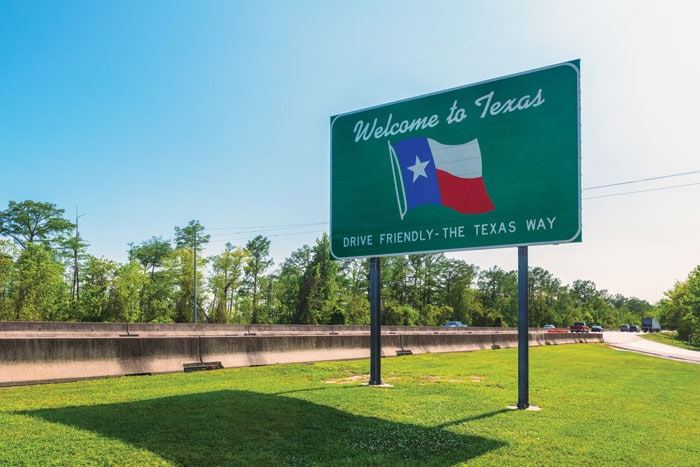
Don’t California My Texas

Dallas is the fastest-growing Jewish community in North America. According to the Jewish Federation of Greater Dallas, approximately 1,800 Jews have moved into the community every year for the past 20 years. First of all, that’s a nice Jewish number, and second, that averages out to five new community members every day. But, why? 

Why Dallas?  

In particular, why are so many Southern Californians pulling up stakes and moving there? 

Not that there’s anything wrong with moving to Dallas. My family did the very same thing 17 years ago when we were looking to upgrade from renting at the Broadcast Center Apartments to home ownership within the Fairfax/LaBrea eruv. We ended up buying within the North Dallas eruv instead. 

At the time, we were a dual-income couple in our early 30s with two kids under the age of two. We had great credit and a healthy budget with which to go house shopping. Or so we thought. On Gardner Street, midway down the block from Beverly Boulevard, we fell in like with a three-bedroom/two-bathroom cottage that offered an antique (read: badly, badly outdated) kitchen and a postage stamp-sized yard. The asking price, in 2004, was $1.3 million. Our realtor advised us to overbid. Hashem Yerachaym. We liked it, we didn’t love it!

My now former husband was born and bred in New York. I had grown up in the only Orthodox Jewish family in Lubbock, Texas. We both ended up in   LA for work and, at 34, we were both working as independent contractors. We loved Los Angeles, but we didn’t have to stay there. We could work from anywhere. So we made a list of everything we wanted in a community. Then we made a list of cities that might offer what we were looking for: a  large enough Jewish community to have infrastructure such as an Orthodox shul, a day school, a mikvah, kosher meat and cheese in the grocery store, and a kosher pizza shop—but a community small enough that we could be of service and make a difference.

I had always subscribed to the Mac Davis philosophy that “Happiness is Lubbock, Texas in my review mirror,” and I never planned to move back. But, to my surprise, upon completing our values clarification exercise, Dallas and Houston scored higher on our list than Seattle, Denver and Atlanta.

Remember that tiny $1.3 million house we liked in LA? In Dallas, we bought a four-bedroom/three-bathroom house on half an acre for the point three. Our house in the North Dallas eruv cost $390,000.

I could tell you what we found in Dallas 17 years ago that had us moving there within two months, but the city, surrounding suburbs and the Jewish community have grown so much since then that I’m going to give you current information. If you come to Dallas today, you’ll find:

  • Five neighborhoods within their own eruvim and many more Jewish neighborhoods without an eruv.
  • Kosher food is widely available in mainstream stores, including Costco. Two grocery stores even have kosher bakeries, sushi, and full delis on premises.
  • A Jewish Community Center so nice it’s known among JCCs of the world as “The Dallas Palace.”
  • More Jewish preschools than I found in LA and the valley combined.
  • Two Jewish day schools.
  • Two Jewish high schools.
  • A boys yeshiva that is a satellite of Chafetz Chaim.
  • Public high schools that rank in the top 10 nationally, according to USA Today.
  • Truly world-class theatre, symphony, ballet, and museums. All the Broadway tours stop in North Texas and besides the Perot Museum of Nature and Science, the Sixth Floor Museum at Dealey Plaza, the Dallas Museum of Art, the Crow Museum of Asian Art, the Dallas Holocaust and Human Rights Museum, there’s the Texas Cowboys Hall of Fame in the Fort Worth Stockyards National Historic District.
  • The Texas State Fair. Scarborough Faire Renaissance Festival. 
  • NO STATE TAX.
  • No. State. Tax. 
  • Public parks with lazy rivers, splash parks, dog parks, ball fields, and beautiful playground equipment, plus day camps and outdoor Shakespeare performances in the summer.

Why do so many Southern Californians relocate to North Texas? The real question is why don’t more of y’all come here?

Why do so many Southern Californians relocate to North Texas? The real question is why don’t more of y’all come here? With everything Dallas has to offer and Governor Greg Abbott heavily recruiting on Twitter, what’s keeping you in the Southland? Follow @GregAbbott_Texas, you’ll be amazed by how ardently he is chasing Californians.

Mindy McLees, a native New Yorker and long-time resident of Sherman Oaks, heeded the call. She requested a transfer to her company’s Dallas office because she and her husband, music producer David McLees, wanted an adventure. They wanted, Mindy says, “to see what life looked like from somewhere else.”

Within weeks, the McLees were in love with their new community. Mindy, who is Property Tax Director at Fandl LLC, says:

“We bought our home for less than 1/3 of what we sold our LA house. Then we customized it to our needs, which did cost a bit. It is close to the same square footage, but it is better suited to what we need for our lives now. We had a pool in California and we have one here, but we have 1/3 of an acre in Dallas where we had 1/4 of an acre in LA”

David’s career hasn’t missed a beat in his move from Hollywood to Dallas. He is grooving.

“No homeless encampments under every highway overpass. No state income tax, a lower cost of living, and a District Attorney who actually prosecutes criminals. What’s not to love about North Texas?”—David McLees

“No homeless encampments under every highway overpass,” he says. “No state income tax, a lower cost of living, and a District Attorney who actually prosecutes criminals. What’s not to love about North Texas?”

“I did not realize how much of my time was spent thinking about my ‘good parking karma,’” Mindy says. “Now, I never have to circle the Trader Joe’s parking lot like a vulture, following people to their cars.”

Influencer and activist Lizzy Savetsky,   host of the IGTV series “Bashert” and an accessories designer whohas appeared in the pages of W, Cosmopolitan, and People StyleWatch magazines, grew up in Fort Worth and sang in the Stockyards Opry. After attending NYU and then living on the Upper East Side of Manhattan while her husband Ira completed his plastic surgery residency, the glamorous couple could easily have been expected to settle near Ira’s brother in Los Angeles. Instead, they chose to establish themselves in Dallas.

“Nothing beats the big hearts of our neighbors. People love you without expectations down here. They just want to visit and bake for you and compliment your kids. It’s so refreshing!” —Lizzy Savetsky

“I love big hair and big earrings,” Lizzy says. “But nothing beats the big hearts of our neighbors. People love you without expectations down here. They just want to visit and bake for you and compliment your kids. It’s so refreshing!”

But Beverly Hills is the plastic surgery capital of the world. Was Dallas a good move for a young doctor? Lizzy says it proved to be more than a savvy career choice. Establishing his practice in Dallas, Dr. Savetsky has the warm Jewish community and the fun, active lifestyle he wants for his family, without compromising professional opportunities.

“Ira’s patients are so genuinely appreciative of his time and talents. They are so kind,” Lizzy says. “They are always sending cards and gifts. Nothing compares to Texas kindness.”

But rest assured, Angelenos! Not everyone finds Dallas to be their Xanadu. Sharon Ginchansky, who relocated from Woodland Hills four years ago, says, “I miss the Jewish Journal!!!” 

She also misses Pico-Robertson. “I miss our synagogue, Temple Aliyah. I also find it hard to not be able to assume most people are Jewish or understand Judaism. In LA, I took it for granted that people knew I was Jewish and got what that meant.”

Suzanne Goldstone Rosenhouse grew up in Huntington Beach. She has a good life in Dallas; she’s active in her shul’s Sisterhood and is happy with her children’s Jewish day school, but says: “I will never recover from leaving California. It’s been 20+ years and I’m still processing.”

Fair enough.

Lorrie Berman Galanter came from West LA 30 years ago and appreciates connecting with other fellow Californians in Dallas. Like me and many others, she misses some of what Los Angeles has to offer, but has discovered new pleasures that make up for her loss: “LA has great restaurants, but nothing competes with Dallas’ Asian food scene. I miss the bike path on the beach, but you can’t beat all the great, uncrowded walking and biking trails here.”

She has a point about food. Dallas has four times more restaurants per person than NYC. LA can’t boast that. And while I miss Jeff’s Gourmet Sausage Factory on Pico, there are several really good kosher restaurants in Big D.

Judy Winegard, a Jewish women’s performer and teacher, lived in Pico/Robertson and North Hollywood. She never thought she would leave LA But when she felt the California political climate was so bad it overshadowed the beautiful coastal climate, she began a five-year campaign of begging her husband to get out of California.

Politics have destroyed normal life in a beautiful state. I know that it will not get back to anything close to what it was in our lifetime. I thought I would miss the ocean, the mountains, but it is so clean and nice here. People are so open and friendly. The trees are magnificent and I feel like I can breathe again. All I can say is, if you feel unsafe and want a beautiful change of life, GET OUT of LA Unless you voted for all this insanity. Then you stay right where you are and sit in what you created.”

My son Jonah seems like he’d be a poster child for Los Angeles. He was born at Cedars-Sinai the same day as William H. Macy and Felicity Huffman’s daughter, Georgia. (That poor kid whose SAT drama became famous in the College Admissions scandal.) Felicity and I were both doing laps around the labor and deliver floor all day to hasten the hour of our children’s birth, and then we recognized each other in line a few days later when we went to register our kids’ names for their birth certificates. As if birthday twinning with a celebrity baby did not confer enough California credibility on Jonah, The Grove opened the day after he was born. Jonah spent the first two-and-a-half years of his life in Los Angeles, but he has been heard to say he got to Texas as soon as he could.

It’s rare that people who become enchanted by Dallas move away, but my children and I made aliyah and live in Yerushalayim now. Despite the Mac Davis philosophy by which I formerly lived, the kids and I have come to understand that the longer we are away from Texas, the more Texan we become. Jonah is a well-acclimated Israeli, but he is recognizable around Jerusalem for his Texas flag face mask and his Texas pride T-shirts. One of his favorites elicits chuckles from Israelis who point to the graphic of Texas kicking California and ask “Mah zeh?” To which he responds: “It says, ‘Don’t California my Texas.’” 

Even in Israel, the line gets an appreciative laugh because everyone knows just what that means.

Y’all know I love Dallas. And, obviously, I love Jerusalem. But, to be perfectly honest, I’m with Sharon Ginchansky: I miss the Jewish Journal. And Jeff’s dogs.


Judy Tashbook Safern is a literary and film publicist. Bred in the panhandle of the South Plains of West Texas, Judy lived in New York, Washington D.C., and Israel before moving to Los Angeles. She raised her children in Dallas and now their family lives in Jerusalem. You can reach Judy by email: jsafern@gmail.com.

Don’t California My Texas Read More »

On Liberty, Liberalism, and Freedom

Hanging out at kiddush after shul a friend stopped me and said that he really enjoyed my latest opinion essay published in Newsweek. Well, what he actually said was more like: “I’m glad you stuck it to those woke idiots trying to ruin America.”

While I had hoped that the tone of my recent opinion piece wouldn’t be taken as aggressive, it was certainly critical of people who claim to be “Woke.” His statement started a conversation between us about the dangers of Woke ideology to Jewish American life, and I mentioned that I had connected with an organization, “The Jewish Institute for Liberal Values,” that is fighting that exact battle. 

My friend, a conservative who voted for Trump, twice, responded swiftly.  

“The Liberals?! They are the ones trying to ruin America and cancel everyone who disagrees with them.”

We often take for granted that everyone understands the meaning of the word “liberal” and the values that it represents. However, we use a confusing lexicon that misleads people regarding the meaning of the word “liberal.”

The word “liberal” (lowercase l) is not the same as “Liberal” (uppercase L). As defined by the Merriam-Webster dictionary, a Liberal (capitalized) is “a member or supporter of a liberal political party.”

With a two-party political system in the United States, the word “Liberal” has become synonymous with the word “Democrat” since the Democratic party claims to be the liberal party. It is crucial to capitalize “Democrat” in this context, not confused with “democrat.” By definition, a democrat is an adherent of democracy, making all Americans who believe in democracy “democrats” even if they consider themselves Republicans. 

When we encounter these terms, this nuance is confusing since we often do not pay close attention to which letter is capitalized and how it changes its meaning. Listening presents a more significant challenge as there is no difference between the pronunciation of capital and lowercase letters. 

Liberalism (lowercase l, but here capitalized because it begins a sentence) is a philosophy that belongs neither to the left nor the right. Just as you can be a democrat and be Left or Right, Conservative or Liberal, Republican or Democrat, you can also be a liberal and hold any of these views. 

The reciprocal to this statement is that you can also be illiberal and hold any of these views. 

So what makes one a liberal? A liberal is “an advocate or adherent of liberalism especially in individual rights.” And liberalism is “a political philosophy based on belief in progress, the essential goodness of the human race, and the autonomy of the individual and standing for the protection of political and civil liberties.”

The term “liberal” comes to us originally from the Latin “liber,” meaning free—as does the term “liberty,” which is similar to the word “freedom.” 

Liberal values are derived from the ideals of liberty. Unfortunately, many people today have confused liberty with freedom. According to John Stuart Mill, one of the most influential thinkers in the history of classical liberalism, they are not the same. He sees freedom as the ability to do as one wants and what one has the power to do, while liberty is the absence of arbitrary restraints, taking into account the rights of all involved.

Here we find an important note for our modern discourse. Freedom is about doing what you want based on your power. Liberty is about not being restrained so long as you don’t infringe on someone else’s rights. 

Wokeness is about freedom: the freedom of one set of ideals to dominate thought and action. When freedom is your core value, the next logical step is to amass the power to do what you want and cancel the competition.

Liberalism is about liberty. The liberty to hold your set of ideas, as long as you respect the rights of others. When liberty is your core value, you must allow others their opinion as well. 

Liberalism is about liberty. The liberty to hold your set of ideas, as long as you respect the rights of others. When liberty is your core value, you must allow others their opinion as well. 

Liberty is more difficult to incorporate internally as a value because it contains in itself a contradiction. However, this contradiction does not disprove it; instead, history has shown that this contradiction is the source of its strength. 

This contradiction shows itself when your beliefs directly contradict someone else’s beliefs. You have to allow space for what you know is incorrect. You are permitted to engage with the opposing views, intellectual and empirically, but you cannot forcibly remove them.

However, a funny thing often happens during this process. None of us has the complete truth. Through this engagement, you will often find that your beliefs evolve. Sometimes your opinions will be strengthened; other times, they will be weakened. Sometimes you will teach, other times you will learn. 

More importantly, everyone moves closer to the truth. Occasionally this means someone completely changes their beliefs. But more often, both parties modify their ideas, and the process begins again. Everyone grows through the process. 

While the primary value of liberalism is liberty, from Mill’s model of liberty, we can derive other core values. Two of those values are individualism and universalism. 

Individualism states that everyone is different. And that person should not be constrained by characteristics that they share with a group. For example, the color of your skin should not limit your opportunities in life.

Universalism states that we all have the same rights and responsibilities. According to the Declaration of Independence, these include “Life, Liberty, and the pursuit of Happiness.”

We can see these ideals in Mill’s model of liberty. The absence of arbitrary restraints allows everyone to be their own person, unconstrained by the stereotypes of the groups to which they belong or characteristics they possess. And taking into account the rights of everyone who makes up a society means that we must all share fundamental rights and responsibilities. 

Finally, to allow a society to flourish in this manner, we need one more value: pluralism. Pluralism is the notion that people can have different ideas and still live together and consider each other brothers and sisters despite their core disagreements. 

These are the liberal values. Liberty encompasses them all. Liberty gives us both individualism and universalism, and finally, pluralism halts the conflicts that can tear apart a liberal society from the inside out. 

And like democracy, liberalism is a core American value. Best summed up in the well-known phrase “majority rules (democracy) minority rights (liberalism).”


David Ben Moshe is a writer, speaker and fitness coach. He writes about social justice, fitness and Israel

On Liberty, Liberalism, and Freedom Read More »

How to Bring People Back to Shuls? AMAZING FOOD

As we all lament the state of our synagogues, battered by COVID and vying to recapture our communal mojo, shul boards and their clergy are desperately trying to figure out how to win back IN PERSON the congregants that have left or stationed themselves on the Zoom sidelines. 

It’s no small challenge. Many congregants have lost their shul-going muscle memory. Their inclination and their muscles have atrophied. When that happens in an athletic context, it takes a lot of conviction and discipline, and maybe even the intervention of a physical therapist, to regain your former gait. You have to want it!

Megillahs have been written over the course of the pandemic that our well-being is fundamentally ill-served by a sustained Zoom existence to the exclusion of human interaction. Hugs and smiles and storytelling and spontaneous encounters are the fuel that revs our human engines. So let’s concede that point: being together is in our nature, and in our collective communal and individual interest. 

That said, is there one BIG IDEA that can encourage lots of Jews to flock back to shul and rediscover the elixir of community togetherness? If that idea exists, we know it has to be something with deep, affecting resonance and magnetic attraction that surrogates like Zoom are simply incapable of imparting.

In other words, it has to be food.

And not just food, but amazing food. Food so amazing that people will believe you when you invite them every Saturday morning to the Ultimate Kiddush.

As Jews, we know there is no greater stimulus than food. 

In these times of distress, synagogues have an opportunity to invest in a potentially game-changing, no-holds-barred Kiddush Culinary New Deal. As Jews, we know there is no greater stimulus than food. Is there anything more Jewish than scooping your friends and family on the latest greatest meal or dish you just savored? Imagine the viral power of congregants talking about their shul as excitedly as they talk about that great new restaurant. Why stay at home Saturday morning when you and your kids could be in shul enjoying the best fare in town — as well as the hugs of your friends and the kibbitzing and the singing you know in your heart you fondly recall and dearly miss. 

The return on investment on this Ultimate Kiddush is inestimable. What price, restored synagogues?  There is none. It’s priceless. The fate of our synagogues, and arguably our faithfulness and togetherness as a people, are in play. 

To succeed, this initiative must get funder support. It is strategic impact philanthropy.  Let’s start a nationwide Ultimate Kiddush Food Network, which would center around a fund that synagogues can tap to underwrite their own Kiddushes. Much as One Table, with wild success, underwrites young adults hosting Shabbat dinners so their peers can experience the most galvanizing community building practice we have in our tradition, so too Ultimate Kiddushes will be available to all synagogue comers, and hew to a serve-them-the-very-best standard. 

There is a galaxy of online food innovators, epitomized by Goldbelly, whose reason for being is furnishing Comfort through Food. It is a culinary aggregator, able to get you whatever food you crave from whomever makes it. All it requires is a credit card and a FedEx truck. 

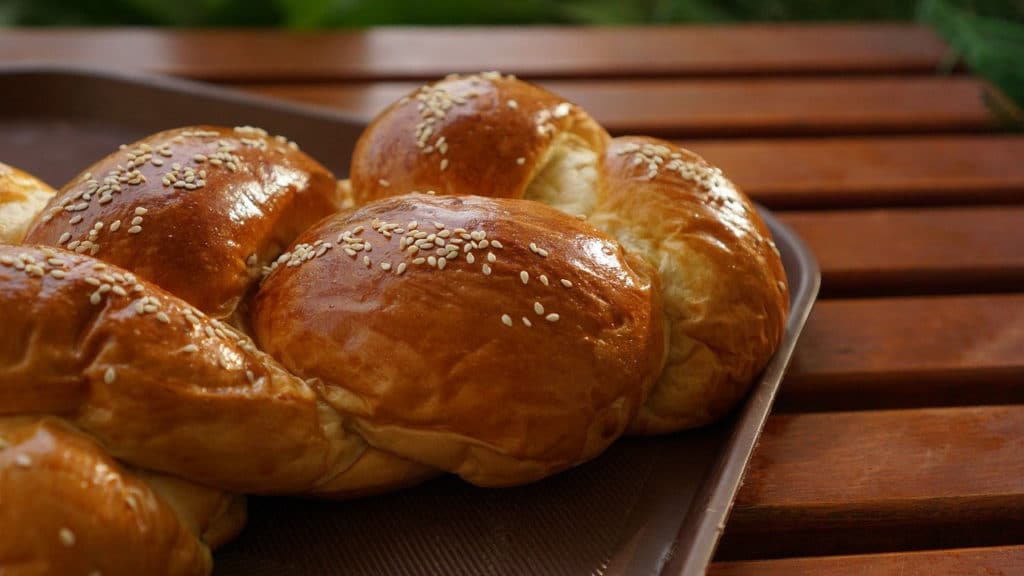
Boldness is the order of this initiative. We can’t cheap out as a community. There’s way too much at stake. This investment stands to be as low-risk as a T-Bill. Ask yourself the last time you munched on warm homemade challah or tender brisket or amazing Tunisian cholent  or swooned over perfect kugel. Every sense rallied: your memory was transported to your childhood, your taste buds celebrated and your mood transformed.

What’s more, if synagogues up their game with inspirational davening, people will get the full nourishment — great food and camaraderie as the ultimate treat after the holiness of the synagogue experience. 

Is this idea a panacea? Of course not. But it’s a trusty arrow in our quiver that we can marshal — a simple yet enticing way to help bring joy and congregants back to our synagogues. The fact that it’s such an obvious idea takes nothing away from its appeal. Just the opposite. The timeless attraction of great food offers us an opportunity to address an urgent communal crisis.

If we do it right, it’ll get people off their couches and back in shul, or at least back in shul for the Ultimate Kiddush.


Howard Zack affiliates at Congregation Kol Shofar in Tiburon, CA.

How to Bring People Back to Shuls? AMAZING FOOD Read More »

Pro-Palestinian Flags Seen At Climate Protests

Pro-Palestinian flags and signs were spotted at various protests for action against climate change on November 6.

The protests were held in response to the COP26Summit, which global leaders have been attending since October 31 in Glasgow, Scotland to discuss climate change. In London, various protesters held Palestinian flags while chanting “Free Palestine” and “From the River to the Sea, Palestine Will Be Free.”

Writer Emily Schrader tweeted out a video of various protesters holding Palestinian flags at the protest in Glasgow and wrote: “Once again, Palestinian protesters hijack a cause that has absolutely nothing to do with them and [make] it about themselves.”

One video showed a man confronting a handful of women at one of the protests on why they were holding Palestinian flags. One woman who was holding a megaphone replied that Israel is a “climate issue” because “imperialism is a climate issue” and accused Israel of “destroying the environment.” When the man countered that Israel is at the forefront of planting more trees, the women started talking over him; the woman with a megaphone started chanting “F— your Zionist narrative” and another claimed that the trees had nothing to do with the Israeli-Palestinian conflict.

Fiona Ben Chekroun, European Coordinator for the Palestinian Boycott, Divestment and Sanctions (BDS) National Committee, attended the Glasgow protest and told the Peoples Dispatch that Israel is engaging “greenwashing.” “They are using Palestinian natural resources, destroying Palestinian land, violating rights of indigenous Palestinian people, they are extracting gas and natural resources from Palestine, and all of this with the complicity of European governments and the European Union,” she alleged.

Various pro-Israel Twitter accounts responded to the pro-Palestinian protesters.

“Guess the quota of global CO2 emissions Israel is responsible for? 0.18%,” Scottish journalist and pro-Israel activist Eve Barlow tweeted. “I just looked it up. One thing has nothing to do with the other. These people are antisemites.”

[/speaker-mute] Writer and activist Yoni Michanie tweeted, “Other than tearing down dozens of greenhouses and celebrating the incendiary kites and balloons that have damaged farmlands and nature reserves, as well as burning tires for days on end, what have Palestinian leaders contributed to the fight against climate change?”

The New Zionist Congress tweeted, “Pay attention to how many doors are closing. We can’t be ‘Zionist’ and LGBT, we can’t be ‘Zionist’ and support DC Statehood, we can’t be ‘Zionist’ and combat climate change, we can’t be ‘Zionist’ and support racial justice. Jews must speak out against this familiar evil.”

StandWithUs Israel Executive Director Michael Dickson also tweeted, “The only thing these ‘activists’ want to rid the climate of, is Jews.”

Human rights lawyer Arsen Ostrovsky, who heads the International Legal Forum, tweeted, “And how much hot air produced by these antisemites? 100 per cent.”

Pro-Palestinian Flags Seen At Climate Protests Read More »

The Hidden Wonders of Your Lungs with Dr. Jonathan Reisman

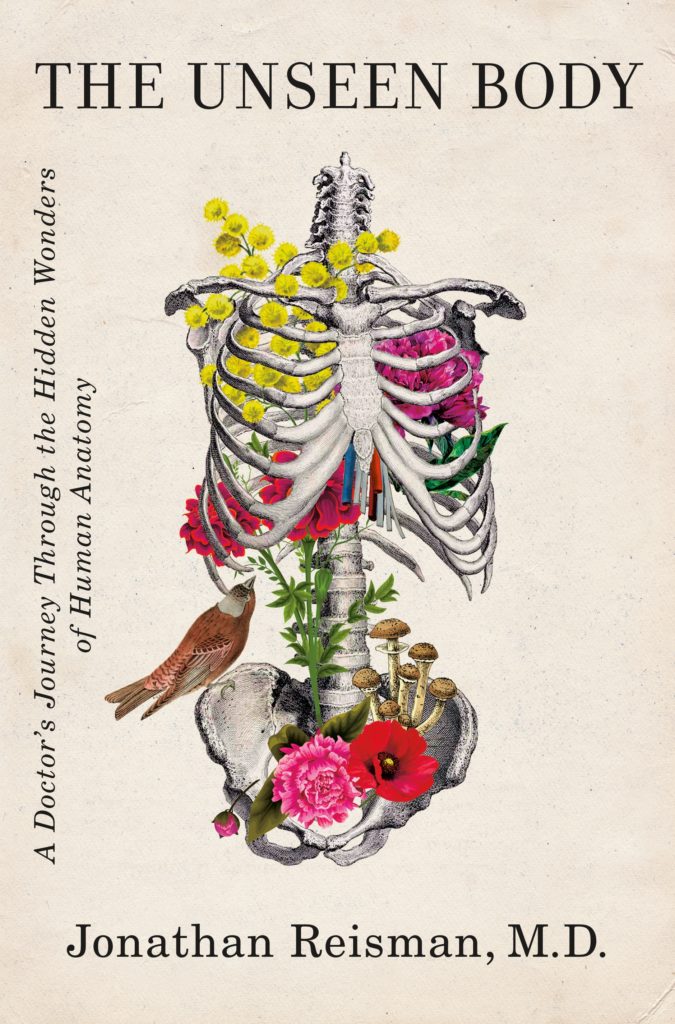
Congratulations to my friend, Jonathan Reisman, on his book, The Unseen Body, which publishes today, Nov 9, 2021!

We met in India during Allahabad Kumbh Mela when according to Wikipedia: “An estimated 120 million people visited Maha Kumbh Mela in 2013 in Allahabad over a two-month period including over 30 million on a single day, on 10 February 2013.”

I am honored to share this excerpt from his book, The Unseen Body, “Lungs,” with permission from his publisher, Flatiron Books:

Early on in anatomy lab, as I was first getting elbow deep in my cadaver’s abdominal fat and neck deep in the Latin names of body parts, I decided to visit a slaughterhouse. I wanted to learn more about how cuts of beef compare to human muscles. I found a kosher slaughterhouse in central New Jersey, deep in the state’s industrial heart, and I called up the owner. After expressing surprise at my request and asking a few questions to convince himself that I was not “some crazy vegan or something,” he agreed to let me visit on the next slaughtering day. And while I had muscles on the mind, the theme of my visit would turn out to be all about lungs. On a crisp autumn morning, I drove along the New Jersey Turnpike past oil refineries, gas stations, and tractor-trailers to the slaughterhouse. When I opened the heavy metal door to the building, I could hear the rattling of chains, the booming sounds of chain saws, and a chorus of cattle mooing. The scent of barnyard hung in the cold air as I walked through the front office toward the dreadful sounds coming from beyond. The slaughtering had already begun. I saw rabbis with long gray beards and thigh-high rubber boots standing around a large wooden table, examining mounds of shiny flesh. Workers, primarily Black and Hispanic, wielded huge motorized butchering saws and moved hanging quarter-cows along tracks in the ceiling. Each steer was led into the building from the outside lot through a narrow chute leading directly onto the slaughtering platform. Chains were then fastened to its back legs and used to slowly lift the animal off the ground. Just as the front hooves left the concrete floor, a long, final moo built in volume and echoed off the grimy industrial walls. With one swift slice of the rabbi’s knife to the animal’s neck, a slick of blood hit the floor with a loud splash, and the animal was dead before the echoes of that last moo had finally faded. I walked among the hanging slabs of beef and saw quarter-cadavers, recognizing the same orthopedics of muscle and bone that I had seen in anatomy lab. Underneath our skins, humans and cattle are both glistening red outlined in white, strung like puppets by the names of a dead language. The rabbi actually doing the slaughtering seemed less busy than the others—in between animals, he mostly stood around cleaning the blood off his long knife. His beard was neatly cropped, and his yarmulke held tightly to his short brown hair. I asked him about what the other rabbis were doing. He explained that Jewish traditional dietary law, or kashrut, provides a guide to the proper dissection of meat and diagnosis of its cleanliness. I knew the basic rules of kashrut: keep milk and meat separate, and avoid shellfish and pork. But there is another criterion that is less well known, he explained: severe pneumonia during an animal’s life can make an animal no longer kosher.
Dr. Jonathan Reisman, photo by Olaf Starorypinski
In healthy animals and humans, as the lungs expand and contract with each breath, they slide freely against the pleura, a layer of membrane surrounding the lungs and lining the inner side of the chest wall. But when the two surfaces are inflamed by a bad bout of pneumonia, they stick together like an unlubricated piston in its shaft. As the pneumonia heals, a scar forms at the spot where the lung got stuck—a band of white fibrous tissue attaching the two surfaces. The shochets—those trained in kashrut’s version of a USDA inspection—were carefully examining the animals’ lungs and looking for these telltale signs of pneumonia. Called adhesions, these scars were the footprint of past disease, and each was a potential degradation of kashrut. According to Ashkenazi Jewish tradition, the number and size of these adhesions determine the grade of kosher, with the highest level called glatt, meaning “smooth,” a description of the surface of an animal’s lungs that are free of the roughened scars. Most important, the shochets must determine whether there is a hole hidden within a scar that reaches straight through the lung. As a carcass hung freshly killed and cut open, a shochet slid the lungs out of the chest cavity. He walked back over to the examining table, his hand grasping the trachea as two fleshy lungs dangled below. He placed an air hose into the animal’s trachea and inflated the lungs with a rush of air. They doubled in size like two large loaves of bread rising abruptly. The shochet then cupped his hands around one of the scar tufts on the lung and filled his hands with water, being careful not to let any drain out. If there was a hole within the scar, air from inside the lungs would bubble up through the water, as when a mechanic investigates a flat tire for the puncture site. Such a hole from the outside into the body’s inside proves the animal is not intact and therefore its entire body is not kosher, with bubbles as the definitive diagnostic criteria. Kashrut’s concept of cleanliness and health seemed to rely on the sanctity of a barrier between the inside of the body and the outside world. Maintaining cleanliness means keeping the outside out, much as people in many cultures remove their shoes before entering a house or a place of worship. When animals or humans breathe in air and atmospheric schmutz, they enter our lungs and whoosh all the way down to the alveoli—but this is not truly inside the body. The air in the lungs is still continuous with the external atmosphere. The real threshold of the physical self is the lining of those deep alveoli, and a hole connecting the inside of the lungs to the pleura is a way for the dirt of the outside world to get in, truly inside, the body, and once that sacred barrier has been breached, innocence and purity are soiled. For the kosher postmortem inspection of an animal, the lungs have a unique primacy—they hold the singular key to the purity of every part of an animal’s body, even its rump roast. In the past, shochets examined eighteen different body parts to make a determination of kashrut, looking for defects of all kinds, but experience over centuries showed that the lungs offered by far the most bang for the buck [Shulchan Aruch]. A large enough proportion of all defects found were in the lungs, obviating the practicality of examining the other seventeen body parts, except in special circumstances. It made anatomical sense: as the organ standing guard at the body’s entrance and suffering the microbial blows of an outside world teeming with infection, the lungs serve as a proxy. The kosher version of dissection exalts the lungs above all other organs, and when they show signs of disease, the animal’s entire body is considered unfit for human consumption. Excerpted THE UNSEEN BODY: A Doctor’s Journey Through the Hidden Wonders of Human Anatomy by Jonathan Reisman. Copyright © 2021 by Jonathan Reisman. Reprinted with permission from Flatiron Books. All rights reserved.  

More about Jonathan Reisman and his organization:

I wrote about him in 2013 for Huffington Post.

The Bodies that Guard our Secrets” in The New York Times, Sunday Review section. April 26, 2014. Kosher meat and the diagnosis of cancer meet in this medical student’s trip to a slaughterhouse.

Buy your copy of The Unseen Body

The Hidden Wonders of Your Lungs with Dr. Jonathan Reisman Read More »