fbpx

July 26, 2021

Algerian Judoka Suspended from Olympics After Refusing to Fight Israeli

An Algerian judoka athlete has been suspended from the 2021 Olympic tournament in Tokyo after refusing to fight Israeli judoka Tohar Butbul.

The Times of Israel reported that Fethi Nourine, the Algerian judoka, declined to fight his opponent, Sudanese judoka Mohamed Abdalrasool, on July 26 because the winner of the match would have to fight Butbul. “The Palestinian cause is bigger than all of this,” he told Algerian television.

The International Judo Federation (IJF) suspended both Nourine and his coach, Amar Benikhlef, over the matter and both will be sent home. “The IJF has a strict non-discrimination policy, promoting solidarity as a key principle, reinforced by the values of judo,” the organization said in a statement. “Judo sport is based on a strong moral code, including respect and friendship, to foster solidarity and we will not tolerate any discrimination, as it goes against the core values and principles of our sport.”

The American Jewish Committee tweeted, “Thank you, @Judo, for sending a loud and clear message against hate.”


Abdalrasool failed to show up for the July 26 match with Butbol. No official reason was given, but Butbul told the Associated Press (AP) that his team was told that Abdalrasool had a shoulder injury. Butbul and his team were skeptical about Abdalrasool’s apparent injury.

Nevertheless, Butbul avoided the subject of politics and focused on the tournament itself in his comments to the AP. Butbul finished in seventh place after losing to Canadian judoka Arthur Margelidon.

“I came with a pure aim to win a medal, and it’s very hard for me to bear that I didn’t fulfill my own expectations,” he said. “That was the goal I put into the whole of my career. It’s still too early for me to understand what happened. I wasn’t precise in executing my plan, but in judo sometimes there is a gap between how you plan and what is in reality.”

Algerian Judoka Suspended from Olympics After Refusing to Fight Israeli Read More »

Ben and Jerry’s Dispute a Sign of Israel’s Growing Societal Challenge

Sometimes an ice cream cone is just an ice cream cone. But sometimes a debate that may seem to be just about dairy-based desserts can have much broader ramifications about a people’s future.

Initially, I didn’t want to write about the Ben & Jerry’s controversy sweeping through the U.S. and Israel, because I worried that discussing the life-and-death issues that frame the Israeli-Palestinian debate within the context of an ice cream boycott could trivialize such a critically important conversation.

But this isn’t an argument about desserts. It’s about terrorism and bigotry and the worst type of double standards that demonize the Jewish homeland and the people who live there. It’s the latest front in the ongoing battle that uses the threat of economic boycott and sanctions to pressure Israel into agreeing to shrink its landmass, empower its enemies and expose its citizens to an even greater threat of danger and death.
This overlap between Middle Eastern geopolitics and an American cultural touchstone demonstrates the scope of the challenge that Israel and its supporters are now facing with a U.S. audience whose support for the Jewish state has become increasingly tenuous. The legislative fights are becoming more frequent and more intense, as anti-Israel voices in Congress continue to grow. But this Ben & Jerry’s dispute is an unpleasant reminder that Israel’s challenges are spreading beyond the political arena to the broader and less manageable cultural space.

Almost every week, we hear apologies by athletes and entertainers who “didn’t understand” the hateful overtones of the jokes or the song lyrics they retweeted. Our children and grandchildren study on college campuses where progressive organizations march with pro-Palestinian zealots and then stand aside when Jewish students are demonized. Our allies in school districts and state legislatures work overtime to detoxify ethnic studies curricula that perpetuate antisemitic stereotypes, and our feminist friends battle to disentangle the national Women’s March movement from Louis Farrakhan’s apologists. Meanwhile, mainstream news media devote a comparatively small amount of attention to hate crimes committed against the Jewish community.

This culminates in a societal challenge on a scale that we have not faced in this country since the founding of the Jewish state. Isolated pockets of prejudice and discrimination are one thing, but this broader attitudinal shift is much more unnerving and has the potential to be much more damaging. Even our victories—passing an anti-BDS bill or defanging an ethnic studies proposal—seem like intermittent rear-guard actions that merely delay inevitable and unceasing movement in the opposite direction. Polls show that antipathy toward Israel is significantly greater among young Americans, which means this trend will continue to worsen unless it is addressed.

Isolated pockets of prejudice and discrimination are one thing, but this broader attitudinal shift is much more unnerving and has the potential to be much more damaging.

An effective repair effort will require extensive work both inside and outside the Jewish community. We must both rebuild our weakened relationships with other underrepresented groups for whom the Jewish role in the civil rights movement is a fading memory, and re-instill an appreciation for Israel among our younger generations for whom the importance of the Jewish homeland is often more obligatory than existential. We need to better coordinate and prioritize the commendable work being done by individual synagogues and community groups throughout the region, but largely independent of each other.

An effective repair effort will require extensive work both inside and outside the Jewish community…The question is who will lead this multi-pronged project?

The question is who will lead this multi-pronged project? The Anti-Defamation League has been heroic on this front for much of its existence, but the ADL is at its best when it is acting as a first responder rather than a general practitioner. The American Jewish Committee has recently begun to return to its historic emphasis on domestic matters after many years of prioritizing foreign policy: David Harris’s successor as the group’s CEO will hopefully accelerate efforts to return to a U.S. focus. Rabbi Noah Farkas brings an admirable record of community activism to his role as the Jewish Federation’s next CEO and is likely to emphasize such efforts. Steven Windmueller argues frequently and eloquently for the need to re-create a Jewish Community Relations Council here in Los Angeles to do the type of work that similar organizations in New York, San Francisco, Boston and many other cities have assumed.

The raw material is here, but the strategy and coordination is not. It’s time for the convening agents to come forward. This multi-front battle is bigger than ice cream or economic boycotts. It’s bigger than politics or legislation, bigger than City Hall or the state legislature or Congress. This is about the place of Jewish Americans in our society and whether we can still belong here in the way we deserve.

Ben and Jerry’s Dispute a Sign of Israel’s Growing Societal Challenge Read More »

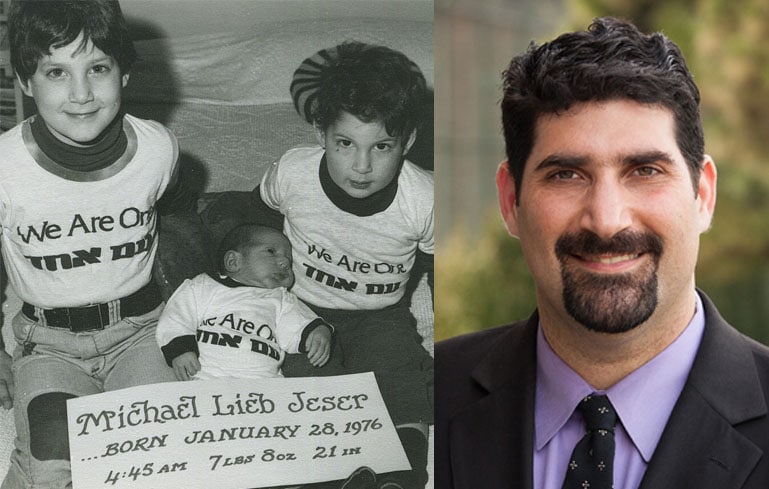
Michael Lieb Jeser, 1976-2021

The Jeser family has lost its king, its hero.

On Shabbat Va’etchanan Michael lost his four-year battle with Esophageal Cancer.

He leaves his much loved and adored wife, his Malka, Laura, and the four-year-old light of his life, Eleanore. He will be greatly missed by his brothers, his partners-in-crime, Marc and Dave, his sisters-in-law Elizabeth and Lisa, and his fourteen nephews and nieces. His parents, Faye and Paul, will never fully recover from losing their baby, their hero and their most special mensch.

From a very young age, Michael had a special relationship with Judaism and Israel. His very first trip (of many) to Israel was when he was minus two months old (when Faye was seven months pregnant). He was a graduate of the JCC pre-school in Orlando and elementary school at the Moriah School in Englewood (NJ). During High School (Dwight Englewood) he participated on the MARCH OF THE LIVING traveling to Poland and then to Israel.

After graduating from the University of Arizona, he spent a year in Israel on PROJECT OTZMA, where he taught English and led after-school programs in immigrant neighborhood schools in Shar Hanegev. In 2004 he received Double-Masters degrees from USC (Social Work) and HUC (Jewish Communal Service).

As a member of the Jewish Communal Service Michael’s professional experience included being part of the staff at the Metrowest Jewish Community Center & Camp Deeny Riback (NJ), Jewish Community Centers of Greater Boston, and the Jewish Community Center at Milken (LA). He was the highly successful and greatly respected Director of the Real Estate & Construction Division and Director, Geller Leadership Project for the LA Jewish Federation. Michael was the Executive Director of USC Hillel and the Jewish World Watch. In 2015 Michael was appointed Director of Annual Campaign and the Life and Legacy program for the Jewish Federation of Greater Portland (OR). For the past three years, Michael has been the CEO of the Jewish Federation of Greater San Diego.

The love for Michael has shown itself in many ways. The support given to him by the SD Federation’s leadership and staff has been beyond any expectations. When Michael decided to run a GoFundMe campaign to provide support for Laura and Eleanore, over 1,400 people responded! There have been over one thousand personal emails and comments on the many Facebook streams which announced his passing. As one close family friend wrote, ‘there are more tears than words.’ As his cousin from Israel wrote, ‘Michael, who gave you permission to leave?’

One of Michael’s ‘happy places’ was Camp Tevya (NH) where he attended from an early age through college when he was appointed Boy’s Head Counselor. His other ‘happy places’ included rooting for the Jets and Celtics, going to Disneyland, whale and eagle watching, going to the movie theater and eating popcorn, drinking with his brothers and close friends, and, most of all, sitting on the couch with Laura and Eleanore watching his favorite TV shows and movies.

The family has requested that donations in Michael’s memory be given to either the Jewish Federation of San Diego (in support of the Michael Jeser Outstanding Jewish Professional Award) https://www.jewishinsandiego.org/, or Camp Tevya https://www.camptevya.org/support-camp/

May Michael’s memory forever be a blessing.

Michael Lieb Jeser, 1976-2021 Read More »

At Least 50 CUNY Profs Resign from Union Following Anti-Israel Resolution

At least 50 professors at City University of New York (CUNY) have either resigned or have announced their intent to resign from the university’s professors union over an anti-Israel resolution that was passed in June.

The Professional Staff Congress (PSC)-CUNY voted overwhelmingly in favor of a resolution on June 10 condemning “the continued subjection of Palestinians to the state-supported displacement, occupation, and use of lethal force by Israel” as well as “racism in all forms, including anti-Semitism, and recognizes that criticisms of Israel, a diverse nation-state, are not inherently anti-Semitic.” The resolution also cited recent reports from Human Rights Watch and B’Tselem accusing Israel of apartheid and calls for discussions for the union to potentially endorse the Boycott, Divestment and Sanctions (BDS) movement.

The New York Post reported on July 25 that CUNY Professor Yedidya Langsam, who chairs the Brooklyn College Computer and Information Science Department, wrote in a resignation letter to the PSC that the union has “chosen to support a terrorist organization, Hamas, whose goal (`From the River to the Sea’) is to destroy the state of Israel and kill all my relatives who live there.” He also criticized the PSC resolution for omitting “the over 4000 rockets fired from Gaza into residential areas” as well as “the apartheid behavior of the Palestinian government (not a single Jew is permitted to be in Gaza) while neglecting to mention that Palestinians are members of the Israeli Knesset and are now part of the ruling coalition” and Hamas’s use of civilians as human shields.

“You have made many Jewish faculty and students uncomfortable with being associated with Brooklyn College and CUNY to the point of fearing for our safety,” Langsam wrote. “Have you and your colleagues forgotten the exponential increase in anti-Semitic attacks against Jews in the NY City area?”

Langsam wrote that he had been part of the union for more than 40 years prior to the resolution’s passage and he is urging his other colleagues to resign from the union as well. “You do NOT represent us and I will not be a part of an organization that supports those who wish to destroy us.”

PSC President James Davis told the Post, “We are in active dialogue with members who have expressed concern over the resolution. Some have decided to remain, some to resign, and some to take time to think it over. Many members are absolutely sincere in their distress, but we also know that a pressure campaign has been launched by people who were not PSC members in the first place.” He also claimed that the campaign was being promulgated by “conservative forces.”

Some CUNY professors disputed Davis’s claim that there has been a “pressure campaign” urging members to resign from the union. “Virtually every CUNY prof who has resigned after @PSC_CUNY’s anti-Israel resolution has made clear they acted [because] of the resolution,” Brooklyn College and CUNY Graduate Center History Professor KC Johnson tweeted.

Dr. Erika Dreifus, Adjunct Associate Professor of English at Baruch College, also tweeted, “I can speak only for myself—no one (of any political inclination) had to ‘urge’ me to resign.”

On June 18, Jeffrey Lax, an Orthodox Jewish professor at the City University of New York’s (CUNY) Kingsborough Community College, announced that he was resigning from the PSC over the resolution. He wrote in a letter to the PSC, “The PSC cannot have it both ways. It cannot self-absolve itself of anti-Semitism by admitting that Israel is a diverse nation-state and then also call Israel ‘Apartheid.’ Doing so, again, reveals nothing more than an anti-Semitic tactic and trope, as defined by the State Department and the International Holocaust Remembrance Alliance definition of anti-Semitism.” Lax also told the Journal that by arguing for the Biden administration to cease military aid to Israel, the union is essentially calling for divestment. “What do they think the ‘D’ [in BDS] stands for?”

At Least 50 CUNY Profs Resign from Union Following Anti-Israel Resolution Read More »

Israel Consul General, ZOA President Discuss Iran in Iranian Americans for Liberty Webinar

Israeli Consul General of the Pacific Northwest Dr. Hillel Newman and Zionist Organization of America (ZOA) National President Morton Klein discussed the history between Israel and Iran in a July 22 webinar hosted by Iranian Americans for Liberty.
Klein started off the webinar by saying, “We should all realize that Iran leaders and the media there repeatedly claim ‘Death to the Jews, Death to Israel!’” He invoked the late Elie Wiesel in saying that people should “take seriously” those that say they want to kill them, so it’s important to take Iran’s threats seriously.

“We should all realize that Iran leaders and the media there repeatedly claim ‘Death to the Jews, Death to Israel!’”

The ZOA president added that it was troubling that President Joe Biden wants to re-enter the Iran deal. “Without Iran, Hamas wouldn’t be able to launch these wars against Israel,” Klein said.

He also argued that Biden pledged to not revoke sanctions against Iran in order to get them to re-enter the deal but he’s already doing so, and pointed out that Iran is enriching uranium to 63% capacity in violation of the deal; they need to reach 90% in order to obtain nuclear weapons “They’re very close,” Klein said.

Klein also said that there were recently four Iranians who were arrested for allegedly plotting to kidnap an Americans human rights activist who actively speaks out against the Iranian regime. Biden’s response, Klein said, was that it had “nothing to do with” reentering the deal.

Additionally, Klein pointed out that Iran helped al-Qaeda with the 9/11 terror attacks and that Dennis Ross, a former diplomat under President Bill Clinton, told him on a phone call that it’s “at least 8 years” before the Iranian government gets a nuke.

Newman then weighed in, saying that while Iran is “Israel’s biggest problem” among the bloc of Muslim countries, Israel feels for the people of Iran as they struggle with shortages of water and other basic commodities.

“Iran as we knew it used to be a wonderful power in the world and look where it is now where children on the streets have to beg for water,” Newman said. Iranian Americans for Liberty Executive Director Bryan Leib, the moderator, interjected that the Iranian people have also had to deal with Internet and electricity blackouts. He cited the Iranian government’s “mismanagement” of economic resources while funding “billions of dollars to terrorism around the world.”

Newman then turned to the history of Israel-Iran relations, calling 1947-1953 a “period of ambivalence” until Shah Mohammad Reza Pahlavi seized back power after the 1953 coup, which then resulted in a “extended period of wonderful relations between Israel and Iran.” “Israel saw Iran as a natural ally,” Newman said, as during the Cold War, Israel’s main enemies were in the pan-Arab states; it wasn’t necessarily a battle between Judaism and Islam. In fact, according to Newman, “much of the infrastructure that still exists in Tehran today was built by an Israeli company.”

But after the Iranian revolution in 1979, the “wonderful relationship” between the two countries “changed overnight,” Newman said, though it wasn’t until 1990 that Israel-Iran relations became particularly “hostile.” Still, Israelis who were living in Iran at the time of the revolution had their lives threatened as a result and had to flee, per Newman.

Despite hostile relations between the two countries, “we have a wonderful relationship with the Iranian people,” Newman said, pointing out that there’s “great admiration in Israel for Persian culture and Iranian people.” “If only this maligned [Iranian] administration would go or change its policy towards Israel.”

Leib then pointed out that it’s “widely known that the Islamic Republic of Iran are the main funders behind terrorist organizations like Hamas like Hezbollah” and that “Israel’s leadership to their credit has repeatedly stated that they will do whatever is necessary to ensure that this evil regime never obtains a nuclear bomb.” Newman pointed out that Iran isn’t just an enemy to Israel; it’s also an enemy to the United States, as the Iranian government frequently refers to the U.S. as the “Great Satan.” Iran is also a threat to the Western world at large, Newman argued.

“The maligned activity of Iran is like an octopus … it covers hemispheres,” Newman said, adding that “they expand their revolution and cause conflict between themselves and the West.” The issue of Iran potentially obtaining nuclear weapons is “an existential threat … to Israel and the Western world … due to the fact that they have such an extreme radical ideology, you can’t bank on anything [to check them],” Newman said.

He argued that the Iran nuclear deal’s sunset clauses––the provisions limiting Iran’s nuclear enrichment capability that expire after 10 years––essentially pave the way for Iran to get nukes and would grant them “legitimacy” in doing so. Israel’s attitude to the deal is ““fix it or nix it,” Newman said.

Leib pointed out that “Iran is in a de-facto state of war with the United States and with Israel and with other countries as well through the terrorist proxies that they fund.” Some of these proxies aren’t as well-known but are still inflicting enormous damage worldwide, according to Leib. Newman said that Iran’s use of proxy terror groups shows their rhetoric is already being carried out through action.

“We should all open our eyes,” Newman said, arguing that too many governments seem to think they can take the “tame the lion” approach with Iran. “You must make sure the lion is not the lion anymore.” He called for “extreme pressure and sanctions” against Iran in order to push its government to “the brink” to pressure it into changing its policy.

Klein interjected, citing Winston Churchill’s quote that “an appeaser is one who feeds a crocodile—hoping it will eat him last,” and that the quote aptly applies to dealing with Iran.

Newman expressed optimism that one day Iran and Israel will be friends again. “This regime will have to change its policy or fall one day,” he said. Newman also said that the recent Abraham Accords, forging peace between Israel and various Arab Gulf nations, “shows how the direction of the world is toward more cooperation more understanding” and these alliances are isolating Iran.

Newman expressed optimism that one day Iran and Israel will be friends again.

Klein said that he agrees with Egyptian President Abdel Fattah el-Sisi that “to get real peace … you need a revolution in Islam” in order for Islamists “to stop believing that Jews are the enemy.” He also expressed concern that when the threat of Iran subsides, Israel’s newfound normalcy with the Arab countries under the Abraham Accords will “revert back to normal,” citing the fact that there has merely been a “cold peace” in Israel’s relations with Egypt and Jordan.

Newman didn’t share Klein’s concern. “I don’t think it will change anything in our relationship … because the glue that brings us together is much deeper and much wider.” He argued that the societies of Arab Gulf nations understand that “Israel is a benefit and asset to them” and the Abraham Accords provided a “people-to-people” peace. The peace between Israel and Egypt and Jordan, on the other hand, was “more like a ceasefire that never trickled down to the people,” Newman said.

As evidence, Newman pointed to a recent incident in which an Egyptian singer was criticized in Egypt for taking a picture with an Israeli singer, forcing the Egyptian singer to apologize. The picture was taken in the United Arab Emirates (UAE), where the Israeli singer was performing. “Just look at the gap here in what we’re talking about,” Newman said, calling it “a totally different cultural environment of peace.”

Klein then asked Newman why the UAE and Bahrain, despite signing the Abraham Accords, criticized the Israeli government’s actions in the most recent conflict with Hamas. Newman attributed those criticisms to fear of “repercussions” from Islamist terror attacks, which is why peace with Israel took so long in the first place. The glass half-full approach is that the UAE and Bahrain didn’t rescind the Abraham Accords, Newman said, as the Palestinian leadership had hoped that they could use the recent escalation as reason for the Abraham Accords to be undone.

Newman concluded the webinar by stating that “the people of Iran understand that Israel cares for them.” “We see the people of Iran as friends, potential allies.”

Israel Consul General, ZOA President Discuss Iran in Iranian Americans for Liberty Webinar Read More »

We Are Living in The Service Era of American Jewish Life

Jasmin Bach arrived in Ecuador in early 2020, ready to change the world. A 24-year-old from Chelsea, Massachusetts, she had traveled thousands of miles, eager to serve a community in need as a member of the Peace Corps. Then, the COVID-19 pandemic began.

Jasmin and her fellow corps members were evacuated, but when she got home she resolved to maintain her commitment to service. As she observed the pandemic’s ravaging effects on her hometown, she felt a deep call to support her neighbors.

“I was shocked by how negatively Chelsea was affected by the pandemic,” Jasmin said. “The community was already facing great challenges before the pandemic, and the inequities were just exacerbated by COVID-19. I began questioning why it took a global pandemic to see the issues that already existed.”

That’s when Jasmin joined the Serve the Moment Service Corps.

As it became clear that the COVID-19 crisis would endure, the summer of 2020 became a summer of service for Jasmin and hundreds of others. More than 45 Jewish organizations coalesced to create the Jewish Service Alliance (JSA), with the vision of engaging the American Jewish community in 100,000 acts of service and learning in response to the pandemic. The JSA’s flagship program, Serve the Moment—powered by Repair the World—includes a Service Corps, national campaigns, and partnerships among local and national organizations coming together to serve the communities in which they live. These opportunities galvanized American Jews to step up boldly and in alignment with our values to serve our communities and our neighbors.
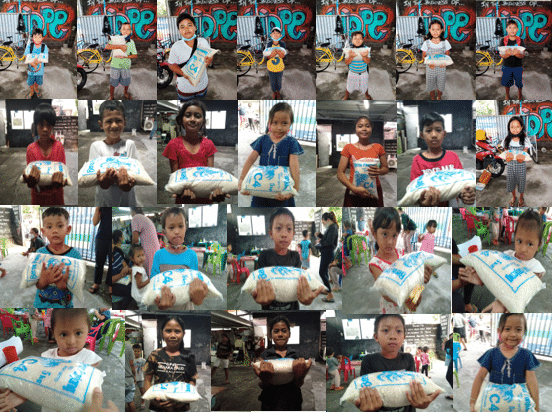

“It has been so meaningful being a part of a Jewish organization committed to service,” Jasmin said. “I learned a lot about the intersection between Judaism and service. I had these two parts of me that I didn’t know were actually the same.”

Serve the Moment participants represent the denominational spectrum of the American Jewish community, non-Jewish community members, and those from interfaith families. Since May 2020, StM has catalyzed about 93,800 acts of service and learning from 26,287 participants (including almost 700 Service Corps members like Jasmin; participants of partner organizations like Hillel Campus Corps, Moishe House, and JDC Entwine; and local volunteers), contributing 159,758 service hours to partners. Corps members spend 6-10 weeks serving part-time with a local nonprofit at no expense to the nonprofit. Importantly, volunteers also have time for Jewish learning, contextual education about service and Jewish values and personal reflection. A new cohort of corps members begins in the summer, fall, and spring, and each corps member is provided a stipend to sustain their commitment. Jasmin has served two StM terms.

At first, Serve the Moment’s work may have seemed like a stopgap, something to support our neighbors through an extraordinary moment. Surely once we made it to the other side of a disruptive pandemic, faltering economy, and urgent movement for Black lives, things could “go back to normal,” right? But as Jasmin quickly learned, the issues that needed to be addressed during the pandemic had always existed, and will remain without continued intervention.

Going forward, the Jewish community has an unprecedented opportunity—and obligation—to build on the generosity and resilience so many of us demonstrated over the last year. We can usher in a new era of American Jewish life—a Service Era.

Going forward, the Jewish community has an unprecedented opportunity—and obligation—to build on the generosity and resilience so many of us demonstrated over the last year. We can usher in a new era of American Jewish life—a Service Era.

The opportunity is illustrated by the recent Pew report, which found that the majority of American Jews believe leading a moral and ethical life (72%) and working for justice and equality (59%) are essential elements of their Jewish identity—while attending synagogue regularly and engaging in other traditional Jewish rituals are not. The obligation is illustrated by the existing and new inequities exacerbated and created by COVID-19. The rebuilding process to get to a better place than where we were before the pandemic will require time and energy, but that commitment will pay off: Points of Light, the world’s largest organization dedicated to volunteer service, estimates that each time someone volunteers, they make a positive impact on four lives.

If we plan and invest accordingly, Serve the Moment can serve as a model for transitioning from an extraordinary moment for service into a powerful Jewish service movement, one that’s driven by young people eager to tackle food insecurity and housing inequity, address learning loss and strengthen our education system, and combat social isolation, all while maintaining a deep commitment to racial justice. Through Serve the Moment, service is infused with Jewish values and blends with relevant Jewish learning and context—in community with peers of both shared and divergent backgrounds.

For many Jewish young adults, the next few years will be filled with uncertainty and challenge. The Jewish Service Alliance’s aim is that no matter where they are, no matter how their Jewishness manifests, they understand that meaningful service and learning in pursuit of a just world is a Jewish practice that’s accessible throughout their lives. As Jasmin learned, we can serve both in our local communities or across the globe to make the world a better place in the Service Era.

“How I viewed service as a part of my life was reaffirmed in the moments after the pandemic,” Jasmin said. “Arriving back home last year was when I realized I could actually do service in my community, and that volunteering would become a core part of my life’s journey.”

Through virtual and in-person service, those who serve form indelible connections with hundreds of nonprofit partners and their communities. At the same time, they find an outlet through service for a meaningful expression of their Jewish identity, a way to live out values they may be discovering for the first time. In short, an investment in service is truly an investment in the Jewish people and those with whom we share the world.


Jordan Fruchtman is Chief Program Officer of Repair the World.


We Are Living in The Service Era of American Jewish Life Read More »

Helping in Bali: How YOU Can Make a Difference During COVID

When I learned to SCUBA dive in 1990, I expected to visit the underwater world and see creatures beyond my imagination. I never imagined that it would lead me to travel to the far corners of the earth and meet some of my favorite people. Thank you to PADI for all you do to save our seas and train torchbearers.

During COVID, the entire planet has experienced challenges and uncertainties. People have suffered with losses of all kinds. In Bali, Paul ‘Tosh’ Tanner who isterritory director of PADI did not stand idly by. He and his family have made a difference and you can help too to make sure that families have food.

Photos and text below are from Paul Tanner.

As everyone knows, back in March 2020 the world locked down, and Bali closed its doors to the world. The British government recommend that all ex-pats should leave Bali and Indonesia. We have lived in Asia for 20 years and our children were both born in Asia with our youngest born in Bali. We knew this was going to be hard, and we have taken so much from Asia, and it’s given us an amazing life so we wanted to give back if we could.

Over the coming weeks people started to lose their jobs. Around 60% of people work in tourism on the island. The impact of no tourism on the island affects everything. Employees from outside of the tourism industry started to lose their jobs too. Banks, farms and even mechanics were effected from the shutdown of tourism.

70-80% of people have lost their jobs.

There isn’t any unemployment here, and the locals get very little help, if anything. Most have big families, and when one is unemployed, the others can help out. However, now entire families don’t have work and are unable to help out.

This has meant we have had our house broken into twice in the last year.

As a territory director of PADI, I am lucky to have a big network of people that have travelled and enjoyed diving in areas like Bali, and understand how everyone is impacted by this global pandemic especially on our island.

In April 2020, I first asked for donations. People who knew me could donate and have 100% of the money raised go-to food for locals.

During COVID, I have raised money, bought food from local farmers and supper stores and gave the food to either families I know or to a non-profit called SOS Children’s Village Bali.

We now give to our local village which has thirty-three families, and 22 of the 33 do not have any employees in the family to support themselves. Once a month, we take the funds raised and give food to the local village.

We also personally financially support 4 families but we do not use the donations for this. One of the issues about donating is knowing how much of the money you give, goes directly and completely to the people that need it.  We use the donations collected to purchase food. In this way, every dollar donated goes towards helping someone.

Donate via paypal directly to Paul “Tosh” Tanner

People from all over the world have been amazing. We have had people from Canada, USA, France, Spain, China, Thailand, Sweden, UK, Germany, Singapore, Malaysia, Australia and Dubai donate.

Thank you to Erica Wedepohl, PADI Territory Director – Caribbean and Latin America and greatest dive buddy ever, for introducing me to Paul “Tosh” Tanner to share what he is doing.

Erica Wedepohl, PADI Worldwide, Territory Director for Caribbean & Latin America underwater at Beaches Turks and Caicos

MORE WAYS TO DO GOOD:

COVID Relief in INDIA with my friend, Jonathan Reisman

Dignity for children with Bags of Hope

Helping in Bali: How YOU Can Make a Difference During COVID Read More »

Toxic House: Domestic Violence in the Jewish Community

My attention was caught by a recent newspaper headline, “The Most Dangerous Place.” What place is that?

In Vayikra/Leviticus 14:34, God tells the sojourning Israelites that when they enter the land of Canaan, God will sometimes “inflict an eruptive plague” on a house, and then goes on to provide instructions for what they’ll have to do about it.           

“The owner of the house shall come and tell the priest, saying, ‘Something like a plague has appeared upon my house.’”

When the priest examines the walls of the house, he’s to look for green or red marks that appear to run deep, signs that this is, in fact, a plague. Finding them, he’s to embark upon a series of rituals meant to determine the severity of the disease and to rid the house of it by, for example, pulling out afflicted stones and tossing them outside the borders of the community. If all else fails, the house will be destroyed.

An obvious diagnosis of what’s going on in these walls is that there is an outbreak of mold. But I’m convinced the cause is quite different: something terrible has happened in this house.

Rabbinical commentators past and present find the notion of an afflicted house metaphoric, mysterious and evocative. They point to God’s warning that this plague will be inflicted as indicative of divine retribution. They speculate that the people in the house have been guilty of slander or gossip, or become selfish, self-absorbed. They suggest that since the home is a refuge from the outside world, perhaps the red and green streaks announce that the formerly safe space has been invaded by societal strife. Modern commentaries mention poverty, homelessness and environmental degradation among other possibilities.

But there is another way to read this moment: The plague isn’t coming from outside the house; it is coming from within. It isn’t about the interplay between the inhabitants and the outside world; it’s about the inhabitants themselves. My sense from the moment this passage jumped out at me years ago, and my even stronger sense today, is that someone is being hurt inside this house. What is happening to the physical body of the house is happening to the physical body of the inhabitants of this house, and many other houses, in overwhelming numbers—specifically with regard to women and children.

But there is another way to read this moment: The plague isn’t coming from outside the house; it is coming from within.

What we might call a domestic plague is a very real public crisis, perhaps more so now than ever. According to the National Center for Injury Prevention and Control, women experience about 4.8 million intimate partner-related physical assaults and rapes every year. Before the onset of the COVID-19 pandemic, an average of three women in the U.S. were murdered by an intimate partner or former partner every day. The number is higher on average for women of color and has significantly increased across the board for all women during the pandemic. More than half of mass shootings in recent years have involved a man killing an intimate partner or former partner along with others. Physical and sexual violence against children is also prevalent. Sometimes a child is a predator’s target. Sometimes a child is a useful tool in the intended goal of destroying that child’s mother.

The Jewish community is not immune from this plague. The evidence suggests that intimate partner violence occurs inside Jewish communities at the same rate as outside them.

Domestic violence is defined as a pattern of abusive behavior employed by one partner to gain or keep power and control over another within a relationship. This pattern doesn’t necessarily escalate quickly to murder; it never begins there. I’ve learned the phrase “murder in slow motion” to describe the gradual escalation of controlling behavior that ends in loss of life. I participated in online workshops this past year to learn how to recognize and safely intervene in abusive situations. But in pandemic conditions we were much less likely to witness dangerous situations in public, or to glimpse the signs of what might be happening behind closed doors.

Sheltering inside to avoid one deadly disease, staying home to stay safe, many women and children found themselves locked inside with their attackers, victims of an entirely different deadly threat. For them the most dangerous place, the place referred to in that newspaper headline, is home.

According to some commentaries, the plague described in the Torah teaches that we should take notice of the first signs of bad behavior, so that moral decay can be nipped in the bud and stopped from spreading. But this particular plague has already spread. Indeed, it is rampant.

The instruction for reporting the eruption to the priest uses the very tentative phrasing, “something like a plague has appeared upon my house.” The rabbis read in this hesitation a deference to the authority of the priest. In other words, it’s up to him to say whether a plague has actually appeared. But I find its meaning shifts according to who is giving the report. A woman making her first foray outside the confines of a violent prison, terrified to ask for help, terrified not to? A child hinting that something is not right at home? A perpetrator bringing a woman to the emergency room with a vague story about how she keeps walking into walls? A perpetrator tentatively asking, help me stop doing this?

Then there are those red and green marks running deep into the body of the house: literally the writing on the wall? Displaced bruises blooming? Maybe they’re makeup smears left by a face sliding down a wall. Maybe blood and grass stains. They could be crayoned depictions of events too hard to name. In a house I once knew they could have been both cosmetics and a child’s desperate reach for help, messages from a little girl made to play secret games with makeup, adult clothes and jewelry for the gratification of an adult perpetrator.

The passage on house affliction appears in a section of Torah detailing what to do, and what the priests must do, in a variety of states of impurity or “eruption,” bodily sorts in particular. These are instructions to a people in the midst of 40 years of nomadic existence, presumably pitching tents or sleeping under the stars, a people whose wanderings in the desert follow over 400 years of enslavement.

In other words, they don’t have houses, may have never had houses. A nomad could be stricken with a skin ailment, but only a home owner has stone walls that might erupt in a plague. This is a law about something that had never happened. Yet God anticipates that it will happen when the people are settled. Violence in intimate relationships and in families would have occurred in the desert, as it does everywhere. I imagine God thinking: these people have never been a settled, sovereign community, they have never owned houses, but they have certainly experienced family violence, intimate partner violence, sexual violence, and once they’re in homes made of stone and timber they’re going to perpetrate and suffer from these crimes until the very walls of their dwellings erupt with the disease of it.


Christine Benvenuto is the author of two books, “Shiksa” and “Sex Changes,” both published by St. Martin’s Press, and her short stories and essays have appeared in many publications.

Toxic House: Domestic Violence in the Jewish Community Read More »

Ruby: A Lesson in Kindness

“Who Is Wise? He who learns from every person.”—Simeon ben Zoma, Pirkei Avot

“If your morals make your life dreary, depend upon it: they are wrong.”—Robert Louis Stevenson

Like most kids, I had a secret life that my parents knew nothing about. I was about 15 years old when I met Ruby. I think he was about 50. Ruby was Jewish, round and bald. He always wore an old, out-of-style sport coat.  He was a divorced gambler.  Not an uncommon combination.

When we first met, he described himself as a loser with hope. At 15, I also felt like a loser, but with no hope. Ruby was a petty crook. He always had a few stolen credit cards in his wallet. He would buy them from pickpockets and muggers. He hated using his gambling money to pay his bills. But then again, all money was gambling money to him.

I met him at The House of Lords, a poolroom on Queens Boulevard in Forest Hills. I was 14 years old when I started hanging out at Lords and shooting pool for money—money I often stole from my parents’ wallets. Money that they never mentioned was missing, which was strange considering my mother only took down about a C-Note a week. Me grabbing a double sawbuck from her purse was considerable. I guess you could also call me a thief.

By law, you had to be 16 to get into a poolroom without a guardian. I had phony proof that said I was 18 even though I looked a young 12. Rocky, the owner of Lords, was a short, dumpy, foul-mouthed bookie. Everyone to Rocky was a MF.

Whenever Ruby popped in, he was looking for action. Gamblers never stop in anywhere just to say hello and see how your mother is doing. Ruby did not shoot pool himself. He just bet the game.

Like me, Ruby was a lonesome soul. Lonely people recognize each other. But he had a kindness to him, and I needed that. He had an eloquent tone to his voice and even though he was a street guy, he sounded intelligent. When we talked, he was always soft-spoken and gentle. Even when he lost all his money, which was often, he never got angry at me.

Lonely people recognize each other. But he had a kindness to him, and I needed that.

I met him at a time when I was heading in the wrong direction. Kindness is something I always craved but, at the time, getting kindness at home or from my friends was at an all-time low. I have a soul that seems to cry out for it. If this was a movie pitch, it would be “Ruby was a crook with a big heart.”

Ruby was exciting to hang with. Two days a week, I would cut school and meet Ruby at his apartment around 10 a.m. Before heading out to the track to play the horses, he would always take me to breakfast on one of the hot credit cards. He would say, “Get anything you want, kid.”  I always loved the track. In some ways, the track was a big part of my schooling. It was at the track that I really learned how to add, subtract, divide, multiply and figure out fractions all in my head and all within seconds. Not bad for a 15-year-old track bum.

Ruby and I would ride out to the track in his 1964 Bengal Ivory AMC Rambler. One time on the way, he stopped at a tire shop and put four new ones on. He gave them the hot card. When it was declined and he saw them calling it in, he said, “Hey kid.  Get in fast.” We jumped back in the car and with the new tires, he tore out as fast as a 66 Rambler could tear out.

During our rides Ruby would share stories about how hard life was for him, how sad he was and how his wife screwed him over and took “the kid.” He always called him “the kid.”  I never learned his son’s real name. Just “the kid.”  Out of nowhere he might blurt out, “I haven’t seen the kid in years.” “I wonder how the kid is doing.” There was a real honesty and pain when he would say those things. Before Ruby, I never heard anyone talk like him. I never heard anyone tell me how hurt they were except my mother and that was usually followed by something about how it was because of me.

Ruby never asked me about my home life. And you know what? I was fine with that.

He was an open wound, an unhealed hurt child. And he was never shy to admit it. He never drank or used drugs. He just lived in his personal hell on the natch.

On our rides back from the track, I could always tell if he lost or won. If he won, he would be so excited about how his luck was finally about to turn. He might say, “No more BlackRock for me.” If he lost, he was as quiet as a stone. When we got back to town, we would stop for dinner at some fancy restaurant he had never been to. He would run up a big bill and pay with a bad card. We never went anywhere twice.

The Mishnah says you can learn from everybody. In a strange way, I learned a lot from Ruby. And I am not unhappy for having had the experience. I learned that I did not want to be a gambler or a thief. I learned that stealing never felt good to me, that I felt ashamed to be part of such a thing. I learned that it scared me. I learned losing money by gambling made me sick to my stomach—that it made me angry and caused me to feel stupid, that losing made me mean. I learned I never wanted to get divorced and have a child that I only called “the kid.” And that if I lived a life like Ruby, that the closest I might ever get to my son or daughter might be a dusty four-by-six framed photo.
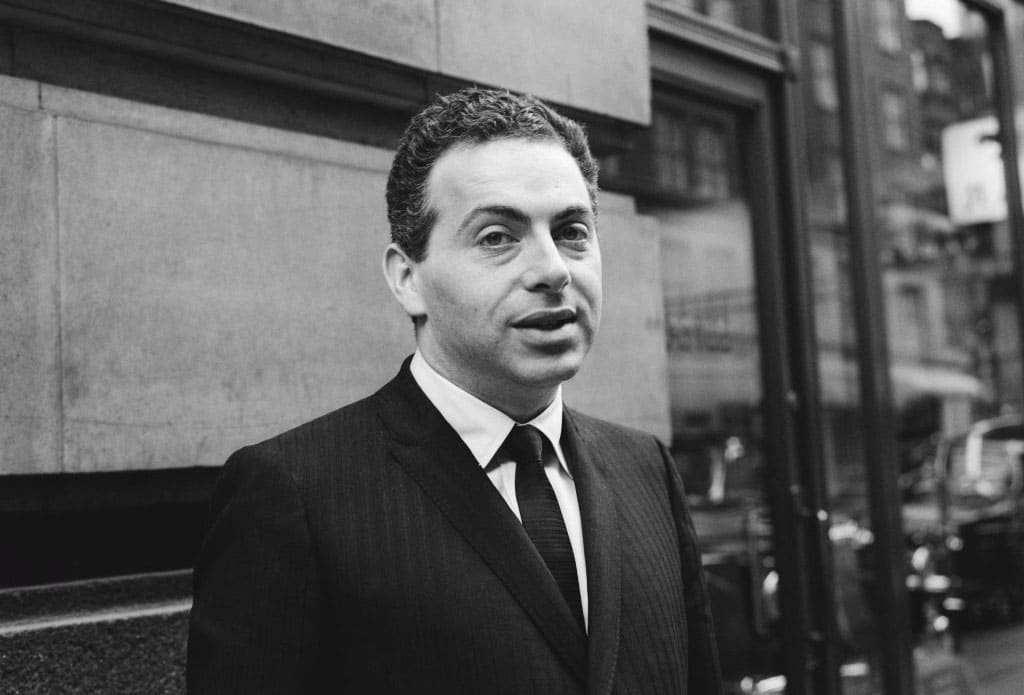
But I also learned kindness. Ruby had a big heart. He had the soul of a poet. The man could not have been more accepting of me if he tried. More than a few times, he said that I should finish school and that I should make something of myself. Otherwise, I might end up like him. And at that time of my life, I did not feel accepted anywhere or by anybody. Ruby was a friend.

I wish I could say I learned these lessons and straightened up right away. I did not. I also had to go through my own personal little trip through hell. One morning, I cut school and went to call on Ruby. When I got there, I found his apartment door unlocked. I cracked the door, peeked in, and then went inside. There was nothing left, and it was swept army barracks clean.

I went up to Lords and asked Rocky if he had seen Ruby. “Ain’t seen the MF in a week.”  Nobody I asked knew anything. They were as quiet as a graveyard at midnight. I kept going back to the poolroom hoping to one day see Ruby again. That day never came. Maybe he went back to see “the kid.” Maybe he was in jail. Maybe someone dumped him. Maybe, maybe, maybe.

In hindsight, I consider him disappearing from my life an act of kindness. I cannot see how it would have ended well. Years later, after getting my first credit card, one day I realized I had lost it. When I got my statement, I saw someone had charged three expensive dinners. Nah … couldn’t be.


Mark Schiff is a comedian, actor and writer.

Ruby: A Lesson in Kindness Read More »

Jackie Mason and Me

The year was 1963. I was ten years old and my sister, Jody, was eight. We would visit my grandmother’s apartment, which she gratefully shared with my Auntie Raye, my Auntie Gertie and her husband, Uncle Jack. So it was my parents and the occasional neighbor or Auntie Raye’s best friend, Marianne, that made a captive audience of six or seven people for the performance that my sister and I would present, a condensed version of “The Ed Sullivan Show.” I of course played Ed, introducing the acts that became stranger and stranger as the night went on. My sister played all the female parts, from Connie Francis and Leslie Gore to Russian Ballerinas and Hungarian acrobats. But my favorite part of the show was the stand-up comedian, and I always chose Jackie Mason as the one to imitate. I didn’t really understand all the jokes back then, but Jackie’s accent and expressions made him unique as a performer, and, besides, my whole family loved him. I could do the accent pretty well, but the jokes—well, let’s just say they didn’t go over as fine as the originals.

After pissing off Ed Sullivan with an alleged middle finger salute, Mason was relegated to doing nightclub work, and in the late 1970s I saw him perform at a local Montréal nightspot called La Dilligence (AKA The Stagecoach). Up close and personal, Mason came across as an everyday Jew, commenting and complaining about everything that caught his eye.

Up close and personal, Mason came across as an everyday Jew, commenting and complaining about everything that caught his eye.

In another famous Montréal eatery, The Brown Derby (no relation to the Los Angeles original), you could see all of Mason’s characters as they cajoled to be first in line to get the next available table, stuffed Sweet’n’Low packets into their purses and pockets, complained about the air conditioning or heating, and made contorted changes to the menu items (“I’ll have the House Salad, but take out the tomatoes and cucumbers, change the bacon bits for extra croutons, give me two containers of dressing on the side, add some slices of cheddar cheese, but not that orange artificial stuff, and I want it on a plate not a bowl with a side order of kishka.”). I remember an older Jewish lady asking for more dinner rolls for the table. “Why don’t you finish the ones in your purse first?” asked the veteran waiter.

I didn’t think much about Mason until he re-emerged from showbiz mediocrity with his famous one-man Broadway show, “The World According to Me!” I was able to get a copy of his tape from my friend Morty. As Mason once said, “There are two things no Jew ever buys, my tapes and Sweet’n’Low.”  I listened to it over and over again until I knew most of the routines by heart. It prepared me for life as an unspeaking and un-opinionated Jewish husband whose primary job was to take out the garbage.

Mason kept showing up everywhere. I recognized him as a shackled, singing rabbi in “The Inquisition” scene of Mel Brooks “History of the World – Part 1”; complementing Rodney Dangerfield in the film “Caddy Shack II”; in over ten episodes of “The Simpsons” as the voice of Rabbi Hyman Krustofsky; and in countless appearances on late night talk shows. The next time I saw him perform live was at the 2004 Just for Laughs Comedy Festival in Montréal. His act had become much more sophisticated and polished, yet his manner and accent remained true to his roots. He really hated high-end coffee shops like Starbucks, calling anyone who would pay nine bucks for a café latté a “dumb shmuck.”

During the last decade I became less infatuated with Mason. I found his right-wing political views a little too extreme. His constant use of the word “schvartze” in his routines was starting to get him in trouble with some long-time fans and he didn’t attempt to customise his act to make it more PC. I get it—he told it like it is, with no filters and no regrets. It takes a brave and courageous individual to get up in front of an audience and speak his mind. Mason will forever be remembered as one of the great comedians alongside Lenny Bruce, Robin Williams and George Carlin, who also were not embarrassed to say it like it is.

Thank you, Jackie Mason, for all the wonderful memories and the great punch lines. Rest in peace.


Paul Starr is a recently retired systems analyst who has lived his entire life in Montréal, Canada. On Sunday mornings he is “living the dream,” hosting a two-hour Internet radio show featuring music from the 50s and 60s called “Judy’s Diner.”

Jackie Mason and Me Read More »