fbpx

June 30, 2021

Freshman Democrat Congressman’s Lessons on Engaging Progressives with Zionism

A young member of Congress has emerged as an outspoken ally of Israel during its most recent tumultuous days.

Congressman Ritchie Torres is a name that is becoming more and more associated not just with supporting Israel, but also embracing Israel as part of a progressive political platform. He’s a Democrat from the Bronx, but hardly on the political fringes.

Rabbi David Wolpe of Sinai Temple in Los Angeles said during a recent Shabbat sermon that “being an ally with Israel is not a republican-only or democrat-only issue,” and specifically pointed out that Congressman Torres has a special understanding of this.

Torres is not someone who was deliberately groomed to be elected. He did not go to elite private schools, he did not grow up with privilege, and he certainly did not hobnob with the wealthy. In fact, during his formative years, he endured frequent harassment, hunger, and mental health issues.

Torres is not someone who was deliberately groomed to be elected. He did not go to elite private schools, he did not grow up with privilege, and he certainly did not hobnob with the wealthy.

“Thirteen years ago, I was at the lowest point of my life. I had dropped out of college, found myself struggling with depression, and abusing substances,” Congressman Ritchie Torres shared, from his district office in the South Bronx. “I feel an obligation to tell my story and break the shame, the silence and the stigma that too often surrounds mental health. People should know that there’s a member of Congress who struggles with depression, taking an antidepressant that enables me to be a productive and effective public servant.”

He has come a long way since that low time. Today, he represents the 15th Congressional District of New York—the part of town in which he grew up. This section of the Bronx is just north of the Harlem River from Manhattan, and is said to be the poorest Congressional district in America. It’s also home to the $2.3 billion Yankee Stadium.

What sets Torres apart from so many of his colleagues in Congress is how open he is about his upbringing, which was anything but easy.

He is Afro-Latino, with a Puerto Rican father who had no presence in his life, and has an African-American mother who raised Torres with his twin brother and sister. They lived in public housing that was plagued with mold and disrepair.

Outside, the neighborhood was rife with drugs and crime—shootings so frequent that the community became desensitized to the horror. He lost a best friend to a fatal opioid overdose. Torres himself came out as gay in his 20s. There were even moments, he explains, when he wanted to take his own life because he felt as if the world around him had collapsed.

Torres found solace and purpose in being open about his struggles with mental health. Eventually, he found a job (and a mentor) on the staff of New York City Council member James Vacca. There, Torres worked on housing issues in the Bronx, seeking to help out his impoverished section of New York City.

Torres found solace and purpose in being open about his struggles with mental health.

Eventually, at age 25, Torres himself became the youngest member ever elected to the New York City Council. And the community took notice of his spirited work.

“Ritchie is still the same passionate, thoughtful, and hard-working young man that I met a decade ago as a housing organizer,” said Marjorie Velazquez, a Bronx-native, community organizer and local politician. “He’s a fighter. From fighting for New York City Housing Authority residents, to championing women’s issues at the Council, to advocating for [Puerto Ricans], Ritchie is someone who is not afraid to be independent, and is an inspiration to our future trailblazers in the Bronx.”

In his own view, Torres brings to politics two specific qualities. The first is empathy.

“I know what it’s like to experience food insecurity and housing insecurity, to experience racism, colorism and homophobia,” he says. “These are not abstractions to me, these are struggles that I have seen in my life. The experience taught me empathy.”

The second quality that Torres says he brings to politics is preparedness. An upbringing full of harassment, hunger, and health issues has prepared him well for the inevitably overwhelming task of being not just a Congressman, but an effective policy-maker.

Torres, 33, comes from a new generation of government officials whose first plunge into political awareness occurred on September 11, 2001. Torres is the fourth youngest member of the House of Representatives, and one of only 21 members of Congress who were of high school age or younger on that day.

“I was in my junior high school drama class when all of a sudden parents began taking their children out of the classroom. There was a scene of panic and pandemonium,” he recalls. “Before then, I had no occasion for the world to be politically engaged, to be politically aware. I had a sense of innocence, I had a sense that the United States and New York city were invincible,” he said, adding that it was a rude awakening.

“Rude awakening” is also how he describes his experience on Capitol Hill on January 6, 2021—only three days after being sworn in on January 3, the U.S. Capitol was besieged by violent protestors at the seeming behest of the outgoing President.

Torres describes, “just a shock of not believing what was unfolding in front of me. How could a violent mob so easily invade the U.S. Capitol and terrorize members of congress and their staff?”

The moment reminded him of the shock and peril he endured on 9/11 (while he firmly points out that the devastation was obviously not equal).

Torres explains (and not in any jocular manner) that he can write a memoir about his first ten days in Congress. On his fourth day in Congress, there was the insurrection. On his tenth day, Torres voted to impeach the 45th President. A week later, the country inaugurated Joe Biden as the 46th.

The time since has been anything but the typical freshman member of Congress experience due to the fallout from the pandemic and insurrection.

Still, Torres’ top priority was to have a fully-operational district office and legislative office from day one. He has done so, but the halls of the House office buildings are eerily quiet these days. Members and staff have extremely limited in-person meetings with constituents and other visitors on Capitol Hill. Torres still hasn’t taken his mother, twin brother, or sister on a tour of the 221-year-old U.S. Capitol.

From left, Del. Eleanor Holmes Norton, (D-D.C)., Rep. Stephanie Murphy, D-Fla., Rep. David Cicilline, D-R.I., Rep. Ritchie Torres, D-N.Y., and Rep. Raul Ruiz, D-Calif., sit socially distanced in the visitors gallery in the House chamber for President Joe Biden’s address to a joint session of Congress in the House chamber of the U.S. Capitol April 28, 2021 in Washington, DC. (Photo by Caroline Brehman – Pool/Getty Images)

Legislating effectively is a team sport, made possible by wide-scale cooperation and compromise, even though it may seem at times that elected officials just aim for Twitter spats. Torres is one of the members who seeks to forge bonds and be a problem-solver and policy-maker rather than a performer.

Forming those bonds is what effective members do. But it has been tough during the 117th Congress.

Congress, when done correctly, is a collaborative experience. Torres says it’s tough to legislate “without the ability to schmooze freely with your colleagues on the House floor and without the ability to break bread over dinner. Although things are slowly opening up, the pandemic is subverting what he calls “the deep durable relationship building that you need to succeed in Congress.”

Even as a progressive Democrat, Torres says he’s enjoyed the experience of getting to know his Republican colleagues.

When asked about who he has enjoyed working with on the other side of the aisle, he mentions Representative Peter Meijer (R-Michigan), describing him as “fiercely independent” with “immense integrity and courage.” Torres laments that Meijer’s virtues are “hard to come by in politics.”

Still reflecting on the bipartisan question, Torres sits back in his desk chair, smiles and says that he also enjoys working with Republican Representative Andrew Garbarino (R-New York), describing the fellow freshman Congressman as “one of the most down-to-earth people.”

The sentiment is mutual between the two.

“I enjoy working with Congressman Ritchie as well because we have been able to find common ground and work towards that goal together,” Rep. Garbarino said. Garbarino, who holds the congressional seat previously held by the ultra-conservative Rep. Peter King, also says that “it’s very tough to meet colleagues due to the voting rules and COVID rules.”

While forming bonds with fellow members of Congress has been slower than typical, it didn’t stop Torres from hitting the ground running. By his fifth week in office, Torres introduced the American Family Act to expand and improve the Child Tax Credit, which if made permanent, could help reduce child poverty.

It has been all business for Torres. Even though part of the excitement of being a freshman is decorating the office, Torres hasn’t bothered to fill his office with homages to New York’s 15th Congressional district. No photos of Yankee Stadium, no paintings of the Bronx Zoo, no plants from the New York Botanical garden. Maybe in time. But right now, Torres says his highest priority is to see to it that he and his staff are firing from all cylinders.

While he has not had a moment to decorate, he always makes room for moments of awe. His office at 317 Cannon used to belong to John F. Kennedy during his time as a Congressman from Massachusetts. The celebration of history throughout the U.S. Capitol, and DC for that matter, is a reminder to Torres of not just the privilege, but also the hallowed duty to legislate for his fellow Americans.

“When you’re in Congress, you feel the weight of history on your shoulders … part of the same institution that was once home to political giants like Abraham Lincoln.” A piece of advice Torres works by is that “if you stop pinching yourself, if you lose the sense of awe, then it’s time for you to go.”

He hasn’t lost sight of who he is, how far he’s come, and how much he can do for the people.

In the summer of 2020, Torres volunteered with community members in helping The Migrant Kitchen, an Arab-Latin fusion restaurant, to distribute meals to New Yorkers in need. This garnered praise from the restaurant’s owners, Palestinian Nasser Jaber from Ramallah and Dan Dorado, a Mexican-American from Los Angeles. Their staff wear shirts that read “No One Goes Hungry On Our Watch”—a motto fit for Torres as well.

Torres points out that before he was elected in 2020, there were no black or Latino LGBTQ members of Congress. He humbly understands the monumentalism of his election, expressing his overwhelming sense of gratitude. It’s mid-pandemic, there was a tumultuous transition of Presidential power, and recently, one of the United States’ greatest allies is enduring one of their most perilous moments in recent memory—Israel.

Torres is increasingly becoming noticed for his staunch support for Israel as a progressive. He has bravely taken on the contentious, complicated issue, putting him at odds with many in the progressive democratic base.

Even back in his days on the City Council of one of the most progressive cities in the United States, there was a resolution pending about the Boycott Divestment Sanctions (BDS) movement to condemn Israel. He recalls that not a single other member on the Council supported a two-state solution.

“My disposition, which to me is the truly progressive position, is that we should seek the peaceful coexistence of Israelis and Palestinians. Not seek the end of Israel as the solution. And if you favor peaceful coexistence, then you can rightly call yourself a progressive. But if you seek to abolish the only Jewish state, there’s no universe where that could ever be considered progressive.”

As a young elected official, Torres thinks often about the next generation of Americans’ relationship to Israel.

As a young elected official, Torres thinks often about the next generation of Americans’ relationship to Israel. He sees trends on college campuses and across the field of politics that suggest that BDS is becoming a more pervasive orthodoxy within the new left—but again, he repeats over and over his view that “there is nothing progressive about BDS.”

That’s not to say there are no progressive activists who share a similar sentiment—just ask Amanda Berman, founder and executive director of Zioness, a coalition of Jewish activists and allies who describe their work as unabashedly progressive and unapologetically Zionist.

“Ritchie shows all of us that supporting Jewish liberation and Jewish self-determination is totally consistent with our progressive values,” said Berman. “It shouldn’t take the kind of courage that it takes, but [Torres] has been extraordinary. And he’s faced racism, he’s faced homophobia from progressives for standing with the Jewish community. How painful that must be to take on this fight and to be targeted by the people who are supposed to be your colleagues, allies and partners in your work.”

Berman is optimistic that as his first term in Congress continues, Torres will inspire more progressive voices that will ascend into political leadership who are not afraid to reject rigid “with us or against us” litmus tests.

Author Noa Tishby also sees Torres as a model for future progressives. She’s the author of a new book about Israel that’s at the top of the Amazon charts for books about Middle Eastern politics: “Israel: A Simple Guide to the Most Misunderstood Country on Earth.”

“Leaders need to stop being so scared by the Twitter mob,” Tishby says. “Ritchie displays the importance of being right before it’s popular. It’s unfortunate that it requires courage, and he displays it in droves. He understands what Israel is dealing with.”

A common refrain in many of Torres’ recent interviews is his condemnation of antisemitism and extremism.

“It is wrong to politicize antisemitism, you have to speak out against extremism no matter where it comes from,” he says. The BDS movement is moving from the fringe to the mainstream of American politics. American politics, as it is, remain strongly pro-Israel.”

Multiple times Torres refers to the current time in history as America’s “FDR Moment”—a time to stick up for our overseas allies and lift fellow Americans who are the least well off. There’s optimism in the people who have taken notice of Torres’ political philosophy. And Torres himself is still optimistic about the future.

“Every day I’m in awe by the grandeur of the Capitol, by the honor of serving in Congress,” he says. “It is frustrating at times but more fulfilling than frustrating. You only become a public servant if you’re optimistic that you can have an impact at improving the world. I’m hopeful that the long game of politics—the long arc of politics—rewards substance. That’s my fundamental confidence. I hope the end result indicates it. But we’ll see.”

As pandemic restrictions loosen, and Torres can form more in-person working relationships with his colleagues in Congress, the best of his problem-solving remains yet to come.


Brian Fishbach is a music journalist in Los Angeles. 

Freshman Democrat Congressman’s Lessons on Engaging Progressives with Zionism Read More »

A Bisl Torah: A Habit Worth Forming

Dr. Janina Fisher, psychotherapist, and trauma specialist, speaks about the concept of resourcing and de-resourcing thoughts. Resourcing thoughts are ideas that build up our confidence and develop healthy ego. De-resourcing are exactly how they sound: destructive, denies our capabilities, and degrades our self-worth. She suggests that we categorize our thoughts before we verbalize them. The more we habituate words of self-affirmation, the more we might start believing them.

When Moses is asked to come forward as the chosen leader of the Hebrew slaves, Moses responds, “Please, O, Lord, I have never been a man of words…I am slow of speech and slow of tongue” (Exodus 4:10). Commentators assume this means Moses had an issue with speaking. Rashi explains that Moses stammered. Ibn Ezra offers that Moses probably had a speech impediment. But Targum Onkelos, Aramaic translator of the Torah, translates k’vad peh and k’vad lashon as weighty of speech and deep of tongue. In a quick reimagining of Moses’ persona, Onkelos creatively, says Speech Pathology and Audiology Professor Dr. Gerald Siegel, “turned Moses’ negative self-description into a positive one.”

There is always room for reflection and introspection. But when self-belittlement ventures into mantra, causing paralysis of growth, the habit must be reexamined. The first century translator had the ability to read the entirety of Moses’ life. Onkelos knew Moses went on to be the greatest leader of the Jewish people. Regarding our own lives, we don’t have the same kind of prescience. But in predicting your narrative, someone might write, “They had faith in themselves” or “They were known for constantly questioning their self-value.”

Have faith in yourself. Choose the resourcing thought. It will be a habit worth forming.

Shabbat Shalom


Rabbi Nicole Guzik is a rabbi at Sinai Temple. She can be reached at her Facebook page at Rabbi Nicole Guzik. For more writings, visit Rabbi Guzik’s blog section from Sinai Temple’s website.

A Bisl Torah: A Habit Worth Forming Read More »

GOP Congressman Says He Doesn’t Know About Fundraiser with White Nationalist

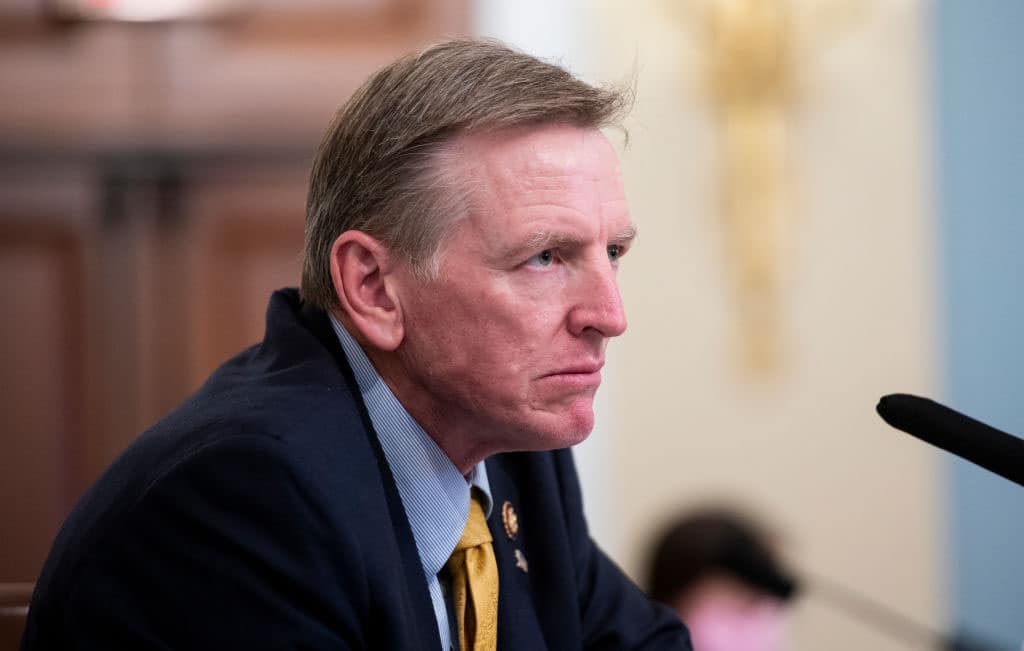
Representative Paul Gosar (R-AZ) is claiming that he isn’t aware of an upcoming fundraiser on his schedule with Nick Fuentes, who the Department of Justice has designated as a white nationalist.

An image of a flyer on social media appears to be advertising for a fundraiser with America First PAC, which is headed by Nick Fuentes, and the details would be announced on July 1. According to Canary Mission, Fuentes questioned the official figure that six million Jews were murdered during the Holocaust in an October 2019 Twitter video. Fuentes compared the Nazi gas chambers to cookies in an oven, and asked if you could bake six million cookies in 15 different ovens in five years. “The math doesn’t quite seem to add up there. I don’t think you’d result in 6 million, maybe 200 to 300,000 cookies.” Fuentes later defended his remarks as a “funny joke.”


Various Jewish groups called on Gosar to cancel the event and disavow Fuentes.

“This is reprehensible, @RepGosar,” the Republican Jewish Coalition (RJC) tweeted. “Your association with Fuentes, and this event are absolutely inexcusable. You must immediately cancel this event, apologize, and denounce antisemite and Holocaust-denier, Nick Fuentes.” The American Jewish Committee responded to the RJC with a clapping emoji.

Anti-Defamation League CEO Jonathan Greenblatt also tweeted that Fuentes is a “proud white nationalist” who was “openly denying the atrocities of the Holocaust and doing so in sick fashion, with a smile on his face” with his cookie analogy. “An elected official should be actively speaking out against this hate, not actively supporting and emboldening it.”


In a June 28 tweet, Gosar wrote: “There are millions of Gen Z, Y and X conservatives. They believe in America First. They will not agree 100% on every issue. No group does. We will not let the left dictate our strategy, alliances and efforts. Ignore the left.” And in a June 29 Twitter thread, Gosar tweeted that he has “a 10 year history of support for Israel” and “will not accept the slander that I am anti-Semitic.” “America First is a broad movement. It does not include racial supremacists and never has. That is not a pass for accepting anti-white critical race theory. Just as racial supremacy has no place in America First, it has no place in our military, our schools or boardrooms.”

Also on June 29, Gosar told The Washington Post he didn’t have any knowledge of the upcoming event. “I have no idea what’s going on. That’s news to me. There’s no fundraiser scheduled on Friday.” House Minority Leader Kevin McCarthy (R-CA) also told the Post that Gosar told him that “it’s not real” and “he doesn’t have anything on his schedule.”

Gosar was the keynote speaker at an event held by Fuentes’ America First PAC in February; the next day, Gosar said he condemns “white racism,” according to the Post.

GOP Congressman Says He Doesn’t Know About Fundraiser with White Nationalist Read More »

How the World’s Jewish Community Came Together to Bring Aid to Surfside

SURFSIDE, Fla. (JTA) — “I’m a Jew, I’m a Jew, I’m a Jew,” Steve Eisenberg tells me.

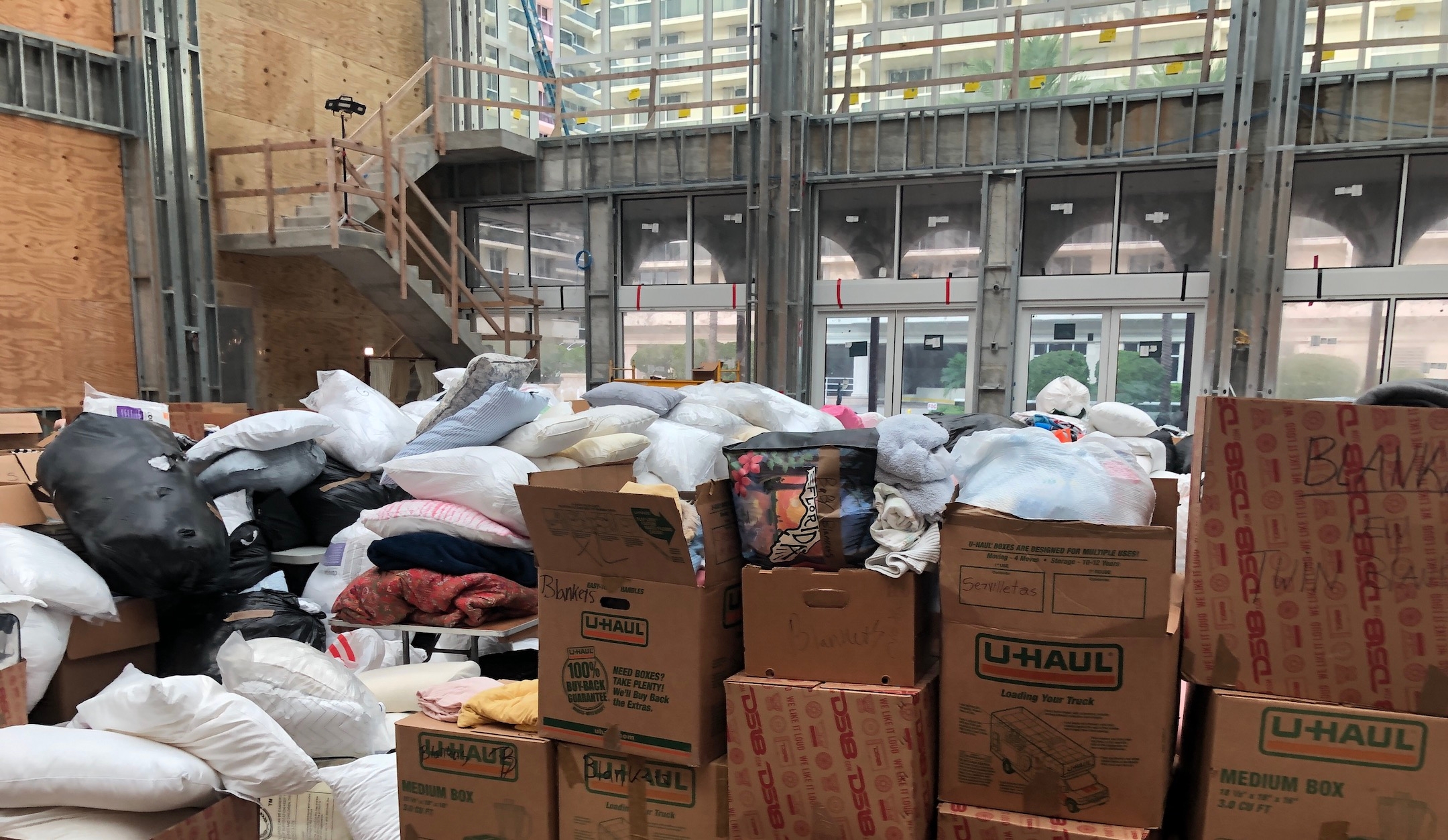
We’re standing in The Shul of Bal Harbour on Sunday, in its social hall under construction. Two days earlier, on Friday evening just before Shabbat, it was piled high with blankets, clothing, mattresses, food and toiletries for the families made homeless after a building in this town of 6,000 collapsed into a pile of rubble.

Now it’s almost empty thanks to people like Eisenberg and Judit Groisman, a tall, means-business woman in jeans and a black Women’s International Zionist Organization T-shirt with blonde hair pulled back tightly who’s busy giving volunteers orders laced with smiles. The supplies are going out to families made homeless by the collapse settling into temporary housing.

Eisenberg has been matching families with apartments owned by “snowbirds,” non-Florida residents who return home for the summer.

“Guys, does anyone know if we have syringes?” Groisman shouts.

The question I had posed to Eisenberg was how he got involved in the recovery efforts. I presume by his insistent “I’m a Jew” response that he is answering the question of why he got involved, not how, so I repeat my initial query.

No, I’m wrong: He’s getting at the how.

Eisenberg lives across the street from The Shul of Bal Harbour and is part of this tight-knit community — Surfside is at least one-third Jewish. That’s why, within hours of the collapse of Champlain Tower South at 1:30 a.m. Thursday, the texts, WhatsApp messages and calls lit up his phone.

Across the street and across the ocean, Jews came together to bring relief to a crowded little beachside community devastated by a sudden unfathomable loss.

Eisenberg knows at least 10 people “in the rubble,” as he puts it, and he knows them because they are Jewish and he is Jewish, and they are part of his community.

“Brad Cohen, I was under the huppah with him,” he says — meaning he was a witness at Cohen’s wedding. “I saw him every day.”

As of Wednesday morning, the death toll stood at 16 with more than 140 people still missing.

The woman in her 30s schlepping boxes at the Surfside community center four blocks down, about a mile from the building collapse, says the same thing: She grew up in the Cuban Jewish community, and there were these ladies her mother was friends with, and though she wasn’t close to them, now that she’s grown up she always said hello when she saw them on the street. And now … they’re gone.

But not quite. The missing peek out from behind faded roses, on printouts thick with Miami’s wet 90-degree heat, pinned to a fence overlooking the rubble.

A grinning young man, Andres Levine, leans into a woman’s head, her hand languidly appropriating his shoulder. A man in a tux, a blond, leans into his chest. The text reads: “Dr. Brad Cohen’s brother Gary (also a Doctor) is missing as well.” There is something unbearably poignant about the parenthetical aside, “also a Doctor,” with a capital “D”: Not one, but two good men are missing.

“Ilan Naibryf+Deborah Berezdivin,” says another printout. A happy young couple poses arm in arm, crowns touching, against a seascape, maybe the one just beyond the rubble, its salt lacing an acrid stench. The printout is partially obscured by a string of prayer beads hanging off the fence.

This is not just a Jewish tragedy; everyone knows that.

The beads, the crucifixes, one as blue as the Miami sky (when it’s clear of the rains), the leather-bound New Testament on the pavement abutting the fence. The yellow note, hanging precipitously, making a plea “in Jesus’s name.”

The circle of evangelical Christians standing next to the memorial fence, holding hands and belting out prayers in Spanish.

The relics that are heartbreaking in their universal meaning: The toy truck, the battered Supersoaker.

Among those who remain missing, The Shul says that about 40 are Jewish, meaning most are not Jewish. And the Jews who have come together from across the world, the rescue teams from Israel, from Mexico, from Canada, know it.

“It’s not only about Jews,” said Nachman Shai, the Israeli minister for the Diaspora who was given VIP treatment when he visited here this week accompanying Israeli rescuers. “I have to make sure that that’s fully understood. It’s about human beings, it’s about a national tragedy.”

Raphael Poch, the spokesman for the United Hatzalah team from Israel, describes how Hatzalah’s trained counselors are working on the second floor of the Grand Beach Hotel, where the families, Jewish and non-Jewish, sit and wait.

“It’s a state of unknowing, and that can cause a sense of helplessness,” he says. “Helplessness is the beginning of what can lead to an emotional reaction or traumatic stress reaction. And that’s what we’re trying to avoid — we’re engaging them to help the people around them if we see there’s a need because they’re often in the same place, the same location with other families. So even if they’re not doing anything that moment, they can go and help another family, can have a conversation with them, they can talk with them, they can interact with them.”

There are Jewish ways of knowing and there is a Jewish way of unknowing: The Jewish tradition of the shomrim, the guardians, are seeking permission to stake out the rubble, to watch over the dead — or, more precisely, the people who may be dead — until they are buried. Or, miraculously, alive. No one knows, with absolute certainty, who is dead and who is alive.

“We have rabbis who are on call who are ready to be with families as they receive notifications,” says Jacob Solomon, the longtime president of the Greater Miami Jewish Federation.

It’s hard to extract meaning from so arbitrary an event, one without intention. A rabbi gives a shiur, a lesson, following Havdalah services Saturday night at The Shul, and mentions the building collapse perfunctorily, saying the services were in “the honor” of the dead and missing. He launches into a fire and brimstone sermon about the Fast of Tammuz 17, which begins that night, and how the sins of the Jews merited its privations.

Miami’s Jewish community is more insular, Solomon says, because so much of it is first-generation — from Israel, from Venezuela, from Mexico, from Central America.

Donations at The Shul synagogue in Surfside, Florida

A social hall under construction in The Shul, a synagogue in Surfside, Fla., is piled high with donations for homeless families less than 18 hours after a nearby building collapsed, June 25, 2021. (Ron Kampeas)

“They see being Jewish as a way of holding on to the identity that they brought with them,” he says. That means closer relations to Israel. “Our 2014 demographic study — you’ll see that we have the highest percentage of adult Jews who have been to Israel, the highest percentage of emotional connection to Israel.”

Just weeks before the building collapse, some of the same people volunteering this week were turning up at the protests against the spike in antisemitism following the Israel-Gaza conflict.

Poch says he was bowled over by the welcome for the Israelis.

“Once the Israeli teams landed, there was a veritable sigh of relief,” he says. “The families, they basically felt like, you know, ‘You guys are here to help and it’s amazing you came all this way.’ They appreciate just the fact that we came. We gave them a sense of relief and a sense of hope.”

At a news conference, Surfside Mayor Charles Burkett — who has been coordinating search and rescue efforts with Miami-Dade County authorities as well as with the international teams — describes an encounter he had on Sunday morning at the Grand Beach Hotel.

“One of the questions from the residents was pretty poignant,” Burkett says. “They wanted to know if the Israeli team thought that the Miami-Dade team had been doing the right thing. The gentlemen, the commander, from the Israeli team did not hesitate. He turned around and said, ‘They’ve been doing exactly the right thing,’ which was a beautiful validation.”

Shai was not surprised when he heard the story.

“Jews around the world look at Israel as a source of support,” he says, “and sometimes even as a source to come and save them.”

Or they look to themselves. Eisenberg, at The Shul, scrolls through his text messages and holds them up for me to see: Jews from around the country who want to help.

“Who can I talk to at the shul,” a man from New York asks. “We have crisis response canines.”

A Baltimore woman wants to help set up a database of the missing.

Eisenberg looks around at the emptying storage area.

“I don’t know how this got done. There was no one person leading it,” he says.

Judit Groisman is circling again.

“I need a volunteer to help me bring mattresses,” she says.

How the World’s Jewish Community Came Together to Bring Aid to Surfside Read More »

Children’s Books Nonprofit Official Resigns After Statement Against Antisemitism

The Society of Children’s Books Writers and Illustrators (SCBWI) Chief Equity Inclusion Officer April Powers resigned on June 27 in the aftermath of a post condemning antisemitism.

The post, which appeared on SCBWI’s Facebook page on June 10, stated in part: “In the last several years, antisemitism has been on the rise globally, and has fueled a 75% increase in hate speech and random violence against Jewish people in the last few weeks alone. Because antisemitism is one of the oldest forms of hatred, it has its own name. It is the example from which many forms of racism and violence are perpetrated. As writers, illustrators, and translators of children’s literature, we are responsible for promoting equity and humanizing people in our work-all children and all families.

“Silence is often mistaken for acceptance and results in the perpetration of more hatred and violence against different types of people. As proof, it saddens us that for the 4th time this year we are compelled to invite you to join us in not looking away and in speaking out against all forms of hate, including antisemitism.”

However, Palestinian-American writer Razan Abdin-Adnani, a former SCBWI member, took issue on social media with the fact that the statement didn’t address violence against Muslims and Palestinians. Powers responded that she didn’t see the same recent “uptick in violence against Arabs and/or Muslims in a way that it had with other groups.” Abdin-Adnani was blocked from corresponding with SCBWI’s social media accounts. Abdin-Anani has tweeted that while she didn’t “disagree with this statement in the slightest bit” and that “Our Jewish siblings have every right to live in safety and violence against them is real,” she did take issue with the statement’s “selective solidarity.” “The situation was *very* painful & othering for me & the Palestinian/Muslim community at large as we didn’t see similar sentiments extended toward us during a time when we’re suffering,” she wrote in a later tweet. “And then to have my voice dismissed and then deleted? Ouch.”

https://twitter.com/razanabnani/status/1407447539138301952?s=20

https://twitter.com/razanabnani/status/1407447539138301952?s=20


In the June 27 apology, SCBWI Executive Director Lin Oliver apologized “to everyone in the Palestinian community who felt unrepresented, silenced, or marginalized. SCBWI acknowledges the pain our actions have caused to our Muslim and Palestinian members and hope that we can heal from this moment.” Oliver also apologized to Abdin-Adnani over Powers blocking her, stating that Abdin-Adnani has since been unblocked. She announced that Powers will be stepping down from her position and board seats for Muslim members will be added to the Equity and Inclusion Committee.

Powers issued her own apology, stating that she had “removed anti-Palestinian and anti-Israeli posts, which in hindsight was not the right thing to do. I neglected to address the rise in Islamophobia, and deeply regret that omission. As someone who is vehemently against Islamophobia and hate speech of any kind, I understand that intention is not impact and I am so sorry.”

Abdin-Anani tweeted that she “didn’t feel unsafe & unheard because April Powers blocked me, but because she diminished the pain of my respective communities & deleted my voice multiple times. I didn’t care that she blocked me [because] at that point I already knew she was hostile to folks like me.” She also claimed to be “receiving death threats as a result of #scbwi Zionist smear campaign against me” and called for boycotting the SCBWI.

https://twitter.com/razanabnani/status/1409278991987621894?s=20

https://twitter.com/razanabnani/status/1409769216509612034?s=20

https://twitter.com/razanabnani/status/1409631299128594439?s=20

  Various Jewish and pro-Israel Twitter users criticized SCBWI over their apology.

“This year a head of diversity at Google didn’t get fired for antisemitism, but a Black Jewish head of diversity at @scbwi was forced to resign for condemning it,” pro-Israel activist Hen Mazzig tweeted. “We are in trouble, folks.” In an earlier tweet, Mazzig noted that Powers “didn’t bring up the Middle East, just solidarity to Jews living in fear. And she lost her job for it. Never Again is now.”

Actress Debra Messing demanded in a tweet that Powers “be given her job back.” “Condemning hate against Jews is NOT Islamophobic NOR Anti- Palestinian [sic]. If you think it is, you have a prejudice against Jews.”

https://twitter.com/DebraMessing/status/1410000254691381248?s=20

Tablet Senior Writer Yair Rosenberg also tweeted, “The statement condemning antisemitism was put out by an American organization, and did not mention Israel at all. That some people would interpret it as an attack on Muslims or Palestinians says something unfortunate about their worldview, not the statement.”

https://twitter.com/Yair_Rosenberg/status/1409623926095826949?s=20

Film critic Roxana Hadadi, on the other hand, tweeted, “Imagine if instead of ‘who felt unrepresented, silenced, or marginalized,’ this [SCBWI] statement read, ‘[W]e would like to apologize to those in the [P]alestinian community whom we unrepresented, silenced, or marginalized.’ [A]pologies that noticeably refuse active voice … kinda suspect.”

Powers wrote in a June 29 Facebook post, “The SCBWI did not fire me or ask me to resign. There are good, kind people who work and volunteer there, many of whom are from marginalized, minority, or underrepresented backgrounds (including Jewish) themselves-who have also been harassed and trolled relentlessly. While there is certainly more to this story, particularly horrific unmasked antisemitism outside of the SCBWI, I cannot comment further at this time other than to say I chose to resign because of the distraction this was causing.”

This article has been updated.

Children’s Books Nonprofit Official Resigns After Statement Against Antisemitism Read More »

Rep. Ilhan Omar Says Her Jewish Colleagues “Haven’t Been Equally Engaging in Seeking Justice”

Representative Ilhan Omar (D-MN) said in a June 29 appearance on CNN that some of her Jewish colleagues in the House of Representatives “haven’t been equally engaging in seeking justice.”

Host Jake Tapper began the interview by pointing to Omar’s past comments about how “it’s all about the Benjamins” when it comes to supporting Israel and that “Israel is hypnotizing the world.” “Do you understand why some of your fellow House Democrats, especially Jews, find that language antisemitic?”

Omar said she has “welcomed” conversations with her colleagues, but that “it’s important for these members to realize that they haven’t been partners in justice, they haven’t been equally engaging in seeking justice around the world… and I will continue to do that.” She added that she “knows what it feels like to experience injustice in ways many of my colleagues don’t.”

Tapper then asked Omar how she would respond to those who say that she’s using antisemitic terminology in her fight for justice, prompting Omar to reply that she has “clarified and apologized when I have felt that my words have offended” but accused her colleagues of using “Islamophobic tropes” against her. “I have always been someone who is humbled, someone who understands how words can be harmful and hurtful to people and I’ve always listened and learned and behaved accordingly and shown up with passion and care.”

Omar also said during the interview that she doesn’t regret her comments accusing the United States, Israel, Hamas and the Taliban of committing “unspeakable atrocities.” “I tend to think that people around the world who have experienced injustice need to be able to have a place where they can go,” Omar told Tapper. “And as a country that helped found the ICC and supported it, I think that it is really important for us to continue to find ways in which people can find justice around the world.”

Jewish groups condemned Omar’s latest comments.

“To accuse Jewish members of not being involved in ‘justice’ is ignorant of their records, and especially offensive when it’s an effort to distract from your own #antisemitic statements,” Anti-Defamation League CEO Jonathan Greenblatt tweeted. “Rep. Omar needs to lead with accountability, not denial — definitely not blaming the victim.”


American Jewish Committee Managing Director of Global Communications Avi Mayer similarly tweeted, “Omar’s comments draw on classic antisemitic themes about Jewish clannishness, the notion that Jews only look out for themselves. They’re also plainly false. Jewish lawmakers have been on the front lines, fighting for human rights in America and globally.”

The Simon Wiesenthal Center also tweeted, “Democratic Party’s leadership giving cover to [Omar’s] #Antisemitism by refusing to condemn her and remove her from powerful committees, only emboldens anti-Semitism on all levels of American society.”


Stop Antisemitism also tweeted, “Shocking – Ilhan Omar refusing to take ANY accountability for her obscene antisemitism.  Instead she has the audacity to blame Jewish members of Congress.  When will this vile bigot finally be censured and properly reprimanded by her party?”

Zionist Organization of America President Morton Klein tweeted, “Ignorant antisemite Ilhan Omar supports [Boycott, Divestment and Sanctions], says Israel hypnotizes world, compares US and Israel to terrorist Taliban & Hamas, yet [Speaker of the House] Pelosi calls Omar a ‘valued member’ of her party & refuses to criticize her. It’s high time for her party to condemn her & remove her from every committee.”


Siamak Kordestani, West Coast Director of the European Leadership Network, noted that “Omar voted ‘Present’ on the historic Armenian Genocide Resolution vote, while her Jewish colleagues voted ‘Yes.’ Hypocrisy.”

IfNotNow, on the other hand, tweeted: “It’s much easier to twist the words of a Muslim woman of color than acknowledge that America and Israel commit war crimes or confront the sad reality that very few Jewish members of Congress work for justice for all people around the world.”

Omar appeared to defend her remarks to Tapper in a lengthy thread. “I am someone who has survived war and experienced injustice firsthand, who is alive today because I was welcomed into this country as a refugee. I know that many of my colleagues—both Jewish and non-Jewish—deeply share that commitment to fighting injustice.” She also tweeted that “the Black community and the Jewish community have historically stood side-by-side in the fight against injustice and throughout our history we have faced efforts to divide us based on our differences.”

J Street Director of Government Affairs Debra Shushan tweeted in defense of Omar’s thread. “As a granddaughter of refugees who survived the Holocaust, I see it as vital to have as a member of [the House Foreign Affairs Committee] someone who has lived a similar experience & will ask [questions] no one else will — like where can Palestinians go for justice in the midst of a brutal, 54-year occupation.”

Others didn’t buy it.

“THIS is Ilhan!” former New York Democratic Assemblyman Dov Hikind tweeted. “Makes antisemitic comment. Refuses to apologize. Goes further by attacking Jewish colleagues. Seeks insulation from criticism on basis of race, religion, gender. Still doesn’t apologize. Then she pontificates in a way that undermines all her previous claims.”

Pro-Israel activist Hen Mazzig also tweeted, “Ilhan, Jewish refugees exist. Most of us live in Israel. Nearly all the Jews from the Middle East and Africa were forced to flee and the Jewish state is why we are alive.”


Scottish journalist and pro-Israel activist Eve Barlow tweeted, “[P]eople who are sorry apologize. [P]eople who are not sorry write long, avoidant threads.”

Rep. Ilhan Omar Says Her Jewish Colleagues “Haven’t Been Equally Engaging in Seeking Justice” Read More »

As New Leader of L.A. Federation, Rabbi Farkas Will Expand His Leadership Horizon

The choice of a rabbi to lead a local Jewish federation is, above all, a bold and courageous one. The traditional approach, whether in L.A. or elsewhere, has been to hire seasoned Jewish professionals who know their way around committee meetings, strategy sessions, personnel management and, of course, fundraising drives.

But in choosing Rabbi Noah Farkas as its next President and CEO, replacing longtime leader Jay Sanderson, the Board of the Federation is banking that Farkas will marry the spiritual power of a rabbi with the strategic acumen of a business leader.

He has some of that experience.

In addition to his extensive rabbinic work at Valley Beth Shalom, a large Conservative congregation in the San Fernando Valley, Farkas has led a campaign to address homelessness in Los Angeles County, building a broad housing coalition to pass legislation and moving $5 billion to build housing and services for the homeless.

He currently serves as an appointed commissioner and former Chairperson of the L.A. Homelessness Services Authority, governing the strategy to end homelessness. He also currently serves as the chair of the Finance Contracts and Grants committee, overseeing a $770 million budget.

He is also founder of Netiya, a Los Angeles Jewish nonprofit that promotes urban agriculture through a network of interfaith partners.

In other words, Farkas is a rabbi of action. He’s been in plenty of committee meetings in leadership positions, and he seems to know how to get things done.

He also has a deep appreciation for nuance.

In an op-ed he wrote for the Journal in 2017, Farkas weighed in on the controversial issue of “politics on the pulpit.”

“There is something comforting about hunkering down against the weekly tweetstorm,” he wrote about the synagogue experience. However, he added, “our tradition forbids us to pray in a room without windows. We must be able to look outside and see the hour, including the pressing hour, the sha’a dakhaq, upon which our world is squeezed ever more presently.”

In his new position, Farkas will have plenty of windows facing him that will require both action and nuance.

In his new position, Farkas will have plenty of windows facing him that will require both action and nuance.

Since he will now be a leader of the whole community, he’ll have to wrestle with a new category of challenges: the intense political divisions within our community; the heated and polarized arguments over Israel; the balance between particularity (helping Jews) and universalism (helping the world); the many religious differences among denominations; the priorities in allocating limited funds and resources; the alarming rise in antisemitism; the fraying of Jewish identity among the new generation; and so on.

His challenge will be to expand his comfort zone and see things from others’ point of view, especially those he may disagree with. I faced a similar challenge four years ago when I went from weekly columnist at the Journal to editor-in-chief. Needless to say, it can be a thankless task to try to nourish a big, noisy, diverse and argumentative community, but it’s also a deeply rewarding and noble one.

Following one of the worst crises of our time, with many synagogues and organizations in a state of high anxiety, the community needs a healing and unifying energy that will help move it forward. Rabbi Farkas is fortunate that his predecessor has left him with a strong legacy of accomplishments. We all wish him the very best in his new journey, and if he ever needs to pick my brain, I’ll be there for him.

As New Leader of L.A. Federation, Rabbi Farkas Will Expand His Leadership Horizon Read More »

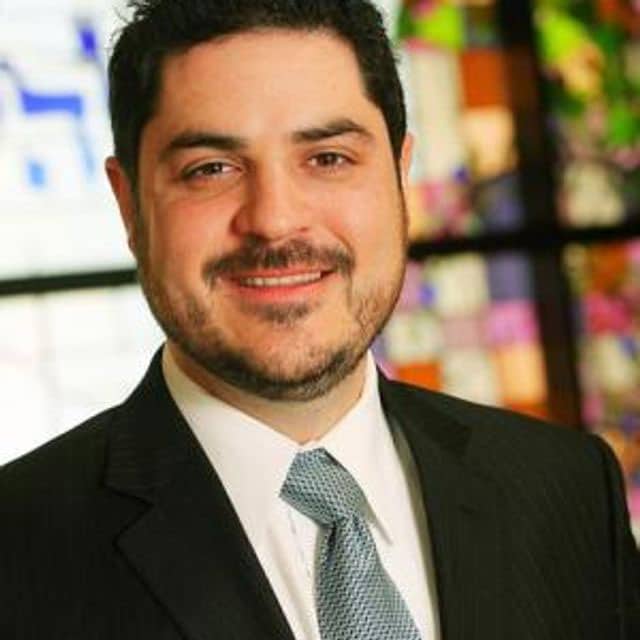
Rabbi Noah Farkas Named Incoming President & CEO of the Jewish Federation of Greater Los Angeles

The Jewish Federation of Greater Los Angeles announced that Rabbi Noah Farkas has been named Federation’s incoming President & CEO.  He assumes his new position January 1, 2022.

Rabbi Farkas will succeed Jay Sanderson who led the Federation as President & CEO for the past 12 years. He will continue to serve in that role through the end of 2021.

Rabbi Farkas currently serves at Valley Beth Shalom, the largest Jewish congregation in the San Fernando Valley, where he teaches, preaches, and leads strategic development.

Albert Z. Praw, Federation Chair, said: “Noah is an enormously talented leader who combines a reasoned and principled approach to address the greatest needs facing our community.  I am enormously confident in Noah’s commitment to the mission statement of the Federation and its strategic initiatives as well as his ability to lead our Federation through its next stage of growth.”

“Noah is an enormously talented leader who combines a reasoned and principled approach to address the greatest needs facing our community.”

“Leading this search team of committed and visionary leaders in our Jewish community has been an honor,” Julie Platt, Former Chair of the Board and Chair of the search committee added: “During our nine-month national search, we carefully considered an incredible number of qualified applicants and couldn’t be more excited about our choice in Rabbi Farkas.”

“I am overwhelmed with gratitude to have been selected as the next President & CEO of The Jewish Federation of Greater Los Angeles,” Rabbi Farkas said. “The Federation is uniquely positioned to foster a flourishing Jewish community and it is a gift to have been asked to serve. I look forward to many years together moving boldly into a future that is both dynamic and caring, but is most of all filled with a spirit of cooperation.”

Rabbi Noah Farkas Named Incoming President & CEO of the Jewish Federation of Greater Los Angeles Read More »

Table for Five: Pinchas

One verse, five voices. Edited by Salvador Litvak, the Accidental Talmudist

Pinchas the son of Eleazar the son of Aaron the kohen has turned My anger away from the children of Israel by his zealously avenging Me among them, so that I did not destroy the children of Israel because of My zeal. Therefore, say, “I hereby give him My covenant of peace.”

-Num 25:11-12


Rabbi Pinchas Winston
Thirtysix.org

Who was Eliyahu the prophet’s father and mother? Before you think too hard, it is a trick question. He didn’t have any. He didn’t? Then how was he born? He wasn’t. He actually originated as someone else, who morphed into the famous prophet we welcome each Seder night on Pesach, and who will herald the final redemption. As the Ba’al Haturim says at the beginning of this week’s reading: Eliyahu, this was Pinchas.

According to tradition, Pinchas merited to become the prophet after his act of zealousness at the end of last week’s parsha. The question is, how? The answer is reincarnation which, yes, we believe in very much. There are two types. The first is when a person’s soul returns to a new body and gives it life. The second is when an “additional” soul comes to a person who is already living. In the first case, if the soul leaves the person does too. In the second case, the soul can come and go and the person will remain alive. Instead of Eliyahu’s soul being born inside a person, it went to Pinchas who was already alive, and transformed him into Eliyahu the prophet.

Pinchas was not the first one to get such help in life to transcend his limitations, or the last one. Anyone can draw down an extra soul if they sincerely want to accomplish a lot spiritually. The benefits are tremendous, as will be a person’s accomplishments. Eliyahu a.k.a. Pinchas makes that clear.


Judy Gruen
Author, “The Skeptic and the Rabbi: Falling in Love with Faith”

Zealots and heathens and spears, oh my! (With apologies to the Wizard of Oz.) At the conclusion of the previous parsha (Balak), Pinchas performed an act of vigilante justice. Watching as a Jewish man dared to have relations in full public view with an idolatrous Midianite woman, Pinchas grabbed a spear and executed them while they were in flagrante delicto. It was a moment of extreme danger for the Jewish people. The rampant idolatry and sexual immorality consuming the Jewish people had resulted in a plague killing 24,000. After Pinchas’ action, the plague ended.

Pinchas becomes known as a zealot, but is it a compliment? Naturally, it’s complicated.

God’s morality is strict, but it also includes safeguards against people acting extrajudicially. Pinchas’ action was also controversial. In his time, he was both lauded for having saved lives but also targeted for excommunication. Though Pinchas took an extreme action outside the law, it was for God’s honor and the communal good, not for personal vengeance.

Still, his act was dangerous; Hashem could not allow it to happen again. As both protection and reward, Hashem gave Pinchas His covenant of peace –he was made a kohen, like his grandfather Aaron. The kohanim are strongly associated with peace—they bless the people communally with the blessing of peace at the end of the Amidah on holidays. Indeed, later on, in the Book of Joshua, Pinchas’ diplomacy negotiating with the tribes over land settlements in Israel will prevent war.


Rabbi Elliot Dorff
American Jewish University

In the weeks before my first summer as a counselor at Camp Ramah in Wisconsin, I was informed by the administration that one of the eleven-year-old boys in my bunk was likely to be scapegoated, and they taught me some ways of dealing with that. Sure enough, on the third day of the season, one of the boys began what was clearly going to be scapegoating of that boy. Another boy in the bunk, though – I will call him Larry – broke into the conversation and said, “No, we are not going to do that. That is not who we are or want to be.” The boy about whom I was warned had many problems during the summer, but scapegoating was not one of them, thanks to Larry, who later became a Professor of Social Work at a prestigious university.

We rightly applaud Larry’s kind of moral courage. Sometimes we see it when people stand up for their own moral claims, as Rosa Parks did on that bus in Montgomery, Alabama, and in doing so they encourage others to do so as well. Sometimes people establish or defend the rights of others, as President Truman did in integrating the troops. Pinchas, though, kills someone in order to correct a violation of the law. God approves, but I am not so sure. Do we really want everyone to take the law in their own hands to that extent? We definitely want Larry among us; do we really want Pinchas?


Kylie Ora Lobell
Jewish Journal, Contributing Writer

Pinchas is one of the great role models in the Torah. He sees that the Jewish people are dying because they are engaging in idol worship and sinning with the daughters of Midian. By killing Zimri and the Midianite princess, he singlehandedly stops the plague. Today, cause and effect is not clear like it was in the Torah, and of course, we have no right to take somebody else’s life like Pinchas did. However, we can be like Pinchas when we stand up for what’s right and fight against what’s wrong in this world.

If we see somebody stealing, we can report it to the police. If someone is spreading anti-Israel propaganda, we can confront them. If we catch ourselves speaking lashon hara, we can stop and switch to a more positive topic of conversation instead. Today, it can certainly be difficult to fight for what’s right when society’s values are ever changing, and our values may seem “old-fashioned.” Plus, if you say the “wrong” thing, you can lose your job, your social status, and your dignity thanks to cancel culture. But if there is a plague of bad ideas going around, and you know in your gut that something is wrong, how can you not speak up?

The short-time consequences may be scary, but in the long run, much worse things could happen. Pinchas knew this and he was willing to take a chance. Are you going to stand up for what’s right like he did?


Hillary Chorny
Cantor/Temple Beth Am

The story of Pinchas begins with a flourish of violence. He is held up in the narrative of the Torah as a righteous actor who orchestrates a swift recovery of Israel’s morality in response to his intense and decisive act. The reward promised to Pinchas by God is a covenant of peace: a Brit Shalom.

Rashi, the prolific 11th century commentator, reads this as a gift of mutuality, an offer from God to Pinchas like a favor one would do for someone who had just done them a kindness in turn. As Pinchas had brought peace and restored wholeness to God’s people, so might he find wholeness.

I see in this Brit Shalom an instruction to Pinchas as well. Peace that is proffered through violence is tenuous and strained at best, and often comes at a terrible price. The Brit Shalom is an invitation to Pinchas that he might choose a more peaceful path for his ongoing leadership, one that promises sustained relationship between him and the Holy Blessed One.

Table for Five: Pinchas Read More »