The sound of the siren reached me as I sat at my desk working—a low howl, uncanny but familiar. It seemed to come from all directions, simultaneously far off and near at hand.
Standing up, I hurried to the stairwell, the safest place in my building, and closed the door behind me. Holding my breath, I waited to hear the boom, the sound of the rocket being intercepted by the Iron Dome. I waited for my neighbors to come out and join me in the stairwell. I waited for the ghostly, otherworldly cry of the siren to stop.
But a moment passed and then another, and the boom never came. I realized my mistake. Walking back into my apartment, I crossed over to the balcony and stepped outside. It wasn’t a rocket siren but rather the Memorial Day siren. Looking down at the street below, I saw the city frozen. People stood in stillness, held fast by the siren’s song like creatures caught in amber.
The next day, I was again working when I heard a terrible whoosh—the sound of air tearing like paper. Outside my window, I saw fighter jets cut across the horizon in a perfect triangle formation. They were heading south. South? They disappeared out of sight. Are they going to—
Before I could articulate the thought, they were back, doing loop-de-loops on their way up the coast. As they went, each one ejected a single firework—a little glowing star that drifted toward the ground before disappearing.
Oh right, I thought, slapping myself on the forehead. Independence Day. It was the air show.
I no longer live in Israel, but I recalled these two moments of disorientation when studying this week’s Torah portion, Parashat Be’haalotecha, in which God commands Moses to create two silver trumpets to be blown when the Israelites are under attack from an aggressor or when observing sacred dates.
For two radically different kinds of occasion, God has commissioned a single instrument. The same trumpets that will call the people to war will inaugurate their festivals.
So it is in Israel to this day. Rocket sirens double as sirens of remembrance. Technologies of war are repurposed for celebration.
So it is in Israel to this day. Rocket sirens double as sirens of remembrance. Technologies of war are repurposed for celebration.
Did the Israelites ever become confused like I did? Did they cry when they ought to have been smiling? Did they cower when they ought to have been standing? Did they draw their weapons when they ought to have been celebrating? In years of peace, did they forget the associations of violence and loss? In years of war, did every blast quicken their pulse and make their blood go cold? Did the trumpet’s cry create a sort of synesthesia—a mixing up of the senses and a tying together of what should be separate?
Joy and sorrow.
Pride and guilt.
Wholeness and grief.
As it is written: “Serve the Lord with fear, rejoice with trembling.” (Psalms 2:11)
At the sounding of the silver trumpets, was it possible to do anything else?
Matthew Schultz is the author of the essay collection “What Came Before” (2020). He is a rabbinical student at Hebrew College in Newton, Massachusetts.
There are various reports stating that Los Angeles Mayor Eric Garcetti has been selected to be the Biden administration’s Ambassador to India.
NBC News reporter Josh Lederman tweeted on May 27 that NBC can confirm that Garcetti has been selected for the position, as has former Chicago Mayor and Obama administration Chief of Staff Rahm Emanuel as the Ambassador to Japan. Thomas Nides, vice chairman of Morgan Stanley and former Deputy Secretary of State in the Obama administration, has been chosen for Ambassador to Israel.
.@NBCNews confirms the following Biden picks for US ambassadors: – Rahm Emanuel to Japan – Eric Garcetti to India – Nicholas Burns to China – Tom Nides to Israel Reporting with @carolelee@albamonica@kwelkernbc
The Associated Press (AP),Axios, and The Los Angeles Times have also reported that Garcetti is likely to be named to the Ambassador to India position. Garcetti’s office has not responded to the Journal’s request for comment on the matter. Garcetti previously said in December that he wouldn’t serve in the Biden administration because he felt like he was needed in Los Angeles to ameliorate the COVID-19 pandemic ravaging the city, although he hasn’t shot down the potential to serve as the Ambassador to India. Garcetti served as the co-chair for Joe Biden’s 2020 presidential campaign committee.
If Garcetti does become the Ambassador to India, the City Council could appoint an interim mayor until 2022 – when Garcetti’s current mayoral term ends – or call a special election for a replacement, who would serve until the end of 2022, according to KTLA. Garcetti and Emanuel’s purported appointments would mean that two former mayors who are Jewish would be serving in ambassador positions.
The Times noted that Garcetti’s potential appointment would come “as the city slowly recovers from the economic devastation of the COVID-19 pandemic and grapples with an ongoing homelessness crisis.” The AP called Garcetti’s mayoral record “uneven.”
We are ritually unclean…why should we be excluded so as not to bring the offering
-Numbers 9:7
I check my son’s homework on the internet machine
every day. This is my new-world responsibility ever since
stay-at-home school made all of us stay-at-home teachers.
The systems they’ve put in place – you can see when
something has been turned in, but it takes extra clicks
to see the actual work. Who has time for extra clicks
when we’re three years into a desert walk – When we’ve just run out of matzah, which may actually be a blessing?
The feedback comes from teachers on high – Show your work. Not enough detail. Why did you turn in a blank document?
Sometimes they give a second chance.
He can redo the work and correct any grievances. Who doesn’t like to redo something they
already did. Unchecking a checked box is the stuff our dreams are made of.
Sometimes he’ll make the effort to do that
but it’s not his priority. We try to instill
the values of our fore-parents – Do it right the
first time and then the world of clicky-fingers
and joysticks can be your world yet to come.
(Joystick is a word those of us who grew up in the
eighties use to refer to game controllers.)
There is no guarantee of second chances
in the wilderness. If you don’t pay your rent or
mortgage your home may no longer be your home.
The off-the-cuff words you say to the ones you
hold dear may sting for years beyond your apology.
If you accidentally touch a dead person
you’ll have to wait until second Passover comes along
to fulfill your obligations. By then your family
may have already flown home. You’re only on this
super-globe for so many turns around the sun.
(Leave it to the poets to remind you of your mortality.)
I message my son from one room to the next. Don’t waste time I tell him. In a hundred years
he’ll know exactly what I mean.
It is hard to believe that Eric Carle, the author of “The Very Hungry Caterpillar” died this week at the age of 91. He also authored the “Brown Bear” series among others, opening up the world of reading to so many curious minds. My children are getting older and yet every once in a while, they still request a visit to the pages of “The Very Hungry Caterpillar.” We’ve memorized the book, know which food is eaten on which day and certainly can explain what happens at the end. But no matter. We all gasp and breathe a sigh of wonder when the caterpillar transforms into the beautiful butterfly.
Eric Carle once said, “Caterpillar is a book of hope: you, too, can grow up and grow wings.” Perhaps, this is the reason parents, teachers, and caregivers choose to reread this story. We all need reminders that our wings are just waiting to emerge. We can choose to let others determine our fate or give unnecessary space to the insecure voices pushing to be heard. Or, we can hope. Putting faith in our own transformation.
Viktor Frankl teaches, “When we are no longer able to change a situation, we are challenged to change ourselves.” Knowing that we hold the capacity to grow even in ways that seem impossible. Eicha reminds us, “God’s kindness is renewed every morning; great is God’s faith in us.” God knows we can grow; we just need to have faith in ourselves. Faith that our wings will sprout, and our inner magnificence will know no bounds.
There’s a butterfly waiting to emerge from every cocoon.
So too, there is a spark waiting to be ignited in every human soul.
“You, too, can grow up and grow wings.”
Shabbat Shalom
Rabbi Nicole Guzik is a rabbi at Sinai Temple. She can be reached at her Facebook page at Rabbi Nicole Guzik. For more writings, visit Rabbi Guzik’s blog section from Sinai Temple’s website.
The student leadership of Hillel at UCLA was asked to give input on a letter entitled “Statement on Palestinian Solidarity” that was written by the Undergraduate Students Association Council at UCLA following a ceasefire in the region. After reading this letter, we were unequivocal: the statement is completely unacceptable.
Rather than expressing a message of coexistence and the possibilities for long-term peace, the statement erases the experiences of Jews and Israelis who have also been directly impacted by the recent conflict in the Middle East. The letter accuses Israel of ethnic cleansing, settler-colonialism, and apartheid and offers familiar calls to boycott and divest from Israel.
This statement actively promotes the antisemitic language fueling direct attacks against Jews in recent days. It is intellectually disingenuous and tragically misinformed. It represents a broader campaign to delegitimize the fundamental right of Jews to self-determination.
Let us be crystal clear: We affirm that Palestinians deserve self-determination and independence. We uphold their human rights. This is possible through a negotiated solution between both parties. Neither side will ever succeed in pushing the other into the sea. If this letter focused on Sheikh Jarrah or similar cases of Palestinian displacement, we’d be open to working with the Council on creating a statement of solidarity.
Many in our community are critical of the actions of the Israeli government. We do not believe that all such criticism is antisemitic. This statement, however, is fundamentally about delegitimization and does not recognize the right of the Jews to their own state, like every other people, including the Palestinians. It completely rejects the possibility of coexistence through mutual understanding and compromise. Instead, it takes the easy, and inaccurate, path of scapegoating the Jewish state for all of the problems of the region.
There are many Israeli students on our campus who are living in great fear for their families right now. There are even more Jewish students who are coming under attack online and in person in our city, from people who are conflating all Jews with the actions of the Israeli government. Agitators are waving Palestinian flags, driving around in Jewish neighborhoods, asking who is Jewish and then assaulting them.
Our friends and families have faced direct attacks in recent days, and the surge of antisemitic content on social media platforms has left many isolated and scared. The outpouring of antisemitism has been well-reported and documented, so much so that Chancellor Gene Block and Vice Chancellor Spain Bradley released a powerful statement of support for our community this week, which we greatly appreciate. We know you, our USAC President, read it because you decided to post a screenshot onto your Instagram story with the caption “this place make me sick” layered on top of the Chancellor’s message that “Anti-Semitism has no place in our community.”
Words have meaning and consequences. Defamation, libel, and propaganda have the power to incite violence. Current events, such as the 568% increase in antisemitic incidents in the past two weeks, provide ample examples.
To address this statement, numerous Hillel student leaders took time out of the end of their quarter, when we should have been studying for finals. We felt incredibly invalidated after our efforts as we were questioned repeatedly as to why we found the statement offensive and disrespectful.
Instead of hearing our concerns, pain, and personal stories, USAC added a discussion of this statement to their Tuesday evening agenda and invited the Jewish community for public comment only 45 minutes before the start of the meeting. This is the same kind of behavior for which the previous council apologized.
Speaking of which, we appreciate the work of your predecessors, in particular the 2016 bylaws change promising not to cause harm to other communities. We also affirm the UC Regent’s Principles Against Intolerance, UCLA’s Equity Diversity and Inclusion office, and the support we receive from the administrators, faculty, fellow students, and members of your own governing body.
We especially thank the current USAC councilmembers who have heard our concerns and understand how it is possible to affirm solidarity with Palestinian students without furthering the hateful language we have seen in recent days.
We simply ask that you treat us with the respect and dignity that you would offer any other minority community on this campus. As such, we ask that you stop asking us to educate you. Do not tokenize us or undermine our community leadership. Do not try to define antisemitism in defiance of widely accepted definitions that recognize the often overlapping nature of anti-Zionism and antisemitism and, more importantly, in contradiction of our own experiences as Jews.
If you really want to oppose “any and all anti-Semitic attitudes that have been expressed at this moment and in the past,” you can start with your proposed statement and your disregard for the thousands of Jewish and Israeli students and allies at UCLA.
We are open to building a relationship with USAC and your office, as long as there is mutual respect and an understanding that the Jewish community at UCLA matters as much as every other community on our campus.
Respectfully,
Binat Gousinov, President, Hillel at UCLA (2021-2022)
Danit Hetsroni, President, Hillel at UCLA (2020-2021)
Israel-hatred is very much like Jew-hatred—the haters will always find new ways to hate.
If you have any doubt about the irrational hatred for Israel, just consider the United Nations. According to UN Watch, since 2015 there have been 112 General Assembly Resolutions against Israel, compared to a grand total of zero for countries like China, Cuba, Venezuela, Libya, Turkey, Qatar and Pakistan.
Even Israel’s sharpest critics must admit this is an extreme case of discrimination and selective prosecution of the world’s only Jewish state.
Here in the United States, the latest tactic of the anti-Israel movement is to connect the Jewish state to the racist sins of white supremacy. As Thomas Friedman wrote this week in The New York Times, there is “a rising chorus of progressives who increasingly portray the Israeli army’s treatment of Palestinians as equivalent to the Minneapolis Police Department’s treatment of Black people or to the treatment by colonial powers of Indigenous peoples.”
In marketing, this is called building on brand equity: Take something credible and connect it to a new target. As the Black Lives Matter movement has become a cultural juggernaut, making Israel its global target turns that cultural equity squarely against Israel.
Making such connections is hardly new. “Intersectionality”—the idea that we all have overlapping identities that affect how we are seen and treated—has often been used against Jews in progressive circles. The intersectional turn against Israel has been around for a while, but Israel’s recent war with Hamas has taken the phenomenon to a whole other level.
A recent piece in The Washington Post, titled, “‘From Ferguson to Palestine’: How Black Lives Matter Changed the U.S. Debate on the Mideast,” began as follows:
“Black Lives Matter activists recently took to the streets of Indianapolis to protest for Palestinians. In Congress, a lawmaker who cut her teeth as a Black Lives Matter organizer and who has compared her clashes with police to those faced by Palestinians tweeted Friday, ‘A cease-fire ends the bombardment—not the violence.’ And during the height of the recent Gaza hostilities, the official Black Lives Matter organization called for ‘Palestinian liberation,’ six years after the group’s early leaders took a trip to the Middle East that planted the seeds for the current alliance.”
Why is this such a disturbing development in the long and ancient history of Jew-hatred?
First, because it’s disingenuous. Israel, and Jews for that matter, are hardly “white.” Israel is home to over 100 different nationalities of all races, colors and creeds. More than half of Israeli Jews hail from Arab and Muslim countries. If anything, it is multicultural supremacy that reigns in Israel.
Israel, and Jews for that matter, are hardly “white.” Israel is home to over 100 different nationalities of all races, colors and creeds. More than half of Israeli Jews hail from Arab and Muslim countries.
Second, framing Israel as a target of a movement that so many Jews, especially younger Jews, support and admire—like Black Lives Matter—threatens to turn more and more socially conscious Jews against the Jewish state. Because of the dichotomy created by BLM, progressive Jews are often forced to choose between support for Israel and support for social justice causes.
If you think Israel is like Derek Chauvin and the Palestinians are like George Floyd, what is there to discuss? Israel’s guilt becomes incontrovertible. There’s no wiggle room.
For many Jews who don’t care to delve into the complexities of the Israel-Palestinian conflict, that simplified narrative sounds believable. Fair or not, this is the new reality: America is going through a powerful racial reckoning moment, and Israel’s detractors are sucking it into the movement.
This is an old and proven tactic in antisemitism—making Jews the enemy du jour, forever guilty of the most despised crime of the moment, be it capitalism or Marxism or being anti-Christian or, now, the implication that the Jewish state is a racist state.
This is an old and proven tactic in antisemitism—making Jews the enemy du jour, forever guilty of the most despised crime of the moment
Third, the hyper-focus on Israel inevitably ends up hurting Jews. As Bret Stephens wrote recently in The New York Times, “In recent years it has become an article of faith on the progressive left that anti-Zionism is not anti-Semitism and that it’s slander to assume that someone who hates Israel also hates Jews.”
But not everyone, he writes, got the memo:
“Not the people who, waving Palestinian flags and chanting ‘Death to Jews,’ according to a witness, assaulted Jewish diners at a Los Angeles sushi restaurant. Not the people who threw fireworks in New York’s diamond district. Not the people who brutally beat up a man wearing a yarmulke in Times Square. Not the people who drove through London slurring Jews and yelling, ‘Rape their daughters.’ Not the people who gathered outside a synagogue in Germany shouting slurs. Not the people who, at a protest in Brussels, chanted, ‘Jews, remember Khaybar. The army of Muhammad is returning.’”
There’s always been a transcendent difference between criticism of Israeli policies and undermining the Jewish state. Natan Sharansky’s Three D test for knowing when anti-Zionism bleeds into antisemitism—delegitimization, demonization and double standards—is as relevant as ever.
The progressive anti-racist movement in America could have picked a slew of horribly racist and murderous nations to go after. Instead, it chose a multicultural Jewish state. Intentionally or not, they have declared open season on the Jews.
(The Media Line) After nearly 15 months of total closure, cinemas in Israel opened their doors Thursday to thousands of eager patrons, the latest in a series of encouraging steps signaling the near-total eradication of the coronavirus pandemic across the country.
“Morbidity rates have fortunately plummeted, the vaccines have definitely done their job. We’re back to almost normal routine,” Hezi Levi, director-general of Jerusalem’s health ministry, acknowledged Thursday.
“Still, we must remember coronavirus isn’t finished. There are variants, around the world and in Israel, so we have to remain very cautious,” he added.
Next week, the country is expected to completely remove all restrictions placed on businesses earlier this year, allowing stores, shopping centers, restaurants and other venues to fully reopen to the public, including customers who have not been vaccinated or recovered from the virus.
“Israel is returning to normal,” Health Minister Yuli Edelstein announced earlier this week. “Thanks to the excellent work of our health system workers … we are reaping the fruits of our world-leading vaccination efforts. It is now possible to cancel the ‘Green Pass’ requirements. The Israeli people and market will be afforded some more breathing room.”
The decision, the ministry said, was reached after consulting the government’s coronavirus task force, a team of experts that has advised Jerusalem’s cabinet on the issue since the pandemic’s outbreak.
Still, we must remember coronavirus isn’t finished. There are variants, around the world and in Israel, so we have to remain very cautious.
Nadav Davidovitch, chair of the Israeli Association of Public Health Physicians and a member of the special task force, says that is not entirely accurate.
“It’s complex. A month ago, we had a meeting where we agreed on some alleviations, like removing mask requirements, if cases were still down by early June,” he told The Media Line.
“The Health Ministry chose to go a different way, keeping the masks but ending the ‘Green Pass’ constraints. We weren’t consulted about that, or anything else, before this week’s announcement. They said they were scared it would leak,” he said.
The only limitations not yet lifted by Edelstein, serving as the lone remnants of the difficult past year, are indoor mask-wearing ordinances and restrictions on those entering Israel from certain so-called “red” countries.
“In the coming two weeks, the professional team will hold discussions regarding mask-wearing mandates in closed spaces,” the ministry’s statement read.
“Removing masks is the right step if morbidity indeed doesn’t spike,” says Davidovitch, an epidemiologist who heads the School of Public Health at Ben-Gurion University.
“It would be preferable to first remove them in workplaces, where you’re around the same people more or less, and only later in places like public transportation and restaurants,” he added.
Over the past few weeks, with new cases dropping sharply, Israel has steadily lifted most of its pandemic-related restrictions, allowing people to remove masks outdoors, and reopening entertainment venues and shops to vaccinated citizens.
Over 5 million Israelis, out of a total population of 9 million, have so far received both required Pfizer vaccine doses.
Only 14 cases were detected Wednesday, bringing the total number of hospitalized patients to 428, with 50 of them in serious condition.
No Israeli has died from the coronavirus since the beginning of the week.
“Honestly, the latest news doesn’t really matter. People haven’t been abiding by government orders for weeks,” Avi, 24, who runs a pet store in Jerusalem, told The Media Line.
“It’s practically over, there haven’t been new cases. Police have even stopped giving out fines for masks and other things. Nobody even knows about this latest announcement,” he said.
According to Davidovitch, the main challenge still facing the nation are potential variants of the virus.
“People entering from abroad, that’s the big concern,” he said.
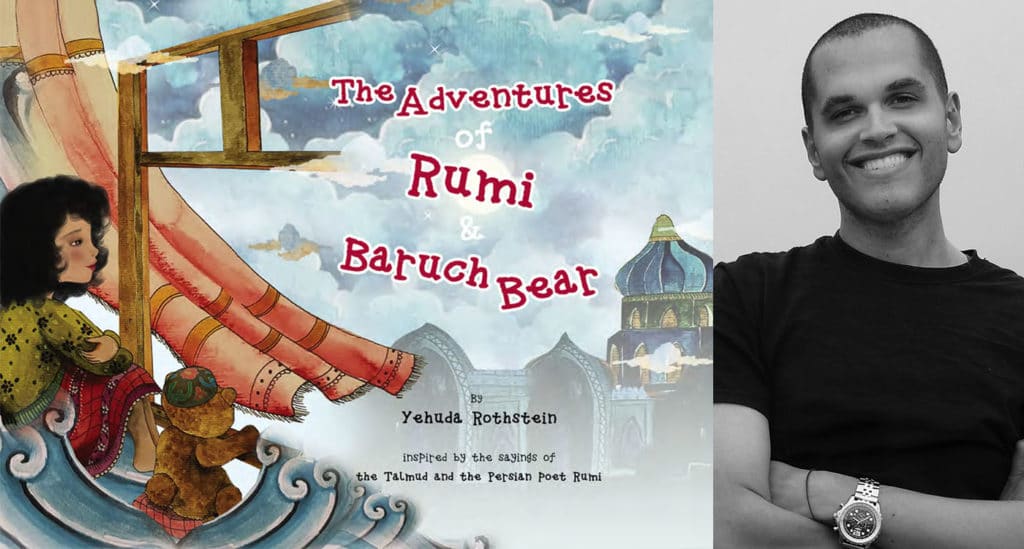
It’s also not every day that the main character of a Jewish children’s book is an Iranian Jewish girl, especially when so many of these books depict Ashkenazi characters, Ashkenazi villages, and disproportionate references to, what else? Matzo balls.
The book begins by introducing a young girl named Rumi as she gazes out of a window in her room in Tehran. Yes, Jews live all over the world, even in Iran, and in recognizing this important fact, Rothstein demonstrates his transparent passion to shine a light on the beautiful diversity of global Jewry.
On Rumi’s wall is a drawing of the tombs of Esther and Mordechai in the northern Iranian city of Hamadan. On her desk: computer screen, a keyboard, and a book titled “C++ Computer Programming.” As my eyes caught sight of the dark-haired Rumi (accompanied by her imaginary companion, Baruch Bear)—who seems to own her Jewish identity, Iranian roots, and yes, the study of computer science—I realized how much I already like this unique little girl.
The book, which is meant for children seven years and older, follows Rumi as she tries to “understand the questions of her heart.” She is guided by her loving mother, grandparents, and her great-grandfather, as well as teachers and friends. “One day,” the reader learns at the beginning of the story, “Iran was no longer safe for Rumi and her family.” These are exactly the same words I use to describe my family’s escape from Iran when I tell the story to my young children.
Rumi’s family resettles in New York and she admits that she’s afraid to attend school because of a stutter, worrying that no one will understand her. In highlighting Rumi’s stutter, Rothstein again compassionately breaks out of the mold of most Jewish “kid lit” (children’s literature)—especially picture books—by presenting a little girl’s struggles in direct parallel with her fears and potential.
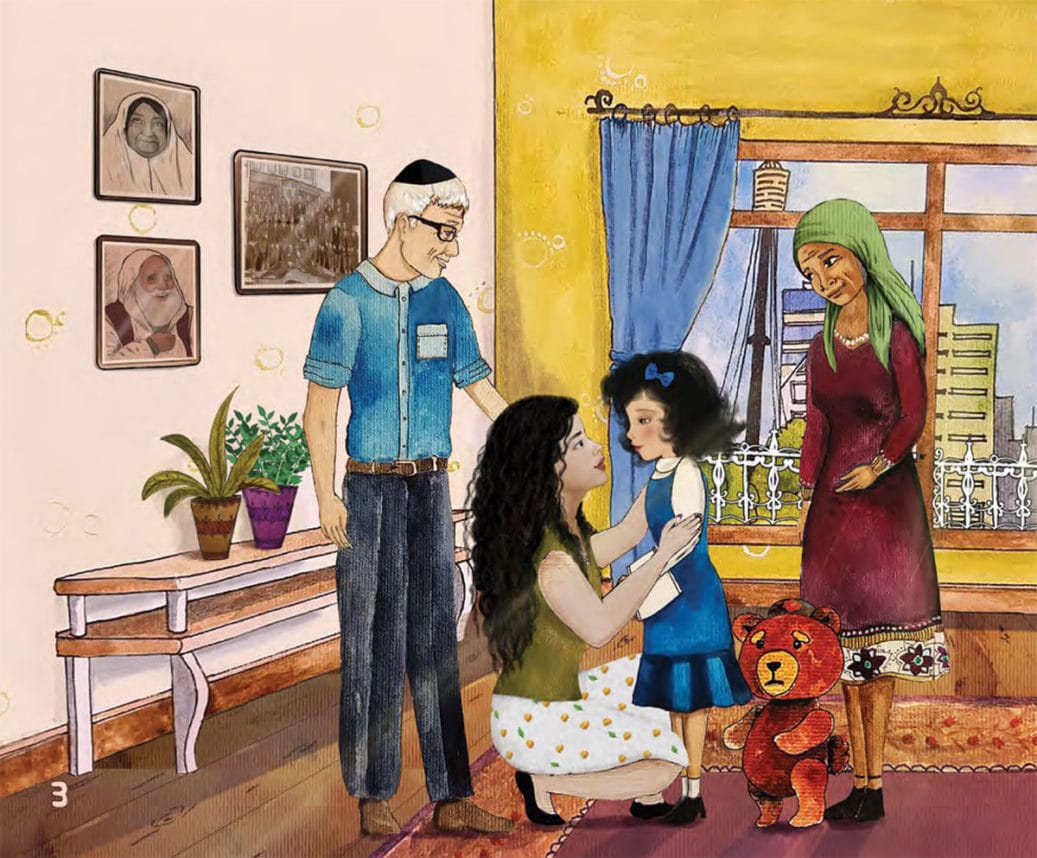
An illustration from the book
“Moses himself was a stutterer and accomplished great things after overcoming many different challenges,” Rothstein told the Journal. “I wanted Rumi to stutter because I wanted her to be different beyond just her Persian ethnicity in an Ashkenazi environment; a stutter is really a metaphor for what we all go through in life. We all try to strive in a way that moves forward our life agenda, but we often take missteps. We make mistakes, we say the wrong things—we stutter. Accepting ourselves, but at the same time, moving forward and growing, is part of life.”
Rothstein succeeds in creating an endearing compromise between telling a simple story about a girl who wishes to find her place in the world and rendering Talmudic wisdom (and the delicious poetry of Rumi) digestible for children. In fact, “The Adventures of Rumi and Baruch Bear” offers such a treasure trove of wisdom that adult readers will be hard-pressed to ignore its sage advice. When Rumi’s mother speaks harshly to her for hesitating to attend school, her grandfather intervenes, echoing the poet Rumi by advising, “Raise your words, not your voice. It is rain that grows flowers, not thunder.”
This is precisely how Rothstein manages to offer such complex poetic wisdom: eloquent counsel is offered by characters as a response to Rumi’s struggles to make friends and forge her own path. Even Baruch Bear espouses wisdom, such as when he responds to Rumi’s question about whether she will grow up to have a lot of friends: “All I can say is this: Who is wise? She who learns from others,” say Baruch Bear, quoting Pirkei Avot 4:1 (“Ethics of our Fathers”), while adding, “But do not blindly follow the stories of others that came before you” (wisdom from the poet, Rumi).
It’s time for a children’s picture book as vivid and inclusive as “The Adventures of Rumi and Baruch Bear.” I wish I had had the poet Rumi’s words, decades ago after I first came to the United States, to soothe me each time I felt anxiety about attending my new American school. I was especially drawn to a conversation in the book in which Rumi’s mother reassures her, “Ever since the dawn of your life, friendship heard your name and it has been running through the courtyard trying to catch you. You must let it.”
How’s that for soothing? Yes, if only “The Adventures of Rumi and Baruch Bear” had existed when I was a child. While I deeply yearned for friends, sometimes I felt as though the only person who ever tried to catch me was Ayatollah Khomeini (and Saddam Hussein during the Iran-Iraq War).
“The Adventures of Rumi and Baruch Bear” is Rothstein’s first children’s book. A New York-based transactional real estate and construction law attorney, he previously was a Fulbright visiting scholar at the University of Toronto Faculty of Law, where he lectured on Comparative Islamic and Jewish Law. Rothstein specializes in Muslim-Jewish relations and in 2017 was appointed a board member of the New York Muslim-Jewish Advisory Council (he also served as a Broome Fellow of Muslim-Jewish Relations at the American Sephardic Federation in New York City). He is currently the Editor-in-Chief of the Jewish-Muslim Sourcebook Project, which works with the Center for Muslim-Jewish Engagement at the University of Southern California. Rothstein is also a World Jewish Congress delegate and a real estate investor.
Rothstein grew up in Monsey, New York, home to one of the largest Orthodox Jewish communities in the country, and studied Talmud and Jewish studies for more than six hours a day at an all-boys yeshiva.
“In Monsey, the average family had five or six kids. And so everyone, including the men, learned a lot about children, how to nurture them, and to value them and appreciate family more generally,” he said. “It’s a very different world than most readers probably know.”
But growing up in Monsey, Rothstein seldom found depictions of Jews that closely mirrored him and his family. “I come from a diverse multicultural and multiracial Jewish background, and as a child, I didn’t see depictions of what we call Jews of Color or Mizrahi Jews in textbooks or learn about the rich history and diversity of our people,” he said. In elementary school, Rothstein saw handouts featuring cartoon pictures of Moses, Aaron, and other Jews in the Torah. “They all looked Ashkenazi and Haredi,” he recalled. “Moses and all of the Children of Israel who followed him into the desert were wearing shtreimels (fur hats worn by Hasidic men) and long coats.”
Rothstein remembers being taught that even Jewish scholars were only Ashkenazi. “Not only were all the biblical characters depicted as Ashkenazi, but all the heroes, all the great rabbis of history, were, too,” he said. “I remember my teachers saying to me that all the great rabbinical scholars or gedolim (great rabbis) of history were Ashkenazi Jews. I was told that there weren’t any great rabbinical figures in the Mizrahi world.”
But Rothstein believes that excluding Sephardic, Mizrahi, and others Jews of Color isn’t only a challenge in the Haredi world. “It isn’t only a problem relegated to the Orthodox world; it was true even in my secular Judaic Studies classes in university,” he said. “It occurs in Reform and Conservative circles I’ve traveled in, too. It’s a larger problem in American Jewry, and something that we need to repair in our culture. My book is a humble attempt to address this issue.”
Still, he doesn’t think of himself as “one kind of a Jew or another kind of Jew, or Ashkenazi Jew or Sephardic Jew. I’m just Jewish, and so I look at every single Jewish communal experience as part of my story.”
Still, he doesn’t think of himself as “one kind of a Jew or another kind of Jew, or Ashkenazi Jew or Sephardic Jew. I’m just Jewish, and so I look at every single Jewish communal experience as part of my story.”
Rothstein was especially influenced by his friendship with an elderly Iranian Jewish man named Shlomo Sakhai, who passed away in 2019 in New York. “He was a real hero and humble leader of Iranian Jewry, and one of the most generous but unassuming people I’ve ever met,” Rothstein recalled. “Shlomo was an orphan child in Isfahan, selling matches on the street corner as an eight-year-old boy. A deeply spiritual man who was focused on helping the community, he became one of the leaders of Iranian Jewry, a bridge-builder and peacemaker. He secretly gave charity to his neighbors, both Jewish and Muslim, and even adopted an orphan Muslim child that he raised as his own. When he died, Muslims in Tehran set up a mourning tent.”
Rothstein spent many Shabbat and holidays with Sakhai, where he learned the particulars of Persian culture: “I knew from my experiences with Shlomo that Rumi’s words and ideas are on the lips and heart of every literate Persian. But likewise, the words of Torah were also on his lips, and on the elders of the community, at all times. And so, I thought, it would be interesting to marry the wisdom of Rumi and the wisdom of the Talmud together, much in a way that they came together in someone like Shlomo.”
The work is a revised version of an earlier children’s book, also by Rothstein, titled “The Adventures of Rumi and Bixby Bear” (Redstone Publishing House, 2020), which did not include Jewish content. The original illustrations by Nasim Jenabi, a non-Jewish Iranian immigrant who resides in Canada, are particularly striking. “I think the best part of this book is Nasim’s art,” said Rothstein, who hired a graphic designer to incorporate Jewish elements into the second version of the book. Indeed, “The Adventures of Rumi and Baruch Bear” demonstrates an instinct for characters and scenes in ways that truly capture the richness of the Mizrahi Jewish experience: an artistic print on a little boy’s skullcap; a circa-1920s picture on a wall in Rumi’s house that shows fez-clad Iranian Jewish men; Rumi and her family at the Shabbat dinner table, surrounded by heaping plates of gondi (an Iranian Shabbat specialty consisting of ground chicken, chickpea, and cardamom meatballs). There’s something almost mystical about Jenabi’s original illustrations and the added graphic designs. Together with the text, this is a book I am deeply proud to show my own children.
“The Iranian Jewish story is really part of one of the first diaspora communities, and its contributions to world Jewry are immeasurable,” Rothstein said, adding, “How is it possible that there are so many Persian Jews in the United States and there is little to nothing about them in our textbooks and cultural centers? How is it that everybody knows about matzo balls, but not gondi balls as a delicacy on Shabbat?”
Rothstein also created a website where readers can download a free parent and teacher guidebook to facilitate discussion with children. “The Talmud says that each child is a clean, smooth piece of paper ready to be inscribed with all the potential of the world, as opposed to us adults who are likened to crinkled sheets of paper,” he said. “If we educate our children correctly, as children’s books have the potential to do, then they will adhere to those values when they are adults and we are gone.”
His commitment to ensuring that Jews around the world know and appreciate diverse Jewish customs is deeply inspiring: “We are taught that a Torah that is missing even a single letter isn’t kosher,” he said. “Our people belong to a single body. How can the left hand not learn about the right? If we don’t show the diversity of our people, then we are missing a part of ourselves.”
Tabby Refael is a Los Angeles-based writer, speaker and civic action activist. Follow her on Twitter @RefaelTabby.
A resolution calling for UC Santa Barbara (UCSB) to divest from various companies that conduct business with Israel narrowly failed in the student senate on the morning of May 27 following a 12-hour debate on the matter.
The final vote was 12 in favor and 13 against; zero members of the student senate abstained. The resolution, which was obtained by the Journal, singled out Caterpillar, Lockheed Martin and General Electric, among others, stating that “Caterpillar has provided engineering tools routinely used in the demolition of Palestinian homes, refugee camps, water cisterns, and agricultural fields in the West Bank and Gaza, and bulldozers used to expand illegal settlements and to construct the Apartheid Wall and military checkpoints throughout the West Bank” and that Lockheed Martin has provided various armaments to the Israeli military. “Investment in these companies shows implicit support for the decisions and actions of these companies and the Israeli government, as well as their consequences, which include the killings of civilians.”
Santa Barbara Hillel Executive Director Rabbi Evan Goodman said in a statement, “We are extraordinarily proud of our students for their resolve and integrity in the months, weeks and days leading up to tonight’s vote. After an exceptionally trying year of distance and isolation, they gave everything they had to fight this anti-Israel resolution. Pro-Israel students fought for the moral and intellectual integrity of our university and they succeeded.”
However, Goodman pointed out that nearly every Students for Justice in Palestine (SJP) speaker accused Israel of “death, genocide and ethnic cleansing” and at one point a speaker shouted “F*** Israel” and “Israel isn’t a real state,” prompting the meeting to be suspended until the speaker was booted from the Zoom meeting. Additionally, “the Facebook Live chat was shut down due to libelous comments made about” Goodman.
“In recent weeks some Jewish students have suffered through antisemitic harassment around campus,” Goodman said. “Santa Barbara Hillel and our campus partners will not allow messages of hate to tear apart our campus community or to isolate Jewish students because of their religious or ethnic identities or because they support the Jewish State of Israel. The pro-Israel community of University of California, Santa Barbara remain committed to being part of the solution.”
StandWithUs Executive Director of Research and Strategy Max Samarov, a UCSB alumnus, also said in a statement, “We are incredibly proud of all the UCSB students who came together and defeated divestment for the seventh time since 2013. With comments such as ‘Israel is an illegitimate state,’ supporters of BDS at UCSB made clear that they are part of the problem. We commend the majority of senators who stood on the right side of history and rejected this campaign of hate.”
I was about 12 years old when the Rubik’s Cube came out in the early 80’s. After months of intense focus, I was able to solve it in less than two minutes. (Yes, I memorized a book).
Life is filled with many puzzles. Sometimes we can follow a solution book. But for the most part, we have to just figure it out.
It takes patience.
It takes trial and error.
It takes failure.
It takes teamwork.
It takes vulnerability.
And yes… It takes perseverance.
But in that moment in time when we stumble upon a solution, the sweetness remains with us for life!
Eli enjoyed working on the cube. He then got schmutz all over it before dropping it into his bathtub! So yes, solving a puzzle can be messy as well!




 Los Angeles poet Rick Lupert created the