fbpx

April 28, 2021

Israel Could Be a ‘Superpower of Goodness,’ Says Presidential Hopeful Yosef Abramowitz

(The Media Line) Yosef Israel Abramowitz, 56, an American immigrant to Israel and well-known environmentalist, announced last week that he will run for the position of president of Israel.

A graduate of Boston University in Jewish public policy and a Wexner graduate fellow at the Columbia Journalism School, Abramowitz has been a pivotal player in putting the solar energy industry on the map in Israel and Africa. He is is president and CEO of investment platform Energiya Global Capital, which finances the development of green energy projects in sub-Saharan Africa, and co-founder of the Arava Power Company at Kibbutz Ketura in Israel’s Arava Desert. He has been named by CNN as one of the planet’s top green pioneers and was nominated by 12 African countries and Belize for the 2021 Nobel Peace Prize.

Abramowitz immigrated to Ketura with his wife, Rabbi Susan Silverman, and five children, in 2006. They now live in Jerusalem.

He spoke with The Media Line’s Felice Friedson about the environmental agenda he hopes to promote as president of the Jewish state.

The Media Line: The role of Israeli president is chiefly but not only ceremonial. What can you bring to the position beyond ribbon cutting?

Yosef Abramowitz: The Israeli presidency is the only stable position – seven years – in a country that seems to always be in an election cycle, and it is usually awarded in backroom deals among coalition members to honor the past accomplishments of an individual. Theodor Herzl, the founder of the Zionist movement, wanted the presidency to represent the future by someone relatively young who had a track record of service to the people. These next seven years are going to be critical on many issues – from climate to relations with the world Jewish community to the widening gap between rich and poor in Israel – and I would focus on strengthening the weakest elements of our society while advancing a strong climate and environmental agenda.

TML: Is the fact that you are an American incidental to your candidacy or is there a statement there?

Yosef Abramowitz: The legitimacy of many of the foundational institutions in Israel has been attacked through each election cycle, undermining the democratic culture. Growing up in the United States implanted in me a deep appreciation of the need for balance and separation of powers between the executive, legislative and judicial branches of government; freedom of the press, and civil discourse; rule of law and the importance of civic engagement. I also believe that if I am given the privilege of serving as president, it will electrify relations with Jews around the world, rebuilding relations that have been strained and will engage the next generation. Let’s call it the Golda Meir effect in an era of TikTok. Immigrants make up about a third of Israel’s citizens and having a president who understands their challenges would be a nonpartisan and Zionist win. I also have excellent relations with Democrats and progressives in the US, whose support for Israel needs to be strengthened and, in some cases, rebuilt. Having common cause with US progressives on climate would be a good start, but unfortunately, our prime minister just squandered that opportunity at the White House Climate Leaders Conference last week and stuck to green-washing our expensive and polluting gas monopoly-fueled policies that make Israel one of the worst climate actors in the OECD [Organization for Economic Cooperation and Development].

TML: By the time you are elected, Israel should be voting for, what will it be … the 15th time in two years? How would President Abramowitz use his office to break free of the political deadlock?

Yosef Abramowitz: In our politicized environment, it would be helpful to have a president who is not identified with any political party in order to be an honest broker during the process of forming new government coalitions. I have joined the prime minister on several trips to Africa, worked with energy and environmental protection ministers from across the political spectrum, cooperated in the Knesset with members from nearly all parties, and am not a member of any political party. I have but one ideological ax to grind, which is the climate, and which nearly all of Israel’s political parties have recently stepped forward to also advance.
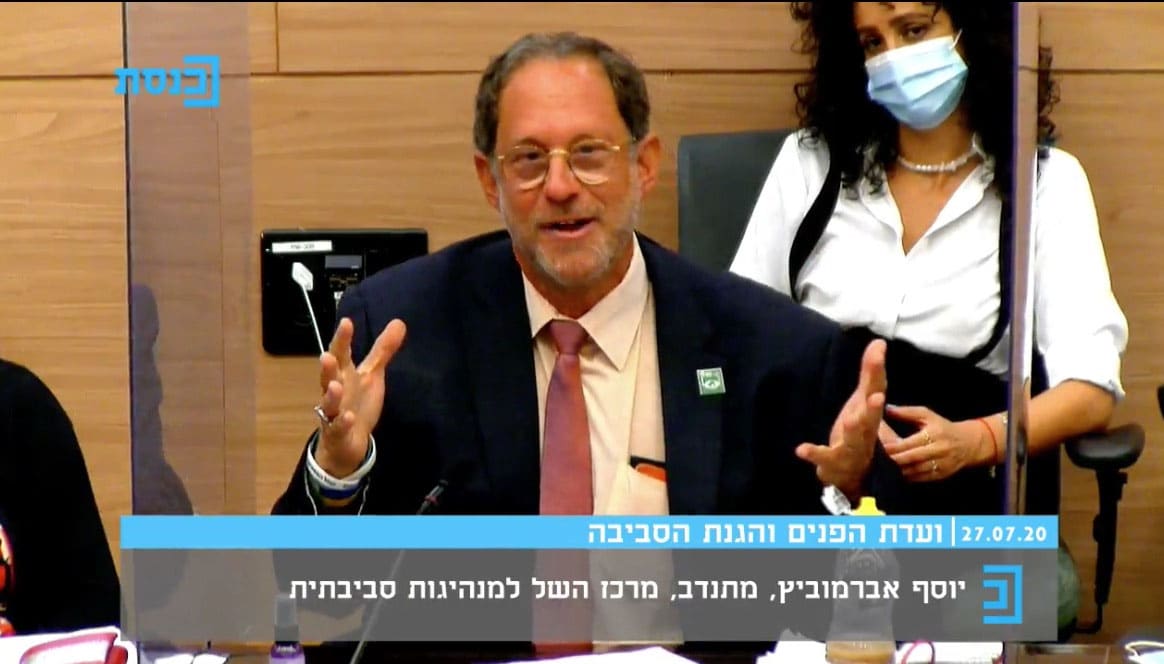
Abramowitz testifies before the Knesset Interior and Environmental Protection Committee, July 27, 2020, at the Knesset in Jerusalem. (Knesset Channel)

TML: You come from the entrepreneurial sector; you are not a career politician. Is that good or bad in regard to your bully pulpit?

Yosef Abramowitz: A good entrepreneur sees opportunities ahead of others to create value, like I have done in spearheading the solar industries in Israel and Africa. My background is from the world of impact investments through the Toniic group, and my vision is through attracting hundreds of billions of dollars in financing for Israeli companies that seek to solve global issues. Israel on my watch could become a superpower of goodness through our industries of goodness.

TML: You are a globally recognized environmentalist, a leading expert in solar energy. How can you make this a plus for Israel?

Yosef Abramowitz: Few other countries can credibly have their head of state lead their delegation to the United Nations Climate Conference in November. I already undertake a certain amount of green diplomacy on behalf of Israel when I cut ribbons on our solar fields in Africa; we expect to be doing so shortly in Burundi, providing 15% of the country’s entire generation capacity. [US] President Biden and Vice President Harris have put the climate crisis at the top of their global agenda; we should, as well. And as Ronald Reagan used to say, personnel is policy – meaning putting the right people in leadership is the key to advancing agendas. What we accomplished with our partners in Eilat and the Arava – the first region to reach 100% solar day goal – is already a shining example to the rest of the world that we can win the climate crisis with the right leadership.

TML: Despite Israel’s technical prowess, it has a way to go in pursuing environmental issues. How will you approach green issues? Do you plan any new governmental infrastructure?

Yosef Abramowitz: I will only cut ribbons on infrastructure projects that have passed a climate impact review process successfully and that advance the right programs to increase the use of public transportation, green building, preserves natural corridors, and more.

TML: How do you answer those who will say you are a one-issue candidate – akin to the marijuana legalization party?

Yosef Abramowitz: Climate affects all segments of our society and the climate justice movement has taught us that, like what we saw with corona affecting the weakest segments of society disproportionally, so too with the effects of climate change. Therefore, resilience is key, across all sectors, which means lifting up the weakest elements of our society educationally, socially, economically and more. The expensive and monopolistic gas deals were done in a way that undermined our democratic processes, and so strengthening our democracy and transparency is important to remove the political toxins that have taken hold of our body politic. Having an environmental lens on all the issues facing Israeli society is an added benefit at a time when Israel and the planet are more vulnerable. I will be a people’s president and also go on a listening tour in the first months.

TML: Do you have any high-profile backers onboard?

Yosef Abramowitz: On Earth Day, for the first time, 15 national green NGOs wrote to all Knesset members, united in their determination to elect only a green president. I am especially humbled and inspired by the support from the Strike for Climate youth. No presidential candidate has received yet any nomination signatures, so we are on a level playing field and our Knesset meetings have been very encouraging.

TML: Why is the time ripe for you to enter the political arena?

Yosef Abramowitz: The White House Climate Leaders Summit is the turning point globally on addressing what the Pentagon and others say is the greatest threat to our security. I don’t have any conventional ambition regarding seeking a seat in Knesset or be a minister in the government; I am simply answering the call of the youth of Israel, and the environmental movement – and even Herzl’s – for Israel to finally become a renewable light unto the nations. I am best positioned to answer this call, especially after 12 African countries and Belize nominated my climate work for the 2021 Nobel Peace Prize.

Israel Could Be a ‘Superpower of Goodness,’ Says Presidential Hopeful Yosef Abramowitz Read More »

What Happens to Unanswered Prayers?

At 8:39 p.m. on April 25, the texts and tweets began appearing on my phone: a six-year-old boy named Menachem Goldberg was missing. A reference photo showed the little boy wearing a kippah and tzizit, smiling from ear to ear as he held a Star Wars figurine still in its box. He looked so small and innocent, and my heart sank down to my feet.

At 8:40 p.m., friends started sending me and hundreds of others links to Tehillim (Psalms) on WhatsApp group chats, along with Menachem’s full Hebrew name and that of his mother (according to the Jewish custom for praying for someone’s health and safety).

At 8:45 p.m., texts continued to entreat members of the local Jewish community to search for “Menachi,” as his family called him. It was dark and cold. Hatzolah had dispatched helpers to specific areas, but there already were so many people at the scene to help that they caused a major traffic jam.

And then came three-word texts via group chats from people whom I’d never met: “On my way,” “Be there soon,” and “I just parked.” From all over West Los Angeles, Jews, especially men young and old, left their homes to search every crevice of Hancock Park in a desperate attempt to find Menachem. Some of them didn’t even know him or his family.

I’ve seldom prayed so hard in the course of a few minutes’ time. Although I don’t know Menachem’s family, I started reading verses of Tehillim I’d never read before, and I even considered giving to tzedakah on his behalf. Others learned Torah in the merit of his safe return. Countless people begged chat groups to update them if and when the boy was found. For a few precious hours, “Menachi” — his safety and his very life — belonged to all of us.

“I didn’t even know that so many people were involved until later,” Sarah Goldberg, Menachem’s mother, told me. “I started to see lines of people around the block. I felt like it was a whirlwind…like achdut (unity), because everyone was coming together with the sole purpose of finding my son.”

Was Menachem the only missing child in Los Angeles at the time? Sadly, no. But I was receiving constant notifications about him. His picture was etched in my mind that night, and I couldn’t fall asleep until he was brought home safely.

Outside Menachem’s house, police helicopters illuminated the night sky while fellow concerned Jews stood and prayed. Police dogs walked alongside officers, and television cameras caught footage of the desperate search. Neighbors were asked to review footage from their outdoor security cameras for any sign of Menachem.

I looked at photos of the masses gathered on Orange Drive in utter gratitude and amazement. Whoever heard of such a rapid community response? Frankly put, any parent around the world whose child had gone missing would have been incomparably lucky to have had such a unified and concerned search party.

“I feel sick to my stomach,” I told my husband, echoing the sentiments of many in the community, especially mothers. “How am I supposed to fold laundry while children are missing?” There was only one thing to do: I went into my kids’ room, where they were fast asleep, and squeezed them until their eyes bugged out and they begged me to let them go back to sleep.

And then, at 10:20 p.m., the text we all were waiting for arrived: Menachem had been found. At home. In his mother’s closet. Holding an iPad.

The whole house had been thoroughly searched earlier, without a trace of Menachem. When he was found, Jews danced in the street outside his home. After hearing the good news, I tried to decompress by observing that I hadn’t seen so many Jews all rush to one place since the night Passover ended a few weeks ago, when there was a caravan outside of the Krispy Kreme in Santa Monica.

It was better than anyone could have imagined. If Menachem had been found safe in the street, that would have been good enough. But he had been in the safety of his own home all along.

This column could have been entirely dedicated to the unique and amazing nature of the Los Angeles Jewish community. But the incident with Menachem really got me thinking about prayer.

Worrying about what’s happened to a missing child magnifies pre-existing tendencies in all of us: Those who identify as spiritually connected immediately turn to religion in times of trouble and many Orthodox Jews quickly open a book of Tehillim and plead with God to show mercy (some already have Tehillim saved on their phones); those with anxiety disorders (myself included) develop even more anxiety, imagining worst-case scenarios and even projecting our anxiety onto others.

Were our collective prayers that Menachem be brought home safely answered? Yes. Except he already was home and just needed to be found. So what was the point of all that Tehillim and prayer?

I don’t believe there’s such a thing as a wasted prayer. My starting point for being an observant Jew is the admission that I don’t understand God’s ways. And while I can’t assume anything, here’s what I like to think about the thousands of prayers (and good deeds) that were offered on behalf of Menachem: They’ll be saved for a spiritually rainy day, whether for him or, yes, even for someone else.

Perhaps those prayers and deeds will reverse a future harsh judgment for another person; perhaps they’ll ensure that Menachem and his family have a healthy and safe rest of the year; or perhaps at around 9 p.m. last Sunday night, thousands of Jews in the City of Angels were simply meant to pray.

According to Sarah, she, her husband and their children have been dealing with illness in the family for a few years. “Because of that, I’ve trained myself to really hone in on my emunah (belief) and bitachon (trust),” she said. “There have been so many intense situations because of the illness for a long time, so when this happened with Menachem, I immediately went to a place of trust in Hashem.

“We’re so thankful to the community,” she continued. “It was so heartwarming, especially because we didn’t even know the majority of the people.”

My maternal cousin — a mother of three small children and a skilled, compassionate pediatrician — was diagnosed with breast cancer in her early forties. An entire community, including those in her family, synagogue and neighborhood, as well as thousands who didn’t even know her, prayed for her recovery. Her family took on more mitzvot on her behalf. I took on more mitzvot. We prayed until we were blue in the face. And in 2015, she succumbed to cancer.

What happened to all those prayers? Where did they go? Were they unanswered?

If you ask my family, who still feels tremendous pain over my cousin’s loss, they’ll tell you that sometimes, prayers can feel unanswered. And yet, we believe that in our deeply limited understanding of God, prayers are not unanswered but redirected. Perhaps those prayers accompanied my cousin in the next world; perhaps they protect her children today. Perhaps they helped save another young mother who could have used a few more prayers.

A friend recently confided in me that she had heard an acquaintance was sick. My friend read Tehillim for this person every day. “I didn’t know the person had eventually died,” she told me, “so I kept praying for her for an entire week after she had passed because I didn’t even know.”

Were those superfluous, wasted prayers? I believe there’s no such thing. But that’s the thing about prayer: God isn’t a vending machine. One can’t read three different verses of Tehillim, push a button and order a Coke with a side of health. Rather than a cosmic vending machine, I like to see God as an ATM: Every prayer, every good deed and every moment of sincere remorse on our part is like a small deposit in our spiritual bank accounts. Even if we seldom “touch” those spiritual funds or feel their positive effects for years, they’re still there. Over the course of just one day, we all deposit and withdraw spiritual currency from the bank accounts of our luminous souls.

Every prayer, every good deed and every moment of sincere remorse on our part is like a small deposit in our spiritual bank accounts.

“The Third Lubavitcher Rebbe, also known as the Tzemach Tzedek, taught about how people can make miracles,” said Sarah. “He believed that you have to think positively. Think good and it will be good. It’s so simple, but so profound.”

As the frantic search for Menachem ensued, Sarah envisioned her son being well and smiling. When her husband began to tear up, she reassured him that they had to “stay strong and stay positive.” Sarah also believes that reciting Tehillim has indescribable power. “Everything that happens to us is from Hashem,” she said. “We don’t know why things happen. But we should keep positively picturing what we want to see.”

As it turned out, Sunday night was Pesach Sheni, the “Second Passover,” which marks a day when those who were unable to bring a Passover offering beginning a year after the Exodus from Egypt could partake in the mitzvah. Many Jews eat matzah on this day and light a candle for the yahrzeit of Rabbi Meir Ba’al Ha’ness, the Jewish sage known as “the Miracle maker” whose name, amazingly, is associated with finding lost objects (and, one wonders, lost people). Pesach Sheni is a literal symbol of second chances through teshuvah, which unfortunately is often mistranslated as “repentance.” But the real meaning of teshuvah is “to return” — to return to one’s perfect soul and try and live to its highest potential.

That’s why Rabbi Yosef Yitzchak of Lubavitch rightly said, “The Second Passover means that it’s never a ‘lost cause.’” I can’t think of a better return than that of little Menachem to his mother and father’s arms. And for a few brief hours, he managed to do the unthinkable: unite Jews.

“I didn’t know what the result of searching for Menachem would be,” said Sarah. “I just kept praying and thinking positively. My main message for the whole community is that we have to strengthen our bitachon so we can bring Moshiach. We should take a lesson from all this to all join together because we’re all Am Israel (the Jewish people). When we join together, the power and unity is just incredible.”


Tabby Refael is a Los Angeles-based writer, speaker and activist. Follow her on Twitter @RefaelTabby

What Happens to Unanswered Prayers? Read More »

A Little Ray of Hope in Los Angeles

I was out walking my dog Sunday evening. The Oscar presentations were over, but the drama was about to begin. An Asian family stopped their car and asked me if I had seen a missing child. I had not, but I asked what I should do if I found the child. They told me to call the police.

I returned to the house and told my wife that the family had lost their six-year-old child. She asked me what the child looked like. I told her the boy must be Asian.

I soon discovered that the missing child was Menachem Goldberg, and he was not Asian, but what I witnessed during the next couple of hours was a beautiful expression of community spirit. As word went around that a six year old had been reported missing, the entire neighborhood came out — Hasidic Jews, assimilated Jews, Asians, whites, African Americans. On the exact same blocks in which I had filmed looting during the June 2020 protests, a broad, diverse community was searching together for a child.

What I witnessed during the next couple of hours was a beautiful expression of community spirit.

In a world in which we see so much division and hatred, it was a heartwarming moment of reassurance that when one child is missing, everyone’s child is missing.

Menachem Goldberg turned up safe and well hiding at home, a couple of hours later. But after securing an extra 10,000 steps and seeing more of my neighbors’ back gardens than I had ever imagined, I returned home pleasantly happy to know that I live in a neighborhood where an Asian couple was out searching for a Jewish child, as if he was their own.


Stephen D. Smith is Finci-Viterbi executive director of the USC Shoah Foundation. The first episode of “The Memory Generation” was released on April 15, 2021, and can be found here: https://www.memorygenerationpodcast.com/episodes

A Little Ray of Hope in Los Angeles Read More »

Former CIA Head Criticized for Tweeting That Jews Should Be “Empathetic Champions” of Palestinians

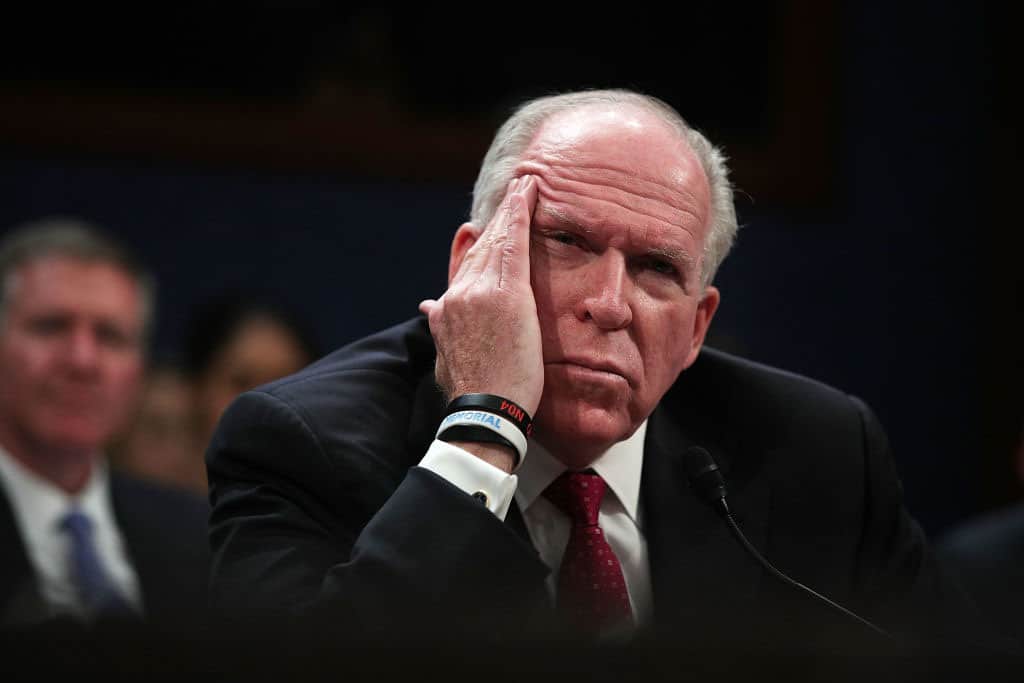
John Brennan, the former CIA director during the Obama administration, is being criticized for tweeting on April 28 that Jews should be “empathetic champions” of Palestinian rights. Brennan was promoting his April 27 New York Times op-ed arguing that the Biden administration needs to focus on ensuring that the Palestinians receive statehood and blamed Israel for the lack of progress on that front.

Brennan, quote-tweeting his op-ed, wrote, “I always found it difficult to fathom how a nation of people deeply scarred by a history replete with prejudice, religious persecution, & unspeakable violence perpetrated against them would not be the empathetic champions of those whose rights & freedoms are still abridged.”


Various Jewish and pro-Israel Twitter users criticized Brennan for this tweet. “Using Jewish history, [including the] Holocaust, as a cudgel against #Israel is obscene,” American Jewish Committee CEO David Harris tweeted in response to Brennan. “Jewish history means [Israel] must take any threat to its existence seriously & rely on itself. Israel needs a Palestinian partner to make peace. Alas, that partner has been MIA [missing in action] since 1947.”

Stop Antisemitism tweeted that Brennan’s tweet was “how to bash Jews without being too obvious about bashing Jews” and added that Brennan is a “hypocrite” for perpetuating “inmate torture during the Bush/Iraq war era.”

Batya Ungar-Sargon, deputy opinion editor of Newsweek, tweeted, “There’s a word for holding Jews to a higher standard than everyone else: It’s called anti-Semitism. But there should be a special word for holding Jews to a higher standard than everyone else due to the very persecution and genocide that was inflicted on us throughout history.”


The Elder of Ziyon blogger wrote in a blog post that Brennan’s tweet was essentially “saying that Israeli Jews are heartless monsters who don’t care about Palestinian human rights,” which the blogger argued is false. “During this holy month of Ramadan, Palestinian youths are celebrating by attacking religious Jews for fun and TikTok videos,” Elder of Ziyon wrote. “The issue, as always, isn’t whether Palestinians deserve human rights. No one argues with that. The issue is how to best balance Palestinian human rights with Israeli human rights.”

Gilead Ini, senior research analyst for the Committee for Accuracy in Middle East Reporting Analysis, also tweeted, “Try fathoming someone effectively saying this: The lesson you Jews *should’ve* learned from the Holocaust is not to worry so much about your own physical security and not to take seriously genocidal calls by Palestinian leaders.”


Rabbi Michael Adam Latz, on the other hand, defended Brennan. “We have not exercised moral leadership to end the occupation,” he wrote in response to Harris. “What is obscene? Palestinians are denied their human rights. Jewish history means we must use our power with compassion, justice, & dignity. Alas, what is MIA is moral courage & conscience.”

Former CIA Head Criticized for Tweeting That Jews Should Be “Empathetic Champions” of Palestinians Read More »

Ryan P. Burge

Ryan P. Burge: The Nones

Shmuel Rosner and Ryan P. Burge discuss his latest book, “The Nones: Where They Came From, Who They Are, and Where They Are Going“.
Dr. Burge (PhD, Southern Illinois University) teaches at Eastern Illinois University in a variety of areas, including American institutions, political behavior, and research methods. My research focuses largely on the intersection between religiosity and political behavior (especially in the American context).

Follow Shmuel Rosner on Twitter.

Ryan P. Burge: The Nones Read More »

Small Christian University in Oregon Grapples with Accusations of Antisemitism

(JTA) — When the new president of his small Oregon university made a remark about Jewish noses, Daniel Pollack-Pelzner was unnerved. But Pollack-Pelzner, a professor at the school, was willing to assume that the president had merely made a tactless mistake.

“At the time, I thought this is messed up,” he said of the 2018 encounter with Miles Davis, president of Linfield University. “I thought people stopped talking about measuring the size of Jewish noses sometime around 1945.”

Pollack-Pelzner added that he didn’t know Davis and “figured I could give him the benefit of the doubt.”

Two years later, Pollack-Pelzner said he is no longer able to keep an open mind about Davis’ attitude toward Jews. He said he was subjected to antisemitic attacks after demanding that Linfield do more to address sexual harassment allegations against men on its board of trustees, of which he is also a member. The professor also said he was banned from certain board meetings after raising concerns.

The internal conflict at Linfield, which is affiliated with the American Baptist Churches, spilled into public view in March when Pollack-Pelzner wrote a viral Twitter thread about his experience. Local Jewish groups have registered concern, and last week the school’s Arts and Sciences faculty overwhelmingly called on Davis and the board chair, David Baca, to resign.

The faculty resolution cited “behaviors that degrade members of our community, including expressions of intolerance and discrimination, actions that intimidate or humiliate others, and retaliation against those who seek to promote justice and accountability.”

Davis has repeatedly denied making antisemitic comments, and an independent investigation of Pollack-Pelzner’s charges could not substantiate most of the allegations, mainly because of Davis’ denial. Meanwhile, the board has responded by expressing its “strong, ongoing support” for Davis and Baca.

“As a Black man, President Davis understands viscerally how words matter and how words can hurt,” Linfield spokesman Scott Nelson told the Jewish Telegraphic Agency. “He is not antisemitic and does not believe he said anything that was antisemitic.”

Linfield has not held discussions with the Jewish groups. Davis did ask the local chapter of the NAACP to conduct an investigation of racial animus against him, which is currently taking place.

Email and phone interviews with faculty members, administrators and local activists reflect an ongoing dispute in which both sides feel aggrieved. The allegations, and the official response that critics are calling insufficient or even misguided, illustrate the challenges of identifying, calling out and remedying allegations of antisemitism in an environment with a tiny Jewish population and relatively little familiarity with the mores surrounding discourse about Jews.

“It feels like they’re trying to sweep them under the rug,” Rabbi Eve Posen, chair of the Oregon Board of Rabbis, which has called on Davis and Baca to resign, said regarding the allegations. “It seems as though there is a culture on campus that doesn’t deal head-on with these kinds of issues, and that’s a problem.”

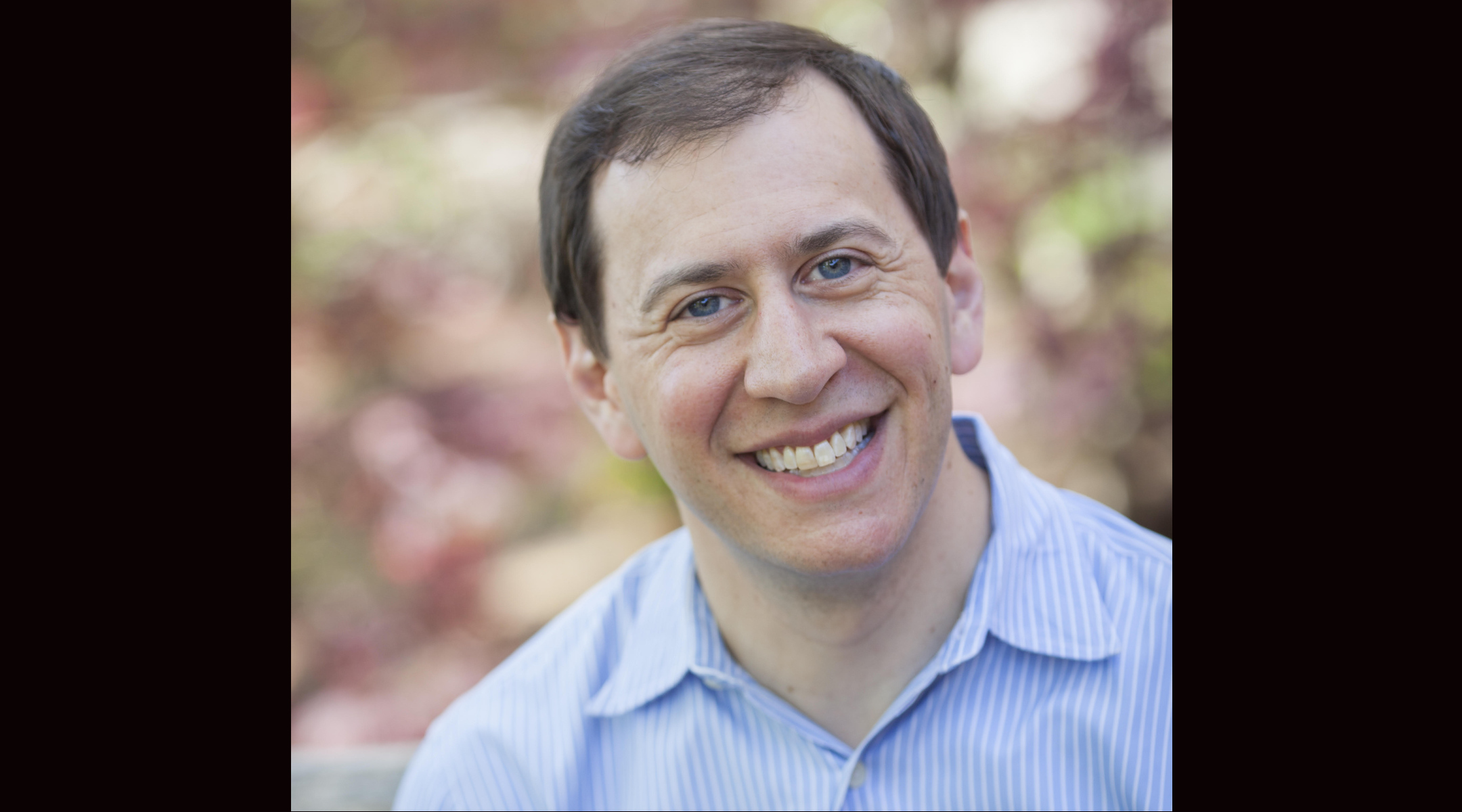
Daniel Pollack-Pelzner, an English literature professor at Linfield University, says he has been targeted with antisemitic attacks after calling out sexual harassment at the school. (Courtesy of Pollack-Pelzner)

Daniel Pollack-Pelzner, an English literature professor at Linfield, says he has been targeted with antisemitic attacks after calling out sexual harassment at the school. (Courtesy of Pollack-Pelzner)

Unlike at many campuses where allegations of antisemitism break into public view, Linfield has almost no organized Jewish presence. There’s no Hillel, Chabad or full-time Jewish professional on campus. Only a handful of students and faculty members — perhaps as few as a dozen total, according to an informal recent count — are Jewish.

Pollack-Pelzner has taught English literature at Linfield for more than a decade and has tenure. In 2018, during that first meeting with Davis, they discussed teaching Shakespeare’s “The Merchant of Venice,” and Davis remarked that he knew there was no difference in size between the average Jewish nose and average Arab nose.

Even though the comment stuck in his memory, Pollack-Pelzner said that when he joined the board the next year as a faculty trustee, fighting antisemitism wasn’t his primary goal.

Instead, soon after he joined the board, fellow professors told him that a professor and a student had been sexually harassed or inappropriately touched by trustees — including, in one case, Davis — at school events. The previous year, a trustee had resigned in the face of sexual assault allegations. (He was later indicted.)

Pollack-Pelzner said he was rebuffed when he asked the trustees to implement sexual harassment training and guidelines to prevent future misconduct. In January 2020, he objected to a plan to have faculty host trustees in their homes on Valentine’s Day.

Around that time, Pollack-Pelzner said, he began to feel like his religion was being used against him.

In a private meeting with Baca, Pollack-Pelzner said, the board president accused him of trying to grab power on the board. And at the next board meeting, according to Pollack-Pelzner, Davis gave a speech warning of internal disloyalty at Linfield — telling trustees to follow the teachings of Jesus at the Sermon on the Mount.

Davis has said he is not Christian, and Pollack-Pelzner told JTA that quoting the New Testament was a regular feature of board meetings at the Baptist-affiliated school. Still, Davis’ exhortation to follow Jesus felt troubling to Pollack-Pelzner given that the board chair had so recently accused him, the board’s only Jewish member, of being power hungry.

“I was cast as a villain in my own community,” he said. “So when I heard the president talking about disloyal elements destroying Linfield from within, and offering Jesus’ teachings as the solution, he was doing what a lot of people do when they’re stressed and defensive, which is closing ranks with a community and scapegoating people who seem to be outside it.”

(The American Baptist Churches said it had no comment on the antisemitism allegations and referred JTA to a resolution condemning antisemitism that was most recently reaffirmed in 1997. Steve Bils, the executive minister of the American Baptist Churches of Portland, did not respond to a request for comment.)

Pollack-Pelzner believed that Davis had poorly handled previous evidence of antisemitism on campus. After swastikas and anti-Black hate speech graffiti were discovered on whiteboards in dorms in December 2019, Pollack-Pelzner recalled Davis ignoring the antisemitic aspects of the graffiti in a meeting with faculty. Instead, according to Pollack-Pelzner and another Jewish professor who spoke with JTA, Davis talked only about how he personally related to the graffiti as a Black man.

“He said he had seen a lot worse himself,” Pollack-Pelzner said. “And I don’t doubt the depth of his own experiences as an African-American man, but I was disappointed that he wouldn’t perceive that there was anybody besides him who would be affected by the presence of swastikas on campus.”

As with the others, Davis denied this allegation to the independent investigator.

Over the ensuing months, Pollack-Pelzner took his complaints to a human resources representative, and the board initiated the independent investigation of his claims. He has also been barred from the board’s executive committee meetings.

The summary of the investigation’s report said it could not substantiate several of Pollack-Pelzner’s complaints against Davis, calling one instance a “he said, he said” situation.

“The investigation found that [Pollack-Pelzner] subjectively believed antisemitism to be behind comments made to him by leadership, but also found it possible that he perceived anti-religious sentiment where none was intended,” the summary said. “No witness corroborated Complainant’s allegations that President Davis made anti-Semitic remarks in public.”

Neither Davis nor Baca agreed to be interviewed. A university spokesperson told JTA that Davis denies saying anything antisemitic.

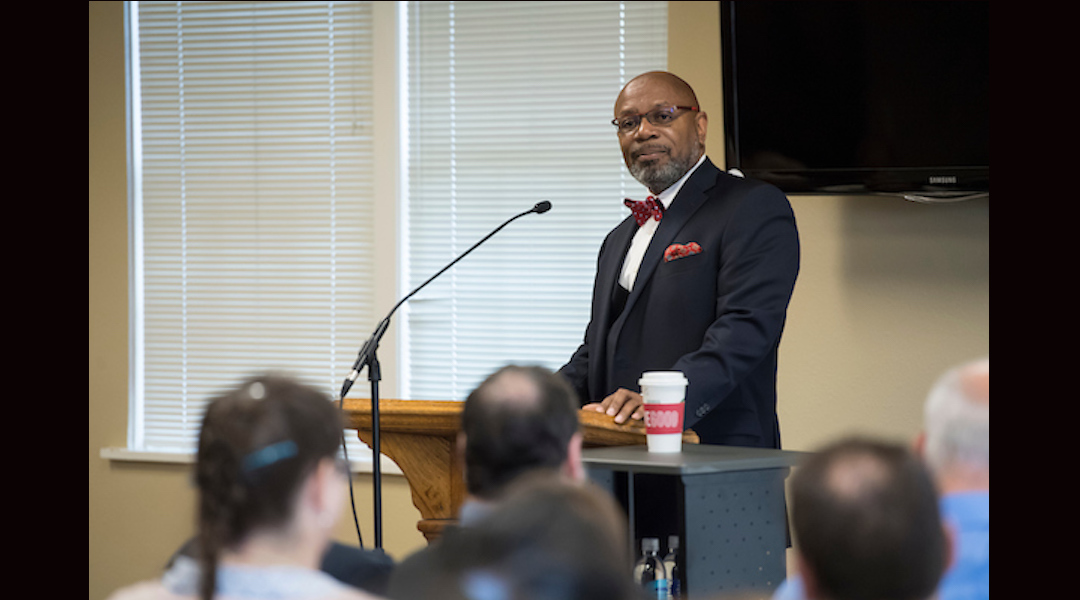
Miles K. Davis, Linfield University's president, denies saying anything antisemitic. (Courtesy of Linfield University)

Miles Davis, Linfield’s president, denies saying anything antisemitic. (Courtesy of Linfield University)

But Pollack-Pelzner is not the only faculty member to accuse Davis of making insensitive comments about Jews. When discussing transparency around possible staff cuts in 2018, according to the Oregonian, two psychology professors, Jennifer Linder and Tanya Tompkins, both recalled Davis saying something like, “You don’t give Jews soap when you send them to the showers.”

Both professors declined to speak with JTA but confirmed that they had heard the comment.

“I don’t remember sharing that quotation,” Davis told the Oregonian, “but if I did I would certainly have attributed it to Professor Harvey and explained that he used the startling imagery to drive home the moral dimension of organizational work.” Davis was referring to a former teacher.

This month, the Anti-Defamation League and Oregon Board of Rabbis wrote letters of protest to the school. The latter called on the president and board chair to step down, accusing Davis of choosing “to levy antisemitic innuendos and disapprobations against a distinguished Jewish faculty member.”

Over the past year, the sexual harassment and antisemitism scandals have sparked calls for Davis and Baca to resign. Those culminated in a 59-11 vote in the College of Arts and Sciences faculty this week calling on both to step down, according to Oregon Public Broadcasting. The faculty’s no-confidence resolution said Davis and Baca “have created an intimidating and hostile work environment, harmed members of the Linfield community, and damaged Linfield’s reputation.”

The university has continued to defend its leaders. It told JTA that antisemitism is covered in its anti-discrimination trainings and encouraged employees to attend trainings hosted by the local Jewish federation.

Linfield also told JTA that the university would welcome the opportunity for the Oregon Board of Rabbis and ADL to come speak with campus leaders. But Posen, the rabbinical board’s president, said the school has not reached out to her.

Davis did send a letter responding to the ADL in which he denied the allegations and accused Pollack-Pelzner of waging a “smear campaign” against him and the university. The president said he welcomed “continued dialogue” with the ADL and would like to hear its recommendations for “additional programming.”

Miri Cypers, the ADL’s Pacific Northwest Regional director, told JTA that she has not responded to Davis because “we have not seen any accountability from the school in acknowledging anything related to the current situation.”

Meanwhile, the local chapter of the NAACP is investigating whether the allegations against Davis, the school’s first Black president, are racially motivated. The president of the local NAACP chapter, Reginald Richardson, told JTA that he cannot comment on an ongoing investigation.

As part of the probe, Richardson asked to speak with Pollack-Pelzner and five other professors who had spoken out about harassment at the university. The six professors responded in a joint email that while they respected the work of the NAACP, they viewed being asked to take part in this investigation as “an act of retaliation” to their criticism.

Multiple Jewish faculty members at Linfield told JTA that they had previously not worried as much about antisemitism at the school, and said its affiliation with the Baptist Church felt nominal. But one of the Jewish faculty members, who asked to remain anonymous for fear of retaliation, said the school feels less comfortable now than it once did.

“Now Daniel’s being called out,” the Jewish professor said. “It feels like a case is being built against him. It feels nerve-racking to not have these allegations taken more seriously.”

Small Christian University in Oregon Grapples with Accusations of Antisemitism Read More »

Jewish Groups Respond to Human Rights Watch Report

Several Jewish groups condemned the April 27 Human Rights Watch (HRW) report accusing Israel of apartheid. The 213-page report doesn’t compare Israel to apartheid South Africa, but it does accuse certain Israeli government policies to be apartheid by using a definition akin to the 1998 Rome Statute and 1973 Apartheid Convention, according to Reuters.

The report specifically cites the 2018 Nation-State law, as well as demolishing Palestinian homes to build Israeli settlements, as examples of apartheid. The report called for sanctions and travel bans against Israel.

“While much of the world treats Israel’s half-century occupation as a temporary situation that a decades-long ‘peace process’ will soon cure, the oppression of Palestinians there has reached a threshold and a permanence that meets the definitions of the crimes of apartheid and persecution,” HRW Executive Director Kenneth Roth said in a statement.

Jewish groups denounced the report. “Human Rights Watch has a long record of demonizing Israel through falsehoods and propaganda,” the American Jewish Committee tweeted. “Its latest report is just more of the same. Let’s call a spade a spade: HRW has zero credibility on Israel and this report has no validity.”

Roz Rothstein, CEO and co-founder of StandWithUs, similarly tweeted that HRW’s “antisemitism is showing” since they’re singling out Israel while “#Hamas is constantly launching rockets at Israeli civilians & [Palestinian Authority President Mahmoud] Abbas has rejected peace & offers to meet.”


Melissa Landa, founding director of Alliance for Israel, grew in apartheid South Africa and said in a statement to the Journal that the HRW report “is a blatantly biased document that fails to provide the full context for Israel’s military actions.” “Since September 2015, Israel has experienced a wave of Palestinian terror, including missiles from Gaza, stabbings, shootings and vehicular attacks, echoing decades of violence against Israel civilians.

“The report also fails to mention that most Palestinians do not wish to become Israeli citizens, but want a state of their own — on the land that comprises the State of Israel. Apparently unable to grasp these complexities, Human Rights Watch has instead presented a simplistic ‘good guys, bad guys’ scenario, demonizing the Israelis, infantilizing the Palestinians and doing nothing to promote peace.”

Jack Saltzberg, founder and president of The Israel Group, also said in a statement to the Journal, “With the amount of misinformation, factually inaccurate content and propaganda spewed against Israel, it’s surprising that HRW didn’t list the BDS [Boycott, Divestment and Sanctions] Movement as its main content provider.”

B’nai Brith International said in a statement that the HRW report “defames Israel” and accused HRW of having an “anti-Israel bias.” “Israel’s harshest critics often use this apartheid language in an attempt to delegitimize the Jewish state. This pervasive singling out of Israel on the world stage must stop.”

The Conference of Presidents of Major Jewish Americans Chair Diane Lob, CEO William Daroff and Vice Chair Malcolm Hoenlein called the report a “libelous document” that demonizes and delegitimizes Israel. They also noted that the author of the report, HRW Israel and Palestine Director Omar Shakir, is a BDS “operative.”

“The apartheid system practice by South Africa was characterized by tyranny and dehumanization; this has no equivalence to a vibrant democracy where all citizens have rights and representation in the national legislature,” their statement continued. “These kinds of misguided efforts to vilify Israel inflame existing tensions and incite violence, obstructing the path to peace and the resolution to the Israeli-Palestinian conflict. HRW should be denounced for giving voice to such vicious hate while purporting to defend human rights.”


NGO Monitor President Gerald Steinberg said in a statement, “The demonization of Israel through comparisons to the heinous legacy of the South African apartheid regime has deep roots, going back to the Soviet and Arab campaigns, and the infamous Durban NGO Forum. HRW’s latest contribution consists of the standard mix of shrill propaganda, false allegations and legal fictions. Exploiting the ‘apartheid’ image for propaganda is a cynical appropriation of the suffering of the victims of the actual apartheid regime.” NGO Monitor published their own analysis of the report on April 25; the Kohelet Policy Forum, an Israeli think-tank, similarly published an April 26 rebuttal to the report.

Other Jewish groups praised the report. “@hrw affirms what Palestinians have long said: Israeli authorities are committing apartheid and persecution,” Jewish Voice for Peace tweeted. “It is long past time for the rest of the world to call this what it is. It could not be more clear. It’s #apartheid. We must act accordingly.”

IfNotNow similarly tweeted, “We recognize that for many Jews, reckoning with a thoroughly researched and well-documented report about Israel’s apartheid practices, is going to be a painful experience, but it’s also a necessary one.”


B’Tselem, the Israeli human rights organization that published their own report in January accusing Israel of apartheid, hailed the HRW report as “groundbreaking” for serving as “as an urgent wake-up call for the international community, to finally take concrete action in rejection of apartheid and in support of human rights, democracy and justice.”

Jewish Groups Respond to Human Rights Watch Report Read More »

Jewish Schools in London Shaken by Sexual Abuse Allegations

(JTA) — Two of London’s most prestigious Jewish schools are in turmoil after they were implicated on a website for Brits to share their stories of sexual abuse.

The website, Everyone’s Invited, launched in March after the disappearance and murder of Sarah Everard launched a national conversation about the safety of women. Among the tens of thousands of testimonies shared on the site already are dozens that name Jewish schools as either the location of an alleged assault or the school that students attended when the alleged events took place.

These allegations, which include rape, assault and harassment, make grim reading for Britain’s two most prestigious and largest Jewish schools: JFS and the Jewish Community Secondary School, both in North London.

JFS, formerly known as the Jewish Free School, is named in 18 testimonies, with one saying that sexual assault was “completely normalized” at the school.

“I was in the lunch queue and he put his hand up my skirt and groped me. … No one said anything,” one account says.

It was “normal for boys of any age to grope girls,” another account about JFS says. “To know they felt a power over these young girls (and myself) is something that I don’t like to even remotely think, let alone talk about.”

The Jewish Community Secondary School is named in 14 alleged incidents, including one implicating a teacher. Other prestigious Jewish schools, such as Manchester’s King David and London’s Hasmonean, also were implicated, as were non-Jewish schools with high proportions of Jewish students, such as Haberdasher’s, the London school whose graduates include Sacha Baron Cohen.

Patrick Moriarty, the head of Jewish Community Secondary School, told the Jewish Telegraphic Agency that the school was “fully aware of these testimonies” and that it was treating them with “utmost seriousness.”

“All identifiable incidents have been thoroughly investigated with input from the statutory authorities and action taken on their advice,” said Moriarty, who has written that learning about the allegations sent him on a “trip into darkness.”

“Their shame, petrifying and mortifying as it always is, falls on us all,” he wrote in a column earlier this month on a website for British educators. “Whatever other responses may rant and rage within us – and they will – that collective shame needs to be tasted in all its rank bitterness: truly, everyone’s indicted.”

Former students of the schools told JTA that the online allegations corresponded with their experiences.

Eden Zamora, 20, spent six years at the Jewish Community Secondary School. Three years after graduating, Zamora holds no nostalgia for the school.

A classroom at the Jewish Community Secondary School (Jennifer Singer)

“What I remember most,” Zamora said, “is once bending over to pick something up and a boy came up behind me and began grinding against me.” Others stood by without saying anything. Afterward, one student came up and observed, matter of factly, “I think he likes you.”

Other graduates recalled being groped, having sexually explicit photos of girls shared with hundreds of students, and public discussion and comparison of female students’ bodies with those of porn stars. Many spoke on the condition of anonymity to avoid potential criticism by their former classmates.

One current Jewish Community Secondary School student related a recent occurrence there that a male student broke into a girls bathroom and began shouting, “Tell me your name, tell me your name, come out now” as he threatened to open a stall that a girl was in.

“She was scared,” the graduate said. “These are big issues.”

A 2016 JFS graduate, now 23, said she attributed some of the incidents to inadequate instruction about sexual education and consent.

“I think it stems from the fact that there’s no sexual education and there is no discussion of these issues,” she said, adding, “I think that education from the very start about what is and what is not OK – as basic as that sounds – and what is consent, needs to be had.”

At the Jewish Community Secondary School, Zamora recalled, girls attended assemblies that they said focused “on how to not get raped,” but did not remember any special assemblies being held for male students.

Zamora’s alma mater is planning to make changes. In an email sent to parents last week, the Jewish Community Secondary School said it was engaging in a review of its curriculum to ensure that “content, emphasis and delivery was as effective as it could be, especially in relation to consent.” The message also noted that past complaints were being reviewed again, and the school would hold “assemblies to address issues of behaviour, respect, kindness, and being an ally not a bystander.”

JFS did not respond to repeated attempts for comment, saying only that school authorities would “choose whether they wish to respond to these allegations.” Teachers there declined to speak with JTA, citing rules preventing them from speaking to the media.

“I could lose my job,” one said.

This is not the first time over the past year that serious sexual assault allegations have emerged within Jewish settings. Police Scotland opened a criminal investigation in July into dozens of allegations of sexual assault, including nine of rape, against members of the St. Andrews University branch of the American fraternity Alpha Epsilon Pi.

Jewish Women’s Aid, an organization that supports women who have experienced domestic abuse and sexual violence, said that following the appearance of allegations on Everyone’s Invited, it had been contacted by “several schools and others across the community who are very concerned.”

JWA said that it had written to “all mainstream Jewish schools on 17 March to restate our offer to run education sessions” and had contacted the Partnership for Jewish Schools, a division of the Jewish Leadership Council, to offer support to school leadership teams.

“We are happy to share this expertise and hope to be able to support school communities in developing healthier cultures,” said Naomi Dickson, the group’s CEO.

Jewish schools represent only a minority of the accounts posted on Everyone’s Invited, which is associated with a broader anti-rape movement that has swelled in the wake of Everard’s shocking murder. But several recent graduates of the schools said they worried that fears of antisemitism might hold back aggressive responses to sexual assault in Jewish schools in particular.

“With the Jewish community,” one former student said, “we are scared to admit that there are problems because of how it is going to be perceived on the outside, but it is actually just creating more profound issues.”

Jewish Schools in London Shaken by Sexual Abuse Allegations Read More »

Table for Five: Emor

One verse, five voices. Edited by Salvador Litvak, the Accidental Talmudist

An ox or a sheep, you shall not slaughter it and its offspring on the same day. Lev. 22:28


Rabbi Shlomo Seidenfeld
Scholar in Residence, Aish/JMI

There are numerous mitzvot, commandments, that many Jews don’t connect to or even worse, find troubling. The mitzvot pertaining to animal sacrifices are especially unsettling. To the untrained ear, they feel primitive and utterly antithetical to the elevated behavior that Judaism trumpets.

A rabbi once said that he couldn’t respect a G-d that he fully understood. By definition, belief in G-d implies a faith in a wisdom that is beyond our full capacity to grasp. It posits that there is a subliminal and moral rationale that accompanies every mitzvah and that our inability to grasp this unseen truth does not undermine it. So I could take the easy route and hide behind that statement. However, Jews don’t only believe, we question, we probe and we endeavor to extract light from even the most challenging texts.

So what’s to be learned and intuited from the sacrificial service and our verse?

Perhaps, that man is both an animal and a soul. That we have animalistic impulses that can reduce us to cruel, selfish and shallow beings and at the same time have the capacity to embody the most sublime, elevated and maternal kindness. Perhaps one of the sacred purposes of the sacrificial service was to remind us of these two sides and these two capacities and to beckon us to care about the pain of all living things. In a world where primitive savagery still bubbles beneath the surface, it’s a lesson that is far from archaic. Shabbat Shalom.


Eva Robbins
Co-Rabbi and Cantor, N’vay Shalom

In a midrash we learn Jacob first spoke these words, even before Moses writes them, as his brother Esau approaches after their tumultuous separation. In his fear of retribution Jacob says, “I fear…he will strike me and the mother ‘with the children.’” He calls upon God, quoting Torah, “didn’t you say…’You shall not kill the mother and her young in one day,’” reflecting a value, compassion, that’s the very foundation of existence. Familial love is a basic tenet, even for the animals, and our forefathers/foremothers knew this foundational wisdom.

At the very core of creation is compassion. Without it the world could not continue. The sages teach if God rules only on the basis of din, judgment, then we would certainly find ourselves drowning in guilt and inordinate punishment. Rachamim, Hebrew for compassion, comes from the root, rechem, which means womb, teaching that compassion is rooted in the mother/child interconnection and sets a precedent that one must open their heart before blindly acting.

How appropriate in a time when we see so many rush to judgment and action, without an inkling of heart or compassion. If they would see each person as a son or daughter, they would understand the repercussions of not only taking a life, but that they also destroy the soul of another, the parent. This law is not only to prevent the suffering of our creatures, it is to sensitize us to the suffering of another, embracing human dignity and compassion.


Mrs. Shaindy Jacobson
Director, Rosh Chodesh Society (JL)

Targum Yonatan explains that this verse comes to teach us the sacrosanct concept of mercy, “My nation Israel, just as your Father is merciful in heaven so shall you be merciful on earth…”

The holy Zohar hones in on the words Yom Echad (one/the same day) and delivers us into a very powerful hands-on lesson for DAILY life: an incredible message of morals and mercy in real time.

Every day that we are here on earth is reflected in its mirrored day in the upper world. Every action we take on that day is planted and accounted for in the corresponding day above, becoming a positive resource and benevolent guardian, ready for us to call upon.

If one’s deeds are cruel, inhumane, or merciless, the opposite side of the coin rings true as well.

The message of this telling verse is clear: on Yom Echad – on this day, EVERY day – we must, both as individuals and as a people, remove ourselves from cruelty in every possible manner, ensuring that not even a hint of negativity is planted and stored in our upper-world gardens, thus safeguarding our compassionate existence.

“An ox or a sheep, you shall not slaughter it and its offspring on “one” (the same) day.” If I may venture to say, the expression famously shared by Jeff Bezos, “It will always be Day One at Amazon”, has a deeply meaningful directive.

In the life of an upstanding Jew, it is always Day One. Arise each morning with a merciful mindset.


Rabbi Chaim Singer-Frankes
Chaplain, Kaiser Panorama City

What does it mean to halt during a frenzied act? Like the prohibitions around taking eggs when the mother bird is present and seething a kid in her mother’s milk, the Torah grasps at codes of compassion. But why employ an animal to define mercy? We must eat and make sacrifices to God. Therefore so long as an animal is permissible (kosher) why pause? Doesn’t a beast possess an uncomplicated sentience? Are beasts of the herd created in God’s image? If not, why does the Torah decree this prohibition? Do animals understand or care?

Midrash Tanhuma invokes Proverbs 12:10, “The righteous (man) knows the soul of his beast.” It may not matter whether or not animals care or apprehend tragedy in the same way as a human parent. Proverbs implies we view this as a means for modeling human behavior. The negative mitzvah contained in our verse may be yet another place where the Torah entreats us to think before we act with impulse, particularly when we are passionate, hungry. Laws forbidding gossip and the laws of kosher eating ask us to consider every thing that passes through our lips. If we must regard the feelings of the animal – a “lower” life form – then how much more does empathy pertain to the realm of human action?

What does it mean to place the brakes on being ravenous? What does it mean to consecrate tenderness of heart when slaughtering to sate either God or our own starving family? Where does this principled stance end? Would it govern behavior in warfare?


Hillary Chorny
Cantor, Temple Beth Am

I am certain that my love as a parent for my children defies and transcends logic. My heart aches for my kids even and especially when they are impossibly challenging. Maimonides understands this love to be a kind of bestial, primordial adoration in the best possible sense. It connects us to non-human creatures of the animal kingdom. This, he explains, is why we understand the cruelty of bringing a baby calf or ox to slaughter in front if its mother. There is something achingly base and tragic about that paradigm. And this becomes the source for yet one more thoughtful boundary our tradition sets around the consumption of meat. We are conscientious eaters, then, aware of how we may model healthy habits for those with whom we’re in healthy relationship.

Table for Five: Emor Read More »

Harvard Event Highlights Power of Stories to Combat Hate

In listening to the testimonies of those who have endured unspeakable tragedies, “we become emissaries and ambassadors to other communities.” That was the key takeaway from “What is stronger than hate? Lessons from testimony, media, and scholarship,” an event hosted by the Shorenstein Center on Media, Politics and Public Policy at Harvard Kennedy School and the USC Shoah Foundation. The April 27 event was initiated to celebrate Harvard making the Shoah Foundation’s visual history archive available to its community.

The event began with the audio testimony of Ruth Bacow, mother of the current Harvard University President Lawrence S. Bacow, describing her experiences in a Nazi concentration camp. Despite watching the smoke from the crematoria every time she used the bathroom, Ruth was “was very optimistic” that she would survive. And she did. But she was the only Jew in her town to do so.

Bacow’s testimony is now part of the USC Shoah Foundation’s Visual History Archive, where it joins over 56,000 survivor testimonies. President Bacow was “extraordinarily grateful” for the archive, adding that his testimony now joins the archives, too. USC President Carol Folt also provided remarks, and she and Bacow emphasized that the testimonies are more important than ever in the fight against hate and disinformation.

The founder of the Shoah Foundation, director Steven Spielberg, joined the call and celebrated the event. “It’s the sharing of these stories with the world that allows our work to have the lasting impact” that Spielberg dreamed of when he created the foundation. “I know that the entire Harvard community is going to benefit from this incredible archive.”

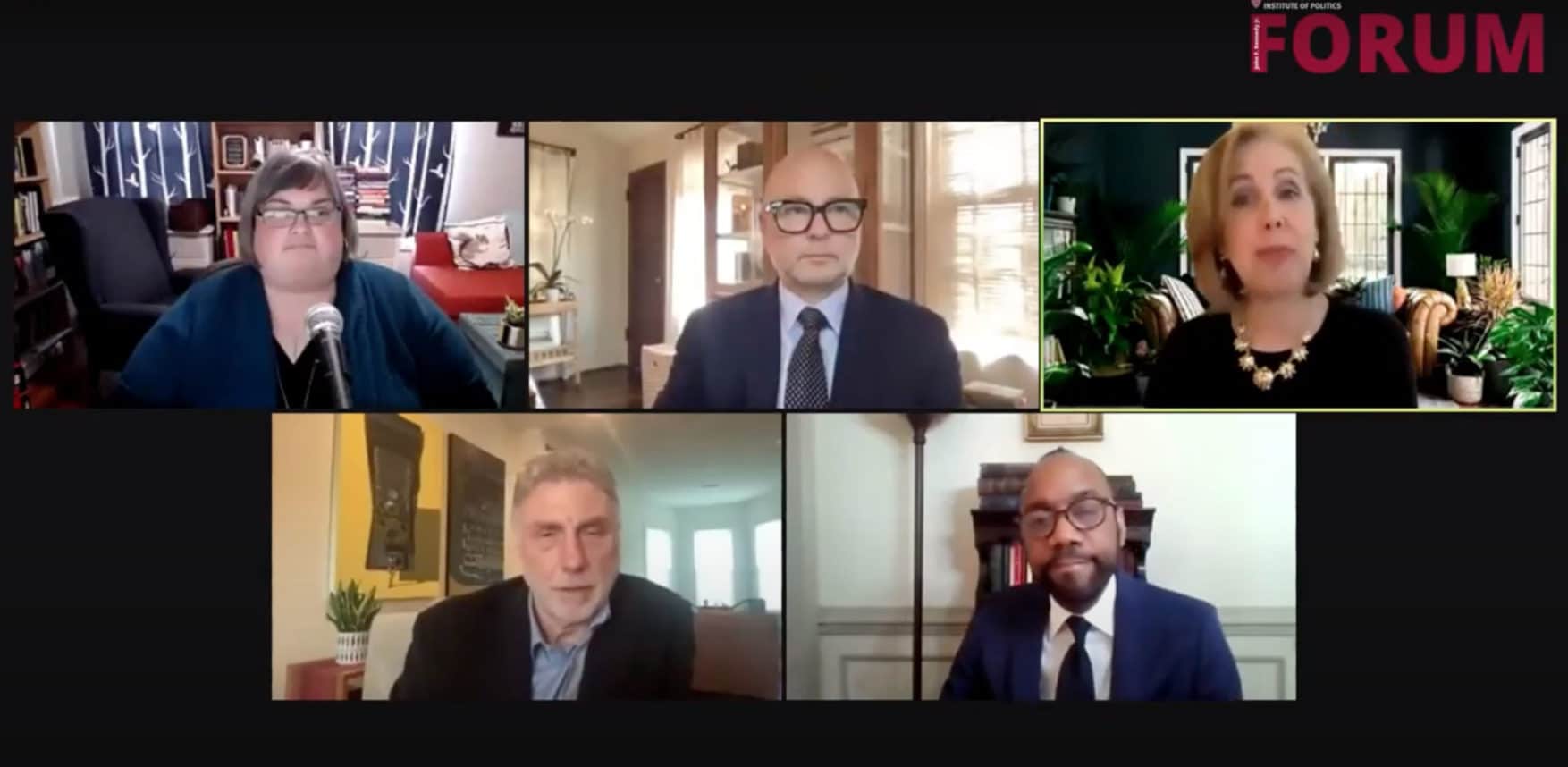
The event featured a panel including Marty Baron, former executive editor of The Washington Post; Cornell William Brooks, former president & CEO of the NAACP; Joan Donovan, research director of the Shorenstein Center; and Stephen Smith, executive director of USC Shoah Foundation and Jewish Journal contributor. Nancy Gibbs, director of the Shorenstein Center, moderated the panel.

Screenshot from YouTube video

Brooks outlined the necessity of using the archives to study hate. He explained that the Nazis were inspired by American racist laws in creating their legal systems. We can use history to combat and understand hate, he argued, pointing to the “only two organizations” that are 100 years old in America that were born of lynching — the Anti-Defamation League and NAACP — as evidence that “we have yoked history, yoked tragedy.”

The stakes for teaching this history are high, Brooks added, noting that there are generations that “can’t name a death camp.” Harvard has a “moral responsibility to teach” history and develop new ways to combat hate, he concluded. “Those 56,000 voices not only represent an archive of the past, they represent a repository in the present.”

But Gibbs asked what happens when today’s teachers — journalists — see facts lose their salience in defining the truth. Baron noted that journalists try to lay out all the information and facts, but even then, people can deny the truth. Although you can’t get through to everyone, he argued, “a substantial majority of people understand what the facts are.” The goal is making sure they “prevail” in setting policy.

Part of combatting disinformation and hate, however, lies with the social media platforms that often spread those messages. Smith explained the role Facebook and other social media companies played in weaponizing hate against the Rohingya in Myanmar. Although the Rohingya had devices, they weren’t able to secure social media accounts to see and respond to the hate weaponized against them; instead, they took photographs of atrocities. Smith argued that the lesson is “we can’t wait for disaster to happen… when we have the tools at our disposal.”

“We can’t wait for disaster to happen… when we have the tools at our disposal.”

Smith asserted that social media companies must assess how their platforms can be used against vulnerable populations. Donovan added that reforms to social media have been slow because members of the Senate and social media companies do not even “know what they have built”; they don’t have the “metaphors” to describe it. “If Facebook had done more to model the networks of antisemites, especially in 2016/2017,” she argued, they would have learned how those communities “evade these systems” and “speak in code.”

Brooks highlighted the power of social media to fight hate. He pointed to the protests over the murder of George Floyd — largely due to a video on social media. That video had a direct link to the photo of Emmett Till’s mutilated body in 1955 in “animating civil rights movements.” It’s not enough to surround people with information, Brooks argued. We need to engage in “storytelling,” take advantage of new platforms and interpret history to enable us to take on broader narratives of hate.

As an example, Brooks explained how he took a class with Elie Wiesel; that experience not only opened his eyes to understanding the Holocaust, but it also allowed him to better understand slave narratives and expanded his “own understanding of tragedy.” Sharing these stories is one way of “creating the empathy, [creating] the agency, [creating] the resilience that allows us to mount social justice movements against hate.”

The panelists concluded by sharing what they were optimistic about in combatting and learning about hate. Smith expressed excitement about using blockchain and encryption to preserve footage and prevent it from being altered. Baron was encouraged by media literacy education. Donovan looked forward to a “public interest internet” with an infrastructure that allowed people searching “COVID-19” or “voting” to find reliable information first. Brooks was eager to use history to expand agency and end hate.

You can watch the full event below.


Ari Berman is Op-Ed Editor for the Journal.

Harvard Event Highlights Power of Stories to Combat Hate Read More »