fbpx

April 27, 2021

Zesty Za’atar: Biblical Herb & Modern Seasoning

Herby, nutty, crispy, earthy, tangy Za’atar is the quintessential seasoning of the Israeli kitchen. Za’atar, part of the oregano family of herbs, grows wildly in Israel and is native to the Levant, Iraq, Egypt and the Arabian Peninsula. The herb and the seasoning is also popular in North Africa, Turkey and Armenia. Traditionally, each region had their own recipe for the Za’atar blend, usually including any combination of dried Za’atar, oregano, thyme or marjoram and sesame seeds, sumac and salt.

Za’atar is wonderful as a seasoning on hummus, eggs and vegetables and in salads, as well as grilled meats and chicken. Za’atar is essential on labne, a tangy, creamy cheese made from strained yogurt, and it is often sprinkled on “Bulgarit” and “Ts’fatit,” the feta like cheeses which are served with pretty much every dairy meal in Israel. The Lebanese dry-cure little balls of labne and roll them in Za’atar for a delicacy called “shanklish.” All over the Middle East, Za’atar is baked into or on top of pita, Laffa, soft sesame rings and on top of crunchy Ka’ak cookies. If the herb hasn’t been baked into the bread, then it is prepared as a dip with olive oil to accompany the bread.

Za’atar is first mentioned in the book of Exodus, Sefer She’mot, when the Israelites are leaving Egypt and they use Ezov (hyssop branches) to daub blood on their door posts. Ezov/Za’ater is mentioned in connection with the ashes of the Parah Adumah (red heifer) and other ritual purification rites in the Mishkan (tabernacle). King David, after he has sinned with Batsheva, extols the purifying power of the herb, saying “Cleanse me with Ezov and I shall be purified.” The Mishnah refers to “ezov” as an ingredient in the food of the Judea region. And Maimonides in his great work, the Mishneh Torah, comments on the cuisine of his day, saying that the Za’atar that is used to “season their stews” is the same “ezov” that is mentioned in the Torah. He prescribed Za’atar to his patients for it’s health inducing properties.

Nowadays, we know that Za’atar is full of healthful antioxidants. It is also full of incredible flavor. If you’re firing up the grill this Lag Ba’Omer, try this recipe for Za’atar Pargiyot (boneless chicken thighs). This marinade recipe combines Za’atar with fresh lemon juice and results in both citrusy fresh and herbaceous flavor, not to mention incredibly moist chicken. You can also prepare your chicken in a cast iron skillet, which leaves a lovely golden crust. Sprinkle some za’atar on your roasted broccoli and sweet potatoes and you have a deliciously tasty and simply modern dinner!


Rachel’s Lemony Za’atar Pargiyot

Marinade
1/4 cup extra virgin olive oil
1 lemon, juiced
3 large garlic cloves, finely chopped
2 tablespoons Za’atar, plus more for sprinkling
1 teaspoon turmeric
Salt and pepper to taste

6 skinless, boneless chicken thighs (about 2 pounds), patted dry


Arrange a rack in the middle of the oven and preheat the broiler.

Cover a baking sheet with foil.

In a medium bowl, whisk together the oil, lemon juice, crushed garlic, Za’atar, turmeric, salt and pepper.

Place chicken thighs in the marinade and let sit for 15 minutes.

Place chicken thighs on the baking sheet and pour juices over the chicken.

Broil for 10-15 minutes, until juices run clear.

Or Grill on Bbq, or saute until golden on cast iron pan

Sprinkle cooked chicken with Za’atar.

Serve with rice and Israeli salad or roasted broccoli and sweet potatoes.


Rachel Sheff and Sharon Gomperts have been friends since high school. They love cooking and sharing recipes. They have collaborated on Sephardic Educational Center projects and community cooking classes. Follow them on Instagram @sephardicspicegirls and on Facebook at Sephardic Spice SEC Food.

Zesty Za’atar: Biblical Herb & Modern Seasoning Read More »

Birthright Israel to Resume Trips in May

Birthright Israel, the largest educational tourism organization in the world, on Monday announced its first trips to Israel following a COVID-19 pause would resume in May.

The last Birthright Israel trip prior to the COVID-19 shutdown concluded on March 13, 2020

Eligibility is limited to individuals from the United States between the ages of 18 and 32 who are vaccinated against COVID-19 or have recovered from the coronavirus.
Dozens of trips are expected in May and June, and more than 400 tour groups are expected for July, August and October.

“Two values we’ve always prioritized are our impeccable safety record and our commitment to innovation in ways that meet the needs of our participants and the demands of our changing world,” Gidi Mark, international CEO of Taglit-Birthright Israel, said in a statement. “With the input of Israel’s Health Ministry, we’re confident that we’ve developed the best plan to safely and efficiently resume our trips, which play such a critical part in strengthening the Jewish identity of hundreds of thousands of young people around the world. The last year has been hard, but we never lost hope that there was light at the end of the tunnel. Now, the wait is over and it is time to come back to Israel on Birthright Israel.”

The organization is taking measures toward ensuring the safety of trip participants. Everyone will be required to provide a negative PCR COVID-19 test before boarding a flight to Israel as well as an antibody test once arriving at Ben-Gurion Airport. The use of personal protective equipment and social distancing guidelines will be based on government policies, and Birthright Israel will work to secure the proper testing required by the Centers for Disease Control and Prevention for reentry into the United States.

The organization is taking measures toward ensuring the safety of trip participants.

Each tour group will be made up of approximately 20 participants, compared to the approximately 40 participants making up a typical group prior to the pandemic.

The resumption of trips marks the end of the only cancellation in Birthright Israel’s more than 20-year history. Since its founding in 1999 by a group of philanthropists, including Charles Bronfman and Michael Steinhardt, Birthright Israel has provided free 10-day educational tours in Israel for more than 750,000 Jewish young adults representing nearly 70 countries.

“When the first Birthright Israel groups took off in December of 1999, we could never have imagined all of the incredible milestones we would hit in just 20 years,” Bronfman, co-founder of Birthright Israel, said in a statement. “The pandemic has been heartbreaking for all of us. Needless to say, the pause in our program was so sad, but I’m thrilled to know that our participants will soon be back in Israel. The magic continues.”

According to Birthright Israel, enthusiasm for the trips remains high. In its announcement about the resumption of tours the organization cited a recent survey conducted by Leonard Saxe, director of the Cohen Center for Modern Jewish Studies at Brandeis University, polling those who had signed up to attend a future trip. Saxe found about half of respondents reported that partaking in Birthright was “very much a priority” once it was safe to do so.

The organization operates with the support of the Birthright Israel Foundation, which raises critical funding in the United States to support the educational program. Izzy Tapoohi, president and CEO of the Birthright Israel Foundation, said the resumption of trips marks the next stage in Birthright Israel’s journey.

“We open the next chapter of Birthright Israel’s story ready to continue carrying out the mission that our founders laid before us, to give every young Jewish adult around the world the opportunity to visit Israel on an educational trip,” Tapoohi said.

The Birthright Israel announcement comes as Israel continues to lead the world with the highest vaccination rate and reportedly is nearing herd immunity.

Birthright Israel to Resume Trips in May Read More »

Despite COVID Restrictions, Antisemitism Barely Decreased in US in 2020, ADL Says

(JTA) — Despite COVID-related restrictions that kept Americans inside for significant portions of last year, the number of reported antisemitic incidents barely decreased in the United States in 2020, according to the Anti-Defamation League.

The number of antisemitic assaults fell sharply, however, and for the first time in three years, no one was killed in an antisemitic attack.
The ADL’s annual audit, published Tuesday, tallied 2,024 incidents of antisemitism in the U.S. in 2020, a decline of only 4% from the 2,107 recorded in 2019. The 2020 tally is the third-highest since 1979, when the ADL began publishing annual audits, and is more than double the 2015 figure of 942. The audits are compiled from reports by victims, law enforcement and community leaders.

With synagogues and other communal institutions shuttered for much of the year, 2020 was free of the deadly anti-Semitic shootings and stabbings that struck the Jewish community in 2019 and 2018. But COVID gave rise to a conspiracy theory in which Jews were blamed for spreading the disease, though the report cautions that “we have not identified cases where we can directly link specific instances of violent antisemitism to conspiracy theories or scapegoating surrounding the COVID-19 virus.”

And while there were fewer physical attacks, the pandemic inspired a new manifestation of hate — “Zoombombing” — in which antisemites would disrupt virtual Jewish meetings with hateful speech or images. The ADL counted almost 200 Zoombombings throughout the year. Zoombombings made up about a third of total antisemitic harassment incidents recorded at Jewish institutions.

“While any decline in the data is encouraging, we still experienced a year in which antisemitic acts remained at a disturbingly high level despite lockdowns and other significant changes in our daily lives and interactions with others,” ADL CEO Jonathan Greenblatt said in a press release. “We can’t let our guard down.”

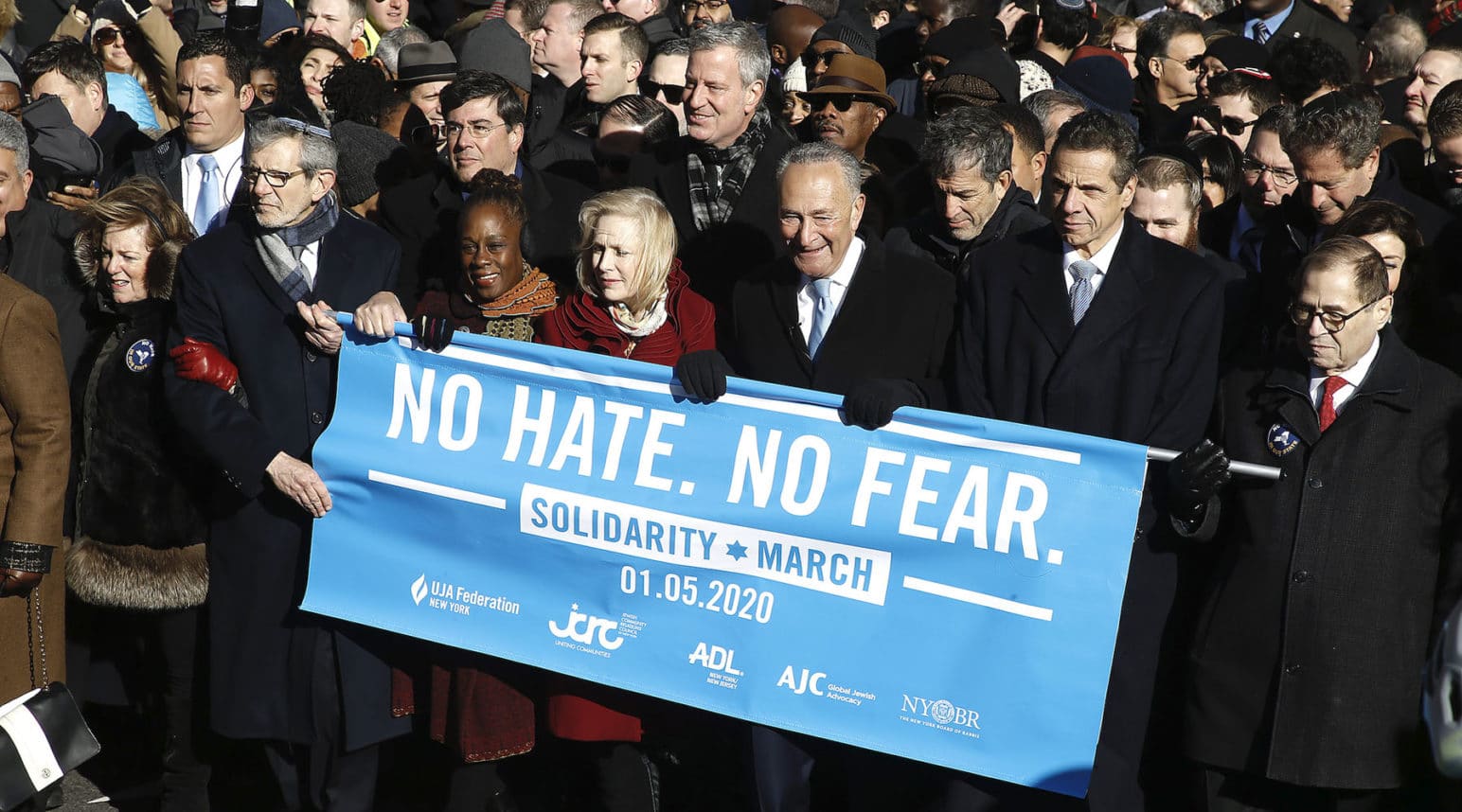
Last year began with a 25,000-person march in New York City, protesting a spate of attacks against Jews in the area late in 2019, two of them fatal. At that point, before the pandemic was at the top of the national agenda, Jews in New York and elsewhere worried about a further escalation of lethal violence, and leaders at all levels of government promised a response.

Then everything shut down. With synagogues, schools and community centers empty for much of the year, and the streets devoid of crowds, physical manifestations of antisemitism plummeted, along with the overall number of incidents. January saw 270 total incidents, as opposed to an average of 155 per month once COVID restrictions began.

The number of antisemitic assaults decreased by nearly half, from 61 to 31, year over year. Vandalism decreased by 18%. Incidents at college campuses decreased by 32%.

Harassment, a relatively broad category that included the Zoombombings, increased by 10%. Examples in the ADL’s report include a virtual Passover seder where an intruder wrote “HEIL HITLER YOU FILTHY K***S. THE BLOOD OF CHRIST IS ON YOUR HANDS. YOU ARE CURSED FOR HIS MURDER” and a Torah study class where someone wrote “Kill Jews” multiple times and drew swastikas.

The number of incidents involving references to Israel or Zionism remained steady, totaling 178 in 2020, as opposed to 175 in 2019.

Incidents perpetrated by known extremist groups or individuals rose more than 20% over 2019, in a year that saw social unrest due to COVID, racial justice protests and the election campaign — all settings that attracted extremist groups. An earlier ADL study found that the volume of white supremacist propaganda doubled in 2020 to the highest number in a decade. And a study by the Network Research Contagion Institute found that online antisemitism peaks during periods of national tension.

The ADL audit is the latest of a few studies showing that antisemitism remained relatively prevalent in recent years. A 2019 ADL study found that more than 60% of Americans believed at least one of 11 anti-Semitic stereotypes while 11% believed a majority of them. A 2020 survey from the American Jewish Committee found that 88% of American Jews say anti-Semitism remains a problem in the United States.

A survey conducted early in 2020 found that more than one in 10 American adults under 40 believes that Jews caused the Holocaust. Another survey published in 2020 found that one-fifth of respondents from 16 European countries believes that a secret network of Jews influences global political and economic affairs.

Despite COVID Restrictions, Antisemitism Barely Decreased in US in 2020, ADL Says Read More »

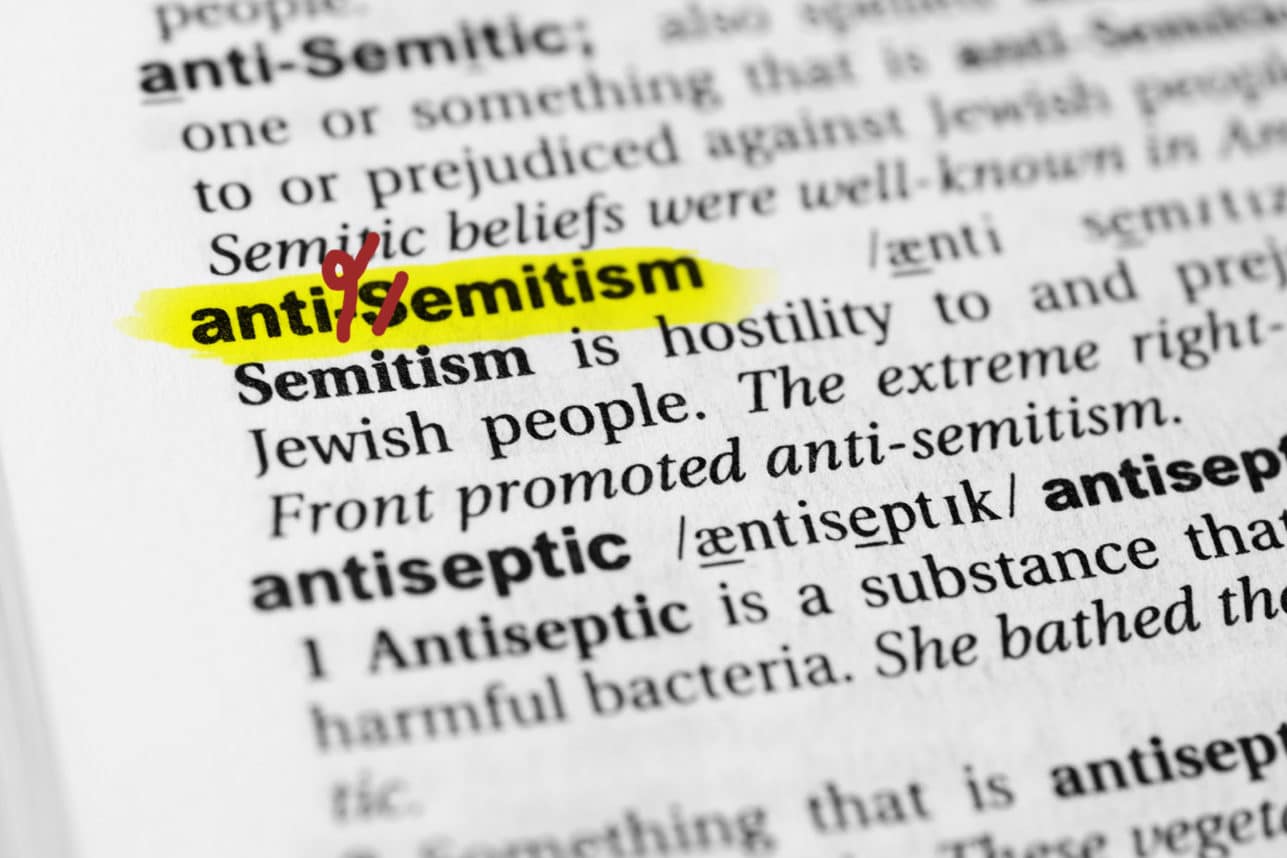
AP Changes Spelling of “Anti-Semitism” to “Antisemitism”

The Associated Press (AP) announced on April 23 that they have changed the spelling of “anti-Semitism” to “antisemitism.” The AP tweeted that they are now spelling the word without the hyphen or capitalizing the “s” in “Semitism.”


The Anti-Defamation League (ADL) has argued that the spelling is important because “there is no such thing as a Semitic peoplehood” and “one could speak a Semitic language and still have anti-Semitic views.” Additionally, the ADL noted that Jew-hatred “goes beyond any false perception of a Jewish race; it is wrapped up in complicated historical, political, religious, and social dynamics.” “While removing a hyphen by itself won’t defeat antisemitism, we believe this slight alteration will help to clarify understanding of this age-old hatred,” the ADL wrote.

Holocaust scholar Deborah Lipstadt celebrated the change, tweeting: “When you fight prejudice & hatred, you don’t win many battles. But we won this one. Bravo AP.” She added that in her book “Antisemitism Here and Now” she had written that “nothing this absurd deserves a capital letter.”


StandWithUs similarly tweeted that it was an “important move” and that the AP is “joining the many who fight against Jew hatred.”

The Journal will also be implementing this change.

AP Changes Spelling of “Anti-Semitism” to “Antisemitism” Read More »

My Memories of Rabbi Morley T. Feinstein

Rabbi Morley Feinstein died April 25, 2021, at his home in Brentwood after suffering multiple myeloma for several years. He served University Synagogue as Senior Rabbi from 2002-2019, after which he retired due to his illness and became Rabbi Emeritus.

He and I became friends within minutes of meeting each other in 2002. We both realized that we shared common dreams of the direction our synagogue could go. Morley was familiar with University Synagogue, since he grew up on the west side of Los Angeles and was active in Jewish youth activities here. His father was Executive Director of Temple Emanuel in Beverly Hills.

Music was another area where we bonded. Morley had played viola in high school and was a fine singer. For his consecration to the pulpit, I commissioned Dr. Michael Isaacson to create a musical piece using the text from Pirkei Avot, “Make for yourself a Rav, and acquire for yourself a friend, and judge people according to their merits.” Morley and I sang the vocal duet together, creating a very special moment.

When he came to the University Synagogue pulpit after serving in South Bend, Indiana, I found him to be a brilliant and gifted teacher. His Hebrew was impeccable, and my favorite drashes of his were when he would read selected passages from the Torah portion of the week, simultaneously translating and commenting on them. And during B’nai Mitzvah services, he would find three words from the child’s Torah portion and weave a beautiful personal lesson geared towards that celebrant. All this was spontaneous, with no notes. His weekday adult classes on current events, especially during the pandemic, were highlights for many congregants.
Morley was generous with extending his teachings beyond the walls of his congregation. He spent thirty-four summers teaching at the camps of the Union for Reform Judaism. He served on the Los Angeles Council of Religious Leaders, was the treasurer of the Central Conference of American Rabbis and was a past president of the Board of Rabbis of Southern California.

When he was selected as a Senior Rabbinic Fellow of Jerusalem’s Shalom Hartman Institute, he told me it was like winning the Rabbinic lottery. He so loved learning — and it showed in his brilliant scholarship.

He so loved learning — and it showed in his brilliant scholarship.

But also brilliant was Morley’s heart, as he was a family man through and through. He had two accomplished sons from a previous marriage. One later became a physician and the other a Jewish educator. With his second wife, Dr. Margarete Myers Feinstein, a historian and professor at Loyola Marymount University, Morley raised two twin daughters. I will never forget visiting Margarete and Morley when the girls were born. I held one of the infants and started sobbing. I was so happy for them. The girls are graduating high school next month and are off to college in the fall. Morley knew that his brilliant and beautiful daughters would have a bright future.

Rabbi Morley Feinstein is survived by his wife, Dr. Margarete; children Aaron (Shira), Ari (Rachel), Eliana and Renata; his grandchildren, Mika Ruth, Jacob and Noah; and his siblings, Dr. Barney and Sheila Meyerwitz.

Zeicher Tzadik livracha ­— May the memory of this righteous soul be a blessing! 


Cantor Jay I Frailich is Cantor Emeritus of Wilshire Boulevard Temple – University Campus.

My Memories of Rabbi Morley T. Feinstein Read More »

Something Crazy Is Happening in Israel: Ideological Opposites May Unite

We’re so used to vicious partisanship and “divide and conquer” politics in Israel that it’s easy to overlook a rare development: Political parties from the hard right and the hard left are considering joining the same coalition.

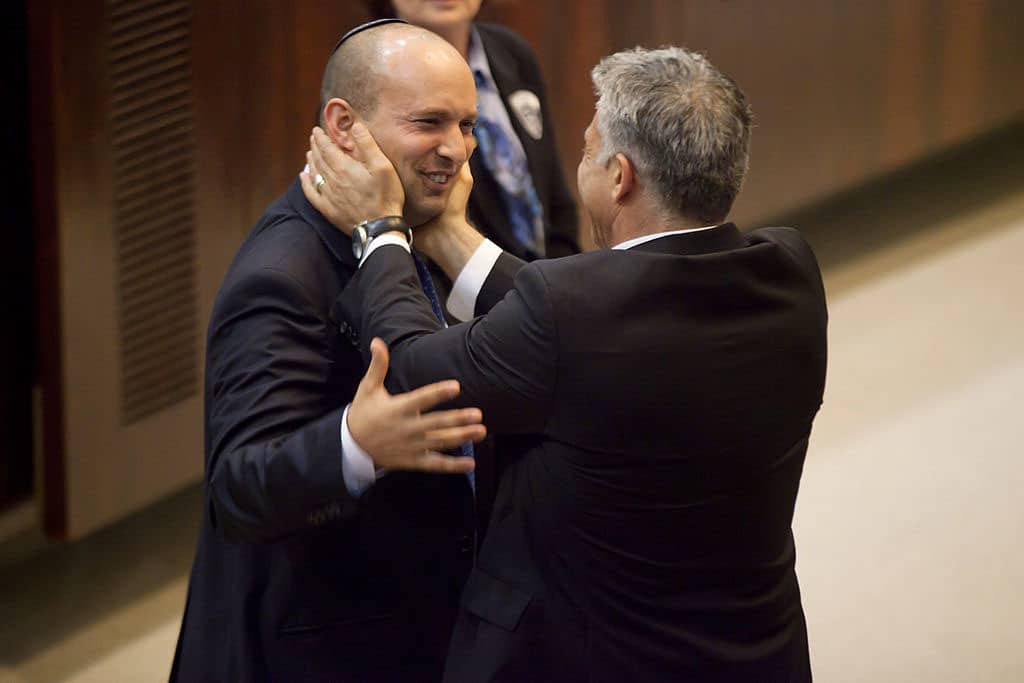
I would have bet on the Messiah showing up before seeing right-wing hawks like Naftali Bennett (Yamina) and Gideon Saar (New Hope) possibly joining a coalition with a leftist party like Meretz. And yet, that is precisely what’s happening.

It goes to show you the unifying power of opposing Prime Minister Benjamin “Bibi” Netanyahu. The anti-Bibi block is so fervent it’s willing to overlook deeply entrenched ideological differences.
Bibi’s problem is as follows: Even if Bennett brings his seven seats to the right-wing block, he will still be two seats short of a 61 majority. Bibi’s only options to get over the hump — luring New Hope (Saar is holding firm to his campaign promise not to join a Bibi government) or an Islamist party into the coalition — have effectively been ruled out.

So, to avoid the fiasco of yet another election (while Bibi remains on his throne), Bennett will negotiate with the anti-Bibi block to try to forge an improbable Coalition of the Disparate — three parties on the right (Yamina, New Hope, Israel Beiteinu), two in the center (Yesh Atid, Blue and White), two on the left (Labor and Meretz) and outside support from Arab parties. They’re even considering luring a Haredi party.

Can they pull off this early Chanukah miracle? First, we can be sure wily Bibi won’t go down without a fight. He still has a week to pull out his bag of tricks. His attempt on Tuesday to appoint a friendly Justice Minister shows how far he’ll go to remain in power.

But assuming things stay as they are, on May 4, President Reuven Rivlin is expected to hand over the mandate to Yesh Atid leader Yair Lapid, who by then will have a good idea of whether the anti-Bibi coalition is a reality or a pipe dream.

My cynical side says no way. These parties have stayed away from one another for a reason — their differences are real. You can’t build a sustainable coalition solely around what you are against (in this case, Bibi.) You also need to share things that you are for.

My cynical side says no way…My John Lennon “Imagine” side, however, wonders if this might be a moment of possibility.

My John Lennon “Imagine” side, however, wonders if this might be a moment of possibility. Yes, the parties were forced into this. But who’s to say some good can’t come out of it?

They can focus, for example, on important things that aren’t too controversial, such as fighting the pandemic and rebuilding the economy. That alone would keep the new coalition very busy and represents most of what the average Israeli is looking for.

As far as responding to rockets or other security threats, although there are differences, my sense is that they’re far from insurmountable. Security in Israel is generally a consensus issue. There are significant differences regarding settlements and the Palestinian conflict, but the peace process has been dormant for years, and I’m not sure any coalition would go against the Biden administration regarding settlements.

There are other areas of differences between the Israeli right and left, but my point is this: Because they’re forced to talk seriously about a coalition, these ideological opposites may discover that they have more in common than they think, including trying to figure out what’s best for the country they love.

That’s not nothing.

Something Crazy Is Happening in Israel: Ideological Opposites May Unite Read More »

Palestinian Election Postponement Announcement Expected

(The Media Line) Palestinian Authority President Mahmoud Abbas has decided to postpone the Palestinian Legislative Council election, according to a Palestinian official.

The Palestinian official, who spoke to The Media Line on condition of anonymity, said that the Palestinian leadership is expected to convene in Ramallah on Thursday when Abbas is expected to make his announcement.

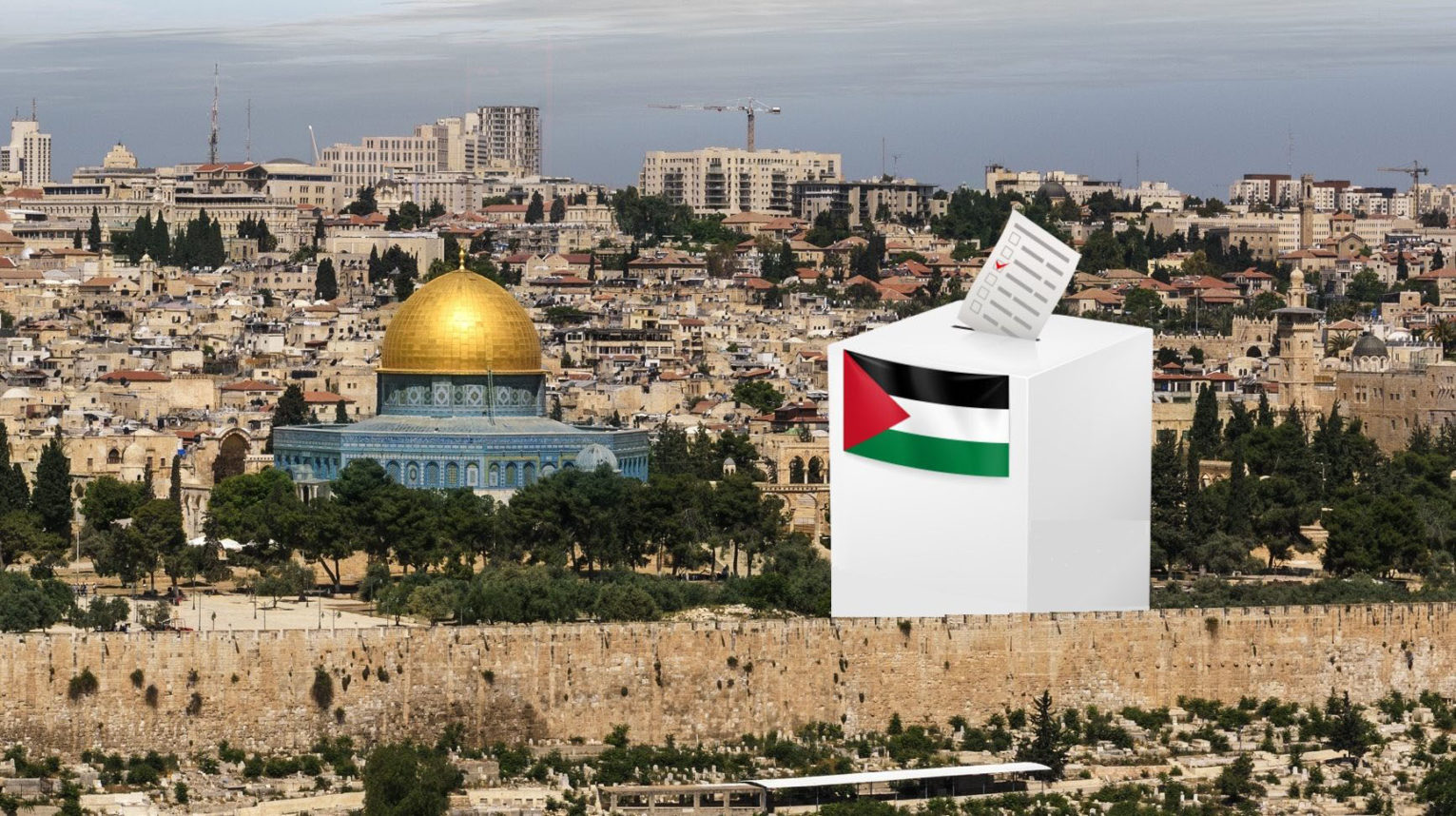
“The president will ask all factions to consent – they all agree that elections must be held in Jerusalem. But if Hamas and other factions object, the president will issue an executive order,” the official said.

Hamas, the Islamist group that rules the Gaza Strip, has said it does not want to see a delay to the elections, currently scheduled for May 22.

Speaking at a meeting of the Fatah Central Committee in Ramallah on Sunday, Abbas said Jerusalem is a red line for Palestinians.

“The elections must take place in Jerusalem, our eternal capital, and its people should be allowed to become candidates, vote and take part in campaigns. Anything other than this means returning to the Deal of the Century,” said a Fatah statement issued after the meeting, referring to former US President Donald Trump’s widely-rejected peace plan.

We haven’t had elections in more than 15 years, we believe that our people deserve their voices to be heard, we firmly stand against any delay. We will resist this expected decision.

Nashat Al-Aqtash, the campaign manager of the independent Watan candidates list, told The Media Line that his list, and three others “will not recognize the postponement.”

“The reason is that the president issued the election decree and no longer has the authority to issue decrees at this stage. It is now up to the election commission,” Al-Aqtash said.

Abbas appears to be determined to not hold the elections on the dates set by his presidential decree under the premise that if elections can’t be held in Jerusalem, then there will be no elections.

The chief reason behind his decision is that a deeply divided Fatah movement will lead to a major loss for Abbas’ list.

Dimitri Diliani, spokesperson of the Reformist Democratic faction within Fatah, affiliated with Mohammed Dahlan, told The Media Line that his faction stands against any postponement of the overdue elections.

“We haven’t had elections in more than 15 years, we believe that our people deserve their voices to be heard, we firmly stand against any delay. We will resist this expected decision,” he said.

Israel has yet to approve Palestinian activities in east Jerusalem and repeatedly has crashed electoral gatherings and arrested candidates in the city in recent weeks.

The Oslo Accord signed in 1995 divided the West Bank, which was captured by Israel during the 1967 war, into three zones: Area A, Area B and Area C.

Area A is under the administrative and security control of the Palestinian Authority (PA). Area B’s administration is controlled by the PA, while Israel controls its security. Area C is under the full administrative and security control of Israel.

While east Jerusalem falls under Area C, some outskirts of the city are beyond the separation barrier, which means they are not under Israel’s administrative control. Those residents are able to participate freely in election activities, as opposed to their inner-city counterparts.

During elections in 1996, 2005 and 2006, Palestinian residents of east Jerusalem were permitted to vote.

The Palestinian population of east Jerusalem is estimated to be more than 340,000.

Amer Hamdan, a candidate from the United National Movement list, wrote on social media that postponing elections is “only an announcement of the defeat of the entire political system.”

Palestinian media reported that Israel has verbally told PA officials that it will not allow voting in Jerusalem.

But the Hebrew-language Walla news website reported on Tuesday that Foreign Ministry Chief of Staff Alon Bar met with 13 European ambassadors on Tuesday, and he stressed to them that Israel is not working to thwart the Palestinian parliamentary elections.

PA Minister of Civil Affairs Hussein al-Sheikh rejected the news that Israel doesn’t want to interfere in the elections. He said in a statement that “rumors that the Israeli government has agreed to hold elections, including in east Jerusalem, are false.”

He also said that the “Israeli position on holding elections in east Jerusalem is still negative,” and reiterated that an Israeli government official has verbally informed the PA that it cannot hold elections in east Jerusalem.

He said that the PA is still awaiting an official final Israeli response.

Khaled Dweikat of the United Palestinian Movement list told The Media Line that Palestinians “should seize the opportunity to restore to Jerusalem its status and should place ballet boxes in the Al-Aqsa Mosque under the supervision of Muslim and Christian clerics, and if the occupation confiscates them, let it be.”

Let us expose the occupation to the whole world; that it prevents the Palestinians from exercising even the most basic human right.

Dweikat said that elections must be held without waiting for Israeli approval. He adds that rather than holding the elections and embarrassing Israel while keeping the issue of Jerusalem on the front burner, Abbas is opting not to do the right thing by not holding elections.

“Let us expose the occupation to the whole world; that it prevents the Palestinians from exercising even the most basic human right,” he said.

Al-Aqtash, who is also a media professor at Birzeit University near Ramallah, is determined to go on with the campaign, saying not even bullets can stop them.

“We will continue as if there are elections, and we will announce the victory of our representatives in the Legislative Council, and we will become the representatives of the people, we will occupy the Legislative Council, and enter the People’s House as a popular force that refuses the dominance of the Palestinian Authority. Let them shoot us. This aggression from the executive authority is unacceptable,” he said.

Meanwhile, the Palestinian newspaper Al-Quds also reported on Tuesday that the PA had decided to postpone the legislative elections after the US and some Arab countries exerted “pressure” on Abbas not to go ahead with election plans.

According to the newspaper, Washington and moderate Arab states are worried that Abbas’ Fatah list will not fare well against its rival, Hamas.

“Either our decision is a national one, or it will come from Tel Aviv and Washington,” said al-Aqtash. “If the decision is from there, then there is no need for elections.”

“It is time for the Palestinian people to speak up and choose a new leadership to lead them in the next phase,” he concluded.

We have suffered enough. An occupation, internal division that lasted for 15 years, and the daily hardships. People want to live within a democratic political system in which the human rights of Palestinians are preserved first.

Recent polls have showed Fatah, a 53-year-old movement, underperforming in the May election, with rivals locking in consistent gains.

In polls looking to July’s presidential election, Abbas appears to be losing handily to Fatah Central Committee member Marwan Barghouti.

Barghouti, 61, poses the most serious threat to Abbas’ rule. He has become an existential threat to members of the Fatah establishment including Abbas, and a threat to their political future.

Barghouti, an influential Fatah leader, currently is serving five life sentences plus 40 years in an Israeli prison, after being convicted of responsibility for multiple killings of Israelis during the second Palestinian intifada, or uprising.

Reem al-Omari, a Ramallah-based journalist and host of a morning talk show, told The Media Line that the Palestinian people desperately need elections to be held.

“We have suffered enough. An occupation, internal division that lasted for 15 years, and the daily hardships. People want to live within a democratic political system in which the human rights of Palestinians are preserved first,” he said.

Omari warns that if elections are delayed or canceled, it will have major ramifications on Palestinian attitudes toward future democratic processes.

“I do not see any need to delay. This will spread negative spirit and energy on the Palestinian street, and it will lead to frustration among the people, they may not go out to vote in the future,” he said.

The last time Palestinians went to the polls was 15 years ago.

Palestinian Election Postponement Announcement Expected Read More »

Human Rights Watch Exploits Its Mission for Hate

In the 1960s and 1970s, the Soviet bloc and the Arab league combined forces in the United Nations to promote antisemitism and demonize Israel. This crescendoed into the infamous 1975 UN resolution labeling Zionism as racism.

By the 1990s, the hatred had spread to powerful political organizations working under the banners of human rights and international law. In particular, the propaganda war against the Jewish state was and continues to be led by Human Rights Watch (HRW), an NGO superpower working in close cooperation with other groups, including some in Israel. In 2009, HRW founder Robert Bernstein, writing in the New York Times, criticized his own organization for helping “to turn Israel into a pariah state.”

HRW’s latest contribution to the anti-Israel agenda was launched on Tuesday under the heading of “A Threshold Crossed: Israeli Authorities and the Crimes of Apartheid and Persecution.” With an annual budget of almost $100 million (including some long-hidden donations such as from a corrupt Saudi billionaire), the organization was able to gain a great deal of publicity and media coverage.

The headlines highlight the disingenuous equivalence that HRW draws between Israel and the South African apartheid regime. HRW’s publication has 200 references to apartheid — approximately once per page — interspersed among false accusations and distorted (or invented) versions of international law, many of which were copied directly from other NGOs. HRW attacks everything from Israel’s 1950 Law of Return, enacted in the shadow of the Holocaust, to counter-terror measures, which, they claim, are used “to advance demographic objectives” and “have no legitimate security justifications.” This claim is made easier by the fact that they fail to mention decades of Palestinian terror against Israeli victims.

Why has HRW focused so much money and energy on viciously targeting Israel for more than 20 years?  The answer is Kenneth Roth, who has led HRW since 1993 and is the driving force behind the organization’s obsession with Israel. Roth has not hidden his strong anti-Zionist compulsion. In 2004, an Israeli journalist asked him, “What’s a good Jewish boy from Chicago doing at the helm of HRW, the famous NGO that many accuse of singling out the Jewish state?” Roth did not deny his hostility towards Israel, but instead referred to his father’s “stories of life in Nazi Germany until he fled in summer 1938.” For many years, Roth’s official HRW biography cited his father’s experience in Germany, as if this somehow explained singling out Israel for attack.

In addition to his obscure personal factors, Roth also promotes an condescending worldview known as post-colonialism that automatically treats supposed victims of the West as innocents who can do no wrong, in contrast to the West — particularly the United States — which he always paints as guilty. After 1967, when Israel was no longer in danger of being destroyed by Arab armies, was receiving increased support from the United States and became an “occupier,” the Jewish state became a primary target for the post-colonialists, including Roth.

The Jewish state became a primary target for the post-colonialists, including Roth.

Many years ago, Roth also understood the value in comparing Israel to the heinous South African apartheid regime. He sent HRW officials to play a central role in the 2001 UN Conference in Durban, South Africa and defended this comparison as part of the organization’s agenda of countering what he referred to, even then, as “Israeli racist practices.” In interviews and on Twitter (Roth posts every hour, seven days a week), he frequently promotes the apartheid and racism theme. In 2017, after the white supremacist march and violence in Charlottesville, Roth tweeted a link to a propaganda piece headlined “Birds of a feather: White supremacy and Zionism.” He included a picture depicting a Confederate and Israeli flag, commenting, “Many rights activists condemn Israeli abuse & antisemitism. Some white supremacists embrace Israel & antisemitism.”

Over the years, Roth has also hired a number of experienced and dedicated anti-Israel activists, such as Sarah Leah Whitson, who was born in the Armenian Quarter of Jerusalem’s Old City (then under Jordanian occupation). Her family reportedly moved to the United States in 1960, but for whatever reason, her anti-Israel passion, often crossing the line into antisemitism, is well-entrenched. Prior to joining HRW in 2004 and heading their BDS campaign, she had been active with the Arab-American Anti-Discrimination Committee and, even then, ran campaigns attacking Israeli “apartheid” and its “matrix of control.” (Whitson also raised money in Saudi Arabia and suddenly left HRW in early 2020 when those details were leaked.)

In 2016, Roth and Whitson hired Omar Shakir — the lead author of HRW’s “apartheid” publication. Shakir is also deeply and personally invested in vilifying Israel and spent many years as a campus activist speaking under headings like “Apartheid IsReal.” He has led HRW’s (failed) effort to press Airbnb and the FIFA soccer association to join the anti-Israel boycott. For Shakir, who left Israel after his work visa was not renewed and he lost a lengthy court battle, this is revenge propaganda.

But perhaps this time, Roth, Shakir and HRW overshot their target. After the report was criticized in media reports, such as in Le Point (often quoting NGO Monitor), they tried to spin the message, claiming that they were not actually comparing Israel to South Africa but instead were using a new definition of apartheid. But with the long history, the 200 references and the title, even an NGO superpower will have trouble selling that canard.


Gerald Steinberg is emeritus professor of political science at Bar-Ilan University, and heads the Institute for NGO Research in Jerusalem.

Human Rights Watch Exploits Its Mission for Hate Read More »