fbpx

February 9, 2021

Holocaust Museum LA, Television City, Magnopus Team Up to Develop Virtual Immersive Experience

A new partnership between media campus Television City, Academy-Award-winning tech company Magnopus and Holocaust Museum LA will create new and engaging ways for people to learn about the Holocaust virtually.

On Jan. 27 Television City, the media campus owned and operated by Hackman Capital Partners announced it contributed $100,000 to the museum to sponsor the development of a virtual museum experience, designed by Magnopus. The shared virtual immersive experience will enable individuals anywhere in the world to engage with some of Holocaust Museum LA’s exhibits from the comfort of their own home.

While plans are still in the research and development stages, this is a big step forward for the museum. Beth Kean, executive director of Holocaust Museum LA, was first introduced to Magnopus through Television City and has been actively working with Magnopus for over a year to find innovative ways to incorporate immersive technology into their programs.

“We are deeply appreciative of Television City embracing Holocaust Museum LA’s free education programming aimed at fighting anti-Semitism and hatred not only in our community but throughout the nation, which has become even more important in light of current events,” Kean said. “The combination of Television City’s contribution to the development of Holocaust education experiences via the vibrant imagination of Magnopus is amazing and will be a powerful tool in amplifying our message globally.”

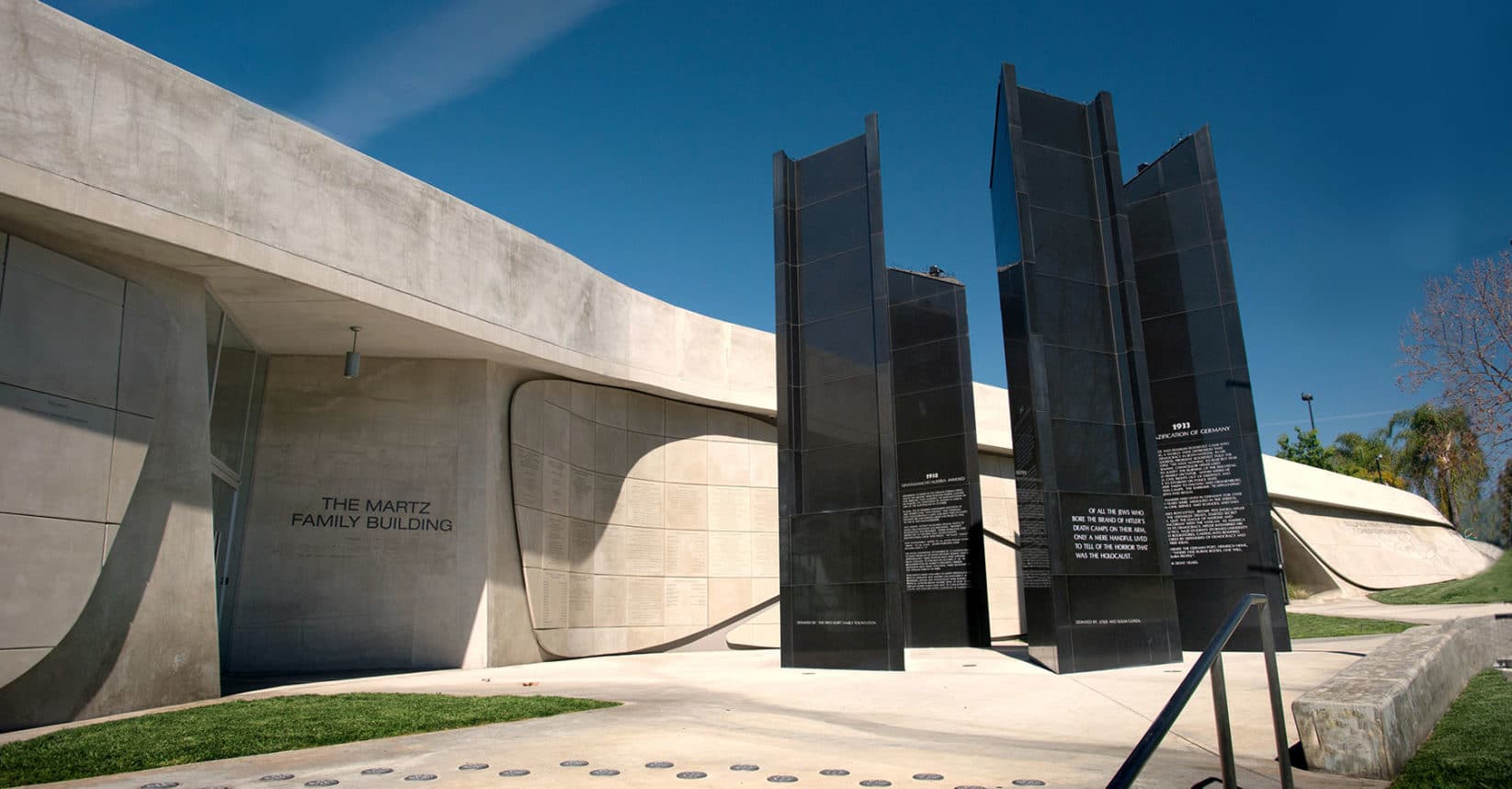
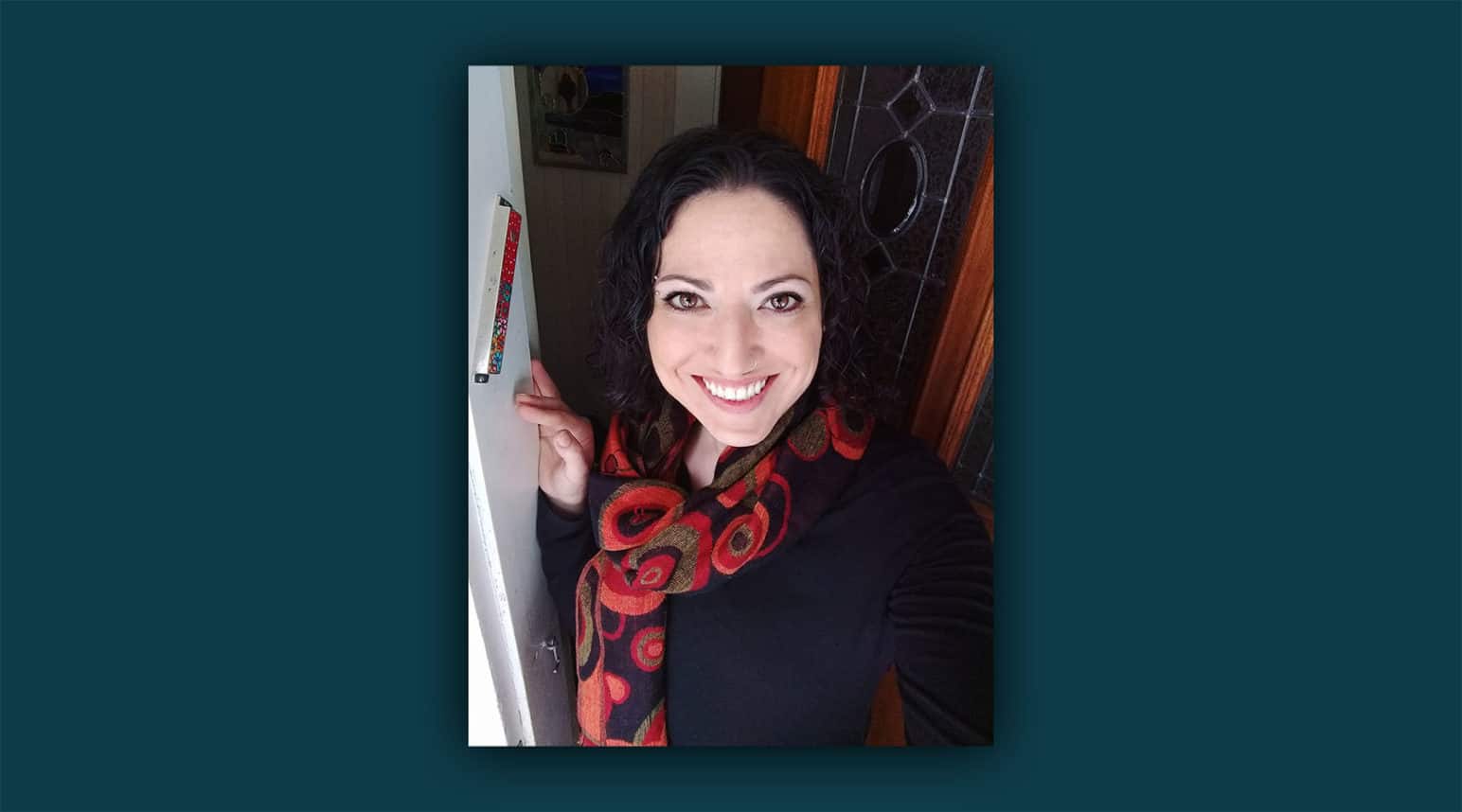
Photo courtesy of Holocaust Museum LA/Tamara Leigh Photography

According to Kean, 99 percent of students who attend tours and programs at the museum are not Jewish. While COVID-19 has temporarily closed many museums in California and the U.S., Kean said virtual engagement at the museum has gone up. While she expects that trend to persist, the museum will continue to offer free education programs and Holocaust education training to educators around the country.

While COVID-19 has temporarily closed many museums in California and the U.S., virtual engagement at the museum has gone up.

Kean added they want to build the virtual experience around the museum’s artifacts and primary sources because it’s one of the ways the museum stands out from others.

“We are starting to do teacher training outside of California and student tours in states that do not have Holocaust museums. We’re working with schools in New York, Alaska [and] Mexico. We also do tours in Spanish and we have survivors who speak Spanish so we’re able to do survivor talks in both English and Spanish,” Dean said. “This Magnopus experience will allow us to really expand our reach and help us educate on a new level.”

The experience-focused technology company specializes in immersive content creation and software development. Its creative and technology teams fuse talent from Hollywood and visual effects, as well as the video game industry, who have served filmmakers like Martin Scorsese, JJ Abrams, David Fincher and Jon Favreau, to name a few.

“We at Magnopus feel fortunate to be working with the Holocaust Museum LA to develop tools and technologies that will deliver enhanced learning experiences for educators and the public,” Craig Barron, creative director of Magnopus and recipient of the 2009 Academy Award for Best Visual Effects, said. “Magnopus has created immersive experiences for museums before, but this project is different, as it is about bringing the exhibit directly to the public.”

This partnership is just one component of Television City’s $2 million pledge to help heal and rebuild the local Beverly/Fairfax community. The pledge contains two parts: a $1 million commitment to support local community organizations, businesses and individuals like Holocaust Museum LA; and its “Changing Lenses” initiative, to help the entertainment industry achieve diversity and inclusion behind the lens by creating career pathways for underrepresented communities.

“We’re proud to partner with Holocaust Museum LA and Magnopus, leveraging best-in-class digital media tools to deliver access to and education about historical events whose atrocities echo in today’s context,” Michael Hackman, founder and CEO of Hackman Capital Partners, said. “These issues are of great importance to me personally and we are humbled that Television City’s pledge can be utilized to help build a more tolerant and empathetic generation of citizens and leaders.”

Zach Sokoloff, who serves as Vice President-Asset Manager for Television City, told the Journal that this project is especially meaningful to him as a Jewish Los Angeleno. He noted it is a special opportunity to work alongside Hackman capital, and Michael Hackman himself, to help invest and give back to the community.

“For me and for Michael, two proud Jews, in addition to the community relevance [and] its proximity to Television City, it always is more meaningful when you have that personal connection,” Sokoloff said. “We realized the impact [of the museum’s resources] is not just on folks who walk through its doors, or in the case of our contribution, utilize the virtual museum-going experience, but for students and teachers. Even if they never come to Los Angles, they can get access to these types of learnings and also benefit from the museum in L.A.”

Photo courtesy of Holocaust Museum LA/Tamara Leigh Photography

Sokoloff also mentioned, noting his own Holocaust education experience, that when students learn about the bystander effect through Holocaust education, “it builds tolerance and empathy” for communities beyond the Jewish community. It’s a major reason Television City wants to continue investing in the museum.

Kean sees this as well and is excited to continue working to ensure everyone around the country has access to Holocaust Museum LA’s educational resources through this new avenue.

“The Holocaust didn’t just happen in a vacuum,” Kean said. “We know from the Holocaust what can happen when hatred and bigotry go unchecked. It’s not just Jewish organizations that are interested today it’s all organizations. This sends such a strong message to our community. Television City is committed to fighting anti-Semitism by making an investment like this. And Magnopus is really a true part of this and also believes in our mission. [We’re lucky] to have that kind of support.”

Holocaust Museum LA, Television City, Magnopus Team Up to Develop Virtual Immersive Experience Read More »

Trump Impeachment Lawyer Mocked Over Orthodox Ritual

Several Twitter users mocked one of former President Donald Trump’s impeachment lawyers after he did an Orthodox Jewish ritual during his speech on the floor of the Senate.

The lawyer, David Schoen, paused and took a sip of water while holding the back of his head as he delivered his arguments.

This prompted some on Twitter to mock him.


Jewish Twitter users, however, quickly noted that Schoen, an Orthodox Jew, was saying a blessing over the water while covering the back of his head because he wasn’t wearing a yarmulke.

“He covers his head when drinking water because that’s what many observant Jews do,” American Jewish Committee Managing Director of Global Communications Avi Mayer tweeted. “It is generally followed by the recitation of a blessing and is an expression of religiosity. Don’t be jerks.”

He defended his use of the term “jerks” in a subsequent tweet, stating, “I invite you to check out the responses to that very tweet, including the folks who’ve characterized Schoen’s religious observance as ‘weird,’ ‘f*cking weird’ and ‘religious nonsense.’ In other words, jerks.”

Jerusalem Post Senior Contributing Editor Lahav Harkov tweeted that when she was in high school, she would see Orthodox men do the ritual Schoen did every day. “In light of some of the reactions I’m seeing — I don’t think people are especially ignorant for not knowing what he’s doing. I don’t even think the vast majority of American Jews, who are not observant, would know.”

The progressive Jewish organization Bend the Arc: Jewish Action tweeted, “Please stop mocking David Schoen for engaging in Jewish ritual as an observant Orthodox Jew. Please continue calling him out for making a mockery of our democracy & the concept of public speaking.”

After leaving office, Trump was impeached for the second time for allegedly inciting the January 6 riot that led to the storming of the Capitol building. If convicted, Trump would be unable to run for office ever again.

Trump Impeachment Lawyer Mocked Over Orthodox Ritual Read More »

Polish Court Orders Holocaust Scholars to Apologize for Recent Book

A Polish court ruled on February 9 that two Holocaust scholars have to apologize to the family member of Edward Malinowski for stating in their book that he aided the Nazis in killing Jews.

The Jerusalem Post and ABC News reported that the Warsaw District Court concluded that Polish Center of Holocaust Research Professor Barbara Engelberg and University of Ottawa Professor Jan Grabowski included inaccurate information in their book about Malinowski, the former mayor of the Malinowo village. The 2018 book, titled “Night Without End: The Fate of Jews in Selected Counties of Occupied Poland,” claims that although Malinowski helped a Jewish woman escape Nazi-occupied Poland, he also robbed her and informed the Nazis of 18 Jews who were hiding in a Walinowo forest.

However, the Warsaw court explained that in 1947, a Polish court found Malinowski innocent, and the Jewish woman he saved, Estera Siemiatycka, had defended him in that trial. She only alleged Malinowski’s crimes to the USC Shoah Foundation in 1996 (Siemiatycka later acknowledged that she had lied to the 1947 court because Malinoswki helped her escape). Based on the 1947 ruling, the Warsaw court concluded that Engelberg and Grabowski need to apologize to Malinowski’s niece. Engelberg and Grabowski do not need to pay a fine.

Jewish groups denounced the ruling.

“By ordering the scholars to ‘apologize,’ it puts both historians and victims on trial and offers protection to the reputations of Poles and others who collaborated in the murder of Jews,” Mark Weitzman, Director of Government Affairs of the Simon Wiesenthal Center, said in a statement. “This ruling opens the door to further intimidation of scholars and researchers and is clearly meant to whitewash unfortunate aspects of Polish history and to offer protection for antisemites.”

“This ruling opens the door to further intimidation of scholars and researchers and is clearly meant to whitewash unfortunate aspects of Polish history and to offer protection for antisemites.”

World Jewish Congress President Ronald S. Lauder similarly said in a statement, “It is simply unacceptable that historians should be afraid of citing credible testimony of Holocaust survivors. This outcome does not bode well for the future of historical research in Poland and sends precisely the wrong message to those who seek to stifle the work of scholars.”

The day before the ruling, The New York Times reported that the case is reflective of how the Law and Justice Party, the ruling party in Poland, “has sought to criminalize any questioning of Polish wartime heroism and poured money into research groups and museum projects that present Poland as Europe’s perpetual and entirely blameless victim.” In 2020, the Polish government changed its libel laws so any court case related to Poland’s role in the Holocaust won’t be subjected to court costs, which is what made the current lawsuit possible, according to the Times.

Holocaust scholar Deborah Lipstadt tweeted out the Times story and wrote: “Poland is engaging in softcore Holocaust denial. It doesn’t deny the genocide. It just rewrites some Poles role in it… and punishes historians who tell the truth.”

Grabowski and Engelberg have acknowledged a couple of errors in the book, but they argue that the errors don’t undermine the book’s premise that numerous Poles aided and abetted the Nazis during the Holocaust. Grabowski and Engelberg both edited the book and worked with several other researchers in writing and researching it. The ruling will be appealed.

Polish Court Orders Holocaust Scholars to Apologize for Recent Book Read More »

Meet a Jewish Woman Who Lives in the Former Stronghold of the Aryan Nations

(JTA) — Andie Bond can almost see the one-time bastion of the American neo-Nazi movement from her house.

Bond, 34, is from St. Louis, Missouri, a city with a robust Jewish population. Now she’s one of just two Jews living in Wallace, Idaho, a town of fewer than 1,000 residents that abuts the Aryan Nations compound from which white supremacists preached their ideology for three decades.

Richard Girnt Butler, the former aerospace engineer who founded the Aryan Nations group, chose the remote parcel of land for what he said was “the international headquarters of the white race” because it was cold and northerly, like the Nordic countries that he admired, and remote enough not to be easily accessible for police or the media. White supremacists networked with each other there, printed literature that they distributed nationally and brushed up on paramilitary training.

An admirer of Hitler who flew Nazi banners at Aryan Nations gatherings, Butler believed that Jews should be “repatriated,” or expelled, from the land he controlled. Some of his followers assassinated a Jewish radio host in Denver in the 1980s, while another shot children at a Jewish community center in Los Angeles in 1999.

Butler lost control of the land after the Southern Poverty Law Center, an anti-hate group, won a legal judgment against him in 2000. By the following year, the buildings had been demolished, but Butler’s influence persisted. Northern Idaho remains a stronghold for white supremacist organizations in the United States.

In a photo taken in 1995, five years before losing the compound, Richard Butler poses with his followers. (Evan Hurd/Sygma/Sygma via Getty Images)

For Bond, who first wound up in Wallace for a newspaper job right out of college and now teaches high school, the specter of the Aryan Nations stronghold is never far from her mind. But she said what she experiences as a Jew in the area is not exactly what Butler imagined.

“There is not so much of this active hatred of Jewish people like you might imagine,” she told the Jewish Telegraphic Agency. “It’s not that people think about their dislike of Jewish people on a daily basis or make it a part of their lives. We’re a blank spot on the map.”

We spoke to Bond about what it’s like living in the shadow of the symbol, Jewish life in small-town Idaho and how she works to fill in that blank space for her students..

This interview has been edited for length and clarity.

JTA: What brought you to Wallace, Idaho, from St. Louis?

Bond: It was journalism, actually. My very first job in my degree field out of college was working for the local paper up here. I figured I lived in the Midwest my whole life, it was time to see the rest of the country a little bit. I moved out here in 2011, and was here for the year, and came back out here to get married. In February, it’ll be three years for me here.

Do you think people know that you’re Jewish?

Around here, people think I’m either Italian or Native American because we do have a couple of reservations pretty close by. If somebody asks me I definitely don’t lie. When I was younger, in the South in certain parts of the country, I kept it to myself when somebody asked because, unfortunately, you have to. But around here for the sake of just trying to spread a little bit of awareness and let people know that Jews are still around, I do tell people, and I’m much more open about it.

How many other Jews live in this area?

I know of one, and they’re not practicing. He’s around my father’s age, in his 50s, 60s.

How did you find out he was Jewish and how did it feel to kind of spot another Jew in your area?

Well, I kind of looked at him and I knew what his last name was. So I asked him and he just grinned and said, “Yeah, but not practicing.”

I felt like, oh, I’m not the only one — we do exist. I think I lean more into my Jewish identity now than I did living at home in St. Louis. I didn’t realize how much I would miss the community, I didn’t realize how much those little things meant, to just pop something off in Yiddish and have somebody laugh or to say “good yom tov” on a holiday and people know what I’m talking about. Tradition and ritual has become more important to me, since I’m kind of the only one.

I do try to say the Shema every day, and I do try to observe holidays and festivals. The closest temple is in Spokane, which is a couple hours away. And even then, I think it’s a messianic temple. [Editor’s note: Spokane also has a Chabad center, a Reform synagogue and a Conservative synagogue.] There’s not really like a central hub for Jewish life, but I try to do things that are meaningful to me and that are a daily reminder of my Jewishness.

What does it feel like to live so near the former stronghold of the Aryan Nations?

The area has an interesting history as the seat of power for the Aryan Nations for years. When I moved here the first time about 10 years ago, I don’t think I saw an African-American person. It’s a little more diverse now, and it’s not unwelcoming, it’s just sort of secluded and cloistered.

I think because the compound was sort of isolated, that mindset was able to incubate and expand, unknown to authorities or anybody else. There was a push from the Jewish community in Spokane, and eventually they were able to get that compound shut down, but there are still pockets of people who have a pretty backward mindset.

I have found since moving away from home and moving into smaller communities out west that there is not so much of this active hatred of Jewish people like you might imagine. It’s not that people think about their dislike of Jewish people on a daily basis or make it a part of their lives. We’re a blank spot on the map. They don’t know anything about us. They don’t know what “Jewish” is to even hate, let alone have specific arguments against us.

We’re not so much battling outright hatred as we are just a complete lack of education. It’s really difficult to grasp that when you grow up in areas with major Jewish populations. It’s easy to not understand that people don’t even know where to start to ask the questions, and don’t know how to not be rude about it either.

What kind of questions have you gotten?

Somebody will ask if the word Jew is offensive. A lot of students would use “Jewish” as a synonym for something that they thought was really stupid. It was just a general pejorative term. A lot of them stopped doing this, to their credit.

They would say, ‘Oh my god, I was Jewed out of a parking spot coming into school this morning.’ The first time I heard it I looked up and I was shocked hearing it come out of this person. And I was thinking there’s a Jew right here. But then I realized they don’t think of it as applying to actual people that could still be around and be offended. They didn’t think of it in terms of my teacher is Jewish. They completely dissociated it from an actual group of people.

One child asked me once if I was bothered by being in a church because all Jews were going to hell. This child has only been told certain things about Jews. And that was a natural question for them.

It was fascinating to see that there was no hatred there, that’s just the way that they have always heard the terms used and the way that they know to use it. With the students, we had a little talk about that.

Where do you think this lack of education comes from?

It’s easy to start to fear something that you don’t interact with and understand on a personal level, and I think a lot of young people in this country see Jewish people as another thing from a textbook. A lot of people unfortunately also look at Native Americans as pinned in time and place to a specific event. And unless somebody has a personal interaction that sort of broadens their perspective, that’s all that they know. That’s all that we are, is something in a textbook. It’s a piece of history, something that’s gone already.

As I was talking to some of these classes [as a substitute teacher], I tried to draw a parallel between the way that we treat certain groups now and the way that Jewish people were treated in the Holocaust to try and give a more modern context to it. So it’s not just dry, dead history.

But the Holocaust is in the curriculum, isn’t it?

Yeah, so with the classes, one grade was reading “The Diary of Anne Frank” and the other was reading “Night,” by Elie Wiesel. And as the kids were working one day, the teacher that I was filling in for came in and we were discussing where they were on the material. And she looked at me and said, “Wait a minute, aren’t you Jewish?”

I said, “Yes, I am actually.” At the teacher’s invitation, I started telling the class about my bubbe Sally, who was a Holocaust survivor, and the story of her family coming here and I could see something changing on the faces of these kids. They’re sitting and listening. They kind of sat up a little straighter, they didn’t talk or interrupt me. They kind of looked at me in a different way, not in a way that was frightened or confused, but as though they were properly looking at me for the first time. It brought home the closeness of history, how recent it really was, that there are people still alive that were there. The cool teacher’s family members were there.

I think being able to put a face on what was otherwise just a dead subject in a textbook made them think again the way that they use the term Jewish, the way that they thought about who Jewish people were and what they actually knew about Judaism.

How did that feel for you, that moment of seeing this recognition on their faces?

That was when I realized it’s not necessarily about hate. It’s about ignorance. There is a huge, huge difference between being actively hated and being a complete curiosity. And a lot of times that can look the same because people are wary about things they don’t understand.

If all they know is what Jewish people were portrayed like in the media or perhaps stories that they might hear from people who used to be affiliated with the Aryan Brotherhood, that image of what being Jewish is not going to be the most positive thing. And it takes knowing somebody to realize that Jewish people are not homogenous and we are not gone by any means.

You are the first Jewish person who many of your neighbors have ever met. Does that put pressure on you to be sort of a model representative of all Jews?

It does because I am really aware that if I am just a jerk, I am reinforcing these negative stereotypes, and I don’t want to be part of the problem that way. So I just try to be open with people. I try not to be the stereotype, but it’s also not something that I stress about because if somebody wants to draw a comparison or make a caricature of me, anybody could. It’s just showing through example that there’s more to being Jewish than “beanie hats” or money.

Does that ever feel overwhelming for you?

Sometimes. If I’m having a bad day, sometimes I’m not as patient as I should be. I don’t want to sit and explain something. But I will still try or apologize to the person.

The lack of Jewish community is something that I feel like a wave daily. I really was not expecting to miss the community as much as I do. So I guess my way of sort of keeping community alive with me is just to try and be a good Jew and try to be a good person. And make people’s experience of meeting a Jewish person for the first time a positive one. But I’m human and I don’t always live up to that goal.

The valley has gotten a lot more diverse in the last 10 years, but when I first got here I would have a group of people I met up with at a bar every Sunday who would write down questions and bring them. They’d ask do you celebrate Christmas, do you believe in the Ten Commandments, do you believe in God, are you rich?  If they had questions that I didn’t know the answer to, I would come home and I would study or go online and look at the answers to these questions, so we could have an honest exchange of information. I wanted to be sure I got it right.

Without having Jewish people to interact with, we’re something people only see on a TV screen or a movie screen or in a book. And that makes it feel as though Jewish people are part of the past, that we don’t have a place in modern culture.  I think that the way that a lot of history classes are taught makes it seem like things occur almost in a vacuum.

What was your reaction to the Anne Frank statue in Boise, Idaho, getting vandalized? Until recently it was the only Anne Frank statue in America, and people put stickers on it with swastikas that said ‘We are everywhere.’

Well, I think it says something about the area and about the people that they did erect this monument to Anne Frank and it was the only one in the country. But there is still that element of racism and fear of the unknown. And Jewish communities tend to find an area that we like and everybody moves there and schools get built and everything is hunky dory except that it limits our exposure, really. So people don’t have the opportunity to interact with Jewish people on a daily basis and realize that we’re not so different.

I don’t necessarily go around waving an Israeli flag and pronouncing my Jewishness to one and all because you never know when you’re going to run across those elements. But in the rare instances that I have, it’s almost like the person becomes embarrassed, especially if they’ve known me for a while, just not knowing that I’m Jewish. I can see the conflict on their face trying to reconcile these beliefs that they’ve held with the person that they know.

The area is sort of untouched by time in a lot of ways. You have to get people to pin down when something happened because they’ll talk about something from 100 years ago like it was yesterday. There are pockets in and around the mountains where a backwards mentality has sort of incubated for a long time without any other outside influence. But it is changing.

What should Jews living in highly populated Jewish locations know about where you live?

It’s a wonderful place to live and I have amazing neighbors. If I have an issue or if I just don’t show up around town for a few days, somebody is going to come to my house and make sure I’m all right. It’s the kind of community a lot of people wish that they had.

The hatred that I assumed I would find here is just not present, it’s a group of people eager to expand their horizons and know more about what’s really going on in the world, who Jewish people really are, who any group of people really are.

It’s a community where it’s almost too small to hate because you know everybody, and through those kinds of interactions a lot of misconceptions get worn down.

If I were speaking to my younger self, I would tell myself to appreciate community more when I had it because it’s an aspect of life that you don’t realize is going to be so absent until it’s not there. At the same time, I’m so glad that I’ve had this experience because it’s reaffirmed a lot of why my Jewishness is important to me, and it’s been a privilege to be able to share my culture with people. We’re all just people.

Meet a Jewish Woman Who Lives in the Former Stronghold of the Aryan Nations Read More »

Netanyahu Receives Day in Court, Pleads Not Guilty

(The Media Line) — Jerusalem’s district courthouse, normally a quiet, rather forgotten building on a side street near the capital’s city center, was jam-packed early Monday morning as hundreds of protesters, bodyguards, reporters, and lawyers, along with one lone prime minister, arrived at the court steps.

Binyamin Netanyahu, Israel’s longest-serving prime minister, currently running for a fifth time in office, arrived for another court appearance, just his second since his trial over charges of bribery, fraud and breach of trust began in May of last year.

After having his indictment read out to him, Netanyahu, as expected, pleaded not guilty, saying simply, “I confirm the written answer submitted in my name,” referring to the document filed earlier by his attorneys.

Then, approximately 20 minutes into the session and after receiving the judges’ permission, the prime minister abruptly left the chamber.

Netanyahu is accused of accepting lavish gifts and handing regulatory favors worth hundreds of millions of dollars to communications and media moguls in return for favorable news coverage in a number of Israeli outlets. If convicted, he could face up to 10 years in prison.

Outside, still oblivious to Netanyahu’s departure, the many dozens of protesters who had gathered early Monday morning continued to chant, sing and whistle, demanding that the judges serve justice and that Netanyahu to step down.

“I’ve come from Tel Aviv, to make sure he stands trial just like any other citizen in this country,” Pnina, a 56-year-old protester, told The Media Line of the prime minister.

“He’ll do anything to delay and cancel this whole thing, and we can’t let him. He’s rotten from the core.”

Demonstrators and spectators outside the courthouse were watched by a heavy police presence whose job included separating the anti-Netanyahu rally from the prime minister’s supporters.

“He’ll do anything to delay and cancel this whole thing, and we can’t let him. He’s rotten from the core.”

On Sunday, Netanyahu called on his backers not to arrive in person in the Jerusalem district court due to coronavirus concerns, noting that the “fraudulent, crooked” case against him and the “sham trial,” which he has consistently blamed on corrupt cops and deceitful prosecutors, was “already falling apart.”

Yet the prime minister, while promising for months to beat the accusations in court and prove his innocence, has done all he can to delay or altogether terminate the trial.

Last year, Netanyahu requested that parliament award him procedural immunity, only to later wave it after concluding that he did not have the required majority. Over the past two years, as Israel has held three general elections and is about to hold the fourth amid an unprecedented political deadlock, the prime minister decried his indictment, pretrial hearing and first court appearance as blatant political interference by the nation’s justice system, demanding the entire procedure be suspended until a government is formed.

On Sunday, Netanyahu’s top confidant, Knesset Chairman Yariv Levin, echoed these charges, calling on the judges to postpone their sessions until after the March 23 election.

“He caused all this. Why do you think there hasn’t been a stable government ever since? He created this mess; he needs it to escape.”

“Of course that’s what they want. [Netanyahu] called an early election [in April 2019] just so that he could say he was indicted during an election,” Eitan, another demonstrator standing outside the court Monday, told The Media Line.

“He caused all this. Why do you think there hasn’t been a stable government ever since? He created this mess; he needs it to escape.”

After their client had already left, Netanyahu’s attorneys on Monday requested that the court hold off on scheduling the next trial date “at least by three to four months.”

As the trial enters its witness testimony phase, judges are expected in the coming days to publish their decision on the coming months’ schedule, including how many times a week the sides will meet.

While he fights to stay out of jail, Israel’s embattled prime minister is simultaneously trying to combat the ongoing health and economic crises while fending off a handful of challengers in the elections, just over 40 days away.

“It’s obviously not illegal but definitely unprecedented,” Prof. Gad Barzilay, former Law Faculty dean at Haifa University, said of the bizarrely intertwined political and judicial courses.

As for whether the trial might harm Netanyahu’s performance at the polls, Barzilay pointed to the Supreme Court’s recent ruling that an indicted lawmaker could still form a government.

“That should assuage any concerns voters have in that regard, but it’s impossible to tell” what political fallout the proceedings may have, he said.

Netanyahu Receives Day in Court, Pleads Not Guilty Read More »

Why the Jewish Right Must Condemn Marjorie Taylor Greene

Why are some right-of-center Jewish organizations finding it so difficult to publicly condemn anti-Semitic congresswoman Marjorie Taylor Greene? A few, such as the Republican Jewish Coalition and the Coalition for Jewish Values, have spoken out. We at Herut, too, condemn Marjorie Taylor Greene’s extremism and her endorsements of anti-Semitic conspiracies. But too many others have remained silent.

The silence of other organizations surely cannot be because of any doubts regarding Greene’s record of espousing anti-Semitism, violence and lunatic conspiracy theories. That ugly record speaks for itself — in volumes. In videotaped diatribes, likes, tweets and retweets over the past several years, Representative Greene promoted the deeply anti-Semitic QAnon movement, encouraged violence against congressional leaders and claimed that the 9/11 attacks, the Las Vegas massacre and various school shootings were hoaxes.

With regard to Jews, she wrote on Facebook on November 17, 2018 that California’s wildfires were caused by “lasers or blue beams of light” being fired from “space solar generators” financed by the vice chairman of “Rothschild Inc, international investment banking firm.” Can anybody doubt that singling out the best-known Jewish name in the world of finance is anti-Semitic?

Less known is that Greene, also in November 2018, “liked” a tweet accusing the Mossad of complicity in the assassination of President John F. Kennedy. That year, she also shared a video in which British extremist Nick Griffin rails against an “unholy alliance of leftists, capitalists and Zionist supremacists.”

Considering how often Jews have been targeted — and hurt — by conspiracy-mongering, you would assume that every Zionist and Jewish organization, from right to left, partisan to nonpartisan would speak out against Greene. For those who didn’t, here’s why you should:

Those in the Jewish community who claim to fight anti-Semitism are credible only if they loudly and clearly denounce the hatred when it comes from all camps — not just from the camp of their opponents. Republicans who condemn anti-Semitism only from the left are no more credible than Democrats who condemn anti-Semitism only from the right.

Anyone who is reluctant to condemn Greene for fear of weakening the Republican Party is making a grave mistake. It will strengthen, not weaken, the GOP to rid it of the anti-Semites on its fringe — just as it strengthened the political right when William F. Buckley, Jr. drove the extremist John Birch Society out of the conservative movement in the early 1960s because it was failing to curb Jew-hatred and racism in its ranks.

It will strengthen, not weaken, the GOP to rid it of the anti-Semites on its fringe.

It’s a shame that Democrats did not respond forcefully enough when Congresswoman Ilhan Omar of Minnesota made her infamous remarks accusing supporters of Israel of paying off members of Congress in 2019. Omar was not removed from any committees, and the resolution that the Democrats adopted merely condemned anti-Semitism in general, instead of acknowledging Omar’s. Jewish Republicans who refuse to ostracize Greene today are repeating the terrible mistake made by Jewish Democrats who refused to ostracize Omar.

It’s not just a matter of credibility. It’s also a matter of effectiveness. When groups on the left denounce Marjorie Taylor Greene, it doesn’t have much impact. But when groups on the right condemn her, it matters. It matters because those are the people that Representative Greene might listen to. She dismisses criticism of her that comes from the left; but when it comes from her own camp, there’s a chance, however small, that she might pay attention. Perhaps it will curb some of her public expressions of extremism.

Where condemning Greene especially matters is in establishing parameters for what is acceptable, and what is not acceptable, in civilized discourse. Many people on the left think the worst of people on the right. They assume that all conservatives are racists or reactionaries or what-have-you. The case of Marjorie Taylor Greene is where the Jewish right must draw the line and prove their critics wrong. Condemning Greene says that she is beyond the pale, she does not deserve to be considered part of the legitimate political right.

At the end of the day, anti-Semites don’t make political distinctions. They hate all Jews. To counter them, Jewish organizations likewise must take a bipartisan approach of condemning all anti-Semites. The first responsibility of leaders of Jewish and Zionist organizations is supposed to be to their members and to the Jewish people, not to a particular political party or a particular current or former president.

Right-of-center Jewish groups have shown over the years that they can be quite prolific and vocal when they want to be. When they have an opinion on some issue, they make it clear. And that makes their silence regarding Marjorie Taylor Greene’s extremism all the more conspicuous and all the more disturbing. It’s time to speak out.


Moshe Phillips is national director of Herut North America’s U.S. division; Herut is an international movement for Zionist pride and education and is dedicated to the ideals of pre-World War II Zionist leader Ze’ev Jabotinsky. Herut’s website is www.herutna.org

Why the Jewish Right Must Condemn Marjorie Taylor Greene Read More »

The ICC Opens a New Front in the War Against Israel. Why We Must Fight.

(The Media Line) — You don’t have to be a lawyer to know the drill:

Heads Israel loses. Tails Palestinians win.

When it comes to the Palestinian Authority’s abject failure to deal seriously with the COVID-19 pandemic, Israel is an occupying power with the responsibility to inoculate all Palestinians. The fact that the Palestinian Authority has the legal responsibility and a health ministry is irrelevant. Israel is cast as an immoral Goliath monster, this time its main weapon isn’t an F-35 but its biomedical prowess and high-tech connections.

However, when it comes to putting Israel in the docket of a kangaroo court, the International Criminal Court (ICC) announces it is treating ‘Palestine’ as a sovereign nation. The Jewish state, its political leadership, generals and soldiers could be placed on Interpol watchlists, be detained at airports, barred from entering other countries and even be schlepped into courts and put on (show) trial – paraded as war criminals – for the chutzpah of protecting their fellow Israeli citizens from criminal terrorists like Hamas, Islamic Jihad and Hizbullah. Speaking of these organizations, the leaders and their deadly operatives have little to fear from the ICC. That court will never hold them responsible for their targeted serial attacks against Israeli civilians living within their internationally recognized borders!

There are observers and legal experts whom I respect, who would counsel the State of Israel to pay no heed to the ICC’s shenanigans. Jerusalem, like the United States, they would rightly point out, never signed on to give the court any jurisdiction, so the ICC threats have no stature or legal standing.

I’m not a lawyer but doing nothing is a luxury Israel and her Zionist supporters don’t really have.

I’m not a lawyer but doing nothing is a luxury Israel and her Zionist supporters don’t really have.

The ICC gambit and its timing when the United States is re-embracing international addresses including the anti-Israel UN Human Rights Council and the Iran nuclear agreement, cannot go unchallenged, especially in the court of international opinion.

ICC’s lurid indictment of a people defending itself from terrorists rather than going after the terrorists themselves, targets one nation and one nation only – Israel.

It fulfills, on steroids, Natan Sharansky’s and Irwin Cotler’s classic 3 Ds of contemporary anti-Semitism masquerading as criticism of the Jewish state:

The ICC is guilty of a whopping Double standard; its goal is to Demonize Israelis by hanging the sign “war criminals” around their necks (read Nazis) for defending themselves from mass murderers; and to De-legitimize Israel’s political leadership by isolating the Jewish state in the international community and de facto keeping key leaders from traveling around the world.

Exaggerating, you say? I think not. I feel like we have been to this rodeo before.

In 2021, academics and well-funded ‘student’ groups around the world serially pummel Israel and her supporters with BDS (Boycott, Divestment and Sanctions) lies, spawning bullying of Jewish students who stand up for Zionism out of leadership positions in student government. It is no wonder that such an environment also spawns blatant anti-Semitism.

Now the ICC’s  illegal decision to recognize the non-existent state of Palestine and to investigate Israel for possible “war crimes” means the opening of a new front in the war against the world’s largest Jewish community. It also guarantees a tsunami of colloquia at law schools and articles in legal journals attacking Israel.

One key question going forward is what will the new Biden Administration do in this case. America is no mere bystander. If Israelis can be prosecuted for imaginary crimes in Gaza, so can Americans be targeted for their actions in Iraq, Afghanistan or Syria. If Prime Minister Binyamin Netanyahu or members of his cabinet can be indicted for military actions, so could former US presidents Barack Obama and Donald Trump, or potentially President Joe Biden.

When I asked Holocaust survivor and Nazi hunter Simon Wiesenthal why he chose to dedicate his life to bringing Nazi war criminals before the bar of justice, he said that one reason was that he wanted to help rehabilitate the fundamentals of justice, which the Nazis had almost succeeded in obliterating.

Were he alive today, he would denounce the ICC’s reckless and shameless politicization of justice to punish Jews for defending themselves from those committed to finish Hitler’s genocidal goals.


Rabbi Abraham Cooper is the Simon Wiesenthal Center’s associate dean and global director of its Ed Snider Social Action Institute.

The ICC Opens a New Front in the War Against Israel. Why We Must Fight. Read More »

UC Berkeley Jewish Law and Israel Studies Institute Receives $10M Gift from Helen Diller Foundation

To kick off the 10th anniversary of UC Berkeley’s Jewish Law and Israel Studies Institute, the university announced on Feb. 9 that a $10 million endowment gift has been given by the Helen Diller Foundation.

The institute, now recognized as the Helen Diller Institute for Jewish Law and Israel Studies at UC Berkeley, will ensure a lasting legacy for its Institute for Jewish Law and Israel Studies. Housed at Berkeley Law, the institute engages students, faculty and the broader community in Israel Studies, and Jewish law, thought and identity.

This grant is intended to help ensure that the institute is well positioned to grow and foster excellence. The Helen Diller Foundation supports education, science and the arts in the Bay Area and Israel.

“It’s a pleasure to see the Israel and Jewish Studies academic landscape flourish here, and become a model for programs around the country,” UC Berkeley Chancellor Carol Christ said in a statement to the Journal. “This consequential gift continues a history of pivotal philanthropy by the Diller family, and will help us educate leaders and scholars for generations to come.”

Helen Diller, who died in 2015, met her husband Sanford Diller, who died in 2018, while attending UC Berkeley. The Diller family’s philanthropy in Northern California includes funding Judaic studies programs at both UC Berkeley and UC Santa Cruz; an international Judaic teen leadership program; the Helen Diller Family Preschool at the Jewish Community Center of San Francisco; renovation of children’s parks in San Francisco; and San Francisco’s de Young Museum, Museum of Modern Art and Legion of Honor Museum.

In 2002, the Diller family gifted the university $5 million, providing funding for the campus’s Center for Jewish Studies and supporting its director, faculty research funds, and graduate student fellowship and research funds. In 2019, the Helen Diller Foundation made a gift of $5 million to establish and name the Helen Diller Family Chair in Israel Studies — the university’s first endowed faculty chair in this field — held by Ron Hassner.

The institute supports an undergraduate fellows cohort of more than 20 students per semester, and has sponsored 85 unique courses across a dozen departments. Classes have addressed topics such as Israeli constitutional law, transboundary water in the Middle East, minority rights in Israel, Jewish mysticism and more. The Helen Diller Institute has brought approximately 40 faculty from Israel’s top-tier universities to teach Berkeley undergraduates.

The institute focuses on Israel studies programs, programs for Jewish law, thought and identity, student initiatives including the Undergraduate Fellows Program, undergraduate and graduate courses, lectures, panels and conferences, in addition to community engagement programs.

Ken Bamberger, Rosalinde and Arthur Gilbert Foundation Professor of Law and Faculty Director of the Helen Diller Institute, said that this gift puts Berkeley on the map as a leader for Israel Studies and the study of Jewish law alongside institutions like Harvard, Columbia, NYU, Brandeis, Northwestern, and UCLA.

this gift puts Berkeley on the map as a leader for Israel Studies and the study of Jewish law alongside institutions like Harvard, Columbia, NYU, Brandeis, Northwestern, and UCLA.

“The generosity of the Helen Diller Foundation allows us to institutionalize our focus on supporting and mentoring students, and expanding programs and initiatives that deepen scholarly inquiry and discourse across the UC Berkeley campus for the long-term,” Bamberger said.

Hassner said in a statement that the next steps for the institute will include expanding the program to include a minor in Israel studies.

“Our next step is to put in place the core classes on Israel that would constitute a minor in Israel Studies so that Berkeley can become a magnet for undergraduate students who wish to specialize in Israel,” Hassnersaid. “We will also continue to develop experiential programs for study and internship in Israel for Berkeley students who aspire to study about Israel in Israel.”

Noting the generosity of the foundation, Berkeley Law Dean Erwin Chemerinsky said: “This gift will ensure that UC Berkeley students will be able to engage deeply with Israel Studies, and Jewish law, thought and identity, at the highest level at the world’s leading public university for years to come.”

UC Berkeley Jewish Law and Israel Studies Institute Receives $10M Gift from Helen Diller Foundation Read More »

Pitting Jews Against One Another Is Never the Answer

On February 3, 2021, an article appeared in the Israeli newspaper, Haaretz, titled, “Democratic Lawmaker: Antisemitism Can’t Be Beat Unless Palestinian Rights Are Respected.” I could not believe the title, so I read the article to discover that in a panel called “How Biden should fight antisemitism,” hosted by organization IfNotNow, United States Representative Andy Levin from Michigan said, “Unless Palestinian human rights are respected, we cannot fight antisemitism.”

Not only do I think the statement (and concept) is false, I also believe the notion — offered by a Jewish representative — to be irresponsible. The victim of hate is never responsible for the hate they receive. Jews understand this clearly when it comes to other communities. African Americans do not bear responsibility for bigotry and racism against them. The LGBTQ community bears no responsibility for hate and discrimination against them. Jews do not bear responsibility for anti-Semitism. We have to make this clear on our own behalf. Jewish leaders must stand up for our own community as well.

Jews in Israel also definitely do not bear responsibility for anti-Semitism in America. Israel, or any nation’s policies, for that matter, can always be debated. However, to suggest that Israeli policy is responsible for the dangerous level of anti-Semitism here in America is scapegoating Jews “there” in Israel against Jews “here” in America.

to suggest that Israeli policy is responsible for the dangerous level of anti-Semitism here in America is scapegoating Jews “there” in Israel against Jews “here” in America.

As a grandchild of four survivors of the Holocaust and as a congregational Rabbi, the Jewish value of Kol Yisrael Aravim Zeh La’Zeh — that all Jews are responsible for one another — stands at the foundation of my Jewish identity. (I also believe that Americans should be responsible for one another.) Any concept that pits one group of Jews against another cannot be good for the Jewish people. Ever. Any attempt to do so is a cheap political trick by a salesman of the highest order.

Were we to believe Representative Levin for a moment, and were we to imagine that the relationship between Israel and the Palestinians sits as a core component of anti-Semitism in America, how can we understand anti-Semitism in America in the 1930s and 1940s, before there was a State of Israel? Levin’s argument dissolves quickly when examined, but unfortunately, the damage of the panel has been done. The viewers of the panel heard a message that affirmed their preconceived false notions about Israel.

If you scapegoat Israel in hopes that you might curb anti-Semitism, you will ultimately be disappointed on two counts. First, Israel will continue to succeed, both in terms of peace agreements with its regional neighbors and with its ingenuity. Second, anti-Semitism will not diminish, as it is the most ancient, resilient, constant form of hatred around the world.

Here in America, anti-Semitism has flourished in the past few years in the form of synagogue shootings, public rallies in Charlottesville and Washington D.C., and in drafts of the currently proposed Ethic Studies curriculum in California. Currently, several members of Congress —on both sides of the aisle — have displayed a pattern of utilizing anti-Semitic tropes in their rhetoric. The suggestion that Jews “there” are to blame only reveals the potency of the newest variant of anti-Semitism, anti-Israelism.

Jewish leaders have stepped up in recent times to protect minority rights across the country. It is time we do the same for ourselves.

If you want to fight anti-Semitism, fight anti-Semites.


Rabbi Nolan Lebovitz is the Rabbi at Adat Shalom in Los Angeles, directed the documentary “Roadmap Jerusalem” and is pursuing his PhD at Claremont Graduate University. 


Pitting Jews Against One Another Is Never the Answer Read More »