fbpx

February 5, 2021

Jewish Groups Release Statement Addressing “Misrepresentations” Regarding Ethnic Studies

Several Jewish groups released a statement on February 4 addressing “misrepresentations” about the Ethnic Studies Model Curriculum (ESMC) issue in the media.

The statement, which was spearheaded by the Jewish Federation of Greater Los Angeles, said that recent articles in Jewish publications about the ESMC “have often misrepresented and misinformed on many of the details of the issue, its progression and the ongoing advocacy work that all our institutions are doing.” They proceeded to state that media reports have referenced parts of the initial ESMC draft that are no longer in the current draft as well as Jewish American lesson plans that are “false and out of context” that have yet to be finalized. Additionally, the Jewish groups allege that the recent reports haven’t adequately described the “the full timeline and scope of advocacy work done” by Jewish groups.

“While the curriculum is improved from where we started, it is not yet finalized and there remain problems that must be addressed,” the statement read. “Ethnic studies will always be a subject matter that incorporates different narratives — and that can be exploited against Jews. We know some groups are still trying to promote anti-Israel narratives within Ethnic Studies and trying to bypass the State Board of Education to have local school districts endorse the earlier unacceptable versions of the curriculum.”

Other Jewish groups who signed onto the statement included Anti-Defamation League Los Angeles, American Jewish Committee Los Angeles and San Francisco and StandWithUs.

Sarah Levin, executive director of Jews Indigenous to the Middle East and North Africa (JIMENA), also wrote in a February 4 Jewish Telegraphic Agency (JTA) op-ed that thanks to the work of Jewish groups, the current ESMC no longer mentions the Boycott, Divestment and Sanctions movement. Instead, students will be taught “that all Jews are indigenous to Israel, they will study the realities of contemporary anti-Semitism, hear about the diversity of Jewish life in America and be exposed — many for the first time — to the stories of Mizrahi and Sephardic Jewish Americans.” Levin later decried that “some in the Jewish community wish to undo these advances and discredit the Ethnic Studies curriculum outright — including eliminating its important lessons on anti-Semitism. Citing outdated material and misrepresenting the lesson’s content commentators have styled themselves as defenders of Jews in the classroom.”

JTA’s Ben Sales reported that there are two recent pieces about the ESMC that have garnered attention on social media – a January 27 article in Tablet warning that the ESMC is “cleansing Jews from history” and a February 3 piece in Jewish Currents stating that the original authors of the curriculum are dismayed at the changes from the initial draft. According to Sales, the Tablet piece contained information that was “inaccurate or misleading.”

Emily Benedek, the author of the Tablet piece, wrote in a February 1 author’s note that her piece was mainly aimed at the California Department of Education, not Jewish groups. She also noted that while Jewish groups deserve credit for making improvements to the current ESMC draft, school districts are not required to take on the draft as is. Benedek added that “over a dozen school districts have already passed resolutions endorsing the use of the ESMC’s first draft.”

Additionally, Benedek argued that recent changes to the ESMC don’t address the underlying problem of its “critical race theory framework” underpinning every draft. “The crime here appears to be that I dared to surface the views of ordinary Jews—many of them parents, some immigrants—who remain deeply uncomfortable with the curriculum for obvious and profound reasons.”

Jewish Groups Release Statement Addressing “Misrepresentations” Regarding Ethnic Studies Read More »

Embrace of IHRA’s Definition is One of Biden’s Early Policy Victories

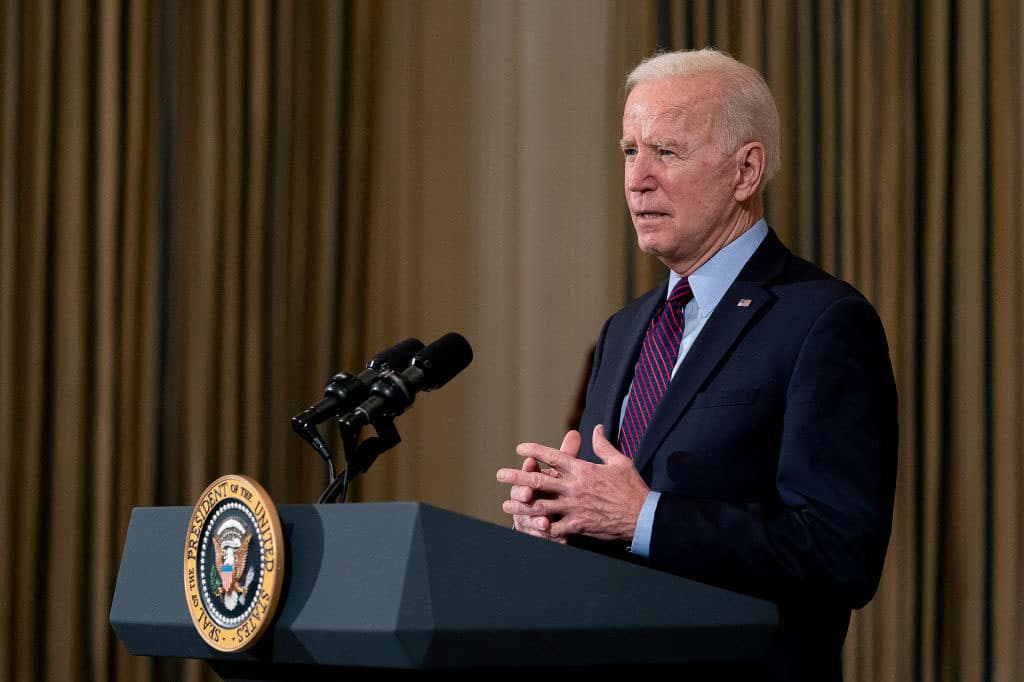
This week, the Biden/Harris administration boldly declared that it “embraces and champions” the International Holocaust Remembrance Alliance (IHRA) definition of antisemitism. The announcement reflects the administration’s appropriate commitment to protecting minority communities that feel extraordinarily vulnerable after the last 4 years. And yet, the IHRA definition has become a point of tension in parts of the progressive movement, with a number of organizations opposing its adoption.

Some have argued that the new administration should have immediately reversed an Executive Order signed in 2019 that protects Jewish students from campus antisemitism by mandating reference to the IHRA definition. According to these groups, the definition’s illustrative examples of contemporary antisemitism––including its manifestation in “anti-Zionism”––would “stifle free speech and suppress debate on Israel.”

Some quote former Secretary of State Pompeo’s support of the IHRA definition as a reason to oppose it, arguing that the Trump administration used “spurious examples of antisemitism as a cudgel to attack its political opponents.” They’re undeniably correct: the Trump administration unconscionably weaponized antisemitism and support for Israel for partisan political gain, and did serious damage to our Jewish community in the process.

Yet in using the Trump Administration to make the argument that support for the IHRA definition is partisan––and Trumpian––these groups curiously omit the fact that Secretary of State Hillary Clinton adopted a definition of antisemitism almost identical to IHRA’s at the Department of State in 2010. Critics trying to paint a partisan picture also leave out the fact that the Anti-Semitism Awareness Act, a piece of federal legislation that would have codified the IHRA definition, sailed through the Senate unanimously at the end of 2018 before hitting a Republican roadblock in the House.

In 2016, the working definition and its list of examples was adopted by a plenary meeting of the 31 countries in the IHRA (Photo courtesy of IHRA)

Antisemitism often manifests via conspiracy theories and age-old tropes unrecognizable for those not deeply educated in this ancient form of hate, which is why defining this evil is a necessary first step to combating it. But, contrary to some of the arguments being made, defining hate speech is not the same thing as banning it.

Hate runs rampant in this country, especially during the Trump era, and, like it or not, hate speech remains quintessentially protected. People can, and do, say racist, Islamophobic, misogynistic, homophobic, transphobic, ableist and xenophobic things every day––and unless they are inciting imminent violence, their right to do so is sacrosanct under the First Amendment.

People have the right, too, to say antisemitic things. People have the right to call Jewish students “Zionist oppressors” and “baby killers,”; they have the right to scream “Intifada, Intifada” in the faces of Jewish community members; they have the right to claim that Israel is a “racist” or “genocidal” or “illegitimate” endeavor, and that Jewish students who support its existence are “white supremacist ethnonationalists”; they even have the right to cover the campus quad with fliers that say “Zionists, Get the F**k off our campus”––referring to the 95% of American Jews who support Israel as our people’s sanctuary from persecution.

Jewish students and their allies also have the right to call this what it is: antisemitism. They have the right to expect that those investigating claims of a hostile campus climate understand why it’s antisemitism, too. They have the right to reject the implication that these attacks on Jews are “criticism of Israel,” and the argument that the Executive Order “risks chilling constitutionally protected speech by incorrectly equating criticism of Israel with anti-Semitism.”

And if students do complain to campus authorities, the required response under civil rights law, namely Title VI of the Civil Rights Act of 1964, is not to punish the antisemitic speakers, or “banish” their hate speech. Instead, the university is put on notice that it must “cure” a potentially antisemitic environment, including through steps as simple as exercising its own First Amendment protected right to speak and condemn such antisemitism, ensuring a safe environment for Jewish students to learn and participate fully in campus life. It is only in the event that a university administration, over a sustained period of time, refuses to ensure the protection of Jewish students, to the extent that the campus environment becomes “pervasively hostile” for Jews, that any legal consequences attach. In the rare circumstance that a violation of Title VI was found, the university––not the antisemitic speakers––would be held accountable for the toxic campus climate.

Asking the Department of Education, as the Executive Order does, to consider the [non-legally binding] IHRA definition in cases where antisemitism is alleged, does not change the process that DoE must go through in adjudicating a Title VI complaint––including in understanding its own First Amendment obligations. The only difference is that, in adjudicating a case of anti-Black, anti-Chinese or Islamophobic discrimination, the blatant hatred would generally be easily recognizable. Antisemitism’s complex manifestations are simply not always as clear as a neo-Nazi wearing a “Camp Auschwitz” sweatshirt, and the IHRA definition serves as a reference to help our government institutions understand contemporary antisemitism so that they can identify and address it.

We all recognize the “Camp Auschwitz” sweatshirt as antisemitism; there is profound cognitive dissonance in claiming to understand how serious this evil can be, while arguing against the existence of a sovereign Jewish state. Israel is what makes Jews confident that “Never Again” actually means something. Denying Jews that inalienable right as a people, wishing to return us to a state of total systemic powerlessness, is just as anti-Jewish as celebrating what happened to us the last time we were in that very position.

“We all recognize the “Camp Auschwitz” sweatshirt as antisemitism; there is profound cognitive dissonance in claiming to understand how serious this evil can be, while arguing against the existence of a sovereign Jewish state.”

Furthermore, contrary to the stated position of IHRA’s critics, it is simply not that difficult to distinguish between criticism of the Israeli government and demonization or delegitimization of the state of Israel.

I frequently criticize the Israeli government. I was apoplectic about the possibility of annexation. I was distraught over the prejudicial Nation State law. I was devastated about the surrogacy law making it impossible for gay male couples to procreate (which has, thankfully, now been suspended). I am constantly dismayed by the power of the rabbinate and what it means for women’s rights and pluralism, and I’m distressed that settlement expansion is detrimental to the hope of a two-state solution, no matter how remote its current likelihood. I have witnessed discriminatory treatment of Palestinians, and talked extensively about those painful experiences.

The IHRA definition expressly states that “criticism of Israel similar to that leveled against any other country cannot be regarded as antisemitic”––and I level similar criticism against the United States (and many other countries) on a daily basis. The suggestion that codification of the IHRA definition makes it, in any way, challenging to criticize actual Israeli policy, is patently absurd.

Yet, Israel’s legitimate existence is simply not up for debate––at least, it wouldn’t be, in a world devoid of antisemitism.

The IHRA definition of antisemitism is just one tool in a massive toolbox, but it is an important one. The new administration’s recognition of the value and practicality of the IHRA definition will enable it to confront this one particular, rapidly snowballing form of hate. Many grateful Jewish Americans will continue to cheer as the administration works to conquer other flourishing forms of hatred, as well.


Amanda Berman is the founder and executive director of Zioness.

Embrace of IHRA’s Definition is One of Biden’s Early Policy Victories Read More »

The Bagel Report

Let Them All Talk: With Special Guest Malina Saval

Proud Bostonian and all-around-rockstar Variety Features Editor Malina Saval joins the Bagels for a deep dive into Jewish representation and how our names and our accents mark us. It’s not just where we’re from but possibly who we become. Is the “Marvelous Mrs. Maisel” full of caricatures? What does it mean to “look Jewish”? And why “Let Them All Talk” is a deeply Jewish — and pandemic-relatable — film, even though it features non-Jewish women on a cruise. Plus, we’ll brainstorm some storylines for the upcoming “Sex and the City” reboot, and discuss why Boston accents are hard to pull off and which actor nailed it best.

Follow ErinEsther and The Bagel Report on Twitter! 

Let Them All Talk: With Special Guest Malina Saval Read More »

On Listening to Our Inner Voice and Finding True Rest

Before the pandemic struck, our lives were very much defined by physical and visible activities. We ran around to meetings. We commuted to work. We went shopping. We schlepped everywhere, from gyms to restaurants to events.

This external noise subdued interior noise. We were too busy to seriously consider our deep inner voice.

The pandemic changed that equation. Suddenly, the running around evaporated. We didn’t just slow down—we came to a full stop. On the surface, it looked like an opportunity to rest.

But for many of us, the opposite happened. The elimination of exterior stress didn’t help us rest; it just transferred the stress inside. The exterior rest empowered inner unrest. Without the constant noise of our busy lives, our inner voices had room to breathe and speak up.

“For most of our lives we’ve been calmer inside,” Rabbi David Wolpe said this morning in his daily message. “During the pandemic we’ve been rushing around and anxious in our souls.”

This inner anxiety can be either a threat or an opportunity. If we suppress or deny it and just count the days until we get our old lives back, the inner stress may grow.

But if we use the slowing down as a chance to listen to our inner voices and embrace our deepest longings, we can come out ahead. If we engage in some “inner schlepping” to better understand and connect with our true selves, we can journey to a place of deeper fulfillment.

By giving us true rest and a place for quiet contemplation, the sanctity of Shabbat can help us find that inner voice.

By giving us true rest and a place for quiet contemplation, the sanctity of Shabbat can help us find that inner voice.

“Shabbat is coming,” Wolpe said. “It’s a time of peace inside, a time to find a quiet center, to breathe, to rest.”

Shabbat shalom.

On Listening to Our Inner Voice and Finding True Rest Read More »

On JPAC Advocacy for an Improved Ethnic Studies Curriculum

In recent days, several articles have appeared about the proposed Ethnic Studies Model Curriculum in California. Some include inaccuracies and misrepresentations of the plan’s current state and ignore the vital advocacy work that the Jewish Public Affairs Committee (JPAC), the largest single-state alliance of Jewish organizations in the United States, and others accomplished during the past 18 months.

Recent misleading articles included excerpts from a first draft of the model curriculum that are no longer present in its current state, false and out-of-context references in the lesson plans on Jewish Americans and failure to properly present a full and accurate timeline, scope of advocacy work, and achievements by our diverse coalition of Jewish organizations across the state. Other news articles incorrectly referred to one of the lesson plans on Jewish Americans as echoing Nazi propaganda and characterizing Jews as imposters in plain sight.

Recent misleading articles included excerpts from a first draft of the model curriculum that are no longer present in its current state.

Our coalition has been involved with the Ethnic Studies Model Curriculum process since July 2019, successfully advocating for the removal of all derogatory and denigrating language about Jews and Israel, the inclusion of anti-Semitism in discussions of forms of bias and hate, the addition of safeguards against the teaching of anti-Semitic material and the addition of material about the diversity of Jewish Americans. Our coalition and other partners submitted meaningful lesson plans that describe the immigration history of Jews to the United States, including targeting by the Ku Klux Klan, employment discrimination and university quotas and anti-Semitism that led many immigrants to change their Jewish-sounding names.

Today, the model curriculum is in greater alignment with Assembly Bill 2016, which called for its creation, as well as the guidelines of the State Board of Education and the California Education Code. The education code, for example, states that schools may not use instructional materials that contain “any matter reflecting adversely upon persons on the basis of race or ethnicity, gender, religion, disability, nationality or sexual orientation [or] occupation.”

From the start of this process, JPAC supported a rigorous and pedagogically sound ethnic studies curriculum that adheres to California’s core values of equity and inclusiveness and that accurately represents California’s diverse communities, including our own.

Although the process is not yet complete and the final Ethnic Studies Model Curriculum has not yet been determined, its current iteration is a significant improvement from previous drafts. JPAC has shared additional recommendations with the State Board of Education, which will decide on the educational plan by March 31, 2021.

With rising anti-Semitism in California and across the United States, the Jewish community must stand united in the final stages of this effort. JPAC will continue to be deeply engaged in the process to ensure that the final version stays free of bias against Jews. We will continue to work with our coalition partners, elected officials and the Department of Education to ensure that the gains we have made are protected.

Our fundamental goal remains to support a final version of California’s Ethnic Studies Model Curriculum that will build understanding and foster respect for the mosaic of ethnic groups in our great state.


Allison Gingold serves as JPAC board chair and Julie Zeisler serves as JPAC executive director. JPAC advocates in Sacramento on behalf of a diverse representation of the California Jewish community, including Jewish Federations and Jewish Community Relations Councils, Jewish Family Service agencies and other Jewish community organizations that serve the California Jewish community and the people of California at large.

On JPAC Advocacy for an Improved Ethnic Studies Curriculum Read More »

David Suissa Podcast Curious Times

Curious Times Episode 2: A Story of Loss, Love and the Search for Identity

Gabrielle Glaser talks about her new book, “Amer­i­can Baby: A Moth­er, a Child, and the Shad­ow His­to­ry of Adoption.”

Enjoy the conversation.

Listen on Apple Podcasts

Listen on Spotify

Listen on Stitcher

Follow David Suissa on FacebookTwitter and Instagram

Curious Times Episode 2: A Story of Loss, Love and the Search for Identity Read More »

We Must Renew Black-Jewish Brotherhood

Back in 1993, when I was Rabbi at Oxford and appointed Cory Booker to be the student president of the L’Chaim Society, our two communities had been rocked by the 1991 riots in Crown Heights and other points of friction. But Cory and I understood the importance of building Black-Jewish brotherhood.

The same rings true today. With frictions between the Black and Jewish communities rising again — with pro-Israel activists feeling that Black Lives Matter (BLM) unfairly targets the Jewish state, the only country in history to bring Black citizens into freedom from bondage and with BLM activists feeling that Israel is part of a global problem of racial injustice — it’s time to renew African American and Jewish bonds of brotherhood.

Now that we’re in 2021, the horrific and historic 2020 begins to fade at last. Although our problems remain unsolved, we are taking steps forward. The rollout of the vaccine bodes well for restoring public health and the peaceful transfer of power President Joe Biden after the abominable assault on the Capitol implies that we might finally snap out of our partisan political tailspin. For the Jewish and African American communities — whose special relationship was put under its own 2020 strain — the coming year already seems to indicate a renewal of brotherhood and friendship that has historically and must forever continue to unite our people.

On February 18, 2021, The World Values Network will be hosting our ninth Annual Champions of Jewish Values International Awards Gala, a virtual event in honor of Black History Month that will celebrate African American and Jewish brotherhood. Black and Jewish philanthropists will join together not only to expand the scope and reach of our event but also to discuss and explore the shared values and the spiritual sensibilities of Black Americans and Jews.

Learned and earned through our bitter histories, our values preserved our forebears through the greatest trials humanity has ever known. But they bear meaning for the future, too. Our principles can unite our communities as we push for a more just and perfect world, the kind envisioned by our prophets and dreamed of by our leaders. The promise of a world where our descendants will never again know the pain of our ancestors.

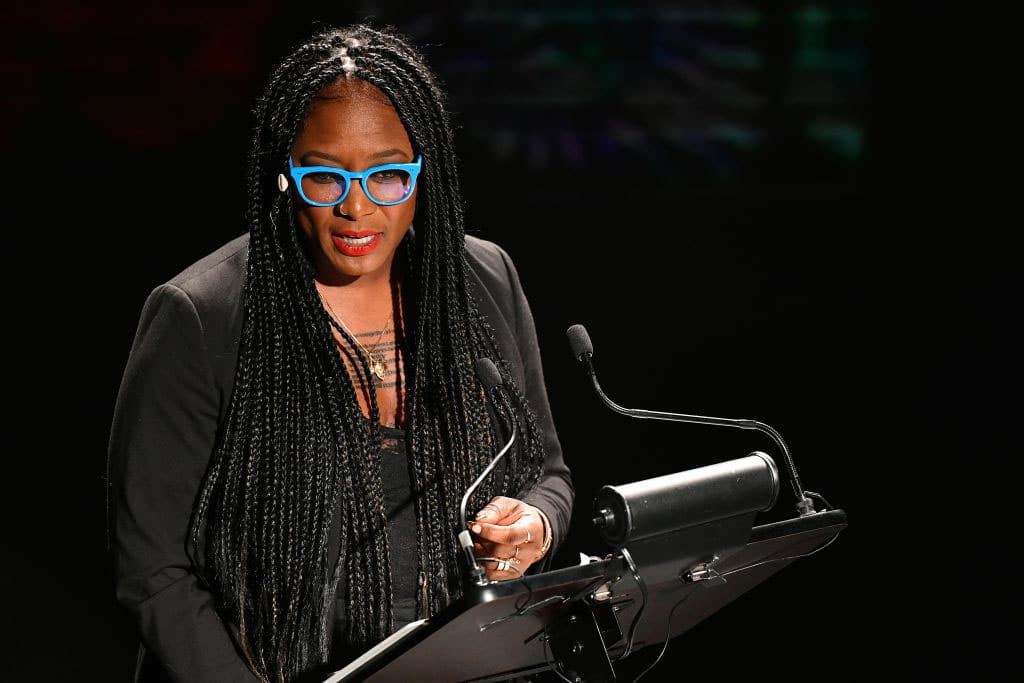
One by one, allies, guests and honorees have joined the movement, with television, performance, and investment legends contributing to the evening as entertainers and guests. And the co-founder of BLM, Alicia Garza, will be recognized for her work in fighting racial injustice and prejudice.

BLM Co-founder Alicia Garza (Photo by Craig Barritt/Getty Images for Audible)

We are honoring Alicia because we are committed to the principles articulated in Genesis 1, that every human being is created equally in the image of God. Judaism insists that we confront injustice and fight every form of bigotry and prejudice. Although there are significant areas of disagreement on issues pertaining to Israel, there is so much that binds our two communities. Our kinship with the African American community is forged through shared faith-based teachings and experiences receiving barbaric treatment. The struggle for equality and human dignity is never-ending and, at times, requires that we all work together, setting aside our differences so that we can bring forth lasting change for a more Godly world.

Our kinship is forged through shared faith-based teachings and experiences receiving barbaric treatment.

Just as a candle expels roomfuls of darkness, the pains and strains of 2020 say less about Black-Jewish relations than the brilliant rays of kinship I’ve felt from the moment the gala ball began to roll.

This warmth and kinship always have been real. But, often the most authentic things are the hardest things to see. They’re usually too vast to be squeezed inside a headline, too gorgeously complex to fit inside a tweet or meme. Some things are so large that they can only be seen from a distance. The true bond between African Americans and Jews is precisely this. It is so vastly profound as to be cosmic in nature, etched by centuries of suffering into the stone of our existence.

We have known and felt more than the cold chill of chains and the searing crucible of bondage. We have both endured second-class status and wholesale slaughter; each of us still struggles to protect the value of life. And each of us has been guided by our God and his prophets, and we have drawn the hope and the strength to prevail from our faith.

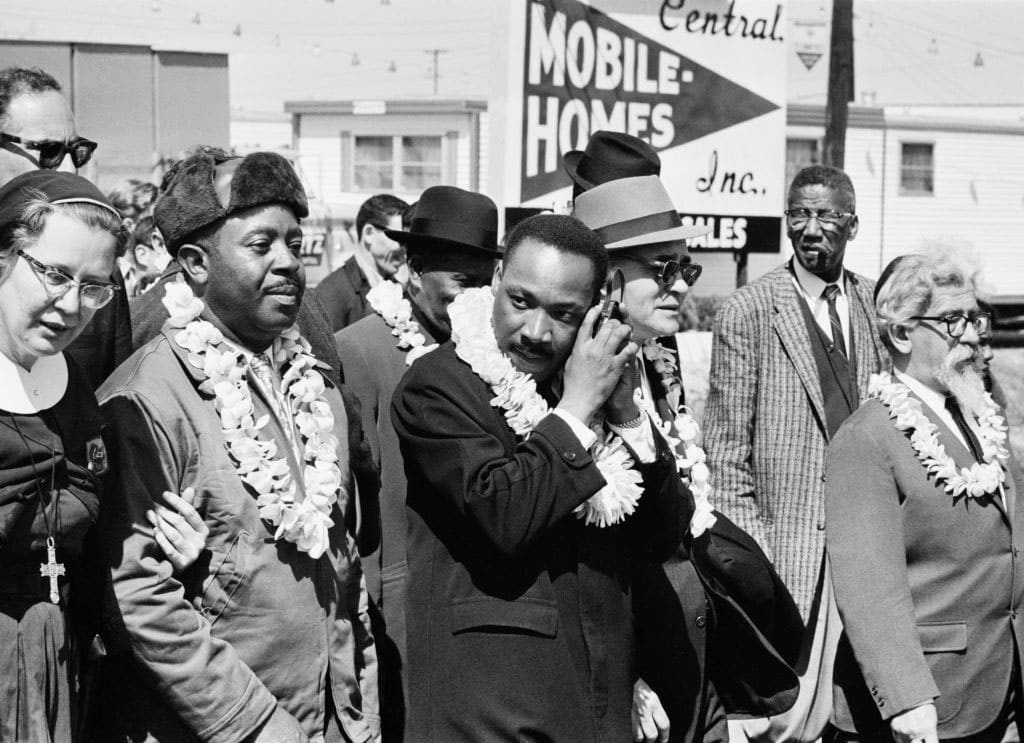
Each of us has earned fluency in sacrifice. We’ve worked hard and lost much for our freedom. But we spoke truth to power and were never afraid. The third Rebbe of Chabad, the Tzemach Tzedek, was arrested twenty-two times for protesting the Russian government when it passed anti-Semitic laws in 1843. The Rev. Dr. Martin Luther King, Jr., the greatest American of the twentieth century, who restored our nation to its founding principles, was arrested thirty-nine times by the time his life was cut short at the age of thirty-nine.

African-American civil rights activist Martin Luther King Jr (1929 – 1968, centre) in the front line of the third march from Selma to Montgomery, Alabama, with Ralph Abernathy (1926 – 1990, second from left), Ralph Bunche (1903 – 1971, third from right) and Rabbi Abraham Joshua Heschel (1907 – 1972, far right). (Photo by William Lovelace/Daily Express/Hulton Archive/Getty Images)

Together, these sacrifices gave mankind a model by which to make true on “Justice, Justice you shall pursue.” As Russians rise to protest against the tyrant Putin, they do so because Alexei Navalny walked fearlessly into his arrest the way our leaders did before him. It was we who defined tyranny and taught shackled people everywhere the plans for their escape.

Indeed, it was Black leaders who gave our God, our prophets and our message of liberation a most far-reaching and eloquent voice. It was Dr. King who took the Hebrew Bible and made it into a modern liberation manifesto, thereby demonstrating to the Jewish community, who often look at their own texts and traditions as ossified, the contemporary power of Jewish prophecy and values.

It is almost eerie to behold the bond between the sacred words and struggle of Rev. Dr. Martin Luther King, Jr., whom our nation commemorated last week, and of the Jews, laid out in the essential texts of our nationhood. “Go and tell Pharaoh!” prophesized King, on April 2, 1968, at Mason Temple, as he waged war against the modern slavery that plagued his people. God, he explained, had taken him to the mountaintop. “I have seen the promised land! … I may not get there with you. But we as a people will get to the promised land.” King was murdered the very next day, but in those words, he achieved immortality. He brought the Bible earthward and made it what God meant it to be: an agent of justice for society, the formula for a more perfect world.

2020 will forever be remembered as a year of tension, loss and isolation. But perhaps one day we’ll behold it from afar and see it as the year of darkness that just precedes the dawn, the terrible feint before the storm of goodness — the birth pangs of redemption. Jews and their African American brothers must come together to show the whole world how it’s done.

After all, 2020 comes down to what we make of 2021.


Rabbi Shmuley Boteach, whom the Washington Post calls “the most famous Rabbi in America,” is founder of the World Values Network and the international best-selling author of 30 books, including “Judaism for Everyone.” Follow him on Twitter and Facebook @RabbiShmuley. The Champions of Jewish Values Gala can be attended or watched at www.theworldgala.com.

We Must Renew Black-Jewish Brotherhood Read More »

Passover Programs Returning in 2021, With Stricter Measures

Last year, Passover started on Wednesday, April 8, just weeks after many cities around the world went into a complete COVID-19 lockdown. This meant that virtually every single Passover program was forced to close its doors.

“The governments didn’t allow programs to operate,” said Doni Schwartz, co-founder and CSO of PassoverListings.com (the number one Passover program review website in the world), in an interview with the Journal. “Program operators had to put down deposits months in advance for the food, hotels and various vendors, and then, all of a sudden, they couldn’t open.”

This year, the Passover industry has slightly rebounded, according to Schwartz. About 30 programs will be operating this year, which is a fifth of what there was in the past. Typically, 150,000 people go away for the holiday during non-COVID-19 times. Still, many of the programs are 60-80% booked up, and operators are very optimistic, said Schwartz.

many of the programs are 60-80% booked up, and operators are very optimistic.

In order to accommodate customers that may have had financial troubles this past year, some of the program operators are keeping their prices the same, while others are offering discounts. There are new terms and conditions for customers as well. Aside from the programs taking safety measures to combat COVID-19, they’re modifying their contracts. “If the government shuts them down again, these customers will get 100% refunded depending on the program,” said Schwartz.

In the United States, people can choose from programs in Florida, California, New York and Ohio from companies like Kosherica, Grand Getaways and RAM Destinations. When traveling to Mexico, they can choose from programs with private villas and pools for additional safety precautions, and they can even go to Morocco and the newly-added United Arab Emirates.

Lasko Getaways Florida (courtesy Doni Schwartz)

“It’s the first of its kind in the UAE,” said Schwartz. “It’s nice to have another option. We surveyed a lot of people on our Passover Listings Facebook group, and they said the number one thing they look for in a Pesach program is traveling to a new destination.”

On the group, Schwartz said he has noticed how many people are excited to go on a program since they’ve been holed up in their homes for the past several months.

“They haven’t spent that much money or traveled. They are avid Pesach travelers who don’t feel like cooking and cleaning, so they are really excited to go away. You have first-time travelers who have never been on a program but have been bunkered up. They have to take off work anyway, and they want an all-inclusive experience. With vaccines coming out all around the world and all these safety precautions in place, there is a lot more excitement this year than I expected.”

According to Schwartz, Pesach programs have been going on for 40 years, and he doesn’t think COVID-19 will slow them down in the long run. “We get thousands of people coming through Passover Listings per day,” he said. “The fact that we’re getting so many people coming through is there is still a massive interest in attending a Pesach program, and thankfully, the tour operators are seeing that. They’re starting to get a lot of book[ings] [from] people who are ready to travel.”

And next year, once COVID-19 finally gets under control, Schwartz believes Pesach programs will be bigger than ever. “I think in 2022 it’ll be a blow out,” he said. “There will be a lot of new programs popping out of the woodwork in Dubai and other exotic locations. Everyone is going to want to travel and get away next year. It’ll probably be the biggest year we’ve had for Pesach in a while.”


Kylie Ora Lobell is a writer for the Jewish Journal of Los Angeles, The Forward, Tablet Magazine, Aish, and Chabad.org and the author of the first children’s book for the children of Jewish converts, “Jewish Just Like You.”

Passover Programs Returning in 2021, With Stricter Measures Read More »