fbpx

November 25, 2020

Georgia On My Mind

Other arms will reach out to me
Other eyes smile tenderly
Still in peaceful dreams I see
The road leads back to you, yeah

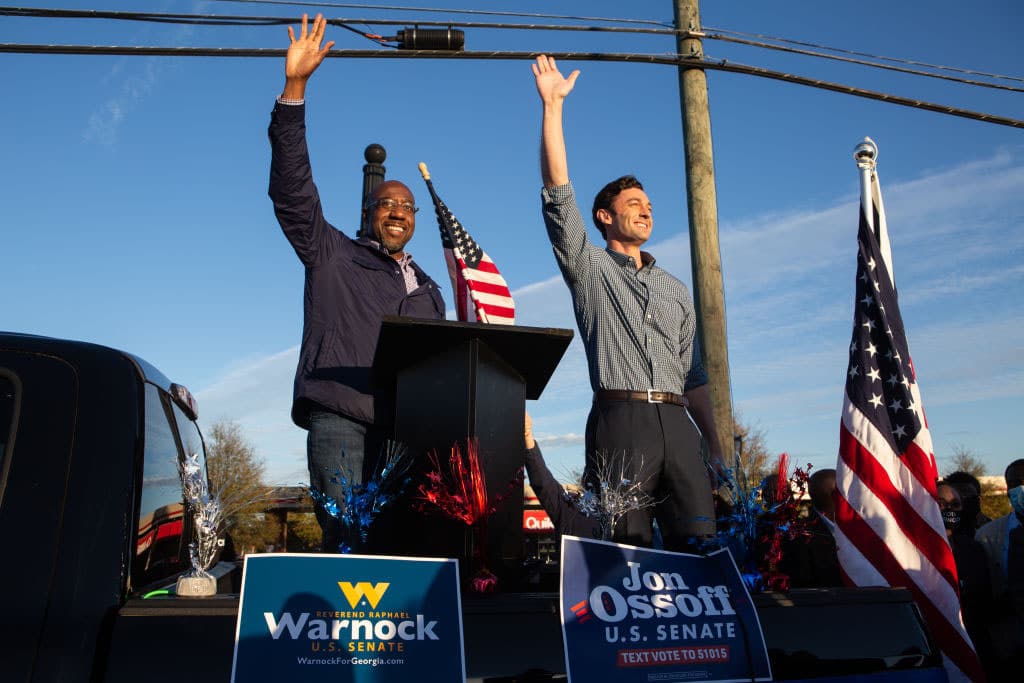
Georgia is on my mind and on the minds of many others. The road, for the next two years at least, leads back to Georgia, where the winners of two Senate seats will be decided on January 5. With Republicans now holding 50 Senate seats and the Democrats holding 48, Georgia’s runoff election will decide who controls the Senate (since Vice President-elect Harris will preside and break a tie vote).

The progressive legislative agenda — ending the Senate filibuster; admitting two likely Democratic states, Puerto Rico and Washington, D.C.; potentially enlarging the Supreme Court to alter its ideological balance; making federal court appointments and tax policy; the Iran agreement; the Green New Deal; and much more — all lie in the balance. Will Republican control of the Senate result in moderation of the more “progressive” Democratic agenda, or will Democratic control be the engine for it?

Voting absentee in Georgia has already begun. In-person voting begins December 14. Both parties are pouring funds into the two Senate races, and the polls show the candidates in both races basically even. So with the election so close and so much at stake, I find myself wondering where President-elect Joe Biden is. He went to Georgia during his presidential campaign. Why has he not gone again to rally the troops for the two Democrats seeking those Senate seats?

One possibility: he’s too busy pulling his administration together. Yes, Biden’s obviously busy, but one day of travel, especially with aides accompanying him and the power of technology, shouldn’t have much impact.

Another possibility: he’s planning to go but hasn’t announced it. Maybe. Incoming White House Chief of Staff Ron Klain has said that he “expect[s] you’ll see the president-elect travel down there before election day,” but added that Biden would also be “trying to work with members of both parties to build consensus for actions …” Perhaps Biden will go to convince Georgians that he’s actually a moderate and that they should not be afraid of Democratic control of the Senate.

A third possibility: Biden’s perfectly happy with a divided Congress. He’s a deal maker and historically a moderate and not a dyed-in-the-wool progressive. Indeed, U.S. Representative Ro Khanna, first vice-chair of the Congressional Progressive Caucus, has already announced his opposition to the appointment of Michele Flournoy, who would be the first female secretary of defense, because Flournoy is a political moderate, has occasionally supported the use of our military abroad, called for limited military options such as long-range weapons to deter Syrian President Bashar al-Assad and Russia from bombing civilians and has ties to the defense industry. Perhaps a Republican-controlled Senate serves Biden’s own interest in moderation.

A fourth possibility: Biden doesn’t want to be embarrassed by going to Georgia in the event that the Democratic candidates lose. After all, Biden didn’t have coattails, or even much excitement, during his own campaign. The presidential election was far more a repudiation of President Trump than an endorsement of Mr. Biden. Notwithstanding his 6-million-plus vote margin in the presidential election, Republicans gained more than a dozen seats in the House of Representatives, kept control of all state legislatures in which they were the majority and gained control of both the New Hampshire Senate and House. Of the 35 Senate seats up for election, 23 were held by Republicans who, nevertheless, have so far had a net loss of only one seat. Eleven governorships were up for election: Republicans held all seven of their seats while gaining the governor’s office in Montana.

Further evidence of Biden’s lack of coattails are suggested by results in California. Although Biden carried California with 64% of the vote, the Republicans picked up one House seat. Many of what might be described as “Democratic” ballot propositions were defeated: Raising commercial and industrial property taxes lost 52% to 48%, permitting affirmative action in government employment, education and contracting lost 57% to 43%, permitting local government rent control lost 60% to 40% and replacing cash bail with a system based on public safety and flight risk lost 56% to 44%.

Will Biden risk aiding a win in Georgia that might render his more moderate policies more difficult to pursue or, even worse, an embarrassing loss?

So will Biden risk aiding a win in Georgia that might render his more moderate policies more difficult to pursue or, even worse, an embarrassing loss? Or will he be too cautious or, so to speak, too busy to make the trip? Will the inducement of other arms, other eyes and peaceful dreams win out in the end, or does his road lead back to Georgia?


Gregory Smith is President of Westwood Kehilla and an appellate attorney with the law firm of Lowenstein & Weatherwax in Century City.

Georgia On My Mind Read More »

Satirical Semite: Learning to Be English

I have found my mission impossible: finding a kosher organic Thanksgiving turkey in England. It may be easier to find a unicorn.

And if that weren’t enough of a task, I am facing an even bigger challenge. The pandemic inspired me to temporarily move back to the United Kingdom and be closer to my family, but after 10 years of living in Los Angeles, I must now relearn how to be English.
One national pastime is complaining. Complaining about Brexit is a safe option, so is bemoaning how Megan Markle abducted the royal formerly known as to Prince Harry to Los Angeles, or kvetching about how it gets dark at 4pm and how the sun never shines. I even complain about someone calling me a ‘Brit,’ since in Hebrew ‘brit’ is a circumcision, and being referred to as a circumcision feels very… cutting.

It’s been three months since I left Los Angeles, and I do wonder if we are now living in a dystopia where the sun has burned away completely, but there won’t be any way of knowing that until the bleak British winter has passed. I can’t blame Prince Harry for packing up and moving out to the beautiful hills of Santa Barbara.

Another thing many British people complain about is wearing masks, saying “It’s uncomfortable! We’ve had enough! You can’t see people’s faces.” But do we really want to see peoples’ faces? This isn’t Los Angeles, where citizens at least have the common decency to inject themselves with botox before leaving the house.

“But we can’t see people’s smiles!” say my friends. Perhaps this is another saving grace. Although I staunchly defended the power of British dentistry, after a decade in Los Angeles, I’ve finally realized it may be a good thing to hide British smiles. I thought my childhood dentist did a good job with my braces, but I only learned recently that you are supposed to have a lifelong retainer to keep your teeth straight after treatment. Next week, I’m starting Invisalign to get everything straightened up and make myself look more American.

According to the British media, after Brexit we are going to have to eat American chlorinated chicken, since EU-chickens will no longer be available. The UK fake news didn’t mention that you can buy organic kosher chicken from Ralphs at $12 a pop versus the equivalent non-toxic chicken over here at £16 ($21).

I plan to smile again sometime in 2023. Unless I eat American chlorinated chicken that rots all of my teeth.

Masks serve a purpose. I’ve been taking the whole COVID-19 thing seriously, since burying a friend’s father at the start of the pandemic. The gravediggers wouldn’t touch the coffin, so I personally helped unload it from the hearse, pulled the cart to the graveside, helped lower it in, and then shoveled in over half the earth. To say it had an impact on me would be an understatement. When someone complains about wearing a mask, I ask if they complain about being alive. Ouch.

I picked up other bad habits in Los Angeles, like saying hello to people when walking past them on the street. If you smile at a stranger on an English street, it is considered a micro-aggression. The Talmud says that we should initiate and ‘greet everyone with a happy face,’ but since Britain is a Church of England country, clearly the Jewish principle doesn’t apply. British etiquette demands that the way to express warmth and good wishes to a stranger is to completely ignore them.  Traditional British restraint is something I now find difficult, but I don’t want to get beaten up, so I make sure I don’t smile and instead show my warmth by ignoring people.

This year, I am celebrating Thanksgiving with my parents, even though it is a festival partly connected with the Pilgrims leaving the British Empire and doing their own Brexit.

There is much to be thankful for, notwithstanding the lack of healthy turkey. I may have to settle for vegan Tofurky, although it isn’t gluten free. If that sounds like a complaint, I am terribly sorry, but I am an Englishman, after all.

If that sounds like a complaint, I am terribly sorry, but I am an Englishman, after all.

Nevertheless, I love America, miss Los Angeles every day and can’t wait to return. As we say in West LA, Happy Organic Free Range Grass-fed Ethically Treated Turkey Day.


Marcus J Freed is an actor, author & filmmaker. www.marcusjfreed.com

Satirical Semite: Learning to Be English Read More »

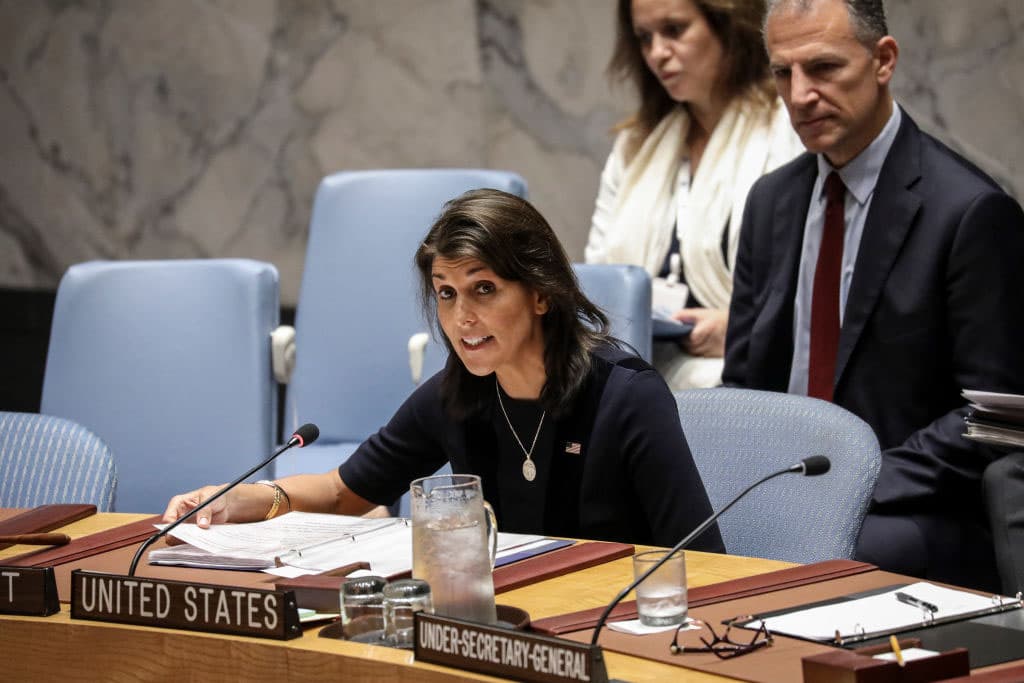
Haley Calls On Trump Admin to Release Report on Number of Palestinian Refugees

Nikki Haley, the former United States ambassador to the United Nations during the first two years of the Trump administration, called on the administration to declassify a report detailing the current number of Palestinian refugees who are receiving aid from the United Nations Works and Relief Agency for Palestinian Refugees (UNRWA).

Haley tweeted, “Very important that the Trump administration declassify the report that provides a current estimate of the number of Palestinian refugees who are receiving support. This goes to the heart of speaking hard truths in the name of moving peace forward.”

Her tweet linked to a November 23 op-ed in the New York Post authored by Foundation for Defense of Democracies Senior Adviser Richard Goldberg and Senior Vice President for Research Jonathan Schanzer. The op-ed noted that Congress required the State Department in 2012 to produce a report on the number of Palestinian refugees receiving aid from UNRWA that were alive in 1948; the report was completed and sent to congressional appropriations committees years later, but the report remains classified today.

“The public release of these figures could spark an international debate over UNRWA’s mandate,” Goldberg and Schanzer wrote. “Secretary of State Mike Pompeo should also announce an official US policy change that for purposes of future US funding and planning, Palestinian refugees are narrowly defined as people who were personally displaced from then-Palestine between 1948 and 1949 and aren’t currently citizens or permanent residents of the Palestinian Authority or any country.”

They added that adopting this policy would show how UNRWA “has kept people in poverty” and “encouraged multiple generations of helpless people to remain erroneously identified as refugees.” Additionally, it would “upend the mythology of a Palestinian ‘right of return’ — making it clear that Israel determines who becomes Israeli citizens, not a UN agency,” they argued.

In January 2018, the conservative news site Washington Free Beacon reported that the State Department has been suppressing the report, with one source telling the Free Beacon that there are “officials at State Department who do not want this information out as it could and would lead to a call to reform UNRWA.”

The Trump administration zeroed out funding to the U.N. agency in 2018; according to Fox News, President-elect Joe Biden hasn’t specifically commented on UNRWA but his campaign website does state that he will “restore economic and humanitarian assistance to the Palestinian people, consistent with U.S. law, including assistance to refugees.”


Haley Calls On Trump Admin to Release Report on Number of Palestinian Refugees Read More »

Love Like Jacob – a poem for Torah portion Vateze

So Jacob worked for Rachel seven years,
but they appeared to him like a few days
because of his love for her.
            Genesis 29:20

I first knew about love when I was
thirteen years old, in junior high school
which was kind to me in no other way.

I don’t want to deceive you
It’s not that I had love, I just knew
I wanted it.

Most of my first interactions with others
begin with could I love this individual
My behavior informed by the answer.

So in 2002 when I found a two-way yes
in the wilds of Oconomowoc, Wisconsin
I was ready to do the work.

And those six months of labor
before we occupied the same time zone
could easily have been seven years.

Along the way, questions were asked
answers were given, rooms were filled
with sunflowers and strawberries

and, eventually, the Rachel to my Jacob
took up space in our permanent residence.
Had I lifted the veil and discovered

a deception had been made, like Jacob,
I would have done it all over again.
There is no amount of years

I wouldn’t labor to set up in this tent
to be with her – No field I wouldn’t till
No sheep I wouldn’t…whatever it is

they do with sheep. Forever is a word
that needs no context. I am the wrestler
she has me pinned.


God Wrestler: a poem for every Torah Portion by Rick LupertLos Angeles poet Rick Lupert created the Poetry Super Highway (an online publication and resource for poets), and hosted the Cobalt Cafe weekly poetry reading for almost 21 years. He’s authored 25 collections of poetry, including “God Wrestler: A Poem for Every Torah Portion“, “I’m a Jew, Are You” (Jewish themed poems) and “Feeding Holy Cats” (Poetry written while a staff member on the first Birthright Israel trip), and most recently “The Tokyo-Van Nuys Express” (Poems written in Japan – Ain’t Got No Press, August 2020) and edited the anthologies “Ekphrastia Gone Wild”, “A Poet’s Haggadah”, and “The Night Goes on All Night.” He writes the daily web comic “Cat and Banana” with fellow Los Angeles poet Brendan Constantine. He’s widely published and reads his poetry wherever they let him.

Love Like Jacob – a poem for Torah portion Vateze Read More »

Professor On Leave After Tweeting ‘COVID-19 Is Another Jewish Revolution’

A professor at a university in Michigan has been placed on administrative leave after the student newspaper unearthed a series of his anti-Semitic tweets.
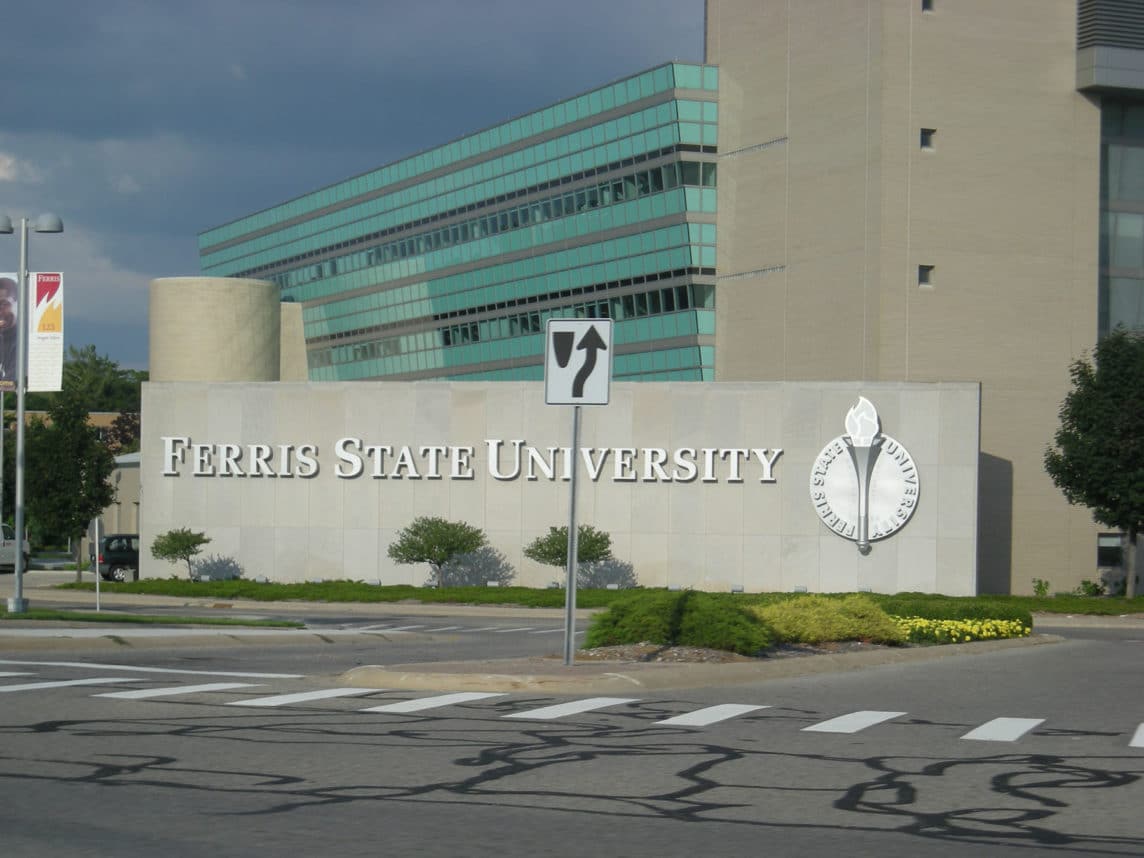
The Torch first reported on November 18 that Ferris State University Astronomy and Physics Professor Thomas Brennan’s past tweets included “Covid19 is another jewish revolution” as well as various references to the “Jewish mafia.” He also has tweets referring to COVID-19 as a hoax and calling the Holocaust a “Zionist eugenics program.”

On November 23, University President David L. Eisler released a statement announcing that Brennan was placed on leave on November 19 and that the university is investigating Brennan over his tweets.

“Last week the University learned of racist, anti-Semitic and homophobic slurs made on Twitter that appear to be posted by Thomas Brennan, an assistant physical science professor in the College of Arts, Sciences and Education,” Eisler said. “Individually and collectively we were shocked and outraged by these tweets. They are extremely offensive and run counter to the values of our University and our commitment to diversity, equity and inclusion. Our students, faculty, staff and members of the community are upset and offended by these comments, and they should be.”

He added that in August, Brennan had “disrupted a College of Arts, Sciences and Education Zoom meeting” where “he expressed via video and chat that COVID-19 death rates in the United States were exaggerated, and the pandemic and rioting were leftist stunts. These comments both surprised and offended those attending the meeting. Dean Williams addressed this in a message to the College’s faculty and staff, and disciplined Dr. Brennan.”

Eisler concluded his statement with a call for the university to unite and “begin to repair the damage from these actions.”

Brennan responded with a statement of his own on November 23, calling The Torch article “a hit piece” and denied being “a science-denier, racist and anti-Semite.” He stated that while he doesn’t believe the pandemic as a hoax, the “severity is being exaggerated by revolutionary leftists in the media and government who ‘never let a good crisis go to waste.’ The end result of this hysteria, if left unchecked, will be a mandatory vaccine.” He also added that this would result in the need for electronic vaccination certifications to enter public places and will manifest “in the form of injectable or micro or nanotechnology in the vaccine itself” which would be a sign “of the mark of the beast.”

The professor then stated that he uses his Twitter account to push the envelope and “sometimes say things that sounds inflammatory or strange” and now he’s a victim of cancel culture. He then addressed some of the specific tweets, arguing that one of his tweets used the word “n—–” in one of his tweets to “try and neutralize its power” and that he supports Israel and that believes the Holocaust was real.

“The Holocaust was perpetuated against the Jews in order to hijack their nation and take them hostage,” Brennan said. “Hitler and the Nazis were the mean to this end. Hitler was a golem, an evil monster whose rise to power only happened because he had financial support from global elites in the United States, Great Britain and other countries.”

Brennan also said that “only a small number of” Jewish elites are involved in an “international conspiracy” and that most of the elites in this conspiracy aren’t Jewish.

“Israel and the Jews should not be blamed for the crimes of a small number of mobsters like Jeffrey Epstein or Ghislaine Maxwell who used pedophile blackmail to control American politicians,” Brennan said.


The Stop Antisemitism.org watchdog tweeted, “These people are teaching young, impressionable students.”

Professor On Leave After Tweeting ‘COVID-19 Is Another Jewish Revolution’ Read More »

Legacy Charitable Foundation Distributes 162 Food Boxes for Thanksgiving

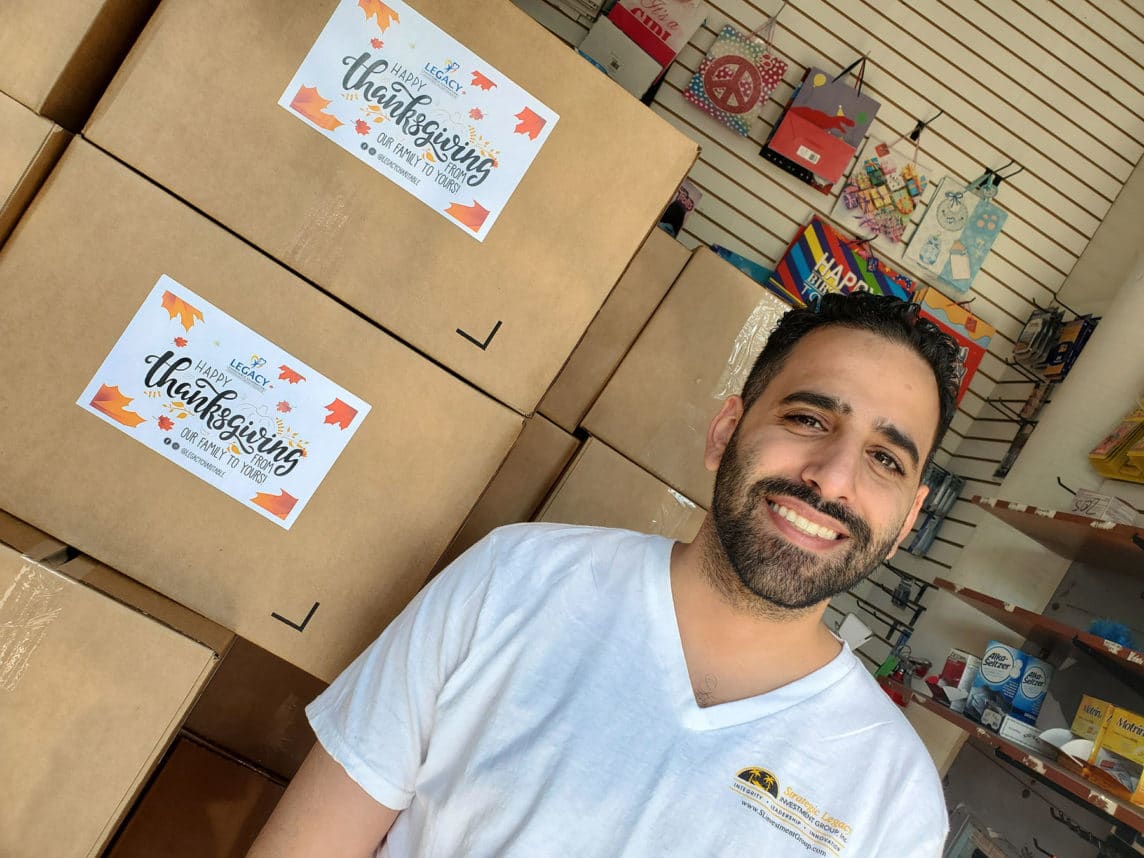
The Legacy Charitable Foundation’s third annual Thanksgiving Turkey Brigade looked a little different this year. The non-profit’s Executive Director Jennifer Brown, who started the holiday turkey distribution tradition in 2018, said that in its first two years, the Turkey Brigade served dinner boxes to 625 families and fed 4,964 mouths.
Because of the coronavirus pandemic, budgets were tight and volunteers were scarce. But like previous years, the non-profit rallied local schools and organizations like the Los Angeles Sheriff’s Office to package and distribute dinner boxes for families struggling on Thanksgiving.

On November 24, organizers and volunteers gave out 162 boxes filled with turkey, corn, green beans, stuffing, mashed potatoes, apple juice, cranberry sauce and sweet potatoes to families in need. A voucher was provided to every family ahead of the event so they could receive the dinner boxes in time for the holiday. Families who couldn’t drive to the downtown L.A. pickup location had the option of having it delivered to their doors.

“When we see a need we always 100 percent try to see how we can help out,” Brown said. “It is a very big blessing. It’s something that’s beyond us, a lot bigger than us. This is paying it forward.”

Legacy Charitable Foundation provided meals to families in Riverside County, San Bernardino County, Bakersfield, East Los Angeles, South Central, Long Beach, Compton, the San Fernando Valley and even as far as Fontana. Brown said the Foundation usually has 34 to 40 volunteers helping package the boxes, but this year, to meet social distancing requirements, they only had 12.

“Board of Directors of the “Legacy Charitable Foundation” is (from Left to right)
Michael Sabet, Abraham Mehrian, Dr. Gonzalo Cruz-Schiavone AKA Dr. Gonzalo, Manny Gonzalez, Jennifer Brown

Although Brown was preparing to downsize the number of boxes they would send out, a Thanksgiving “miracle” came through last minute to provide extra funds so the foundation could overreach their goal. Brown said they were able to give out 162 boxes instead of their original goal of 150.

Michael Sabet, vice president of Strategic Legacy Investment Group Inc. and Founder of Legacy Charitable Foundation, told the Journal that many nonprofits who usually provide food on Thanksgiving have struggled for donations this year. He added that L.A. City Sheriff Alex Villanueva was grateful for the work they did because they were struggling to find donations.

Many nonprofits who usually provide food on Thanksgiving have struggled for donations this year.

“I was speaking to Sheriff [Villanueva] and he does three [food drives] a day. He said this year he has seen the most need for this. It’s been the worst in terms of people needing [food] in any other year he can remember,” Sabet said.

Sheriff Villanueva didn’t just come by to make an appearance. Manny Gonzalez, manager for the non-profit Maravilla Foundation and co-founder of the Legacy Foundation, said he brought some of his deputies to participate. He said, “In turn they went out to the community and found [families] who were really really in need. He spent a lot of time [finding them] and bringing them to us.”

The non-profit takes part in helping the community yearly through annual Turkey Brigade boxed dinners, Toy Drive Wish Lists for sick and disabled children, programs for children and other efforts to feed the homeless around Los Angeles.

Legacy Charitable Foundation was established in 2015 in the Downtown Los Angeles Fashion District by Jewish founders Abraham Mehrian, Michael Sabet, Emanuel Sabet, Daniel Sabet and Manny Gonzalez. Their goal was to help the homeless, support disabled and sick youth and provide aid and resources to low-income family living residences.

Gonzalez added that the families who received Thanksgiving dinner boxes this year roughly receive a median household income of $35,000 to $42,000.

“A lot of them are single mothers, they have three or four or five kids. I know a couple of families personally where the husbands just lost their jobs. So this is really helpful for them at this point,” Gonzalez said. “We do our best to focus on the impoverished communities…It’d be great to help out even more.”

Both Brown and Gonzalez are grateful to everyone who helped them achieve their goal this year. The pandemic has impacted so many this year and this was one way to give back.

“This was just a blessing,” Brown said. “It was a very huge group effort to make this happen. The fact that we were even able to do that this year was a miracle.”

“Because of the pandemic, many of these people have lost their jobs, they’ve lost their ability to be self-sufficient and be able to provide a meal for their families,” Gonzalez added. “Not only do we provide the food we are providing a little bit of hope to keep them moving forward. This is a labor of love because all of us are volunteers.”

For more information on how to volunteer for future events visit the website.

Legacy Charitable Foundation Distributes 162 Food Boxes for Thanksgiving Read More »

Breathing New Life Into A Thanksgiving Pumpkin Tradition

When I was in second grade, my home economics class made pumpkin bread for Thanksgiving. I brought home a six-inch-long loaf, shared it with my family and a decades-long tradition was born.⁠ Without fail, since 1981, my mother and both sisters have continued baking this sumptuous pumpkin recipe every November and December.⁠ I cannot forget the image of melted chocolate chips running all over our fingers as we gobbled down the first steaming slices prior to our Thanksgiving guests arriving.⁠ To this day, no Thanksgiving is complete without the scintillating aroma of cloves, cinnamon and allspice wafting throughout my parents house while the loaves bake.⁠And with Shabbat the next night, there has always been ample reason to extend the culinary festivities.

Pumpkins, along with turkeys and cranberries, are among the most iconic of Thanksgiving foods, making an appearance in pies, breads, soups, muffins, cupcakes, spiced lattes and candies. Incredibly, there is even a strong Jewish tradition, among Sephardim from the Iberian Peninsula and Italy, of eating pumpkins, that harks back to the first New World explorers.

And yet, in a modern marketplace brimming with colorful choices and accessible alternatives, the pumpkin somehow seems…ordinary.

For all its seasonal pomp, a pumpkin on its own is a fairly bland and unflavorful fruit with a sometimes stringy texture. It requires a cupboard full of spices to uplift it on the palate. And pumpkins are over-marketed and overhyped, from Halloween to Thanksgiving, from Facebook feeds to Pinterest pins.

Why stick with the ordinary pumpkin when you can accessorize into a whole line of winter squashes with far more panache?

Why stick with the ordinary pumpkin when you can accessorize into a whole line of winter squashes with far more panache?

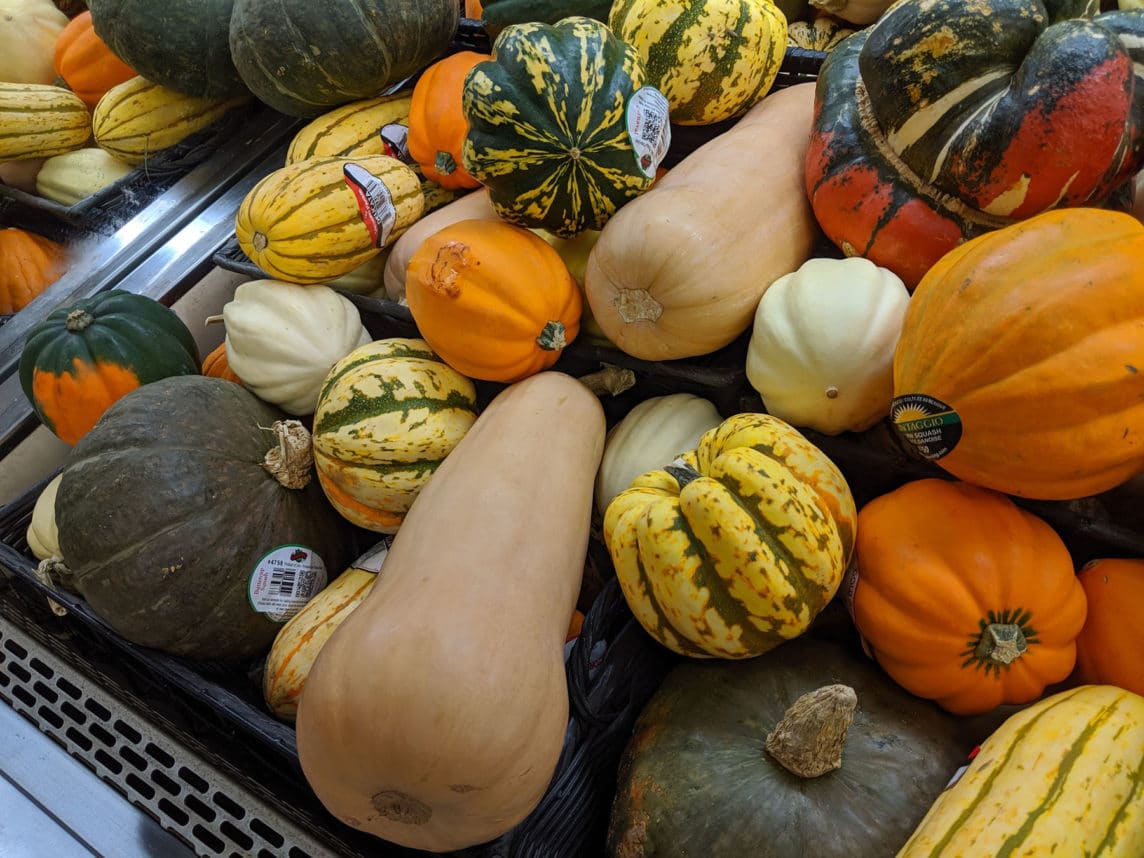
There are two types of squashes: summer squash, which are the soft kind and include zucchini, patty pan and crookneck squash; and winter squash, which are the hard-skinned type and include pumpkins, red kuri, kabocha, butternut squash, acorn squash, carnival squash, honeynut squash and spaghetti squash.

Winter squash come in many vivid colors, textures, shapes and sizes. They are delicious, nutritious and versatile, with dense, sweet flesh and a hollow cavity full of seeds worthy of roasting. Winter squash are a cozy and inviting culinary category, whether for Thanksgiving, Shabbat dinner or warming your belly on a cold winter night.

In place of pumpkin, the winter squashes that go best for Thanksgiving are red kuri, kabocha and butternut squash. Unlike pumpkins, these squashes all have complex, assertive and memorable flavors on their own.

Red Kuri Squash

The red kuri squash resembles a small, teardrop-shaped pumpkin but without the telltale ridges. The kuri has an assertive, chestnut-like flavor that goes well in soups, stew and casseroles, although it can also be made into pies, muffins and bread. It is high in fiber, vitamins A and C and beta carotene. When cooked, the skin becomes soft and can be used in recipes alongside the smooth and rich flesh.

Kabocha Squash

The kabocha squash resembles a slightly squashed dwarf pumpkin. It consists of greenish-white stripes on the outside with bright yellow orange on the inside. Kabocha squash has a very sweet, nutty flavor that tastes like a cross between a pumpkin and a sweet potato. This squash can be used in soups, roasted, baked and steamed. Like the red kuri squash, the skin is edible and delicious, too.

Butternut Squash

Butternut squash is bell shaped, with a slim neck and bulbous bottom. Although it is related to the pumpkin, it is visually different.

Butternut squash has a sweet, nutty flavor reminiscent of pumpkin, with deep orange flesh and a creamy texture when cooked. Butternuts are fabulous when roasted, puréed into a soup or baked into a pie.

Sugar Baby Pumpkins…if you must

If you must use pumpkin, sugar baby pumpkins are the way to go. They can be made into breads, smoothies, cookies, flavorful side dishes and savory soups. They are also highly nutritious: They contain copious amounts of beta carotene and other antioxidant carotenoids, as well as vitamin C, potassium, magnesium, zinc and dietary fiber, while also contributing few calories.

These delectable winter squashes can easily be found at Sprouts, Whole Foods, Instacart or your local farmers market.

In my own family, the pumpkin’s preeminent position among our Thanksgiving traditions has gone unchallenged for 40 years. This year, I plan on breathing new life into my second-grade pumpkin bread recipe by using red kuri squash. And with Shabbat coming on the heels of Thanksgiving, we plan on spicing up our Friday night hamotzi with a kabocha squash challah. This challah has a vibrant yellow-orange color with a deep flavor that is both savory and sweet, in contrast to the more mellow and bland pumpkin version.

This year has been anything but ordinary. When you sit down at the Thanksgiving table, and the Shabbat table the night after that, reward yourself with an abundance of winter squash varieties that are unusual and extraordinary. You will be grateful that you did.


Michael Tanenbaum is a writer and marketer living in Los Angeles. He is the founder and editor-in-chief of ConsciouslyKosher.

Breathing New Life Into A Thanksgiving Pumpkin Tradition Read More »

Court Ruling Means Young Jerusalem Arabs Face Easier Route to Israeli Citizenship

The Media Line — A previously unpublished regulatory clause, outlining relaxed requirements for young adult legal permanent residents applying to become Israeli citizens, has become public by order of the Jerusalem District Court.

Tuesday’s ruling forced Israel’s Population and Immigration Authority, which operates under the Interior Ministry, to publish the criterion – Clause 4A.

The approximately 20,000 Palestinians between the ages of 18 and 21 living in east Jerusalem now understand what is needed when petitioning for Israeli citizenship, which is not automatically granted to them as residents of the city.

Clause 4A requires five years of continuous residence in Israel; that the youth not be a citizen of any other country; and lastly, that they prove they have not committed any serious legal offense. These conditions were not previously publicly available to petitioners.

Since Israel took control of east Jerusalem in 1967, the rules to obtain citizenship for east Jerusalem Arab residents have been a political and judicial challenge.

Jordan occupied the territory from 1948 through 1967. The kingdom provided residents with Jordanian papers, including passports, until 1988, when it relinquished its claim to the area and severed all administrative and legal ties with the West Bank and Jerusalem.

For those born after 1988 and who therefore did not have Jordanian papers, the first test cases came in the early 2000s, when they began to reach the age of 18.

“I did not know anything about the mysterious 4A clause and the Interior Ministry would not tell me. I was born here and lived here all my life. They never said anything to me about the clause. They just kept pushing me off.”

Osama, who agreed to be quoted without using his full name, was one of the first, requesting Israeli citizenship in 2012, at the age of 19.

“I did not know anything about the mysterious 4A clause and the Interior Ministry would not tell me. I was born here and lived here all my life,” he told The Media Line. “They never said anything to me about the clause. They just kept pushing me off.”

Now 30 years old, his case is still pending before the court because it was petitioned under Clause 4A.

“It is my right, not a favor they may or may not grant me, to obtain Israeli citizenship.”

“All countries have standard citizenship requests like marrying a citizen or moving into a country. The US has its green card for temporary residents [actually, green card holders have permanent residency in the United States J.S.]. The laws are clear. In Israel, we have the Law of Return enabling any Jewish person to become a citizen. But Israel refuses to make it easy for east Jerusalem residents,” noted Osama, whose experience now includes work in Israeli courts as a translator from Arabic to Hebrew.

“It is my right, not a favor they may or may not grant me, to obtain Israeli citizenship,” he told The Media Line.

Adi Lustigman, a human rights lawyer, and colleague Hadar Shechter brought the case forcing the Population Authority to publish its guidelines.

Court Ruling Means Young Jerusalem Arabs Face Easier Route to Israeli Citizenship Read More »

Thanksgiving: Two Stories, Retold

Jews are used to stories that start and then begin again. Two versions of creation launch the Torah. Two tellings of our history commence (and re-frame) the Passover Seder. The Haggadah starts telling our tale by offering, “in the beginning, our ancestors worshiped idols” and then begins again with, “our ancestor was a wandering Aramean.” Sometimes, there are just too many insights to cram into a single version. Some stories resonate in ways that make them worth multiple tellings.

Some stories resonate in ways that make them worth multiple tellings.

Turns out that Thanksgiving is one of those tales. There’s just too much to unpack in a single version. So, I propose here to tell it twice. And then twice again.

Thanksgiving #1: Puritans and Natives

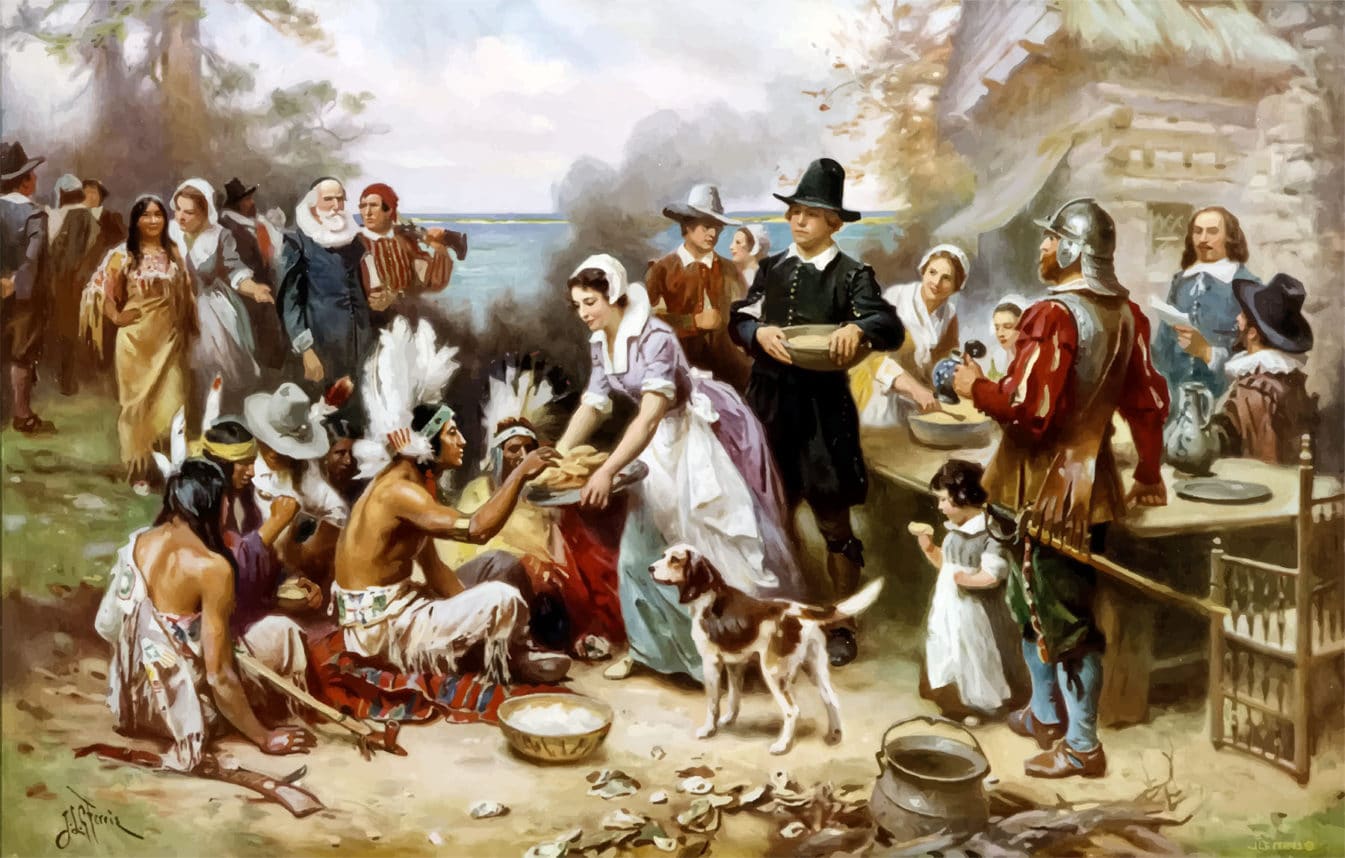
The version of Thanksgiving that many of us grew up hearing was of a band of hardy Puritans who landed on Plymouth Rock in 1620 and survived their first grueling year because of the wisdom and care of the local First People. After the locals taught the Pilgrims to build and hunt and how to plant the local produce, the English immigrants celebrated their survival with a visiting delegation of Natives at a festive meal that featured local delicacies (turkey, gourds, potatoes, green beans, cranberries, corn and, of course, pumpkin pie). This Thanksgiving story focused on the Pilgrims, offering a religious (Christian) context for this celebration: arrival in a new land, divine favor for the mission of the new arrivals, religious freedom for monotheists.

The first retelling of the story broadens our focus to tell the story of the Pilgrims, certainly, but it also recognizes the Natives as Native Americans. Their story is no longer a supporting role to the (European, Christian) stars. Their story is now our story, too.

So, let’s offer a more expansive retelling.

When the Europeans first came to what we now know as New England, they found a continent full of people. Estimates suggest that 50 to 100 million people were living on the continent at the time. The northern coast of the Atlantic, for example, was packed with people, villages and farms. And the locals didn’t really want permanent European neighbors. When the French explorer, Samuel de Champlain, came to the area several years in advance of the English, the locals were willing to trade with his group, but they then sent them on their way.

Although Champlain and his ships left, they had to leave behind a handful of Frenchmen who were prisoners (or slaves) of the Native Americans. The Frenchmen told their captors that their God would decimate them for their rejection of the Europeans. The Native Americans were skeptical that the European God could be so powerful.

When the English Pilgrims arrived a decade later, they encountered a drastically different landscape. The French had introduced new diseases for which the Native Americans had no immunity, wiping out a majority of the population. When the English arrived, they found empty villages and fields prepared for farming but with no farmers. The surviving Native Americans were terrified of the consequences of these Europeans and their God. Both Native Americans and Pilgrims accepted a religious conquest explanation for why there was no Native American opposition and why the Pilgrims would triumph. This narrative may explain why there was no opposition to the establishment of the Plymouth Rock settlement: a shared sense of inevitable destiny.

That first Thanksgiving dinner is a recognition that the Europeans were here to stay. The American story would now forever include them and their progeny. It was indeed a triumph for the fragile new community. But our telling of the story is no longer just about the Pilgrims. We can also integrate the tale of the Native Americans and their culture as vital to the larger story. The English pilgrims did benefit from native wisdom and experience freely shared. In that sense, they and their descendants are also heirs to the rich heritage of Native American culture, faith and resilience. But our telling must also include the tragic and unanticipated consequence of biological intrusion: the widespread deaths that devastated the Native American population and launched an ideology of Manifest Destiny, the belief in the inherent superiority of European settlers, European culture, and any conquest they could sustain.

That Thanksgiving dinner was a pause before the storm and a beacon of possibility that we have yet to fully implement: an expansive identity as Americans that not only treasures our roots in religious dissent and yearning for freedom but also honors Native wisdom, community and generosity. Our tale can mourn the victims of these powerful ideas and civilizations and the complex realities they generated.

Thanksgiving #2: Power and Slavery

The Thanksgiving story I grew up with also involved a second tale. That second story centered around our sixteenth president, Abraham Lincoln, the Great Emancipator. As I was taught, in the midst of a righteous war to end the scourge of slavery, President Lincoln issued a call to the nation to express “Thanksgiving and Praise to our beneficent Father who dwelleth in the Heavens.” In an 1863 proclamation, the Lincoln administration called upon the citizens of the United States to offer prayers “with humble penitence for our national perverseness and disobedience, commend to His tender care all those who have become widows, orphans, mourners, or sufferers in the lamentable civil strife … and fervently implore the interposition of the Almighty Hand to heal the wounds of the nation, and to restore it … to the full enjoyment of peace, harmony, tranquility, and Union.” In my family’s telling of this tale, we affirmed the United States’ fundamental decency as a country united in opposition to slavery and proclaimed the dinner as the paradigmatic American celebration of liberty, justice and freedom for all.

But, of course, this second story is more complicated, too. It is true that President Lincoln is justly remembered as the emancipator of the slaves. But history reveals that ending slavery was not his original motivation (re-read the quotation above, and you will discover no mention of slavery at all). Lincoln famously and repeatedly observed that if he could save the Union and not end slavery, he would have been willing to follow that path. His primary motivation when the Civil War launched was to preserve the Union of the United States. But as the war developed, it became clear to him, General Grant and many others that the issue of slavery was so deep and fundamental to any future unity as a nation that it required clear and unambiguous opposition. Upon issuing the Emancipation Proclamation on January 1, 1863, Lincoln finally sided with the Abolitionists and changed the course of the war and the ideal of American liberty that we still struggle to attain. The Civil War began as a power struggle, but it grew into an instance of moral advance.

A more nuanced telling of this Thanksgiving story requires us to retell the story of America not only as the dictate of white Protestants but also from the perspective of the marginalized and the suppressed. How slaves created meaning and dignity in a bloody and brutal system and how women and others were able to begin the work of claiming their voices and their place in public — these groups are now vital aspects of our Thanksgiving story. Harriet Tubman, Frederick Douglass, John Brown and others, are now part of the pantheon of heroic Americans we center, emulate, and celebrate. We dare not omit their perspectives and insights.

Giving Thanks and Moving Forward

The Talmud asks which of the Temple sacrifices will no longer be needed in the Messianic future and which will continue. Not surprisingly, the Sages of old affirmed that there will always be a place for the Thanksgiving (Todah) Offering. Gratitude is an abiding affirmation of what is best in human character and gratitude remains a pressing psychological need to inspire us to be self-surpassing. In offering thanks, we place ourselves in a future of hope and aspiration rather than allowing ourselves to be trapped in a past of determinism and despair.

As we gather this Thanksgiving — in cyberspace and in pods — we continue to heed the mandate to reorient ourselves with the healing affirmation of gratitude. We thank as a spiritual exercise of resilience and of possibility. As the Siddur reminds us three times each day: “We thank you, Lord our God and God of our ancestors, throughout all time. You are the Rock of our lives, the Shield of our salvation in every generation. We thank you and praise you morning, noon and night for Your miracles which daily attend us and for Your wondrous kindnesses.” More than God may need our thanks, we need to become people of gratitude.

But for our Thanksgiving to do its redemptive work, we must tell the stories that are truly worthy of real gratitude: stories in which we can all see ourselves and hear our voices in all their divergences and disparities, stories too nuanced and complex to be told only once. Rather than flattening our shimmering sparkles into uniformity, can we tell multiple versions of our founding stories so that the raucous symphony of sounds creates something grander than any of its single component tunes? By including more stories previously ignored or overlooked, we make the telling of them that much more of an inspiration. And we illumine the path for a tomorrow of promise for us all.

There is always more to be thankful for.


Rabbi Bradley Shavit Artson, a contributing writer, is the Abner & Roslyn Dean’s Chair of the Ziegler School of Rabbinic Studies at American Jewish University, where he is Vice President. Thanksgiving remains one of his favorite holidays.

Thanksgiving: Two Stories, Retold Read More »

How Jewish Vegetarians Celebrate Thanksgiving

This is why on Thanksgiving non-vegetarians

have a custom to eat turkey.

It’s because the tasty bird was thought to come from

India, whose Hebraic name

is hodu, Hebrew word for “thanks,” Consuming it

in any way, not just as jerky,

we’re able, using Hebrew-English wordplay-tastebuds,

thanksgiving to God proclaim,

which is more difficult for vegetarians,

who, in order to praise God,

must link up with some Jewish people, Zooming with them,

if there are none in their pod,

celebrating Thanksgiving without a turkey,

fowl fair vegetarians pardon,

treated by them as forbidden fruit in their

wild west-of-Eden meatless garden,

while treating people who encourage them to eat it

as most sneaky, snarky snakes,

not only holier than thou, they clearly think,

but cooler, drinking their milkshakes

celebrating Thanksgiving without a turkey,

animal we choose to pardon,

thinking it’s forbidden fruit which we don’t eat

in our wild west-of-Eden garden.


Robert Krulwich writes in npr.org, 11/27/2008 “Why A Turkey Is Called A Turkey”:

All over the world, people now can eat American Turkeys, but they don’t call them Turkeys.

Across Arabia, they call our bird “diiq Hindi,” or the “Indian rooster.”

In Russia, it’s “Indjushka,” bird of India.

In Poland, “Inyczka”— again “bird from India.”

And what, we wondered, do the Turks call our turkey?

Well, they call it “Hindi,” again, short for India.


11/22/20


Gershon Hepner is a poet who has written over 25,000 poems on subjects ranging from music to literature, politics to Torah. He grew up in England and moved to Los Angeles in 1976.  Using his varied interests and experiences, he has authored dozens of papers in medical and academic journals, and authored “Legal Friction: Law, Narrative, and Identity Politics in Biblical Israel.” He can be reached at gershonhepner@gmail.com.

How Jewish Vegetarians Celebrate Thanksgiving Read More »