fbpx

November 24, 2020

SFSU President Says She Can’t Support BDS Resolution

San Francisco State University (SFSU) President Lynn Mahoney announced that she can’t support Boycott, Divestment and Sanctions (BDS) resolution that the student government passed on November 18.

In a letter to the Associated Students Board of Directors (obtained by the Jewish News of Northern California), Mahoney wrote that the university aims to create a “safe space for discussions about the Israeli-Palestinian conflict,” which is why she can’t support the divestment resolution that recently passed.

“I am deeply uncomfortable with the binary positions that drove the conversation around the resolution,” she wrote. “I also fundamentally disagree with the premise that a single geopolitical issue can serve as a proxy against which to measure an institution’s commitment to human rights. I regret that the resolution flattens an incredibly complex historical and current geopolitical issue into misleading binaries.”

“I regret that the resolution flattens an incredibly complex historical and current geopolitical issue into misleading binaries.” — Lynn Mahoney

Mahoney added: “Some would have us believe that you are either Pro-Palestinian or Pro-Israel; that you are either an antisemite if you oppose Zionism or a racist if you support it. You can only be for or against. These binaries do not do this issue justice nor do they do justice to us as a University.”

The university president did say she respected the student government’s “commitment to human rights” as well as the right for students to criticize Israel, however she “was struck by the acknowledgement some made throughout the process about how little they know — and many of us know — about the historical and current complexities of Israel and Palestine. We need courageous conversations, and we need to listen to one another without demonizing each other. We who are in leadership positions — at the student and administration levels — must hold ourselves accountable to model complex conversations, develop nuanced understandings, and think about how our actions either fuel or stem Islamophobia, antisemitism, academic freedom, freedom of expression, and activism.”

Mahoney also noted that several countries have committed human rights abuses, including “the gross violation of voter rights and racial disenfranchisement rampant in our nation” and that “a single geopolitical issue cannot serve as a proxy against which to measure an institution’s commitment to human rights. The University cannot advance a divestment position with no global context or acceptance of the complexities at hand.”

Mahoney said she would instruct the university to adopt “a socially responsible investment strategy” and that the university “will initiate a faculty, student, and administration collaboration and use our shared governance partnerships to construct a comprehensive plan for educating and training on Islamophobia, antisemitism, and the resurgence of white nationalism that threatens many of our communities — and model how to have these important discussions without blacklisting, red lining, doxing or canceling.”

San Francisco Hillel Director Rachel Nilson Ralston said in an email to community members, “We appreciate Dr. Mahoney’s nuanced framing of the issues, which helps our diverse Jewish student community feel heard and included. We also welcome Dr. Mahoney’s strong vision for the future of SF State that affirms our students’ right to a safe learning environment, where marginalization and bullying are condemned, where we have courageous conversations and respectful disagreement.”

AMCHA Initiative Director Tammi Rossman-Benjamin similarly said in a statement to the Journal, “We commend President Mahoney for recognizing the serious and deleterious effects of the intolerance expressed in the chat, and for making it clear, in no uncertain terms, that she will not tolerate blatant intolerance like this on her campus.  However, it’s also important to recognize the role that faculty – like her own Rabab Abdulhadi, faculty advisor to the GUPS students who brought the BDS resolution forward – play in inciting such hateful rhetoric and the hateful behavior that inevitably results.  To achieve what President Mahoney aims to achieve, it’s critical she also apply this standard to professors like Abdulhadi, who inappropriately participated in the chat and who regularly abuses her university position and resources to promote viciously anti-Israel propaganda and demonize and marginalize Jewish and pro-Israel students at SFSU, and has been doing so, with impunity, for more than a decade.”

The resolution, which called for the university to divest from more than 100 companies that conduct business with Israeli settlements in the West Bank, passed with 17 votes in favor and one against and two abstentions. Jewish groups had denounced the resolution’s passage, arguing that it would have a negative impact for Jewish students on campus.

SFSU President Says She Can’t Support BDS Resolution Read More »

Who Are the Jews On Joe Biden’s Cabinet?

United States President-elect Joe Biden has assembled a team of Cabinet nominees with strong ties to the Jewish community.

Antony Blinken, Biden’s nominee for Secretary of State, hails from a family of immigrants, refugees and a Holocaust survivor. During a November 24 press conference in Wilmington, Delaware, Biden introduced his nominee by explaining that Blinken’s family taught him the unique promise of America.

In his nomination acceptance speech, Blinken emphasized how he was inspired by the example of his family, including his grandfather, Maurice Blinken, an “early backer of Israel,” according to the New York Times. His father, Donald Blinken, served as U.S. Ambassador to Hungary during the administration of President Bill Clinton, and his father’s second wife, Vera, fled communist Hungary as a young girl.

Blinken also shared his family connection to the Shoah: his late stepfather, Samuel Pisar, was the only one of 900 children in Bialystok, Poland to survive the Holocaust after four years in concentration camps. During a death march in the woods of Bavaria, Pisar came upon an African-American soldier, Blinken said. And to the soldier, Pisar uttered the only three words in English he knew, a phrase his mother had taught him: “God Bless America.”

Antony Blinken’s late stepfather was the only one of 900 children in Bialystok to survive the Holocaust after four years in concentration camps.

Another Jewish cabinet member is Alejandro Mayorkas, Biden’s nominee for Secretary of Homeland Security. Mayorkas is a Latino Jew, the son of a Cuban Jewish father and Romanian Jewish mother, the Times of Israel reported. Other Jewish members of Biden’s inner circle will be Ron Klain, whom Biden named his Chief of Staff, and Janet Yellen, who is Biden’s pick for Treasury Secretary.

In a statement about Biden’s nominees, Jewish Democratic Council of America (JDCA) noted the strong Jewish presence. “We are proud of the fact that this slate of nominees includes multiple Jewish Americans and others whose family history represents the rich tapestry of American society,” the JDCA said. “Their understanding of our past will help build a stronger future.”

According to the JDCA, Biden’s appointment of four Jewish individuals to his presidential cabinet exceeds the number of Jews who were appointed to Trump’s cabinet over the course of four years. According to JDCA, Trump had three Jewish people in his cabinet.

During his remarks on Tuesday, the president-elect expressed confidence that this team is the right group of people to lead the country at this time. “To the American people, this team will make us proud to be Americans,” he said.

Biden, a Democrat, also said he hoped the U.S. Senate, which may feature a Republican majority depending on the results of two upcoming runoff elections in Georgia, would give his nominees “a prompt hearing.”

Who Are the Jews On Joe Biden’s Cabinet? Read More »

MOTs Score Grammy Nominations

You don’t have to be a musician to be nominated for a Grammy Award.

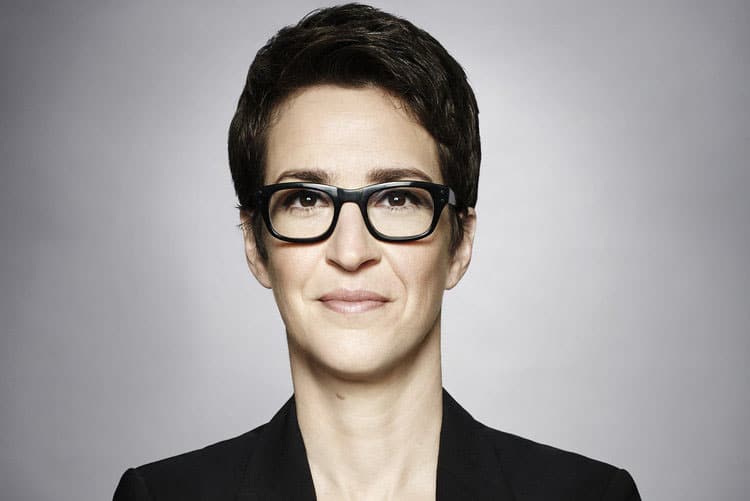
This year’s nominees include several Members of the Tribe, including Jerry Seinfeld, Tiffany Haddish, Rachel Maddow and Spike Jonze, in categories that reflect their particular talents.

Seinfeld and Haddish are competing in the Best Comedy Album category for “23 Hours to Kill” and “Black Mitzvah,” respectively. It’s Haddish’s second nod: she was previously nominated for Best Spoken Word Album for “The Last Black Unicorn” in 2018.

Maddow’s nomination for the audio version of her bestseller “Blowout: Corrupted Democracy, Rogue State Russia, And the Richest, Most Destructive Industry on Earth” is her second as well, having scored a Best Spoken-Word Album in 2013 for “Drift: The Unmooring of American Military Power.”

Rachel Maddow (Photo by: Art Streiber/MSNBC)

Director Spike Jonze (né Adam Spiegel) is in the running for Best Music Film for his “Beastie Boys Story,” opposite “Linda Ronstadt: The Sound of My Voice” from Rob Epstein and Jeffrey Friedman.

On the musician side, the trio Haim received two nominations. The Jewish sisters are up for Album of the Year for “Women in Music Pt. III and Best Rock Performance for “The Steps.”

MOTs Score Grammy Nominations Read More »

My Journey Back to Shul

Attending the 6:15 Shabbat service at Stephen Wise Temple is a tradition I have enjoyed for a long time. After a hectic workweek, schlepping up to Temple and facing the dreaded 405 on a Friday evening always seemed like a monumental task; but once I entered the gates, a calmness immediately ran through my body. When I entered the sanctuary, I was greeted by hugs, smiles and an opportunity to sit arm-in-arm with fellow congregants and strangers as Cantors Lam or Lutz beautifully opened the service and as our rabbis guided us through the traditional prayers. The service was only an hour of my time, but it set the weekend off with the right tone.

Of course, that all changed in March 2020. A tradition so many of us enjoyed came to a screeching halt in what we thought was just a temporary pause. We were now sitting in front of our televisions, watching the service on YouTube. At first, it seemed like a real treat. No long drive on a Friday afternoon, no dressing up for Shabbat and scrambling to arrive by 6:15. Shabbat dinner was actually served calmly, and then we gathered in front of the TV for the service. I am so proud of our shul for their sense of urgency in making our Shabbat experience as good as it could be while living through COVID-19. Even my kids, in their twenties and living on their own, have joined me every Friday evening, like clockwork. Once we mastered socially-distancing, we invited a small group of friends to join us.

If staying at home had lasted only a few weeks or maybe a month, we easily could have looked back on this in a positive light. We are now entering our tenth month of YouTube Shabbat and High Holidays, Zoom classes and virtual everything. There is no doubt that we are all “zoomed out.”

So, you can imagine my delight when I received an email last week inviting a limited group to enroll in the “lottery” to attend a live, in-person Shabbat Service “pandemic style.” YES, IN-PERSON!

I immediately threw my name in the hopper and was delighted to hear a few days later that I was one of the “chosen” few invited to attend. The strict protocols were outlined: masks at all times, assigned seating, limited schmoozing at a six-foot distance. It all didn’t matter — in-person, it felt like I won the lottery!

In person, it felt like I won the lottery.

Last week was also my father Richard’s yahrzeit, and I yearned to honor his life at my synagogue and share his name aloud in the company of my community. Standing in front of the big screen at home just didn’t cut it. Stephen Wise made it happen.

The commute was seamless and travel time was cut in half — one of the “silver linings” of the pandemic. When I entered the service, I saw our masked clergy ensconced in a three-sided plexiglass booth on the patio in front of Katz Pavilion. It was definitely surreal, but this was our new normal. The seating was strategic and followed all protocols, with about 25 in attendance.

All I needed was to hear Cantor Emma Lutz combine Leonard Cohen’s soulful Hallelujah into L’Cha Dodi and Rabbi Yoshi Zwieback’s spiritual meditation in his sermon to realize that we are coming back, ever so slowly and safely. I could not think of a better way to honor my father’s life as I stood to say Kaddish.

After the service concluded, I strolled back to my car feeling a sense of optimism that this service fulfilled my longing to be back at shul, surrounded by fellow congregants, clergy and Torah.

Zoom got us through the turbulent months of 2020. But as “Zoom fatigue” sets in, we must ensure that it does not translate to “shul fatigue.” Now, more than ever, we must push for the smaller, safe and distanced communal opportunities. We are yearning for human connection like never before, and the smallest event can make a difference.

I, for one, am definitely on board. And I promise never to complain about commuting on the 405 on a Friday evening again.


Sandra Heller is a longtime member of Stephen Wise Temple and co-founder of the newly-developed Wise Marketplace, designed to help congregants professionally network with each other during COVID-19.

My Journey Back to Shul Read More »

PA TV Accuses Israel of “Deliberately Killing Palestinian Children”

On November 21, The Palestinian Authority’s (PA) official television network accused Israel of “deliberately killing Palestinian children” during a children’s television program.

Palestinian Media Watch (PMW) reported that Walaa Al-Battat, host of “The Best Home” children’s show, said, “Unfortunately — and this is a very painful thing that I want to tell you about — a number of friends have lost their right to live because the occupation is deliberately killing the Palestinian children, and this is a very painful thing.”

PMW noted that Al-Battat has made similar comments in the past, including saying in 2015 broadcast of “The Best Home” that the Israelis are “occupiers who act in a very barbaric terrorist way” who “try to kill people for no reason.” Such comments aren’t exclusive to Al-Battat, as a PA TV reporter said on November 20 that “Palestinian children are being subjected to random summary executions.”

The Simon Wiesenthal Center tweeted that such PA broadcasts are “brainwashing next generation of Palestinian children with [the] big lie that Israelis target them for killing is ultimate child abuse, a lie that NGOs and social media will surely echo.”

The group added in a subsequent tweet, “Children will never hear of millions of [COVID-19] vaccine doses Israel is buying and giving to PA. No vaccine for such hate taught [to] little children.”

The Wiesenthal Center is referring to a recent Israel Hayom report stating that Israel will be setting aside three to four million doses of COVID-19 vaccines for Palestinians in both the West Bank and the Gaza Strip and that Israeli and Palestinian officials developed a distribution plan together. However, there’s still expected to be a shortage of millions of doses of vaccines for Palestinians.

Past reports have highlighted incitement of hatred against Israelis and Zionists in Palestinian textbooks, and there have been various instances of Palestinians using minors for terrorist attacks.

PA TV Accuses Israel of “Deliberately Killing Palestinian Children” Read More »

Talking with Maya Batash About “Talking With God”

Maya Batash was grappling with personal issues when she first ventured to Uman, the renowned burial place of the 18th century mystic and kabbalist, Rabbi Nachman of Breslov. The experience was so transformative that Batash, a filmmaker and actor who moonlights as a neurologist, decided to return. Her second visit inspired her to begin making a documentary, which eventually morphed into a feature film. Eight years later, the result is Talking to God, (www.talkingtoGodmovie.com) an award-winning comedy Batash wrote and directed. The pic depicts the sage’s short story, “A Tale of Faith,” and explores hitboddedut, the spiritual practice embodied by the film’s title.

“I wanted to make a funny and fantastical trip of a film about the experience I had and all I learned along the way,” Batash says. “Though it’s a fictional story about a filmmaker with ‘troubles’ who travels and dreams about a fixer and a king and spiritual surgeon, it’s really a film about how to be happy.”

On screen, Batash portrays the film’s protagonist, a fictional “everywoman” in a state of crisis who is ready to grow. After 12 nights of insomnia, she journeys to Ukraine in search of a magic cure. Outrageous characters help her finally sleep. Through dreams and contemplation, she discovers the meaning of life and how to be happy—even with nothing.

Filmed on location on Staten Island, Brooklyn and Uman, the pic has scored honors aplenty at the Glorious Movie Awards, New York’s Retro Avant Garde Film Festival, MiraBan UK Film Festival and the French Independent Film Festival. TTG landed “Best Actress” for Batash at the Euro Film Festival Geneva and “Best Director” at the Florida Comedy Film Festival. In advance of its digital release slated for November 24, the Jewish Journal caught up with Batash in Jerusalem, where she now resides.

JEWISH JOURNAL: What propelled you to Uman?

MAYA BATASH: Desperation. I’d been having personal issues and a friend suggested a five-day group trip with a bunch of like-minded desperate women. It wasn’t exactly a spa vacation in the mountains… I was ready to try anything.

I thought I was supposed to feel something but I didn’t. When I came back home though, I felt completely different, as if I had been rebooted, if that makes any sense, and felt like I was given a gift.

JJ: What kind of gift?

MB: Tools to live in a more joyful and meaningful way.

JJ: How has making the film further delivered on that promise?

MB: According to Rebbe Nachman’s teachings, dancing sweetens judgements. It gives me a lot of joy. Turning on the radio and boogying in your own living room, every day, even for a few minutes, is very liable to make you happy–though 15 minutes works wonders.

JJ: How do you frame the film’s core message?

MB: No matter who we are, what we’ve done, what our religion is, God wants to be close to us. How do you get close to someone? By talking to them, sharing yourself with them—your feelings, your hopes, aspirations, disappointments, dreams, etcetera. That’s essentially how to talk to God. By doing that daily, you can create a vessel for God to create miracles in your life to help you. The only side-effect of this whole process is that you feel real joy afterwards.

JJ: In what ways is the film universal?

MB: The film is about happiness and how to have faith when times are tough—something every human being needs. The key to that is through having a regular daily conversation with God in a real and intimate way, as if with a close friend. Through doing this, we create a soul connection with the Source of all life. By feeding our souls with this daily connection, we fulfill the real purpose of creation and create a channel for potential miracles in our daily lives. Even atheists who saw the film told me they received a lot from it.

JJ: What do you love about the film?

MB: I love the comedic aspect. I love that it talks about something so meaningful in a fun and happy way.

JJ: What scene moves you the most?

MB: The ending, when the ladies talk to God.

JJ: How did you encounter the teachings of Rebbe Nachman?

MB: I started learning the Garden of Emunah book—written by Rabbi Shalom Arush, translated by Rabbi Lazer Brody—with my cousin. The teachings made me happy. When a different friend recommended a group trip to Uman, I was willing. You have to experience it to understand it.

JJ: Do you identify as a “Nach Nach”, as a disciple of Rebbe Nachman?

MB: I’m not so into labels. I keep shabbat, kashrut and try to be a better person through learning Torah and Hasidut.

JJ: Have you found the same kind of connection, meaning and joy that you portray in the film?

MB: A regular daily conversation with God is conducive to feeling very happy. I highly recommend it.

“A regular daily conversation with God is conducive to feeling very happy. I highly recommend it.” – Maya batash

JJ: How can hitboddedut help during this pandemic?

MB: If we ask God for help, we elevate fear, and realize God is really in charge of it all.  Rabbi Nachman teaches fears of the natural world are “fallen fears”. By connecting and talking to God about them, we replace fallen fears with fear and awe of our Creator. And we calm down, because we realize it’s all One.

JJ: What does the film’s success mean to you?

MB: To feel that the film has impacted others would be the greatest award. But really, the award goes to God. I was just a vehicle to spread this message. It’s God’s recognition and honor because the film was made only through regular daily prayer and pleading. I asked for help literally in every phase of the filmmaking—from raising the funds, to getting the right cast and crew, to the production phase, to completing the last credit of the film. Even now, I’m asking God to help me to know what to say in this interview.

Links:

For the US:

https://itunes.apple.com/us/movie/talking-to-god/id1536856963?ign-mpt=uo%3D4

For Israel: https://itunes.apple.com/il/movie/talking-to-god/id1536856963


Lisa Klug (www.lisaklug.com) is a widely published freelance journalist and the author of the bestselling humor book, Cool Jew: The Ultimate Guide for Every Member of the Tribe, and its companion, Hot Mamalah. 

Talking with Maya Batash About “Talking With God” Read More »

Power of Youth LA Kicks Off Hanukkah with Maccabee Drive Thru Experience

Rabbi JJ and Frumie Duchman, founders of the non-profit the Power of Youth LA (POY), know that Hanukkah tends to be an afterthought during the holiday season. This year, the couple —who are also Youth Directors at Young Israel of Century City— thought it would be the perfect time to give the Jewish holiday a little more chutzpah with a drive-thru experience.

Kicking off Dec. 9, “Maccabees: A Drive-Thru Chanuka Experience” will be a drive-thru storytelling of the Hanukkah story. During the driving festival of lights, families can expect photo opportunities, live performers and special effects. Rabbi JJ Duchman told the Journal that “it is an engaging, interactive show that is family-friendly and the perfect way to spend time together during the holidays.”

The drive-thru experience runs approximately 30 minutes upon entering the location at 7729 Burnet Ave. Ending Dec. 13, each ticket is $99 per vehicle. Livestream links will also be made available for those who do not want to leave their house.

Because in-person gatherings of any size are no longer possible, Duchman said drive-thrus are becoming the new normal so people can safely enjoy entertainment and the closest thing to in-person connections.

“Drive-thus are the safest way to bring live performances to an audience,” he said. “Our greatest concern was to make this event COVID-safe for everyone involved, and we have implemented certain measures to maintain safety.”

The rabbi said that guests will be asked to remain in their vehicles, and masks must be worn at all times. During the performance, the audio will be broadcasted to the vehicles’ radios so their windows can remain up.

He added that all performance spaces have been carefully measured to maintain a six-foot minimum distance between guests and performers at all times.

“Our crew and driving attendants will be wearing masks and temperature checks at the door are mandatory for all cast and crew,” he said.

The Power of Youth LA has aims to help children in the community reach their full potential through various events and programs year-round. POY seeks to empower kids so they can grow emotionally and spiritually.

When COVID-19 canceled in-person learning, after-school programs and religious-school learning, along with everything else, Rabbi JJ switched gears and started producing all sorts of virtual activities for the kids to enjoy.


With Hanukkah on the way, Duchman wants to ensure that Jewish holiday celebrations can continue to happen for families despite the unprecedented circumstances. He said this drive-thru experience is a way to spread Tzedakah throughout the community.

“The Jewish faith takes pride in righteous deeds and in sharing the message of love and unity,” he said. “We want to bring together not only the Jewish community but people of all kinds to share in our message of Tzedakah (charitable acts).”

“Maccabees: A Drive-Thru Chanuka Experience” opens Dec. 9 and runs through Dec. 13 at 7729 Burnet Ave. 30-minute time blocks vary. For ticket information, visit their website.

Power of Youth LA Kicks Off Hanukkah with Maccabee Drive Thru Experience Read More »

Donations of Appreciated Stock Unlock Charitable Currency, Bring Fulfillment

A few years ago, the Jewish Community Foundation of Los Angeles (The Foundation) ran an advertisement with an attention-grabbing headline: To open a charitable fund there, a person didn’t need to be a millionaire just a mensch – Yiddish for a good person of integrity and honor.

As vice president of advancement  at The Foundation, it is my privilege to work on a daily basis with many of our donors – both people with wealth and of comparatively ordinary means – and I can tell you with absolute certainty that being a millionaire and a mensch are not mutually exclusive propositions.  What unites the charitable-minded is a commitment to giving back and of making the world a better place – the precept of tikkun olam – while ingraining philanthropy within their guiding principles.

For hundreds of our donors, their instruments of choice are donor-advised funds (DAFs) – essentially a charitable-giving account – established at and administrated by The Foundation.  DAFs are among the most popular, fastest-growing philanthropic vehicles in the United States – and for good reason.  DAFs allow donors to: contribute to funds that they establish, recognize a fair-market-value (FMV) tax deduction on their donations (presuming you itemize and not take the standard deduction), and then enjoy the flexibility of recommending grants to a virtual limitless range of nonprofits on their own timetable – immediately or in the future.  For a comparatively small annual administrative fee, DAFs afford many benefits of a private foundation: Donors are free to experience the joys of charitable giving and focus on their philanthropic passions, while leaving all the administrative and investment management entirely to The Foundation.

Unlocking Charitable Currency

The popularity of DAFs is, in no small measure, due to the ability they afford donors to contribute other assets, besides cash, to their funds, including publicly traded stocks and bonds, real estate and ownership interests in businesses, principally LLCs, and receive that same FMV deduction on their contribution.  But wait, there’s more: Through gifts of appreciated assets, donors can potentially eliminate the capital-gains tax liability which you would incur if you sold the assets yourself and then donated the proceeds, prospectively increasing the amount available to charity by as much as 20 percent.

Michelle: Funding Philanthropy with Appreciated Stock

To illustrate how gifts of appreciated public-company stock can become charitable currency, consider the case of Michelle, who represents a composite of several actual Foundation donors. A single parent with two teenagers, Michelle is a long-time executive with a leading, publicly traded entertainment and media company.  She is fortunate to earn a healthy salary, but after retirement-plan contributions, taxes, mortgage, private school and summer camp tuitions, synagogue membership and living costs, her available dollars for charity were not commensurate with the level at which she desired to give.

Michelle’s CPA pointed out that her cash donations each year – essentially what we call “checkbook giving”– were too large in relation to her cash-flow and also haphazard, not strategically implemented.  The CPA then provided Michelle with an alternative – what became her “ah-ha” charitable moment.

In each of the past 15 years, Michelle has received an annual officers’ stock grant of company shares as part of her total compensation.  Other than drawing off some of the dividend yield from these shares, Michelle had never sold any stock, which has appreciated nearly four-fold since her first award in 2004.  If Michelle sells those shares, she stands to incur significant capital-gains taxes on the appreciation, depending how long the stock was held.

To help Michelle fulfill her charitable ambitions, her CPA suggested an alternative: She would establish a DAF at The Foundation that each year she funds with a contribution of appreciated company shares equivalent to her desired donation, thereby enabling the most favorable income-tax result each year.  Generally, Michelle’s oldest shares with the lowest cost-basis are contributed, eliminating the largest potential capital-gains tax liability in contrast to if she sold stock and took the proceeds.

Since establishing her DAF, each year Michelle has made a regular contribution of shares directly to her charitable fund at The Foundation. The Foundation then, in turn, sells the shares and the net proceeds are available to Michelle for recommending grants from her fund.  The advantages have been multi-fold: The contributed stock affords Michelle considerable tax benefits; it’s increased her personal cash-flow by reducing reliance on her salary for charitable contributions; it’s brought predictability and allowed her to step up annual charitable giving; and, drawing on The Foundation’s resources available to its donors, has enabled her to become more strategic with her philanthropy, focusing on causes which are personally meaningful.

A Few Other Tips

There are few important considerations to keep in mind if you’re considering contributing appreciated assets to a DAF:

  • Stock (or other assets) need to be held one year or more to eliminate capital gains on the sale and deduct the FMV of the donation.
  • Upon receipt of the stock, The Foundation controls the sales process – immediately in most cases but entirely at its discretion.
  • Gifting of restricted stock is possible, but any restrictions must be reviewed carefully to determine if transfer is permitted. Additionally, restrictions will affect the valuation of the stock for charitable-deduction purposes.

Expert In Complex Assets

The Foundation and its professionals possess a deep reservoir of knowledge to assist donors with charitable-gift planning related to a myriad of sophisticated assets beyond stocks and bonds.  We have worked with donors and their advisers in structuring gifts of such assets as real estate, privately held business interests (including C-Corp, limited partnership and limited liability company), and private-equity fund investments, among other assets.

To explore smart charitable giving strategies – and the fulfillment that comes with it – at this time when it matters most, as well as ways to amplify the impact of your philanthropy, please visit www.jewishfoundationla.org or contact us at (323) 761-8704, or development@jewishfoundationla.org.


Steve Gamer is vice president of advancement for the Jewish Community Foundation of Los Angeles, which manages more than $1.3 billion in charitable assets and distributed $129 million in grants in 2019 to causes locally, nationally and around the world. He has 30 years of experience working with individuals, families, corporations and foundations to help them achieve their philanthropic vision.

Donations of Appreciated Stock Unlock Charitable Currency, Bring Fulfillment Read More »

Thankful for a Chair and a Table

The COVID-19 virus that has hijacked humanity in 2020 is 10,000 times smaller than a grain of salt. It’s not even a living organism, like bacteria. It’s an inanimate object, more like a microscopic gun that just keeps shooting and shooting.

To see how it wreaks havoc, scientists fighting the virus have had to go down to its molecular level, cutting through a thicket of cellular distractions to isolate the reckless virus and figure out how to deal with it.

Whether we realize it or not, we’ve done something similar. An invisible, lethal and contagious disease that can kill us any time we encounter other people has forced us to cut through a thicket of distractions to isolate the things we value most.

The first thing we value most is, clearly, our life. We may crave doing all the things we normally do, but not if it will endanger our lives. That’s why we’ve upended our routines and tolerated prolonged isolation — because staying alive is worth it.

The second thing we value most is our relationships. If we can’t hang out with the people we usually do, we must prioritize. Who’s on our must-see list? Who are we closest to? Who nourishes us the most, and who must we nourish?

The third thing is our time. If we have to cut out so many of our normal activities, how do we use this most precious of commodities? How do we balance our time caring for ourselves with caring for others?

Which brings me to the holiday of Thanksgiving, a singular American tradition that connects the three things we value most — our lives, our relationships and our time.

I remember being introduced to Thanksgiving after moving to the United States in the early 1980s. It took me a while to fully grasp the power and mass attraction of the holiday, which brought all Americans together and reminded us of life’s blessings. It floored me that just about everyone, regardless of religion or ethnicity, made plans to gather with their families and enjoy the same festive meal. The whole country, it seemed, looked forward to it.

In this year of the pandemic, needless to say, even rock-solid Thanksgiving has been highjacked and turned upside down.

It’s sadly ironic that COVID-19 is disrupting this most cherished American ritual in a year when we need its warmth and comfort more than ever. Alas, this cold and lifeless virus doesn’t take time-outs for holidays. It continues its rampage whether we’re in a bar, a synagogue or at a boisterous family gathering.

COVID-19 is disrupting this most cherished American ritual in a year when we need its warmth and comfort more than ever.

In fact, it is precisely what makes Thanksgiving so special —close physical proximity with other people — that makes it especially dangerous. As much as we may value this holiday above all others, most of us will conclude that it’s not worth the risk. I’m sure many people will adjust and have much smaller gatherings, while others will just not have any guests.

Regardless of how we adjust, there is always Plan B: If we can’t celebrate the holiday the way we’re used to, we can double down on celebrating its message of gratitude. So, when I go around our table this year — just me and three of my kids — what will I be thankful for?

If we can’t celebrate the holiday the way we’re used to, we can double down on celebrating its message of gratitude.

The list is surely endless, but in a year when so many have lost so much, if I had to choose one thing I’m most grateful for, if I had to cut through the thicket of distractions to isolate my gene of gratitude, I would say I’m most thankful that I’m simply able to sit in a chair and have a meal at a table and look at people I love– and be alive to write about it.

Happy Thanksgiving.

Thankful for a Chair and a Table Read More »

A Boston Synagogue Compares Trump to Hitler

Imagine the juxtaposition.

On Saturday, November 21, the New York Times published a half-page article titled “For Netanyahu and Israel, Trump’s Gifts Kept on Coming.” Its subtitle was even more specific: “Allowing the convicted spy Jonathan Pollard the ability to emigrate to Israel was just the latest in a long list of prizes for America’s closest ally in the Middle East.”

The article went on to detail all the things that President Trump has done for Israel over the past four years. By now, it’s a well-known and long list. The New York Times cited the recognition of Jerusalem as Israel’s capital and the moving of the embassy to the holy city; the recognition of the Golan Heights as sovereign Israeli territory; the defunding of the Palestinian Authority and UNRWA because of their “pay to slay” policy; the staunch defense of Israel at the United Nations through Nikki Haley and others; and Trump trashing Obama’s Iran deal. What sparked the article was Secretary of State Mike Pompeo’s visit to the Psagot winery in Israel, which is in Judea and Samaria. Said the Times, “the Trump administration has increasingly equated anti-Zionism with anti-Semitism, both domestically and internationally. Building on that, Mr. Pompeo this week announced that the Boycott, Divestment and Sanctions movement against Israel would be deemed anti-Semitic, and that its adherents would no longer be eligible for federal government support.”

Lest you think that the New York Times had suddenly taken leave of its senses and published the article to praise Trump, the article’s intent was the opposite. It was to complain about how one-sided Trump has been toward the Jews and how Biden might, hopefully, be more even-handed. As the Times wrote, “Mr. Trump broke sharply with his predecessors’ approaches to the Israeli-Palestinian conflict, taking Israel’s side on the status of Jerusalem, West Bank settlements and other occupied territory.”

U.S. President Donald Trump (L) and Prime Minister of Israel Benjamin Netanyahu (R) show members of the media the proclamation Trump signed on recognizing Israel’s sovereignty over Golan Heights. (Photo by Alex Wong/Getty Images)

Now, contrast that criticism of President Trump as being way too nice to the Jews and Israel with an astonishing and mystifying attack by Temple Emanuel — a Conservative synagogue in Newton, Massachusetts — which put out a statement comparing Trump to Hitler.

In a newsletter sent out to its congregants last week, signed by senior clergy and Cantors, Temple Emanuel said, “The attack on democracy happening now is literally unprecedented. In the history of our nation, no presidential candidate who lost the election has refused to concede or to assist in the orderly transition of power… We Jews of all people, all of us, should be alarmed. On this week when we mark the 82nd anniversary of Kristallnacht, we Jews know that when assertions are made by authoritarians that go unchallenged, when ordinary citizens shrug and do nothing, or worse, are co-opted by those looking to undo democracy, the gravest harm ensues.”

The authoritarian in question is, of course, President Trump, and Kristallnacht was the beginning of Hitler’s Holocaust.

Here you have a shul telling its members that Trump challenging the election in the American courts and refusing to concede can be likened to a night when hundreds of synagogues were burned to the ground in Germany and scores of Jews were brutally attacked and murdered — with thousands more sent to concentration camps — in the most infamous and widespread pogrom of the modern era.

No one is saying that the synagogue should not have called upon Trump to concede the election. But Hitler? One would have thought that Temple Emanuel’s comparison might apply more to the murderous Mullahs of Iran who post on social media calling for the annihilation of Israel’s six million Jews, and whose regime Trump is crushing with unprecedented sanctions. But no, the president whom even the New York Times scolds as being too much in league with the Jews is on the precipice of starting a holocaust and becoming Hitler.

The “Trump is Hitler” crowd have been mystifyingly vocal for the past four years, particularly and shockingly in the Jewish community. I myself was condemned by Rabbi David-Seth Kirshner — of a Temple Emanu-El in Closter, New Jersey — in the Jewish Standard in March 2016 for chastising those who compare Donald Trump to Hitler. Kirshner responded, “When exactly is the moment of worry which officially allows us to sound the alarm bells? Must one first kill 6 Million Jewish souls to be categorized as ‘Hitler?’”

In other words, saying thank you to a man who moved the American Embassy to Jerusalem, recognized the Golan Heights, changed the tenor toward Israel at the U.N. and, most importantly, took us out of the Iran deal is too much. Yet demonizing him as a monster is still too little.

Let’s be clear. Even the Jews who despise Trump and refuse to offer any gratitude for all he has done for Israel should at least show some respect to the six million and stop engaging in this rancid and disgusting trivialization of the Holocaust.

It is time for Jews who are Democrats and Republicans, liberals and conservatives, to push back against those who abase themselves by comparing Trump to Hitler.

I shouldn’t even have to say this, but the vile comparison of Trump to Hitler belittles the Holocaust and all genocides. I just completed a three-year project of writing a book called “Holocaust Holiday: One Family’s Descent into Genocide Memory Hell.” It details how I took my children to the killing fields of Europe in an effort to confront the sheer horror and brutality of the largest mass murder in world history. The book is filled with painful stories of episodes like my daughter Cheftizba begging me and my wife Debbie not to make her spend her eighth birthday, on July 3, at Auschwitz (we took her to the Lodz ghetto instead). The Holocaust is unknowable, and yet I know it. As a Jew, it is seared into my soul. And it’s time that as a global community, we call on rabbis and Jewish leaders to stop depreciating its horrors by comparing Trump’s legal challenges about the vote in court to the Einsatzgruppen and the SS.

The vile comparison of Trump to Hitler belittles the Holocaust and all genocides.

What the “Trump as Hitler” attacks by the leadership of Temple Emanuel and others really expose is a willingness to demonize Trump even at the expense of the six million. So I say, You hate Trump? Fine. That’s democracy. By all means, oppose him with every breath and heartbeat. That is your right. But what in God’s name does this have to do with Jews being turned into soap and lampshades?

Jews who voted for Biden can still, as influential thinker Rabbi Yitz Greenberg said, show thankfulness and gratitude for all that Trump has done for Israel and the Jewish people.

Jews who voted for Trump can still acknowledge Biden’s decades of friendship with Israel and the Jewish community.

And Jews who voted for Biden can still make it clear to him that he better maintain his independence and not be co-opted by some on the Democratic far left, such as the unrepentant Israel and Jew bashers like Ilhan Omar and Rashida Tlaib.

Jews on the left and the right can all agree that for four years, it’s been inspiring to see a president with a Jewish daughter and son-in-law who observe the Sabbath, light the Chanukah candles, read the Purim Megillah and push their father to protect a people, and their nation-state, who just seventy years ago were murdered at a rate of 10,000 per day by a man, to whom no human ought to ever be compared — Hitler.


Shmuley Boteach, “America’s Rabbi,” whom The Washington Post calls “the most famous Rabbi in America,” is the international best-selling author of 33 books. Follow him on Twitter and Instagram @RabbiShmuley.

A Boston Synagogue Compares Trump to Hitler Read More »