fbpx

October 15, 2020

Obituaries: Oct. 16, 2020

Eugene W. Berk died Sept. 25 at 90. Survived by nieces Pam, Karen; nephews Damian, Scott. Neptune Society

William Bernstein died Oct. 7 at 87. Survived by wife Evelyn; daughter Marian; son Steve. Hillside

Morris Bernstein died Sept. 27 at 86. Survived by sons Robert (Debby), Michael (Christine); 3 grandchildren. Hillside

Helene Brown died Oct. 4 at 91. Survived by sons Jeffrey, Brian. Mount Sinai

Saul Cohen died Oct. 6 at 91. Survived by wife Beatrice; sons Stewart, Marshall; stepsons Mitchell, 4 grandchildren; brother Bernard. Gleason Funeral Home, Somerset, N.J.

Ruth Miriam Drobman died Oct. 4 at 97. Survived by daughters Deborah (Claude LaBonte) Psomas, Linda Tatum, Susan (Greg) Riessen; son Jeff; 9 grandchildren; 16 great-grandchildren. Mount Sinai

Edward S. Feldman died Oct. 2 at 91. Survived by daughter Shari; sons Mark, Richard; 4 grandchildren. Mount Sinai

Al Finci died Sept. 27 at 91. Survived by wife Rose; daughter Helen (Jeffrey) Rosenberg; sons Joe (Margery), Jeffrey (Shelley); 6 grandchildren. Mount Sinai

Darren Frank died Oct. 2 at 52. Survived by mother Marjorie; sister Cindy (Steve); brother Mark (Debbie). Hillside

Ernest Frankel died Sept. 19 at 97. Survived by daughters Sharyn Musika, Elin Schwartz (Steven); 6 grandchildren; 7 great-grandchildren. Pierce Brothers

Monroe Friedman died Oct. 2 at 85. Survived by wife Rita; sons Ethan, Mark, Jordan; 6 grandchildren; 2 great-grandchildren. Hillside

Randall Gingold died Sept. 25 at 57. Survived by wife Allison; daughters Alexis, Grace; sons Zachary, Blake; mother Susan Rogers; brother Stephen (Renee); stepbrother Jeff Rogers (Cathy). Hillside

Harriet Gitter died Oct. 10 at 92. Survived by daughters Julie, Melinda; son Richard (Debra); 5 grandchildren. Hillside

Allan Gruener died Oct. 3 at 97. Survived by niece Aima Vatter; nephews Jason Harrow, Daviol Harrow, Garrett, Michael. Mount Sinai

Alvin Harris died Oct. 1 at 89. Survived by daughter Nancy (Paul); son Charles (Laurie); stepdaughter Susan (Phil) Nathanson; stepson David Pascal; 2 grandchildren. Mount Sinai

Stanley Hersh died Oct. 6 at 89. Survived by wife Adrean; daughter Gennyne Mott; son Larry (Mary Elizabeth Rodriguez); 4 grandchildren. Mount Sinai

Allen S. Lazarus died July 3 at 82. Survived by wife Elisa; 2 daughters; 2 grandchildren; brother. Chevra Kadisha

Lenore Levine died Sept. 22 at 66. Survived by husband Irving; stepdaughters Lori Hindman, Dayna (Charles) Woodward; stepson Michael (Isabella); 4 grandchildren; 2 great grandchildren; sister Marilyn; brother Austin O’Malley. Malinow and Silverman

Marvin Al Lichtig died Oct. 3 at 92. Survived by sons Randy (Robin), Jeffrey (Claudia); 4 grandchildren; 2 great-grandchildren. Mount Sinai

Bernice Marks died Oct. 6 at 97. Survived by daughter Andrea; sons Joel (Millie), Robert (Vibeke); 6 grandchildren; 5 great-grandchildren; sister Gloria. Hillside

Edward Myerson died Sept. 28 at 70. Survived by wife Kaili; daughter Zoe; son Sean; mother Muriel; brother Alan (Abby). Hillside

Sanford Nadlman died Sept. 30 at 87. Survived by daughter Michelle; son Jay (Kathy); 5 grandchildren; 2 great-grandchildren; brother Marvin. Hillside

Stuart L. Niesen died Oct. 5 at 68. Survived by wife Wendy; daughters Jessica Erin Hooper, Kimberly Anne Niesen Fuentes; 5 grandchildren; sister Cheryl; brothers Jeffrey, Keith. Mount Sinai

Joseph Nizinski died Sept. 27 at 88. Survived by wife Lillian Bonilla; daughter Julia (Luis) Nizinski Harbottle; son Steve; stepsons Richard, James (Sheryl) Gullon; 5 grandchildren; 3 great-grandchildren; brother Bernard (Gisela). Mount Sinai

Robert A. Packer died Oct. 3 at 89. Survived by sons, David (Lori), Alan (Margaret), Richard (Laura), Andrew (Roberta); 10 grandchildren. Mount Sinai

Eileen Racklin died Sept. 26 at 89. Survived by daughters Susan (Kevin), Andrea (Dean); sons Robert (Pink), Richard “Doe” (Tim); 5 grandchildren; brother Maurice (Gloria). Hollywood Forever Cemetery

Lawrence Resnick died Oct. 1 at 86. Survived by wife Susan; daughter Jodie; son Steve (Cathy); 1 granddaughter. Mount Sinai

Ben Schwartz died Oct. 1 at 103. Survived by daughter Candy (Ted); son Bill; sister-in-law Beverly; 6 grandchildren; 2 great-grandchildren. Hillside

Gloria Slater died Oct. 9 at 88. Survived by daughter Elaine; son Bruce (Amanda); 4 grandchildren; 2 great-grandchildren; sister Rosalie. Hillside

Ronald Sobel died Oct. 5 at 80. Survived by wife Geraldine; son Glen; sister Lynda (Howard) Lerner. Mount Sinai

Stephen Solomon died Oct. 8 at 81. Survived by wife Ellen; sons Logan, Anthony (Lisa), Robert (Jennifer), Stephen (Erica); 3 grandchildren; brother Jeffrey. Hillside

Judy Ungar died Sept. 26 at 94. Survived by daughter Debbie Alpers; sons David, Allan; 2 grandchildren; sister Ruth Globe. Mount Sinai

Martin Vogel died Sept. 26 at 95. Survived by wife Sylvia; daughter Estee; son Ira (Jennifer); 4 grandchildren; 7 great-grandchildren; sister Fanny (Joe) Marcus. Mount Sinai

Joel Ward died Oct. 6 at 86. Survived by daughters Nancy (John) Ward Bigley, Robin (Stephen) Ward Bender; son David ( Kathy); 6 grandchildren; 3 great-grandchildren. Mount Sinai

Kay Weiner died Sept. 27 at 87. Survived by daughters Debra, Laura (Laurence); son Brad; 5 grandchildren; sisters Marie, Esther. Hillside

Mona Young died Sept. 30 at 100. Survived by daughter Cathy; son Steven (Hitoe). Hillside

Obituaries: Oct. 16, 2020 Read More »
Georgetown SJP to Host Speaker Who Tweeted Jews Are Known for Being ‘Sleazy Thieves’

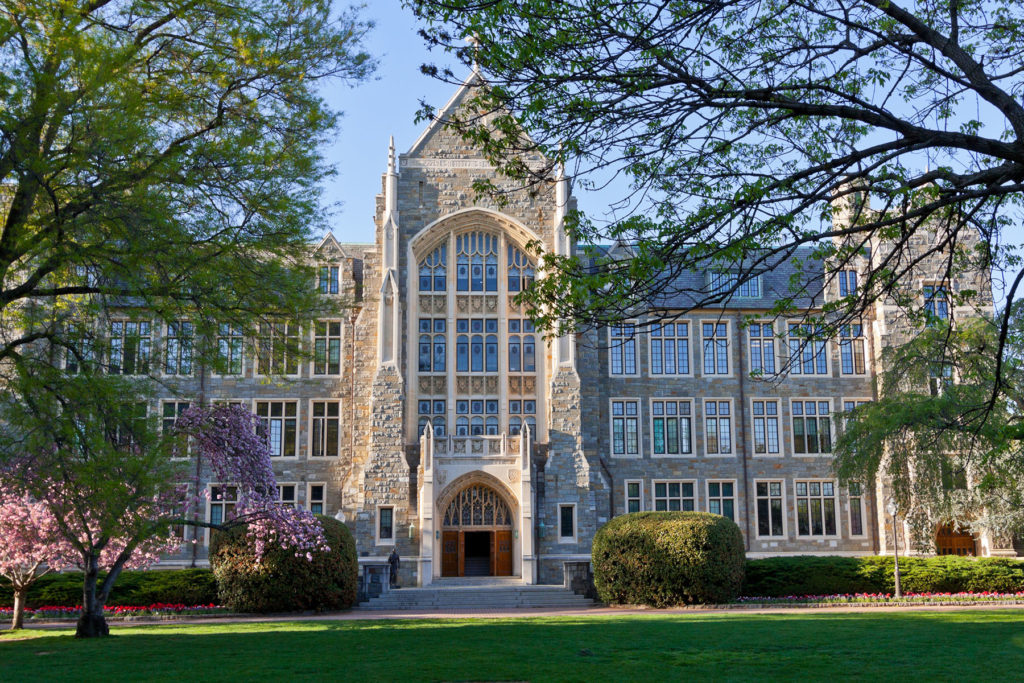
On October 18, Georgetown University’s Students for Justice in Palestine (SJP) chapter will be hosting a speaker who once tweeted that Jews are known for being “sleazy thieves.”

Georgetown SJP and the university’s Qatar SJP chapter will be hosting Miko Peled, an Israeli-born Jew who is the son of an Israeli general and a supporter of the Boycott, Divestment and Sanctions (BDS) movement, on a Zoom webinar event titled “Anti-Zionism vs. Anti-Semitism.” The event is open to the public.

There have been calls for Georgetown to cancel the event. An October 15 Times of Israel piece noted that Peled has been canceled from speaking at prior events; in 2016, San Diego State University’s (SDSU) SJP chapter canceled Peled after he tweeted that “Jews have reputation [for] being sleazy thieves.” Peled was reacting to the ten-year, $38 billion Memorandum of Understanding (MOU) that the United States and Israel agreed to at the time.

“#apartheidisrael doesn’t need or deserve these $$,” Peled wrote.

Following that tweet, SDSU SJP announced on their Facebook page that they would be canceling Peled’s speaking event because his comments were “offensive,” although they claimed that Peled’s “comments are not reflective of Mr. Peled’s principles or character.” The Princeton Committee on Palestine also canceled its Peled speaking event at the time over his remarks.

Peled defended his comments by stating in a Facebook post that “the very people who cry anti Semitism all day long are demanding billions of dollars. This is criminal and it lends itself to the claims of Jews being sleazy money grabbing [people]. It’s not my tweet that gives legitimacy to the stereotype – it’s the actions of the government of Israel that causes hatred of Jews. And since they claim Israel represents Jews and mainstream Jews in the US Support Israel the danger in making the stereotype fit is clear.”

“Supporting Israel is supporting genocide and demanding the US taxpayers pay for it is the lowest form of dishonesty and thievery – and that is the stereotype Jewish [people] like me and [Jewish Voice for Peace people] are fighting.”

Roz Rothstein, co-founder and CEO of the pro-Israel education organization StandWithUs, said to the Journal “Miko Peled has such a hateful record that even multiple SJP chapters felt compelled to cancel events with him. If SJP at Georgetown insists on using their platform to promote his bigotry, the administration should unequivocally condemn both the event and organization hosting it.”

The Stop Antisemitism.org watchdog tweeted, “Hey @Georgetown
HOW and WHY are you allowing a man who called Jews ‘sleazy thieves’ a platform at your school?????”

Tammi Rossman-Benjamin, director of the pro-Israel group AMCHA Initiative, also told the Journal, “This is par for the course for SJP.  They trot around anti-Semitic speakers to spew and incite hatred on campus.  The strategy here, and it’s a deliberate one, is the same as divestment resolutions — to suppress all pro-Israel speech on campus by bullying and harassing Jewish and pro-Israel students into silence.”

However, she doesn’t think that Peled should be canceled.

“Just as Jewish students should be able to freely express their pro-Israel views on campus without being bullied or harassed into silence, we also have to permit anti-Semites the same right,” Rossman-Benjamin said. “However, our research clearly indicates that anti-Semitic venom — whether it’s motivated by classic anti-Semitism or anti-Zionism — is often accompanied by acts that target Jewish students.  And when that happens the university must act swiftly to address and punish that behavior, no matter the motivation.”

Georgetown SJP and the university did not respond to the Journal’s requests for comment. Peled declined to comment to the Journal.

During an event outside of the UK Labour Party’s 2017 conference venue, Peled reportedly said, “This is about free speech, the freedom to criticize and to discuss every issue, whether it’s the Holocaust: yes or no, Palestine, the liberation, the whole spectrum. There should be no limits on the discussion.”

However, according to the UK Daily Mail, Peled went on to say that there are “limits of tolerance” as to who deserves a platform.

“We don’t invite the Nazis and give them an hour to explain why they are right; we do not invite apartheid South Africa racists to explain why apartheid was good for the blacks, and in the same way we do not invite Zionists – it’s a very similar kind of thing,” Peled said.

In October 2019, St. Anne’s Church in London issued an apology to the Jewish community for allowing a Peled speaking event to be held in one of its rooms. St. Anne’s donated the room hire fee to the Community Security Trust, a British watchdog organization against anti-Semitism. Board of Deputies of British Jews President Marie van der Zyl told the Jewish News at the time that they were “grateful” for the church’s apology and called on those who have hosted or associated with Peled to “have nothing more to do with him.”

Peled told the Jewish News at the time, “The suggestion that the event in which I spoke in any way shape or form represents hate, racism, homophobia, or antisemitism is outrageous and libelous.” He added that he’s Jewish and Israeli and has “many friends who are Jewish and view the issue of Palestine as I do. I would like to know the identity of anyone who made these false accusations.”

Georgetown SJP to Host Speaker Who Tweeted Jews Are Known for Being ‘Sleazy Thieves’ Read More »

Before Town Hall, Actor Jeff Goldblum Urges Jews to Vote for Biden

“Life finds a way,” Jeff Goldblum said in “Jurassic Park” 27 years ago. Now Goldblum is trying to make sure voters find a way to the polls by Nov. 3.

During a town hall pre-show on Oct. 15 presented by Jewish Floridians for Biden, Goldblum (“Isle of Dogs,” “Thor: Ragnarok,” “The Fly,” “The Big Chill”) shared a few words about the importance of voting and why Jewish Americans should vote for Biden. The event led up to Democratic presidential candidate Joe Biden’s town hall on ABC.

“I’m grateful to be part of this fight,” he said from England, where he is filming the next installment of the dinosaur-thriller franchise. “You always want to join the great fight. Well, there’s no better time and no other moment than right now and right here to leave it all on the field. I’m very emotional about it.”

Goldblum noted, like many Americans, he believes COVID-19, the economy, social justice, gun control, LGBTQ rights and climate change are issues at stake this year. Growing concerns about climate change worry Goldblum now that he is a father of two young sons. He said he’s more aware about what will be left behind for them to deal with when he is gone.

“Our entire species is at risk because of this administration,” the Jewish actor said, referring to President Donald Trump. “I’ve got two kids now … not only do I care deeply and have enormous affection for our entire species, I’m a little more invested in it because I can’t leave them a world of horrible danger like this.”

Noting that he has played heroic characters who often save the human race from dangers like aliens, dinosaurs and government corruption, he notes, “There aren’t too many times when we actually make a difference in real life and be a hero.”

Because Florida will play a major role in who wins the election, Goldblum told the Floridians and all watching that voting and helping others vote can be the modern heroic act that will make a difference.

Because Florida will play a major role in who wins the election, Goldblum told the Floridians and all watching that voting and helping others vote can be the modern heroic act that will make a difference.

Goldblum suggests having a voting plan is the best way to stay active and engaged during the run-up to the election. This includes being registered, voting early, researching where your polling location is, voting safely in person, volunteering at polling centers and encouraging others to vote.

“If I learned anything that might be relevant to our fight now … whether fighting aliens or dinosaurs, it always comes down to a group of people, a personal effort and a group getting together [with] grit and determination that will win the day and allow us to prevail,” he said. “I’m sure that grand things are ahead …. Go get ’em! I will, too.”

Joe Biden is answering questions during a live town hall discussion at 5 p.m. PDT on ABC Oct. 15.

Before Town Hall, Actor Jeff Goldblum Urges Jews to Vote for Biden Read More »

Amy Coney Barrett Is Not Alone In Her Bias

Almost as soon as President Trump announced his nomination of Judge Amy Coney Barrett to the U.S. Supreme Court, op-eds and statements by law professors and others flooded the media. These posts either sang her praises or vehemently opposed her as Ruth Bader Ginsburg’s replacement on the Supreme Court. The positive pieces extolled her brilliance, integrity, and fine personal qualities. Virtually all of the negative commentary focused on her right-wing views, which they assert will strengthen the Court’s conservative majority and possibly lead to the end of health care, abortion, and same-sex marriage.

As a law professor who approaches any legal system by trying to understand the cultural factors explaining a law’s creation and interpretation, I agree that Amy Coney Barrett has a bias that definitely impacts her legal reasoning. But in this respect, she is no different from anyone else.

The reality is that legal judgments are shaped by the interpreter’s background, experience, and beliefs. Such influences have been documented as early as the first century of the Common Era, when the two major schools of thought concerning Jewish law emerged with the sages Hillel and Shammai. Hillel’s judgments often reflected his “every-man” perspective, whereas Shammai’s rulings reflected the rich man’s perception of the world.

In the legal academy in the United States, the law was traditionally understood to be an objective, neutral system incapable of being influenced by anything outside of its internal process. That view has changed significantly among many legal academics, who now focus on discussing and interpreting law in cultural terms. The name for this way of looking at the law is cultural analysis.

Originally, cultural analysis was associated with areas of legal scholarship, such as feminist jurisprudence and other critical legal studies. By the last third of the twentieth century, however, even more traditional areas, such as law and economics and intellectual property, began to pay attention to the law’s cultural implications.

A cultural analysis of law emphasizes how the law sustains and reinforces relationships of power in lawmaking and the importance of historical context. As the late Supreme Court Justice John Paul Stevens observed, “traditions—especially traditions in the law—are as likely to codify the preferences of those in power as they are to reflect necessity or proven wisdom.” Cultural analysis of law recognizes that all involved in the lawmaking enterprise have bias and that bias impacts not only legislative priorities but also judicial interpretations. Given that law is produced by humans, pure neutrality simply is impossible.

Given that law is produced by humans, pure neutrality simply is impossible.

I realize that some legal authorities, particularly those with a more originalist and textualist bent, will disagree and argue that a provision in the Constitution should mean the same thing today as it did in 1787. But those who look at law through a cultural analysis lens believe that legal texts possess the capacity to speak to new generations in different contexts. Culturalists seek to broaden the discourse by also inquiring into the current meaning of legal texts. This contextualized, democratic approach to law seeks to incorporate multiple perspectives into the discourse rather than be confined to those of dominant social groups—such as the all-male American Founders.

One of the ways cultural analysis scholars incorporate more diverse perspectives into the discourse is through the use of narrative or storytelling. This approach was pioneered by the late Yale law professor Robert Cover in his groundbreaking Harvard Law Review article, “Nomos and Narrative.” In that article, Cover argued that “once understood in the context of the narratives that give it meaning, law becomes not merely a system of rules to be observed, but a world in which we live.”

Cover’s insight demonstrates that the key theme of cultural analysis is its emphasis on the interrelationship between law and culture. Perhaps this intersection was particularly clear to Cover, who not only had a background in Jewish law but also made it acceptable to use Jewish legal sources in conventional academic discourse. Because Jewish law maintains the view that its origin is Divine, it is often regarded as a prime example of a legal system that is objectively neutral. But the reality is quite the opposite. As stated by Menachem Elon, the former Deputy President of the Supreme Court of Israel, “the source of [Jewish law] is Heaven,” but its place “and its life and development… are not in heaven but in human society.”

So yes, Amy Coney Barrett will surely be guided by her perspectives and even her beliefs as she interprets the law. But in this way, she will be no different from all of her current and former colleagues on the Court and lawmakers everywhere.


Roberta Rosenthal Kwall is the Raymond P. Niro Professor at DePaul University College of Law. She is the author of “Remix Judaism: Preserving Tradition in a Diverse World” (Rowman & Littlefield, 2020) and “The Myth of the Cultural Jew: Culture and Law in Jewish Tradition” (Oxford U. Press 2015).

Amy Coney Barrett Is Not Alone In Her Bias Read More »

I’ve Loved Her Since Before the Garden – A poem for Torah Portion B’reishit

a man shall leave his father and his mother, and cleave to his wife,
and they shall become one flesh.

When I got married,
we had an artist from Fargo, North Dakota,
who is like the Eve of her generation,
design our wedding invitation.

On the front, the Yiddish proverb
each man and woman are
one soul, one flesh.
I remember my mother-in-law

thought it was interesting
which is a word people say when
they would have gone in another direction.
But for us it was the only direction.

We cleaved to each other like
two halves of a single world
that had longed to reunite.
Our first statement to the world

we’re this one thing.
Later my teacher told me how
the more traditional use this proverb to
justify different roles for men and women.

You’re all parts of a whole –
You wouldn’t ask your foot to wave
or your arm to do the walking.
If I were to re-write this for a

twenty-first-century sensibility –
and, after all, isn’t that what I’m doing?
I might remove the gender specificity.
Each person and person are

one soul, one flesh. I am grateful
to have found my other half,
to learn how she sometimes waves
while I sometimes walk.

I cleave to her like we came out of each other.
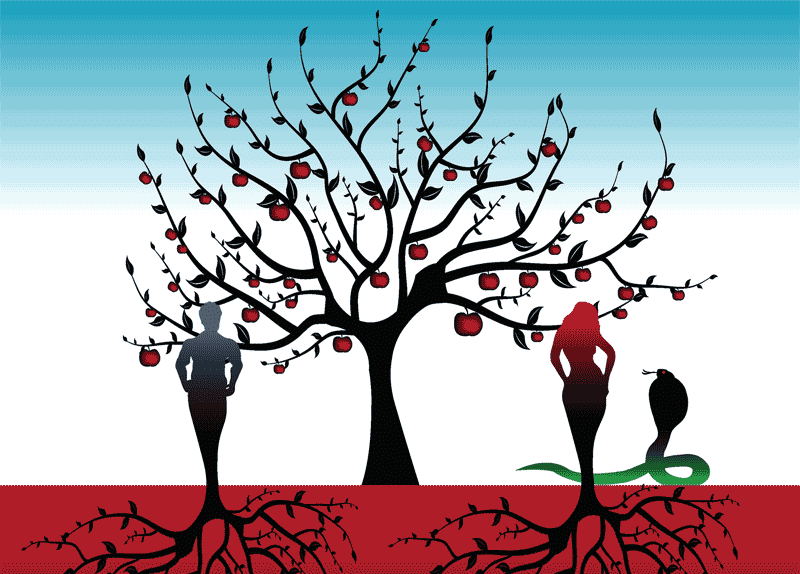
We shield each other from snakes and dust
as we walk through our garden
eating all the fruit we want.


God Wrestler: a poem for every Torah Portion by Rick LupertLos Angeles poet Rick Lupert created the Poetry Super Highway (an online publication and resource for poets), and hosted the Cobalt Cafe weekly poetry reading for almost 21 years. He’s authored 23 collections of poetry, including “God Wrestler: A Poem for Every Torah Portion“, “I’m a Jew, Are You” (Jewish themed poems) and “Feeding Holy Cats” (Poetry written while a staff member on the first Birthright Israel trip), and most recently “The Tokyo-Van Nuys Express” (Poems written in Japan – Ain’t Got No Press, August 2020) and edited the anthologies “Ekphrastia Gone Wild”, “A Poet’s Haggadah”, and “The Night Goes on All Night.” He writes the daily web comic “Cat and Banana” with fellow Los Angeles poet Brendan Constantine. He’s widely published and reads his poetry wherever they let him.

I’ve Loved Her Since Before the Garden – A poem for Torah Portion B’reishit Read More »

Rabbi Jonathan Sacks Says He is Being Treated for Cancer

(JTA) — Former British Chief Rabbi Jonathan Sacks announced he has been diagnosed with cancer and is undergoing treatment.

In a statement posted to his Twitter feed Thursday afternoon, Sacks’ office said he had been “recently diagnosed” with an unspecified cancer and hoped to return to work “as soon as possible.”

“He remains positive and upbeat and will now spend a period of time focused on the treatment he is receiving from his excellent medical team,” the statement said. “He is looking forward to returning to his work as soon as possible.”

Sacks, 72, has been treated for cancer twice before, in his 30s and again in his 50s, a fact that wasn’t widely known until it was disclosed in a 2012 book.

Sacks served as chief rabbi of the British Commonwealth from 1991 until 2013 and is among the most prominent expositors of Orthodox Judaism in the world, having authored dozens of books addressing contemporary spiritual and moral issues. A translation and commentary on a Jewish prayer book that he wrote has become enormously popular worldwide. His most recent book, “Morality: Restoring the Common Good in Divided Times,” came out last month.

Rabbi Jonathan Sacks Says He is Being Treated for Cancer Read More »

Facebook’s Move on Holocaust Denialism Is Too Late

Facebook has come out against Holocaust denial. This week, the company announced that it is “updating [its] hate speech policy to prohibit any content that denies or distorts the Holocaust.” For Mark Zuckerberg, Facebook’s founder, the decision marks a public retreat from his notorious position, articulated two years ago, that although he didn’t agree with Holocaust denialism, he didn’t think it was Facebook’s place to censor it. Far too belatedly, Zuckerberg’s agenda-setting company has taken the easiest and most obvious steps to stand up for truth and fight back against hate. (Two days after Facebook’s announcement, Twitter followed suit.)

I have long been skeptical of Facebook’s power. Nearly a year ago, I decided to stop using the platform because I was troubled by its rampant invasions of privacy. I also gave up Twitter. And while I appreciate the moves these companies are making now, I can’t help feeling that it’s too little, too late.

Consider all the months of advocacy it took to get Zuckerberg to agree to even this modest step. In June, a group of organizations led by the Anti-Defamation League started a campaign called Stop Hate For Profit, calling on companies and groups to pause their advertising campaigns on Facebook for the month of July in protest of the rampant hate speech and harassment that proliferates on the platform. More than 1,200 brands pulled millions in ad dollars. At the same time, the Claims Conference organized a brilliant social media campaign called #NoDenyingIt. Each day for 74 days, they posted a video from a survivor calling on Zuckerberg to recognize that Holocaust denial is hate speech.

After all these efforts, it seems to me that Facebook and Twitter have made a business decision that some deeply problematic ideologies do not belong on their platform. And it’s not just Holocaust denial—anti-vaxxers and white supremacists are facing Facebook bans, too. Facebook’s announcement boasted that 250 white supremacist organizations have been exiled from the platform, and that 22.5 million pieces of hate speech were removed in the second quarter of this year alone.

But that itself is cause for great concern. An annualized total of nearly 100 million hateful posts on just one social media platform, suggests that online hate is an enormous problem. And I suspect the reason for the slow action is that Zuckerberg has always known this will be a hard problem to solve.

Once the celebratory fist pumping is done, the real challenge begins. Because Holocaust denial is not going away. And when it comes to excising posts, it is not easy to define what constitutes Holocaust denial. Neo-Nazis spouting blatantly hateful propaganda: those are the easy cases. The more insidious situations are not. Denial has become much more sophisticated today. Relativizing the Holocaust is to deny it. Undermining the historical record of the Holocaust is to deny it. Questioning whether the Nazis really intended the genocidal horrors of the Holocaust is to deny it.

Once the celebratory fist pumping is done, the real challenge begins.

I’ve spent 25 years trying to understand the many facets of Holocaust denial. Who inside Facebook is going to be charged with such a delicate task? Someone on staff? New hires? An algorithm? It is much tougher than it sounds.

report on extremists banned from Reddit in 2017 showed that blocking users who spew hate speech reduces the incidence of hate on the Internet by 80-90 percent. Yes, blocking abusers works; they don’t just sprout up elsewhere. So why did Facebook need to have to hear from 74 Holocaust survivors before they acknowledged the obvious? Why did Twitter have to wait for Facebook before acting? It was never about free speech, because Facebook and Twitter are private companies and not subject to the First Amendment’s strictures. It has always been their call to make.

Through this and similar policy changes, Facebook is recognizing that it is a media company that curates content. Zuckerberg was making the right business choice to keep the platform as open as possible. Now he is doing the right thing by identifying its moral and social responsibility.


Stephen D. Smith is Finci-Viterbi Executive Director Chair of the USC Shoah Foundation. He is also the UNESCO Chair on Genocide Education.


Facebook’s Move on Holocaust Denialism Is Too Late Read More »

Hello Street Cleaning, Goodbye Mosquitos

Helpful storytime with Boaz. So, today after many many months, street cleaning in L.A. is restarting. So move your cars or get a ticket. But you should be happy because of a big side effect that most of you aren’t aware of that’s happened.
Any of you getting eaten alive by mosquitos the last few months? Way worse then in the past? We certainly have, so I called the Vector Control department of the city. The guy came out to both our place and my parent’s home 2 miles away. The verdict? The mosquitos are breeding like crazy in the curb of the street where small puddles of water collect, and remain stagnant because there’s no street sweeping once a week. So all over the city the mosquitos are thriving because their breeding grounds are rarely disrupted!
So as annoying as it is to have to find that spot across the street and occasionally get a ticket, I’m happy to get the damn mosquitos under control again asap.
This has been a message paid for by the Hepners Against Bloodsuckers Foundation, which is in no way affiliated with the Hepners Against Vampires Foundation because vampires are cool and fang-shaming is wrong.


Boaz Hepner grew up in L.A. in Pico/Robertson and now lives here with his wife and baby girl. Thus, the neighborhood is very important to him. He helped clean up the area by adding the dozens of trash cans that can still be seen from Roxbury to La Cienega. When he is not working as Registered Nurse in Santa Monica, he can be found with his wife and daughter enjoying his passions: his multitude of friends, movies, poker and traveling.

Hello Street Cleaning, Goodbye Mosquitos Read More »

Reporter Calls Anchorage Mayor ‘Jewish Living Piece of F—ing S—’ in Threatening Voicemail

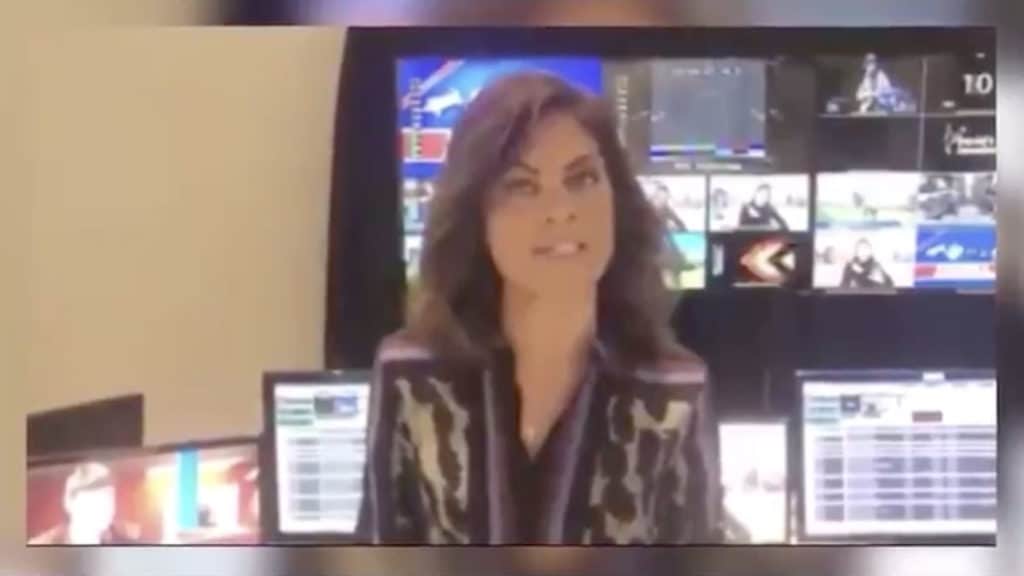
A reporter for a local FOX/ABC affiliate left a threatening voicemail to Anchorage, Alaska Mayor Ethan Berkowitz, a Democrat, in which she called him a “Jewish living piece of f—ing s—.”

The reporter, Maria Athens, left the voicemail on October 9 to Berkowitz, accusing him of being a “pedophile” and gloating that she would win an Emmy after exposing him.

“I will personally kill you and [Berkowitz’s wife] Mara Kimmel myself you Jewish piece of living f—ing s—,” Athens said in the voicemail. “You have met your match motherf—er…. I can’t believe I am such a good person and thought I loved you.”

She added that she will “pray for your Zionist f—ing a— you piece of s— loser.”

Berkowitz’s office immediately denounced the allegations from Athens as “slanderous,” calling her “hostile and unwell.” The office “spoke with Ms. Athens’ employer, general manager Scott Centers, who emphatically disavowed his employee’s comments.”

The Anchorage mayor subsequently announced his resignation on October 14, a day after admitting that he had in “a consensual, inappropriate messaging relationship with reporter Maria Athens.”

“My resignation results from unacceptable personal conduct that has compromised my ability to perform my duties with the focus and trust that is required,” Berkowitz told the Anchorage Assembly. “I know my conduct has done great injury to my family, my staff, to Municipal employees, and to the people of our community, and for that, I am deeply sorry. To make this transition as smooth as possible, my resignation will be effective Friday, October 23 at 6 p.m.”

Athens told the Alaska Daily News that their messaging relationship began in 2016, saying Berkowitz “gave me attention when I was lonely.” She refused to say if the relationship went beyond the messages. Athens was arrested on October 9, when she attempted to enter the studio for KTBY and KYUR, where she allegedly got into a physical altercation with Scott Centers after being told she was not allowed to enter. She had also reportedly been dating Centers. Athens faces charges of misdemeanor assault, disorderly conduct, and criminal mischief.

The FBI Anchorage Field Office told the Daily News that based on its initial investigating with the Anchorage Police Department, they couldn’t find any evidence substantiating Athens’ claim that Berkowitz is a pedophile but “the FBI Anchorage Field Office continues to monitor the situation.”

Reporter Calls Anchorage Mayor ‘Jewish Living Piece of F—ing S—’ in Threatening Voicemail Read More »

Five Ideas for Renewing Your Energy

I’m concerned about you. No, really I am. The data is in, and it does not look good: CNBC reports that nearly 70% of Americans are showing signs of burnout, and the CDC recently concluded that two thirds of adults currently have symptoms of anxiety and depression.

Many of us are hitting—or have already hit—our limits. I know, because I personally hit a wall of physical exhaustion about 12 weeks ago: in the span of five days, I dozed off at the wheel—thankfully, avoiding an accident—and then sprained my ACL a few days later, landing me literally on the bench for nearly two months.

While hitting our limits is obvious in a pandemic world, many of us have also learned how sneaky those feelings of being “overwhelmed” can be in our new normal.

So, yes, as the quarantine drags on, election day draws nearer, the weather gets colder, and the days get shorter, I’m concerned about you.

If you’re feeling tired, stressed, or just in a “funk”—you are not alone. Some days are easier than others and a few “others” in a row can feel crushing. Here are five simple ideas for renewing your energy this fall:

If you’re feeling tired, stressed, or just in a “funk”—you are not alone.

  1. Seriously, take some time off. I have a rule that nobody is allowed to tell me they’re burned out until they’ve taken a week of true vacation (that means no inbox monitoring). Many of us are working longer days than ever before, and almost all of us could really use a break. So, open up your calendar and book yourself a “staycation” in the weeks ahead. If you can’t swing a week, can you at least try for a long weekend?
  2. Get more sleep. I know how important sleep is these days because, like many of you, I am not getting enough of it. But the days and weeks that I do sleep, I honestly feel amazing. If you’re struggling to sleep like me, then you are part of a new wave of “coronasomnia.” Psychologists attribute this sleep disruption to increased stress levels and decreased accessibility to our normal routines. So try building new sleep routines, like committing to turn-off-times for your computer, TV, and phone. Or try journaling before bed to get all the ideas that race through your head in the dark onto a piece of paper. The latter has been a game-changer for me: in fact, the first draft of this article was written on the scratch pad that now lives on my nightstand.
  3. Turn off your phone. We need our devices to work and stay connected, but they also connect us to all the things that stress us out, like social media, news, and work email. One thing I personally started over the summer (the day of my almost-car-wreck, in fact) was taking a weekly tech Shabbat: turning my computer and phone off from Friday night to Saturday night. Don’t get me wrong, my weekly screen time average still horrifies me, but the once-weekly digital detox has become something I truly crave by Thursday afternoon.
  4. Get “social” in different ways. Many of us have felt like we’re in a social “funk” and, according to new research, we’re getting more socially awkward as the pandemic continues. Try going “old school” and picking up the phone to call a friend. Not a Zoom, not a text, and not an email—a good, old-fashioned call. Bonus points if it’s somebody you’ve thought about but haven’t reached out to in a while. For my introverts: consider writing a letter to somebody, sharing a memory, saying thank you, or just letting them know you care about them. These gestures can help get you out of your own funk and also be a lifeline to the recipient.
  5. Make like RBG and get a passion project. Some of you will protest that you’re too busy, while others will protest that you “tried the sourdough thing” back in May and are over it. It was RBG who famously implored us, “if you want to be a true professional, do something outside of yourself.” For her, that passion was opera, and if RBG could keep up with her husband’s law school work while he was ill, raise Jane, and also make the Harvard Law Review, you can find time to get a passion project, too. Passion projects invite us to get creative, spark joy, and recharge in a way that vegging out with Netflix just can’t. Here are some passion projects I’ve seen friends, family members, and clients take on recently: playing an instrument, running, playing tennis, training a new puppy, woodworking, writing, and cooking (that one is mine, something I “hated” for years and am now enjoying for the first time ever).

Taking care of ourselves isn’t a “nice to have” these days—it’s “need to have”, as urgent as any other priority in our life. So which of these ideas will you start with today?


Randi Braun is an executive coach, consultant, speaker and the founder of Something Major

Five Ideas for Renewing Your Energy Read More »