fbpx

July 29, 2020

Seth Rogen’s Zionist Blind Spot Deserves a Clear-Eyed Zionist Answer

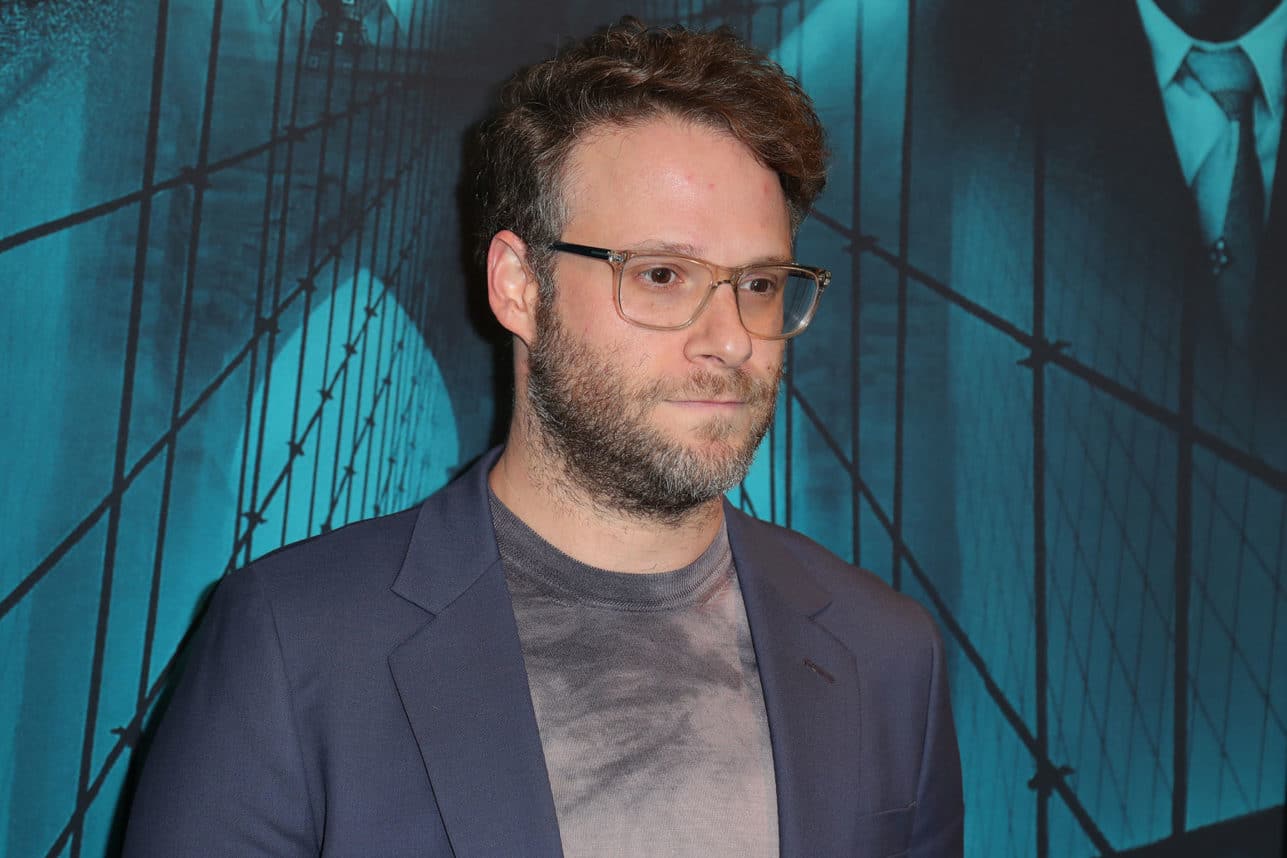
Jewish Hollywood star Seth Rogen thinks it “makes no sense” for the “preservation of Jewish people” to “keep something you’re trying to preserve all in one place—especially when that place is proven to be pretty volatile.”


In other words, he thinks the state of Israel is bad for the preservation of the Jews.

Had Rogen spewed that musing to a friend on the set of his latest movie, that would be one thing. But he said it on Marc Maron’s highly popular podcast, which has more downloads than the top-rated Tucker Carlson or any news show on CNN.

If you don’t know much about Israel or the Zionist idea, you might hear Rogen and think: “Hmm, that kind of makes sense. Why would so many Jews gather in one volatile and dangerous neighborhood? Isn’t that bad for their preservation?”

Rogen said other brazen things on that now-infamous podcast, but for me, the comment about preservation was the most dangerous. Why? Because he comes across as having the Jews’ best interest at heart.

After all, it’s true that so many Jews have gathered in one place– at latest count, close to 7 million Jews live in Israel. And it’s true that Israel is in a “volatile” region, surrounded by enemies sworn to its destruction.

If you’ve never been taught the story of the Jewish people– the yearning for 19 centuries to return home to Zion; the never-ending persecution Jews suffered as they wandered through the Diaspora; the need for a homeland where Jews would hold their destiny in their own hands—it’s not a great leap to conclude: Who needs Israel?

On the podcast, Rogen lamented that “as a Jewish person I was fed a huge amount of lies about Israel my entire life.” If indeed he believes Israel “makes no sense,” then Rogen is right—he’s been fed plenty of lies.

Here’s a suggestion, then, for Mr. Rogen: Learn your people’s story. A good place to start would be “Letters to my Palestinian Neighbor” by Yossi Klein Halevi.

“Israel exists because it never stopped existing, even if only in prayer,” Halevi writes. “Israel was restored by the cumulative power of Jewish longing. But attachment to the land wasn’t confined to longing. Throughout the centuries, Jews from east and west came to live and be buried in the land.”

Not surprisingly, the need to escape anti-Semitic horrors was a huge factor in the eternal Jewish longing to return home.

As Halevi writes: “The impetus for creating a political expression of the longing for return—restoring the Jewish relationship to Zion from time back into space—was dire need. In nineteenth-century Russia, millions of Jews were threatened by regime-instigated pogroms. Many Russian Jews were fleeing their homes and heading west. The newly created Zionist movement was seeking a solution not just for Jews but for ‘the Jews’—a permanent solution to homelessness.”

But since Rogen expressed such an interest in the “preservation” of his people, he ought to note that safety from persecution was far from the only impetus to Zionism.

“However desperate the situation,” Halevi writes, “anti-Semitism and the need for refuge didn’t define the essence of Zionism. Need gave Zionism its urgency, but longing gave Zionism its spiritual substance. Zionism was the meeting point between need and longing.”

Which lies was Rogen fed all these years that made him miss the very soul of the Zionist idea?

Which lies was Rogen fed all these years that made him miss the very soul of the Zionist idea?

I heard through the grapevine that Rogen has been sending private Twitter messages to some of his critics to “explain himself.” If he truly cares about the preservation of his people, I hope that he will also educate himself– and then return on that same podcast to share with millions what he learned.


Seth Rogen’s Zionist Blind Spot Deserves a Clear-Eyed Zionist Answer Read More »

Tisha B’Av 5780: Understanding How Much We Cannot Understand

By the rivers of Babylon, there we sat and wept, as we remembered Zion.

This year, we sit on the curbs of our sidewalks, on the streets of our land, instead of on the floors of our synagogues, as we remember Zion. Every year the same question is asked: How can we continue to speak of the desolate Land of Israel, the destruction of our nation and the downtrodden state of our people when we sit not on the banks of the rivers of Babylon, but on the boulevards, which stand as a testament to the first flowerings of our impending redemption?

Of course, the Temple has yet to be built. There are many problems that still plague our nation and unfortunately many are suffering, but has our hope — which now serves as the very anthem of our reestablished country — ever been stronger? Are such lamentations, originally written from an exile devoid of any light on the horizon not a slap in the face of our maker? Have we no appreciation for how far we have come, how fortunate we have been, how many open miracles our generation has witnessed?

It seems that this year’s events, perhaps more than any others in recent history, answers this question that only our generation is fortunate enough to consider asking on the fast of the Ninth of Av.

It seems that this year’s events, perhaps more than any others in recent history, answers this recent question that only our generation is fortunate enough to consider asking on the fast of the Ninth of Av.

Perhaps this year, when our perception has been anything but clear, can help answer this question. Perhaps a year in which we realize just how little we truly understand, will help bring us a heightened sense of humility. Perhaps a year in which our collective ego has been utterly humiliated will shake us from our narcissism.

As this seemingly interminable period drags on, we are compelled to repeatedly acknowledge our inabilities and admit that no matter what means we may have at our disposal, our jurisdiction in this world is limited by The One above.

This year, when we have come to appreciate more than ever the “butterfly effect” of a touch, a sneeze, or even a lone breath, we should understand Tisha b’Av with clarity. Yes, we mourn the destruction of our ancient Temples, as well as commemorate the myriad of tragedies that have befallen our nation over the last two millennia. However, Tisha b’Av is not just about mourning what we lost, it’s about lamenting our lack of clarity in understanding what we lost. The physical infrastructure we grieve for must be accompanied by the anguish caused by the destruction of our spiritual acumen.

Tisha B’Av is not just about mourning what we lost, it’s also about lamenting our lack of clarity in understanding what we lost.

In a year when we learned the effect that one breath can have on the world, we can certainly attempt to perceive the effect that the presence of the great Temples once had on this world. In a year in which only the blind can emerge with their vainglory intact, how much more so is it upon us to acknowledge that we are so close yet  so very far.

What more should we require beyond the forced memorialization on our sidewalks of the extirpation of our Temples,  in light of the temporary closure of our synagogues?

Every year, Tisha b’Av poses a paradoxical challenge: It is a day when we are commanded to attempt to grasp what we lack, despite the knowledge that such a mission is impossible.

Why does The Almighty command us to annually attempt the impossible?

Perhaps that is precisely our mission. Perhaps our mission is not to understand, but to attempt to understand how much we simply cannot understand.

And what time period, in recent history, has been more appropriate for us to assume such a mission?

Doni Cohen is a 25-year-old student currently studying political science and Jewish history at the Hebrew University of Jerusalem. He made aliyah from Bergenfield, N.J. in 2013. He can be reached at arbel67@gmail.com.

Tisha B’Av 5780: Understanding How Much We Cannot Understand Read More »

A Blessing for Demanding Life

I don’t need to be gripped
by the other side
to know
I choose life.
I don’t need see
someone else suffer
to learn
I’m not the only one who matters
I don’t need God to orchestrate
a redemption
to know Love’s saving power.
Before us You have placed a choice
between blessing and cursing
and death and life.
The lives
that have long been threatened,
for black people who were taken,
for the long standing war
that should have already been won,
bless you for demanding life.

A Blessing for Demanding Life Read More »

Jewish Groups Express Concern Over Comments Made by Presumptive Nominee to Be U.S. Ambassador to Germany

A couple of Jewish groups have expressed concern over past remarks made by the presumptive nominee to be the next United States Ambassador to Germany regarding neoconservatives and the Israeli government.

Jewish News Syndicate (JNS) reported that President Donald Trump intended to nominate retired Col. Douglas Macgregor, a decorated combat veteran, for the position. Macgregor said in a 2012 interview with The Daily Bell that neoconservatives make “decisions in Washington that in their minds are beneficial to a foreign power and are not necessarily good for the American people.”

He then said it was wrong to state that Jews always support the actions of the Israeli government.

“What you have are numbers of people who call themselves neocons,” Macgregor said. “They operate in a variety of settings in the government and in the media, and they support or advocate, for all intents and purposes, unconditional support for whatever the Israeli government wants to do. They are by no means the majority and they are by no means representative of what I would call Americans who happen to be Jewish.”

Jewish groups called these remarks anti-Semitic.

“This is nothing more than a repackaging of the anti-Semitic conspiracy theory alleging that Jews are more loyal to Israel than they are to the countries of which they are citizens,” StandWithUs CEO Roz Rothstein said in a statement. “As the child of Holocaust survivors, I know too well how dangerous such rhetoric can be. Disagreements over policy should focus on ideas, not hateful attacks alleging disloyalty or dual loyalties.”

B’nai Brith International similarly said in a statement that the term “neoconservative” is “is often used as a euphemism for Jews.”

“It is important that American diplomats not question the patriotism of other Americans who hold political views different from their own, especially given that questioning Jewish loyalty to America is an anti-Semitic trope,” the statement added.

B’nai Brith also said the organization was concerned about Macgregor’s past comments on Iran, including saying in 2019 that “there’s no evidence that Iran wants to attack us” and that Trump’s “neocon” advisers were responsible for the killing of Iranian Maj. Gen. Qassem Soleimani earlier in 2020.

“It is vital that the American ambassador to Germany, whose work includes diplomatic negotiations on sanctions against the Iranian regime, Hezbollah’s presence in Europe and other aspects of Iran’s global reach, understand the severity of Iran’s belligerence and support for terrorism,” B’nai Brith said. “Combating anti-Semitism is an important priority for the U.S.-German bilateral relationship, which adds to our concern over his record of insensitivity in speaking about Jews.”

The White House did not respond to the Journal’s request for comment.

If the Senate confirms Macgregor, he would succeed Richard Grenell, who served in the role from 2018-20.

Jewish Groups Express Concern Over Comments Made by Presumptive Nominee to Be U.S. Ambassador to Germany Read More »

Holocaust Survivors Launch Campaign to Fight Holocaust Denial on Facebook

BERLIN (JTA) – Joining a growing chorus of critical voices, Holocaust survivors have launched an international online campaign criticizing Facebook CEO Mark Zuckerberg that is aimed at countering Holocaust denial on his social media platform.

Starting Wednesday, a campaign sponsored by the Conference on Jewish Material Claims Against Germany called “There’s No Denying It #NoDenyingIt” will upload video testimony daily from survivors across the globe to social media platforms including Facebook, Instagram (owned by Facebook) and Twitter.

The campaign is being billed as the first-ever digital campaign by survivors. Some 50 have signed on to the project so far.

“People believe what they see on Facebook,” Stefanie Seltzer, a Polish-born survivor and activist, told the Jewish Telegraphic Agency in a phone interview from California. “What happened cannot be denied.”

Pressure has grown on the social media giant since Zuckerberg told the technology website Recode in July 2018 that while he found Holocaust denial “deeply offensive,” he didn’t want to take it down because “I don’t think that they’re intentionally getting it wrong.”

The Claims Conference is arguing that Holocaust denial is intentional and therefore a violation of Facebook’s community standards. Several groups, including the Anti-Defamation League, recently turned on the pressure, launching a successful advertising boycott as part of the “Stop Hate for Profit” campaign in June.

The ADL has detailed large groups of Holocaust deniers who gather on the platform.

Among those taking part in the campaign are Serge Klarsfeld, a prominent survivor and Nazi hunter; Roman Kent, the U.S.-based head of the American Gathering of Jewish Holocaust Survivors; Charlotte Knobloch, former head of the Central Council of Jews in Germany; and Auschwitz survivor Eva Schloss of Vienna, who lives today in London.

“I lost all my family. Many, many family members. There is no denying it!” Schloss says in a video.

“Holocaust denial is nothing short of hate dialogue,” Kent says in another.

In response to the ad boycott, Zuckerberg and Facebook Chief Operating Officer Sheryl Sandberg agreed to hold a Zoom meeting with ADL National Director Jonathan Greenblatt, NAACP President and CEO Derrick Johnson and others on July 8. Participants reportedly came away disappointed.

Zuckerberg has not yet met with survivors to discuss the matter, according to Greg Schneider, the head of the Claims Conference.

Seltzer said the public is vulnerable to distortion, since many don’t know the history.

She was hidden in Poland as a child and was reunited with her mother after the war. Seltzer is the founder and president of the World Federation of Jewish Child Survivors of the Holocaust and Descendants.

“The rise in anti-Semitism and all kinds of discrimination is very worrying to us,” she said.

Holocaust Survivors Launch Campaign to Fight Holocaust Denial on Facebook Read More »

Wiley Apologizes for ‘Comments That Were Looked at as Anti-Semitic’

The British rapper known as Wiley issued an apology during a July 29 interview with Sky News regarding his tweets that were directed at “all Jews.”

Wiley, born Richard Kylea Cowie, denied being a racist.

“I’m a businessman,” Wiley said. “My thing should have stayed between me and my manager [John Woolf].”

Sky News correspondent Noel Phillips then pressed Wiley on his tweet that read “Jewish community you’re too touchy. Anyway, Israel is not yours.”

The rapper replied that it’s “silly” to think that it’s anti-Semitic to say that Jews are powerful in business, but he did apologize for generalizing the Jewish community in his tweets.

“I want to apologize for generalizing, number one, and I want to apologize for comments that were looked at as anti-Semitic,” Wiley said. “My comments should not have been directed to all Jews or Jewish people.”

However, Phillips noted that minutes later Wiley said, “The system and that man [Woolf] and the community of Jewish lawyers … have made me feel that way. Yes they have. They made me feel that way. Not anti-Semitic, they made me feel angry and upset because they are showing me their systemic racism and privilege that they’re allowed to use on us.”

Wiley also addressed his use of the phrase “hold some corn,” which the Campaign Against Anti-Semitism interpreted to mean “take bullets,” according to Sky News.

“I’m an MC [rapper],” he said. “We speak like that, ‘hold some corn.’ It doesn’t mean gun shooting. It means hold some corn lyrically. Stop trying to be clever.”

Phillips asked Wiley what he would say to any fans who potentially could be inspired to commit violence against Jews after seeing Wiley’s tweets. The rapper asked Phillips why he would ask such a question when Wiley has never committed any violence against Jews. Phillips kept pressing him on the matter, prompting Wiley to respond in an agitated manner: “Fans are fickle. Don’t wind me up. I’m 41 years old; it isn’t like I have a big bag of fans…. I’m at the end of my career rather than the beginning.”

Wiley also said he would be willing to return his MBE [Most Excellent Order of the British Empire] that he was awarded in 2018, claiming that he never had it in his physical possession.

“John Woolf’s got the MBE,” Wiley said. “I’ve never had the MBE. It’s framed in his house. Now who’s the MBE for, really?”

A spokesperson for Woolf told Sky News that the MBE has been at Woolf’s house and that Wiley can pick it up at any time. Woolf announced in a July 24 tweet that he and A-List Management parted ways with Wiley.

“Following Wiley’s anti-Semitic tweets today we at @A_ListMGMT have cut all ties with him,” Woolf wrote. “There is no place in society for anti-Semitism.”


Board of Deputies of British Jews President Marie van der Zyl told Phillips that she doesn’t accept Wiley’s apology.

“The alarm and offense he’s caused is unimaginable and he’s clearly not sorry whatsoever,” van der Zyl said. “This is a man also with 500,000 Twitter followers. He needs to be charged with incitement to racial hatred. He needs to face the full force of the law.”

The Simon Wiesenthal Center tweeted, “You [Wiley] say you had spat with your manager who is Jewish so you blasted out insidious anti-Semitic tropes to millions around the world slandering our people and you’re not a bigot?”

Wiley was permanently banned from Twitter on July 29; Twitter apologized in a statement for not acting sooner.

“We deeply respect the concerns shared by the Jewish community and online safety advocates,” the social media platform said in a statement.

Facebook and Instagram also have banned Wiley.

Wiley Apologizes for ‘Comments That Were Looked at as Anti-Semitic’ Read More »

All Hate Crimes Must Be Strongly Condemned. Without Exception.

I just wrote about the recent outrageous and unprovoked attacks against my country —Azerbaijan.

To make matters worse, there was a violent protest on July 21, staged by the Armenian National Committee of America and the Armenian Youth Federation in front of Azerbaijan’s Consulate General in Los Angeles, as if to say that attacking our country is not enough. A counter protest, of approximately 50 Azerbaijani-Americans stood peacefully across the street. Yet, the radical Armenian organizations wouldn’t allow it. Crossing the street and moving the police barrier aside, the mob brutally attacked the small group of Azerbaijani protesters, which has led to nine injuries, including a young woman, and five hospitalizations. One of the protesters also assaulted a police officer and was detained. The Los Angeles Police Department is now investigating this incident as a hate crime.

Even though the less than accurate media coverage of the protest by the mainstream media has been disheartening, I know that we are not alone. Azerbaijan is privileged to have strong friendships with nations and communities across the globe, including many that celebrate Azerbaijan’s unique success with multicultural harmony, and its loyalty to protecting oppressed people from around the world, offering shelter to Jews and Christians throughout the centuries, and a beacon of hope for a world overrun by intolerance and prejudice. Especially in Los Angeles, where this shameful violence took place, we have deep and lasting supporters that are speaking out on our behalf, lifting the veil for the media, for elected officials and all other victims of a distorted campaign to take life and land from a sovereign nation, and one that thrives as an oasis of peace in an otherwise turbulent region.

I was delighted to learn of the public condemnation of this violence by the Simon Wiesenthal Center, American Jewish Committee, Israeli-American Council, many influential rabbis such Rabbi David Wolpe of Sinai Temple, Rabbi Kalman Topp of Beth Jacob Congregation, Rabbi Elazar Muskin of Young Israel of Century City, Rabbi Yosef Kanefsky of Congregation B’nai David Judea, Rabbi Pini Dunner of Young Israel of North Beverly Hills and Rabbi Yonah Bookstein of Pico Shul. I had the pleasure of meeting many of these distinguished rabbis and institutions during my several visits to Los Angeles. Thank you for your solidarity and friendship in these difficult days.

My hope, as a survivor of this same kind of violence, as an advocate for justice and peace, and as a friend to so many in the Jewish community, is that we can count on more and more  leaders in our communities to speak out against these attacks. We may be far less than those that seek to destroy us, but in our broader community, represented well beyond any borders, we have the strength and the hope to carry on and strive for a day when justice will be restored, a day when I, and the over 1 million Azerbaijani forcibly displaced, can return to our homes and lands.

I commend the Lieutenant Governor of California Eleni Kounalakis for condemning this violence. I also call on Los Angeles elected officials to step forward and strongly condemn this hate crime. They have no place in a city as diverse and multicultural as Los Angeles. The silence from elected leaders in the face of physical violence targeting any group because of their ethnic, religious or other background, enables more violence.

All Hate Crimes Must Be Strongly Condemned. Without Exception. Read More »

Minnesota Republicans Acknowledge Board Member Posted Meme Comparing Mask Mandate to Holocaust’s Yellow Star

(JTA) — The Minnesota Republican Party acknowledged that a Wabasha County board member posted a meme on Facebook comparing the requirement to wear masks during the coronavirus to the yellow stars that Jews were forced to wear during the Holocaust.

The Republican Party of Wabasha County originally said that its Facebook page had been hacked and removed the image on Monday.

The board member has resigned, effective immediately, Minnesota Republican Party Chairwoman Jennifer Carnahan said Tuesday evening. The member was not named.

“We are saddened by the vitriolic post and hope as we move forward that Republicans and Democrats alike will maintain the highest level of integrity, respect, and sensitivity,” Carrahan said in a statement posted on Twitter. “The Wabasha County Board and MN GOP apologizes for this disappointing post.”

The state of Minnesota has a mandatory mask ordinance in effect.

The meme shows an elderly man wearing a yellow Star of David badge pinned to his chest facing down a Nazi officer.

“Just put on the star and quit complaining, it’s really not that hard,” its caption said. “Just put on the mask and stop complaining.”

Minnesota Republicans Acknowledge Board Member Posted Meme Comparing Mask Mandate to Holocaust’s Yellow Star Read More »

The Lobster Effect: Don’t Pull Each ‘Other’ Down

If there is one thing that I have always been able to count on as a kippah-wearing Jew, it’s that society will always see me as an “other.” I’ve considered myself lucky to grow up in Los Angeles, where I’m not as “other” as elsewhere. But it always lingers, and comes up in either small or not-so-small ways.

For example, it was my first day in Paris, with a kippah on my friend’s head, making our Judaism obvious, when a handful of teenagers began throwing glass bottles at our feet. They screamed, “Yisraeli!  Palestini!” followed us, and spat in our faces. Hundreds of white and Black onlookers actively averted my gazing pleas for help, like a driver who knows you are asking to enter a lane and yet refuses to make eye contact because doing so would force him to make a human decision. I left that assault feeling more betrayal by the multitude of bystanders than the handful of perpetrators. 

It was my mother’s first day in London without our kippahs nearby to identify her as a Jew, when some lovely white women at a bus stop made friendly chitchat with her and casually brought up the “murderous Israelis and Jews.”

In the safety of my Los Angeles home, these occurrences have been less common — thankfully — but still persist. It has happened while walking down the streets of Pico Robertson on my peaceful Friday-night Shabbat, when a car driving by has slowed, its occupants gotten my attention, and yelled, “Heil Hitler!” with the salute included, and different variations of “Die Zionist/Israeli/Jew” — take your pick.  

As an undergrad at UCLA, I was treated to jeers and boos as I walked while wearing a kippah, and students held up signs while yelling, “Zionist! Israeli oppressors! Murderers!” as I walked by, but strategically left out the word “Jewish” so that those taunts would be permissible in the guise of free speech on campus.

At my doctor’s office, the nurse who has triaged me for years suddenly asked with an innocent smile, “Is it true that you can take off your beanie once you make your first million?” 

On the bus in Santa Monica, a genuinely curious girl asked me if we wear a kippah to cover up our horns, and if not, then when do they actually grow in?

Examples are not limited to outsiders pulling us down for our “otherness.” Sometimes we are our own worst enemies. While I was in nursing school, Yom Kippur fell on the same day as one of my classes, and a test was scheduled for that day. I had experienced these conflicts in four years of college without a problem, taking tests early or late as need be. Here I was, being told to speak with the dean — the Jewish dean — of my nursing school.

Expecting one result, I was instead hit with the offensive words that nobody wants to hear: “Well I’m Jewish, and that wouldn’t be a problem for me, so there’s no reason it should be for you.” Oh, really? It shouldn’t? Well, it was. Big time. And I was told if I didn’t show up and take the exam, on the highest of Jewish High Holy Days, I would be failed out of the program, which offered “zero accommodations.” Offers to take a more difficult exam earlier didn’t help; a letter from my rabbi did not move her. So I went.

I spent Yom Kippur walking miles to my school, and doing all I could to not break my holiest holiday, while still taking the exam, all so I could begin my career as a nurse. I later graduated as valedictorian. I didn’t thank the dean or the school during my speech. One “other’s” experience should never dictate how everyone in that group should feel and act.

Hatred for the “other” has never been a partisan issue. I have felt and experienced anti-Semitism from a macro level (ranging from politicians on the left supporting the  boycott, divestment and sanctions movement to politicians on the right questioning Jewish loyalty if we don’t support the candidate who supports Israel); and a micro level (all of my aforementioned stories, which I assure you came from Republicans and Democrats equally).

If there’s one thing that can be agreed upon by both sides, it’s that Jews are most certainly, at all times, an “other.” 

This is why, in my heart, I want to support every other “other,” because I know what it is to be one. And we “others” have unique challenges. We have unique pasts. It should never become a pissing match between “who has it worst”; that is a zero-sum game none of us should want to play. As a Modern Orthodox Jew, I have the ability (that I often utilize) to sense a less desirable situation, remove my kippah, and thus, avoid potential anti-Semitism. And I recognize that this is a privilege that a Black or brown person doesn’t have the option to do when their Spidey senses alert them to potential racist danger.

At the end of 2018, my family went on a road trip with friends; two cars driving in Arizona to the Grand Canyon. Without realizing it, the highway speed limit had dropped to 35 mph. I was going around 85 mph when lights flashed behind me, indicating to pull over. I was genuinely confused as to why. When I saw the white cops walking toward us with hands near their gun holsters, I removed my kippah, not wanting to take extra chances.

After explaining that the speed limit had changed and we were 50 mph over, not only did he ultimately let me off with a warning, but during the process, with our baby, Natalia,  screaming in the back seat, he relaxed his demeanor, and allowed my wife, Adi, to exit the car and tend to our baby while his back was to her. I remember him asking for my license; I warned him it was in my jacket in the backseat cluttered with luggage, and he seemed relaxed as I turned around rummaging through dark belongings for it, any of which could have been a weapon. Driving the other car was our friend Courtney, a Black man, who has served his country as a Marine. Had he been pulled over, whereas I removed my kippah, he could not have changed the color of his skin. It is hard to believe the process would have been as relaxed, nor the results as generous.

Each “other” must overcome their own challenges, and we all should be uplifting one another, which is why it is extra maddening when we see the opposite occur, such as with recent anti-Semitic incidents from such public personas as Ice Cube, DeSean Jackson and Nick Cannon. Even more frustrating is that when the offending parties such as Jackson and Cannon offer public apologies, they are met by a strong level of antipathy by their own “other” community. After meeting with Rabbi Abraham Cooper of the Simon Wiesenthal Center, Cannon said, “I made the Jewish community mad. I made my community mad by apologizing. We should be allies because of our common oppression.” It is depressing that an apology could be widely seen as a sign of weakness rather than strength.

I strongly recommend recent articles written by Kareem Abdul-Jabbar, Mitch Albom, Jemele Hill and Soraya Nadia McDonald offering interesting and constructive perspectives. Eric Ward writes how anti-Semitism threatens all “others,” and should have absolutely no place within any social justice movement.

“Taking antisemitism seriously as a threat to everyone’s civil rights and humanity means challenging it wherever it arises, within our own ranks as well as in our opponents. Opposing antisemitism can’t be used to make partisan or other ideological points. We can’t choose only to point it out when it comes from white nationalists; nor can we ignore or treat it more harshly when it’s expressed by those fighting for civil and human rights. Hypocrites don’t solve problems, they reinforce problems. Our fight against antisemitism has to be value based.”

I do not expect to ever live in a world without anti-Semitism, where I feel completely safe as a Jew. I do not expect to ever live in a world where someone is always treated equally regardless of their skin color. I am not naive about how slow change comes. But can the education at least propel we “others” forward to help one another?

A bizarre fact I remember learning as a child is that when female lobsters are put into a pot of boiling water, a lid doesn’t need to be put on because they will claw and pull one another down rather than help one another escape. A twisted and sick fact of nature. My hope and prayer is that we “others” can and will be less like those lobsters and more like the humans we were blessed to be, building a bridge that helps all of us climb out of our respective pots.


Boaz Hepner lives in Pico Robertson with his wife and daughter. He works as registered nurse in Santa Monica.

The Lobster Effect: Don’t Pull Each ‘Other’ Down Read More »

How Forgiving My Brother Took Me on a Journey Toward Healing

“Why do you want to be alone with me?” Irwin wrote back.

Although it was an email, I could hear and feel his anger. “I’d love you to voice Dad’s WWII letter for my film,” I wrote.

He quickly replied,  “I’m sorry I signed the release. I don’t want to have anything to do with your film.”

Before I finished reading his response, my head started to throb — something that hadn’t happened in decades. Why was Irwin saying this, and why now? I was just about to finish my movie, a deeply personal documentary I had spent the past three years working on; the one for which I had 250 backers; the one during which I got sick while making because of reliving the trauma; the one I poured my heart into with one motivation: to help others.

I needed him in the film. I couldn’t entirely remove him. He’d given me a beautiful interview, which was filled with empathy — something I had never experienced from him before.

I was scheduled to visit Irwin’s house on Long Island for brunch. I was hoping to record him then. Now, I was afraid to even see him. For sure, he’d bully me — something he’d done continuously since we were kids. He was my big brother. Aren’t big brothers supposed to protect you?

The next day, I woke up sick. I had no appetite and couldn’t stop vomiting, even though I had nothing to throw up. My head was throbbing and the room was spinning. Fear was seeping out of every pore of my body. I hadn’t felt this way since I was child living at home. In seventh grade on the way to Hebrew school in a carpool of kids, I mentioned I had a headache. They all asked me what that was. I had thought everyone had headaches.

Huddled over the toilet, I knew I had to cancel my plans for the day. I was supposed to meet a backer of my film who lived in Scarsdale, N.Y. She had mailed me a letter sharing the trauma of her childhood.

When I pulled myself together, I called her. The phone rang with no answer. She didn’t have a mobile and was picking me up at the train station two hours from then. I had to go. I couldn’t leave her waiting for me with no way to reach her.

As I sat on Metro North with a plastic bag in hand just in case I started retching again, I looked out the window. I kept asking myself, why did Irwin now tell me he didn’t want to be in my movie?

I knew I hadn’t forgiven him yet. My work had been focused on my mother, and I had succeeded in forgiving her.

There was much to do to finish and release my film, especially as the producer, director, editor and distributor. I postponed the emotional work I would need to do in order to forgive Irwin. It would take time and digging, both of which I didn’t have.

As I gazed at the moving landscape, the answer came to me: don’t wait. You must forgive Irwin now. I decided I’d go to his house for brunch, but I wouldn’t go alone. I was so afraid I would crumble from his hectoring. Irwin was an extremely private person, and I knew he’d restrain himself in front of a stranger. I asked a buddy Irwin’s age to come along. We stopped on the way for me to fetch fresh bagels.

As I stood outside ringing his doorbell, my stomach turned. My mission was to get in and get out of his house as quickly as possible. I wasn’t going to bring up my movie — just talk about world affairs.

Irwin’s future wife answered the door. Behind her, leaning on the spiral staircase,  was a life-size mounted portrait of Irwin wearing a suit, yarmulke and tallis from his bar mitzvah in 1959.

“Why’s that there?” I asked her.

“I don’t know. He wanted you to see it,” she responded.

Both curious and worried what I was walking into, she led the way to the kitchen, where Irwin was waiting. I plodded to him, kissed him lightly on his cheek and introduced him to my friend. Being around Irwin was never a warm, loving experience. It didn’t take much to unleash his anger. One time, I was visiting for a holiday gathering during the day. I had to be back in Manhattan for something I was participating in by 7 p.m. He was settled on the couch with some of his guests, watching a ballgame while the rest of the family was scattered in the kitchen and the backyard. I had to get to the train station. Not wanting to disturb anyone, I asked if someone had a phone number for a taxi. Irwin started screaming. “This is not about you! You can’t wait until the game is over and I’ll take you?!”

He was so loud that everyone heard him, perhaps his neighbors, too. His then-wife ran in, startled. Just another offense on my growing record. I never knew what I would do that would piss him off. Frequently, it felt like just my presence annoyed him.

Now, there was something so critical, something I couldn’t give in to, something he couldn’t control: my film. I had to make the best possible movie without his involvement.

Our brunch was going well. Just as we finished and were ready to say goodbye, Irwin directed us to follow him to his finished basement. Sitting on his desk, he pointed to his baby book from 1946. He was the firstborn of three. As I went through it, gently turning each page, I marveled at each item that was cut, placed and pressed on these pages: his hair, baby announcement card and ribbons. Mom had written down everything in Irwin’s book. As I hemmed and hawed, my big brother started to sing, “I’m the Prince. I’m the Prince. Your next movie is going to be about me.” He sang this over and over again.

That was all I needed. My prayers had been answered. Before this, Irwin was my brother whose life was filled with riches — partner in a law firm, a gorgeous house, fancy cars, many friends, a loving wife, children and grandchildren. Now, I saw his pain. I didn’t know what caused it, what happened in his childhood, but I saw him as a wounded child desperate for attention and love. This gave me the ability to forgive him.

My friend commented in the car on the way home, “Boy, your brother is a narcissist.”

Two years later, Irwin was diagnosed with metastatic cancer. Three years later, he died. It was devastating to watch his body deteriorate and see him in so much pain. He fought to the end, still controlling everything. The day he returned from making his funeral arrangements, I was visiting. For the first time in my life, I was invited often and was thrilled to be there to give him my love. I wished I had a magic wand that could heal him. As he withered away, my heart ached. Irwin was taking his rage to the grave. I was losing my brother, my emergency number, the only person who never missed sending me a Valentine’s card, and the one who, no matter what happened, I knew would be there for me.

I was now so grateful for the email Irwin sent me years before, as it was the trigger that enabled me to forgive and love him no matter what he said and did.


Gayle Kirschenbaum is an Emmy Award-winning filmmaker, TV producer, photographer, writer and TEDx speaker. Her documentary “Look at Us Now, Mother!” can be found here. She’s writing a memoir based on this film. This story is an excerpt. 

How Forgiving My Brother Took Me on a Journey Toward Healing Read More »