fbpx

April 27, 2020

Thousands of American-Jewish Exchange Students Decided to Stay in Israel During Pandemic

As Israel and the world struggle with the fallout from the coronavirus pandemic, most of the innumerable programs that bring Americans — Jews and non-Jews — to visit and work in Israel have sent home their participants.

One organization, however, has not. Masa Israel Journey is continuing its operations despite the coronavirus, and many of its participants have chosen to stay and continue their work.

Founded by the Israeli Prime Minister’s Office and the Jewish Agency, Masa Israel Journey brings young Jews to Israel to study, volunteer and work in Israeli businesses, social enterprises and academic institutions as part of an immersive experience of the Jewish state that lasts from two months to a year.

Annually, approximately 12,000 fellows take part in the program, and when the pandemic hit, about 7,500 fellows were in Israel. Unlike other programs, the overwhelming majority chose to stay amid the outbreak.

“At this moment of crisis, the safety of our community is of utmost importance,” Masa’s Acting CEO Ofer Gutman said. “We are working closely with Israel’s Prime Minister’s Office and the Ministry of Health to ensure the well-being of our fellows in Israel.

“We are also continuing our vital work to connect the next generation of global Jewry to Israel with dynamic opportunities to engage, learn and grow,” he added. “This is critical for ensuring the Jewish future.”

Among these efforts is Masa ONLINE!, a virtual platform that offers fellows and alumni Hebrew language courses, discussion groups, prayer services and other online events. At the same time, fellows are taking a small but active part in helping Israel fight the coronavirus and maintain its social fabric. Several Masa programs are dealing with public health issues and others deal with education, both of which have been deeply affected by the pandemic.

Alex Sleisenger, an Israel Government Fellow (IGF) from Beverly Hills, is directly involved in the international fight against the spread of the coronavirus. As an intern in Israel’s Ministry of Foreign Affairs’ Congressional Affairs Department, he prepares briefs on the pandemic as it relates to the United States.

“Life in Israel during COVID-19 has been relatively calm and quiet,” he said. “We have been working from home and many of our seminar days have been moved to online platforms. Masa has also put together daily online programming for fellows in Israel and around the world, which has been fun and interesting.

“I remained in Israel as I feel safer here than I do back home in California, where things seem to be even more uncertain,” Sleisenger said. “At least in Israel, we can remain in our apartments with roommates and continue on in our programs as opposed to risking infecting loved ones back home upon being in transit.
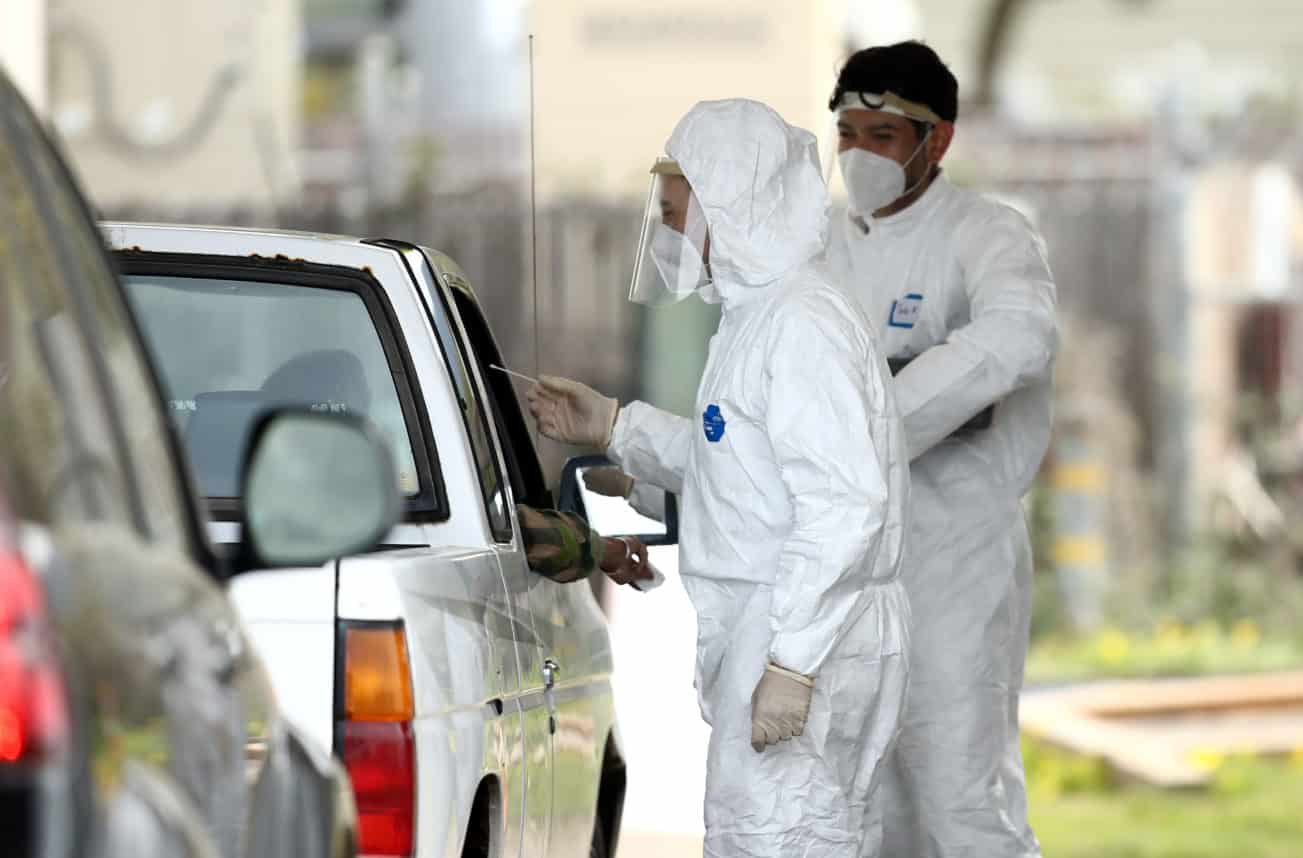
A medical professional administers a coronavirus (covid-19) test at a drive thru testing location conducted by staffers from University of California, San Francisco Medical Center (UCSF) in the parking lot of the Bolinas Fire Department April 20, 2020 in Bolinas, California. (Photo by Ezra Shaw/Getty Images)

“The importance of Israel to me has grown exponentially during these times as I realize how lucky we are as Jews to have a second place to call home in the event of a disaster or pandemic like COVID-19,” he said, noting Israel’s quick and aggressive response to the virus, which many around the world have praised.

Leena Demers, a Masa fellow from New York City, is interning at an Israeli company through Aardvark, a program that brings gap-year students for immersive experiences in Israel.

“I’ve decided to stay in Israel for the rest of my gap year because New York is really bad and I would much rather be with the friends I’ve made here than be home and do nothing,” Demers said.

“Being in Israel during this pandemic means that I am pushing myself to new limits that I didn’t even know I could go to,” she said. “I’m still working with the company I interned at, just small things that they need me to do for social media and contacting other companies. I’m trying to make the best of my situation every day by keeping busy in the house and hanging out with friends that live in my building.”

One of the most remarkable stories among the Masa fellows who have remained in Israel is that of Lida LeVine.

Born in Siberia, LeVine grew up in a difficult family situation, including parental alcoholism and abuse. At the age of 6, she was placed in an orphanage, and at 7, was adopted by a Jewish family from Tampa, Fla.

LeVine developed a strong connection to Judaism and Israel, which she first visited in 2004. Today, she is teaching English to Israeli children in the southern Israeli city of Ashdod.

“I have had an incredible experience teaching English to children in Israel,” she says. “I decided to stay during the pandemic because this is the perfect time to show what I can do. This a time the children need our support most. I have grown close with my classes and have seen them progress so much, that it would feel a waste to leave them now.

“We have switched from classroom learning to online learning,” she said. “It has been a learning process for myself as well. I create worksheets, Quizlets, and even make videos for the children. We want them to keep progressing, so we continue just as we would if we were back in the classroom.

“I have always loved Israel, and watching the country come together during this difficult time shows just how beautiful and special this place really is,” she said. “I’ve been given an incredible opportunity and wouldn’t give my time up!”

CORRECTION: The official program is IGF and not Masa IGF. An earlier version of the story labeled the program as Masa IGF. 


Benjamin Raziel is an Israeli journalist and novelist, based in Tel Aviv. 

Thousands of American-Jewish Exchange Students Decided to Stay in Israel During Pandemic Read More »
Even After Laying Off 190 Employees, This Dental Lab Executive Is Donating 3-D Printed N95 Masks

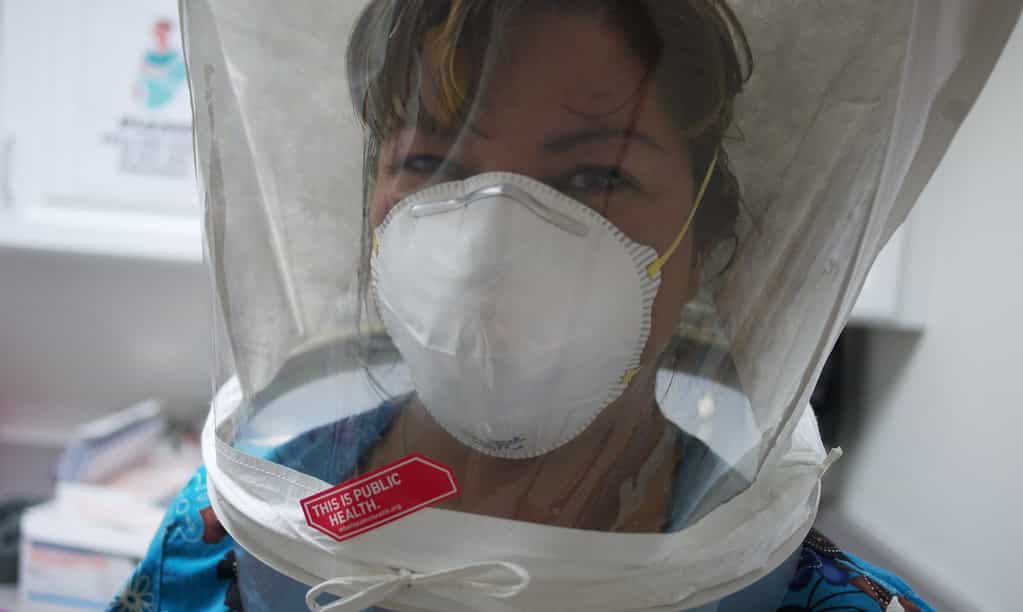
Andrew Sedler is the chief operating officer at Burbank Dental Lab. Although the pandemic has forced the lab to reduce its staff from 200 people to 10, it still is treating emergency cases. When the staff isn’t handling such cases, it’s making N95 masks to donate to medical personnel.

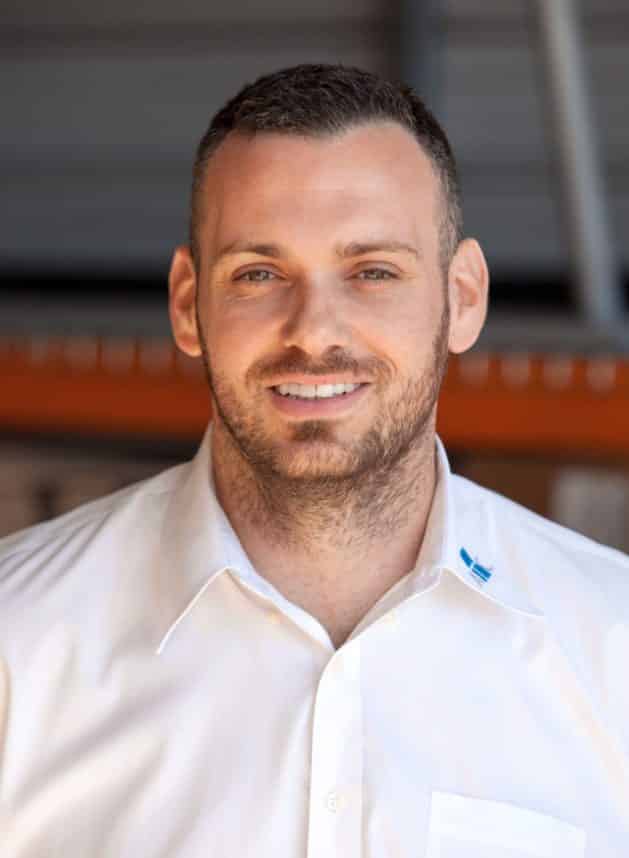
Andrew Sedler

Sedler told the Journal he spoke with a Cedars-Sinai Medical Center worker who told him she “was given only one N95 mask for the week. She was crying as she was headed to work telling me this.”

The lab is using 3-D printers and material from Pennsylvania to create both medium and large reusable masks with filters. “This mask is like a pair of glasses, it’s like a pair of shoes,” Sedler said. “You use it until it breaks.”

He added that the masks will not degrade if you use disinfectant on them, and estimates the masks can last up to a year. To date, the lab has produced around 800 masks, which have been donated to myriad hospitals in the Los Angeles area, including Cedars-Sinai and Children’s Hospital Los Angeles, as well as a couple of hospitals on the East Coast.

 “I want to teach my son what tzedakah is. I want to be a role model to my own son.” — Andrew Sedler

“Any feedback we’ve had has generally been very positive,” Sedler said. “The only negative feedback we had is communicating through the mask. You kind of have to stand next to the person to hear what they’re saying. But other than that, people are saying, ‘Thank you and we’re very comfortable now [in] being able to do our job because you’re not going to inhale the virus.’ ”

Sedler said that he goes into the lab on Saturdays and Sundays to continue the production of the masks. “I want to teach my son what tzedakah is,” he said. “I want to be a role model to my own son.”

Even After Laying Off 190 Employees, This Dental Lab Executive Is Donating 3-D Printed N95 Masks Read More »

What It’s Like Treating Immune-Compromised Patients During COVID-19

The beginning of COVID-19 pandemic marked a 180-degree change in my role as a pharmacist at UCLA Health. Patients who were once coming in, receiving their medications and patient consultations, were encouraged to stay home and skip their doctors appointments, thus resulting in them not receiving their medications.

My current patient population here happens to be those that have had a recent lung, liver, heart or other type of organ transplant. For this reason, about 90% of the patients I see and talk to each day are categorized in the immune-compromised group.

“[Transplant] patients are at extremely high risk of infection, as their immune system is already at an all-time low. My passion has been to help these patients as much as possible, and with the COVID-19 pandemic, I have had to ponder ways to make it safe and easy for them to receive their medications.” — Nicole Lavian

These patients are at extremely high risk of infection, as their immune system is already at an all time low. My passion has been to help these patients as much as possible, and with the COVID-19 pandemic, I have had to ponder ways to make it safe and easy for them to receive their medications. Mail order service is now being provided, along with virtual consultations, whether it is via Skype, FaceTime or simply over the phone. Patients no longer need to leave their homes and put themselves at risk. This truly goes without saying: “We came to work for you, please stay at home for us!”

My motivation is knowing that I wake up each morning and am able to help someone in need. Most importantly, I am able to put a smile on someone’s face. I am grateful for everything I do and for those I can help each day.

What It’s Like Treating Immune-Compromised Patients During COVID-19 Read More »

This Clinical Psychologist Is Offering Free Counseling to Essential Workers

After clinical psychologist Niaz Khani saw her patients’ lives uprooted by the coronavirus pandemic, she started to offer free therapy to essential workers.

Khani, who has a private practice in Los Angeles, also runs the mental health program at Los Angeles’ Pierce College.

“After the shutdown began, we started working remotely and got a HIPAA-compliant video-conference set up,” Khani told the Journal. “Fortunately, we began seeing clients we already had. Since then, we’ve had lots of new clients reach out to us for therapy, to find ways to cope with the stress and adjust.”

She added, “I wanted to give something back to the essential service providers who are still going out and exposing themselves on a daily basis to the virus. So I started offering them free sessions.”

Ten free sessions per essential Californian worker, to be exact, via video conference. She said she already has had an enthusiastic response from patients and other psychologists who see it as a meaningful way to give back.

“I wanted to give something back to the essential service providers who are still going out and exposing themselves on a daily basis to the virus. So I started offering them free sessions.” — Niaz Khani

According to Khani, the mental health challenges essential workers are facing are unique, particularly because they have to go to great lengths to avoid infecting their families. “Going out and risking exposing themselves and going home where there are other additional restrictions like having to isolate themselves brings up loneliness, feelings of [being] overwhelmed, stress, panic,” she said. “There’s lot of pressure and maybe guilt [over] being out there providing for others, and in some ways not being as available to their own family members and partners because they have to be more careful and cautious.”

She added that although she’s treating patients going through the pandemic while she, too, is going through the pandemic, it actually brings her comfort.

“I find that even when people are feeling alone, you can offer another perspective or say, ‘I’m also in this,’” Khani said. “It’s not making it hard but normalizes it in a weird way.”

This Clinical Psychologist Is Offering Free Counseling to Essential Workers Read More »

Remembering Israel’s Fallen Heroes Virtually on Yom HaZikaron

Every year on Yom HaZikaron (Israel’s Remembrance Day), Israelis are united under a shroud of mourning, honoring those who died to ensure the independence of Israel and the safety of its citizens.

This year especially, all around the world, ceremonies won’t be held due to COVID-19, making it even more challenging to honor fallen heroes.

Photo by Ari Bronstein

Yashar LaChayal and Helping Israel Fund have partnered to create a platform that allows  all of Israel’s fallen to be remembered.

“Remembering Israel’s Fallen” is a project that matches each participant with one of 23,740 men and women who fell in Israel’s defense, so not a single soldier is forgotten. As the memorial siren wails in Israel, candles will be lit and prayers will be said around the world in a campaign of unity and remembrance.

Photo by Ari Bronstein

Every participant will be emailed a certificate with the unique name of one of Israel’s fallen, and it will be his or her privilege to remember that soldier on Memorial Day. On Israel’s 70th Memorial Day, join in remembering those who gave so much and for the State of Israel.

In addition to the meaningful campaign, participants can choose to donate to the “Bereaved Family Fund” which provides various forms of support to financially disadvantaged family members of fallen soldiers. In the past, the organization has sponsored groceries during the holidays, household appliances, furniture, and other types of assistance for bereaved families.

Yom HaZikaron 2020 in Israel will begin in the evening of Monday, April 27 and ends in the evening of Tuesday, April 28.

Remembering Israel’s Fallen Heroes Virtually on Yom HaZikaron Read More »

Toronto Synagogue Service Zoombombed, Garage Vandalized With Anti-Semitic Graffiti

Recent reports of Zoombombing and anti-Semitic graffiti have emerged from Toronto.

Canadian Broadcasting Corp. (CBC) News reported on April 26 that Shaarei Shomayim’s April 19 service held on the Zoom platform was disrupted with anti-Semitic messages such as “Hitler was right!”

Rabbi Chaim Strauchler told CBC News that the Zoombombing was traumatizing and pointed out that nearly all of the 20 people on the Zoom call left when the disruption occurred.

“On that call, there was a great grandmother who never experienced an anti-Semitic incident before in her life,” he said. “On that call there was a Holocaust survivor who didn’t know what happened, didn’t know what was going on. There was a bar mitzvah boy, a 13-year-old young man, who was also on that call.”

Zoombombing is the unwanted audio and/or video intrusion by one or more individuals, often containing offensive content, that causes a disruption during a session.

Strauchler said that the synagogue has since changed its Zoom settings so all participants will be screened in a waiting room before the host lets them join.

Friends of the Simon Wiesenthal Center president and CEO Avi Benlolo condemned the Zoombombing in an April 24 statement.

“As the coronavirus pandemic brings more people online, we are seeing a disturbing trend called Zoombombing gain popularity,” he said. “What is very concerning is that Jewish groups and synagogues holding online services have been especially targeted by anti-Semitic Zoombombers who are exposing members — young and old — to such hateful and vile messages and images.”

Benlolo added: “Just like we have seen an increase in physical violent attacks on synagogues, we are now seeing an increase in online attacks, so we urge for more safety precautions to be taken during these times.”

On April 25, the Toronto Star reported that the words “Blame the Jews!” was found on a person’s garage in the west end of Toronto sometime during Passover; the graffiti likely blamed Jews for the COVID-19 pandemic. Additionally, on April 9, graffiti stating “Zionists are not welcome” was found on an Aroma Espresso Bar in downtown Toronto.

B’nai Brith Canada released a report on April 27 finding that there was an average of more than six anti-Semitic incidents occurring a day in Canada in 2019. There were 2,207 total anti-Semitic incidents in Canada that year, an 8% increase from 2018.

“These figures, and the brazenness of the incidents we are seeing, would have been unthinkable just a few short years ago,” B’nai Brith Canada CEO Michael Mostyn said in a statement. “Instead, they have become a loathsome reality in this country.”

Toronto Synagogue Service Zoombombed, Garage Vandalized With Anti-Semitic Graffiti Read More »

Cedars-Sinai ER Director: Emergency Patients Are Afraid to Come to Hospital Due to COVID-19

Dr. Sam Torbati’s role as a frontline health care worker during the coronavirus crisis has been made much more manageable thanks to the support of his community.

“The outpouring of support from people who want to feed us. … I don’t know if it’s a Jewish thing or a human thing, but everything is much easier to tolerate when your stomach is full,” the co-chair and medical director of Cedars-Sinai Medical Center’s Ruth and Harry Roman Emergency Department told the Journal.

Torbati said his workday has taken on a different rhythm since the outbreak of the coronavirus. There has been an urgent need for medical professionals to wear personal protective equipment (PPE) when treating patients.

“We have to be careful,” Torbati said. “We’re very cautious in terms of the PPE we wear. As we’ve gotten more used to interacting with patients who have COVID-19, we’re continuing to come up with new processes that are more patient-centered to make it less traumatic for them. You go into battle now and you need to make sure you have your armor. Before, we did not have to wear armor.”

Responding to the coronavirus outbreak, Cedars-Sinai set up three surge tents “to take care of patients that are not terribly sick but need to evaluated,” Torbati said, while the emergency medical department continued to “take care of patients both critically ill and other patients who need our help.”

“The outpouring of support from people who want to feed us — I don’t know if it’s a Jewish thing or a human thing, but everything is much easier to tolerate when your stomach is full.” — Dr. Sam Torbati

Torbati admitted the consequences of the disease have been frightening and witnessing the separation of patients from their families has been emotionally draining, but he added the significant number of COVID-19 patients who have recovered has been encouraging.

“Our job is to alleviate suffering and prolong life and cure disease when possible. Until we have more treatment options, our hands are a little bit tied. I am reassured by many of the patients who come in critically ill but get better,” he said.

While Cedars continues to treat COVID-19 patients, Torbati said they are still treating other patients. “One of the things we noticed both in our department and nationally is patients appear to be afraid to come to the hospital when they have potentially true emergencies. We’re concerned if they are too afraid, they could have bad outcomes. We want people to understand Cedars is fully operational and there are separate areas that will take care of them. One big message to the community is if you need us, come in,” he said. “Don’t be afraid.”

Cedars-Sinai ER Director: Emergency Patients Are Afraid to Come to Hospital Due to COVID-19 Read More »

Biden Marks Poway Synagogue Shooting Anniversary with Plan for Increased Protections for Jews and Others

WASHINGTON (JTA) — Former Vice President Joe Biden marked the one-year anniversary of the deadly shooting at a synagogue in Poway, California, with a proposal to add protections for Jews and other targets of hate attacks.

“These are acts of terrorism, plain and simple,” Biden said Monday in a statement to the Jewish Telegraphic Agency. “They are bound together by the common thread of perpetrators using fear and violence to undermine individuals’ ability to freely exercise their faith.”

Biden’s three-point plan would increase the $90 million the Department of Homeland Security now hands out for securing nonprofit institutions by “multiples.”

“Upon taking office, Biden will convene the faith-based community with DHS to identify an appropriate funding allocation,” said the plan attached to Biden’s statement.

The plan’s second point would make prosecuting hate crimes a priority for the Justice Department and would seek legislation that increases penalties for attacks on religious institutions. Hate crime legislation already increases penalties for crimes committed with a motive of racism or prejudice.

The third point is a proposal to convene faith communities to consider “whole of society” reforms that would address hate attacks, including improving information sharing among law enforcement agencies, improving mental health care as a means of inhibiting the violence and demanding that “social media and technology platforms do more to root out toxic extremist content.”

Biden, now the presumptive Democratic nominee for the presidency, likened the plan in his statement to his proposals to reduce gun violence should he be elected. He also said President Trump bore responsibility for the spike in violent attacks.

“He has fanned the flames of bigotry and racism for political gain, and made a moral equivalence between those perpetuating hate in our country, and those standing against it,” Biden said.

Trump equivocated in condemning the neo-Nazi perpetrators of deadly violence in Charlottesville, Virginia in 2017, but has since condemned anti-Semitism. His administration has rolled back programs tracking white supremacists and then restored some of them.

Trump last year signed an executive order tackling anti-Semitism, but it has been employed since then in tackling leftist anti-Israel activity on campus.

Biden Marks Poway Synagogue Shooting Anniversary with Plan for Increased Protections for Jews and Others Read More »

Coronavirus is Exposing Inequalities in Education, Explains ADL Webinar

The Anti-Defamation League (ADL) held a webinar April 23 discussing the state of online education during the COVID-19 pandemic.

ADL CEO Jonathan Greenblatt hosted the webinar with Jim Steyer, the CEO and founder of educational advocacy nonprofit Common Sense Media. Steyer argued, “There is a huge inequality divide in the United States around education,” noting it was particularly stark when it comes to online education, as 15 million children don’t have internet access at home.

“The good news is that the COVID-19 epidemic … is laying bare the reality that poor kids don’t have the same opportunities as the Steyer kids and that’s not right,” Steyer said.

He went on to say the key to online education has three components: a tablet or a laptop, access to Wi-Fi or broadband connectivity, and quality educational content online. Most teachers don’t know how to teach classes online, Steyer said, which is why Common Sense launched a new website titled WideOpenSchool.org on March 31.

The Wide Open School site curates content resources for teachers and families transitioning to online learning. “We need to understand not just math and reading and science, but the other issues we run into in a 24/7 digital universe,” Steyer said.

Among the resources featured is content from National Geographic, Scholastic and the Khan Academy. Steyer said there are thousands of schools in the United States that aren’t currently offering any sort of online classes for their students, so Wide Open School provides those students with a daily schedule.

Screenshot from YouTube/Anti-Defamation League.

The schedule features “everything from ‘here’s how you can learn geography or history or math or whatever’ to fun live events,” Steyer said. On April 3, the site hosted a webinar with Bill Gates discussing science and climate change.

Steyer added the schedule also encourages children to exercise every day.

“You want [children] to have a normal, healthy day, even though we’re all cooped up inside,” he said.

Steyer also predicted education will never be the same after the pandemic ends. “Many more students are going to be using platforms like [Zoom] to supplement their day-to-day classroom activities,” he said, adding people are “going to realize the potential of this platform, if used wisely.”

“The good news is that the COVID-19 epidemic … is laying bare the reality that poor kids don’t have the same opportunities as [rich] kids, and that’s not right.” — Jim Steyer

He then discussed the issues of cyber harassment and cyberbullying, particularly when it comes to Zoombombing. “We see people interrupting Zoom conferences with hate-filled messages, with racist messages, with anti-Semitic messages, so it’s just bringing to the [forefront] the fact that the medium of the internet … can be subject to harassment,” Steyer said, adding there has been a rise in misinformation and hate during the pandemic.

“We’re seeing it even in some of the demonstrations across the county about reopening the country while people are still dying of COVID-19,” he said. “So it’s a great opportunity for the ADL and Common Sense to partner and educate the public.”

Common Sense Media CEO and founder Jim Steyer. Screenshot from YouTube/Anti-Defamation League.

On the issue of children learning how to socialize, Steyer said, “In this particular period, we have to use technology for social interaction, but the one thing I don’t want people to think is that in the long run, there’s any substitute for interpersonal interaction,” he said.

Steyer believes platforms such as Zoom are the best way to communicate with other people during the pandemic because “you can see the other person … . I always think that’s better than the anonymity of text messaging.”

Steyer has been urging major tech companies to ensure families who are struggling financially have a device and internet access so everyone has the opportunity for a quality education online. “I think we will give every kid the opportunity to learn at home during this crisis,” he said. “And if we don’t, shame on the country.”

Coronavirus is Exposing Inequalities in Education, Explains ADL Webinar Read More »

Israel Is Not Normal

Let’s face it. Israel is not a normal country.

We cut each other off on the highway, but will help a total stranger carry her baby carriage onto the bus.

We will steal your parking space at Azrieli, but will pay for your coffee when you’re five shekels short.

We scream at our neighbor because her dog peed on our lawn, but we will be the first over with a basket of food when her mother dies.

We cheat on our taxes, but give to charity.

We litter in the park, but plant trees.

We draw lines, but reach across them.

We are cynical. We are optimists.

We can be jerks. We can be brash. We can be rude but we will bring down joy with tambourines and timbrels, and we will join hands and dance the hora with total strangers.

And remember this — today and all days: We have all grieved over someone killed horrifically and violently – a parent, or a lover, or a friend, or neighbour, or God forbid, a child. And this place is so small, so close, so fraught that even if we haven’t felt it touch our flesh, we feel it, and you can see it in our eyes when the news broadcaster announces “a bus has blown up in Talpiot.” “There has been a car ramming at Pisgat Ze’ev.” There has been a shooting in Tel Aviv.” “A young girl was stabbed to death in her bedroom in Kiryat Arba.”

And we take it very personally.

This isn’t a headline or a sound bite for us.

These are the people we sat next to on the train this morning, or jostled in line with at Aroma. They sat shivah with us at our uncle’s funeral three months ago. They danced with us at our cousin’s wedding last May.

And we keep our phones on all the time just in case, and as soon as the news hits that something terrible has happened, we call, we text and we hold our breath and our heart stalls in our chest waiting for a response.

And every time we relax just enough to breathe a little, it hurts so hard in that space beneath the ribs until we are afraid to breathe again too deeply.

And it’s like this every single time.

And it’s true, we are a strong and mighty nation, but we have never known a day of peace since we came into being – and that fear does something to us and you can see it on the roads and in our lines and in our homes and when we vote.

We are PTSD-riddled, angsty, angry, handwringing, nail biting people.

But still, we stay out all night and swim in warm sea water, or argue with our friends on crowded corners, or drink whiskey until sunrise, or dance until our feet hurt and then stop for a minute and keep on dancing. We choose life with our arms and eyes wide open.

We are full to brimming.

We are not a normal country.

We are in pain at times, but joyful still. We make mistakes and struggle and defend. But we keep on moving on that spiral through history — a beautiful and messy work in progress — and we are a miracle.


Sarah Tuttle-Singer is the new media editor at The Times of Israel and the author of “Jerusalem, Drawn and Quartered: One Woman’s Year in the Heart of the Christian, Muslim, Armenian, and Jewish Quarters of Old Jerusalem.”

Israel Is Not Normal Read More »