fbpx

January 27, 2020

House Overwhelmingly Passes Holocaust Education Bill

The House of Representatives overwhelmingly passed a bill providing funding and resources for schools to provide Holocaust education throughout the country.

According to a press release from Rep. Carolyn B. Maloney (D-NY), one of the leading co-sponsors of the Never Again Education Act, the bill allocates $10 million over a five-year period toward programs providing training for teachers on the matter as well as expanding the U.S. Holocaust Memorial Museum’s website that provides the relevant curriculum and course materials.

The bill passed with 393 votes in favor and five against, according to Hadassah.

“I can think of no better way to honor the memories of those murdered in the Holocaust than to make sure our students know their names & their stories,” Maloney tweeted.

Jewish groups praised the bill’s passage.

“We are pleased that the House has taken action today, on International Holocaust Remembrance Day, to ensure that the lessons of the Holocaust will be passed from one generation to the next,” Anti-Defamation League CEO Jonathan Greenblatt said in a statement. “We look forward to this law’s swift passage and to working closely with teachers and districts across the country to ensure that Holocaust education is uniform and consistent across the country.”

American Jewish Committee Los Angeles Regional Director Richard S. Hirschhaut told the Journal in a phone interview, “We are thrilled to welcome the overwhelming support for this essential and ever timely Holocaust education bill. Holocaust education can be a powerful antidote to hate and anti-Semitism in our world today.

He added: “I have witnessed firsthand the power of the connection that between a Holocaust survivor and a young person. It is genuine and it is enduring. The more Holocaust education we can bring to people across America, the better opportunities we have for understanding and empathy.”

Hadassah, the Women’s Zionist Organization of America CEO and Executive Director Janice Weinman and National President Rhoda Smolow similarly said in a joint statement, “It is imperative that we make every effort to push back against the hatred, bigotry, anti-Semitism and extremism fueling violent attacks – and the best way to do that is by passing the Never Again Education Act. Improving the availability and enhancing the quality of Holocaust education is within our reach. Educators deserve our full support in their efforts to instill its universal and timeless lessons in every generation.”

They urged the Senate to follow the House’s lead and pass the bill.

Christians United for Israel (CUFI) Pastor and Co-Founder John Hagee also said in a statement, “Combatting the rise of anti-Semitism sweeping across the country is a top CUFI priority, and one of the fundamental ways in which we can combat this scourge is through education. Sadly, Americans know far too little about the Holocaust, and such ignorance enables anti-Semitism to rear its ugly head. We must ensure the next generation understands the history and horrors of anti-Semitism and this legislation is a solid step in that direction.”

A Pew Research Center poll published on Jan. 22 found that 45% of American adults know that six million Jews died during the Holocaust and 43% of American adults know that Adolf Hitler rose to power in Germany through the democratic process.

High school student Jack Elbaum wrote in a Jan. 23 op-ed in The Forward that the Pew numbers highlight the need for better Holocaust education in the country.

“Considering the obvious lack of adequate education on Jewish history, why would we be surprised when anti-Semites assault Jews on the streets of New York, go on a stabbing rampage in a Rabbi’s house in Monsey or shoot-up a synagogue in Pittsburgh or Poway?” he wrote. “Isn’t it a predictable outcome of years of ignoring our history? Education may not be the final step, but it sure is an important first one.”

House Overwhelmingly Passes Holocaust Education Bill Read More »

US Will Contribute $2 Million to Auschwitz-Birkenau Foundation

(JTA) — The United States will contribute $2 million to the Auschwitz-Birkenau Foundation, Secretary of State Mike Pompeo announced on International Holocaust Remembrance Day.

The contribution, in coordination with Congress, is in addition to the $15 million provided by the United States to the foundation over a five-year period that ended in 2018, according to a statement issued Monday.

“This funding demonstrates our commitment to Holocaust education, remembrance, dialogue, and research,” the statement said.

The statement called on other countries to join in supporting the Auschwitz-Birkenau Foundation.

Jan. 27, observed as International Holocaust Remembrance Day, this year marks the 75th anniversary of the liberation of Auschwitz.

“We firmly believe it is humanity’s duty to honor Holocaust survivors, guard the memory of Holocaust victims and all other victims of Nazi persecution, and fight back against anti-Semitism, and attempts to ignore and revise history,” Pompeo said in the statement. “We urge all to take active steps to make sure the horrors of the Holocaust are not repeated and future crimes against humanity are prevented.”

US Will Contribute $2 Million to Auschwitz-Birkenau Foundation Read More »

Second Swastika Found in Syracuse in Less Than a Week

A second swastika was found on the Syracuse University campus in the span of less than a week.

The Daily Orange student newspaper reported that the swastika was discovered on Jan. 24 in a men’s bathroom stall in the Marshall Student Union. The student union is where various classrooms, stores and restaurants are located on campus, according to The Daily Orange.

On Jan. 21, a swastika was found drawn on a table in the campus library. The perpetrator in that instance was discovered and referred to the university’s Office of Student Rights and Responsibilities.

Anti-Defamation League New York/New Jersey tweeted that it was disturbed about the second swastika but thankful that a perpetrator was found in the Jan. 21 incident. “#Swastikas are deeply offensive and hurtful to #Jews and other minorities,” they wrote. “We expect appropriate action [to be] taken.”

There have been 22 instances of anti-Semitic and racist incidents at Syracuse since the beginning of November, according to The Daily Orange. One of the instances was a swastika drawn in the snow across the street from an apartment building where myriad students reside.

New York Gov. Andrew Cuomo, a Democrat, criticized the Syracuse administration’s handling of such matters in November.

“They have not been handled in a manner that reflects this state’s aggressive opposition to such odious, reckless, reprehensible behavior,” Cuomo said. “That these actions should happen on the campus of a leading New York university makes this situation even worse.”

Second Swastika Found in Syracuse in Less Than a Week Read More »

The Day Kobe Bryant Died

My two worlds collided on Sunday, Jan. 26, a day that will surely live in L.A. infamy. It was right before noon, and I had just finished moderating a panel on anti-Semitism at the Z3 Conference at Stephen Wise Temple.

I knew something was up from the first text I got, which simply said: “KOBE BRYANT!!!”

Since he’s no longer playing, I thought, this cannot be good.

Sure enough, as I was milling around a little sea of Jews who had come to discuss the future of Zionism and some of the challenges facing the Jewish world, the news hit me with the second text, and the third, and the fourth.

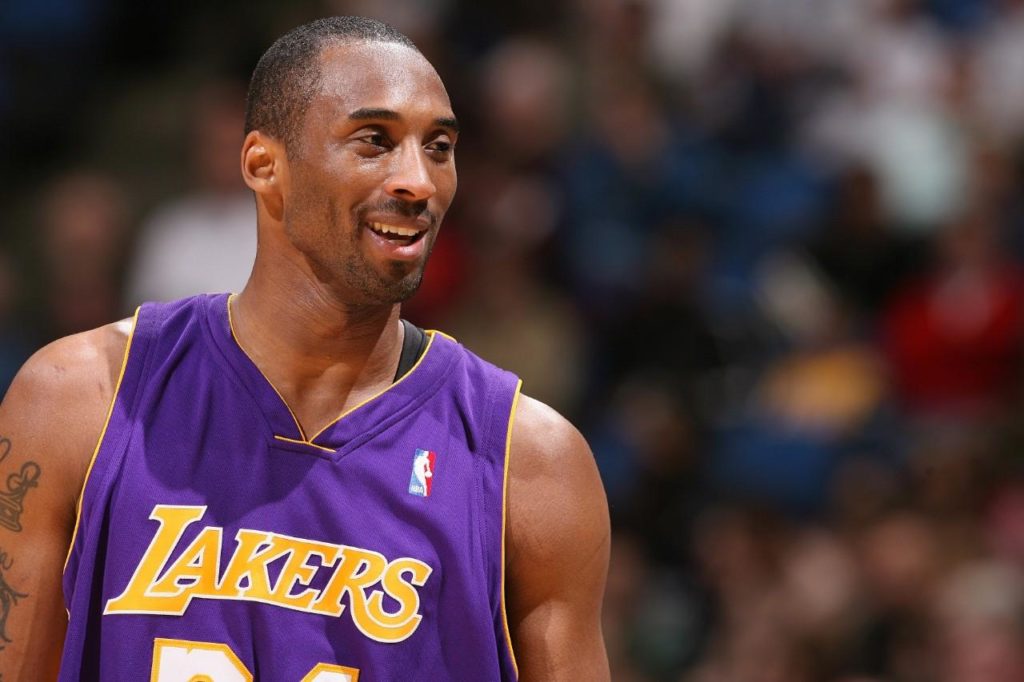
Kobe Bryant, a virtual member of my family from the day he joined my beloved Lakers 24 years ago, had perished in a helicopter crash, on a foggy hill not far from where I was standing.

I got dizzy. My mind started racing. Should I go to a quiet corner and cry? Should I call my son in Israel who adores Kobe? Should I seek out more information on the crash?

I was surrounded by people I hadn’t seen in years. I was looking forward to reconnecting with them. As the news of Kobe’s death flooded my brain, I had to click on that other part of my brain that says: “You must look happy and schmooze, no matter what.”

I’ve had plenty of practice doing that — no matter how dark the thoughts in my mind, if I’m at a public event, I’ve learned to smile and fake it so as not to dump my darkness on others.

I got dizzy. My mind started racing. Should I go to a quiet corner and cry? Should I call my son in Israel who adores Kobe?

It was harder to do that on Sunday, but I tried.

The afternoon turned into a blur of love and darkness. I was loving the depth of conversation on so many Jewish issues that mean so much to me, but Kobe’s death kept assaulting me. And I was thinking about my son in Israel, who wasn’t answering his phone. 

The Lakers have always represented for me a kind of ultimate “safe space.” When I moved to L.A. in the early 1980s, way before I had kids, the Lakers became my brightest and proudest connection to my new town. They boosted not just my mood but my civic pride. When I went to games, I could experience, like nowhere else, the cultural kaleidoscope of this great city.

As I got more involved with the Jewish world and had to comment on things like wars and terrorism and anti-Semitism and endless communal strife, the refuge provided by the Lakers became even more welcome. The incredible thing about sports, I would say, is that you get all the drama of the real world — conflict, fierce competition, tribalism, winners and losers — without anyone dying.

That sanctuary was also true in my family. No matter all the ups and downs in our lives, we could always count on the Lakers for moments of safe, enjoyable drama.

The death of Kobe pierced that safe space, especially for me and my son.

Kobe would always come up in our conversations. He had a work ethic, a drive to excel and an ability to overcome obstacles that we both admired and tried to emulate. Kobe was far from perfect, but he had the will to improve and get the most out of life.

Suddenly, this man of life who had so influenced our lives was gone. And finally, in the early afternoon, my son answered his phone. He had already heard the news. I had to go outside because I knew I might break down. 

The afternoon turned into a blur of love and darkness. I was loving the depth of conversation on so many Jewish issues that mean so much to me, but Kobe’s death kept assaulting me. 

Part of me wanted to protect him by looking strong, but it didn’t matter. I lost control. I was unable to click on the “fake it” part of my brain, so I just cried.

It was probably better that way. It was too early to share the coping mechanisms that help us function in times of loss (“He’ll live forever in our hearts” and so on). We both needed a moment of pure sadness to honor a man who had meant so much to us.

As the day wore on, the pain got even deeper as the news came of the other eight people who died in the crash, including Kobe’s daughter Gianna. By then, people at the conference were talking about the tragedy. A horrifically violent accident had interrupted a day of highly civilized thought and dialogue.

Maybe we don’t need to rush to draw lessons from dark episodes in our fragile lives. A human earthquake hit Los Angeles on Sunday, Jan. 26, that many of us will long remember, each for our own reasons.

Sometimes it’s enough to just stare at reality and cry.

The Day Kobe Bryant Died Read More »

Duchess of Cambridge Unveils Photo Exhibit of Survivors’ Families on Holocaust Remembrance Day

In honor of International Holocaust Remembrance Day, Britain’s Duchess of Cambridge unveiled a photo collection of four Holocaust survivors and their families. 

Known as Kate Middleton before her marriage to Prince William, the amateur photographer is Royal Photographic Society Patron and worked in partnership with Britain’s Jewish News and the Royal Photographic Society (RPS) in what will be part of a new exhibition opening later this year commemorating 75 years since the end of the Holocaust. 

In addition to the duchess, RPS Honorary Fellow Jillian Edelstein and RPS member Frederic Aranda also worked on the collection, which will include 75 photos in total. Other images featured in the exhibition will be taken by fellows of the RPS.

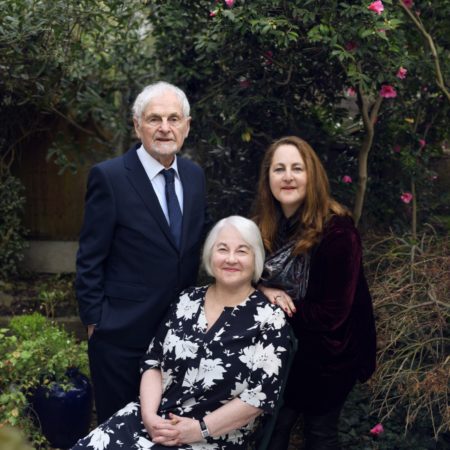
Photographed by Aranda, Joan Salter, 79, fled the Nazis as a young child. She is photographed with her husband, Martin, and her daughter Shelley. John Hajdu, 82, photographed by Edelstein, survived the Budapest Ghetto and was photographed with his 4-year-old grandson Zac.

Holocaust Survivor Joan Salter; Photo by Frederic Aranda.

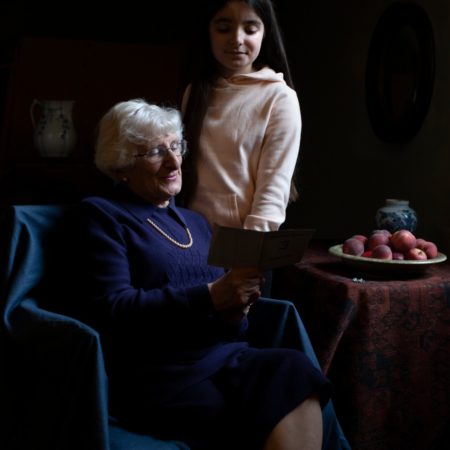
The duchess photographed Steven Frank, 84, and Yvonne Bernstein. Originally from Amsterdam, Frank survived multiple concentration camps as a child and was pictured alongside his granddaughters Maggie and Trixie Fleet, ages 15 and 13, respectively. Bernstein, originally from Germany, was a hidden child in France throughout most of the Holocaust. She is pictured with her 11-year-old granddaughter Chloe Wright.

“The harrowing atrocities of the Holocaust, which were caused by the most unthinkable evil, will forever lay heavy in our hearts. Yet it is so often through the most unimaginable adversity that the most remarkable people flourish,” the duchess said. 

“Despite unbelievable trauma at the start of their lives, Yvonne Bernstein and Steven Frank are two of the most life-affirming people that I have had the privilege to meet.  They look back on their experiences with sadness but also with gratitude that they were some of the lucky few to make it through. Their stories will stay with me forever. Whilst I have been lucky enough to meet two of the now very few survivors, I recognize not everyone in the future will be able to hear these stories firsthand. It is vital that their memories are preserved and passed on to future generations, so that what they went through will never be forgotten.”

Holocaust Survivor Yvonne Bernstein; Photo by The Duchess of Cambridge.

Speaking about the project, Frank said in a statement that although he hopes people enjoy the beauty of the photography, “they will also think of the people behind the photos and their families that they lost in the Holocaust.”

“I think it helped put into perspective that he’s just our Opa — he’s our grandpa as well as a Holocaust survivor,” Frank’s granddaughter Maggie said. “It’s important to tell the story so it doesn’t happen again.”

Alan Hodgson, president of the Royal Photographic Society, also commented on the importance of educating future generations on the Holocaust.

“These portraits provide a direct connection to those who were witnesses to the horrors perpetrated by the Nazi regime and, crucially, bring in their children and grandchildren who will be so important in ensuring that their stories and experiences remain relevant and real to contemporary society, Hodgson said.

Holocaust Survivor John Hajdu; Photo by Jillian Edelstein.

Jewish News Editor and Co-Publisher Justin Cohen, said, “Each of these striking photographs remind us of the strength of so many survivors in building new lives and families after coming face to face with evil, but also of the millions who were murdered and the many more millions of children and grandchildren who were never even born.”

He added: “With fewer and fewer survivors with us to relay their experiences, the work of the duchess and the other photographers will help ensure the truth is never forgotten, and its lessons for fighting hate today are brought to the fore.”

Duchess of Cambridge Unveils Photo Exhibit of Survivors’ Families on Holocaust Remembrance Day Read More »

Trump, Johnson Pledge to Fight Anti-Semitism in Holocaust Remembrance Day Statements

President Donald Trump and newly elected British Prime Minister Boris Johnson each issued statements on Jan. 27 commemorating International Holocaust Remembrance Day with vows to combat rising anti-Semitism worldwide.

In his message on the White House website, Trump paid tribute to the 75th anniversary of the liberation of Auschwitz.

“As we solemnly mourn those who were abused, tortured, or killed at Auschwitz and other concentration and extermination camps, we acknowledge the heroes who risked their own lives — many of whom made the ultimate sacrifice — to help liberate the camps,” Trump said. “Their sacrifices helped the forces of freedom prevail to ensure that these atrocious crimes will never be repeated.”

Trump then touted the executive order he signed in December to address anti-Semitism on college campuses.

“Anti-Semitism will never be tolerated, and this action bolsters my Administration’s efforts to create a culture of respect that deeply values the dignity in every human life,” the president said.

He concluded his statement with a call for prayer for Holocaust survivors and the families of those who perished during the Shoah.

“We ask that the world reflect on this day and seek to ensure that we stand united against intolerance and oppression of people of every race, religion, or ethnicity,” Trump said. “And, in order to ensure that these horrific crimes against God and humanity never happen again, we must resolve to combat evil and oppressive regimes with democracy, justice, and the compassionate spirit that is found in the hearts of all Americans.”

Johnson similarly wrote in an op-ed for the Jewish News that he admired Holocaust survivors for informing the world about their experiences in public forums even in their old age. He added that is important for the world to ensure that the horrors of the Holocaust are never forgotten.

“Even though the Shoah was a crime so unprecedented it required the creation of a new word — genocide — simply to describe it, its perpetrators wished for it to be left unnoticed by the history books,” Johnson wrote. “As the Red Army’s 322nd rifle division closed in on Auschwitz, retreating Nazis destroyed the gas chambers and crematoria in a desperate attempt to cover up their crimes. Despite their enthusiastic participation in the slaughter, they didn’t want the world to know what they had done.”

He warned that anti-Semites today are attempting to whitewash the Holocaust, and that it is imperative that they do not succeed.

“Speak to anyone who survived the Holocaust and they will tell you that it did not begin with the gas chambers or the pogroms,” Johnson wrote. “It began when anti-Semitic slogans were daubed on a Jewish shop window. When a Jewish child was abused on a bus. And when ordinary, law-abiding people chose to turn away and do nothing.”

Johnson concluded his op-ed with a pledge to preserve the memory of the Holocaust in order to prevent such horrors from occurring in the future.

“The government I lead will stand with you and fight alongside you so that the darkest of nights is never again allowed to fall upon the Jews of the world,” he wrote. “We owe those incredible survivors nothing less.”

Trump, Johnson Pledge to Fight Anti-Semitism in Holocaust Remembrance Day Statements Read More »

Vampire Weekend Wins 2020 Grammy for Best Alternative Album

(JTA) — The 2020 Grammys were overshadowed by the tragic news of the deaths of Kobe Bryant and eight others — including his 13-year-old daughter Gianna — in a helicopter crash earlier on Sunday. But despite the somber mood, the show went on.

The Jewish highlight came when Vampire Weekend, led by Jewish rocker Ezra Koenig, won best alternative album of the year. Koenig explored themes of Jewish identity on the album, “Father of the Bride.” Two of the music videos promoting tracks on the record were pretty Jewy, too — one was set in Jewish New York delis (and featured a Jerry Seinfeld cameo) and another included a Passover seder.

The Jewish singer Danielle Haim, of the band Haim, also was heavily featured on an album produced in large part by Ariel Rechtshaid, who has Israeli parents.

“Thank you. That’s it. Really. Thank you — and everybody else that’s not with us,” Koenig said in accepting the award. In his customary aggressively casual pattern, he wore sandals with socks.

Vampire Weekend’s previous album, “Modern Vampires of the City,” won best alternative album in 2013.

Vampire Weekend Wins 2020 Grammy for Best Alternative Album Read More »

Amar’e Stoudemire Wipes Away Tears Upon Hearing of Kobe Bryant’s Death

(JTA) — Former NBA standout Amar’e Stoudemire wiped away tears during a game in Israel upon hearing of the death of NBA legend Kobe Bryant in a helicopter crash.

Stoudemire was playing for Maccabi Tel Aviv against Hapoel Tel Aviv on Sunday when the news broke at the game of the accident in Southern California. The crash killed nine people, including Bryant’s 13-year-old daughter, Gianna.

“I don’t know what to say, man,” Stoudemire said. “I’m shocked, bro. I don’t know what to say. I don’t even want to believe it.”

Stoudemire played against Bryant, an 18-time All-Star who played for the Los Angeles Lakers for his entire 20-year career. His Suns and the Lakers clashed in the 2007-08 playoffs.

Fans at the Tel Aviv arena stood and applauded in tribute to Bryant, the fourth-leading scorer in NBA history, when news of his death was announced.

Omri Casspi, who also played against Bryant during a decade in the NBA and now is a teammate of Stoudemire’s in Tel Aviv, tweeted simply “speechless.”

A helicopter carrying Bryant and his daughter, along with seven others, crashed on Sunday morning in foggy conditions into a hillside outside of Los Angeles. There were no survivors.

Fans around the world mourned the death of Bryant, a five-time world champion who won the Most Valuable Player award in 2008.

Prime Minister Benjamin Netanyahu tweeted his condolences to Bryant’s family for the “tragedy,” calling him “one of the greatest basketball players in history.” Foreign Minister Israel Katz also tweeted  condolences from Israel “to his family and the NBA family.”

Amar’e Stoudemire Wipes Away Tears Upon Hearing of Kobe Bryant’s Death Read More »

Mike Bloomberg Brings a Biblical Fire to JCC Rally. But the Crowd Wants Details.

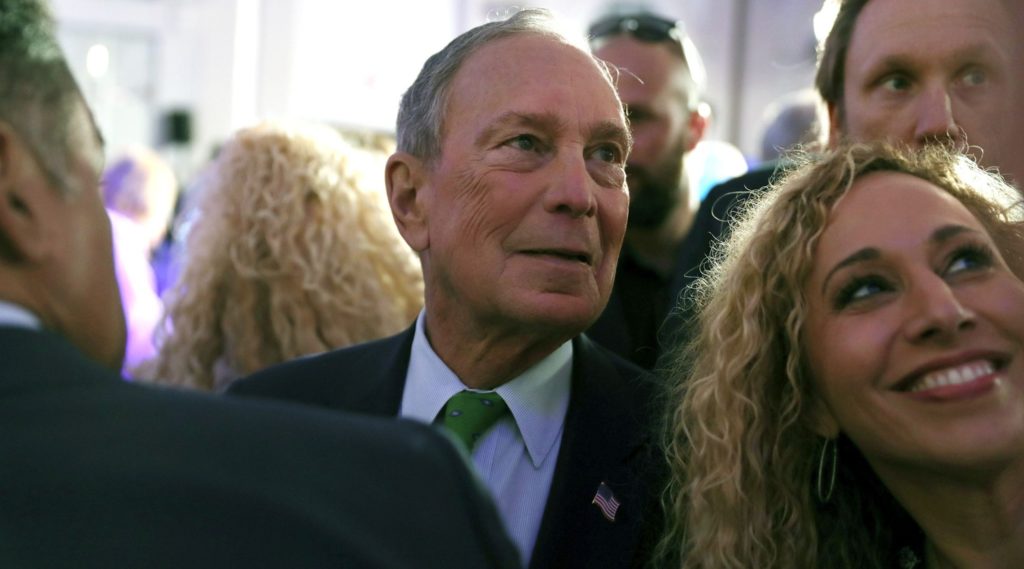
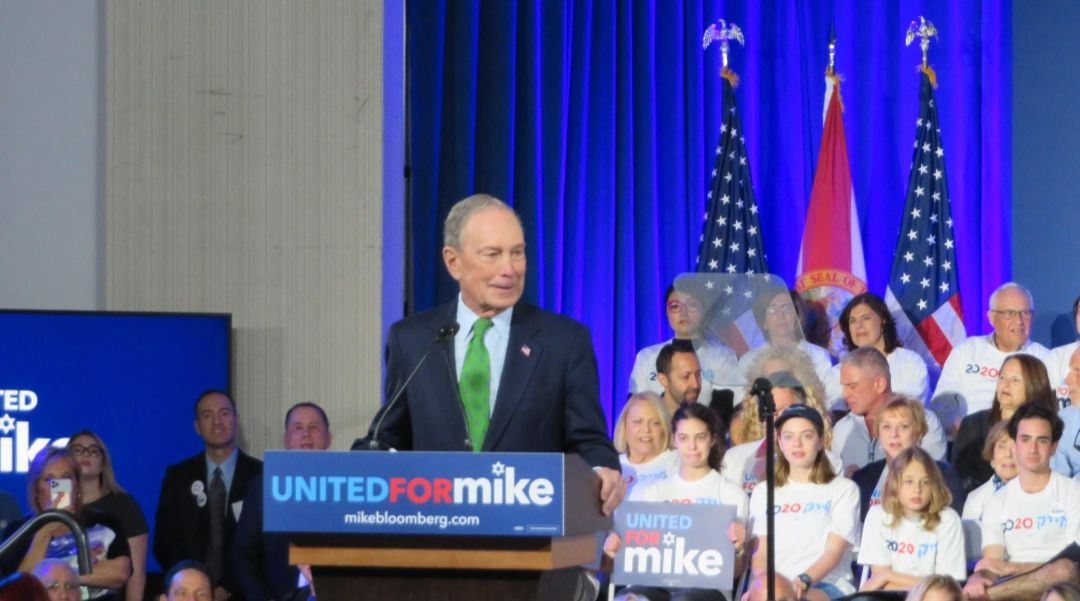
AVENTURA, Fla. (JTA) — Like the biblical Moses, Mike Bloomberg spoke to the Jews in grandiose terms, declaring that the nation was in peril and needed to be saved.

Bloomberg, however, was speaking at a Jewish community center in this Miami suburb to an audience of about 800 people seated on white folding chairs. And his message was that during this moment of national danger, Jewish Americans could help the United States rededicate itself to the rule of law — by electing Bloomberg over President Donald Trump.

“The Bible — and our history — teaches that there will always be a pharaoh who knows not Joseph,” the former New York mayor and billionaire media mogul said at the emotional height of his speech. “And in those times – in all times – we must depend on the rule of law and the guarantee that all of us are equal before it.”

His followers, wearing shirts emblazoned in Hebrew with “Mishpucha for Mike” or “Mike 2020,” ate up his words as eagerly as they picked at fresh-baked rugelach off small paper plates.

But they also wanted more — well, manna: What was Bloomberg’s economic message? How does he reach folks who are suffering in the heartland and voted for Donald Trump in 2016?

“This election is going to be campaigned by Republicans on the economy,” said Debbie Picker, who said she was pleased when Bloomberg announced his late entry into the race in November — but was frustrated at the lack of detail in his speech. “It’s important to remember that if you want to win.”

In chats with about a dozen supporters before the event started, the economy was the first thing that came up. The attendees did not highlight Bloomberg’s Jewishness, even though the event was held at the Aventura Turnberry Jewish Center.

Martin Rubenstein, a housing consultant, said he was “not thrilled” with the left-leaning Democratic candidates in the race like Bernie Sanders and Elizabeth Warren because they had not adequately explained how much their proposed health care overhauls would cost.

“I don’t know much about his policies,” Rubenstein said of Bloomberg. “I came because I want to know more.”

Sylvia Rosenwasser, 69, a Cuba native, said she was primarily there to see what Bloomberg had to say about preserving capitalism. Sanders’ purported socialism, she said, “makes my hair stand on end. I don’t want to lose another country.”

Instead of details, supporters heard soaring rhetoric and dire warnings about the dangers Trump posed to America. Abigail Pogrebin, the author who is his director of Jewish outreach, set the tone by implying that Trump’s presidency may have been friendly to the Jewish community — but not others.

Bloomberg, she said, is making “a promise to protect not only the Jewish people but every person who has felt prejudice shake the ground beneath them.”

It was a theme that Bloomberg picked up and delivered with a vengeance. He especially targeted right-wing Jews who favor Trump because of his substantive changes to U.S.-Israel policy and his closeness with Israeli Prime Minister Benjamin Netanyahu. Bloomberg in essence accused right-wing Jews of seeking the favors of a king rather than the protections of the Constitution.

“The United States – like Israel – is an expression of our deepest values,” he said. “And throughout our history, we have seen that the best guarantee of safety in this country is the rule of law, not proximity to the throne of the powerful.”

Bloomberg rolls out his Jewish campaign at a JCC in Aventura, Jan. 26, 2020. (Ron Kampeas)

Bloomberg said Trump posed a danger due to his divisive rhetoric and abusive policies — and implied that Jews were well placed to broadcast that warning to other Americans.

“When children are ripped from mothers at the border because their skin is darker, or when immigrants are denied entrance based on their religion or nationality, we hear history’s dark echoes – while others hear a dog whistle and become emboldened and empowered,” he said.

It was a message that resonated. Bloomberg earned his biggest and longest cheers when he said, “To me, there is no such thing as a ‘very fine’ white supremacist. I choose inclusion. I choose tolerance. I choose America.”

The reference was to Trump’s equivocations in condemning white supremacists following a deadly neo-Nazi march in Charlottesville, Virginia, in 2017.

Bloomberg said there was anti-Semitism on the right and the left, but Trump’s position of power made him the more potent threat.

Bloomberg’s hyper-Jewish messaging was notable at a time that another Jewish candidate, Sanders, also is emphasizing his background. Bloomberg once famously said he did not believe a Jew could win the presidency. Phil Levine, a former Miami Beach mayor, said that thinking was out of date, and just as African-Americans overcame similar skepticism to vote for Barack Obama, so, too, should Jews turn out for Bloomberg.

“We need as Jews to get that thought out of our mind!” Levine said. “A Jew can become president!”

Bloomberg twice referenced to the week’s Torah portion, which includes the account of the 10 plagues. Another speaker was Rabbi Joseph Telushkin, a best-selling writer on Jewish thought, who noted (as Bloomberg did multiple times) that the former mayor had visited Israel at the height of the 2014 war with Hamas in the Gaza Strip.

Even Bloomberg’s digs at Sanders were Jewish.

“I’m not the only Jewish candidate running for president,” he said. “But I am the only one who doesn’t want to turn America into a kibbutz.”

Bloomberg also jabbed at Sanders’ attacks on Netanyahu and his pledge to leverage aid to pressure Israel into concessions.

“I will never impose conditions on our military aid, including missile defense – no matter who is prime minister,” he said.

(All but one or two at the rally who spoke to JTA said they would vote for any of the Democratic nominees.)

Bloomberg’s ad blitz since he launched his campaign in November has purchased results: He is not in the lead, but is a distant fourth in some polls, which is notable for a late entrant. His ads emphasize his generosity, particularly in pushing back against the gun rights movement, and his record as a jobs creator as CEO of a media empire and then as New York mayor. He is paying $10 million to run an ad during the Super Bowl, a gambit that reportedly has spooked Trump.

Those who attended the JCC rally appreciated the messaging but also expressed concern that Bloomberg needed to do more to get into the field and press flesh like other candidates. A hefty portion of the room was very much like Bloomberg — in their 70s, trim and healthy, outspoken and still gainfully employed, and mindful of the nuts and bolts of getting a job done. Some expressed disappointment that he did not take questions. Instead, following a brief interaction with voters, his handlers hustled him off the stage.

“He’s got to get out!” said Adelaide Schiff, 77, a retired jewelry store owner.

Bloomberg, she said, could make an impact in middle America because “he doesn’t talk down to people. He comes alive.”

“Can he resonate with the red counties?” asked David Gray, 53, a publishing CEO. “How is he engaging?”

Mike Bloomberg Brings a Biblical Fire to JCC Rally. But the Crowd Wants Details. Read More »

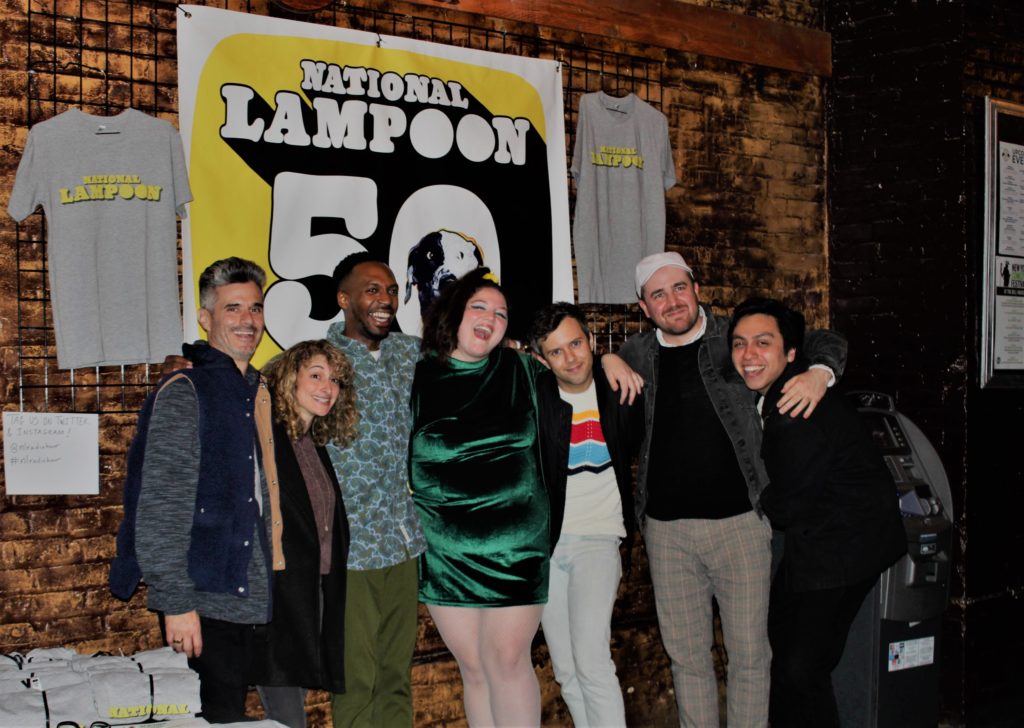
National Lampoon President Evan Shapiro On Finding Success as A Producer

When National Lampoon first released the “National Lampoon Radio Hour” in 1973, it broke ground in audio sketch and introduced a cast of fresh young talent that lit the world on fire: John Belushi, Chevy Chase, Bill Murray, Gilda Radner and Harold Ramis included. With the next decade, National Lampoon would also give the world “Animal House,” “Caddyshack” and the “Vacation” series of movies. Eventually, it would also help give starts to Conan O’Brien, Greg Daniels from the American version of “The Office,” and Al Jean from “The Simpsons,” beyond countless other comedy writers and producers.

National Lampoon relaunched the “National Lampoon Radio Hour” on Dec. 19 as a scripted podcast. Among the participating talent will within its first 11 episodes are lead writers Cole Escola (“At Home With Amy Sedaris,” “Difficult People”) and Jo Firestone (Adult Swim, “The Tonight Show”) and performers Maeve Higgins, Lorelei Ramirez, Rachel Dratch, Amy Sedaris, Chris Gethard, Julie Klausner and Jordan Klepper.

Evan Shapiro is notably the President of National Lampoon these days. Shapiro is an Emmy and Peabody Award Winner and has produced or created more than 150 television series, specials or documentaries, including “Portlandia” and “Comedy Bang Bang.” Shapiro is also a Professor for TV and Media at NYU/Stern School Of Business, and kindly took some time to answer some Q&As.

Darren Paltrowitz: What was your introduction to National Lampoon?

Evan Shapiro: As a kid? I read the magazine religiously. I heard the albums at JCC sleep-away camp. I watched the movies on a loop. Lately? I met my partners through a mutual friend and jumped at the chance to be a part.

DP: You yourself as are an Emmy-winner and a Peabody-winner with extensive production credits. But what was your first production credit that you really got hands-on with?

ES: In TV? I think it was Greg The Bunny at IFC. A puppet-comedy from the creative team behind the Oscar-nominated film “The Florida Project.”

DP: At what point did you realize that entertainment was going to be your trade for life? And that it wasn’t just fun to be working in entertainment?

ES: In 1982, when I watched “Nicholas Nickleby” on NBC over two nights, starting Roger Rees. That changed my life.

DP: Initially, did you want to be a writer or performer?

ES: Yes. I wanted to be a director. But when I started producing, I realized that was my true calling

DP: Are you working on anything besides being President of National Lampoon? Or does that get all of your time and attention these days?

ES: I am Executive Producing a YA project for Disney+ called “The Grimm Legacy,” about a fictional repository that houses real magical objects.

DP: When not busy with work, where does your free time usually go?

ES: Most of my free time goes into — in order — my family, teaching at NYU, mentoring a bunch of young people, and working with the American Theater Wing.

DP: As this is for the Jewish Journal, I feel the need to ask: When and where was your bar mitzvah? And did it have a theme?

ES: It was quite small. I was bar mitzvahed at Temple Emanuel in Cherry Hill [New Jersey]. We had lunch afterward. The theme was my hair, which was quite big at the time. Some things never change.

DP: Finally, Evan, any last words for the kids?

ES: People will tell you that the things you love can’t be your job. They’re wrong. The more you love what you do, the better you’ll be at it. Money is meaningless if you aren’t happy.

National Lampoon President Evan Shapiro On Finding Success as A Producer Read More »