fbpx

December 16, 2019

UK Government to Propose Anti-BDS Law

The newly-elected British government will focus on passing an anti-boycott, divestment and sanctions (BDS) law in the coming year, a government official said on December 15.

The Jerusalem Post reports United Kingdom Special Envoy for Post-Holocaust Issues Eric Pickles made the announcement during the International Institute for Strategic Dialogue conference in Jerusalem, explaining the law would prevent all government entities in the U.K. from working with those who boycott Israel.

“BDS is anti-Semitic and should be treated as such,” Pickles said.

According to the Post, the anti-BDS law will be mentioned during Queen Elizabeth’s December 19 speech announcing the installation of the new parliament.

The announcement comes after incumbent U.K. Prime Minister Boris Johnson’s Conservative Party defeated Jeremy Corbyn’s Labour Party in the December 12 elections, with the Conservative Party winning 368 of 670 seats. The Labour Party won 191 seats.

Corbyn’s Labour Party had been plagued with allegations of anti-Semitism, with at least 10 members of Parliament resigning in 2019; most of whom cited the rising anti-Semitism in the party as their reason for doing so. Following Labour’s defeat, Corbyn announced he would be stepping down from his position as Labour leader.

Similar laws have been passed in 27 states in the United States; such laws either bar state entities from conducting business with those who boycott Israel or prevent state pension funds from going toward those who boycott Israel.

UK Government to Propose Anti-BDS Law Read More »

Indiana University Fraternity Suspended Following Assault of 3 Jewish Students

Indiana University (IU) announced on Dec. 15 that the Pi Kappa Phi fraternity has been suspended after video footage emerged over the weekend of their members beating three Jewish students.

The video footage shows 11 men beating up the three Jewish students — all of whom are members of IU’s Alpha Epsilon Pi (AEPi) chapter — in front of a house on the evening of Dec. 13. The students suffered concussions from the incident.

IU’s statement, which was posted to Twitter, said that the fraternity is suspended until law enforcement’s investigation into the matter has been completed. It also stated that the university is aware of allegations that anti-Semitic slurs were used during the fight.

“Indiana University condemns bias or violence in any form and will hold individuals and organizations accountable,” the statement read. “Diversity and inclusion are core values that we expect to be shared among IU students.”

Pi Kappa Phi Assistant Executive Director of Communication Victor Tran told the Indiana Daily Student newspaper that the fight started after Pi Kappa Phi members tried to remove a person who was not invited to a fraternity party and his friends. The fraternity conducted an investigation and determined that anti-Semitism didn’t play a role in the fight, he added, noting that the party was co-hosted with another Jewish fraternity on campus.

“Pi Kappa Phi values diversity and inclusion and does not condone violence,” Tran said.

Indiana Hillel wrote in a Dec. 15 Facebook post, “We have confidence that the University is deeply concerned and takes this investigation extremely seriously. As we await more information and the outcome of the investigation, we are always here to support all Jewish students on campus and to promote Jewish life on campus.”

Indiana University Fraternity Suspended Following Assault of 3 Jewish Students Read More »

The 2019 Chuppah Gift Guide: What Every Jewish Couple Needs

Know a loved one who is getting married next year? Need a Judaica gift that’s special and meaningful? Look no further. Here are some gifts that will be sure to impress.  


Yair Emmanuel Seder Plate
For a Passover with a truly Israeli feel, spring for this colorful peacock seder plate. This hand-painted plate by Jerusalem-based artist Yair Emmanuel retails for $144. It comes with six matching bowls and can be hand-washed. Order the seder plate here.


Michael Aram Washing Cup
You can never go wrong with some gorgeous Michael Aram Judaica. Make handwashing beautiful with the designer’s handmade stainless steel and antique gold-tone cup. It costs $100 on his website.


Nadav Art Mezuzah Case
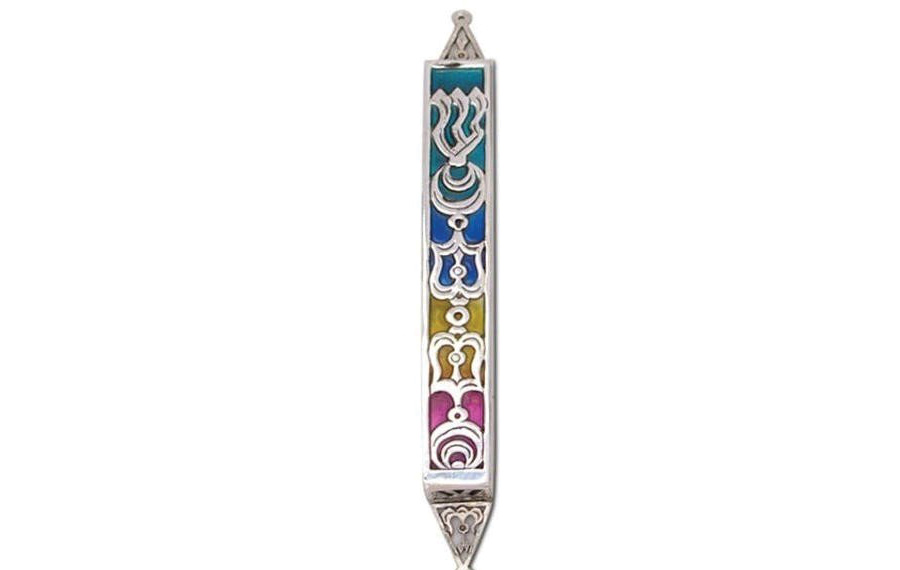
Israeli artist Avi Nadav, who works out of Jerusalem, created this sterling silver and colorful mezuzah case, which will be sure to impress guests when they visit the newlyweds’ home. You’ll need to buy the mezuzah scroll for this gorgeous piece separately. The case is $214 and can be purchased here.


Joy Stember Ani L’Dodi Wedding Kiddush Cup
Joy Stember’s modern take on the traditional kiddush cup says, “I am my beloved’s and my beloved is mine,” a famous phrase from the Song of Solomon. This stunning cup, which is handmade from brass and pewter, is perfect for madly-in-love newlyweds. It retails for $260 here.


Jonathan Adler Marble Menorah
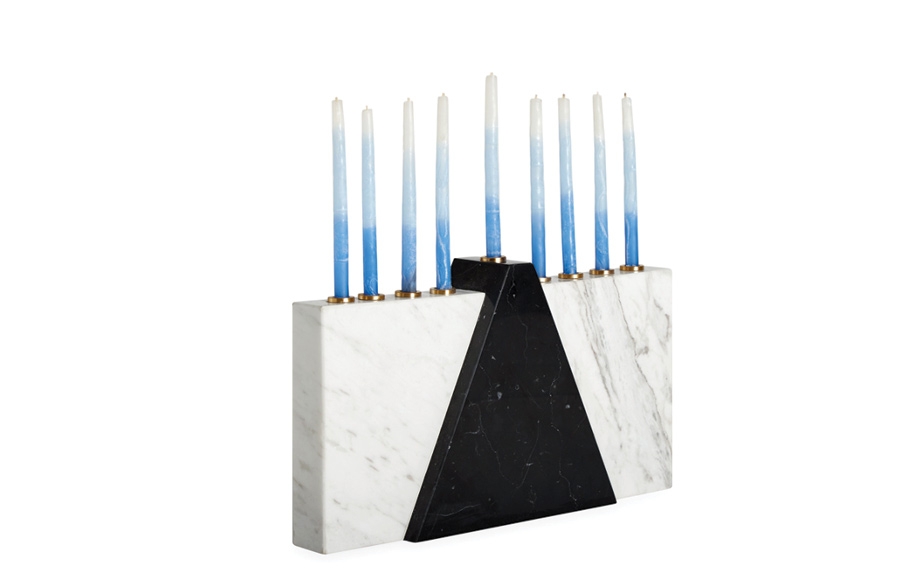
You can class up the couple’s next Hanukkah with the Jonathan Adler Canaan Marble Menorah, a modern take on a Judaica fixture that’s in every Jewish home. The popular potter made this menorah out of solid white and black marble, and it includes brass accents. It costs $148.50 at Neiman Marcus.


Yaeli Challah Cover
This challah cover does more than protect the sacred Shabbat bread. It also acts as a piece of artwork for the newlyweds’ table. Handmade with genuine hide leather, this Yaeli challah cover, called “The Cool Blue One,” is hand-embellished with 25k gold leaf. You can purchase it for $175 here.

The 2019 Chuppah Gift Guide: What Every Jewish Couple Needs Read More »

Finding the Perfect Ketubah

The ketubah has always been an integral part of a Jewish wedding. The marriage contract details the husband’s obligation to his wife and is designed to protect her if they get divorced or he dies. Couples present the ketubah at their wedding and often display it in a prominent place in their home afterward. 

While the ketubah used to be a simple legal document, today, ketubah-making has exploded into an international business. When searching for ketubahs, couples can choose from an array of handmade, custom ketubahs in a number of different styles and prices. They can get a papercut, hand-painted, handwritten, giclee, canvas or letterpress ketubah, ranging in price from $15 to over $1,000.

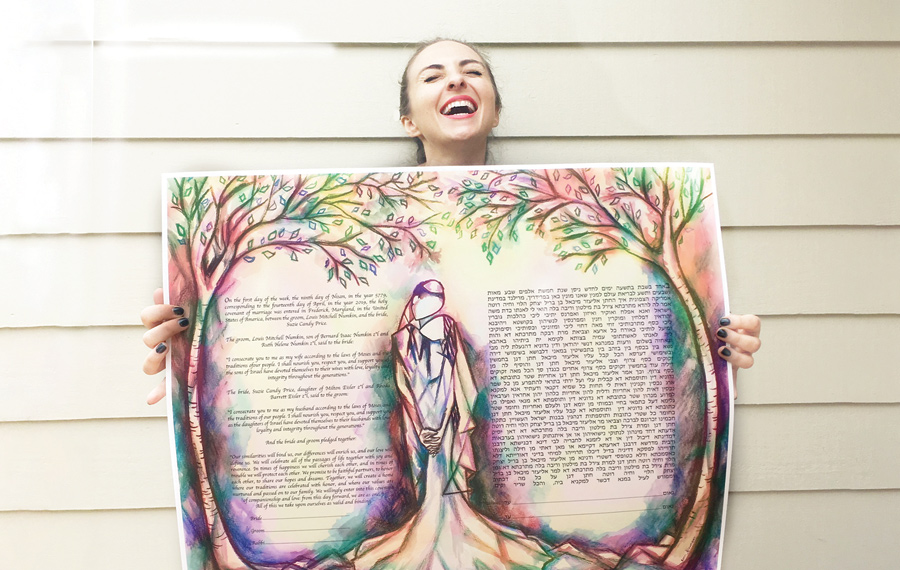
In Los Angeles, couples have the option of buying from a Judaica store or ordering a custom ketubah from a local artist like Anna Abramzon, who makes colorful ketubahs painted in watercolor, gouache and ink. In addition to creating ketubahs for the wedding, she offers free replacement ketubahs if they are lost or destroyed in a natural disaster. 

“Nowadays, people really love to showcase their ketubah prominently throughout the ceremony and celebration,” Abramzon told the Journal. “After the big day, couples often use their ketubah as the jumping-off point for decorating their home and starting their art collections. They often come back to me for other kinds of art and for various life cycle events, all to complement the style of their ketubah, the first piece of art they chose together.”

Abramzon’s designs include ketubahs with palm trees, hamsas and couples embracing, and they start at $139. She made her first ketubah 12 years ago for her own wedding and then began making them for friends. 

Her background is in figurative art and portraiture, which she said gives her “a unique point of view, which I bring to the world of Judaica. My style is original and recognizable, with sophisticated color combinations and original imagery. Every one of my ketubahs tells the love story of the couple signing it.”

Another local artist creating custom and premade ketubahs is Melody Molayem, who was inspired to get into the business after going to an all-girls seminary in Israel in the summer of 2013. She makes papercut ketubahs of trees, flowers, meadows and hasmas, and cuts her designs on wood and paints over them. Her inspiration comes from stories from the Tanakh, Spanish and Moroccan patterns, florals, trees, astrology, typographic art and museums, and her ketubahs start at $355 on Etsy. 

“I want my ketubahs to be somewhat educational of what a 

true partnership and Jewish marriage is all about, and really remind the couple of their personal love story as well as their roles within the marriage whenever they look at it.” — Melody Molayem

“I have always been creative and imaginative, and all my ideas are original artworks that combine [the] aesthetics of romance, fairy tales, spirituality, holiness and the Torah into something that has never been done before,” she said. “I want my ketubahs to be somewhat educational of what a true partnership and Jewish marriage is all about, and really remind the couple of their personal love story as well as their roles within the marriage whenever they look at it.”

Both Abramzon and Molayem consult with the couple and their rabbi to ensure the text is just right. Traditionally, it’s written in Aramaic, but some couples choose to have it written in English. Couples sometimes customize the text and write their own version of a ketubah.

“Certain rabbis have particular ketubah guidelines and [I] have learned this through working with a wide range of rabbis and wedding officiants,” Molayem said. “For example, certain Sephardic rabbis require a square-shaped text box, which can sometimes change the whole design of the artwork.”

One place where couples can either buy a ketubah, ensure the text is correct or do
both is The Mitzvah Store, a Judaica shop on Beverly Boulevard in the La Brea neighborhood. There, they will encounter the owner, Rabbi Shimon Kraft, who opened the store in 1991 and has been helping couples ever since.

Kraft will write the ketubah text himself, which, he said, takes six to eight hours.
Typically, couples like to go to Kraft in person because he said they are overwhelmed and confused by the process and they want some clarification.

“I work with whoever is marrying the couple to make sure the details are correct,” he said. “The worst thing is if they get to the wedding and it’s not right.”

When couples sort through all their options and end up choosing the kind of ketubah that truly reflects their relationship, they can look at it anytime to remember just how special their union really is. 

“It’s a reminder of the holiness of the marriage between a couple,” Kraft said.  “It’s a very significant thing.”

Finding the Perfect Ketubah Read More »

Knowledge is Power: Pre-Wedding Genetic Screening

Getting engaged and planning a wedding can be overwhelming. Aside from creating a to-do list for the big day, conversations also arise around finances and family planning. 

As you enter this exciting new stage in your life with your partner, you also should discuss genetic testing — also called carrier screening. It empowers you and your partner with important health information that can guide decision-making for family planning. Having this information gives you some control over what can be a process filled with uncertainty. 

We all have two copies of every gene in our body, one from our mother and the other from our father. Sometimes there is a mutation, like a typo, in a gene that can cause it to not work properly. Mutations can cause genetic conditions including cystic fibrosis, sickle cell anemia and Tay-Sachs disease. When a healthy individual inherits a mutation from a parent, they have one copy of the gene with the mutation while the other copy is normal. This person is called a carrier. We are all carriers for certain genetic conditions. Most of the time, this does not cause any concern — a carrier will not develop the disease. 

Concerns may arise when both partners are carriers of the same condition, because that is when there is the risk of having a child affected with the condition. If both partners are carriers of the same genetic disease, there is a 1 in 4, or 25%, chance with each pregnancy of having a child with the condition. Regardless of the results, the information is vital to ensure partners are able to make informed decisions. 

When both partners are carriers for the same condition, there are many options available for having a healthy baby, thanks to advancements in medicine and technology. These are big decisions that should not be rushed, which is why having time on your side is a huge benefit. 

Not all genetic conditions have the same severity. Some are mild, and in these types of cases couples may choose to proceed with natural conception and pregnancy. Knowing this is still essential because the child can be tested at birth and necessary interventions or treatments can be started immediately. With other conditions that are more severe or untreatable, a couple may consider alternative methods of conception or pregnancy management.

There are various reproductive options available. These options fall into two categories: prevention before pregnancy and diagnosis during pregnancy. Decisions on how to proceed are personal and based on multiple factors specific to each couple. Seeking support, counseling and guidance through this process is essential. 

Prevention options

• In vitro fertilization (IVF) with preimplantation genetic testing (PGT-M). This method uses the couple’s own eggs and sperm to create embryos. The embryos are tested for the disease and only unaffected ones are implanted.

• Use of donor egg or sperm from a noncarrier donor.

• Adoption.

Diagnosis during pregnancy options

• Genetic testing using chorionic villus sampling (CVS) or amniocentesis.

• If the fetus tests positive for a disease, parents may choose to use the information to prepare for the birth of an affected child or terminate the pregnancy.

Knowledge is power and knowing your carrier status is the first step in ensuring the health of your future family. There’s peace of mind in knowing. Discuss carrier screening with a genetic counselor or your health care provider.


Daniella Kamara is a genetic counselor at UCLA Health.

Knowledge is Power: Pre-Wedding Genetic Screening Read More »

Designer Wendy Light Helps People ‘Say Yes to the Tallit’

Tallit designer Wendy Light recognizes that no two people are alike, so why should their tallitot be similar? 

For more than 30 years, Light has been capturing the essence of people and placing it on their shoulders. Her company Holy Thread Designs creates intricate prayer shawls for men and women with whatever materials she can get her hands on. Not only can Light create a tallit for a wedding ceremony, she also recycles wedding dresses, turning a bride’s ceremony gown into a tallit. 

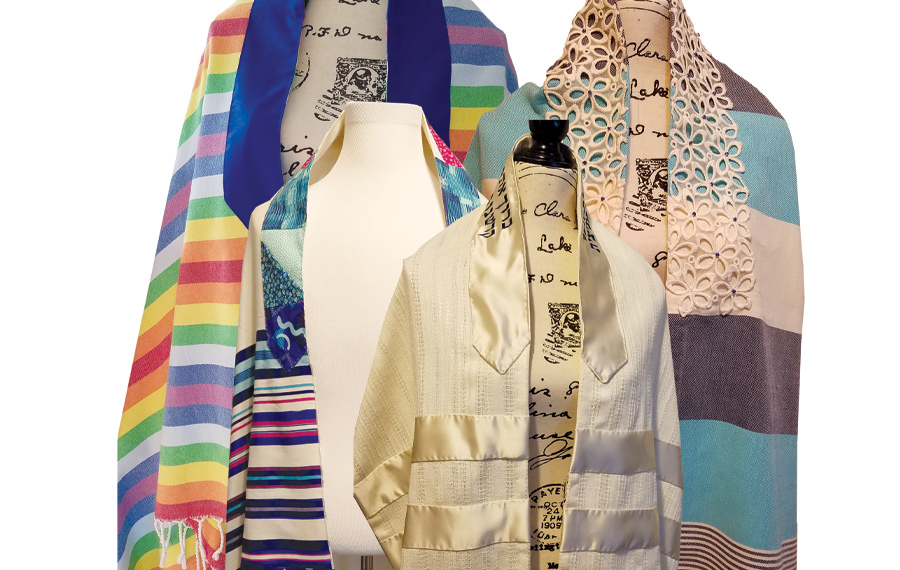
The tallitot Light creates are nothing like the traditional versions you might be used to seeing. She has manifested tallitot using vibrant dyes, silk, wool, cotton, jean jackets, antique napkins, ties and, of course,  old wedding dresses. 

Her journey into tallit making began after United Synagogue closed its Department of Education. Light, who acted as a national education consultant for the Conservative movement for 15 years, realized she needed to do something else with her time.

Creativity had always sprung from her fingertips, whether in school when she was learning from renowned artist Larry Rivers, or designing stained-glass windows, sculpting metal or teaching art at schools and Jewish camps around the country. When she started to wear her one-of-a-kind tallit to synagogue, people noticed and started to ask for Light originals. From there, she found her new purpose.

“As a woman, I probably have been wearing a tallit for 35 years,” Light told the Journal. “When I put my tallit on, I feel like I’m being embraced by God and I wanted more people to have that experience. Women don’t have a lot of choices in choosing a tallit.”

Light said that whenever clients come in to look around, she treats it like an episode of the TLC wedding show “Say Yes to the Dress,” where she creates piles of tallitot clients love, like and don’t like.

Light has made about 15 tallitot out of wedding dresses 

but also creates tallitot for wedding chuppahs. One was 

for a couple coming out of a long-distance relationship. She hand-stitched the words ‘Meet you at the chuppah’ in the tallit for the two to stand under. 

Through this method, Light discovers the client’s essence and can help them find the tallit that is right for them without even having to design a sketch. From there, she can help personalize it so it is unique to them.

“They come in usually with their families, their grandparents and sometimes even their friends, and they try on every single tallit in here,” Light said. “I make them tell me what they like about it and what they don’t… They go through all of them and then we go back to the ‘I love it’ pile. By the time they do about 40 try-ons, they have a much better idea of what they want.”

Light has crates and crates of fabric and tallitot in her studio — and garage — for people to try on. She has made hundreds of tallitot for men and women who are preparing for their b’nai mitzvot and those who want an updated look from when they first chose their tallitot as a teenager. Light has even redone tallitot for men who have outgrown their original prayer shawls.

Over the years, she has made tallitot for Jews all around the country and members of the Los Angeles community, including Mayor Eric Garcetti, and all the members of her family. Light notes she has even created sets of tallitot for the b’nai mitzvot and a camp version so people can pray with a tallit made from a fabric that is more nature compliant. 

Although she can be working on several projects at a time, her recent tallit designs have come from specific borrowed and gently used fabric: old wedding dresses. Light had been thinking about the idea of repurposing wedding gowns because it was a shame they would be worn only once after women spent so much money on them. She wanted to create something meaningful out of an object that held so much meaning to a specific family.

“It’s so much fun. I did one for a woman. I made for her, her husband, for the bat mitzvah girl and two of the boys,” Light said. “Everyone is very, very different but it was made from her wedding gown that was sitting in a box in the closet for years.”

It may be hard to believe, but Light said she might not have enough fabric to work with when she receives wedding dresses in the mail. She said it all depends on the style of the dress and which parts are still in good condition. She almost always uses very little of the bodice so she tells the clients to repurpose it by dunking the bodice of the dress in decoupage to make a planter out of it.

“Sometimes there is beautiful beading so I use that,” Light said. “Whenever I get a dress I just take it all apart.”

Light has made about 15 tallitot out of wedding dresses but also creates tallitot for wedding chuppahs. One was for a couple coming out of a long-distance relationship. She hand-stitched the words “Meet you at the chuppah” in the tallit for the two to stand under. 

Light added that she has received requests for tallitot years in advance or 10 days leading up to the event itself. Regardless of timing, she will make it happen. She likes to think of buying a tallit in the same way you buy a wedding dress: You start looking for the tallit after you have your Torah portion assigned. That leaves room to find the one that fits the personality best.

One of the most memorable cases of last-minute tallit designs came 10 days before a boy was having a bar mitzvah. “I got a call from a man, he was crying on the phone,” Light recalled. “He said, ‘You don’t know me, I don’t know you … my father just died, I’m still in shloshim (30 days of mourning), and my son is refusing to have his bar mitzvah because his grandfather won’t be there. If I send you something could you use it?’ I said send it to me.” 

Within days, Light had designed a hot-pink striped tallit in honor of the boy’s favorite colors out of a jean jacket his grandfather wore. “It was unbelievably special,” Light said. 

Every tallit that Light touches includes personality and detail that makes each unique to her customers. “I just want to do something different,” Light said. “It has to be what I like. … For people to be proud of who they are and show it in their clothing. That’s bold and I love it and I want to support it.” l

To see more of Holy Thread Designs, visit Wendy Light’s Etsy page.

Designer Wendy Light Helps People ‘Say Yes to the Tallit’ Read More »

Wearing a Wig After Marriage

In the Torah, when a married woman is accused of adultery, she must undergo a ritual called sotah to determine whether she is guilty. The priest in charge is required to uncover the woman’s hair as part of this process, as detailed in Parashat Nasso in the Book of Numbers. Based on that, many Orthodox Jews believe that a woman is required to cover her hair once she is married. 

In Modern Orthodoxy, women are allowed to wear hats or scarves on their heads. In the more ultra-Orthodox communities, many women don sheitels (wigs).   

“To me, covering my own hair represents a physical safeguard to the privacy of my marriage,” said Shoshana Shore, co-owner of Ayala Wigs in Pico-Robertson. “In our modern world, women are working in all varieties of professions. Covering with a wig can allow a woman to feel confident and ‘herself’ in any environment while fully observing the mitzvah. It is a woman’s right to choose how she covers and so important that she feels beautiful and good about doing it.”

At Ayala Wigs, Shore, together with her business partner, Chayala Friedman-Coleman, takes new or soon-to-be brides on a tour of their store and helps them determine which style and cut is right for them. 

“It’s so important for brides to learn how to put on and take off a wig, and how to properly secure their own hair underneath the wig to ensure comfort and a natural appearance,” Friedman-Coleman said. “We strongly suggest that brides do not wait until the last minute to wig shop, so that they have time to get comfortable with their new wig before the wedding.”

Shore said brides often say that they ended up not liking their first wig because they weren’t informed enough. She and Friedman-Coleman encourage women to bring along their mother or a close friend for a second opinion, and to familiarize themselves by trying on as many wigs as possible before buying one. 

“As a bride, there are so many new adventures they are about to embark on, so my mission in guiding them is to make it easy and fun to keep them feeling excited about covering their hair.” — Mona Zargar

The range of wig options available are vast, everything from synthetic to real human hair wigs, the latter of which can cost anywhere from $500-$8,000, depending on the quality. There are full sheitels, which extend to the hairline and cover the entire head, and falls, which allow women to show the front of their hair and cover the rest with a wig and a headband or hat. Some wigs come as ponytails and others come with an attached hat. 

Currently, Shore said, lace top and lace front wigs are popular because they give the illusion that the wig is growing out of a woman’s head and they create an undetectable hairline. And wigs, like real hair, require regular washing and styling. 

In Los Angeles alone, there are several wig stores for Orthodox women including Ayala Wigs, Bait Miryam, also in Pico-Robertson, Milano in the La Brea neighborhood, and at the homes of various women throughout the city and San Fernando Valley who sell secondhand sheitels at discounted prices. 

At The Wig Fairy, a store and salon in Beverly Hills, owner Mona Zargar helps brides navigate the many choices available by recommending they start with a wig that is closest to their natural hair color, length and texture.

Zargar ensures the wigs fit properly and gives the brides advice on how to maintain them. She explains the importance of brushing the wig before and after wearing it; to store them in a room where there isn’t any moisture; and to communicate with their wig stylist about any issues they’re having.

“As a bride, there are so many new adventures they are about to embark on, so my mission in guiding them is to make it easy and fun to keep them feeling excited about covering their hair,” Zargar said.

Friedman-Coleman admits that covering your hair can be a challenging commandment. Ultimately, however, she recognizes just how meaningful it can be for brides. 

“It’s a beautiful mitzvah to keep your hair for your husband’s eyes only and have it as special for just the two of you,” she said. “The fact that we can do this mitzvah while looking beautiful and natural makes this a win-win.”     

Wearing a Wig After Marriage Read More »

Creating Modern Chuppahs for a Modern World

Andrea Cohen finds inspiration in fashion designers and contemporary artists when it comes to designing her unique chuppahs.

“Bringing that angle to chuppah design is who I am,” Cohen, who owns the Los Angeles-based Chuppah Studio, told the Journal. “I don’t come from an event background or a floral background.”

Cohen designs her chuppahs on her computer. Without access to her own laser cutter, she outsources the manufacturing of the material covering the chuppahs to a company in the Midwest. She builds the structures, consisting of four poles and the overhead covering, in the garage she has converted into a home studio in Culver City.

Cohen said her work is a natural extension of her former life as a sculptor and assistant professor at Parsons School of Design in New York City.

In 2010, Cohen was living in New York, exhibiting pieces in East Coast galleries and museums when her sister, who works in arts administration in San Francisco, asked Cohen to make a chuppah for her wedding. 

Cohen, who previously had made large-scale structures and installations, created a chuppah featuring a geometric pattern of cascading circles for her sister. When friends and family praised that chuppah, Cohen was inspired to create and share prototypes of her chuppahs on the online site Etsy. 

Then, in 2012, she launched her website. She soon realized that if she wanted to create a successful company out of her newfound passion, she would have to ship her products across the country. 

“The trend in terms of big, extravagant, spectacle weddings is to have chuppahs with lots of flowers on them. What I’m doing is more design-driven. There’s less waste. It’s a little more contemporary and modern.” — Andrea Cohen  

Over the next couple of years, Cohen created several iterations of her chuppah to the point where she said making them began to feel like less like a hobby and more like a business. Incorporating skills she learned while earning her master’s degree in sculpture from Temple University’s Tyler School of Art and Architecture, Cohen made structures emphasizing modularity, allowing the components of her chuppahs to be separated into smaller parts and shipped across the country. 

“The designs now are pretty versatile and it’s continuing to grow,” she said. “I’m always looking for what I can add and what people will like.”

In 2017, Cohen moved to Los Angeles. “I just decided I didn’t want to grow [old] in the art world and I needed to make a shift,” she said.

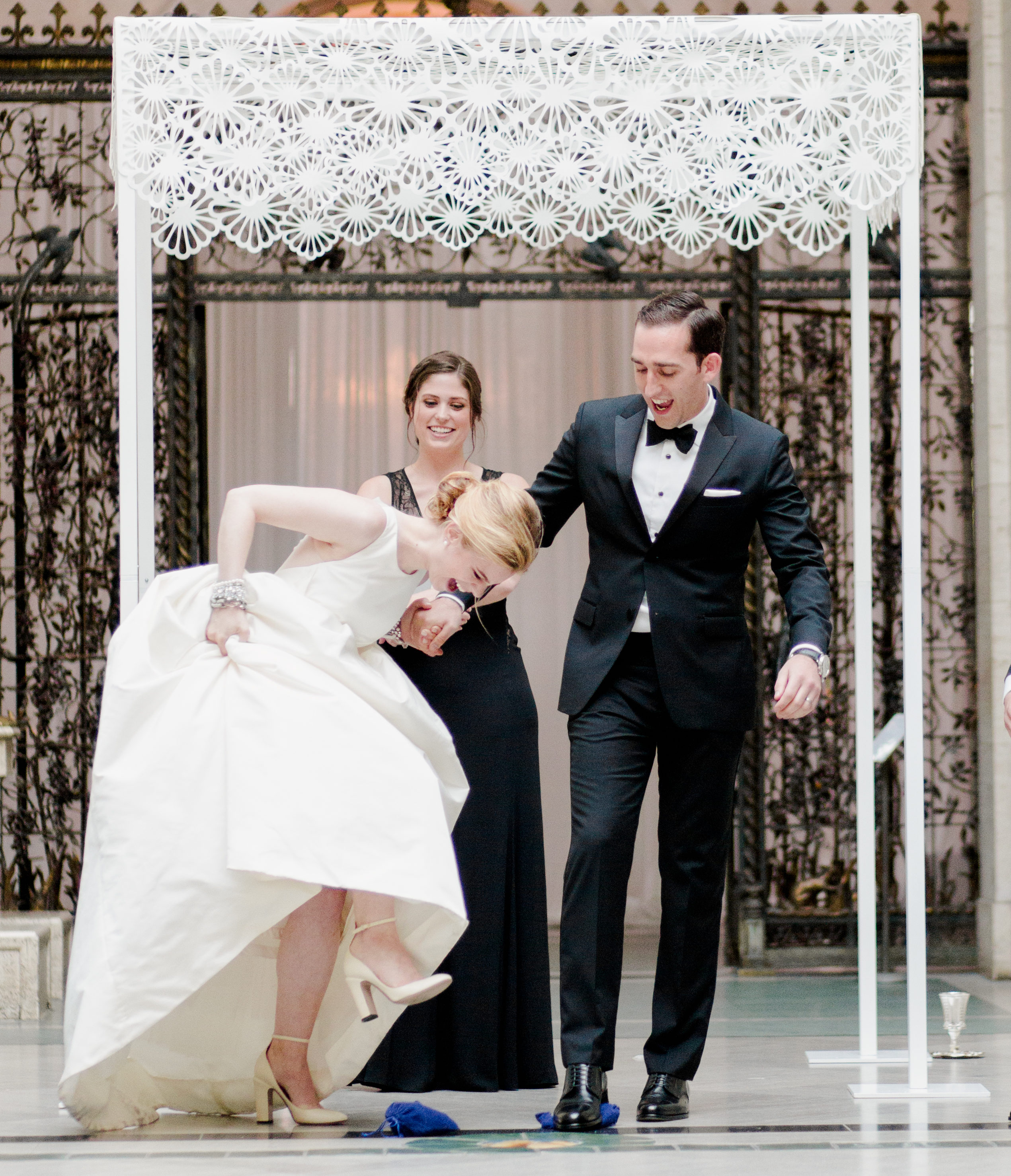
Chuppah Studio’s Chrysanthemum design. Photo by Rebecca Yale Photography

She hasn’t looked back and to date, Cohen has made chuppahs for local weddings, international weddings, beach weddings and mountaintop weddings, among others. She said she owes part of her success to going against style. While brides and grooms typically decorate their chuppahs with as many flowers as possible, Cohen’s chuppahs emphasize elegance, simplicity and sustainability, she said.

“The trend in terms of big, extravagant, spectacle weddings is to have chuppahs with lots of flowers on them. I’m offering an alternative to that,” she explained. “What I’m doing is more design-driven. There’s less waste. It’s a little more contemporary and modern. It’s sort of a modern design meets treasured tradition.”

While the majority of Cohen’s customers are Jewish, she also has helped non-Jewish couples that appreciate the aesthetic, if not the religious significance, of the chuppah.

“Even though a chuppah comes out of a religious tradition, some non-Jews are interested in it just as a design element,” she said. 

Her clients come to her through referrals, Google searches and even social media.  

“Brides are sort of obsessed with Instagram and Pinterest,” Cohen said, “so they are constantly looking at those two places and finding images for inspiration.”

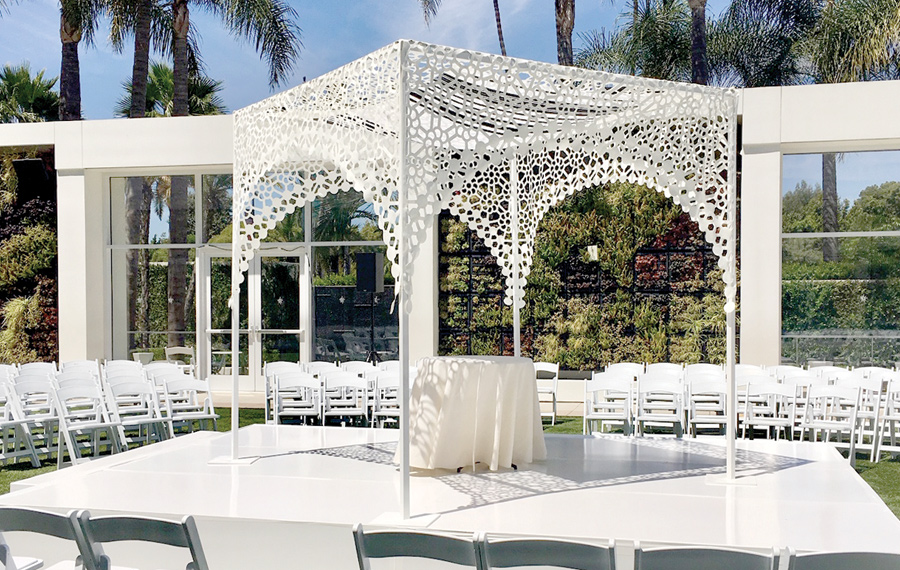
About half of Cohen’s clients have been local, and the majority order one of Chuppah Studio’s nine rental options, including “Cascading Circles,” Cohen’s debut design, as well as her most popular chuppahs: one inspired by a Japanese chrysanthemum, and Modern Lace, which Cohen’s website calls “an original interpretation of romantic lace with a framing arch on every side.”

Rental prices start at $825. 

Cohen also does custom work, including for a bride who was not her client when she got married but after becoming pregnant hired Cohen to turn her wedding dress into a chuppah to pass on to her children. Then there was the couple that wanted their family heirlooms transformed into a chuppah. Despite her initial skepticism that the couple’s grandmother’s tablecloth and grandfather’s bathrobe would make an attractive chuppah, Cohen was happy with how it eventually came together.  

“It turned out really nice, actually,” she said. “I saw these fabrics that don’t go together and I thought, ‘It will be hideous,’ but it turned out well.”

Creating Modern Chuppahs for a Modern World Read More »

Celebration Guide: Chuppah 2019

For full screen click here. 

Celebration Guide: Chuppah 2019 Read More »