fbpx

November 11, 2019

A Hallmark Hanukkah: This Year, the Christmas Channel is a Little More Jewish

Jewish fans of Hallmark’s signature romantic-comedy movies have something to kvell about this year. Two of the channel’s 24 original holiday films include Hanukkah as part of the plot. Both “Holiday Date” and “Double Holiday” are about interfaith romantic relationships, and air Dec. 14 and 22, respectively.

According to “Double Holiday” writer Nina Weinman — who has had 21 movies air on the channel since 2010 — incorporating Hanukkah is “something that all of us in the Hallmark world have talked about for years. This year, they wanted to branch out and be part of the proper representation of what the world looks like, not just a Christmas story in a small town where two people fall in love. There is plenty of that. But it’s about diversity and thinking outside the box.”

Taking place over the eight days of Hanukkah and leading up to an office Christmas party, the story puts together rival co-workers Jewish Rebecca (Carly Pope) and non-Jewish Chris (Kristoffer Polaha), who learns about Hanukkah traditions while spending time with Rebecca’s family. Latke-making, menorah-lighting and a “very competitive dreidel event” are part of the festivities, Weinman said. 

Raised in a Reform Jewish family, Weinman had a bat mitzvah, went to Israel at age 15, and loved celebrating the holidays with her family. Her husband is not Jewish, and they’re raising their two children with the traditions of both faiths “to get them to understand that we’re both saying the same thing but just calling it by a different name,” she said.

To lighten the load of gifts they get for Hanukkah, Christmas and their winter birthdays, Weinman has the children pick a charity to donate to in lieu of gifts on all eight nights. “It’s all about giving back and being kind to others, appreciating what you have and being thankful for the gifts that have been bestowed on us,” she said, noting she incorporated a charitable element into “Double Holiday’s” script. 

A Silicon Valley native, Weinman spent seven years with Lifetime before moving on to Hallmark, where she has eight movies in various stages of completion, including “Christmas at Dollywood,” airing Dec. 8. 

“The thing I love about these movies and writing them is we know it’s a formula. We know how it’s going to end, but we can take people on a fun ride along the way and watch them fall in love,” she said.

Producer Joey Plager also is a Hallmark veteran, with credits that include four holiday films over the past six years. He worked closely with writer Karen Berger and channel executive Liz Yost on the “Holiday Date” script and supervised production on set, sometimes coaching the actors on Jewish elements. 

“Holiday Date”:  Photo: Matt Cohen Credit: ©2019 Crown Media United States LLC/Photographer: Allister Foster

He relished the opportunity to work on a movie that shows “people of all faiths can come together and enjoy the holiday spirit.” Its interfaith theme is familiar to Plager: He’s married to a woman who is half Jewish and grew up having a Christmas tree in her home. “The first four years of our marriage, I successfully fought off the notion of having a Christmas tree in our house. But she grew up having one and I relented,” Plager said.

In “Holiday Date,” a woman just dumped by her boyfriend enlists an actor to pretend to be her boyfriend and celebrate Christmas with her family, only to discover he’s Jewish. The family welcomes him, and they celebrate both traditions, which include saying the prayer over the candles, making latkes, spinning the dreidel and explaining the significance of the holiday. “We hit all the major milestones of Hanukkah,” Plager said. “It’s one of the funniest Hallmark movies I’ve worked on because of the inherent conflict in the setup.”

Plager was not involved in casting, but said there was an effort to find a Jewish actor for the lead role of Joel Parker. Matt Cohen got the job. “It was a character I hadn’t played before. It’s very refreshing,” Cohen said, contrasting it with the heavier roles of creeps, villains and demons he’s played before, including the “broken guy” he plays on “General Hospital.”

As someone who drifted away from Judaism, Cohen said, “It brought me great pleasure to step into this character and be engulfed by what Hanukkah is, what the prayers mean and why we say them.”

Cohen, a Miami native whose parents divorced when he was a baby, grew up with his single father and grandfather. They celebrated the Jewish holidays and said the prayers, “but I barely paid attention,” he said, noting that he studied for his bar mitzvah but never went through with it because his rebelliousness got him expelled from Hebrew school. On set,
 Plager helped Cohen with the proper Hebrew pronunciation of the prayers he had to recite.

Plager anticipates showing “Holiday Date” to his extended family at their annual gathering, where the adults do a white-elephant gift exchange as they nosh on latkes and brisket. He also is eager to see Rabbi Steve Leder at Wilshire Boulevard Temple, where Plager is a member. “He gives me a wry smile when he sees me around the holidays because he knows I’ve been producing Christmas movies,” Plager said. “I’m excited to tell him that I have a Christmas-Hanukkah movie this year.”

He called Hallmark’s recognition of Hanukkah “a wonderful step. These are the kind of movies you can watch with your entire family. There’s so little programming that’s on TV that you can sit down and watch with your grandparents and your children. They’re happy movies. Yes, they can be a bit predictable, but there’s some variation in theme, and they really celebrate the goodness in people, love, and family and friendship. People want to see that around the holidays.”

With a good response from the public and the ratings to back it up, there should be more Hanukkah on Hallmark in the future. Plager would like to see a sequel to “Holiday Date.” “There’s a suggestion that the lead characters may get engaged,” he said. “I think that ‘Holiday Wedding’ would be a nice follow-up.”

Weinman is similarly encouraged. “Hallmark is now so open to it that they’re already thinking about next year,” she said. “The floodgates are open. I don’t think it will stop anytime soon.”

“Holiday Date” premieres on Dec. 14 and “Double Holiday” premieres on Dec. 22 on Hallmark Channel.

A Hallmark Hanukkah: This Year, the Christmas Channel is a Little More Jewish Read More »
‘King Bibi’ Documents Netanyahu’s Rise to Power

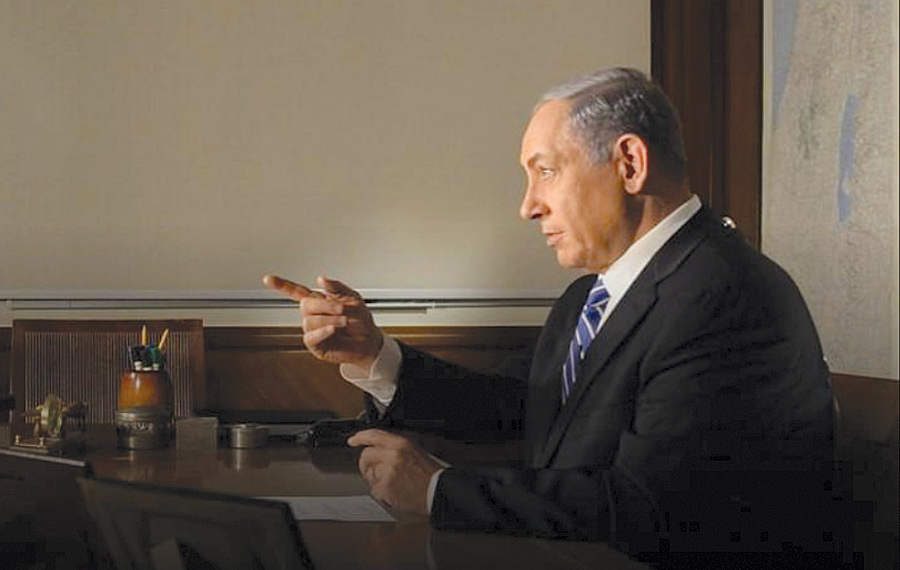
Benjamin Netanyahu has been the face of Israeli politics for 20 years as prime minister and Likud party chairman. But amid criminal investigations for bribery, fraud and breach of trust, and the Likud’s slippage in the last election, Netanyahu’s future is in doubt. He nevertheless remains a fascinating figure, as the documentary “King Bibi” depicts. 

Subtitled “The Life and Performances of Benjamin Netanyahu,” it chronicles his rise to power, his obsession with image and his relationships with the media and President Donald Trump. It will be screened at the Israel Film Festival (IFF) in Los Angeles on Nov. 17 and 23.

“I was fascinated by Netanyahu as a cinematic character. I had a fascination with all his media appearances over the years and I wanted to learn more about him,” filmmaker Dan Shadur told the Journal. Eschewing talking-head interviews, he assembled the film using only archival footage of Netanyahu’s television and public appearances. 

Although he includes Netanyahu’s youth and early adulthood, “It’s not a biopic,”
Shadur said. “I don’t pretend to reveal the true man behind the news or give you all
the biographical details. I went with the archives to tell the story and say something not only about Netanyahu and Israel but also politics and media and the relationship between them.”

In his research, Shadur sought “footage that would be different from what we’re used to seeing of Netanyahu — something that would show him before he became what he is.” Over a four-year period, he gathered material from more than 60 archives in Israel and the United States, totaling hundreds of hours. “One of the things that stood out from the research was … how much Netanyahu was ahead of the times,” he said.

“I don’t believe that art can change your political point of view or should serve as propaganda, but I hope it will make people think about politics, Israel and what  happened to Israel in the last 40 years since Netanyahu appeared 

for the first time.” 

— Dan Shadur


The film draws parallels between Netanyahu and Trump’s handling of the media and direct communication with the public. “Netanyahu thought about things in the ’90s that are prominent today: the idea of attacking the media and making it an antagonist so supporters can relate to it and identify it as an enemy,” Shadur said. “He launched the website for the prime minister’s office to talk directly to the people. He was already thinking about social media 10 years before it existed.”

Asked to predict the outcome of the criminal investigation into Netanyahu’s conduct, Shadur said, “I think it’s going to be hard for him to get away with it completely. In the meantime he’s not letting go. He’s taking the whole political system with him so we haven’t had a government for a year now. He’s the problem. If it was another leader from the right, it would have been resolved by now.”

Not surprisingly, “King Bibi” has received a lot of attention in Israel. “It brought in different crowds: Netanyahu supporters and his opponents who can relate to it, and people from both sides who don’t like the film. It created an interesting discussion,” Shadur said. “For some people, it reassures what a great leader he is, for others it shows the devil at work. I don’t believe that art can change your political point of view or should serve as propaganda, but I hope it will make people think about politics, Israel and what happened to Israel in the last 40 years since Netanyahu appeared for the first time. The film is about Netanyahu, but it’s also about Israel and the radical changes it went through in those decades and Netanyahu is the face of it.”

Shadur confirmed that Netanyahu has seen “King Bibi” and commented publicly. “He said it was an interesting documentary. He fell asleep in the middle, not because the film wasn’t good but because he was very tired. He watched it on a flight to Chad.”

Shadur, the son of Israelis of Polish and Lithuanian heritage, grew up in suburban Tel Aviv in a secular Jewish family. He was a writer and newspaper editor before he enrolled in film school. “It was a great way to tell stories and share a point of view,” he said. “Then I got into documentaries, which combined film and my journalism background.”  His previous film “Before the Revolution” is based on the years his family lived in Iran in the late 1970s. He’s currently shooting a film about Telegrass, an Israeli cannabis delivery app and its Orthodox Jewish founder.

“King Bibi” continues to play the film festival circuit, and it will have a digital release sometime in 2020. Shadur is particularly excited about its inclusion in the IFF. “I love L.A. and I wish I could be there,” he said. “I’m looking forward to hearing about the reaction. I think it’s an important film for American Jews and Americans in general. It talks about a lot of important topics and I hope a lot of people will come to see it.”


“King Bibi” will screen at the Israel Film Festival on Nov. 17 at Laemmle’s Town Center 5 and on Nov. 23 at Laemmle’s Ahrya Fine Arts. Visit the website for showtimes and ticket information.

‘King Bibi’ Documents Netanyahu’s Rise to Power Read More »

‘Golda’ Explores The Triumphs and Failures of Israel’s Trailblazing Prime Minister

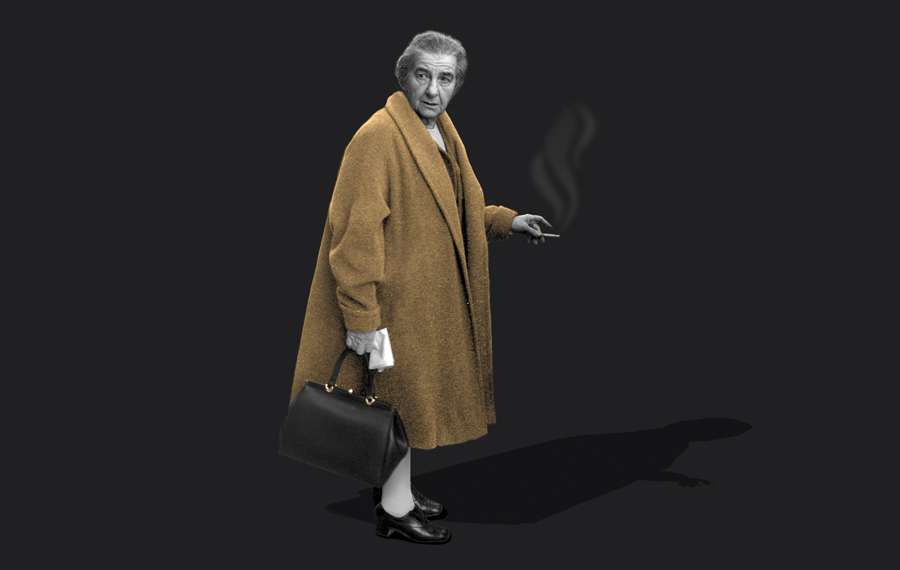
As the only woman to serve as Israel’s prime minister (1969-1974), Golda Meir is perceived as a Jewish icon and feminist heroine. But in Israel, she’s more reviled than revered. The documentary “Golda” will screen at the Israel Film Festival (IFF) on Nov. 17, 19 and 21, and explores why Meir is “a synonym for failure and disgrace” to Israelis, according to filmmaker Udi Nir.

“The gap between her different images was a very interesting starting point because we felt there must be some things we are missing from the story of Golda Meir, and that people in other places don’t see what we experienced here,” Nir told the Journal. “The truth is somewhere in the middle. And that kind of complexity was our basis of starting the project.”

Nir co-directed the film with his life partner, Sagi Bornstein, and Shani Rozanes, and said they aimed to chronicle the events of Meir’s five years in office “and what she went through personally and professionally. We didn’t want to take sides. We wanted to see her through her eyes, to be able to empathize with her and connect with her. All three of us directors were born after she died, so we’re less biased and emotional about her than our parents and people of their generation who fought in the [Yom Kippur] war or experienced that traumatic year in 1973,” he said.

Beginning in early 2017, the filmmakers interviewed “only people with first-hand accounts of working with Golda,” both champions and detractors, Nir said. Working with Bornstein in Tel Aviv and Skype-ing with Berlin-based journalist Rozanes was logistically difficult, “but I think it brought some complexity to the film, and is part of why it was so well accepted in Israel,” he said. “It allowed both the ones who hate her and love her to learn something new about her and relate to her.”

The documentary was nearly finished when the directors found a box marked “GOLDA” at the Israeli TV archives in Jerusalem. It contained old tapes of Meir’s last TV interview plus never-aired, candid footage recorded after the broadcast ended. “We spent 2018 to 2019 reediting the whole film,” Nir said.

“There’s a lot to learn from [Golda Meir’s] decisions and views and the way she handled the country, and the light that sheds on the Zionist movement and Israel in general.” 

— Udi Nir


Today, he said, he’s better able to analyze Meir’s triumphs and failures. “Her condescending approach and lack of empathy for Mizrahi Jews and the Israeli Black Panther movement caused a huge explosion in Israeli society and we still face the consequences today,” he said. “Her other big mistake was how she perceived Israel’s place within the Middle East and her lack of flexibility in negotiations with Egypt and the Palestinians throughout the early 1970s. Israel desperately needed a different kind of leadership at that time.”

He added he believed Meir’s biggest triumphs were from the time before she was prime minister — when she was labor minister and foreign minister in the 1960s.  “She set up the welfare system, which was, for many years, the basis of the socialist system for housing, health and education in Israel. As foreign minister, she was very much responsible for the relationship between Israel and the United States, and Israel and numerous African countries.”

Nir believes Meir’s greatest asset and greatest flaw was her perseverance. “She was very strong and hard-minded, which enabled her to hold the country together in a way I don’t think many people could have, but it didn’t enable her to change with the times and imagine a different future,” he said. “She was very honest but also very narrowminded, and didn’t see far ahead.”
Nir said he found some of  her positions “very irritating and hard to digest. But there’s also something very captivating about her, and an honesty and integrity that in recent years,
has been very much missed in Israel. She didn’t have hidden motives and she said what she believed.”

The son of Israeli parents, Nir is Ashkenazi on his father’s side and Yemeni on his mother’s. “I have a very strong link to Judaism as a culture but not from the religious angle,” he said. He met Bornstein while he was writing and directing for the theater. The pair made the documentary “#Uploading_Holocaust,” edited from YouTube video clips from teenagers’ visits to concentration camps. Their next project will be a series “that breaks down the historical narratives of Israelis and Palestinians, side by side and event by event, from 1948 to present day.”

He’s delighted “Golda” will screen for the Los Angeles Jewish community at the IFF and hopes the audience will come away with a greater understanding of Meir and “a more complex image of Israel. There’s a lot to learn from her decisions and views and the way she handled the country, and the light that sheds on the Zionist movement and Israel in general,” he said. “I’d like them to see some of her grave mistakes and learn from them, but I also would like them to see the unique, uncompromising woman in a world of men, who was able to do great things at a time when that wasn’t very popular.”

Asked what Meir would think of “Golda,” Nir said, “She would definitely have a
hard time and disagree with some of the claims brought up by the interviewees and by us. After the premiere at DocAviv [the documentary festival in Tel Aviv], her grandson said it was hard to see some of the things we chose to include, but he could see what we were
trying to do, to go through some kind of shift for the viewer. I think she would have respected that.”

“Golda” will screen at the Israel Film Festival on Nov. 17 and 21 at Laemmle’s Ahrya Fine Arts and on Nov. 19 at Laemmle’s Town Center 5. Visit the website for showtimes and ticket information. 

‘Golda’ Explores The Triumphs and Failures of Israel’s Trailblazing Prime Minister Read More »

‘Kill All Jews’ Graffiti Found at NYC Subway Stop

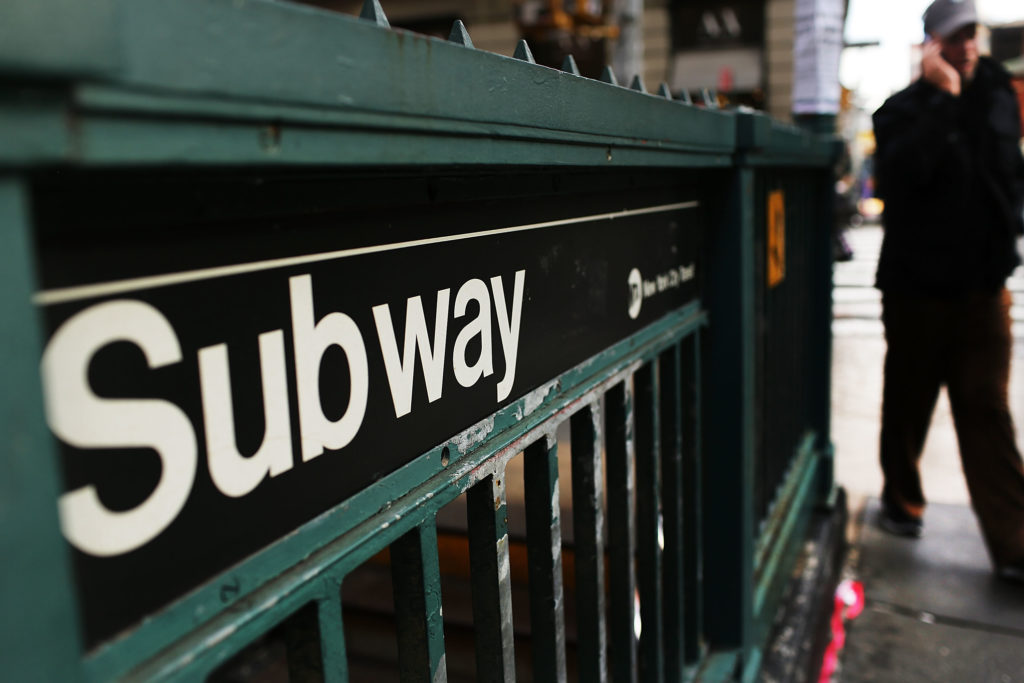
Graffiti featuring the words “Kill All Jews” and swastikas were found at a New York City subway stop on Nov. 11.

The NYPD Hate Crimes Task Force posted the photo to Twitter and announced that they would be investigating the matter. The graffiti, written in black marker, depicts what appears to be Nazi SS lightning bolts, two swastikas and a “Hitler was right” website in addition to the words “Kill All Jews.”

The Stop Antisemitism.org watchdog tweeted that the graffiti was “sickening,” adding that “thanks to the radical left, the alt-right, and religious extremists, #jews can’t go anywhere in #America in 2019 without seeing how much they’re hated.”

The Anti-Defamation League (ADL) New York and New Jersey chapter tweeted, “Thank you to the @NYPDHateCrimes for your tireless work in investigating every single one of these terrible #antiSemitic incidents! We continue to appreciate your partnership! It is up to every one of us to fight this onslaught lest they become normalized in #NY.”

The City, an NYC nonprofit news publication, reported that there had been a 162% increase in anti-Semitic incidents on the NYC subway from 2018 to 2019; 60% of the anti-Semitic incidents in 2019 have been graffiti and assaults.

ADL New York and New Jersey Director of Community Affairs Alexander Rosemberg told The City, “People are emboldened and they want the largest possible audience for what they want to communicate, and the subway is where they find that audience.”

‘Kill All Jews’ Graffiti Found at NYC Subway Stop Read More »

Swastikas Found on Seattle Turtles

Two turtles were found with swastikas painted on them in a state park in Renton, Wash., nearby Seattle.

The Renton Police Department announced in a Nov. 5 Facebook post that the turtles were seen at Gene Coulon Memorial Beach Park, but the authorities were unable to capture them.

https://www.facebook.com/RentonPDWA/photos/pb.666538636693829.-2207520000.0./3006782636002739/?type=3&theater

According to The Seattle Times, authorities think that the turtles were formerly pets that were put into the wild with white inverted swastikas painted on them. The turtles are also not believed to be from Lake Washington, where the park is located, KIRO 7 reports.

“It seems pretty clear to us what the symbol means,” Anti-Defamation League (ADL) Pacific Northwest Regional Director Miri Cypers told the Times. “I think it’s a really sad and unfortunate act. Unfortunately, anti-Semitic vandalism is becoming all too common in this climate.”

Chad Cashman-Greene, who organized the Nov. 9 Rally Against Hate in response to the swastikas, told KIRO 7, “Many of us are upset to see this in our own backyard.”

Former New York Democratic Assemblyman Dov Hikind, who heads the Americans Against Antisemitism watchdog, tweeted, “In the latest strain of the anti-Semitism plague even wildlife aren’t safe! Sick people out there.”

The ADL’s Annual Audit of Anti-Semitic Incidents found that there was a 60% increase in anti-Semitic incidents from 2017 to 2018 in Washington State.

Swastikas Found on Seattle Turtles Read More »

American Film Market is Amazing!

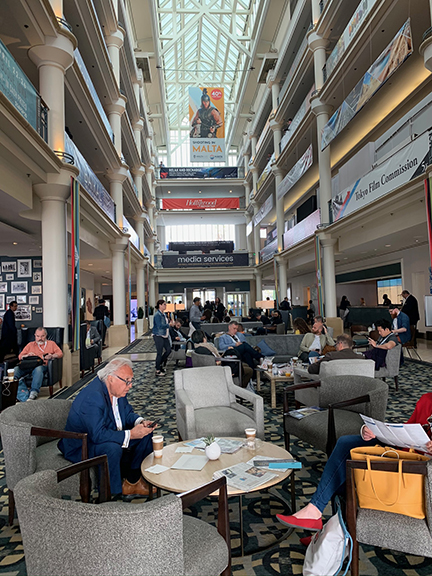
I’m here at the week-long American Film Market event in Santa Monica, California.  This is a huge event and marketplace where hundreds of films, TV shows, and digital products are bought, sold, planned and created.  It’s kind of like speed dating for film buyers and sellers. It runs Nov. 6 through the 13, so if you are at all involved in the entertainment industry, I would definitely check it out.

AFM is vastly different than a film festival.  Most festival’s films are carefully curated for quality and cultural import.  For AFM, the business of film is the order of the day.  What the market, and what audiences to watch is the ruling criteria.  You see a lot of what I call “popcorn movies” here that are the slasher/spy/adventure/horror genre type of films.  People do want to watch them in droves, otherwise, we would be here talking about different types of entertainment and artistic films.

I arrived on Wednesday morning, Nov. 6, and was delighted with the accommodations and facilities provided to the press.  We were welcome to attend most any event and I was free to walk the halls, pop my head into any of the sales offices that line them, and generally explore to my heart’s content.  I saw my friends from ITN Distribution here, and made a few new ones.  But overall, unlike the more freewheeling vibe of a film festival, the air here is serious, focused, and quite business oriented.

The event is held in upscale hotels that line the oceanfront area of Santa Monica, and they are elegant and comfortable.  For the Loews Hotel, AFM’s main location, all 352 rooms were cleared of all beds and turned into offices for visiting sales reps, film companies, distributors, and the like.  You could spend hours just visiting the endless rooms on several floors of film offices.

They also offer a number of very informative workshops and talks.  The first one I attended Wednesday,  was a speech by the very knowledgeable Johnathan Wolf, who is also Managing Director of AFM.  He made some excellent points that are likely very helpful to filmmakers in all levels of experience.  He gave some invaluable tips on how to professionally pitch a film, how to find the right distributor for your project, and many other useful pieces of advice.  Perhaps his best tip was in closing.  He said the next time you see a really crappy film up in the theatre with your friends on a Saturday night, look up all the producers’ names and find out how they managed to get such a lousy film made and theatrically released!

At AFM there are literally hundreds of filmmakers, writers, producers, directors, and distributors. One such filmmaker is Jacqueline Murphy, who I met on Wednesday. She is a director, producer and star of The Admired a multiple award-winning short film.  She is here to try and get interest in making the short film into a feature, or possibly television or digital platform series.   She lives both here in Los Angeles and New York City, and started her acting career playing a nurse on a soap opera, as she is actually a nurse in real life.  She’s a delightful, multi-talented lady, and I wish her much luck with her project.  Her website is theadmired.com.

There are also plenty of screenings and parties at AFM.  I went to one party last night at the Fairmont Hotel Bungalow.  Super fun, and I met some very nice folks there.

For more information about AFM, visit americanfilmmarket.com.  For more photos I took, visit flickr.com/joybennett.  AFM runs through next week, and tickets are still available if you are interested in attending.  Bring your business cards, and dress for success!

American Film Market is Amazing! Read More »

JDCA Discusses US Aid to Israel

A Nov. 8 Jewish Democratic Council of America (JDCA) conference call featured former United States Ambassador Dan Shapiro and Israel Policy Forum Policy Director Michael Koplow discussing the recent debate involving U.S. aid to Israel.

During the annual J Street conference on Oct. 28, Democratic presidential candidate Pete Buttigieg, the mayor of South Bend, Ind, said he wants “to ensure that US taxpayer support to Israel does not get turned into US taxpayer support for a move like annexation.”

Sen. Elizabeth Warren (D-Mass.), who is also running for president, said during an Oct. 19 campaign event that “everything’s on the table” to deter Israel from increasing settlement building in the West Bank, including the U.S. reducing aid to Israel. Sen. Bernie Sanders (I-Vt.) also said at the J Street conference that some of the yearly aid the U.S. gives to Israel should be diverted toward the Gaza Strip.

Shapiro served as the ambassador to Israel from 2011-2017 and said that U.S. aid to Israel has been a staple of U.S. foreign policy for “decades” and was ramped up following the 1973 Yom Kippur War. He argued that such aid is necessary since “Israel is our democratic ally in the Middle East, the only democracy in the Middle East” and because Israel’s enemies –Iran, Hezbollah and Hamas – are also threats to the U.S.

“Israel should have a qualitative military edge and the United States is obligated to provide that,” Shapiro said. He added that the “benefits of this relationship flows both ways, noting that there’s an enormous amount of sharing of Israeli intelligence with the U.S. and Israel also trains U.S. forces.

He went on to say that the U.S. and Israel agreed to a 10-year memorandum of understanding (MOU) where the U.S. provides $3.8 billion per year to Israel during fiscal year 2019-2028. Under the MOU, $3.3 billion a year is allocated for foreign military financing and $500 million toward missile defense.

“Israel should have a qualitative military edge and the United States is obligated to provide that. ” — Fmr. U.S. Ambassador Dan Shapiro

“The value of a 10-year MOU is that it provides stability for both sides,” Shapiro said.

He added that President Barack Obama didn’t treat such aid as conditional despite Obama’s public spats with Israeli Prime Minister Benjamin Netanyahu.

Koplow pointed out that Buttigieg and Warren have called for conditioning aid to Israel to stop them from taking steps toward annexing the West Bank.

“Annexation would threaten Israel’s ability to be Jewish and democratic at the same time,” Koplow said, adding it would also result in “enormous security costs” that go far beyond the monetary value of the MOU.

The issue of West Bank annexation first arose when Netanyahu pledged to start annexing parts of the West Bank in April. In September, Netanyahu vowed to annex Israeli settlements in the Jordan Valley.

Shapiro agreed with Koplow’s criticisms of Israel potentially annexing the West Bank. “It’s very much in U.S. interest that annexation should not occur and we should be active” in that, Shapiro said.

However, he also pointed out that most of the MOU funds go toward long-term purchases of major U.S. military systems that counter Iran and Hezbollah from Syria. “Our dollars are used for what our dollars are used for” and should focus on that, Shapiro said.

Koplow said that he didn’t think that the current discussion over aid to Israel involves “whether the MOU or the current aid structure will be impacted or not.” He said Warren and Buttigieg are simply voicing their displeasure with the current Israeli government. He added that there is a large consensus in the Democratic party to support a two-state solution while ensuring that Israel has a right to defend itself.

“The Democratic Party is still very much in the moderate, bipartisan category when it comes to policy toward Israel,” Koplow said.

JDCA Discusses US Aid to Israel Read More »