fbpx

October 17, 2019

Israeli Ambassador: Venezuela’s UNHRC Seat Shows HRC Has ‘Zero Concern for Human Rights’

Israeli Ambassador to the United Nations Danny Danon criticized the United Nations Human Rights Council (UNHRC) for providing a seat to Venezuela on Oct. 17, arguing that it shows that the UNHRC doesn’t care about human rights.

Danon tweeted that Venezuela is “led by a dictator who starves his people” and Libya, which was also elected to the UNHRC, “runs torture camps for African migrants.”

What is the #HRC’s focus? 1. Obsessive hatred of Israel 2. Zero concern for actual human rights violations,” Danon tweeted.

Danon also said in a statement, “The Human Rights Council continues to abandon human rights and is now in the business of protecting dictators and war crimes.”

United States Ambassador to the U.N. Kelly Craft said in a statement, “That one of the world’s worst human-rights abusers would be granted a seat on a body that is supposed to defend human rights is utterly appalling,” adding that Venezuela’s new seat on the UNHRC “reinforces why the United States withdrew” from the council in 2018.

U.N. Watch Executive Director Hillel Neuer said in a statement, “Electing the oppressive Venezuelan regime of Nicolás Maduro to a human rights council is like making a pyromaniac into the town fire chief. It’s absurd, immoral and offensive.”

U.N. Watch has started a campaign to pressure the U.N. General Assembly to expel Venezuela from the UNHRC under Article 8, which states that any country “that commits gross and systematic violations of human rights” can be removed from the council. A U.N. Watch petition on the matter states, “The Maduro regime routinely targets opposition leaders, including by imprisoning them and preventing their participation in elections. According to the NGO Foro Penal, as of April 2019 there were more than 900 political prisoners across Venezuela. Due process violations are commonplace, including arbitrary detention for extended periods without criminal charges. The judiciary lacks independence, generally rules in favour of the government, and is plagued by corruption.”

The petition added that 4.4 million Venezuelans have fled the country, in large part due to Venezuela’s “catastrophic economic crisis” that has resulted in “mass hunger, epidemics and shortages of basic food and medicine.”

The Anti-Defamation League has noted that Venezuela’s “Chavez/Maduro governments have been overtly anti-Israel, pro-Iran and Syria, and used the Palestinian cause as a propaganda tool to advance their foreign policy agenda.” Venezuelan President Nicolas Maduro has accused claims of his presidency being illegitimate were due to a “Zionist” conspiracy.

Israeli Ambassador: Venezuela’s UNHRC Seat Shows HRC Has ‘Zero Concern for Human Rights’ Read More »

This is the End – A poem for parsha V’zot Haberachah

And this is the blessing with which Moses, the man of God,
blessed the children of Israel [just] before his death.

If you’ve got to go, you’ve got to go.
So you might as well say your piece
as these eager souls already have
their hearts on the other side of
the river.

Not everyone has the benefit of
starting over – of rewinding this scroll
to the beginning and re-reading
the story – of reliving our history
as if it’s the first time, every time.

Soon the garden will be built again.
The same mistakes will be made.
The forbidden fruit, the serpent,
the shame.

But I’m skipping ahead.
Let’s savor the final words, before
the man who brought us here
takes his final hike up the mountain.
He’s doling out blessings like
last day presidential pardons.

May we all live and not die
is the one that rings in my ears.
If only all of that were possible.
I’d like to get to the end and see
the first seeds of the first tree.

Maybe come early and watch the
heavens and earth separate.
But Moses’ final lesson is his death.
So do everything you can before
that happens. This is the entirety
of your blessing.


God Wrestler: a poem for every Torah Portion by Rick LupertLos Angeles poet Rick Lupert created the Poetry Super Highway (an online publication and resource for poets), and hosted the Cobalt Cafe weekly poetry reading for almost 21 years. He’s authored 23 collections of poetry, including “God Wrestler: A Poem for Every Torah Portion“, “I’m a Jew, Are You” (Jewish themed poems) and “Feeding Holy Cats” (Poetry written while a staff member on the first Birthright Israel trip), and most recently “Hunka Hunka Howdee!” (Poems written in Memphis, Nashville, and Louisville – Ain’t Got No Press, May 2019) and edited the anthologies “Ekphrastia Gone Wild”, “A Poet’s Haggadah”, and “The Night Goes on All Night.” He writes the daily web comic “Cat and Banana” with fellow Los Angeles poet Brendan Constantine. He’s widely published and reads his poetry wherever they let him.

This is the End – A poem for parsha V’zot Haberachah Read More »

Anti-Semitic Graffiti Found on Lithuanian Project Commemorating Jewish Life

Anti-Semitic graffiti was found on Oct. 12 on a Lithuanian project depicting Jewish life before World War II in the capital of Vilnius.

The project, Walls That Remember, posted a photo of the graffiti on their Facebook page. The graffiti shows a Jewish Star of David crossed out.

“The people who did this must be found and held accountable for this hate crime. We believe Lithuania is a country that does not tolerate hatred,” the post states. “We will seek this case to be investigated by the Lithuanian police.”

The Lithuanian Jewish Community noted on their website that the graffiti “is the latest in a series of acts of anti-Semitic vandalism of Jewish sites and statues in Vilnius and Lithuania.”

Walls That Remember consists of murals based on photographs of ordinary people that lived in the Jewish community at the time standing against the walls of Vilnius’ former Jewish quarter. The creator of the project, Lina Šlipavičiūtė-Černiauskienė, told a Lithuanian news outlet, “I chose to use the modern language of graffiti in order to bring history closer to today’s people and youths.”

The StopAntisemitism.org watchdog tweeted, “Before the #Holocaust even started, the Lithuanian killing machine took preemptive steps to eliminate nearly 95% of Vilnius’ #Jewish population. This week we see the hatred towards Jews still is alive and well in #Vilnius!”

According to the Times of Israel, around 3,000 Jews who reside in Lithuania are perturbed at the Lithuanian government’s decision to preside over monuments and naming street names after Nazi collaborators. Efforts from the Jewish community to remove such monuments have been met with fury from Lithuanian nationalists, resulting in the lone synagogue in Vilnius being shut down for two days in August.

Anti-Semitic Graffiti Found on Lithuanian Project Commemorating Jewish Life Read More »

‘60 Minutes’ Reports: Tree of Life, One Year Later

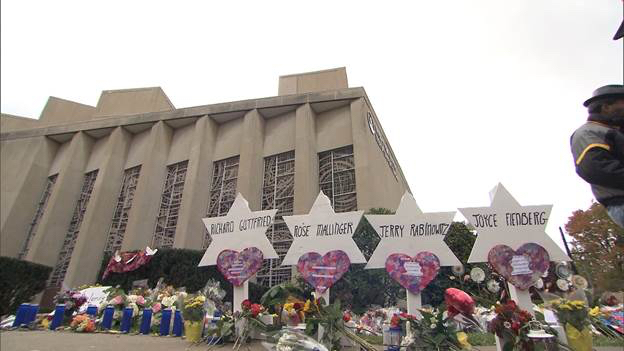
Commemorating the anniversary of the deadliest act of anti-Semitism in U.S. history, “60 Minutes” will broadcast a report from Pittsburgh’s Tree of Life synagogue on Sunday, Oct. 27. In the report, Lesley Stahl interviews rabbis, congregants and leaders of non-Jewish congregations who came to the aid of their neighbors in the aftermath of the attack that left 11 dead and 7 injured, including five first responders.

The program includes a debate about gun control and whether armed guards should be present at synagogues. “What were we thinking? We thought we’re so safe in America?” said Rabbi Jonathan Perlman of the New Light congregation at Tree of Life. “Every single synagogue in Europe has an armed guard. The tragedy is that, you know, it shouldn’t be an act of courage to enter a house of worship.”

Islamic Center of Pittsburgh leader Wasi Mohamed, whose mosque stepped in to raise burial money for the Tree of Life victims, told Stahl, “We understand this more so than a lot of communities do unfortunately. We can understand this pain and the fear of lack of security. Black churches have never been safe…mosques have never been safe in this country. Synagogues have always been targets. It’s been used as a fear tactic against our communities for generations since this country was founded. [The message is] ‘If you’re not safe in this sanctuary, you’re just not safe here, leave.’”

’60 Minutes’ airs at 7 p.m. on CBS.

‘60 Minutes’ Reports: Tree of Life, One Year Later Read More »

Chapter Three: Growing Up in Pre-Nazi Europe

He was born Ernest Zeev Ehrenfeld on February 21, 1925, in Lucenec, a provincial city of 35,000 residents in the agricultural heart of Czechoslovakia. His father Max delivered furniture by horse-and-wagon. His mother Sarah owned a restaurant. 

Trauma struck early: Max died when Ernie was just seven. He suffered from dizzy spells that caused him to pass out and tumble from his horse-drawn carriage.

One day, someone spotted a hat lying in the bottom of the family’s well. The fire department recovered Max’s body, and Ernie recalls seeing his dead father lying there on a white sheet in the grass. He knew then his life was about to change. 

In 1992, when he was in his 60s, Ernie talked about his life with producers from the Bay Area Holocaust Oral History Project, which conducted videotaped interviews with Holocaust survivors, liberators and other eyewitnesses across the region.

Max, Ernie told his interviewers, had always been “the clown of the city,” a youth soccer coach who carried fireworks in his pockets for area kids. 

They followed his cart, calling out for him to toss out his wares, the youngest ones climbing up on the horses. 

Max once laid a bunch of fireworks out on the ground near where his brother sold watermelons. Customers unknowingly stepped on the explosives, setting them off. 

The kids all laughed. Max was their hero.

After his father’s death, Ernie relied on his stalwart mother for his boyhood lessons. But there was far less play in Sarah’s spirit.

She was a hard-working woman who ran “Sarah’s Restaurant” in town, a place where Jewish patrons regularly collected to socialize and play music. 

Sarah was always slaving in the kitchen, hectoring her oldest son, raising a rolling pin when he got in the way, Ernie told Oral History interviewers.

“Stop bugging me!” she’d say. “I have work to do! I’ll break your head!”

Ernie snuck outside to escape the kitchen hubbub. “If she saw me not doing anything, she’d say “Come wash the dishes, wipe this, do this.” 

Come summer, she sent Ernie off to live with his paternal grandparents in the countryside — “just to get rid of me,” he recalled. Still, he worshipped his mother.

Each morning, the boy accompanied his grandfather, Sigmund Ehrenfeld, to surrounding villages, taking the reins to guide the horse-and-buggy as the old man collected eggs from farmers for resale. 

On the Sabbath, Sigmund religiously attended services at his local temple, but had to bribe his grandson to go with him. 

“If I wanted pocket money, I had to schlep with him and go,” Ernie later told interviewers.

“I didn’t like the whole thing, but I had to go with him because I needed money, and if I didn’t go to the temple, then he didn’t give it to me.” 

Ernie also double-dipped, taking a similar bribe from his grandmother: “I was schlepping from both sides, so I had enough for going to the candy store and all those things.”

There are two synagogues in Lucenec, where a thriving community of long-bearded Orthodox Jews worked as farmers, doctors and shopkeepers. 

Ernie’s family lived above a neighborhood butcher shop. While his neighbors were non-Jewish, everyone got along, without the overt anti-Semitism that would eventually divide the entire European continent. 

Back then, Ernie loved bacon, which as a Jew he was forbidden from eating. But the Christian family that ran the butcher shop indulged him. 

“Just come in,” they’d say. “Nobody will see it.”

So he did.

Ernie was a bright boy who became multilingual early on: He spoke Hungarian at home and Slovak at the Jewish school he attended. 

In those days, he never bothered to learn the Yiddish his grandparents spoke. 

That would come later. 

The family restaurant was kosher and Sarah’s strudel brought customers from around the city. Ernie spent time here and with uncles and the local rabbi, who felt sorry for this boy without a father.

In town, Ernie was sometimes bullied because of his religion. 

But he sought to fit in.

“I got along. I just showed them what I am. I didn’t see any difference between the gentiles. Everyone is my friend. I didn’t understand why we aren’t all the same.” 

Ernie had brown hair and blue eyes. People said: “You don’t look Jewish.” And he was proud of that. He never offered his identity as a Jew: “If they asked me, I was.”

But in 1938, Lucenec changed. 

Anti-Semitism had spread from Germany to neighboring countries. Whether it was out of fear from the powerful Germans, or whether they’d always harbored such hatred, many people in town now viewed their Jewish neighbors with suspicion. 

A strict 6 p.m. curfew was introduced for Jews, who now had to wear yellow arm bands to distinguish them from other residents.

Jewish businesses were ordered closed. 

Ernie’s mother was banned from shopping at the local market until well after the best vegetables were sold off. But friends stepped in: farmers snuck into her restaurant to deliver fresh meat and eggs so her restaurant could continue.

Ernie learned first-hand about the hatred that had invaded his hometown. 

One evening, he ran into a policeman on the street, a cop he’d known for years. 

“Aren’t you Jewish?” the officer asked. “Don’t you know you’re not supposed to be out on the street?”

“I know,” the boy replied, “but I don’t know why.” 

“Get home quickly,” the officer hissed, “before I beat you up.”

Soon, gangs of Christian boys wandered the streets harassing Jews. Even long-time neighbors began avoiding Jewish families on the street. 

“They tried to be polite,” Ernie recalled. They’d say ‘Don’t call me; I’ll call you.’ And we didn’t push. We were just happy they left us alone.” 

Meanwhile, Ernie’s hardline mother had always insisted that he make something of himself. For a while, he got a job in a factory, salvaging the metal springs from old mattresses. The work was dirty and unfulfilling. 

So Ernie decided to follow in his mother’s footsteps.

“That’s how I got in the bakery business,” he said. “I loved too much licking the pans.”

He attended a vocational baking school — studying in the afternoon, working in the bakery each morning. There were 16-hour days, all without pay. Sometimes the work included washing the diapers of the boss’s children.

As rumors spread that the Germans were about to invade Czechoslovakia, prices soared. The baking school chefs sent Ernie into the countryside atop his bicycle to test the black market for hard-to-find eggs and flour.

The trips reminded him of those days with his grandfather. Much later, Ernie remembered them as a premonition to darker shopping trips to come, once war came calling, and he gathered food for his Nazi captors.

But even in 1938, there were lighter moments. 

Once, the chefs at the baking school took him to a brothel. Ernie told his mother he was going to see a movie. He remembers standing there with the others, assessing the line of prostitutes before him.

“Choose,” someone said.

Ernie picked the fattest one. He later told the others: With more flesh, he got more for his money.

In 1943, Ernie finally became a professional chef. 

But the following year, the life he knew in Lucenec ended for good.

By then, the Nazis had ruled Czechoslovakia for four long years. Finally, the German and Hungarian occupation issued an order — distributed through the synagogues:

All Jews were forcibly relocated to newly established ghettos on the outskirts of the city; a series of cramped apartment buildings where each family was issued one room apiece, and use of a communal kitchen.

Ernie later recalled how he struggled to pull a heavy four-wheel buggy, one usually attached to a horse, making numerous trips, carrying furniture and keepsakes between the family apartment and the ghetto. 

He likened it to a scene in the movie “Fiddler on the Roof.”

Not everything could go. Sarah parted with personal treasures.

“You can only put so much in one room,” Ernie told Holocaust Oral History interviewers. “We had a lot of neighbors, and my mother said ‘You take this, and you take this.’ And everyone was crying.”

It got worse.

Eventually, young Jewish men across Lucenec were ordered to report to the train station. Nobody knew why, but they could guess: laboring in the brutal German work camps behind Axis lines. 

Sarah filled a rucksack with necessities for her son — an extra sweater and a pair of shoes with slabs of wood hammered over the soles so they would last longer.

She had already given up a chance to save herself.

Friends had wanted to spirit her to England to escape the occupation. But Sarah would not go without her two sons.

Now Ernie was leaving, and his strong-willed mother finally broke down.

She’d long been her family’s emotional rock, who taught her eldest son how to bake and to become a fighter. But in the end, just before he trundled off toward the train station, there wasn’t much to say.

“She kissed me,” Ernie recalled, his voice breaking at the memory. “We were both crying. Everybody was crying.” 

The next day, Ernie boarded a train with 50 other young and bewildered Jewish men, each with simple rucksacks packed by their own families. 

None of them knew what the next precarious weeks and months would bring.

“We didn’t think anything bad. We knew that, because we were Jewish, they took us,” he said later. “Young guys like me; we didn’t dream about what we were getting into.”

He didn’t know he would never see his mother again. 

NEXT WEEK: Marianne arrives in Ernie’s kitchen, where he promptly circles the wagons. Forks fly.


John M. Glionna is a Las Vegas-based freelance writer who chronicles the American West. He’s also a former national reporter for the Los Angeles Times, based in Vegas, and served as the Seoul bureau chief on the newspaper’s foreign desk, where he covered the 2011 Japanese earthquake and tsunami and the subsequent death of North Korean strongman Kim Jong Il. He has also written extensively about California. For more on Glionna visit his website.


Chapter Three: Growing Up in Pre-Nazi Europe Read More »

Father of Jewish Sandy Hook Victim Awarded $450,000 in Defamation Suit

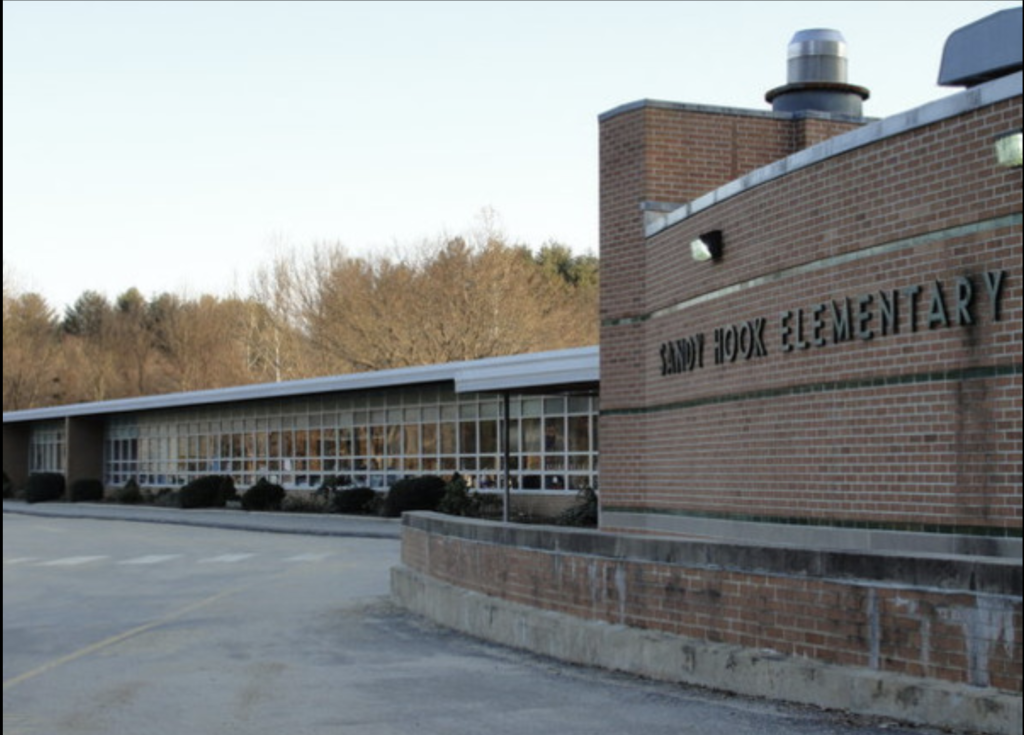
(JTA) — The father of a Jewish boy killed at the Sandy Hook Elementary School won a $450,000 judgment against the editor of a book that claimed the 2012 massacre at the school never happened.

A jury in Wisconsin determined the amount to be paid to Leonard Pozner, whose 6-year-old son Noah was the youngest of the 26 people killed at the Connecticut school.

The award came four months after a judge ruled that Pozner had been defamed by James Fetzer and Mike Palecek, editors of a book claiming that the government had staged the killing to advance gun control measures. According to the book, Pozner had faked his son’s death certificate to advance the conspiracy.

Fetzer, a retired professor emeritus at the University of Minnesota-Duluth, called the judgment “absurd” and said he plans to appeal, the Wisconsin State Journal reported. Palacek has already settled with Pozner for an undisclosed amount, according to The New York Times.

Pozner is a party to multiple lawsuits against those who claim the massacre was faked, including Alex Jones, the online provocateur who runs Infowars. Jones has also made claims to the effect that the parents of Sandy Hook victims are part of a plot to take away firearms.

Father of Jewish Sandy Hook Victim Awarded $450,000 in Defamation Suit Read More »

Facebook’s Sheryl Sandberg Pledges $2.5 Million to ADL

(JTA) — Sheryl Sandberg, the chief operating officer at Facebook, has pledged $2.5 million to the Anti-Defamation League to support anti-hate programs in Europe and the United States.

Sandberg announced the gift on Wednesday in a post on Facebook — where else? — though she did not specify the amount. An ADL statement released minutes later said it would be $2.5 million.

In her post, Sandberg said she was making the contribution in honor of her parents’ 75th birthday and had been inspired to support the ADL specifically following the shooting last week outside a synagogue in Germany.

“A week ago, on Yom Kippur – the holiest day of the Jewish year – I was sitting in synagogue, thinking about how, earlier that day, a gunman showed up at a synagogue in Germany, hoping to kill as many Jews as he could,” Sandberg wrote. “He knew the temple would be full because of the holiday. In the end, a locked door kept him out, but he still managed to kill two people outside. Sitting in temple that day, I knew what my parents’ birthday present should be.”

The ADL’s national director, Jonathan Greenblatt, said the gift comes at a “critical juncture in the fight against bigotry.”

Sandberg’s post also mentioned her parents’ “horror” at rising anti-Semitism in the United States and elsewhere, including at the Tree of Life synagogue in Pittsburgh. She also noted a recent family trip to Yad Vashem, the Holocaust remembrance center in Jerusalem, as a “powerful reminder of where this hate can lead.”

Facebook’s Sheryl Sandberg Pledges $2.5 Million to ADL Read More »

British Teacher Fired for Threatening to Send Jewish Students to Gas Chambers

(JTA) — A British elementary school teacher was fired after telling Jewish students that she would “ship them off to the gas chambers” if they didn’t finish their schoolwork.

The Daily Mail reported Wednesday that the teacher at Newberries Primary School near London allegedly had told her students that she was “joking” and urged them not to tell anyone. But word had spread on the messaging app WhatsApp and the teacher was fired Friday.

According to the paper, 11 students in the class of 28 were Jewish. The teacher, who has not been named, reportedly was an agency worker and had no permanent employment contract at the school.

“We can confirm that last week we were made aware that an alleged racist comment had been made by an agency teacher working within the school,” a school spokesperson said. “We acted on this immediately and our governors and leadership team are undertaking a full investigation. The agency teacher will not be returning.”

British Teacher Fired for Threatening to Send Jewish Students to Gas Chambers Read More »

US, Turkey Agree to Ceasefire in Syria

Vice President Mike Pence announced on Oct. 17 that the United States and Turkey have agreed to a ceasefire in northern Syria.

Speaking to reporters, Pence said that Turkey will temporarily halt their actions in northern Syria for five days to allow the Syrian Defense Forces (SDF) time to withdraw from the area. Various Kurdish militias are a part of the SDF.

After the five-day period is over, Turkey will cease their operations in northern Syria entirely, Pence said.

The day before, Pence, Secretary of State Mike Pompeo and White House National Security Adviser Robert O’Brien had held negotiations with Turkish President Recep Tayyip Erdogan to end Turkey’s invasion of the Kurds in northern Syria or face further sanctions. President Donald Trump had announced on Oct. 6 that the U.S. would be withdrawing forces from the area; since then, he has threatened “to swiftly destroy Turkey’s economy” if they continue their actions against the Kurds.

Israeli Prime Minister Benjamin Netanyahi condemned Turkey’s invasion of the Kurds in an Oct. 10 statement.

Israel is prepared to extend humanitarian assistance to the gallant Kurdish people,” Netanyahu said.

US, Turkey Agree to Ceasefire in Syria Read More »