The Side Door
The Side Door


(JTA) — Police have released a knife-wielding Syrian refugee who had to be subdued by pepper spray by security guards outside a Berlin synagogue after he crossed its security barrier.
Investigators said they had to release the man, a 23-year-old from Damascus, because they did not have enough evidence to charge him with a crime at this point. The investigation is ongoing, according to the state Prosecutor’s Office.
The response was woefully inadequate and even dangerous, Josef Schuster, head of the Central Council of Jews in Germany, said in a statement Monday. He said the violent nature of Friday’s incident prior to Shabbat services at the historic Neue Synagogue should have merited a tougher response.
A “dangerous man” is now at large, he said.
According to a statement from the Prosecutor’s Office, two security guards drew guns on the man, identified by police as Murad M., after he crossed the security barrier, but he did not respond to their order to drop his knife and continued mumbling in Arabic. Local media reported that he said “God is great” in Arabic, a phrase often used by Arab terrorists.
Police subdued the man using pepper spray. He dropped the knife and was arrested.
The man has a residency permit ending in December 2020 and did not have a prior police record.
On Saturday morning, the man was released after a search of his apartment initially failed to turn up any evidence for a motive.
Police Release Knife-Wielding Man Who Crossed Security Barrier at Berlin Synagogue Read More »

The American Jewish Committee (AJC) and other Jewish groups condemned the Trump administration’s Oct. 6 announcement that the United States will be withdrawing troops from northern Syria.
The announcement states that the U.S. will end its opposition to Turkey’s “long-planned operation into Northern Syria,” referencing the U.S. established safe-zone that serves as a buffer between the Turkish government and Kurdish forces. “Turkey will now be responsible for all ISIS fighters in the area captured over the past two years in the wake of the territorial ‘Caliphate’ by the United States,” the announcement reads.
Trump released big statement late Sunday on US allowing Turkey into the safe zone in northeast Syria. Turkey wants to go in to attack the Kurds there, who are close partners with the US military & are critical in fighting ISIS. US mil & senior State officials have opposed this. pic.twitter.com/LyX7TSJglW
— Edward Wong (@ewong) October 7, 2019
The American Jewish Committee tweeted, “The Pentagon said the Syrian Kurds bravely helped take back their homeland from ISIS. Now, after a call with Erdogan, @POTUS
okays a Turkish incursion, a dangerous move that could have dire consequences for the Mideast. We urge POTUS to reconsider. We mustn’t abandon our allies.”
The Pentagon said the Syrian Kurds bravely helped take back their homeland from ISIS. Now, after a call with Erdogan, @POTUS okays a Turkish incursion, a dangerous move that could have dire consequences for the Mideast. We urge POTUS to reconsider. We mustn’t abandon our allies.
— American Jewish Committee (@AJCGlobal) October 7, 2019
Democratic Majority for Israel CEO Mark Mellman similarly said in a statement, “With their backing, Kurdish forces helped lead the fight against ISIS, sacrificing thousands of their soldiers in the process. The United States promised the Kurds continued security cooperation to reduce the Turkish threat, but President Trump’s impulsive decision betrays America’s commitments to the Kurdish people.”
Jewish Democratic Council of America Executive Director Halie Soifer, who was also a national security adviser in the Obama administration, said in a statement that [President Donald] Trump’s “reckless” move “sends a clear message that the U.S. cannot be trusted or relied upon, and that U.S. policy can turn on a dime based on the whims of an unstable president. Our allies, including Israel, will note that President Trump’s foreign policy is clearly guided by his personal and political interests, as opposed to the national security interests of the United States and our regional partners.”
Rep. Lee Zeldin (R-N.Y.) tweeted, “The Kurds have fought, bled & died fighting alongside the US. They have been warriors & brothers in battle along the way. POTUS is right to want to end endless wars, but the Turks wiping out the Kurds will ABSOLUTELY NOT be an acceptable outcome after all of that.”
The Kurds have fought, bled & died fighting alongside the US. They have been warriors & brothers in battle along the way. POTUS is right to want to end endless wars, but the Turks wiping out the Kurds will ABSOLUTELY NOT be an acceptable outcome after all of that.
— Lee Zeldin (@LeeMZeldin) October 7, 2019
Trump defended his decision on Twitter, arguing that “if Turkey does anything that I, in my great and unmatched wisdom, consider to be off limits, I will totally destroy and obliterate the Economy of Turkey.”
As I have stated strongly before, and just to reiterate, if Turkey does anything that I, in my great and unmatched wisdom, consider to be off limits, I will totally destroy and obliterate the Economy of Turkey (I’ve done before!). They must, with Europe and others, watch over…
— Donald J. Trump (@realDonaldTrump) October 7, 2019
….the captured ISIS fighters and families. The U.S. has done far more than anyone could have ever expected, including the capture of 100% of the ISIS Caliphate. It is time now for others in the region, some of great wealth, to protect their own territory. THE USA IS GREAT!
— Donald J. Trump (@realDonaldTrump) October 7, 2019
UPDATE: The Simon Wiesenthal Center said in a statement that they urge “President Trump not to abandon the Kurds of Syria to the deadly whims of Turkey’s Erdogan. Maintaining the presence of a few hundred American troops to protect America’s ally is the most prudent and appropriate path and will negate future attacks by Turkey against people who stood and stand with the United States of America.”
AJC Condemns Trump’s Decision to Withdraw from Syria Read More »

In a survey of 1,812 Jewish voters in Los Angeles County, 70% of those polled “strongly disapprove” of the way President Donald Trump is handling his job and serving the public.
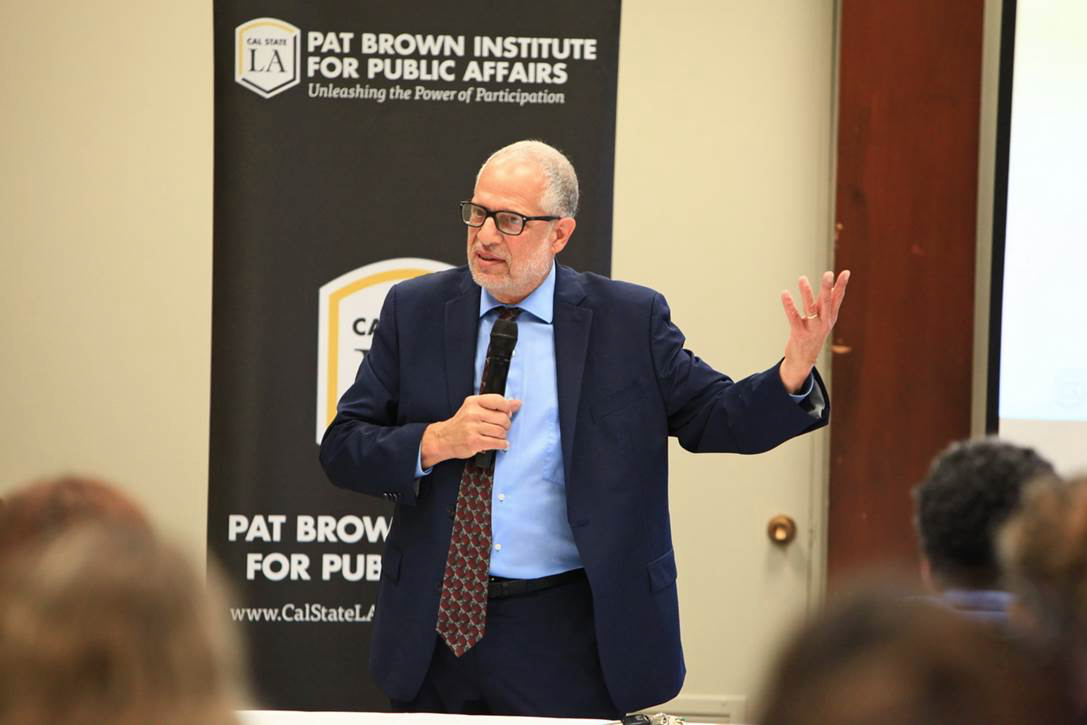
Titled “Surveying Jewish Los Angeles: A Portrait of Engagement,” the poll was conducted from Aug. 7-Sept. 19 by the Pat Brown Institute for Public Affairs at Cal State Los Angeles and public opinion research company Evitarus, with 93% of respondents being reached online and the rest by telephone. The margin of error was 2.3%. Respondents were born between 1928 and the early 2000s.
When asked who they would vote for among the Democratic presidential nominees if the 2020 election were held today, 38% said they would vote for Sen. Elizabeth Warren (D-Mass.). Fifteen percent of respondents said they would vote for former Vice President Joe Biden and 14% said they’d vote for Sen. Bernie Sanders (I-Vt).
On Oct. 3 at Wilshire Boulevard Temple, Raphael Sonenshein, executive director of the Pat Brown Institute for Public Affairs, and Shakari Byerly, partner and principal researcher at Evitarus, presented the findings to reporters, Jewish community professionals and leaders.
The findings, they said, underscored that the overall political leanings of Jewish voters are liberal, while Orthodox Jewish support for Trump and the Republican Party is strong. According to the poll, 70% of Orthodox Jews approve of Trump, particularly his overseeing of the U.S.-Israel relationship.
Overall, 73% of respondents said it is important to them that Israel exists as a Jewish state. Of those, 56% said it was “very important” and 17% said it was “somewhat important.”
Of those polled, 711 identified as Reform, 286 said they were Conservative and 99 identified as Orthodox. Sixty-nine percent said they did not belong to a synagogue.
In a phone interview, Rabbi Susan Goldberg, who formerly served at Wilshire Boulevard Temple and leads Nefesh, a new outreach community, said the finding of low synagogue affiliation revealed that more work needs to be done by Jewish leaders.
“Regardless of ideology, regardless of party, the overwhelming share of L.A. County registered Jewish voters is very, very concerned about what they perceive as rising anti-Semitism.” — Raphael Sonenshein
“I think it’s a high number but also not a surprise. I do think this poll warrants some good discussion inside the Jewish community and inside the organized Jewish community about how we can meet the needs of more of our Jewish community in Los Angeles,” said Goldberg, who attended the poll findings event and helped formulate questions for the survey.
As for the political results, Sonenshein said he was most surprised about support for Warren outweighing that of any other Democratic candidate. He added it was “good news for Elizabeth Warren, but whether that translates into an even bigger base will depend on the ability to win nonwhite voters going forward. ”
Additionally, the poll revealed that an overwhelming majority of L.A. County’s registered Jewish voters are concerned about anti-Semitism, with 75% saying they believe it is a serious problem.
“I think it is a really striking result,” Sonenshein said, explaining that respondents submitted lengthy comments about anti-Semitism. One wrote that anti-Semitism is most serious among the alt-right while another said it is most concerning when manifesting as anti-Israel bias from the left.
“Regardless of ideology, regardless of party,” Sonenshein said, “the overwhelming share of L.A. County registered Jewish voters is very, very concerned about what they perceive as rising anti-Semitism.”
Full survey results are available online.
Poll: L.A. County Jews on Trump, Warren and Anti-Semitism Read More »

New York Police Department (NYPD) Deputy Inspector Mark Molinari announced in an Oct. 3 meeting with the United Jewish Appeal (UJA)-Federation of New York donors 163 hate crimes took place in New York City from Jan.-Sept. 2019, a marked increase from 108 during the same timeframe in 2018.
Jewish Telegraphic Agency (JTA) reports that Molinari, who heads the NYPD’s Hate Crimes Task Force said 87 percent of the anti-Semitic hate crimes that occurred in New York City in 2019 were “generally vandalism involving the drawing of swastikas.” The rest were assaults.
Overall, there were 311 total reported hate crimes in New York City through September in 2019. Fifty-two percent were anti-Semitic. There were 250 total hate crimes reported in New York City during the same timeframe in 2018.
“For the most part, I’m dealing with 311 random individuals of very diverse backgrounds committing these hate crimes against different people,” Molinari said, adding that “there aren’t roving bands of white supremacists, from khakis and tiki torches to hood-wearing people” committing hate crimes in New York City.
Anti-Defamation League (ADL) New York and New Jersey Regional Director Evan Bernstein told the Journal, “There [have] been issues in Brooklyn for many, many years… with gentrification. There have been issues between the different minority communities that make up Brooklyn and the Jewish community, and I think this is again showing that there needs to be even more work done to ensure that these hate crimes stop.”
“It’s a huge challenge for us as an organization trying to stay on top of these types of incidents because we want to do the best we can to prevent them, but also we want to be proactive.” — Evan Bernstein, ADL.
Recent instances have included three swastikas at Pelham Middle School in New York’s Westchester County on Oct. 2 and two youths who threw milk crates into the windows of the Rivnitz shul in Brooklyn on Sept. 30 during Rosh Hashanah services.
“It’s a huge challenge for us as an organization trying to stay on top of these types of incidents because we want to do the best we can to prevent them, but also we want to be proactive,” Bernstein said. “And the sheer magnitude is making it harder. We’re feeling like we have to be more reactive than proactive, and that’s very difficult for us.”
UJA-Federation said during the Oct. 3 meeting that together with the Jewish Community Relations Council, they are funneling $4 million to 2,000 Jewish institutions in New York City over the next two years to enhance their security in response to the rising hate crimes, according to JTA. Bernstein told the Journal that the ADL is working with schools in New York City to implement anti-bias education.
“We need to let people know, especially young people, that bias of any kind is not tolerated,” Bernstein said. “And that’s what’s happening here. These are people that are clearly showing bias against Jews and Orthodox Jews, and we need to get to the root cause of it.”
He called for New York City officials to facilitate dialogue between minority communities in the city.
“Elected officials are the leaders in their community,” Bernstein said. “They’re the ones that are representing those varying swaths of different kinds of backgrounds and religions and they need to be the ones coming together that can create the sense of community to where someone knows someone well enough or knows the community well enough to where they’re not going to want to assault somebody else. But right now, I think there’s a divide in the conversations that people just don’t understand each other.”
ADL CEO Jonathan Greenblatt similarly tweeted that there needs to be “a plan from the Mayor/ elected leaders to curb the surging #antiSemitism that we see.”
Report: NYC Anti-Semitic Hate Crimes Increased 50% in 2019 Read More »

This story originally appeared on Kveller.
Abba, are you there?
You died 4 1/2 years ago, but I still forget sometimes.
I was driving in sixth gear the other day. I went to exit the freeway and, on the off-ramp, I downshifted enough that I was able to shift directly into fourth. You taught me never to skip a gear. You said it was bad for the car. I never asked more about it; I just did what you said.
Because you were Abba and I was me and you knew best. You knew all. That was your job.
But now I want to know why. I bet you knew but I didn’t think to ask. I didn’t know to ask. Like: Does it hurt the gears? What if the speed is sufficiently low? Is that not the same as shifting to neutral and then into an appropriate gear? I mean, it is — right?
I won’t Google it. The internet is not the answer because you were the answer. And you disliked the internet. You didn’t think it would really catch on, the same way you said cellphones wouldn’t. Abba, I laughed at you with disdain. And I’m sorry.
I understand you better now that you’re gone. I understand how scary the internet was for you. It’s scary to me, too. We have trouble processing a certain kind of information, you and me. Filling out forms is hard for us. Lots of stimulus is hard for us. The internet can really overwhelm our brains in ways other people don’t get overwhelmed. They tell us we have a touch of ADD, which seems so strange since we are so productive and focused in so many ways. They didn’t have alternatives for us when the internet became popular. We just pretended we didn’t like it.
So instead of looking up why I shouldn’t skip gears when I drive, I prefer to keep it in the category of “Things I Can’t Know Because My Father Died.” This list of things is long, and it is a terrifying one. There is no comfort, there is no peace. Some more items on the list:
What was Grandpa really like? What was he always angry about when you were a kid?
What was your bar mitzvah like?
Who taught you how to dance so well?
Were you scared to become a dad?
What was the best part about me being born?
Was it weird having a daughter look so much like you? Did you like that?
Why did you collect such strange books? What did they mean to you?
And then there are the many things I wish I never knew. Like what it was like for you to feel your body dying. What it was like to lose the ability to control your walking, your balance, your speech, your writing. I know these things because you told me. And I was there to receive them. That was my job.
I know your regrets — about your lack of Jewish dedication, about your communication, about your faults, about how you treated mom sometimes.
I know the last things you wanted to say to your brother, your cousins, your niece and nephews. To your son.
I know what you wanted mom to hear you say before you died. I helped you say it.
I was there for all of it, and still, I forget you are gone.
This is the time of year when we remember. Four times a year — including Yom Kippur — we have Yizkor, an entire Jewish memorial service just for people like me. We stand and we weep, or we can’t weep and that’s weird because we cry ALL THE TIME everywhere else, all over everyone and every thing. So we stand and listen for the ancient words that seal the deal. The rabbinical punctuation mark to end all punctuation marks.
The punctuation is this: Your father is dead. He is never coming back. You won’t ever know the things you don’t know and you can’t unknow the things you do. You will live the rest of your life in his shadow, as his shadow. You are the daughter of a dead father.
Binyomin Yidl ben Meir v’Shayna Duba. Who will receive your name? Who will carry that weight and that blessing into generations I can only pray God gives me the time to see? If my older son reads this, he will say, “Ema, I carry his countenance. I look like him. I talk like him. I make people laugh like him. I am like Zaidy.”
And my son will also invariably Google why you shouldn’t skip gears when you drive. And maybe, just maybe, he will tell me the thing I don’t want to know: That it’s not true. Zaidy was wrong. Zaidy believed it because his father told him it was so, and he believed it because no one questioned one’s father.
No one should question one’s father.
Abba, are you there?
Mayim Bialik: Everything I’ll Never Know Because My Father Died Read More »

A British university and college trade union apologized on Oct. 2 for leaving out Jews in a Sept. 27 email about Holocaust Memorial Day, saying the omission was due to a “drafting error.”
The Jewish Chronicle reports that the University College Union (UCU) sent an email to various local branches urging them to commemorate Holocaust Memorial Day on Jan. 27. The email goes onto list several of ethnicities that were persecuted under the Nazi regime – including blacks, gays, those with disabilities and “non-Jewish Poles” – but Jews were not listed.
After receiving backlash over the matter, the UCU issued a follow-up email stating, “UCU apologizes for the drafting errors in Branch circular UCU/972 that was sent out in last Friday’s email to alert branches to observe Holocaust Memorial Day, January 27. UCU apologizes for the offense this caused and reassures all members that it continues to fight against all forms of anti-Semitism, hatred and bigotry in society.”
They later provided a link to an updated version of email, which had an extra paragraph describing how the Nazis’ “systematic murder of six million Jews across Europe begun by the separating and dehumanizing of the Jewish people.”
University of London Sociology Professor David Hirsh tweeted that the initial omission of Jews from the email was due to “institutional anti-Semitism” at the UCU.
The point is not a @ucu apology for this mistake. Of course it was a mistake and of course it will have no difficulty apologizing.
The point is to explain how this particular mistake could possibly have happened.
And the answer lies in the history of institutional antisemitism. https://t.co/9OKTVrT5Cw
— David Hirsh (@DavidHirsh) October 1, 2019
UCU has nothing to fear. It long ago defeated and humiliated its members who opposed antisemitism. It excluded them, allowed them to be bullied and watched carelessly as they resigned.
Now @ucu is part of a much wider and more entrenched institutional antisemitism on the left.
— David Hirsh (@DavidHirsh) October 1, 2019
In any case, a list like that of 'victims of the Holocaust', even if it had Jews in it, as one of the victim groups, would completely misunderstand the Holocaust. It would completely understand the central importance of Jews to Nazis.
— David Hirsh (@DavidHirsh) October 1, 2019
According to the Jerusalem Post’s Seth Frantzman, the UCU wasn’t the only organization to omit Jews as victims of the Holocaust in their descriptions of Holocaust Memorial Day (HMD) events.
“On some websites, such as the Holocaust Memorial Day Trust’s page devoted to ‘75 memorial flames,’ it is clearly noted that the Holocaust was ‘the genocide perpetrated by the Nazis against the Jews of Europe,’” Frantzman wrote. “However, a press release from April about the ‘HMD 2020’ theme, called ‘Standing Together,’ doesn’t mention the word Jew. The press release, also at the Trust’s website, notes that ‘HMD 2020 will also include marking the 25th anniversary of the Genocide in Bosnia.’” Frantzman noted “that while Bosnia is mentioned, the place that the Shoah began in Germany is conveniently left out.”
Frantzman added that there are similar omissions on “other sites related to the ‘HMD 2020’ and ‘Stand Together’ events.”

(JTA) — Hundreds of etrogs, the citron fruit used for the holiday of Sukkot, were seized at an airport in England.
The Animal and Plant Health Agency held up the shipment at the Manchester Airport under new and stricter regulations on the import of citrus fruit. Etrog importers were unaware of the new rules, the London-based Jewish Chronicle reported.
The Board of Deputies of British Jews worked with the Department for the Environment, Food and Rural Affairs to have the 600 etrogs taken to a Manchester synagogue, where the stalks could be trimmed to meet the stricter rules, the Board of Deputies reported. The fruits also must be destroyed immediately after the holiday.
Some 10,000 etrogs were due to be imported to Britain for Sukkot this year.
Board of Deputies President Marie van der Zyl said the board’s “timely intervention” has “potentially saved Sukkot.”
“The waving of the lulav (palm branch) and etrog with hadas (myrtle) and arava (willow) is an essential and iconic part of the festival and it was vital to ensure the supply of etrogs for this year,” she said in a statement.
Van der Zyl called on suppliers to “ensure that etrogs are imported in full compliance with regulations in the years ahead.”
The shipmen was seized at the end of last month.
Hundreds of Etrogs Held Up At Airport in England Over New Import Regulations Read More »

Once a year, for 24 hours, traffic all over the country grinds to a halt. Cars, buses, trucks, and traffic lights give way to empty roads filled with a somewhat rare silence. Trains stand still, and airports shut down. This is Yom Kippur.
Dominik Döhler, ZAVIT* – Science and Environment News Agency
Video on Yom Kippur and Air Quality in Israel:
For Jews around the world, Yom Kippur is the most sacred day of their faith. It is a time of contemplation and self-reflection. Following Rosh Hashana (the Jewish New Year), Yom Kippur marks the end of the “Ten Days of Repentance.” Traditionally, one seeks forgiveness for the sins and transgressions committed during the previous year and prays for a healthy and prosperous future.
Moreover, it is a time of fasting and abstinence. Religious and many secular Israelis alike honor this holy day by neither eating nor drinking, not using any electricity and abstain from driving cars or using any other motor-driven means of transportation. Latter has a remarkable and unique side-effect: Nationwide, traffic grinds to a complete halt. Large, vibrant cities such as Tel Aviv and Jerusalem become so quiet that it almost feels like an invisible hand has just turned down the volume. Where there is commotion, it is only on account of pedestrians strolling down the streets or the laughter of children riding their bikes through normally traffic-choked arterial roads.
Usually, Yom Kippur takes place not too long after the World Car Free Day (September 22). So how does a world without cars really look like?
A natural experiment in reducing air pollution
Besides the silent streets and almost no car accidents, the most substantial impact of the Jewish holiday is one that cannot be seen with the naked eye: The air is simply cleaner. On Yom Kippur, ambient air pollution across the nation drops to an all year minimum, and Israel experiences better air quality than on any other day.
Nitrogen oxides (NOx), a mixture of hazardous gases produced during fuel combustion and the main pollutants responsible for poor air quality, are nosediving at this time. “Nitrogen oxides are known to cause numerous adverse health effects including respiratory diseases and lower immunological resistance,” says Inbar Blum, sustainable transportation project manager at the Ministry of Environmental Protection (MoEP).
Sitting at the heart of a bustling metropolitan area, Tel Aviv usually sees one of the highest concentrations of nitrogen oxides; But according to the official numbers put out by the MoEP, concentrations in Tel Aviv have plummeted by 94.5 percent, from 62.8 to 4.1 ppb, during last year’s Yom Kippur. In the Haifa port area, nitrogen oxides have radically declined from 181.3 to 3.3 ppb (98.2 percent). Jerusalem measurements for 2018 have shown similar results. In 2017, nitrogen oxide concentrations in some less-trafficked parts of the city have even reached zero.
During Yom Kippur, a less notable, nonetheless mentionable drop in Benzene, a highly carcinogenic chemical compound, is also commonly observed in several areas in Israel. The effect of the holy day on the levels of PM (Particulate Matter) – a pollutant produced by cars and trucks responsible for the death of nearly 2,000 Israelis every year – could not be measured, because particles stay in the atmosphere for about ten days once created.
Cars running on diesel are the worst offenders
The significant improvement in air quality on Yom Kippur provides a rare example of the role of transportation as the primary source of air pollution in the centers of big cities. In recent years, numerous steps have been taken around the world in order to tackle the growing problem, among them are the expansion of public transportation systems, car-free zones, and a shift toward electric vehicles. Similar measures are adopted in Israel.
According to the Israeli Ministry of Environmental Protection, cars running on diesel are one of the worst offenders when it comes to exhaust emissions. Blum points out that although they only account for 20 percent of the mileage in Israel, diesel engines contribute 80 percent to the entire air pollution caused by road traffic.
“At the Ministry of Environmental Protection, we have launched multiple initiatives aiming to reduce air pollution from car traffic,” Blum explains. “One of which is the creation of low-emission zones. These zones are designated areas in which diesel-powered cars are not allowed to drive”. A first low-emission zone was launched on February 2, 2018, in downtown Haifa, in the north of Israel, which prohibited any vehicle weighing more than 3.5 tons from entering the designated area. This restriction, however, does not apply to heavy vehicles with an emission-reducing particulate filter. On January 1, 2019, stage 2 of the low-emission zone in Haifa was initiated by banning all “polluting, light commercial vehicles” from entering the cities residential areas.
According to Blum, the implementation of further low-emission zones is underway and also planned for the rest of the country. As a matter of fact, a first stage low-emission zone for downtown Jerusalem is planned to come into effect in November of this year, banning older-model-powered trucks.
At the same time, the government subsidizes a filter system for diesel cars that do not meet the standards of environmental regulations. Since November 1, 2018, this is the only way for anyone who owns a diesel-powered vehicle to renew their license. Those who refuse to equip their car with the new filter will have to put a red sticker on their windshield, which will not only indicate where the vehicle is allowed to drive but send a message of psychological nature. “People in the neighborhood will know who owns a polluting car, and eventually this person will feel compelled to switch to a more environmental-friendly model,” Blum hopes.
Both initiatives are part of the Clean Car Revolution, a project initiated in 2016 by the MoEP and the Jewish National Fund with the objective of “reducing dangerous vehicular air pollution.” Besides regulatory measures and retrofitting antiquated diesel-cars, the Clean Car Revolution wants to introduce a whole fleet of eco-friendly vehicles including electric buses, hybrid taxis, and an electric car ride-share system. In August 2018, the MoEP launched a subsidization program, which aims to incentivize taxi drivers to switch to hybrid cars. Those who opt to purchase a hybrid car receive up to 20.000 NIS ($5.600) in subsidies. Blum emphasizes that the MoEP is working tirelessly to expand the infrastructure for a new eco-friendly transportation system. “67 electric buses have already been put into service in different parts of the country,” says Blum. Indeed, just recently, 10 new green electric buses were added to the fleet in Jerusalem. “Furthermore, in Haifa, we have already introduced a set of electric cars, and hybrid taxis will follow soon. Due to the MoEP’s efforts, we have already seen a decline of 10 percent in nitrogen and sulfur oxides between 2017-2018,” Blum adds.
“What happens during Yom Kippur should be duplicated”
On a final note, Blum added: “We really hope by going the extra mile we can ultimately have the same air quality we experience on Yom Kippur every day”.
This view is shared by Yotam Avizohar, the CEO of the Israel Bike Association. “What happens during Yom Kippur, when tens of thousands of Israelis leave their cars at home and reclaim the streets for walking and biking, should be duplicated, not only because of the dramatic improvement in air quality,” Avizohar writes in a statement.
He is referring to a report by the OECD countries, which revealed that the density on Israeli roads is among the worst in the world, at 3.5 times the average of other OECD countries. Car ownership, travel duration, costs for traffic congestions, and road accidents are on the rise. However, Avizohar reassures it is not all bad news. “More and more people begin to recognize the benefit and attractiveness of bicycle transportation. According to the Israel Center Bureau of Statistics, over 300,000 bikes are sold per year. Added to the bicycle riders are 230,000 electric bikes”, he says.
At the same time, bicycles alone may not be enough. Israel’s existing public transportation infrastructure is also in need of a major upgrade, one that might already be underway with the completion of a brand new high-speed railway connection between Jerusalem and Tel Aviv last week.
Shimrit Nothman, the CEO of “15 minutes”, a public transport advocacy organization, stresses that a shift from privately owned vehicles to public transit is crucial. “Creating sophisticated transportation networks is the only way to improve mobility, environmental health, and save Israelis from sitting in traffic jams every day. Israel has the worst traffic jams in the OECD yet spends the least on public transportation. Commute times have grown by 30 percent just since 2005, and over 90 percent of carbon emissions come from the use of private vehicles. But, through the creation of fast, convenient public transport networks, we can slow or even reverse these trends. One city bus can take 40 private cars off the road and keep 184 metric tons of carbon out of the air every year, and two kilometers of bus lane can shorten commute times by 4 minutes. We as citizens, need to make sure our government is prioritizing and investing in these solutions.”
Whether it is going to be electric cars, better public transportation or more bicycles in the street, Yom Kippur has inadvertently become a relevant benchmark not only for air quality and health but ecological awareness in Israel at large. Who would have thought that a holy day that stands for religion and faith, steeped in tradition and history, would one day become a flagship for change, progress, and even science?
During Yom Kippur, Air Pollution Levels All Over Israel Plummet to Near Zero Read More »
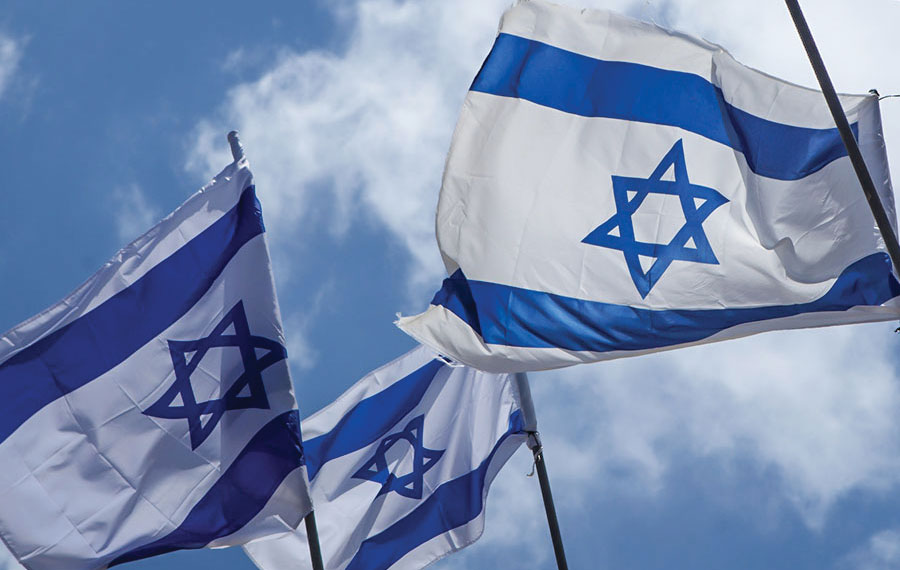
JERUSALEM (JTA) — About 60 percent of Jewish Israelis plan to fast on Yom Kippur, a poll found, but synagogue attendance for Judaism’s holiest day is not nearly as widespread.
According to the special Yom Kippur survey by the Israel Democracy Institute’s Guttman Center for Public Opinion and Policy Research, 42 percent of Jewish Israelis plan to attend all or some of the holiday services, while 39 percent said they will not attend any of them.
The survey of 501 adults aged 18 and over, men and women, was conducted Oct. 3-6 via the internet and telephone.
Yom Kippur begins Tuesday night at sundown and lasts for 25 hours.
The survey found that 60.5 percent of Jewish Israelis plan to fast on Yom Kippur, while 27.5 percent do not and 5 percent of respondents will only drink liquids. The rest are undecided.
The results are similar to a 2000 survey, when 63 percent of Jewish Israelis said they planned to fast, but are a drop from the 73 percent in 1994.
In terms of synagogue attendance, 23 percent of Jewish Israelis said they plan to attend all the services and 19 percent said they will attend some, while 12 percent said they will go just to hear the shofar.
The sampling error is plus or minus 4.1 percent.
60% of Jewish Israelis Plan to Fast on Yom Kippur, Poll Finds Read More »