fbpx

October 3, 2019

Two Men Arrested for Swastika Graffiti on NY Masonic Lodge

Two people were reportedly arrested on Oct. 3 for allegedly spray-painting graffiti on a Masonic Lodge sign in Queensbury, N.Y., which included a swastika.

The Post Star reports the men have been identified as Anthony Dean, 20, and Gaven Wasson, 18. Police concluded that neither of the apprehended suspects had any anti-Semitic intent with their graffiti of the Masonic Historical Society sign. 

“They were just trying to be cute,” Lt. Steve Stockdale told the Post Star. “Neither one of them had any comprehension about what it meant.”

There was also graffiti on the Queensbury Masonic Lodge that read “Crip 58” and “58 Crip.”

Anti-Defamation League (ADL) New York and New Jersey Regional Director Evan Bernstein told the Journal in a phone interview that the ADL is going to reach out to the police to discuss the matter.

“[They] didn’t look like very young guys, and they put the swastika on the sign for a Masonic temple, which also typically has Stars of David,” Bernstein said. “Someone who doesn’t understand [could] easily maybe think of that as a Jewish symbol and they’re putting a swastika on there. It’s hard for me to believe that they don’t understand what that swastika means.”

Masonic lodges are where the Freemasons meet, members of a secret fraternal organizatioin.

Bernstein added that it is “very infrequent” for a swastika to be used in a manner that isn’t anti-Semitic.

“It’s not just a New York City issue. It’s not just a Brooklyn issue. We’re seeing these kinds of things now taking place all over the state of New York,” Bernstein said. “We’re seeing more and more white supremacist flyering, we’re seeing now these kinds of hate symbols being drawn on buildings and it’s very, very disturbing.”

StandWithUs tweeted, “Blind hate is raising its head once again.”

Two Men Arrested for Swastika Graffiti on NY Masonic Lodge Read More »

Soon Enough, We’ll Go – A poem for parsha Vayelech

Today I am one hundred and twenty years old.
I can no longer go or come

It’s a shame for Moses as a lot of
what he did was come and go.

I’m nowhere near half his age
which is a lie I tell myself as

I’ll be there in the blink of
a child’s eye. And that’s just

to the halfway mark. I could dream
of being one hundred and twenty

but every ancestor I’ve ever had
scarcely saw a 9 in front of their

final tally. This may also be a lie
as the information I have about

who they were, and where they
came and went is hidden in

the mouths of people who
already went.

My father is getting there.
But even he who could lift

the world with only one of his arms
isn’t so interested in crossing rivers.

It’s a shame for Moses who came
and went for a hundred and

twenty years, and now has only
one place left to go.


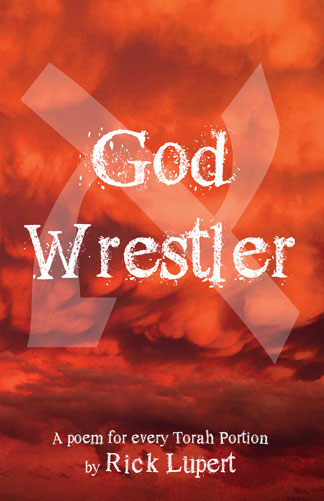
God Wrestler: a poem for every Torah Portion by Rick LupertLos Angeles poet Rick Lupert created the Poetry Super Highway (an online publication and resource for poets), and hosted the Cobalt Cafe weekly poetry reading for almost 21 years. He’s authored 23 collections of poetry, including “God Wrestler: A Poem for Every Torah Portion“, “I’m a Jew, Are You” (Jewish themed poems) and “Feeding Holy Cats” (Poetry written while a staff member on the first Birthright Israel trip), and most recently “Hunka Hunka Howdee!” (Poems written in Memphis, Nashville, and Louisville – Ain’t Got No Press, May 2019) and edited the anthologies “Ekphrastia Gone Wild”, “A Poet’s Haggadah”, and “The Night Goes on All Night.” He writes the daily web comic “Cat and Banana” with fellow Los Angeles poet Brendan Constantine. He’s widely published and reads his poetry wherever they let him.

Soon Enough, We’ll Go – A poem for parsha Vayelech Read More »

Australian Jewish Student Forced to Kiss Muslim Student’s Feet for Being Jewish

An Australian Jewish student was forced to kiss a Muslin student’s feet or else he would be physically assaulted for being Jewish, the Australian Jewish News (AJN) reports.

The Cheltenham Secondary College Jewish student, 12, was at a Melbourne park near the school back in July when the Muslim student and nine other students from the same school surrounded him and issued the aforementioned threat. 

The incident was filmed and was shared extensively on Instagram. Since then, the Jewish student has been subjected to anti-Semitic slurs at school and was assaulted in a locker room by one of the students who watched him kiss the Muslim student’s feet.

The Jewish student’s mother told AJN that the school didn’t take any disciplinary action against the Muslim student or any onlookers because the incident didn’t take place on school property.

“They didn’t even want to call it anti-Semitism,” the mother said. “To avoid action, everything becomes an ‘isolated incident,’ so then it is not bullying or religious vilification.”

She told the Sydney Morning Herald that she met with the Muslim student’s parents over the matter, and they were appalled over what had occurred.

“We sat down, his parents, the two boys and myself, around the table and explained the velocity of [the bullying] and what it meant to us as parents as far as building bridges between Jews and Muslims in society and not creating division like that photo does,” the mother said.

Northwest Victoria Department of Education Director Barbara Crowe told the Sydney Morning Herald, “This was not acceptable and would have been an unpleasant experience for [the boy]. I am sorry that this occurred.”

AJN also reported on extensive anti-Semitic bullying of a five-year-old Jewish student at Hawthorn West Primary School stemming from the student being circumcised. The student has been subjected to anti-Semitic slurs like “Jewish vermin” and “dirty Jew.”

The bullying had reached a point where the student broke down one morning, telling his mother, “Mummy, you shouldn’t love me. I’m a worthless Jewish rodent. I’m vermin.”

The student’s parents discussed the matter with the school’s principal, advocating for a program against anti-Semitism. The principal refused.

“[The school] refused to accept there was an anti-Semitic issue,” the five-year-old Jewish student’s mother told AJN, adding that they simply attributed it to bullying and they didn’t “want to make other students feel uncomfortable.”

The student’s parents are searching for a different school for him, and is being homeschooled in the meantime, according to the Sydney Morning Herald.

Anti-Defamation Commission Chairman Dvir Abramovhich told the UK Daily Mail, “This is [a] stain on Victoria’s education system that will long endure. Bullying and harassment of Jewish students at public schools is a deeply embedded virus that is reaching pitch-fever and should alarm us all. We are gradually reaching a point of no return.”

The Anti-Defamation League tweeted, “No child should be subjected to this type of horrible #antiSemitic abuse. We stand with our partners & the Jewish community in Australia in calling for schools administrators to take more action to stop this #hate.”

According to an Executive Council of Australian Jewry report, anti-Semitic incidents increased 59 percent from 2017 to 2018 in the country.

Australian Jewish Student Forced to Kiss Muslim Student’s Feet for Being Jewish Read More »

How Mechilah Can Give Us a Model to Go Forward on Inclusion

Many of us spend time leading up to the High Holidays helping congregations and organizations prepare to fully respectfully welcome Jews with disabilities into our communities and rituals. Most of the training is good, and the organizations are almost always earnest. Hence, we can get really optimistic and expect that everything needed will be implemented. And yet, as much as we are excited about the idea of how inclusive things will be, we must also always be aware that they will not be perfect every time.

When Yom Kippur ends, and people start taking stock of the inclusion efforts at their synagogue for the holidays, there will be stories, probably at every congregation in the world, where inclusion did not happen the way we might have wanted. There will be mix-ups, misses and unanticipated situations.

The question is not how to avoid those, because I believe that our tradition teaches us the folly of expecting perfection. The question is, where do we go from here.

I’ve been in a lot of meetings where organizers are reflecting on past events, and been privy to a lot of anguished sharing sessions where participants with disabilities painfully recount things that went wrong. Too often, the one side is busy defending the adequacy of intention, while the other side has determined that they have suffered at the hands of an organization incompetent at best and indifferent at worst. Battle lines are drawn. Hurts rage.

What if we did something a little different? In preparation for Yom Kippur, Jews practice Mechilah, Mechilah encompasses parallel Jewish obligation. First, a person to understand where they have hurt their fellow, and make amends the best of their ability. What is sometimes less understood is that should this process be undertaken faithfully, the person who was hurt essentially obligated to offer forgiveness. What if we practiced a little post-High Holiday Mechilah?

What if those of us in charge of organizing events were to say, “we want to hear where things did not go right.” What if we were to then first acknowledge the painful nature of the experience for the participant that experienced it, and then have an earnest discussion about how it could be improved in the future.

What if those of us that felt excluded were to candidly share our hurt, assuming that we have a receptive audience who will show contrition. What if we were to then do the really hard work of letting go of the pain and hurt, and offering forgiveness while we work together on a solution?

Judaism does not teach us to turn the other cheek, that sort of blanket forgiveness belongs to other faiths. Judaism teaches us that we have an obligation to forgive an individual that comes to us in true contrition, trying to act better.

If both parties practice this Mechilah, then we have a blueprint to move forward. We’ve identified problems and solutions, and while Rosh Hashanah 5781 will no doubt still have its problems, they will be different and hopefully fewer than 5780, and each Shabbat and each event this year will benefit from the process.

In tradition, Mechilah is about removing negative entries on the accounting of our souls What if, in this inclusion Mechilah, what we are doing is taking potential negative entries on the ledger of our collective and shared experience in synagogue life, and building instead credits to the ledger to make us more inclusive? Then we might truly be sealed for a better year in the year to come, whether we believe that that is a spiritual phenomenon or not.

In closing, I hope that everyone that reads this had a wonderful Rosh Hashanah and will have a meaningful and reflective Yom Kippur.

Yom Kippur PSA: Jewish tradition actually forbids us from fasting if we are medically required to eat, and it is incumbent upon our communities to make sure that people who are not fasting for medical reasons feel supported and embraced in their eating.

How Mechilah Can Give Us a Model to Go Forward on Inclusion Read More »

The Baker: A Bittersweet Life

Hello, Jewish Journal blog reader.

Come along for a wild ride into the life and times of a Jewish baker who made his mark on modern history with little more than a rolling pin and a bad attitude.

Over the coming months, I’ll be posting weekly installments of a long-form narrative piece I’m calling “The Baker: A Bittersweet Life.”

It’s the gripping tale of the late Ernie Feld, a Jewish pastry chef whose culinary genius and curmudgeonly kitchen demeanor launched him on perilous worldwide escapades spanning the 20th Century.

But before we get into Ernie’s story, let me tell you a little bit about how I first encountered this amazing man.

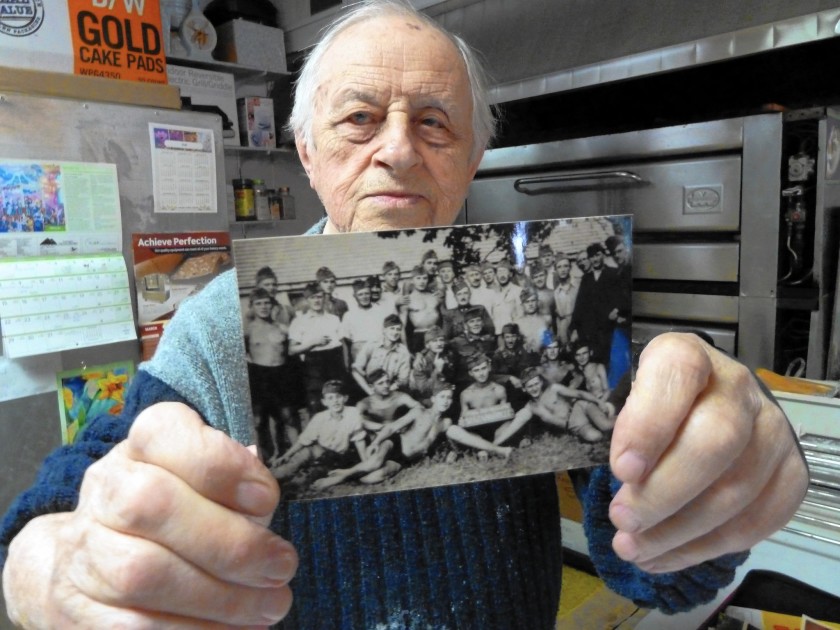
In 2015, as a national correspondent for the LA Times, I wrote a story on the recollections of an aging Lake Tahoe-based Jewish pastry chef who was taken captive during World War II was forced to make his signature strudel for the a band of ruthless Nazi SS officers.

His voice was low, his accent guttural, his story fascinating.

The piece caught the attention of Hollywood producer Dave Wolthoff, who brought the 2013 movie “Concussion starring Will Smith, to the screen.

Dave wanted to develop Ernie’s story into a film, and suggested there might be even more to the tale. Together, we revisited Ernie, heard many more of his anecdotes.

After several months of interviewing family members and researching archives — including a 1992 interview Ernie gave to scholars working with the Bay Area Holocaust Oral History Project I wrote an 22,000-word nonfiction narrative Dave is shopping to Hollywood executives.

Through the experience I came to know Ernie, who taught me a lot about chutzpah, conviction and the personal cost of being yourself. When he died a few years ago, Dave and I were pallbearers at his funeral.

Now, in short bursts of storytelling, I want to chronicle the adventures of this surly Jewish baker who barnstormed through the history of his oppressed people.

Like his recipes, Ernie’s life adventures are varied and well-seasoned: Holocaust Survivor, Israeli freedom fighter, Cypress prison camp hero and, later, determined businessman, accidental emissary to the United Nations and baker for three world leaders.

He was the cantankerous chef who, because of his world-class baking skills, force of personality, and even reluctant Judaism, survived it all – the Nazis, British warships, indentured servitude, and perhaps most tragically, even a broken heart.

He met the love of his life during the Holocaust, and chased her across four continents, five decades and throughout Jewish history. Along the way, his hardbitten resolve literally saved hundreds, perhaps thousands, of lives. Despite all that, he’s mostly remembered by those who know him best as “Hitler in the kitchen.”

In a way, Ernie’s story is a love letter to Judaism: At every pivotal moment – despite the fact that he did not fully embrace his faith until late in life — it was his being Jewish that saved him.

Ernie’s tempestuous personality – charming one minute, rigid taskmaster the next — helped him stand up to the Nazis, but in the end cost him the love of his family. 

Which is ironic, because the only thing that Ernie ever longed for was family.

It created a bittersweet life.

So here goes. We open with a prologue about Ernie being, well, Ernie, even in times of extreme duress.

Prologue

The big guns had opened fire on the old salvage boat jam-packed with Jews. Once again, Ernie Feld, the brash young Jewish pastry chef, was in the middle of the fray.

The year was 1947 and countless British warships crawled the Mediterranean Sea to prevent Jews just freed from Nazi death camps across Europe from reaching the shores of Palestine to help create a new Israeli state.

Even before the British attack on Ernie’s boat, the voyage was rough, with 3,500 Jews crowded together like African slaves or British convicts bound for Australia. The high seas made people sick and the stench of vomit pervaded below deck. 

Ernie, the 22-year-old cook, had lightened the mood by playing his accordion each night; renditions of folksongs that were the cultural soundtrack of the cause.

The surprise attack came just before first light, as the old boat at last reached waters just off Haifa. That’s when Jewish resistance leaders hatched a plan:

As the British ordered the refugees to surrender, with the big searchlights isolating them like actors on a stage, the voice came over a loudspeaker: “You are all prisoners,” it ordered. “You are illegal. Give up!”

But the Jews didn’t give up They began to sing and dance.

Gathering in circles on deck, they performed the traditional Hora, arm in arm, singing out loud to drown out the British commands.

The ruse confused the British, if only for a moment. But they rallied.

First they ships fired water cannons across the deck of the overwhelmed boat. Then came the dreaded tear gas. And still the Jews danced.

Ernie and others distributed old rags soaked in water, so people could cover their faces against the searing chemical sting. As the British boats rammed the rickety vessel and soldiers poured onboard for hand-to-hand combat, young Jewish fighters scurried up to the crow’s nest.

Ernie handed them empty bottles to bombard the invaders. The missiles began hitting their mark. Soldiers fell. The British retreated.

That’s when the gunfire came.

All around him, Ernie recalled, bullets and bottles flew.

One by one, Jewish fighters were struck, calling out, falling to their deaths into the turbulent waters below.

“From the top, my friends,” Ernie said, “they were just falling down like flies.”

NEXT WEEK: Ernie Meets His Nemesis — His Daughter in Law


John M. Glionna is a Las Vegas-based freelance writer who chronicles the American West. He’s also a former national reporter for the Los Angeles Times, based in Vegas, and served as the Seoul bureau chief on the newspaper’s foreign desk, where he covered the 2011 Japanese earthquake and tsunami and the subsequent death of North Korean strongman Kim Jong Il. He has also written extensively about California. For more on Glionna visit his website.


The Baker: A Bittersweet Life Read More »

Demi Lovato Apologizes to Fans for Visiting Israel

Singer Demi Lovato apologized on Oct.3 for her recent visit to Israel, stating she didn’t intend to make “a political statement” during her visit.

Lovato posted, in a since-deleted Instagram story, that she was “extremely frustrated” over receiving heat online for her Israel visit, saying that she went to Israel for free “in exchange for a few posts” about the Jewish state.

“Sometimes people present you with opportunities and no one tells you the potential backlash you could face in return,” Lovato wrote. “This was meant to be a spiritual experience for me, NOT A POLITICAL STATEMENT and now I realize it hurt people and for that I’m sorry. Sorry I’m not more educated, and sorry for thinking this trip was just a spiritual experience.”

According to the Times of Israel, it’s not known who provided Lovato with the free trip.

Among Lovato’s Instagram posts about Israel included visits to Yad Vashem and Shalva National Center – which describes itself as providing services for “people with disabilities from infancy to adulthood and their families” on its website – as well as being baptized in the Jordan River.

https://www.instagram.com/p/B3F1tVohjwp/

https://www.instagram.com/p/B3F3chlBGNJ/

https://www.instagram.com/p/B3F4g13hgX-/

Pro-Israel activist Hen Mazzig tweeted, “Demi Lovato visited Israel & nest of antisemitic trolls started attacking her on Instagram for visiting the only democracy in the Middle East. You’re from America, you have camps with children at your border. We’re not perfect, but don’t come to here & post things like that.”

Washington Examiner Magazine Executive Editor Seth Mandel tweeted, “This is what she’s feeling made to apologize for. Bringing smiles to the faces of Jewish children with special needs. BDS [boycott, divestment and sanctions] is a genuinely cruel way to express hatred of Jews.”

Watchdog group StopAntisemitism.org tweeted, “You’re a grown woman w/ a massive social media following who was offered a press trip; don’t make it seem like you were tricked into going to #Israel.”

The Washington Examiner’s Madeline Fry wrote, “In all of her posts about the trip, Lovato said nothing about the Israel-Palestine conflict. The singer was among millions of tourists who visit Israel each year. While we’re getting angry at celebrities for going abroad, where was the outrage over Katie Holmes and Idris Elba visiting Saudi Arabia, with its awful human rights record, last year?”

Demi Lovato Apologizes to Fans for Visiting Israel Read More »