The Israel Defense Forces (IDF) uncovered another attack tunnel in the southern Gaza Strip on July 8.
The tunnel was discovered during the IDF’s construction of an underground barrier to protect Israelis from Hamas’ attack tunnels.
“IDF soldiers are conducting an investigation of the passage,” the IDF said in a statement, adding that they would provide more information when available. The Eshkol Regional Council also said that the tunnel isn’t a threat.
Israel’s Defense Ministry has been working on the underground barrier since 2016 in response to Hamas’ use of tunnels to kidnap and terrorize Israelis. During Operation Protective Edge in 2014, Israel destroyed more than 30 such Hamas tunnels; since the operation ended, Israel has uncovered 18 more tunnels. The barrier will be 40 miles long and include “reinforced, sensor-laden concrete” to neutralize any currently existing Hamas tunnels and any future tunnels, according to the Times of Israel.
Israel has also uncovered at least six Hezbollah-built attack tunnels to its north; the United Nations has concluded that at least three of those tunnels violate a 2006 ceasefire agreement between Israel and the Shia terror group.
(JTA) — Jane Eisner, who served as editor of the Forward newspaper until a sweeping staff cut in January, was named director of academic affairs at the Columbia Journalism School.
In her new position, which she announced Monday, she will be overseeing the New York City graduate school’s Master of Arts program.
Eisner served more than a decade as editor in chief of the English-language Forward, during which time it won multiple awards for her opinion pieces, investigations into Jewish nonprofits and its coverage of cultural affairs.
Earlier this year the Forward announced it would cease its print edition — already reduced to a once-a month magazine from a weekly tabloid during Eisner’s tenure — and lay off 20 percent of its staff. A new editor in chief has not yet been named.
Before joining the Forward, Eisner held senior editorial positions at the Philadelphia Inquirer. She later served as vice president for national programs and initiatives at the National Constitution Center in Philadelphia.
A new report by a Tel Aviv-based strategy and leadership group outlines how intersectionality is posing a threat to the organized American Jewish community.
Published in June by the Reut Group, the report, titled “Navigating Intersectional Landscapes: Rules for Jewish Community Professionals,” argues that the American Jewish community is divided over many viewpoints on Israel and tensions are being exacerbated by those who are using intersectionality to promote anti-Israel agendas.
The 42-page report was produced with the support of the Los Angeles-based Julis Foundation for Multi-Disciplinary Thinking following a yearlong partnership between the Reut Group and the Jewish Council for Public Affairs (JCPA), which is made up of 125 Jewish Community Relations Councils (JCRCs) and 17 national Jewish agencies, including the Anti-Defamation League and the American Jewish Committee.
According to the report, the goal of the Reut/JCPA partnership is to “bolster the community relations field’s response to contemporary challenges within the Jewish community and anti-Israel campaigns. During this partnership, we identified the potential threat of intersectional movements to the Jewish community.”
What is Intersectionality?
In a 1989 paper for the University of Chicago Legal Forum, Kimberlé Crenshaw, a law professor at Columbia University and UCLA, developed a theory that African American women face a unique form of oppression that is not sufficiently explained by racism or sexism.
Crenshaw coined her theory “intersectionality,”which the Reut report argues “holds that different forms of oppression and discrimination overlap and are experienced in a unique manner by individuals that fall within several biological, cultural and social categories, such as race, gender, religion, ability, sexual orientation, age and class.”
Today, the report states, the term intersectionality embraces more than Crenshaw’s original definition, and social justice coalitions understand it as a call to support other disenfranchised groups, even if their causes do not seem connected.
In a Feb. 8, 2019, op-ed, “The Progressive Assault on Israel,” New York Times columnist Bret Stephens defined intersectionality as “the idea that the oppression of one group is the oppression of all others.”
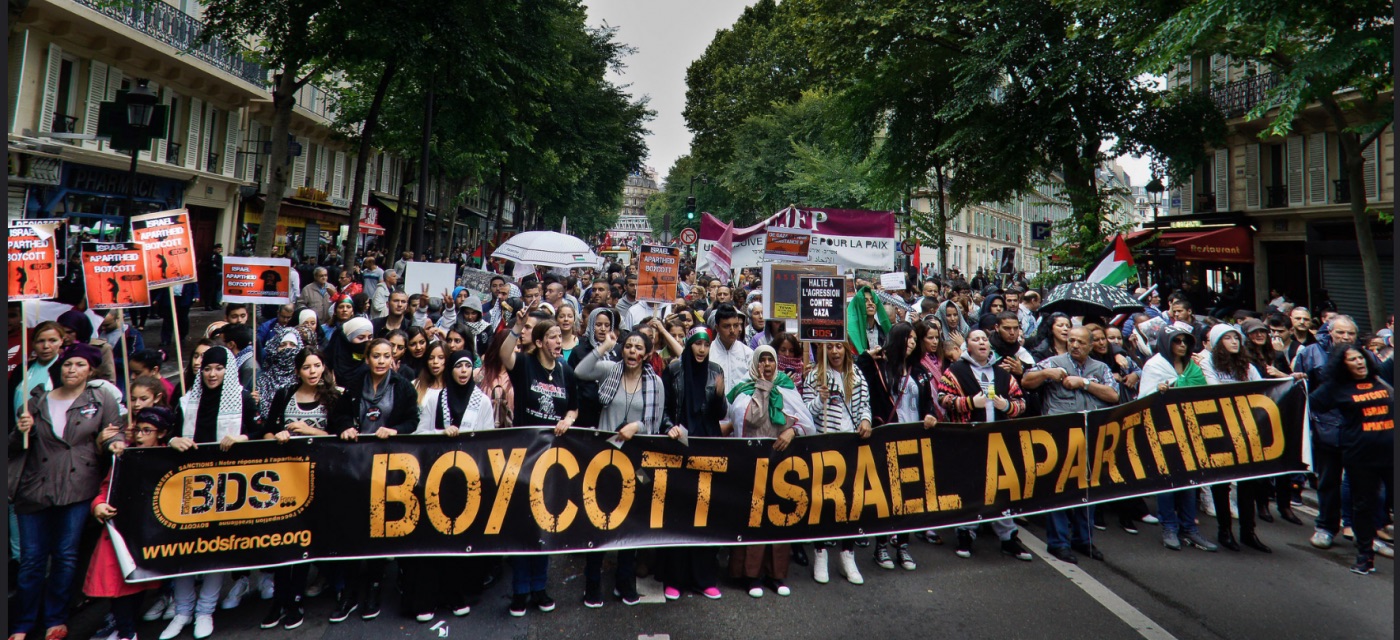
“Under intersectional umbrellas,” the report states, “members of Black, Latino and LGBTQ communities regularly stand in solidarity with anti-Israel and BDS-promoting groups.”
In 2014, demonstrators in Ferguson, Mo., protested the death of 18-year-old African American Michael Brown, who was shot and killed by a white police officer. That demonstration coincided with Israel’s Operation Protective Edge battle in Gaza. The report states that among those calling out police shootings of African Americans were pro-BDS protesters promoting “the #PALESTINE2FERGUSON campaign in an attempt to draw a parallel between the Palestinian struggle and the issue of police brutality against African Americans.”
According to the report, this was a turning point in how Israel was viewed through the lens of intersectionality.
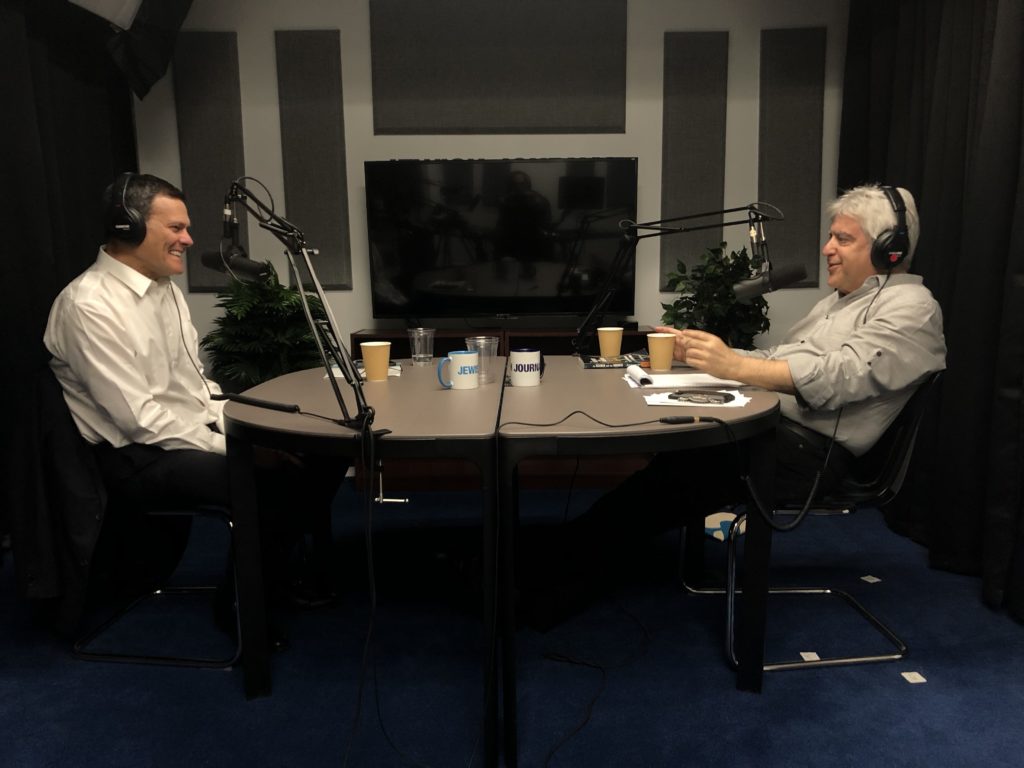
“In the recent years since Ferguson, we can see how anti-Israeli activity is seen as a right social cause and support for BDS as a legitimate solidarity cause,” Reut Group CEO Eran Shayshon told the Journal from Israel in a phone interview.
The report also links the rise of intersectionality to events including the 2017 Women’s March, led by leaders Linda Sarsour and Tamika Mallory, who have been accused of being anti-Semitic, and the 2017 Chicago Dyke March, during which three women were told they could not march in the event because they were carrying flags with Stars of David, a “Zionist symbol.”
All the while, support for Palestinians in the context of its conflict with Israel has become an increasing presence in intersectional coalitions, the report states, noting, “the Palestinian cause has been widely adopted as a core and prominent threshold for solidarity by many marginalized groups.”
Where Do American Jews Fit In?
According to the report, American Jews are often omitted from intersectional spaces, despite a history of standing with African Americans during the civil rights era, because contemporary American Jews are not seen today as marginalized but as privileged.
“Jewish identity in America is mutating from a self-perception of being a marginalized and disempowered community to one increasingly being seen by outsiders as a privileged social group,” the report states. “As a result, Jews are often excluded from intersectional coalitions of solidarity formed among members of oppressed groups.”
Shayshon said this exclusion of Jews from intersectional spaces is anti-Semitic.
“Intersectionality in its current form mainstreams subtle anti-Semitism because it combines conspiratorial things like the disproportionate power and influence of Jews and asks Jews to renounce their privilege and claims of prejudice, and makes the Jewish cause to defend the Jewish state illegitimate,” he said. “Anti-Zionism has become a litmus test for progressive communities to make.”
Shayshon added it was incumbent on his organization to understand how intersectionality is affecting the American Jewish community because “the challenges facing the Jewish community are critical to the resilience of the Jewish people and also to Israel, and Israel has been inserted into the conversation of intersectionality.”
Breaking Down the Report
The report classifies the American-Jewish community’s perspectives about Israel into four categories, or tribes:
1. Aligners, or those who “consider Israel to be an integral part of their Jewish identity and generally support the State of Israel.”
2. Moderate Critics, who, “while pro-Israel, tend to oppose the Jewish Establishment’s traditional, unconditional support for Israel.”
3. Harsh Critics, who “hold highly critical views of Israel’s policies, most often with regards to Israel’s continued control of the Palestinians.”
4. Radicals, “anti-Zionists who denounce Israel.”
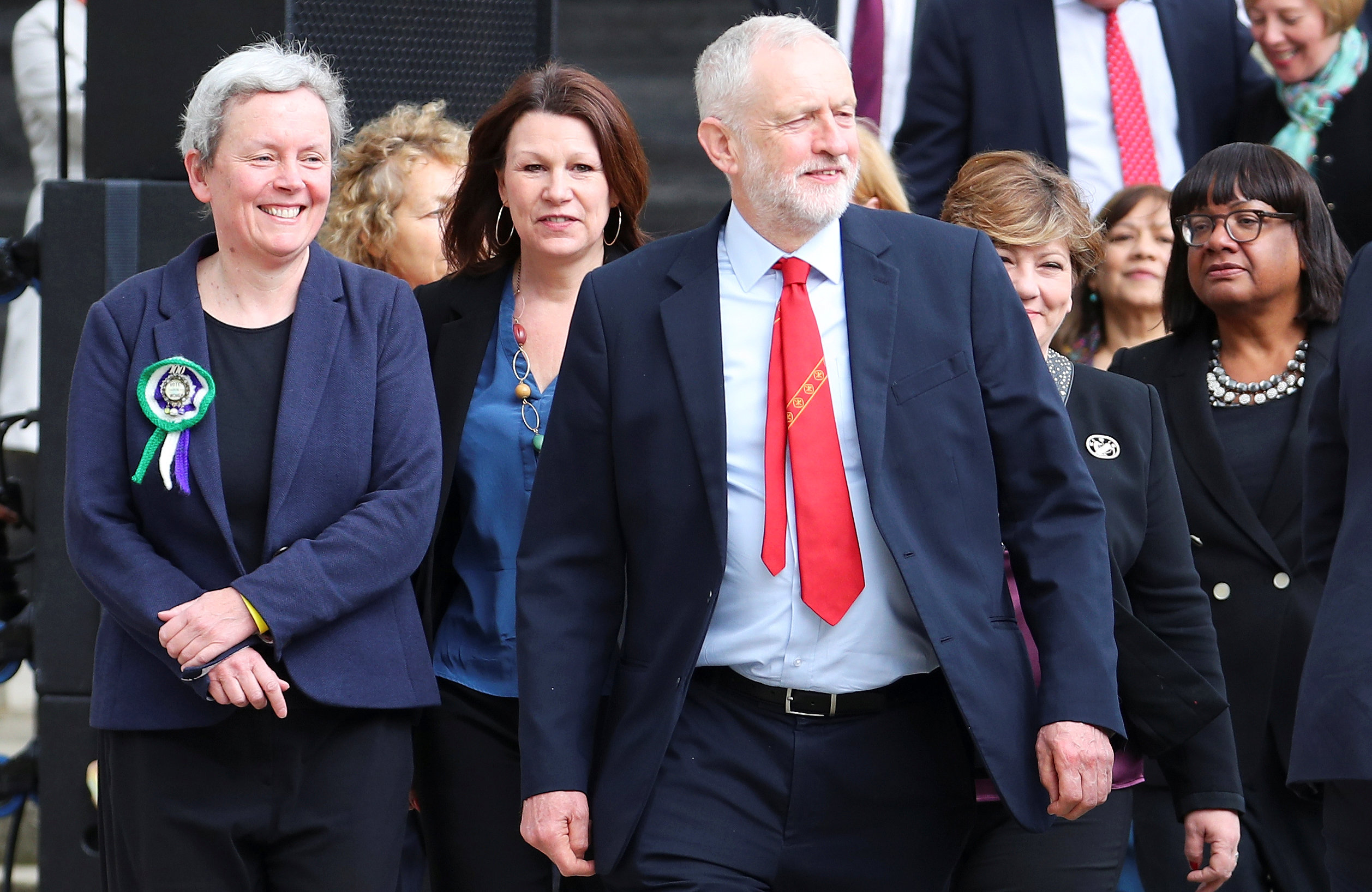
Labour Party leader Jeremy Corbyn leads his colleagues to the unveiling of the statue of suffragist Millicent Fawcett on Parliament Square, in London, Britain, April 24, 2018. REUTERS/Hannah McKay
In the“new anti-Semitism” that is anti-Zionism, the report states, the United States is seeing “the ‘Corbynization’ of progressive politics,” a reference to British Labour Party leader Jeremy Corbyn, who is, according to the report, “mainstreaming new anti-Semitism” into the ideologies of his political party.
If London is at the center of much of the anti-Israel activity in Europe, the center of anti-Zionism in North America is San Francisco, Shayshon said. “We’ve studied the dynamic of anti-Israeli groups and clearly the geographical hubs in the U.S. are metropolitan areas. In the San Francisco Bay area, there is a concentration of anti-Israeli groups, which serve as a hub for a long list of anti-Israeli groups all over North America. Clearly [UC]Berkeley is such a hub. SJP (Students for Justice in Palestine), their hub is at Berkeley.”
Stating that “we know that the anti-Israeli movements flourish in progressive hubs,” Shayshon added, “Israel has been losing its progressive credibility.”
The report states that increasing criticism of Israel among far-left members of the Democratic Party poses a “threat to the future of traditional U.S. bipartisan support for Israel.”
Among the incidents the report cites backing these claims is a 2003 episode involving a San Francisco-based rape crisis center, San Francisco Women Against Rape, that defined itself as anti-Zionist and asked potential interns and volunteers if they would be willing to take a stance against Zionism, even though the Israeli-Palestinian conflict was unrelated to its mission.
Another article the report references was published on Oct. 8, 2018, in the Forward, highlighting how Tucson Jews for Justice, while protesting President Donald Trump’s policies on child separations and the Muslim travel ban, faced bullying from far-left groups for not condemning Israel. This was part of “a national trend of harsh treatment of Jews in progressive spaces,” according to the Forward.
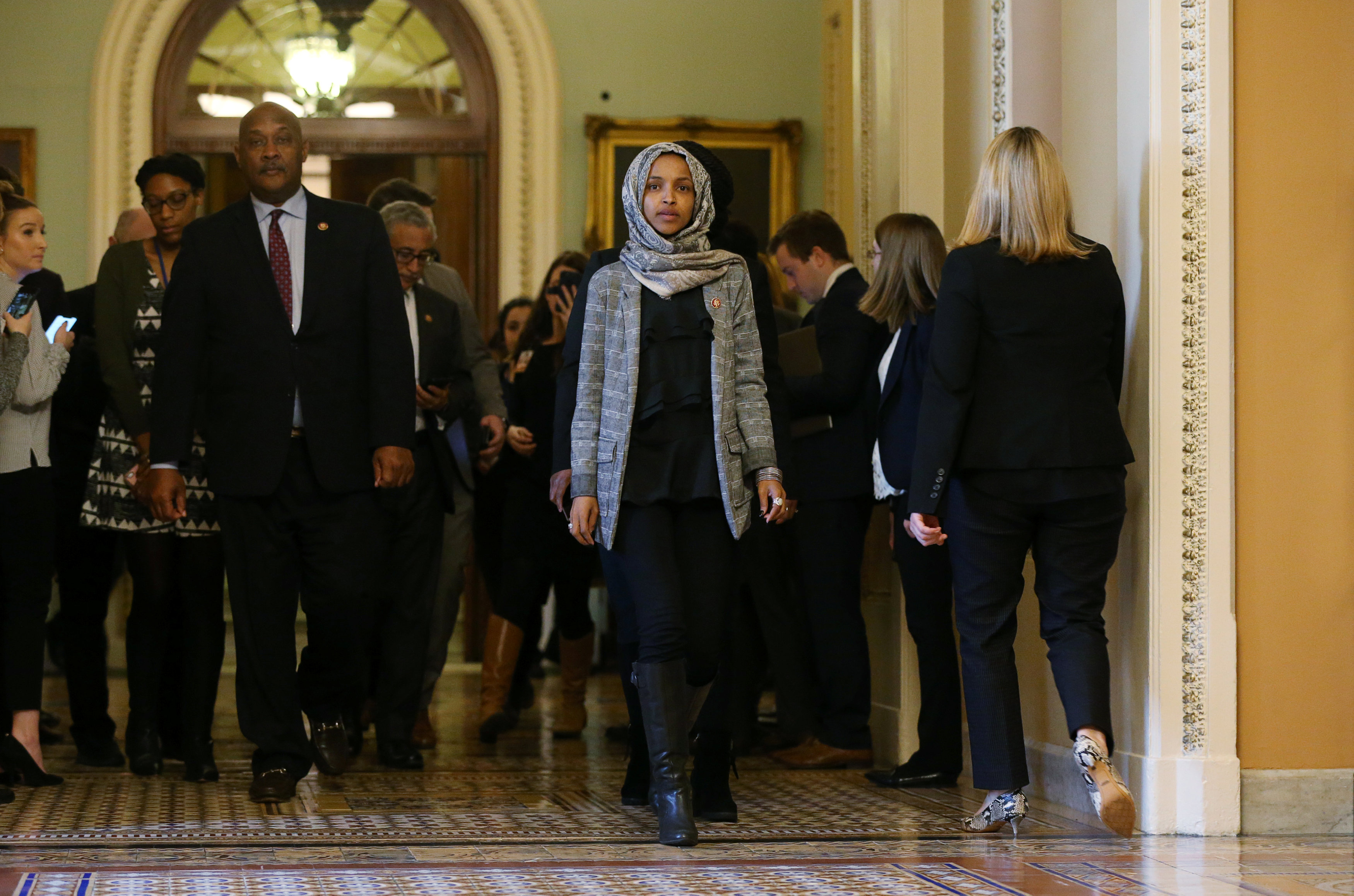
The report also discusses recent events involving Rep. Ilhan Omar (D-Minn.), whose remarks on Twitter about Israel and the America Israel Public Affairs Committee (AIPAC) were widely deemed anti-Semitic, and Mallory, the Women’s March leader, who refused to condemn what many deemed anti-Semitic remarks made by Nation of Islam leader Louis Farrakhan.
U.S. Rep. Ilhan Omar (D-MN) leaves the U.S. Senate chamber and walks back to the House of Representatives in Washington, U.S., Jan. 24, 2019. REUTERS/Leah Millis
Shayshon went further, saying, “Many Israelis believe the relationship between Israel and the U.S. has never been stronger because of the Trump-[Prime Minister Benjamin] Netanyahu relationship and many talk about the possible blowback when a Democratic administration succeeds it.”
Shayshon said he was more concerned about anti-Semitism on the political left than he was with anti-Semitism from the right. “On the right, it is much more about a challenge of physical insecurity, like what happened in Pittsburgh, but anti-Semitism on the left is more threatening in the sense that it is polarizing the Jewish community. It drives a wedge between Jewish communal organizations and many young Jews and as a result loses its vitality.”
The report goes on to state that intersectionality not only is driving a wedge between members of the American Jewish community but also is threatening “Israel’s status within the U.S. Jewish community from a unifying issue into a divisive one.”
The report also highlights how the younger generation of American Jews is distancing itself from Israel and has a distrust of Jewish communal organizations.
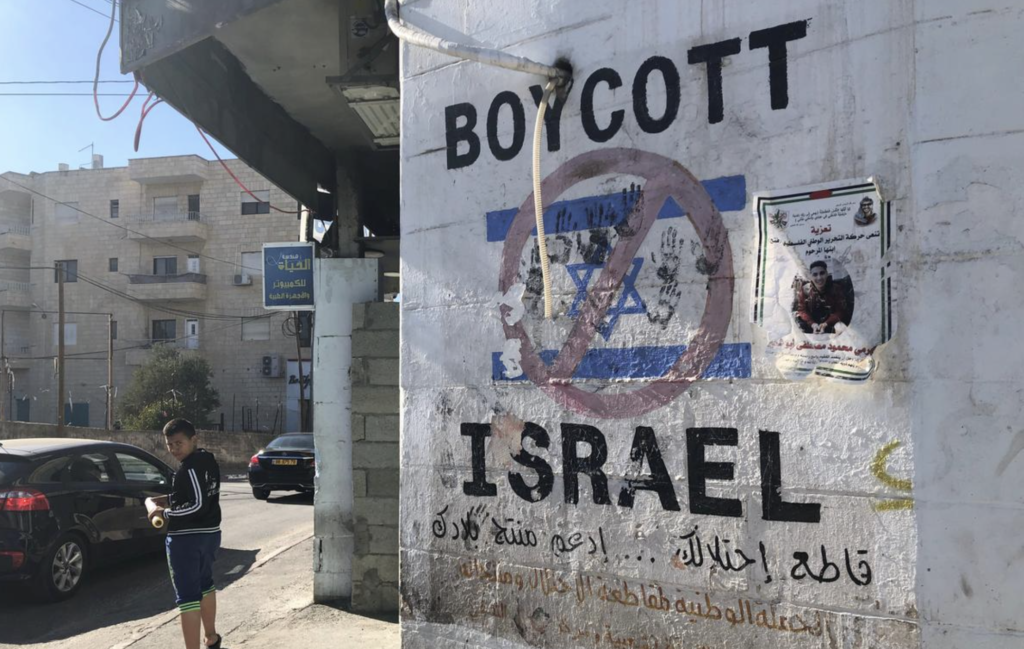
Shayshon said anti-Israel movements like BDS (boycott, divestment and sanctions) are popular among young people who are susceptible to viewpoints masking as tikkun olam.
“I have no doubt that most people who support BDS are not motivated by an anti-Israel view or anti-Zionism,” he said. “Many times their position is a submission to the anti-Israeli spirit of the times, which [the intersectionality] ideology aims to create.”
Our democracy is built on debate, Congresswoman! I should not be expected to have allegiance/pledge support to a foreign country in order to serve my country in Congress or serve on committee. The people of the 5th elected me to serve their interest. I am sure we agree on that! https://t.co/gglAS4FVJW
The report encourages Jewish groups to engage with Israel’s critics, stating, “Jewish communal broad-tent engagement efforts should specifically focus on engaging Harsh Critics who may give Israel the benefit of the doubt, maintain a meaningful connection to Israel and disapprove of the BDS movement.”
The report goes on to say that while Jewish organizations may have a tendency to lessen its emphasis on Israel to remain relevant among young people, the better response is doubling down on Israel engagement.
In combating the growing antagonism toward Israel, the report recommends that the Jewish community broaden its tolerance for “legitimate discourse on Israel” and avoid blacklisting organizations that hold differing viewpoints on issues like the boycotting of West Bank products, stating, “There is a low likelihood of a divided Jewish community reaching common ground on several eminent issues.”
The report also advises Jewish organization to find new allies, including Jews of color, to demonstrate that the pro-Israel movement also has diverse, intersectional support. Among some of the smaller, niche organizations the report cites that can help play a role include Moishe House, which provides subsidized living for young adult Jews who commit to holding Jewish programming in their homes, and OneTable, which provides millennials with tools and resources to hold Shabbat dinners. They too, according to the report, can be bridges between Israel’s critics, Jewish communal life and Israeli society.
Photo by Odemirense
Moving Forward
Shayshon said the report’s focus on how intersectionality presents new challenges for the American Jewish community stems from his group’s belief that the American Jewish community relations field is the “most potent platform of the Jewish community to fight anti-Israeli movements.”
However, he added, “We don’t see the sense of urgency in the Jewish community regarding intersectionality. One of the main threats of intersectionality in its current format is it mainstreams anti-Semitism and we see how the Jewish community is unable to coalesce around fighting these issues.”
Shayshon said he hoped the publication and dissemination of the report leads to change in how the community interacts with the intersectionality question. “We are not just a think tank that publishes papers and hopes the words will take effect,” he said. “This is part of a long couple of years’ effort to strengthen the community relations field with our strategic partner for the U.S., JCPA.”
“We hope research can trickle down and become pillars of operations for the JCRC network,” he said. “That’s our plan.”
Hillel International announced the hiring of two Reform rabbis to work as Senior Jewish Educators at UCLA and Brandeis University to strengthen Jewish life on college campuses by helping students to understand what it means to be Jewish and working with students to incorporate Judaism into their lives. The new positions were made possible due to a grant from Central Synagogue to Hillel International in partnership with Hebrew Union College-Jewish Institute of Religion (HUC-JIR).
“We are excited to partner with Hillel International and Central Synagogue to encourage inspiring Jewish educators to work on campus and support the next generation of Jewish life and foster the future of Reform Jewish leadership on the college campus and in North America as a whole,” HUC-JIR’s President Andrew Rehfeld said in a statement to the Journal.
The multi-year grant of $1.4 million from Central Synagogue’s Rabbi Peter J. Rubinstein Fund for the Renaissance of Reform Judaism provides training, placement and support to HUC-JIR graduates who hope to become Hillel Senior Jewish Educators on college campuses in America.
“I’m honored that Central Synagogue members chose to create this grant to support the growth of vibrant Jewish programming on college campuses and the training of future Reform Jewish leadership,” Rabbi Emeritus Peter J. Rubinstein of Central Synagogue said. “This innovative collaboration between Hillel and HUC-JIR enables Reform rabbi educators to strengthen Jewish engagement, celebrations and learning for college students in service of their Jewish future and our people’s unparalleled mission.”
HUC-JIR graduates Rabbi Alex Kress and Rabbi Evan Sheinhait will join the UCLA Hillel and Brandies University Hillel staffs this upcoming fall. Rabbi Eric L. Abbott was hired as a Senior Jewish Educator last year through this grant and will be returning to Johns Hopkins University Hillel. The grant will also allow three rabbinic interns to serve on The Ohio State University, Princeton University and University of Southern California campuses.
“This partnership between Hillel International and HUC-JIR, with the support of the Central Synagogue grant, allows us to provide rabbinical role models who will be accessible to a diverse range of Jewish students on campus,” Hillel International’s interim CEO Adam Lehman said. “Our mission is to enrich the lives of Jewish students so that they may in turn enrich the Jewish people and the world. These Senior Jewish Educators will do just that, by engaging Jewish students and strengthening their connection to Jewish life, learning and Israel.”
On average, each Senior Jewish Educator connects 200 students to Jewish life per year, according to Hillel International’s research. “The effect of an educator is much greater on a student with little or no prior involvement with Hillel or those with less developed Jewish backgrounds,” Hillel International said in the statement.
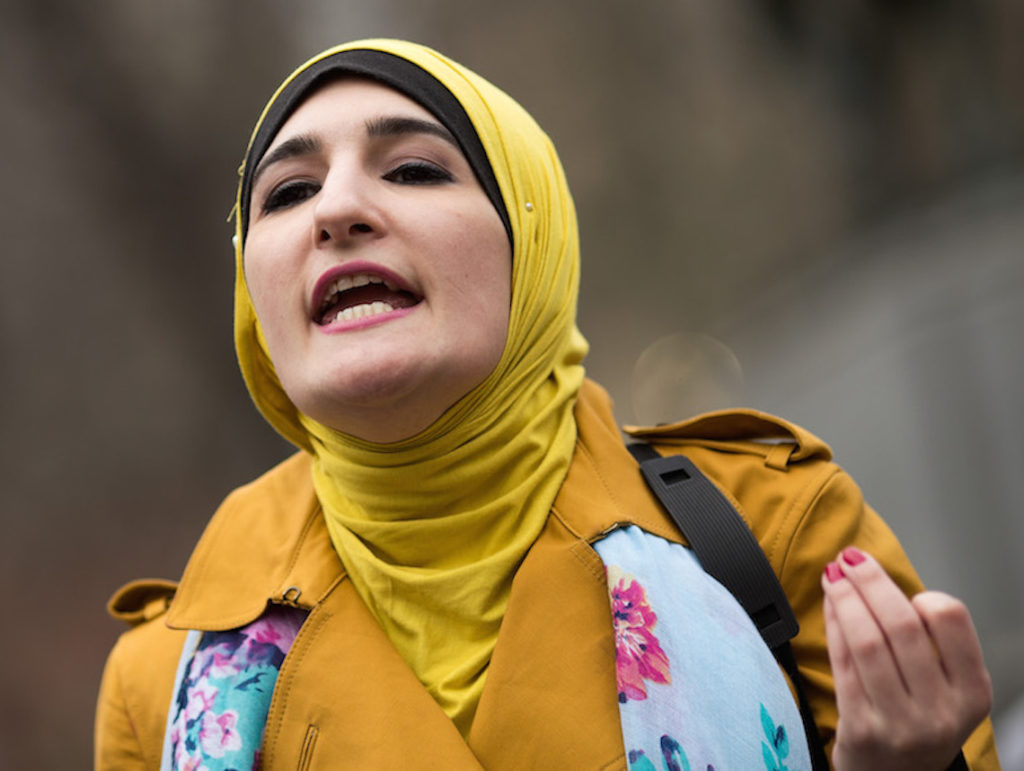
Myriad Jewish groups slammed Women’s March, Inc. co-leader Linda Sarsour on Twitter for saying that Jesus Christ was a Palestinian.
The controversy began with Sarsour tweeting on July 5, “Jesus was Palestinian of Nazareth and is described in the Quran as being brown copper skinned with wooly hair.”
Jesus was Palestinian of Nazareth and is described in the Quran as being brown copper skinned with wooly hair.
Sarsour doubled down on Twitter in response to backlash:
Folks reported my tweet that Jesus was a Palestinian. 🤣 twitter was obviously like this doesn’t violate our standards. It’s also true. Jesus was born in Bethlehem which is in Palestine. Move on.
Why so upset by the truth. Jesus was born in Bethlehem aka بيت لحم in Arabic. Bethlehem is in Palestine. It’s currently militarily occupied by Israel and home to a predominately beautiful Palestinian Christian community. Yes, the birthplace of Jesus is under military occupation. https://t.co/xiseLoylYL
The American Jewish Committee (AJC) tweeted in response to Sarsour that Judea is mentioned 48 times in the New Testament, while Palestine isn’t mentioned anywhere because “because the name “Palestine” was only applied to the region by the Romans in 135 CE.”
They added, “Try cracking a history book, Linda. It’ll blow your mind.”
Mentions of Judea in the New Testament: 48
Mentions of Palestine in the New Testament: 0
Which makes sense, because the name “Palestine” was only applied to the region by the Romans in 135 CE.
— American Jewish Committee (@AJCGlobal) July 7, 2019
AJC CEO David Harris similarly tweeted, “Jesus was a Jew born in Bethlehem (in Hebrew, Bet Lehem) in Judea, then a Roman province. Next up for her cultural appropriation? Maybe King David, born in Bethlehem 1000 [years] earlier & another ‘Palestinian’?”
Lengths to which Israel-bashers go to revise history is mind-boggling. Jesus was a Jew born in Bethlehem (in Hebrew, Bet Lehem) in Judea, then a Roman province.
Next up for her cultural appropriation? Maybe King David, born in Bethlehem 1000 yrs earlier & another “Palestinian”? https://t.co/YgkwkgxsI3
The Simon Wiesenthal Center tweeted, “#Sarsour‘s hatred for the #Jewish State blinds her to inconvenient historic truths. Yes, @lsarsour invents her own ‘facts’ to bolster her bigotry.”
— SimonWiesenthalCntr (@simonwiesenthal) July 7, 2019
StandWithUs similarly tweeted in response to Sarsour, “1. Jesus was born in Judea. The name “Palestine” did not even exist at that time. 2. Jesus was born Jewish. Why does Linda keep trying to revise the history of Jews living in their indigenous homeland, Judea (=Israel) for her own politicized aims?”
Now for the facts: 1. Jesus was born in Judea. The name “Palestine” did not even exist at that time. 2. Jesus was born Jewish. Why does Linda keep trying to revise the history of Jews living in their indigenous homeland, Judea (=Israel) for her own politicized aims?
Rep. Ilhan Omar (D-Minn.) came under a similar controversy in April when she re-tweeted a tweet stating that Jesus was a Palestinian. Associate Dean and Director of Global Social Action Agenda at the Simon Wiesenthal Center Rabbi Abraham Cooper told the Journal at the time that it is a “grotesque insult” to say that Jesus was a Palestinian, saying that “Palestine was a name made up by Romans after they crucified thousands, destroyed the Holy Temple in Jerusalem and exiled the People of Israel from their homeland.”
(JTA) — Alex Bregman and Joc Pederson, the two best Jewish home run hitters in professional baseball, will face each other in the first round of Monday’s 2019 MLB Home Run Derby.
The contest’s format since 2014 matches up participants from the National and American League in a tournament-style bracket.
So far this season, Bregman, the Houston Astros’ third baseman, has 23 home runs, while Pederson, an outfielder for the Los Angeles Dodgers, has 20. For comparison, the competitor with the most home runs so far is Pete Alonso, who has hit 30.
Bregman’s Astros and Pederson’s Dodgers played each other in the 2017 World Series. The Astros won that championship, so Pederson would love some revenge.
The action starts at 5 p.m. PT on ESPN.
The Jewish Journal updated this story to provide the Pacific start time.
Just recently, the Israel Water Authority announced an upgrade to the water supply line from Israel to the Gaza Strip. According to the Water Authority, the renovations will be carried out on Israeli territory and will “aim to improve the water supply that Israel is transferring to the Gaza Strip.” But will upgrading the water supply on only one side of the border solve an issue that has already become transboundary?
The main source of water in the Gaza Strip is the Coastal Aquifer, where groundwater is stored for domestic, industrial, and agricultural use. The aquifer stretches along the entirety of the Mediterranean coastline in Gaza and Israel and is primarily recharged by rainwater. However, water that returns to the ground after agricultural use also fills the aquifer. In addition, there is groundwater movement within the aquifer itself.
Saltwater from the Mediterranean Sea, which infiltrates the groundwater during the pumping process, is squeezed back out by the increasing level of fresh water when the reservoir is recharging. This process forms a boundary between the freshwater and saltwater called “interface,” which keeps the freshwater uncontaminated and potable.
Unfortunately, in Gaza exact data on groundwater is non-existent. The average annual rainfall in the Gaza Strip is 365 mm, which is not a lot to begin with. The amount of water that enters the aquifer in Gaza each year makes it possible to extract 50 million cubic meters of water without harming the groundwater through over-pumping. When an aquifer is over-pumped, the groundwater is reduced to a level at which seawater infiltration is possible, which increases the salinity of the water.
Currently, the section of the Coastal Aquifer that serves Gaza is pumped three times beyond its sustainable yield, which is the amount of water that can be extracted without exerting too much pressure on the water table and thereby harming water quality.
According to the World Health Organization (WHO) standard in 2015, 96.4% of the water produced by the aquifer in the Gaza area is unfit for human use on account of over-pumping. Continual over-pumping is a severe threat to long-term water availability. Indeed, according to the WHO report, by 2020, the aquifer is expected to be irreversibly polluted and saline.
One of the most substantial problems is that rainwater in the Gaza Strip cannot easily seep into the ground due to urbanization. The region has become overloaded with built-up areas at the expense of sandy areas, making it difficult for water to penetrate the ground. Therefore, when it rains, the water tends to accumulate on the surface rather than seeping into the soil and enhancing the water table. At the same time, the population density in the Gaza Strip is increasing. In order to meet the resident’s needs, water is persistently over-pumped from the aquifer, which causes the water table in the area to decline continuously. It has now reached more than 10 m below sea level, which exposes the groundwater to the infiltration of saline water. In addition, the water supply pipe inside Gaza is not adequately sealed, and large quantities of water are lost in the pumping process.
More Than Salt Another problem in Gaza is that sewage is not properly treated. Every day more than 100,000 cubic meters of raw sewage is dumped into the Mediterranean Sea. The groundwater level drops and the seawater begins to fill the aquifer, which brings in not only saltwater but pollutants and toxins. About 90% of all the water pumped from the aquifer contains nitrate concentrations (pollution caused by sewage and agricultural fertilizer), exceeding WHO’s recommended levels by two to eight times. This environmental nuisance has health implications including that 30% of Gaza’s illnesses are caused by water pollution, such as the ‘blue baby syndrome’ which may cause temporary digestive and breathing problems.
The water shortage in Gaza is encouraging more and more people to turn to desalination as a solution. Desalination in Gaza is performed by public and private desalination plants, of which about only a third operate with a license and under supervision. Although these small desalination facilities may very well reduce the saline water levels, they do not eliminate the abundance of pollutants in the drinking water.
“Today, the water and sanitation crisis in Gaza already affects Israel,” says Gideon Bromberg, the Israeli director of EcoPeace Middle East, an organization that works with Jordanians, Palestinians, and Israelis to promote cooperative efforts to protect environmental heritage in the region. “In the past, Zikim Beach (a popular bathing beach only about a mile north of the Gaza Strip) has already been closed due to high levels of pollution. Apart from the damage to the beachgoers, the desalination plant in the port city of Ashkelon, which supplies 15% of the drinking water of the State of Israel, was forced to suspend all operations temporarily. Currently, 70% of the water used for domestic use in Israel comes from five desalination plants, four of which are located south of Tel Aviv,” Bromberg adds.
According to Bromberg, in addition to the risk of water security, national security may also be at risk. “If cholera breaks out in Gaza, we can certainly reach a situation where fear of disease will drive people to fences in Israel and Egypt, demanding to be saved and receive drinkable water,” Bromberg stresses.
In this context, one must also consider the fact that in Gaza, building materials are frequently misused for terroristic purposes. For example, Hamas is actively engaged in digging tunnels into Israel, which constitutes a strategic threat to the residents of the Gaza vicinity as well as to IDF forces in the area. Various building materials designated for civilian applications such as cement are utilized to strengthen the terrorist groups’ offense against Israel. Therefore, Israel has imposed certain restrictions on the transfer of these materials into Gaza.
“Israel has changed its policy recently, and today it allows the transfer of more construction materials into the Strip. Until this change, the regulations made it difficult to build basic infrastructure, both for water supply and sewage treatment.”, says Bromberg. “As an Israeli citizen who runs for shelter when there are rockets fired from Gaza, you can understand that we do not want to allow Hamas to receive dual-use materials that can be used against us. On the other hand, however, without cement, there is no way to build infrastructures. The policy was necessary in order to prevent disaster here.” Bromberg concludes.
Not All in Israel’s Hands According to Bromberg, a large part of the problem of supplying electricity and water in Gaza is the ongoing conflict between Hamas and the Palestinian Authority (PA). The PA pays for 12 million cubic meters of water that Israel transfers to the Gaza Strip annually. While the infrastructure has the capacity to carry up to 20 million cubic meters a year, the PA is unwilling to increase their payment because Hamas keeps public funds instead of transferring them to the Authority.
Today, those who pay the price of the conflict between the Palestinian factions are the two million people in Gaza. Even if they build further desalination facilities, it will be difficult to operate them without significant additional energy, which is another serious problem for Gaza’s infrastructure.
A potential solution to this problem may come from the current US administration, which initiated a conference last month in Bahrain, where representatives from various countries, including Israel, were scheduled to discuss the economic development of the Palestinian Authority. It is possible that these discussions will ultimately yield infrastructural development initiatives that will improve the water and sewage situation in Gaza, which will benefit both Gaza and Israel.
(JTA) — The man who set fire to the 18th-century Exeter Synagogue in Devon, England one year ago has been ordered to remain hospitalized indefinitely.
Tristan Morgan, 52, also set himself on fire when he attempted to burn down the historic synagogue on July 21, 2018, which was the Jewish fast day of Tisha B’Av. The crime was captured by a surveillance camera. Prosecutors told a London court on Friday that Morgan was laughing after he caught on fire, and that he was having a psychotic episode at the time of the attack.
He reportedly told police at the time of his arrest, shortly after the attack: “Please tell me that synagogue is burning to the ground, if not, it’s poor preparation.”
The court ordered Morgan to be held in the hospital under the Mental Health Act along with a restriction order for the safety of the public, the London-based Jewish Chronicle reported.
“Tristan Morgan’s violence was partly driven by his hatred of Jewish people which was clear from the library of extremist literature he had,” the Crown Prosecution Service said. He also composed folk songs encouraging violence against Jews.
A police search of his home and car found 24 knives, a sword, hunting knife and the axe he used in the arson attack. His electronic devices contained anti-Semitic and neo-Nazi material, including documents about Holocaust denial, “ethnic cleansing,” and supposed Jewish global power.
The synagogue, the third oldest in the country and dedicated in 1764, suffered $29,000 in damages.
(JTA) — Disney Channel star Cameron Boyce, 20, best known for his role on the network’s comedy show “Jessie,” died suddenly in his sleep after a seizure on Saturday.
“He passed away in his sleep due to a seizure which was a result of an ongoing medical condition for which he was being treated,” a spokesperson for Boyce’s family said.
“Jessie” aired on the Disney Channel from 2011 to 2015. Boyce also played a main role in the Disney TV movie series “Descendants,” about the teenage children of Disney villains, as the son of Cruella de Vil.
Boyce, who has a Jewish mother and an African-American father, spoke about his family’s history in his last interview, in May.
His grandmother, Jo Ann Boyce, was one of the Clinton 12 — part of the first group of black students to attend Clinton High School in Tennessee after the 1954 Supreme Court ruling in Brown v. Board of Education.
Speaking about his grandmother, Boyce told Haute Living, “She’s a huge part of who I am. Being African American and Jewish, I have plenty of ancestors and family members that I can look to for strength, and more importantly, for a grateful outlook on life. Every one of them clawed and scratched for my sister and I to be in the position we’re in today.”
Adam Sandler, who played Boyce’s father in the film “Grown Ups,” was one of the numerous friends and colleagues to share tributes to the young actor on social media.