fbpx

June 3, 2019

California Man Who Made ‘Kill Lists’ of Jews Pleads Guilty to Plotting Anti-Semitic Attacks

(JTA) — A California man who wrote “kill lists” of prominent Jews pleaded guilty to threatening three houses of worship in Orange County.

Nicholas Wesley Rose, 28, of Irvine, was sentenced Friday for carrying a loaded firearm not registered to him and three civil rights counts in relation to making the threats. Other felony charges were dropped.

His parents contacted the police last year after he said he wanted to “get a fun and killed some Jews,” The OC Register reported. Rose had composed lists of Jews he wanted to kill and threatened and visited a synagogue in Irvine that he wanted to attack. He also threatened and visited two churches, in Irvine and Lake Forest, that had expressed sympathies for the Jewish community.

He was sentenced to 825 days in jail, one year in residential mental health treatment and five years probation.

Rose’s lawyer, Brian Gurwitz, said his client was suffering from mental illness.

Orange County District Attorney Todd Spitzer decried Rose’s ideology in a statement.

“There is no place for hate,” Spitzer said. “He is a danger to society and every resident of Orange County should be aware of the threat he poses.”

California Man Who Made ‘Kill Lists’ of Jews Pleads Guilty to Plotting Anti-Semitic Attacks Read More »

Report: Iran Attempting to Obtain WMDs

Intelligence from two German states has concluded that Iran has been making efforts to obtain weapons of mass destruction, according to the Jerusalem Post.

The Post reports that the German states of Bavaria and Mecklenburg-Vorpommern’s intelligence have each issued reports spanning hundreds of pages on the threat of nuclear proliferation, particularly Iran. The Bavarian report stated that Iran is attempting “to expand its conventional arsenal of weapons with weapons of mass destruction,” which would include “atomic, biological, chemical weapons.” Iran has attempted to hide their actions through an illicit end-around of “German export controls,” according to the Post.

Similarly, the Mecklenburg-Vorpommern report concluded that Iran, along with Pakistan, Syria and North Korea, are among the countries that are using their intelligence agencies to engage “in unlawful procurement activities in the field of proliferation, using globally oriented, conspiratorial business and commercial structures.”

The aforementioned intelligence reports come as President Donald Trump’s visiting the United Kingdom, where he is expected to seek help from the British government in putting pressure on Iran. The Trump administration currently sees Iran as the chief threat in the Middle East; in May 2018, Trump announced that the United States would be leaving the Iran nuclear deal and re-impose sanctions on Iran.

Secretary of State Mike Pompeo said in Switzerland on June 2 that the U.S. would be open to a dialogue with Iran without any pre-conditions, but Iranian Foreign Minister Javad Zarif told ABC’s Martha Raddatz that Iran would only engage in a dialogue with Trump if he showed them “respect.”

Report: Iran Attempting to Obtain WMDs Read More »

Bipartisan Congressional Black-Jewish Caucus Established

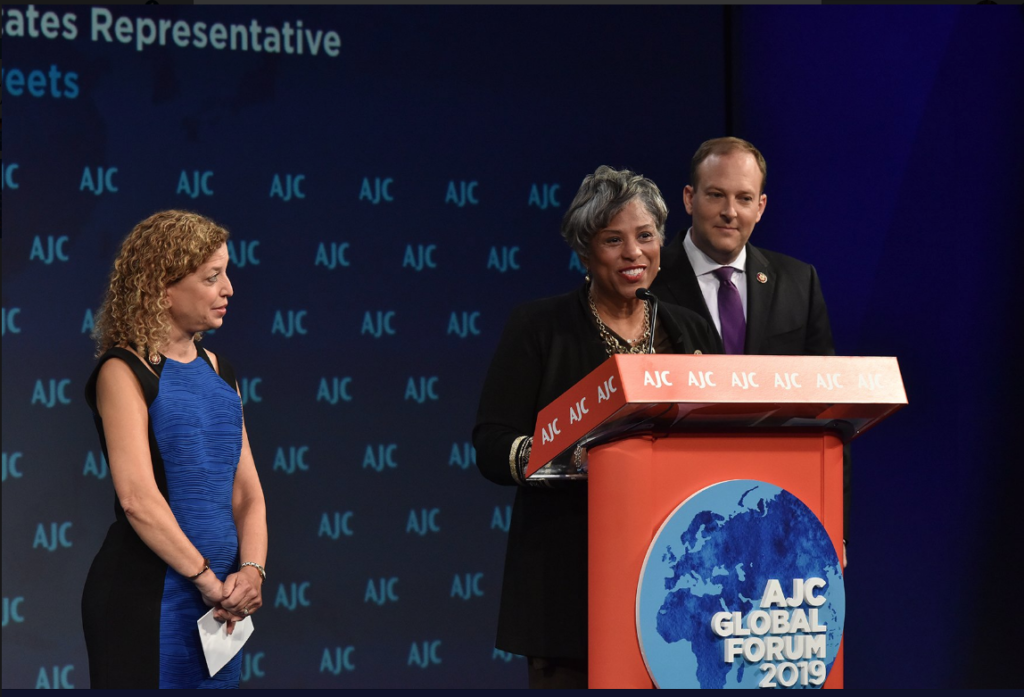
Reps. Debbie Wasserman Schultz (D-Fla.), Lee Zeldin (R-N.Y.) and Brenda Lawrence (D-Mich.) announced at the American Jewish Committee’s (AJC) Global Forum in Washington, D.C. on Monday the formation of the Congressional Black-Jewish Caucus.

The AJC, which aided the creation of the caucus, tweeted that the caucus will focus on providing “resources to members of Congress to empower them to bring African-American and Jewish communities together, combating stereotypes and hate and showcasing commonalities.” The caucus will also advocate for hate crime bills that crack down on white supremacists.

Schultz tweeted, “African American and Jewish communities have a shared history of confronting discrimination & racism. White supremacy threatens both our communities, and the Caucus will build on our common fight for a better world.”

Lawrence similarly said in a statement, “The African-American and Jewish communities have a history of standing together for the promotion of social justice and civil rights. There are very few segments of America that have invested themselves in these struggles as much as these communities.” She added that the caucus will help in “advancing our issues in a collective manner.”

Zeldin also said in a statement, “For generations, the Jewish and African-American communities have stood together, helping each other overcome their greatest challenges and triumphing in the face of sweeping discrimination, all while securing a brighter future for all Americans, but our work is not yet finished. It is clear our communities are still the target of hate and discrimination, and we will not stand idly by.”

Reps. John Lewis (D-Ga.) and Will Hurd (R-Tex.) are the other co-founders of the caucus.

American Jewish Congress President Jack Rosen has been among those calling for the formation of a Congressional Jewish Caucus. California and New York are currently the only state legislatures that have a Jewish caucus.

Aaron Keyak, former head of the National Jewish Democratic Council, said in a statement to the Journal, “As hatred, racism and anti-Semitism are on a deadly rise, it was heartening to see a diverse group of leaders, across the religious and ethnic spectrum, gathered in Washington to stand up against domestic terrorism and those that tolerate it. The creation of the Congressional Black-Jewish Caucus, founded on our shared values in the fight for social justice and civil rights, is a shining moment during an otherwise bleak moment in our history. It is a sign of what can come when we come together and work toward change.”

American Jewish Committee (AJC) Los Angeles Regional Office Assistant Director Siamak Kordestani similarly said in a statement to the Journal, “We commend these members of Congress for writing a new chapter in this historically important relationship. For decades, African-American and Jewish communities have stood shoulder-to-shoulder in the struggle for civil rights, social justice, and combating racism. As we face a surge in hate and domestic terrorism across the nation, there is much work for us to do together.”

Bipartisan Congressional Black-Jewish Caucus Established Read More »

ADL, UCLA Hillel Call on UCLA to Issue a ‘More Full-Throated Response’ to Anti-Israel, Anti-Semitic Incidents

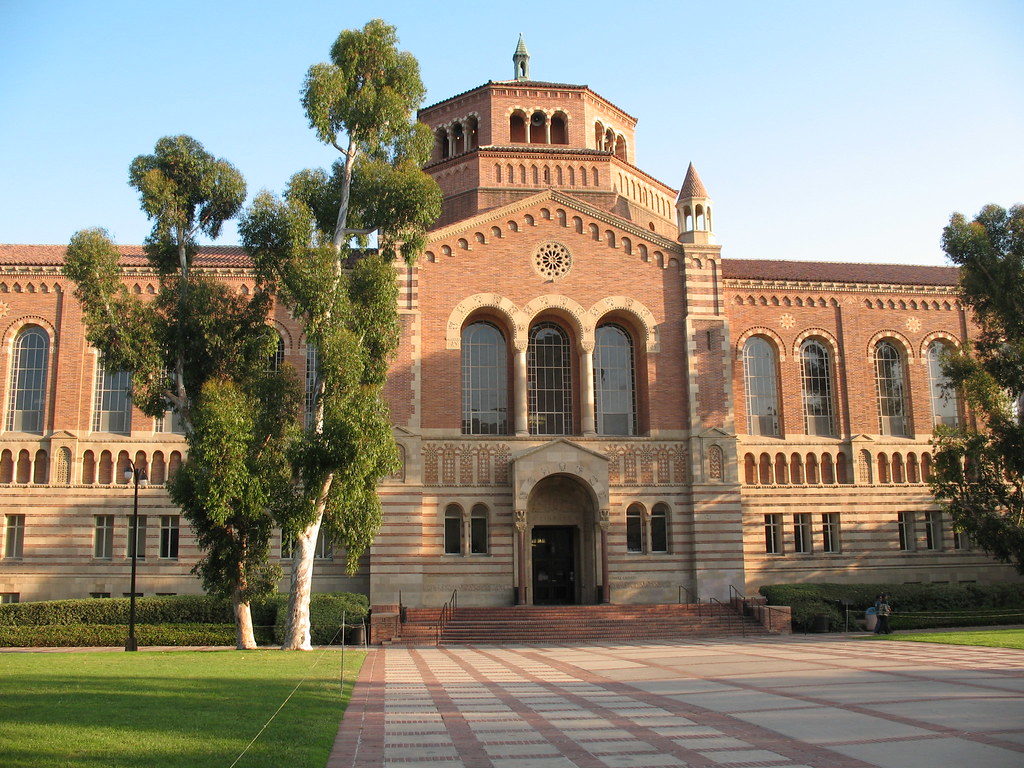
Anti-Defamation League (ADL) Los Angeles Regional Director Amanda Susskind and UCLA Hillel called on UCLA to better protect Jewish students on campus in light of recent incidents.

In a Monday letter to the UCLA administration, UCLA Hillel Executive Director Rabbi Aaron Lerner along with Susskind wrote that “the time has come to call for a more full-throated response” from the university due to “the sheer number of reported incidents” of anti-Zionism and anti-Semitism on campus.

“On campus, the repetition of aggressive, ill-informed and often academically devoid anti-Israel bias has created a highly-volatile, and at times vulnerable, atmosphere for Zionist and Jewish students,” Lerner and Susskind wrote. “Off campus, it has also created a perception in the community, among alumni, and across the nation that UCLA has failed to provide an environment where it is safe to be Zionist or Jewish.”

Lerner and Susskind highlighted such incidents over the past five years, which included “a 2014 campaign to discredit two student council members who participated in Jewish organization-sponsored missions to Israel and subsequently voted against a BDS [Boycott, Divestment and Sanctions] resolution” as well as pro-Palestinian protesters disrupting a May 2018 Students Supporting Israel event. Lerner and Susskind also cited San Francisco State University Professor Rabab Abdulhadi calling Israel-supporters white supremacists during a May 14 guest lecture at UCLA as an example.

“It is important to note that we cherish the value of academic freedom in universities—including when it comes to international politics and, more specifically, the complex Israeli-Palestinian conflict,” Lerner and Susskind wrote. “It is predicated on the idea that professors can teach, and students can learn, without other forces interfering in the process, limiting the pursuit of ideas. However, with academic freedom also comes academic responsibility.”

They added, “The 2016 UC Regents Principles Against Intolerance, in referencing ‘anti-Semitic forms of anti-Zionism,’ make clear an ugly reality: the demonization of Israel, and of Jews and others supportive of Israel, contributes greatly to the rise of anti-Semitic acts on campus and elsewhere.  Taken together, the May 14 guest lecture and the other reported and unreported incidents highlight the need for proactive measures at UCLA.”

Lerner and Susskind then called on the university to clearly delineate “academic freedom from bigotry and political activism” and to provide training to all UCLA faculty and students regarding “the history of anti-Semitism, the overlap between anti-Israel sentiment and anti-Semitism, and the impact of each on the Zionist and Jewish students.”

Lerner and Susskind’s letter comes after UCLA’s Academic Freedom Committee concluded on May 29 that Anthropology Professor Kyeyoung Park had every right to bring Abdulhadi for a guest lecture, even if students found it “objectionable.” Judea Pearl, chancellor professor of computer science at UCLA, National Academy of Sciences member and Daniel Pearl Foundation president, told the Journal in a statement, “I welcome the statement of my colleagues on the UCLA Academic Freedom Committee, in which they support professors’ freedom to invite speakers as they deem academically appropriate. This is indeed a cherished freedom that I have enjoyed in my fifty years as a professor at UCLA. I therefore hope that the committee will join me in protecting another principle that academic freedom entails: setting the norms for an academic climate conducive to learning and to civil discourse.”

He pointed out that UCLA’s Office of Equity, Diversity and Inclusion’s website states that “the university is best served when its leaders challenge speech and action reflecting bias, stereotypes, and/or intolerance.” 

“In this spirit of responsible leadership I therefore call upon Jerry Kang, Vice Chancellor for Equity, Diversity and Inclusion, to challenge the biased and intolerant speech of the guest lecturer, Rabab Abdulhadi, and the anti-diversity words she uttered on May 14, 2019,” Pearl said. “In particular, VC Kang should ask Abdulhadi to apologize to the thousands of students and faculty at UCLA who are devout Zionists, whom she labeled ‘white supremacists.’Many of these Bruins,’ VC Kang should emphasize, ‘are tireless champions of human rights, social justice and peaceful co-existence, who see the creation of Israel  as the culmination of Jewish history, hence as an important part of their collective identity… it is disrespectful of you to make such sweeping, reckless and incriminating accusations against hard-working members of your hosting university, in front of a class of students who assumed you had factual, if not authoritative knowledge of the subject matter.’”

Pearl added, “Post-lecture condemnations are not uncommon at UCLA nor at other universities. On February 14, 2018, for example, following the cancelation of [far-right pundit] Milos Yiannopoulos’ lecture, and based on the speaker’s reputation as anti-Mexican, UCLA Chancellor Eugene Block issued a condemnation stating: ‘This kind of tactic and his rhetoric are totally contrary to our values.’ UCLA students and faculty, I among them, are entitled to know whether Abdulhadi’s tactics and rhetoric are not contrary to our values.”

UCLA’s Office of Equity, Diversity and Inclusion has a whole section on their website dedicated to the May 14 guest lecture.

The university did not respond to the Journal’s request for comment.

ADL, UCLA Hillel Call on UCLA to Issue a ‘More Full-Throated Response’ to Anti-Israel, Anti-Semitic Incidents Read More »

Chicago-Area High School Pulls Support for Teacher Training on Palestine After Members of Jewish Community Call It One-Sided

CHICAGO (JTA) — A high school district with a large Jewish population has withdrawn its recommendation of an optional training opportunity for teachers called “Teaching Palestine” after local teachers, synagogues and national organizations protested.

The training was one of several offered to high school teachers in a section of north suburban Chicago. One of the schools, Niles North High, is the primary high school serving Skokie, a local Jewish population center.

“The course presented an extremely one-sided view of a very complex situation,” said Rabbi Ari Hart of Skokie Valley Agudath Jacob Synagogue. By using the phrase “occupation of Palestine,” he said, the course’s language implied “that a Jewish state in our ancestral homeland is illegitimate.”

The training opportunity does not offer continuing education credit, does not depend on accreditation from a school district and is open to teachers throughout the Chicago area, according to one of its designers, who characterized it as more of a discussion group. The training will still take place.

Offered by a group called Teachers for Social Justice, the course was open to “critical educators who want to teach about Palestine and the Palestine liberation struggle,” according to a May 22 email to teachers obtained by the Jewish Telegraphic Agency. It promised to teach both about how to develop curricula on Palestinian history, as well as how to counter objections from Zionists.

The email said the course also said it would draw connections between Palestinian issues and race relations in the United States.

Its objectives included “Develop a deeper understanding of the history and current political context of the Israeli occupation of Palestine and the Palestine liberation struggle” and “Discuss concrete strategies for how to respond to Zionist Professional Developments and curricula or when parents/staff/others object to anti-Zionist curriculum.”

The course said it would use Jewish Voice for Peace, an anti-Zionist organization that supports the boycott Israel movement, as one resource.

The school district covering the high schools, Niles Township 219, has withdrawn the course after some local rabbis raised alarms and some parents, staff and others objected. Two Orthodox synagogues in Skokie, Or Torah and Skokie Valley Agudath Jacob Synagogue, mobilized members to call the school to object. Two national pro-Israel groups, StandWithUs and the Simon Wiesenthal Center, also sent out notices to members about the course.

Hart said dozens of Skokie community members complained to the school.

“When you talk about how to deal with students who believe in the right of a Jewish state to exist, when they are targeted in that way and presented as a problem to be dealt with, that makes students and faculty feel unsafe,” he said.

Hart also spoke Thursday with the district superintendent, Steven Isoye, and its director of equity, La Wanna Wells. Later that day, the district released a letter announcing the withdrawal of the recommendation for the course, and said it will work on a more rigorous set of standards for professional development courses.

“We recognize that without multiple perspectives surrounding this topic, we created a sense of exclusion by including this offering,” the letter said. “We will continue to strive to create an equitable place of learning that allows each and every student to feel safe. We recognize the need to work collectively to educate each other on the cross-cultural, religious, political and socio-economic issues that impact our world.”

Teachers for Social Justice did not respond to a request for comment. But its website says the Chicago-based group views teaching as inherently political. Other courses the group is offering this summer focus on racial justice in the United States and “US Imperialism’s Impact on Honduras.”

“[W]e must recognize and accept our role as either confronting the social, political, and educational inequities within U.S. school settings, or continuing to reproduce the oppressions in our current society,” its “About Us” page says. “We stand for confronting these inequities. Neutrality is not possible. We understand that teaching is a political act.”

An activist who took part in creating “Teaching Palestine,” Lesley Williams, said that the Israeli occupation of the West Bank is acknowledged by the international community, and that Palestinian students have said they do not feel that their perspectives are represented at school.

“We were hearing from teachers and also from students that they didn’t feel Palestine was being actively covered in the curriculum,” said Williams, an activist with Chicago’s chapter of Jewish Voice for Peace. “It’s not as though the existence of these human rights abuses or the existence of the occupation is purely a partisan issue. These are facts that can’t be denied.”

Teachers at Niles North said students and faculty have repeatedly heard anti-Israel messages at school programs. A teacher told JTA that multiple speakers who were brought to the school to discuss various topics ended up criticizing Israel for oppressing Palestinians.

“There’s an increasing amount of anti-Semitism events that have been happening,” said a teacher who asked to remain anonymous, so as not to be publicly identified with the controversy. “I think that it’s very concerning that this is kind of an insidious thing that’s been increasing over the years.”

The school is diverse, teachers said, with its 2,000 students speaking approximately 100 languages. It also has long had a large Jewish student population. But teachers said Israel was never an issue until this year.

“It’s a school that has everyone — Jews, Muslims, every denomination of Christian you can imagine,” said Aaron Minkus, a history teacher and faculty sponsor of the Israel Club for students, which he said focuses mostly on cultural events. “It’s a rainbow, it’s the United Nations, and the Arab-Israeli conflict, I’ll be honest, never reared its ugly head.”

To head off future issues of this kind, the district will be convening a working group of eight administrators and faculty over the summer “to establish a set of guidelines our schools will use to vet potential speakers before they come to our schools, as well as to vet potential professional development opportunities shared by the district,” Jim Szczepaniak, the district’s director of community relations, wrote in an email.

Hart said the administrators sounded sincere in wanting to create a welcoming and inclusive environment for their students.

“I think schools should focus on serving their students and on creating fair and equitable learning environments for each and every one of their students,” he said. “In the context of a class on world history, I would expect that educators are provided with a variety of viewpoints and with nuanced materials, and allow their students to be exposed to many different views and ideas.”


Chicago-Area High School Pulls Support for Teacher Training on Palestine After Members of Jewish Community Call It One-Sided Read More »

The Land of Milk?

Eating dairy products is a long-standing tradition of Shavuot. The increasing demand for dairy around the holiday sheds light on the environmental impact of the industry. Is an environmental-friendly Shavuot just around the corner?

Watch a video about Shavuot and Dairy Consumption in Israel here: 

Shavuot, the “Festival of Weeks,” which starts this year at sundown on June 8th, is known as the day when God gave the Israelites the Torah, and Moses read the Ten Commandments on Mount Sinai. It is also known for the harvest from the Land of Israel. In biblical times, the most common tradition during Shavuot was to bring the first fruits of the harvest to the Temple in Jerusalem. Today, one of the most common traditions among Israelis is the consumption of milk and dairy products. However, this tradition has many harmful environmental impacts that go hand-in-hand with the rise of dairy consumption.

Shavuot is known as Israel’s “foodie” holiday. Weeks before Shavuot, Israelis see an increase in television advertisement from Tnuva, Strauss, and other companies specializing in dairy products. Pamphlets in newspapers have recipes for dairy-based foods including cheesecakes, blintzes, and quiches. These endorsements have been around for decades. Bakery and pastry shops alike ramp up their production of decadent dairy-rich meals and desserts. During the week of Shavuot in 2016, dairy product consumption increased by 53%, while dairy consumption of deli products increased by 84%. The week after Shavuot, sales of these products fell below average.

A multitude of nutrients is found in dairy products, including calcium, protein, vitamins (A, B and D), minerals, and probiotics. The benefits of eating low-fat dairy products include bone, muscle, and digestive health. Dairy can also be a high source of iodine. Many Israelis are iodine-deficient, which adds to its positive benefits. However, the negative environmental impacts of the dairy industry, as well as the moral issues related to the conditions of the industrial dairy farms in which cows are kept are becoming a prevalent concern in today’s world.

52 L of water for 1 kg of milk

The livestock industry, which includes diary, not only depletes resources such as land and energy, but impacts environmental factors including air, water, and soil quality because of its emissions. In particular, milk production uses a high amount of water consumption compared to the pork and poultry industries. According to the Food and Agricultural Organization, 14.5% of all greenhouse gases come from livestock industry practices, including cow manure and emissions. These greenhouse gases do not allow heat to escape from the atmosphere, thus increasing the effects of climate change.

An analysis carried out by Shir Triky, MA. and Prof. Meidad Kissinger from the Ben-Gurion University of the Negev found that to produce 1 kg of cow milk in Israel, 0.5 square meters of land and 52 liters of water were needed, and 1.03 kg of CO2-eq (equivalent to carbon dioxide, Global Warming Potential) were emitted into the atmosphere, mostly as byproducts of cow digestion.

Environmental impacts from Israel are among average in the dairy industry worldwide. On the contrary, land use impacts are lower in Israel compare to the rest of the world because the cows do not graze. Israel has almost no land used for grazing, and their nutrition is based on a feed mix that is high in nutrients. In general, cattle feed is an issue because of the large amount of land and resources, such as water and energy that are required to produce enough feed.

Another possible explanation for the lower environmental impacts that Israel has on the dairy industry is because the Israeli-Holstein cow, the most common species in Israel, produces the highest amount of milk per cow in the world at 12,460 kg per cow. Dr. Hagit Ulanovsky, an expert on environmental risk management policy and food regulations, says that since we are taking enormous amounts of milk from each cow in Israel despite the hot climate, we are not using as many environmental resources. Since fewer cows are needed to produce a higher yield, not as much feed is necessary.

Dairy farming has other negative environmental and ecological impacts. Many large dairy farms use antibiotics in order to ensure the healthiness of the cow, thus boosting milk production. However, the overuse of antibiotics causes them to leach into the soil and create an environment that allows harmful antibiotic-resilient bacteria to thrive. Pesticides used to keep cows pest free have also been problematic. When cows graze, they spread these pesticides to the surrounding ecosystems, which negatively impact biodiversity and soil.

Cow manure also has negative impacts due to its high concentrations of nitrogen (N) and phosphorous (P). If the manure is not removed, processed, and treated in an eco-friendly manner, excess nitrogen and phosphorous can leach into and pollute nearby waterways, causing eutrophication, which increases plant and algal blooms and decreases oxygen concentrations, thus killing marine life that use oxygen to survive including fish. To prevent such harmful environmental issues around the world and in Israel, manure is treated in facilities. A byproduct of treated manure is biogas, which is being used as a renewable energy source. Biogas reduces the need for fossil fuels, thus decreasing the amounts of greenhouse gases put into the atmosphere.

An alternative Shavuot menu

The Ministry of Health in Israel has some suggestions as to how to maintain a healthy and eco-friendly diet during Shavuot. For instance, it is recommended to substitute yellow cheese and cheeses high in fat for those with lower fat content, as well as substituting cream with yogurt. In order to keep with the Mediterranean diet, the Ministry advises to make dishes with legumes instead of dairy products and sauces that are tomato, herb, or oil-based instead of cream-based. Also, it is worth including salads with vegetables or vegetable dishes in the holiday menu. For dessert, fruit salads can be prepared instead of cakes and cookies, and dairy can be replaced with soy. The Ministry also emphasizes portion control and choosing reduced-fat dairy products.

In addition to the Ministry’s suggestions, it is vital to notice the amount of sugar, salt, and saturated fat found in dairy products. Ulanovsky says, “if you go to the supermarket and look at dairy products, very few can be considered healthy. Two healthy options are regular milk and plain yogurt.” She adds, “cheeses are too fatty and salty. Yogurts with fruit have too much sugar. You feel like most things in the refrigerated section are healthy, but that is wrong. About 75% of all products in this section will be getting a red sticker.” The red sticker initiative created by the Israeli Ministry of Health, beginning in January 2020, will mark foods high in sugar, salt, and/or saturated fat with a red sticker. According to Ulanovsky, replacing dairy from one’s diet with products such as soy can help reduce environmental impacts.

In the past, only those who were lactose intolerant could ask for dairy alternative foods. Now, however, as the vegan capital of the world, Tel Aviv is going one step further to make changes to the traditional Shavuot menu. Shani Banai, a vegan chef at the Meshek Barzilay deli, one of Tel Aviv’s prized vegan establishments, says that vegans want “the same dishes as before because they don’t want to miss out on the holiday.”

Since veganism is common in Tel Aviv, people are very accepting about altering Shavuot recipes. One recommendation that Banai has for cooking vegan is to soak cashews in water and grind them up to make cashew cheese, and adding garlic confit, salt, or other flavorings for taste. Adding sugar to the cashew mix can substitute for a cake base as well. “If you are against using dairy products, it doesn’t mean you have to miss out on the dishes during Shavuot. You can still eat everything without causing the suffering of the animals,” she concluded.


Sarah Vorsanger, ZAVIT* – Science and Environment News Agency

The Land of Milk? Read More »

Jared Kushner Says in Rare Interview He Hopes the Palestinians ‘Can Become Capable of Governing’

(JTA) — White House senior adviser Jared Kushner said in a televised interview that he hopes the Palestinians “over time can become capable of governing.”

Kushner, the Jewish son-in-law of President Donald Trump, did not say during the interview on “Axios on HBO” aired Sunday whether the Trump administration’s Israeli-Palestinian peace plan will include an independent Palestinian state.

Asked by Axios’ Jonathan Swan whether the Palestinians could expect to be free from any Israeli governmental or military interference, Kushner responded, “I think that it’s a high bar.”

He said, however, that the Palestinians “should have self-determination,” though he did not specify what that means.

Kushner also said that the Palestinian people want different things than their leaders, the implication being that the people would be willing to accept something short of a sovereign state if they are better off financially.

“When I speak to Palestinian people, what they want is they want the opportunity to live a better life. They want the opportunity to pay their mortgage,” Kushner said.

Kushner and special Middle East envoy Jason Greenblatt, the architects of the peace plan, will host an “economic workshop” in Bahrain next month to encourage capital investment in the West Bank, Gaza, and countries in the region. Kushner said in the interview Sunday that “in order for the area to be investable … you do need to have a fair judicial system, you need to have freedom of press, freedom of expression, tolerance for all religions.”

He did not say when the entire plan would be rolled out.

Kushner also addressed the Trump administration’s decision to slash aid to the Palestinians, saying “America’s aid is not an entitlement.”

The interview came as The Washington Post reported that Secretary of State Mike Pompeo expressed doubts about whether the peace plan would “gain traction” with the Palestinians and the Israelis.

Jared Kushner Says in Rare Interview He Hopes the Palestinians ‘Can Become Capable of Governing’ Read More »

NYC Mayor Denounces BDS in Radio Interview

New York City Mayor Bill de Blasio gave an unequivocal “no” to the Boycott, Divestment and Sanctions (BDS) movement in a recent radio interview.

Speaking to radio host Nachum Segal during New York City’s Celebrate Israel Parade on June 2, de Blasio said, “New York City stands with Israel. We say, ‘Yes to Israel.’ We say, ‘No to BDS.’”

De Blasio, who announced on May 16 that he was running for president in the Democratic primary, has been previously critical of the BDS movement. In 2016, de Blasio said at the Hampton Synagogue that progressive support of BDS is “ahistorical,” arguing that BDS is antithetical to “the very notion that the Jewish people need a homeland in a still dangerous and unsettled world.”

“You can disagree with a particular government’s policy at that moment in time, but that doesn’t mean that you don’t believe in that nation, or its right to exist, or its founding ideals,” de Blasio said. “Israel, in good times and bad, tough times and easier times, has been a beacon.”

De Blasio also criticized Rep. Ilhan Omar’s (D-Minn.) dual loyalty comments in a March press conference as “unacceptable.”

“I believe strongly in the state of Israel,” de Blasio said. “I don’t feel beholden one bit to a foreign power. I’m a proud American who believes in the state of Israel and believes it must exist.”

According to Jewish Telegraphic Agency, around 40,000 people participated in the recent Celebrate Israel Parade on Fifth Avenue in Manhattan. ZAKA Search and Rescue President Edward Mermelstein served as the grand marshal at the parade.

NYC Mayor Denounces BDS in Radio Interview Read More »

Last Living Survivor of Nazi Death Camp Sobibor Dies

JERUSALEM (JTA) — The last living survivor of the Nazi death camp Sobibor has died.

Semion Rosenfeld died on Monday at a hospital in central Israel at the age of 96. He moved to Israel from the Ukraine in 1990, according to the Jerusalem Post.

Sobibor was built and operated by the SS during World War II near the railway station of Sobibor in Poland. At least 200,000 Jews were murdered in the gas chambers at Sobibor though some have put the number as high as 350,000. The camp was destroyed by the Germans at the end of 1943.

Rosenfeld, who was born in Ukraine, was drafted into the Red Army in 1940 to fight the Nazis. He was captured and taken as a prisoner of war in 1941.

He was transferred to Sobibor in 1943, and participated in the Sobibor uprising in September of that year. He was one of the 300 prisoners that managed to escape the camp, and one of only 47 who survived in the days after the uprising. He hid in the woods with a small group of prisoners until spring 1944, when they were liberated by the Red Army, which he rejoined and participated in the capture of Berlin by the Soviet forces, according to Ynet. He was demobilized in October 1945.

He is survived by two sons and five grandchildren in Israel and the United States.

Last Living Survivor of Nazi Death Camp Sobibor Dies Read More »

Israeli, French and American Jews Agree on Almost Everything – Except Trump

(JTA) – Three recent surveys of American, Israeli and French Jews commissioned by the American Jewish Committee revealed that there is more that unites the Diaspora and Israeli Jewish communities than divides them.

Most Jews feel an affinity for each other and for the State of Israel and support a strong Jewish Diaspora.

However, President Donald Trump and his Israel policies remain as contentious as ever, with Israelis feeling much warmer toward him than American Jews.

Jewish values – and the value of being Jewish

Asked how important being Jewish is in their lives, 51 percent of Israeli Jews responded that it was “most important” and 29 percent said it was “very important.” Just 8 percent said it was “not too” or “not at all” important.

Responses among American and French Jews were more divided, with 41 percent and 33 percent, respectively, saying that being Jewish is “very important” in their lives, 35 percent and 32 percent saying it is “somewhat important,” and 24 percent and 32 percent saying it was “not too” or “not at all” important.

A plurality of all Jews surveyed responded that Judaism is mostly a “matter of ethnicity and culture” rather than “mostly religion.” Fifty-nine percent of American Jews, 51 percent of Israeli Jews and 43 percent of French Jews concurred, with approximately one-quarter of each group responding that Judaism is instead “more a matter of religion.”

The importance of Israel

Most American and French Jews (62 percent and 59 percent) agree “strongly” or “somewhat” that caring about Israel is a “very important part of my being a Jew,” while 15 percent and 18 percent “disagree strongly.” For their part, 50 percent of Israeli Jews responded that “living in Israel is a very important part of my being a Jew.”

But on whether or not Israel is personally meaningful, the vast majority of American and Israeli Jews surveyed “think that a thriving State of Israel is vital for the long-term future of the Jewish people,” with 72 and 91 percent concurring.

Jews lukewarm toward two states

Thirty-three percent of Israeli Jews and 14 percent of American Jews “strongly oppose a two-state solution through the establishment of a demilitarized Palestinian state on the West Bank,” while 12 percent of American Jews and 18 percent of Israeli Jews oppose it “somewhat.”

Thirty-nine percent of Israeli Jews, and 64 percent of American Jews, favor a two-state approach “strongly or somewhat.”

Younger and haredi Orthodox Israeli Jews, two groups that generally lean right politically, were the biggest opponents of a two-state solution, with 42.4 percent and 56.8 percent strongly opposed.

It is unclear how those Israelis who do support a two-state approach would like that to happen in practice, given that 50 percent of Israel Jews surveyed say that Israel should not be willing to dismantle any Jewish settlements in the West Bank.

When it comes to Diaspora Jews acting on their opinions about Israel, the majority of Israeli Jews (63.4 percent) believe it is “not appropriate for American Jews to attempt to influence Israeli policy on such issues as national security and peace negotiations with the Palestinians,” while 57 percent of American Jews feel it is appropriate for them to do so.

Asked to think about their relationship to other Jewish communities in terms of a family bond, 31 percent of Israeli Jews consider American Jews siblings and 47 percent consider them either first cousins or extended family.

Those sentiments aren’t returned quite as warmly across the pond, with only 13 percent of American Jews feeling the sibling bond, 58 percent considering Israeli Jews extended family or first cousins, and 28 percent not considering them part of their family at all. Thirty-one percent of French Jews, for their part, consider Israeli Jews siblings, and just 16 percent say they’re not part of the family at all.

These sentiments may be explained in large part by the finding that 44 percent of Israeli Jews have actual “family to whom they feel close” in the United States, while only 28 percent of American Jews report having the same in Israel. Forty-eight percent of French Jews have family to whom they feel close in Israel, and 25 percent report owning a residence there.

It’s also worth noting that distance may not make the heart grow fonder: Over half of Israeli and American Jews (52 and 59 percent) have never visited their respective countries, while only 35 percent of French Jews have not visited Israel.

The state of the Diaspora

The majority of all Jews surveyed, including 74 percent of Israeli Jews, believe that “a thriving Diaspora is vital for the long-term future of the Jewish people.”

Whether or not that Diaspora feels it is actually thriving is less clear. Most American Jews (65 percent) and French Jews (50 percent) feel that the status of Jews is less secure in their country than it was a year ago. Fifty-seven percent of American Jews also report feeling that “the climate on campus” is “more hostile” toward pro-Israel students.

Most French Jews (60 percent) believe that Jews have a future in France, while 29 percent say Jews should leave now. Most French Jews (56 percent) believe their country is “not really” effectively combating anti-Semitism, and 33 percent have personally experienced anti-Semitism “several times.” Seventeen percent of French Jews have “seriously considered” emigrating “because of fear for the future of Jews in France.”

How Jews feel about U.S. politics and Trump

Forty-nine percent of American Jews consider themselves Democrats, while 18 percent say they are Republicans. Twenty-six percent of Jews have a favorable opinion of the job President Trump is doing and 71 percent disapprove, the same figures as those found in AJC’s 2018 survey.

Though the sample sizes for the following subgroups are small and should be taken with a spoonful of salt, it is worth noting that the vast majority of Republican Jews (91 percent) and American haredi Jews (88 percent) approve of the job Trump is doing, while 50 percent of Modern Orthodox Jews, 69 percent of Conservative Jews, 82 percent of Reform Jews, 89 percent of Reconstructionist Jews and 90 percent of secular Jews, in contrast, disapprove.

When it comes to Trump’s handling of Israel, Israeli men are the biggest fans, with 56.4 percent approving strongly of the job he is doing. Just 39 percent of Israeli women and 22 percent of American Jews agree – and 45 percent of American Jews “disagree strongly.” Half of American Jews  support “the recent American recognition of the Golan Heights as Israeli territory” and 39 percent oppose the move.

The 2019 survey of Israeli Jews was conducted April 10-17 by Geocartography and included 1,000 telephone interviews. SSRS conducted the survey of American Jews from April 10 to May 17 and included 1,006 telephone interviews. Ifop ran the survey of French Jews from March 11 to May 2 using 771 telephone and face-to-face interviews. The respective margins of error are 3.1 percent, 4.1 percent and 2.1 percent.

Israeli, French and American Jews Agree on Almost Everything – Except Trump Read More »