fbpx

January 25, 2019

Irish Parliament Advances Bill Criminalizing the Purchasing of Products From Judea, Samaria

The Irish parliament advanced a bill that would criminalize the purchasing of goods from Israeli communities in Judea and Samaria.

On Thursday, the lower house of parliament voted to advance the bill, which would impose a five-year prison sentence or a fine that could be more than $280,000 for those who purchase products from “Israeli settlements” outside of the pre-1967 borders. According to the Jerusalem Post, this would include East Jerusalem and the Golan Heights.

The Israeli government will be reportedly reprimanding Ireland’s Ambassador to Israel, Alison Kelly, over the bill’s advancement.

“Israel is outraged over the legislation which is indicative of hypocrisy and anti-Semitism,” Israeli Prime Minister Benjamin Netanyahu said in a statement.

“It is disturbing and disappointing that the initiators of the law are focusing on a hypocritical attack on Israel, rather than on dictatorships that slaughter their citizens,” Israel’s Foreign Ministry said in a statement. “This is a clear expression of obsessive discrimination that should be rejected with disgust.”

The Irish Foreign and State Ministries have also signaled their opposition to the bill, noting that while they oppose Israeli settlements, the law would be in violation of the European Union’s (EU) trade policies.

The Lawfare Project indicated in July that they would file a lawsuit against the Irish government if the bill becomes law, arguing that it is illegal under EU laws.

“Commercial discrimination on the basis of nationality is shameful in any form, but it is particularly frightening when it emanates from the halls of government—from the same lawmakers who were elected to protect the legal rights of their constituents,” Lawfare Project executive director Brooke Goldstein said at the time. “We will do everything in our power to prevent this unprecedented state-sanctioned discrimination from becoming law in Ireland.”

Bloomberg columnist Eli Lake has pointed out that the bill “would force Apple, Google, Microsoft and Facebook to choose between their Irish tax haven and their business in the Jewish state.”

However, supporters of the bill, such as parliamentarian Fiona O’Loughlin, have stated that they will continue to support the bill because it expresses “our solidarity with the Palestinian people who are living in dreadful conditions in the occupied territories.”

The American Jewish Committee tweeted that they were “deeply disappointed” in the Irish parliament:

StandWithUs executive director Michael Dickson tweeted that the bill is “disgusting” and “discriminatory”:

Irish Parliament Advances Bill Criminalizing the Purchasing of Products From Judea, Samaria Read More »

Report: 80% of Palestinians Killed in Gaza Riots Belong to Terror Groups

A new report from the Meir Amit Intelligence and Terrorism Information Center (ITIC) concluded that 80 percent of the Palestinians killed by Israel Defense Forces (IDF) in the weekly riots at the Gaza border belong to Palestinian terror groups.

The report states that of the 187 Palestinians killed at the ongoing riots that have occurred every Friday since March 30, “150 of them were identified by the ITIC as being affiliated with some organization, most of them operatives of Hamas or affiliated with it.”

The ITIC found that 96 were part of Hamas, 36 were part of Fatah and six were part of Palestinian Islamic Jihad (PIJ).

“According to these findings, it is evident that during the ‘return march’ demonstrations, operatives of the terrorist organizations in the Gaza Strip, especially Hamas operatives or Palestinians affiliated with Hamas, occupy the front line of confrontation vis-à-vis the IDF forces,” the report states. “In most cases, it is these operatives who throw hand grenades and IEDs at the IDF forces, and it is these operatives who approach the security fence and attempt to sabotage it or penetrate into Israeli territory. In addition, some of the operatives were also involved in attempts to carry out terrorist attacks during the demonstrations and hit the IDF troops deployed on the ground.”

Some examples of the terrorist deaths listed in the report includes Hamas operative Ahmed Hassan Abu Odeh, who went under the name Ahmed Oweidat as a journalist, and Fatah operative Abdallah Barham Suleiman al-Daghma, who was killed attempting to breach the Israeli border.

The report added that most of the civilians who take part in riots are typically positioned more toward the “rear sites,” which is why they consist of the minority of the deaths in the riots.

“The large number of fatalities from the terrorist organizations on the front line demonstrates that the violence against the IDF near the border is not ‘popular,’ as the false Palestinian propaganda wishes to convey. It is orchestrated by Hamas and significantly involves operatives of Hamas’s military wing or operatives affiliated with Hamas,” the report states. “It also shows that the IDF soldiers do not shoot indiscriminately at ‘innocent’ demonstrators but instead, in most cases, target and hit specific terrorist operatives.”

H/T: Legal Insurrection

Report: 80% of Palestinians Killed in Gaza Riots Belong to Terror Groups Read More »

Deal Reached to Temporarily Reopen Federal Government

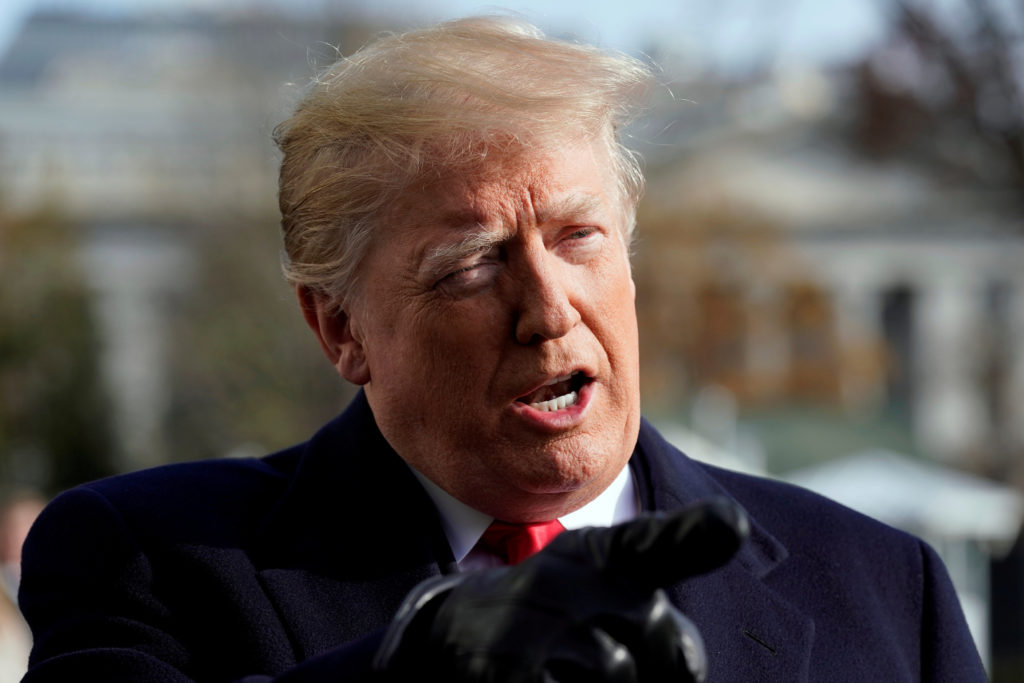
During remarks on Jan. 25 in the White House Rose Garden, President Donald Trump announced a deal had been reached to temporarily reopen the federal government but reiterated the need for a security wall or barrier at the U.S.-Mexico border in order to prevent undocumented immigrants from entering the U.S. The short-term budget agreement doesn’t include new funding for the barrier.

“We really have no choice but to build a powerful wall or steel barrier,” Trump said. “If we don’t get a fair deal from Congress, the government will either shut down on Feb. 15 again or I will use the powers afforded to me under the laws and the constitution of the United States to address the emergency. We will have great security.”

His remarks on Jan. 25 followed a 35-day government shutdown resulting from a deadlock between the president’s demand for border wall funding and Democrats’ refusal to include such funding in the budget. Pay could resume as early as this weekend for more than 800,000 federal workers who have gone a month without a paycheck.

As he has done previously when speaking about his desire for a wall at the nation’s southern border, Trump said Israel’s use of a wall at the Israel-West Bank border has been successful in helping Israel maintain security by preventing potentially dangerous people from entering the country.

“Israel built a wall that is 99.9-percent successful,” Trump said on Jan. 25. “They keep criminals out.”

Trump said the responsibility for bolstering security at the U.S.-Mexico border was part of his role as commander in chief.

“My highest priority is the defense of our great country,” he said. “We cannot surrender operational control over the nation’s borders to foreign cartels, [drug] traffickers and smugglers,” he said. “We want future Americans to come to our country legally and through a system based on merit.”

A wall is essential not just for U.S. security but also for ensuring the safety of those attempting to come illegally into the U.S., he said.

“Our plan includes desperately needed humanitarian assistance for those being abused by coyotes, smugglers and the dangerous journey north,” he said. “The requests we have put before Congress are vital to ending the humanitarian and security crisis on our border.”

He said that allowing undocumented immigrants to enter the U.S. has had a negative economic impact, including the “tremendous economic and financial burdens of illegal immigration … on the shoulders of low-income Americans.”

The battle over the government shutdown pitted the president against House Speaker Nancy Pelosi (D-Calif.). The fight between the two led Pelosi to bar Trump from delivering the State of the Union address in the House chamber. It’s not known how the temporary budget agreement will affect that situation.

Pelosi held a joint press conference with Senate Minority Leader Chuck Schumer (D-NY) following Trump’s remarks.

“Disagreement over policy should never be a reason to shut down the government,” Pelosi said. “I am sad it has taken this long [but] I am glad we have come to a conclusion today about how to go forward in the next three weeks.”


Deal Reached to Temporarily Reopen Federal Government Read More »

PA: We Will No Longer Accept U.S. Security Funding

The Palestinian Authority (PA) announced in a December 26 letter to Secretary of State Mike Pompeo that they will no longer be accepting United States security funding as a result of the Anti-Terrorism Clarification Act (ATCA).

PA Prime Minister Rami Hamdallah wrote in the letter that such U.S. aid to the PA is now a “dividing force” with the ATCA’s passage in October, since the law would hold the PA liable for Palestinian acts of terror against American citizens if they continue to accept U.S. funding after January 31.

“In the view of the Government of Palestine, the U.S. Judicial Branch has sole cognizance over these issues because they involve rights protected by the Constitution of the United States of America,” Hamdallah wrote. “Unfortunately, the ATCA has sought to convert these constitutional issues into political ones.”

Hamdallah continued, “In light of these developments, the Government of Palestine respectfully informs the United States Government that, as of January 31st, 2019, it fully disclaims and no longer wishes to accept any forms of assistance referenced in ATCA.”

According to the Times of Israel, the Trump administration provided more than $60 million in security aid to the PA in 2018.

The Jerusalem Post notes that between this announcement and the United States cutting more than $230 million in economic aid to the Palestinians as well as $300 million from the United Nations Relief and Works Agency (UNRWA), the latest announcement means just about all U.S. aid to the PA is gone.

PA: We Will No Longer Accept U.S. Security Funding Read More »

Civil Rights Museum Reverses Decision, Offers Human Rights Award to Angela Davis

The Birmingham Civil Rights Institute (BCRI) announced on Friday that have reversed their decision and will offer their human rights award to Angela Davis after all.

In a statement posted to their website, BCRI said their board voted to undo their revocation of the Reverend Fred Shuttlesworth Human Rights Award from Davis and noted they had issued a January 14 public apology over how they handled the matter.

“At the end of the day, we stand for open and honest dialogue on issues,” BCRI Interim Board Chair Rev. Thomas Wilder said in a statement. “It is only through our ability to talk openly and honestly with one another that we can achieve true understanding and appreciation for one another’s perspectives. We look forward to continuing the Institute’s legacy as we foster dialogue and open communications, improve our Board governance and policies, and stay focused on our Vision 2020 strategic plan.”

BCRI had voted to rescind the award from Davis on January 4, which Davis had said was the result of her supporting the Boycott, Divestment and Sanctions (BDS) movement. Davis has not publicly stated if she will re-accept the award.

Davis did not respond to the Journal’s request for comment as of publication time.

Civil Rights Museum Reverses Decision, Offers Human Rights Award to Angela Davis Read More »

An Ancient Moon and a Modern Fascination

On a bitterly cold January night (or early morning, to be exact), I stood out on my front porch and there it was. A blood moon. It was my third trip outside, as I had gone out every few hours—first to see the full moon, then to see the eclipse beginning, and now this. My entire family was asleep, but I “shared” the experience with millions of others around the world. I had purposefully stayed awake for this and it did not disappoint.

The next morning, Tu B’Shevat (which always happens on a full moon), my social media feed exploded with pictures of that beautiful and awesome site. Once upon a time, people would see such a thing and think the world was ending. Now, we plan for days in advance to marvel at nature’s beauty. With our modern telescopes and internet stream. Remember the Great American Eclipse of 2017?

It truly is amazing to think about. In the age of the endless news cycle, streaming, and text messaging, why are we still as fascinated by the moon as we were fifty years ago when Neil Armstrong first set foot? But, then again, that is our entire lives as Jews—balancing the old with the new. The ancient with the modern. Indeed, we can have both. They are not mutually exclusive.

Tonight, Jews around the world will light Shabbat candles, fulfilling an ancient commandment at the end of a busy week. Depending upon their level of observance, they will engage in various recreational activities. Some as old as a game of chess, others as modern as a Netflix video. Different Jews with different traditions. On Saturday morning, out comes an ancient scroll read aloud in a most likely modern building. Old and new. Ancient and modern. It is everywhere.

In his weekly column in the Detroit Free Press, Mitch Albom unapologetically writes about his continued ownership of a flip phone. “I don’t care about phones. To me, they are there for talking and for hanging up. I don’t need to carry the world in my pocket. I don’t need to post my life.” A modern writer who still uses “old” technology.

Anyone who has been to Israel has experienced this dichotomy. One day, you are walking through the streets of the Old City of Jerusalem and the next day, you find yourself amidst the bustling nightlife of Tel Aviv. However, one need not go to Israel to have this. It is the entire history of the Jewish experience. Each Jewish holiday (appropriately placed against the ancient cycle of the moon) has a mix of old and new. Hanukkah candles substituted for oil. The Passover seder plate now includes an orange. The list goes on and will continue to be updated for eternity.

L’dor V’dor. From each generation, we create our own traditions, combining the old with new. And it is as beautiful as a blood moon at midnight.


Disclosures: the author’s husband is Mitch Albom’s cousin. The painting included with this story is an original created by the author.

Lisa Rothstein Goldberg is a social worker and Jewish educator. She currently lives in Louisville, Ky., with her husband and two young daughters.

An Ancient Moon and a Modern Fascination Read More »

Fighting Sneaky Anti-Semitism

Civil rights lawyer and advocate Michelle Alexander, writing last week in The New York Times, decided to honor Martin Luther King Jr. Day by focusing on the “grave injustice of our time.” She had plenty to choose from. According to the International Rescue Committee (IRC), “2018 was a devastating year for millions around the world, with more people displaced from their homes than ever before. In many of the world’s most challenging places, armed conflict and man-made crisis mean life will get worse and not better in 2019.”

The IRC listed Yemen as the top crisis, followed by the Democratic Republic of Congo, South Sudan, Afghanistan, Venezuela, the Central African Republic, Syria, Nigeria, Ethiopia and Somalia.

So, guess which crisis Alexander picked? Palestine, of course.

In an op-ed headlined, “Time to Break the Silence on Palestine,” Alexander argued that “many civil rights activists and organizations have remained silent” about “the human rights nightmare that has unfolded in the occupied territories.”

Let’s put aside the absurd notion that the civil rights world has been too “silent” about the plight of Palestinians, which is arguably the most talked about cause on the planet. Let’s also put aside the fact that Palestinian leaders have rejected numerous offers over the years to create their own state.

The real question is: Why would Alexander single out the Jewish state?

In recent years, we’ve seen two strands of anti-Semitism percolate in America. Neo-Nazis chanting “Jews will not replace us” in Charlottesville represent the classic, blunt strand of Jew-hatred. These blatant bigots have no problem identifying themselves. They hate Jews, and they tell you they hate Jews.

The second strand of anti-Semitism is sneakier. It is made up of social justice activists who fight for the rights of blacks, gays, minorities and other oppressed people, but seem to have a real problem with Jews and the Jewish state. Because they’re so good at flaunting their social justice credentials, it’s not as easy to expose them when they show signs of anti-Semitism. Their favorite tactic is to hide behind criticism of Israel.

As Victor Davis Hanson wrote on the National Review website, this strand “grew most rapidly on the 1960s campus… The novel romance of the Palestinians and corresponding demonization of Israel, especially after the 1967 Six-Day War, gradually allowed former Jew-hatred to be cloaked by new rabid and often unhinged opposition to Israel. In particular, these anti-Semites fixated on Israel’s misdemeanors and exaggerated them while excusing and downplaying the felonies of abhorrent and rogue nations.”

The most obvious examples of this strand are Women’s March leaders like Linda Sarsour, who coddle up to vicious anti-Semites like Louis Farrakhan and single out Israel for special condemnation. But there are many others.

Take the case of Ilhan Omar, one of the first Muslim women elected to Congress. Omar, who is part of the new wave of Democrats challenging the status quo, is regarded so highly that she was just seated on the powerful House Foreign Affairs Committee.

In 2012, while Israel was defending itself against hundreds of Hamas terror rockets launched against its civilians on the Gaza border, Omar tweeted: “Israel has hypnotized the world, may Allah awaken the people and help them see the evil doings of Israel.”

This notion of “hypnotizing the world” is a classic anti-Semitic trope.

As Bari Weiss wrote in The New York Times about Omar’s comment, “The conspiracy theory of the Jew as the hypnotic conspirator, the duplicitous manipulator, the sinister puppeteer is one with ancient roots and a bloody history.”

Omar’s initial response on CNN was to say she “couldn’t see how her comments would be offensive to Jewish Americans” and that she was “clearly speaking about the way the Israeli regime was conducting itself in that war.” After a major outcry, she tweeted on Monday night that she had “unknowingly” used an “anti-Semitic trope” when she accused Israel of “hypnotizing” the world in 2012. She didn’t comment on the other accusation of “evil doings.”

In any case, this is encouraging. It shows that it pays to speak out. The phenomenon of hiding behind Israel to disseminate anti-Jewish sentiment is serious, and it’s only getting worse.

In his 3D test to distinguish legitimate criticism of Israel from anti-Semitism, Natan Sharansky laid out three red flags: Delegitimization of Israel, Demonization of Israel and subjecting Israel to Double standards. As Sharansky explained, “Hiding behind the veneer of legitimate criticism of Israel, this new anti-Semitism is much more difficult to expose.”

What makes it even more difficult is that it hides behind the veneer of social activism. Jews are especially vulnerable to this camouflage. We have social justice in our genes. Fighting for the oppressed is our collective calling. It’s not surprising, then, that we would have a tendency to overlook anti-Jewish behavior when it comes from social justice warriors whose causes we endorse.

Let’s face it: It’s a lot easier to go after blunt Jew haters who tell us they hate Jews than sneaky Jew haters who fight for the oppressed.

It’s time to advance a new intersectionality that delivers this message: If you nurture anti-Semitism rather than fight it, don’t talk to us about social justice.

Fighting Sneaky Anti-Semitism Read More »

The David Suissa Podcast

Tim Berke: Five Years in South Sudan

A conversation with Tim Berke, who headed the IsraAID mission in South Sudan for more than five years. Tim discusses how he originally began his journey in South Sudan and what life was like in one of the most unstable regions in the world, from a wedding with three thousand guests to an rpg taking out his water supply.

Follow David Suissa on Facebook, Twitter and Instagram. 

Tim Berke: Five Years in South Sudan Read More »