A judge struck down a 1996 federal law banning female genital mutilation, saying that it was incompatible with the Constitution.
The Michigan case at hand involved Dr. Jumana Nargawala who allegedly performed female genital mutilation on nine girls, who were reportedly in the age range of 7-12 years old. Nagarawala is also alleged to have “tricked” two of the girls into the procedure, as one of the girls was allegedly told that the procedure was to clean out bacteria and afterward a medical examination found damage to her genitals.
Nargawala has denied the allegations, stating that she performed a benign procedure on the girls.
The judge, Bernard Friedman, argued that the federal government didn’t have jurisdiction over the matter because female genital mutilation doesn’t constitute interstate commerce.
“As despicable as this practice may be, it is essentially a criminal assault,” Friedman wrote. “FGM is not part of a larger market and it has no demonstrated effect on interstate commerce. The commerce clause does not permit Congress to regulate a crime of this nature.”
Consequently, the six charges under the FGM law against Nargawala were dropped, as were charges against Dr. Fakhruddin Attar, who allegedly allowed Nargawala to use his facility for FGM, and his wife Farida Attar, of providing aid to Nargawala.
Molly Blythe, an attorney for Nargawala, told National Public Radio (NPR): “The law warranted this decision, and we are happy with it.”
Nargawala and the Attars still face charges of conspiracy and obstruction. The federal government is looking into appealing the ruling.
The ruling has sparked outrage. Ayaan Hirsi Ali, a survivor of FGM, tweeted:
Outrageous. Federal judge throws out US law criminalizing FGM. Cutting girls genitals is a crime and must be prosecuted. https://t.co/VRMYiaqVAG
Everyone is asking me how is it possible that this judge has dismissed this historic FGM case. I am not an expert on US law. All I ask of you is to commit to set this right. Please call or write to your rep in Congress to address this ASAP. Surely we can protect girls in the US!
These are children; little girls; between the ages of 2 to 8; they have no idea and from one moment to the next they are held down by people they love. And then chop! Parts of their genitalia are gone! The law must protect them! PLEASE.
The Washington Examiner’s Tiana Lowe called the ruling “a bending of the law to protect and normalize systemic violence against women.”
“Even the most limited, contemporary reading of the Commerce Clause would allow Congress to protect minors from being forcibly shoved across state lines to undergo medically detrimental torture. (One of the victims was drugged with Valium to make her compliant.),” Lowe wrote.
Jaha Dukureh, who like Ali is a survivor of FGM, told NPR, “Some women have partial or total removal of the clitoris [a small, highly sensitive part of the genitalia]; some have the folds of flesh around the vagina removed; some have both those areas removed; some have the vaginal opening narrowed, often by stitching, and some women have some form of piercing, scraping, cauterizing to genitalia.”
Dukureh added that there are no health benefits to FGM and it’s generally done as a religious procedure to control women’s sexual impulses.
There are 27 states that currently have laws banning FGM, including Michigan.
I am sitting on an El Al plane on Friday afternoon flying in to Tel Aviv. We took off four and a half hours late due to a combination of reasons: it was the first snow fall of New York this season. When we finally boarded the plane, we were told by the captain that the crew had been late to arrive from Manhattan due to heavy traffic and we were still awaiting one more crew member. We waited.
Then the plane had to be “de-iced”.
Last, there was usual traffic to get in line for takeoff. We took off.
In the two and a half hours that we sat on the plane, questions were raised about whether we would land in Tel Aviv before sundown so as not to violate the Sabbath. Not just questions; screaming. The Israeli way. The resounding yelling was about taking off to get to Israel on time. Some requested to get off the plane and spend the Sabbath in New York but we had already left the gate. After much noise, the captain announced that since they were able to change the route to a faster one, the flight would take only nine hours and we would arrive prior to the start of Shabbat. Still lots of commotion. Another announcement: this time by a passenger who had somehow taken on the role of “rabbi on board”. He announced that everything is fine, he has heard the plan, we will arrive in Israel before the start of Sabbath and everyone can relax.” We take off.
Baruch Hashem 🙂
Seven and a half hours later, we are awakened to a new plan:
“Ladies and gentlemen: due to headwinds, our flight time is longer than had been expected and we will therefore need to land in Athens. This plane cannot fly to Israel on the Sabbath and so other small planes will be coming from Israel to take those of you who wish to land in Israel today. Those who wish to stay in Athens for the Shabbat will deboard the plane first and be taken to hotels.”
Uproar!
People yelling, stewardesses trying to calm them down, explaining the decision came from top management and they are not responsible; crew members under attack and crying, it seems no one wants to land in Athens.
It’s very unpleasant and no one seems to want this. We are a captive audience, on a plane and no longer with any ability to determine our fate. No one asked us in New York if we preferred to fly direct to Israel (perhaps on another commercial airlines) nor did I consider that El Al may determine to take us on an additional detour through Athens airport, security and immigration clearance and all, for a six hour delay in order to avoid landing in Israel fifteen minutes into the Sabbath.
It sounds surreal but it is real.
One person tells me that the pilot told him we can continue to Israel and land in Israel at 16:14. There is talk about when the Shabbat starts: in Jerusalem at 16:10, in Tel Aviv at 16:20…..it’s clearly a very close call. But it is not the pilot’s decision. He announces that the decision was taken by the CEO of El Al.
I’m listening to religious Jews hovering above me and yelling:
“El Al has put us in a horrible, horrible situation”, they say, very seriously. “We will be breaking Sabbath no matter what and now we will be stuck in Athens. We land at 3:15 pm and “Shabbos” starts forty five minutes later. We are being forced to make a terrible decision. Who knows how long it will take to get out of the airport, through customs, where we will stay, how we will eat kosher food…the Shabbat will be violated no matter what.”
There are elderly people on this plane, confused and tired. There are cries of a woman who is scared of flying. “I took two valium to get on this plane, I am here with my small children, I can’t get on a small plane and we need to get home. Why are my needs not taken into account?” There are tourists who do not understand what is happening and are fully confused by the attempts at a rational explanation (perhaps because there isn’t one).
Many of the religious Jews that I hear say they prefer to land at 16:30 in Israel and spend Shabbat at the airport in Israel or walk to a nearby synagogue or neighborhood.
The religious man sitting next to me recognizes that this very act causes much more violation of the Sabbath than landing a few minutes late in Israel. “El Al is now bringing two small planes from and to Israel, that’s another two sets of crew that will fly and work on Sabbath,” he says.
The crew is equally frustrated and helpless.
In this unpleasant encounter, I could not find anyone who wanted to land in Athens, not even the ultra orthodox who seemed equally frustrated with the decision handed down.
That’s the law the crew tells us. We have no choice.
I can’t help but find irony in the words of an orthodox man standing over me, as people complain.
“What a Great Father we have….look at what he has done to us!” the man smiles.
And I wonder, who is this “Great Father” and what has He done?
I think most of us on the plane realize that this time it is El Al management.
I for one challenge the decision to play with my fate, with full disregard for the desire of the passengers, or the safety involved in an unplanned landing and an additional take off, and the economic cost to El Al, now a private company that should strive for profitability and for pleasing its passengers.
Six hours later, 7:30 pm and we are about to land in Tel Aviv. A final announcement from the new crew: Our luggage is waiting on carousel number 3 for us in Israel.
How did it get there before us?
The flight we disembarked in Athens, took the crew and flew to Israel before us! Indeed, they flew the plane back to Israel with crew and luggage after we deplaned. When we asked if this was what would happen, the crew told us they did not know. But as it happens, they need to get back to Israel as well and without us it is no longer a commercial airliner so it can fly to Israel with our luggage and the crew. No paid passengers allowed; Paid passengers on Shabbat, they told me, would make it “illegal”.
The plane and our crew flew to Israel with our luggage but we, the paying passengers, were delayed in Athens for three hours, made to stand in line and go through security and customs, wait on line for new boarding passes and put on a small plane that does not say “El Al” on it.
And to that I say to the CEO of El Al, “Look at what you have done to us!”
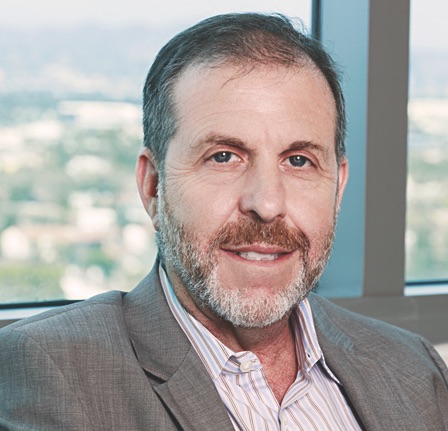
Anti-Defamation League (ADL) CEO Jonathan Greenblatt wrote a letter to Airbnb expressing their dismay at the organization’s decision to stop providing services to Israeli communities in the West Bank.
Greenblatt began the letter by denouncing the Boycott, Divestment and Sanctions (BDS) movement as anti-Semitic.
“Many of the founding goals of the BDS movement, including denying the Jewish people the universal right of self-determination – along with many of the strategies employed in BDS campaigns – are anti-Semitic,” Greenblatt wrote. “Many individuals involved in the starting and running of BDS campaigns are driven by opposition to Israel’s very existence as a Jewish state. And, all too often, BDS advocates employ anti-Semitic rhetoric and narratives to isolate and demonize Israel.”
Greenblatt added that this is why they “were dismayed to read about Airbnb’s recent announcement to not list rentals in Israeli settlements in the West Bank.”
“With this decision, the boycott, divestment and sanctions movement and its supporters will be further emboldened and view it as a victory for their hateful campaign against Israel,” Greenblatt wrote.
Greenblatt noted that Airbnb still provides services to areas in which people have been displaced, such as Northern Cyprus and the Western Sahara, which suggests a “double standard” against Israel.
Greenblatt then asked if Airbnb if they would make similar decisions for other “disputed areas,” what experts they consulted on them matter, how providing services to Israeli communites contributes “to existing human suffering,” and if they would stop providing listings for East Jerusalem and the Golan Heights.
The ADL CEO also took issue with Airbnb’s contention that the communities in the West Bank are the center of the Israel-Palestinian conflict.
“During the Oslo Peace Process, Israel offered the Palestinians significant land concessions in the West Bank, but the Palestinian team walked away from the deal,” Greenblatt wrote. “Instead of working to promote peace, there are voices in Palestinian society as well as others in the Arab world, who reject Israel’s legitimacy and call for a violent end to Israel itself. Unfortunately, the ‘core of the dispute’ is that too many do not want a Jewish state to exist.”
In a statement sent to the Journal via email, an Airbnb spokesperson said, “Israel is a special place and our over 22,000 hosts are special people who have welcomed hundreds of thousands of guests to Israel. We understand that this is a hard and complicated issue, we appreciate everyone’s perspective and we hope to meet with the ADL as soon as possible to discuss this matter.”
The spokesperson added that their guidelines would in fact extend to areas such as the Western Sahara region and that they would still provide listings to Israeli homes in East Jerusalem and the Golan Heights.
Since her breakout Tony-winning debut on Broadway in “Hairspray” in 2002, Marissa Jaret Winokur has appeared in movies (“Fever Pitch”), TV series (“Retired at 35,” “Melissa & Joey,” “Playing House”), competed on “Dancing With the Stars” and won “Celebrity Big Brother.” Now she’s returning to the musical theater stage as the good witch Glinda in “The Wonderful Winter of Oz,” a Lythgoe Family Panto production opening Dec. 15 at the Pasadena Civic Auditorium.
Blending Frank Baum’s story and characters from “The Wizard of Oz” with well-known modern pop songs, the holiday show stars Mackenzie Ziegler (“Dance Moms,” “Dancing With the Stars: Juniors”) as Dorothy and Kermit the Frog as the Wizard.
“It’s broad and funny and has music everybody will know,” Winokur told the Journal. “It’s a good theater experience for young kids because if they’re not sitting still it doesn’t matter. They don’t have to sit quietly. They can boo and cheer. There’s a lot of audience participation.”
Growing up watching “The Wizard of Oz” and “The Muppet Show” on TV, Winokur didn’t hesitate when she got the offer to participate. “We were all star-struck by Kermit the Frog at the photo shoot. Getting to sing with Kermit is so exciting for me,” she said. And she’s just as thrilled to don her extravagant Glinda gear. “The costumes are amazing. They come from London,” she said. “They’ve spared no expense.”
Winokur said she’s putting her own mother figure take on the character. “I want her to be like a Jewish mother, taking care of Dorothy,” she said.Fittingly, she sings, “You’ll Never Walk Alone” from “Carousel” to her.
Off stage, Winokur is the mother of 10-year-old Zev, and she’s been stressing over what to get the sports-loving boy for Hanukkah. “When I was growing up we didn’t do presents for Hanukkah. We just lit the candles. It was very much about religion and family. Birthdays were when we got our presents,” she said.
Winokur is already planning for Zev’s bar mitzvah, she said. “My sister has a daughter who is the same age and we’ve talked about going to Israel to do the [b’nai mitzvot] there,” she said. “That would be my dream. I’ve never been.”
A New York City native and now a San Fernando Valley resident, Winokur grew up the youngest of four children in a close-knit family that valued Jewish traditions. “I identified with being Jewish when I was young and really enjoyed that,” she said. “We had a lot of close friends who were like family that we spent holidays with, and that’s what made me who I am. For me, Judaism is about tradition and family,” she said. “It’s less about reading the Torah and more about being part of a community and giving back and being a good person.”
Fostering a sense of community for her son is important to Winokur, “whether it’s at temple, school or at home,” she said. “Our house is always open for friends and family. There’s always someone living in our guest room – an unemployed actor, a divorcée, someone who needs to get back on their feet. My son sees that we’re always giving and helping other people.”
Winokur has been married for 12 years to writer Judah Miller, the showrunner on HBO’s “Crashing.” However, they met six years beforehand. “I hadn’t done ‘Hairspray’ yet, he was an executive’s assistant,” she said. “We’re not the same people we were when we met, but we’ve learned together and let each other change and grow, and we’ve been there for the highs and lows. He’s not just there for me when I’m successful. He’s there for me when I’m falling on my face, too.”
Over the past year, Winokur made guest appearances on “Crashing,” shot the films “Divos!” in which she plays a nun, and “A Very Nutty Christmas,” a Lifetime movie airing Nov. 30 with Melissa Joan Hart and Barry Watson, in which she plays a bakery owner. She also has an upcoming guest appearance on ABC’s “A Million Little Things.” Onstage, she recentlywas involved in “The Unauthorized Musical Parody of Stranger Things” and directed a musical version of “Bridesmaids.”
She considers “Hairspray” the highlight of her career. “Nothing comes close,” she said, but she’s also proud that she did “Celebrity Big Brother” and “Dancing With the Stars.”
“I had the time of my life,” Winokur said. “I don’t take my career so seriously that I have to be doing a hit show on Broadway.I want to work and be social and have fun.” She hopes to direct more and bigger musical theater productions, and plans to star in a revival of “Gypsy” one day. “My son is my priority so I can’t go to New York right now. But in eight years, I can do whatever I want,” she said. “I’m going to be such a good
Mama Rose.”
“The Wonderful Winter of Oz” runs Dec.15-20 at the Pasadena Civic Auditorium.
With music and lyrics by Stephen Schwartz, a book by Winnie Holzman, produced by Mark Platt and telling the origin story of the witches of Oz, the musical “Wicked” runs Nov. 28-Jan. 27 at the Pantages Theatre in Hollywood.
The Skirball Cultural Center invites families to celebrate Hanukkah at its “This Little Light of Mine” festival on Dec. 2, featuring a klezmer band, roaming musicians, dance leaders, art projects and the Urban Voices Project choir. Also at the Skirball, you can gorge on latkes from Freedman’s LA while enjoying stand-up performances from Jewish comedians Dan Ahdoot, Matt Lieb, Robby Hoffman, Heather Pasternak and host Ester Steinberg in a showaptly titled “Latkes and Laughs” on Dec. 6.
The iconic songbook of the composer of “Somewhere Over the Rainbow,” “Stormy Weather” and “That Old Black Magic” will be celebrated in “The Music of Harold Arlen, Wonderful Wizard of Song” at the Soraya Center for the Performing Arts on the campus of Cal State Northridge on Dec. 1. Hosted by Arlen’s son Sam Arlen, the program features Eden Espinosa, Leo Bwarie, Karon Blackwell and George Bugatti in a big band tribute to the tunesmith’s classics.
Singer Barry Manilow will perform a mix of hits and holiday songs in “A Very Barry Christmas” at the Microsoft Theater in Los Angeles on Dec. 14 and at the Agua Caliente Casino & Spa in Rancho Mirage on Dec. 15-16.
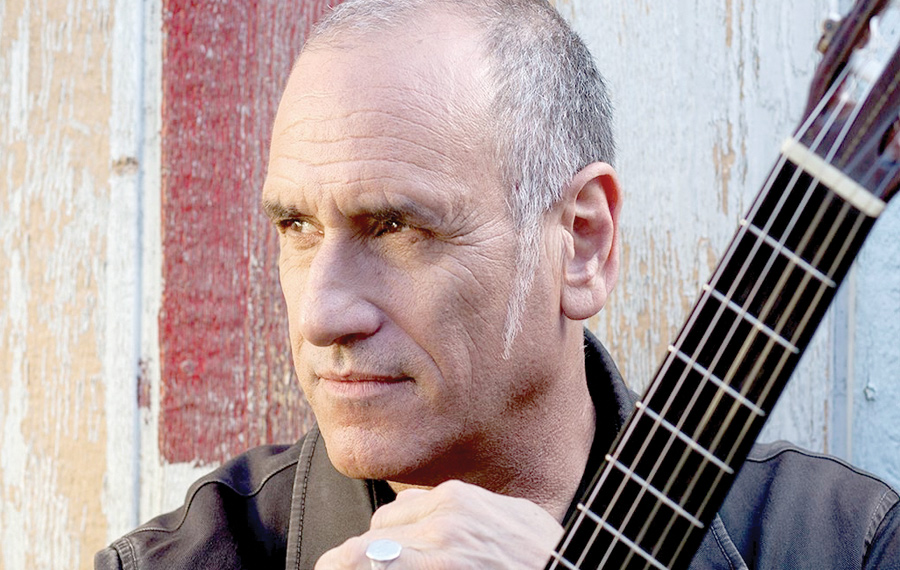
David Broza. Photo courtesy of The Broad Stage
Israeli singer-guitarist David Broza brings his unique blend of Israeli and Spanish-inspired songs — and a message of peace — to the Broad Stage in Santa Monica on Dec. 15. This return engagement of David Broza & Friends features Trio Havana and guests Yuniel Jimenez “El Guajiro,” Xianix Barrera and Alfonso Cid.
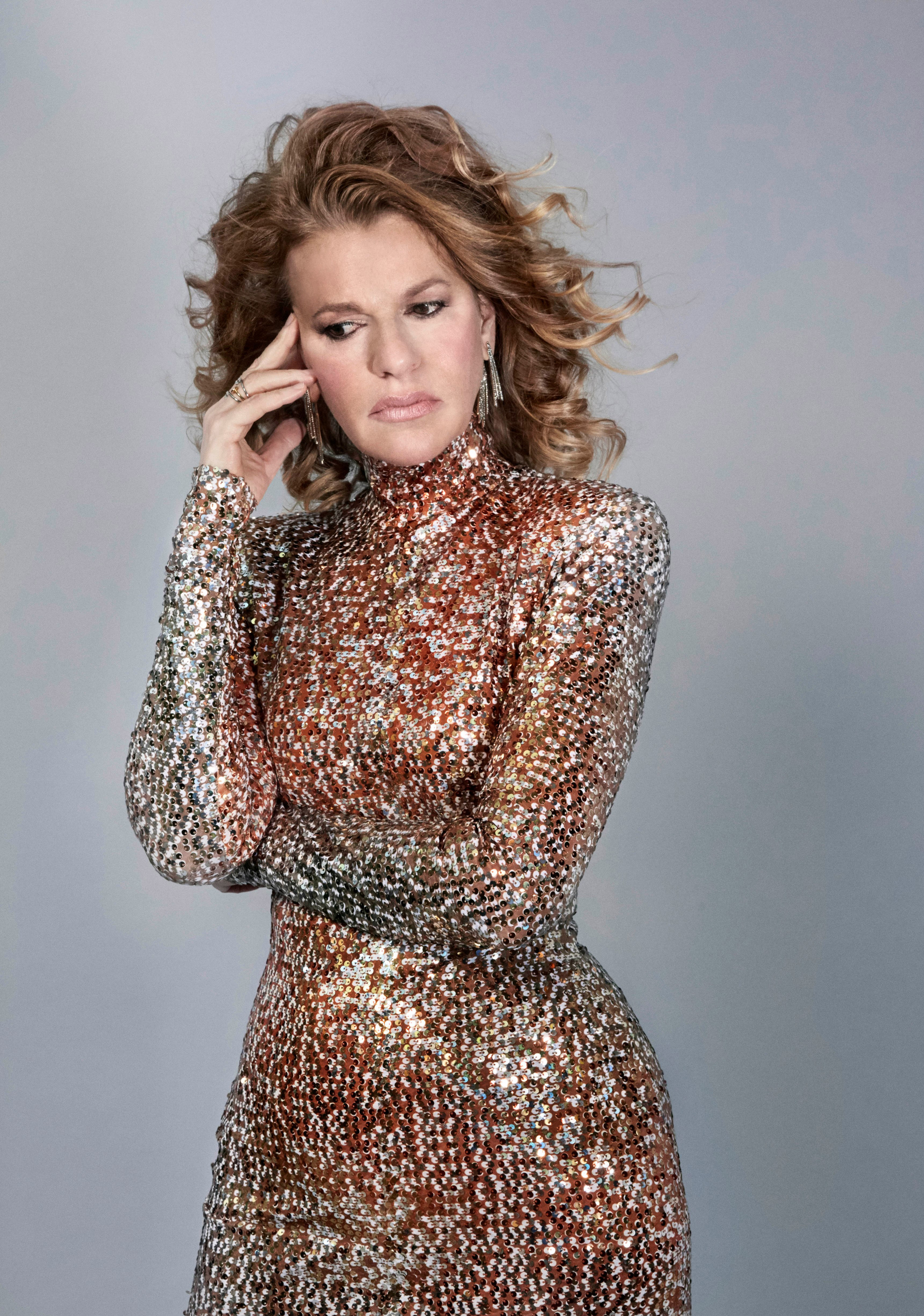
Sandra Bernhard photo by Jordan Graham
Mixing stand-up comedy, cabaret and music in her idiosyncratic style, movie and TV actress Sandra Bernhard returns to her live performance roots with the world premiere of “Sandemonium!” a solo show at the Sorting Room at the Wallis Annenberg Center for the Performing Arts from Dec. 13-15.
Avi Avital Photo by Harald Hoffmann/DG
Israeli mandolinist Avi Avital joins the Los Angeles Chamber Orchestra for an all-Vivaldi program celebrating the composer’s “Four Seasons” on Dec. 13 at Zipper Hall in Los Angeles and Dec. 14 at St. Monica Catholic Church as part of LACO’s Baroque Conversations series.l
Members of the Tribe are on camera and behind the scenes in this cinematic holiday mix of comedy, drama, animation, prestige pictures and action flicks, plus one special reissue.
“Black Swan” Oscar-winner Natalie Portman is getting rave reviews for her latest performance in “Vox Lux” as a pop superstar with a troubled past, a sensational career and a complicated life. She plays Celeste, who survived a school shooting and became famous for a song she wrote to honor the victims. Twenty years later, she’s the mother of a teenage daughter and on the career comeback trail, trying to put a scandalous incident behind her. While on tour with her album, she has to deal with personal crises, the pressures of fame and another shattering act of violence.
Written and directed by Brady Corbet and featuring original songs by Sia, “Vox Lux” will be released on Dec. 7.
Natalie Portman. Photo courtesy of Neon.
Reteaming with her “Lobster” director, Yorgos Lanthimos, Rachel Weisz (“Denial,” “Disobedience”) stars in “The Favourite” as Lady Sarah Churchill, Duchess of Marlborough, the woman behind the throne in the court of Queen Anne of England (Olivia Colman).
Lady Sarah was an ancestor of both Winston Churchill and Princess Diana, and was the queen’s friend, confidant and trusted adviser on matters personal and political.According to Weisz, “Lady Sarah has the whole package: She’s very intellectually powerful, she’s very sexually powerful, she’s physically quite powerful, and politically, she is in charge of the entire country. I think of her as having the clarity and decisiveness of any modern political leader. Neither politics nor battle tactics nor running the country is Anne’s strong suit, but that’s all very appealing to Sarah.”
In the film, opening on Nov. 23, the balance of the women’s symbiotic relationship is threatened with the arrival of Lady Sarah’s cousin Abigail (Emma Stone), who becomes a rival for the queen’s attention and affections. Weisz also stars opposite Colin Firth in “The Mercy,” opening Nov. 30. It’s based on the true story of sailor Donald Crowhurst’s 1998 attempt to circumnavigate the globe and the cover-up of its failure.
Sarah Silverman. Photo courtesy of Alberto E. Rodriguez/ Getty Images for Disney.
Sarah Silverman and Gal Gadot add their voices to that of John C. Reilly’s title character in the animated sequel “Ralph Breaks the Internet,” a family-friendly adventure that Silverman describes as a “completely different” story compared with its predecessor, “Wreck-It Ralph.”
In the movie, opening on Nov. 23, racer Vanellope “is missing something, a steering wheel from her game, and that becomes a complete existential crisis,” Silverman said of her character. “Who am I if I’m not a racer? So [she and Ralph] decide to go into the internet and explore this vast endless expanse and it changes them forever.”
Gadot plays new character Shank, a racer in a game called “Slaughter Race.”
Silverman explained, “It’s a racing game that’s thrilling to Vanellope but very hard-core. Vanellope looks up to her. She becomes Vanellope’s mentor and she takes Vanellope under her wing.”
Another big draw for kids: “We have this scene with every Disney princess in it,” Silverman said.
Hailee Steinfeld. Photo courtesy of Paramount Pictures
Hailee Steinfeld stars as a teenage mechanic who befriends the titular Autobot in“Bumblebee,” a stand-alone action adventure from the “Transformers” universe, opening Dec. 21. She plays Charlie, who stumbles upon the battered Volkswagen Beetle hiding in a junkyard, takes him home and sees him as her ticket out.
According to Steinfeld, whose single “Back to Life” appears on the movie’s soundtrack, her character Charlie “has experienced a major loss in her life. She’s constantly trying to find that freedom she craves and start her own life.” Bumblebee is targeted for destruction, which sets their escape in motion. “Better Things” star Pamela Adlon plays Steinfeld’s mother.
Steinfeld also supplies the voice of Gwen Stacy in the animated movie “Spider-Man: Into the Spider-Verse,” opening on Dec. 14.
Israeli writer-turned-director Etan Cohen’s new action comedy plays Sherlock Holmes for laughs in “Holmes & Watson,” starring Will Ferrell and John C. Reilly in the title roles. The story sends the sleuths on a mission to stop Professor Moriarty (Ralph Fiennes) from assassinating Queen Victoria. It opens on Dec. 21.
Ron Perlman plays a Mossad agent turned hitman who falls for his target (Famke Janssen) in “Asher,” opening Dec. 7. Perlman’s daughter, Blake, who was in “Hellboy 2” and “Hand of God” with her father, appears as a pregnant woman.
The Oscar-winning Holocaust drama “Schindler’s List” will be re-released in select theaters on Dec. 7, with picture and sound digital remastering supervised by Steven Spielberg. In the 2017 HBO documentary “Spielberg,” the director talked about filming “on hallowed ground” at Auschwitz and how the little girl in the red dress — the only color in the black-and-white movie — “symbolized the Holocaust and the monstrous evil that no one did anything about. It was emotionally the hardest movie I’ve ever made.”
When United States airspace was closed after the 9/11 terrorist attacks in 2001, 38 planes were ordered to land in Gander, Newfoundland, increasing its population of 10,000 by 7,000 overnight. The story of how the town’s residents opened their homes and hearts to strangers from all over the world is the subject of the Tony Award-winning Broadway musical “Come From Away,” which opens Nov. 28 at the Ahmanson Theatre in Los Angeles.
Guitarist Adam Stoler was with the show on Broadway and segued to the touring company in October. He’s part of the band of onstage musicians who perform the music and lyrics by Irene Sankoff and David Hein.
“Not only are we onstage for the entire show, we’re in costume and we get to interact with the cast,” he told the Journal. “I love it because I didn’t get into this business to sit in a pit. I wanted to be part of the action.”
Stoler wasn’t familiar with the story before he came on board, but he loves its message. “It’s about the Ganderites who took these people in and housed them and fed them. It’s about the relationships that were forged between the Ganderites and the passengers. It’s about treating people with love and respect and helping each other,” he said. “There are little things that we all can do every day to be kind to each other. Little things can make a big impact.”
The characters are based on real people, many of whom have seen the show multiple times. One, an American Airlines pilot, is planning to bring a large group to see it in L.A., Stoler said. “Two of the characters, passengers from different planes, met and ended up getting married.”
For Stoler, who was living in Manhattan during 9/11, the show “brought back memories of my own experience. I woke up that morning to a phone call from my brother saying, ‘I’m still alive.’ He was getting off a bus in front of the World Trade Center as the first plane hit and narrowly escaped with his life. So the show is very cathartic for me. There are parts that are very difficult, but in general, it’s a very uplifting show. You should feel good when you leave the theater.”
Stoler grew up in a musical family. His father played guitar, bass and piano and introduced him to music. “I had my first guitar at 5 and by 10 I was taking lessons,” he said. “I knew instantly that it was what I wanted to do.”
After earning undergraduate and graduate degrees in jazz performance and composition from New York University, where jazz and world music artist Richard Bona became his mentor, Stoler toured the world with Bona. “It was an extremely formative experience,” he said. “It also opened a lot of doors for me.”
His itinerary included Israel, where he’d visited twice before. “I got to perform in Tel Aviv at Philharmonic Hall. It was a wonderful experience. I cannot wait to go back. My wife hasn’t been there and wants to go.”
Of German and Russian Jewish heritage, Stoler grew up in a “Conservative, somewhat observant kosher home. I had a bar mitzvah and can still read Hebrew, but can’t understand it,” he said. “I’m less observant these days but [Judaism] is still a significant part of my identity. I like to think it makes me more open to different types of music. I’ve always been interested in world music, music from the Middle East, and music from our prayers are influenced by that. My heritage has broadened my perspective.”
In “Come From Away,” “a lot of the music has a traditional Irish vibe to it because that’s what a lot of the culture is in Gander,” Stoler said, calling it a “very challenging score.” He plays several differently tuned acoustic and electric guitars during the show. “There’s a lot of back and forth and fast changes between scenes.”
He has a one-year contract, “but they’re already booking this production into a third year. I’m going to take it one year at a time and see how it goes,” Stoler said. So far, he’s enjoying life on the road. “It’s a luxury situation compared to what I’ve had touring with solo artists and bands. We’re in L.A. for six weeks. It’s really nice. You feel like you’re living in the city and really get to see the place. Our spouses are able to come out for portions of the tour. My wife came to Seattle and will come to L.A.”
Stoler loves the city and is looking forward to hitting Venice Beach, trying restaurants in different neighborhoods and “exploring outside of L.A., hiking and doing other outdoorsy stuff.”
Although Broadway “wasn’t something that I was particularly going after, it fell in my lap in a wonderful way,” Stoler said. But he continues to compose and record his own material with the mobile recording equipment he takes with him on the road.
“Each experience brings new challenges and I enjoy bouncing back and forth to keep things interesting. I see myself continuing to do Broadway, my own music and music for other artists,” he said. “I’ll probably do some of that while I’m in L.A. After the show is over, I’ll be out the door and in Hollywood.”
“Come From Away” runs Nov. 28-Jan. 6 at the Ahmanson Theatre.
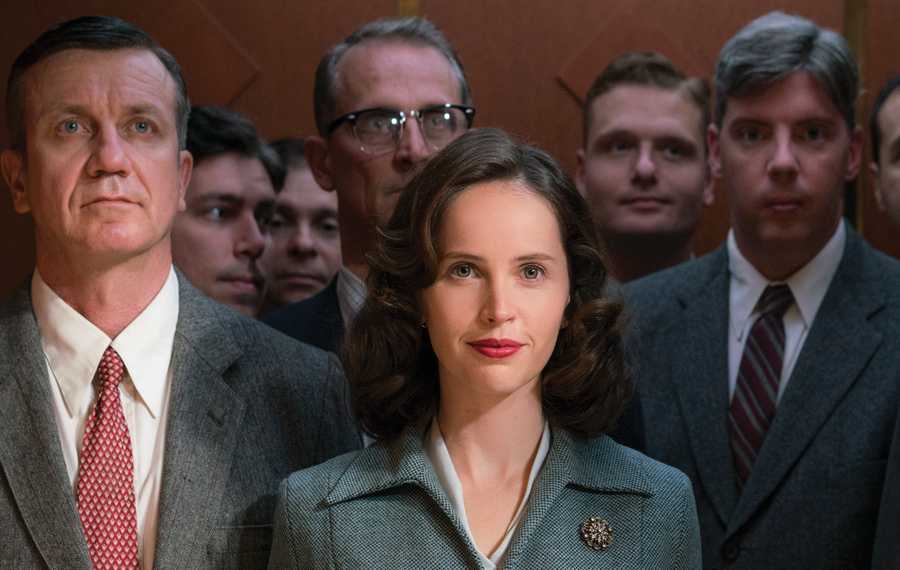
Earlier this year, the lauded documentary “RBG” celebrated the life of Supreme Court Justice Ruth Bader Ginsburg, following the civil rights crusader’s rise to legal powerhouse, pop culture icon and role model for our times. The feature film “On the Basis of Sex” has a narrower focus, zeroing in on Ginsburg’s early career, the early years of her marriage and the landmark case that set her on the path to greatness.
Starring Felicity Jones and Armie Hammer and written by Daniel Stiepleman, the nephew of Ginsburg’s late husband, Martin, the film opens in 1956, when Ginsburg was one of nine women in her law school class at Harvard University. It ends with the landmark gender rights case that the couple argued together in 1970 in which a man caring for his sick mother was denied a caregiver exemption by the IRS because at the time it applied only to women.
The film is directed by Mimi Leder, the Emmy Award-winning director/producer of “ER” and other television shows, including “China Beach” and “The Leftovers.”
“We wanted to tell a great story about this part of [Ginsburg’s] life,” Leder told the Journal. “To me, this movie is about how change happens and about how love prevails. We didn’t set out to make her life story. We wanted to depict this seminal moment where RBG became RBG — where she and her husband fought the only case they ever fought together. It’s a case that affected us all. Discrimination on the basis of sex is not just a women’s issue.”
Leder knew she wanted to be involved in the film as soon as she read the script. “I felt compelled to tell this story because I related to [her] journey on a very personal level,” she said. “Ruth Bader Ginsburg is very much a hero to us all and she has broken the glass ceiling. Although I would never compare my work to Justice Ginsburg’s, I have in my own way broken the glass ceiling for others in my field. I know what it feels like to be one of the only women in the room, if not the only woman in the room.”
Leder also noted that both she and Ginsburg come from Ashkenazi immigrant backgrounds. “We’re both Jewish women, from New York, the mothers of daughters. I’m in a long-term marriage — 32 years — so I know what that’s like,” she said. “I felt as a Jewish woman and a filmmaker I could have some personal insight into telling the story in a very grounded and real way. I felt a personal connection to her and who she was and who she became.” At the outset, Leder said she “didn’t know much about [Ginsburg] on a personal level, but when I started to find out about her I so wanted to tell this story.”
Casting was crucial, Leder said. “Finding that chemistry and the right people to tell the story is always challenging. You never know if it’s going to work until you’re doing it. You hope and pray that it works and in ‘On the Basis of Sex,’ it certainly did.”
Ruth Bader Ginsburg is very much
a hero to us all and she has broken
the glass ceiling.”
— Mimi Leder
Filmed between September and November 2017, mostly in Montreal, the movie wrapped with a scene in Washington, D.C., where Jones, playing Ginsburg, ascends the Supreme Court steps and turns into the real Justice Ginsburg. Leder, who met with Ginsburg several times during the course of filming, was thrilled that the 85-year-old icon agreed to appear. “It’s one of my favorite moments in the movie because it shows how far she came and where she is today,” Leder said.
She notes that the film was underway when the Harvey Weinstein scandal broke and launched the Time’s Up and #MeToo movements, making it more timely and relevant than ever. “The story culminates in the 1970s. It was an era of seismic change in our society. The film is opening on the heels of the 25th anniversary of [Ginsburg’s] tenure on the Supreme Court,” Leder said. ™ “Her journey and remarkable life documents what it meant to be a woman then and what it means to be a woman now.”
Felicity Jones portrays a young Ruth Bader Ginsburg in “On the Basis of Sex.”
Always on Leder’s mind was the responsibility inherent in making a film about a living person, honoring her legacy and pleasing her with the result. “It was daunting, and meeting Justice Ginsburg really added to the pressure to tell the story honestly and honor her,” Leder said. She was worried about what Ginsburg would think of the sex scene, but the justice “was fine with it. She was more concerned that we got the law right.”
Although it doesn’t dwell on the Jewish aspects of Ginsburg’s life, “On the Basis of Sex” does establish that she is Jewish, with several references to it and a visible menorah in one scene. Leder had visited the justice’s apartment and made note of the menorah and Jewish art on display. “It was very subtle,” Leder said. “But we certainly played her as a Jewish woman in her heart and soul.”
Leder grew up in a non-observant home, the daughter of a Belgian-born Holocaust survivor mother who survived four concentration camps and a death march. Her father, a U.S. Army medic, helped liberate Buchenwald after World War II. Her parents met in New York, married and moved to Los Angeles when Leder was 6.
“My parents were very Jewish culturally,” she said, describing her late father as an atheist and mother, now almost 96, as agnostic, “but they both were very proud to be Jewish. I feel a great connection to my Jewishness, my heritage. It’s just part of who I am. I bring that with me.”
Leder’s father was a producer, her brother became a screenwriter and her sister is a casting director, now at Paramount Television. “I grew up in Hollywood, on a set, making low-budget films with my father. My whole family was a part of that,” she said. “It was an incredible life. I cherish every moment.”
Her showbiz family has expanded to include her husband, Gary Werntz, an actor-writer whose credits include many of her projects and who appears in “On the Basis of Sex” as Judge Doyle; and her daughter, Hannah, an actor-writer-director. “She’s very much following in my footsteps,” Leder said.
“I feel that I have paved the way for young filmmakers to tell their storiesand not be afraid.”
— Mimi Leder
When she was 20, Leder became the first woman accepted by the American Film Institute’s cinematography program, honing a skill that prepared her to direct. “I cut my teeth learning how to work with a camera, to understand how you tell a story visually,” she said.
She made her directorial debut with an episode of “L.A. Law” in 1987 and soon established herself as a master of high-end drama with shows like “Sisters” and “China Beach.” She made her feature directing debut with the action film “The Peacemaker” in 1997 followed by “Deep Impact” the following year. But after 2000’s underperforming “Pay It Forward,” Leder said, “No one would hire me to make a film. But I flourished in TV.”
Her latest television project as a producer and director is an untitled series set behind the scenes of a morning news show, starring Jennifer Aniston, Reese Witherspoon and Steve Carell. “It very much deals with the country today, and greed and powerful women,” Leder said of the show, set to debut next summer on Apple TV. “I would call it a drama with a lot of dark comedy. It’s a hard tone to hit and we’re having a great time doing it.”
On Leder’s future slate is a movie she’s written about growing up in her filmmaking family and a film about “the women of early Hollywood, like Mary Pickford and Frances Marion, who wrote, directed and edited films. Then when it became a business, it became a man’s business,” she said.
Mimi Leder became the first woman accepted by the American Film Institute’s cinematography program, which paved the way for her becoming a director. Photo from Instagram.
She’s thrilled that the number of female directors is on the rise today. “But we need more. We still don’t have gender parity,” she said, noting that she has mentored several young women who have become directors. “We need more diversity, more inclusion, more equality, more safety in the workplace. We have so much work to do. I feel that I have paved the way for young filmmakers to tell their stories and not be afraid.”
Reflecting on her career, Leder singles out “The Leftovers” and “On the Basis of Sex” as highlights. “Having had the privilege of telling the story of Ruth Bader Ginsburg is one of the great all-time experiences of my career,” she said. “It was very important to me to be part of this and help tell the story of a remarkable woman of our time who changed the world.”
Leder hopes audiences are inspired by the film. “I want people to walk away and feel like they can do anything, that they can find the strength inside them to speak their voice and make a change,” she said. “I want people to be grateful for Justice Ginsburg’s legacy, for what she did for all of us and for the world, for equality and justice. What she did was not only find a seat at the table, she found a seat at the bench. I think all of us can find a seat at the table with our voices.”
“On the Basis of Sex” opens in theaters on Dec. 25.
Hanukkah is going to be especially sweet this year, and sufganiyot have nothing to do with it. “The Marvelous Mrs. Maisel,” the show that Steven Spielberg recently called “the best Jewish musical since ‘Fiddler on the Roof,’” is returning to Amazon Prime for its second season Dec. 5.
The series, which won eight Emmy Awards in September, is about a well-to-do New York Jewish family in the late 1950s, with Miriam “Midge” Maisel (Rachel Brosnahan) in the spotlight as a young mother who inadvertently becomes a stand-up comic — and kills at it. Her relationships with her parents, Abe and Rose (Tony Shalhoub and Marin Hinkle), her husband, Joel (Michael Zegen), who cheated on her but is remorseful and wants her back, and her manager, Susie (Alex Borstein), are at the core of the story.
It’s the brainchild of Emmy Award-winning writer-producer-director Amy Sherman-Palladino and her director husband, Dan Palladino, and a top-notch creative team that brings the “Maisel” world to life. Judging from a sneak peek at the first two episodes at a private screening, there will be no sophomore slump.
Kevin Pollak, who plays Joel’s father, Moishe, acknowledged the pressure in following up a stellar debut, but he attended the screening and was relieved by the wildly enthusiastic response. “Expectations are usually the root of disappointment, regardless of the quality,” he said. “But that audience was hanging on every word. They were laughing in all the right places but also felt all the emotion at the same time. Yes, the pressure is ridiculous, but Amy and Dan have exceeded expectations.”
Pollak gives props to the Palladinos for the show’s success. “It has a broad appeal based on the extraordinary writing and directing, and the Academy of Television Arts and Sciences echoed that. But those of us who work on the show have known that all along,” he said. “It starts with great writing and you hope that the alchemy happens. And then you have this amazing set design and production design and music and cinematography and wardrobe. It’s the best quality across the board in all departments than anything I’ve done in 20 years. In that regard, we may have lightning in a bottle.”
plays a woman who embarks on a career in stand-up comedy in “The Marvelous Mrs. Maisel.” Photo by Nicole Rivelle/Amazon Prime Video
Pollak, 61, also attributes the popularity of the show to the relatable characters and its multigenerational appeal. “My niece and her friends, 20-year-olds, are obsessed with the show, which couldn’t possibly be for the same reasons as older people who know or lived in this world,” he said. “I think they’re captivated by the character of Midge Maisel and her strength of character, and that she is reinventing herself in the most unusual way.”
He feels “tremendous pride” to be part of a show that reflects the Jewish experience, especially “one that reaches such a universal audience regardless of race, creed, religion or color,” he said. “For something this Jewish on paper, it astonishes me how it reaches every sort of demographic. I’m told the show is huge in China.”
“The show is the best quality across the board in all departments than anything I’ve done in 20 years. In that regard, we may have lightning in a bottle.”
— Kevin Pollak
Although Pollak has played Jewish characters before, Moishe is a departure from others on his resumé. “The challenge was to portray a very loud, older Jewish man,” he said. “My career has not been based on being the boisterous one. I’m not used to playing the guy who doesn’t listen and just talks. That was a challenge.”
Another was getting used to long scenes with no breaks and lots of fast dialogue — a Sherman-Palladino signature. “I came from stand-up comedy, not theater,” Pollak said. “This is a specific style of acting that I was not familiar with, but the challenge was part of the attraction.”
This season, Pollak has been promoted from a recurring guest star to series regular. “You’re going to see a lot of me, whether you want to or not,” he said, describing the second installment of the show as “full of surprises. It’s an ever-expanding universe. It’s bigger and bolder in a number of ways. That’s how you deal with the expectations. You broaden the universe that the show is set in.”
He’s referring to journeys outside the Maisels’ Manhattan milieu that take them to places including Paris and the Catskill Mountains.
Will we see Jewish themes and celebrations? “Without getting into specifics, of course,” Pollak said. Those aspects of the show seem quite familiar to him. “We’re California Jews from San Francisco,” he said, “but there was a great sense of family and celebration in very similar ways for the holidays and in that regard it rings true.”
Kevin Pollak’s role has expanded in the second season of “Maisel.” Photo courtesy of Amazon Studios.
Pollak said he belonged to a Reform temple while growing up. “It was very much a social gathering,” he said. “I attended religious school every weekend. I went to Hebrew school for three years and was confirmed and bar mitzvah’d. There was a strong sense of a Jewish household. [Judaism has] been a great influence my whole life. There’s always been a tremendous sense of pride about being Jewish. As I got older, I put a little less focus and interest on all organized religion, the result of having come from such a lax religious upbringing and being suspicious of organized anything, not just religion. But I have a tremendous sense of pride in being Jewish and the heritage.”
Pollak got into comedy early on, entertaining at school. “I started lip-syncing to comedy albums, performing to Danny Kaye when I was 10 years old in 1967,” he said. “I’m pretty much a natural-born ham, which translates to a life devoted. I’ve always had my eyes and heart and thoughts in all things comedy. I’d already started performing in nightclubs when I was just out of high school. I went to college but I felt this was what I was supposed to do. There was no turning back.”
Following in the footsteps of Jewish comic legends Buddy Hackett, Don Rickles, Mel Brooks, Carl Reiner, Woody Allen “and Albert Brooks, who became a comedy hero and mentor,” Pollak established himself in stand-up. Then in 1989, his career took an unexpected turn, thanks to “a wonderful Jewish saga by Barry Levinson called ‘Avalon.’ I suddenly went from comedian to dramatic actor,” he said. “Although that wasn’t my career trajectory of choice, it made me a respected actor, along with ‘A Few Good Men’ in ’92 and ‘Casino’ and ‘The Usual Suspects’ in ’94, and it was off to the races.”
Rachel Brosnahan (far left) and Marin Hinkle in “The Marvelous Mrs. Maisel.” Photo by Nicole Rivelle/ Amazon Prime Video
Pollak has toggled back and forth between dramas and comedies, and counts “studying at the feet of [Jack] Lemmon and [Walter] Matthau in the ‘Grumpy Old Men’ movies” as a career highlight. “I’m always in search of material that lifts my alleged abilities and challenges me,” he said. “I don’t think I’ve ever been challenged as much as I have been on ‘Maisel,’ and it makes it that much more rewarding, just to be a part of such a magical show but also to be challenged to work at a higher level. I would have been happy to carry a spear, as they say, on this one. To be in the mix as much as I have is a complete honor.”
Currently, Pollak is appearing as The Miami Herald’s publisher in “The Front Runner,” about the scandal that torpedoed Gary Hart’s presidential campaign. He’s also in the comedy “Lez Bomb,” about a lesbian woman who goes home for Thanksgiving and tries to come out to her family. He has six other films in various stages of completion.
Pollack directed the 2015 documentary “Misery Loves Comedy,” “based on the thesis that you have to be miserable to be funny,” and he plans to continue directing. In January, he is set to direct a film he describes as “an interesting whodunit in a noir style, set in modern times. We’re casting now,” he said.
“I created a mantra about 10 years ago, ‘If you’re not creating, you’re waiting.’ I’m very involved in creating new content and opportunities for myself,” Pollak said. “There’s a new improvised comedy podcast that I created called ‘Alchemy This.’ I’ve gathered five of the best improvisers I’ve ever met and I throw out unusual and unique humorous situations and we improvise those scenes. My other podcast, “Kevin Pollak’s Chat Show,” will be 10 years old in March. It’s long-form interviews with everyone from Elon Musk to Tom Hanks to Larry David,” he said. “It’s all over the internet, including KevinPollak.TV.”
Pollak acknowledges that he has always been self-motivated. “As a stand-up comedian, my life was that of a gypsy, a traveling performer, making my own schedule,” he said. “But unlike a lot of people I started out with, I was self-generating and refused to just wait for the phone to ring, even when it was ringing off the hook. I turned 60 last year and I’ve never been so busy. It really has been magical.”
Given his full slate, Pollak has set stand-up comedy appearances aside for the time being, but he still finds time to play poker. The former host of “Celebrity Poker Showdown” will participate in the “Friday Night Poker Live” tournament in December. “It streams on Facebook and shows up on PokerGO a week later,” he said. “It will be on about a week after ‘Mrs. Maisel’ premieres.”
Pollak, who didn’t have to audition to play Moishe, is thankful to the Palladinos for the invitation “to come and play,” he said. “In terms of my acting life, I’d say it’s the most challenging and rewarding at the same time, more so than anything else I’ve ever done. It’s magically exciting.”
“The Marvelous Mrs. Maisel” begins streaming on Amazon Prime Video on Dec. 5.
The following is an excerpt of a conversation between Jewish Journal Editor-in-Chief David Suissa and Jay Sanderson, president and CEO of The Jewish Federation of Greater Los Angeles. The two talked for Suissa’s podcast at jewishjournal.com. It has been edited for clarity and brevity.
DAVID SUISSA: I can’t recall two weeks like this, from Pittsburgh, the elections, the Thousand Oaks [shooting], to the fires, to Gaza.
JAY SANDERSON: Yeah. It actually looked like the two weeks were going to be worse. I was getting ready to buy a plane ticket to go to Israel on the weekend for a solidarity mission if the rockets kept going. So, I’m thanking God that the two weeks aren’t worse than they could have been.
DS:Let’s start with Pittsburgh. Tell us what it was like as soon as you heard the news, and what did you do?
JS: First of all, I’ve been thinking about [a scenario like] this for seven years, which is why our federation was one of the first Jewish communities in North America to get into the security business and oversee all the community security in Jewish institutions throughout almost all of Southern California. I’m not surprised that it happened. But it was shocking.
DS: When you hear of an emergency like this, what is the first thing you do? Do you gather an emergency group?
JS: Each situation is different, and this was on Shabbos. Normally I would immediately have gathered community leaders together. So, I thought, “OK, what are the things we could be doing right away?” It’s to activate our community security initiative. That means there are bulletins and briefs that go out to every Jewish institution automatically. We also wanted to see if we could convene on the following Shabbat a national solidarity Shabbat.
DS: And it worked. It was unbelievable.
JS: I know. It was unbelievable. And we’re convinced that more Jews were in shul on that Shabbat than ever. I was at Stephen Wise [Temple], and the place was packed with over 1,000 people. VBS [Valley Beth Shalom] — packed. Almost every local synagogue committed to it, and the same thing nationally. That was an opportunity for us to go back to shul, put our arms around each other and comfort each other, and say to the bad guys, “Hey, you’re not keeping us out of shul.”
“I’ve tried very hard to guide the federation to do the work we do, which is very evident today with the fires, and not get into that abyss of left/right politics — who wins, who loses.”
— Jay Sanderson
DS: We’re all on edge these days.
JS: We’re on edge. But in the Jewish community that edge, I think, is magnified. Some of it is based on people’s politics. Some of it is people think we’re in pre-Nazi Germany. Which, anybody who actually understands history knows that many of the things that happened in pre-Nazi Germany are not happening in America today.
DS: After that solidarity Shabbat — well, we were horrified by Thousand Oaks.
JS: There were Jews in that club. One of my staff’s brother was in the club. I said this at a gathering for Camp Shalom alumni campers the other night: “We are vulnerable. We feel vulnerable no matter where we are. What we have to do is everything we can to keep these places safe, but we have to go about living our lives.”
DS: And in the middle of these two mass shootings, these two disasters, we have what some people call the most consequential mid-term elections in our lifetime, which reminds us of our divisions.
JS: So, I just say the political climate we’re in is toxic, divisive. I’ve tried very hard to guide the federation to do the work we do, and not get into that abyss of left/right politics — who wins, who loses. I’m very sympathetic to people on both sides who feel like their voices are being extinguished by the other side.
DS: Did you know [the fires were] going to be this bad? It started on a Thursday night, and by Friday morning it was Armageddon.
JS: I am blessed and cursed by access to minute-by-minute information. So I understood what was happening with the fires.
DS: Tell us what you’re doing for the community, the kind of meetings you are having at the federation.
JS: The first thing we do is we convene, so we have to reach out. You have synagogue rabbis, because in the affected areas are people who belong to the synagogues, who are evacuated, who lost their homes, who are suffering from trauma. So the rabbis are essential. Then you have the four major institutions that have been impacted. That is Ilan Ramon School in Agoura [Hills], which is basically burned down. There’s a few buildings left. You have Camp JCA, Shalom Institute — gone. And you have the two Wilshire Boulevard Temple camps — Hilltop, gone; and Hess Kramer pretty much gone. So, all those folks are on the phone.
DS: [These camps] were the heart and soul of our community.
JS: I believe the heart and soul of the community are the people. I said this also at the camp event. When people go to camp, their lifelong friends are the people they meet there. They don’t necessarily remember where the bunks are. This is physical damage, not human damage.
DS: There are so many memories.
JS: A hundred percent. I said this on a call this morning: There are layers on layers on layers [of memories], but at the end of the day, these camps will come back stronger, better. They’ll continue next summer. They’ll be beacons rising from these ashes. The school will be better, and we’ll try to do everything we can to make people stronger. There are many positives. You don’t want there to be a tragedy for positives, but I am overwhelmed by the commitment, the passion, the extraordinary leadership of the rabbis. Wilshire Boulevard Temple, I mean, everyone understands that — emanating from Rabbi Leder all the way down to the staff who run the camps. They’re fantastic professionals.
DS: Did you have some emotional conversations during those 48 hours with people who were directly involved with the camps?
JS:Look, the people who run these camps and work for these camps, they felt a tremendous personal loss. Bill Kaplan basically was a camper at Camp Shalom, right? Now his camp director was a camper. So, this is a major loss; and even though I stood up in front of everybody and said this is not about buildings, it’s about people, it’s easy for me to say. It’s a loss, and …we’re a traumatized community. If you put [these disasters] together, there’s a lot of reason for us to feel unsafe, vulnerable and traumatized; and we have to address that and talk about it and be open about it.